


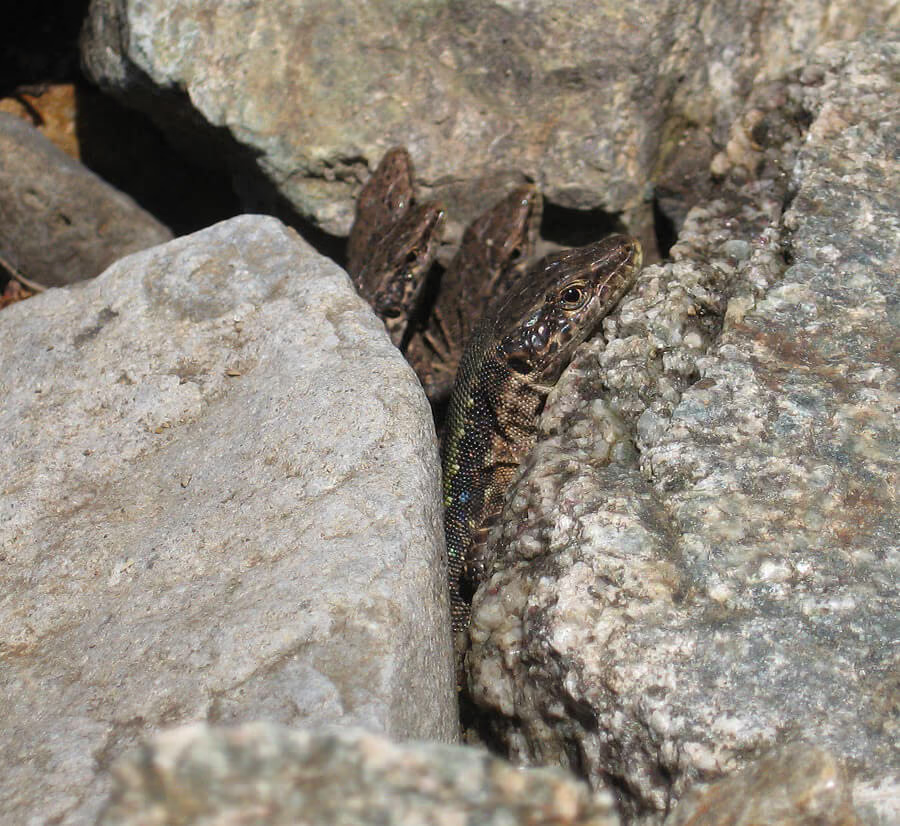
Lizards
Uzzell’s lizard confirmed in Armenia for the first time
Four parthenogenetic Darevskia uzzelli at one site — a species not confirmed in Georgia at this stage.
Read the article
Lizards in Georgia
From Caucasus rock lizards to the glass lizard — profiles, identification traits, and a catalog of the lizards found in Georgia.
29
Lizards in the atlas
5
Families
12
Regions in the atlas
Guide
This page gathers the lizard profiles published in the atlas — Darevskia rock lizards, forest and meadow species, geckos, and the limbless glass lizard. Each entry leads to the full profile for that species.
Rock lizards are often hard to separate. Colour alone is not enough — body traits, place of occurrence, and habitat matter too. If you know where the animal was found, the regional atlas can also help you narrow the species.
Catalog
The list brings together rock lizards, other lacertids, skinks, anguids, and other groups. Each profile includes identification traits, distribution, and additional information.
The atlas includes both rock lizards and the glass lizard — a large limbless lizard often mistaken for a snake.
The Caucasus is home to many Darevskia species, and telling them apart is often difficult. Do not rely only on colour — use the place of occurrence and the identification traits described in the profile.
This section also gathers non-Darevskia species, including other lacertids, skinks, geckos, anguids, and other lizards confirmed in Georgia.
Other categories
Each category gathers the relevant species on one guide page, where you can continue to a specific lizard’s full profile.
FAQ
Short answers — depth lives on species pages.
The atlas gathers lizard profiles supported by sources for Georgia. The rock-lizard genus Darevskia is especially diverse in the Caucasus, so it has an important place in the catalog.
The European glass lizard (Pseudopus apodus) is a large, strongly elongated limbless lizard, not a snake. A separate guide also helps distinguish it from the slow worm and similar snakes.
Many Darevskia species look very similar. For identification, consider the region where it was found, the habitat, and the traits described in the species profile — colour alone is not reliable.
Georgia’s lizards occur in many environments — rocky places, dry slopes, forest edges, meadows, and other habitats. Regional pages help show which species are confirmed from a specific place.
No. The Georgian lizards presented in the atlas are not venomous to people. You may also see a Caspian gecko on building walls — it is harmless and does not need to be killed. Important venom risk in Georgia concerns certain snakes, not lizards.
Next step
Open a species or compare regional lists. Atlas filters help you pick the right group first.
News
Lizards
Four parthenogenetic Darevskia uzzelli at one site — a species not confirmed in Georgia at this stage.
Read the article
Lizards
The paper divides species recorded in Georgia into confirmed and candidate taxa — this is not a list of new discoveries.
Read the article