


Region
Species recorded in Tbilisi
In Tbilisi, reptiles mainly occur in valleys around the city, parks, green areas, and riverside habitats, not in central urban districts. Atlas records from Tbilisi and its surroundings include Levantine viper, nose-horned viper, several ratsnakes and racers, grass and dice snakes, glass lizard, and other species. Encounters inside the city are rare but possible. If a snake bites someone, call 112 immediately.
The atlas has 48 species profiles for Tbilisi: 13 snakes, 13 birds, 6 lizards, 5 amphibians, 4 turtles, 2 scorpions, 2 spiders, 2 insects, and 1 mammal. Reptiles make up 23 of them, amphibians 5. The region’s main habitats: Suburban valleys; Parks and green areas; Riverside habitats.
5 listed species have a high or moderate risk level for people: Levantine viper (Macrovipera lebetinus), Nose-horned viper (Vipera ammodytes), Mediterranean black widow (Latrodectus tredecimguttatus), Mottled scorpion (Mesobuthus eupeus), and Caucasian scorpion (Olivierus caucasicus). Keep your distance from any unidentified snake, never try to catch or handle it, and call 112 after a bite.
A species is listed only when it has an atlas profile and a confirmed record names this administrative unit. This is not the full fauna of Tbilisi, so an animal missing here may still live in the region. Related region pages: Kvemo Kartli, Mtskheta — Mtianeti, Shida Kartli, and Kakheti.


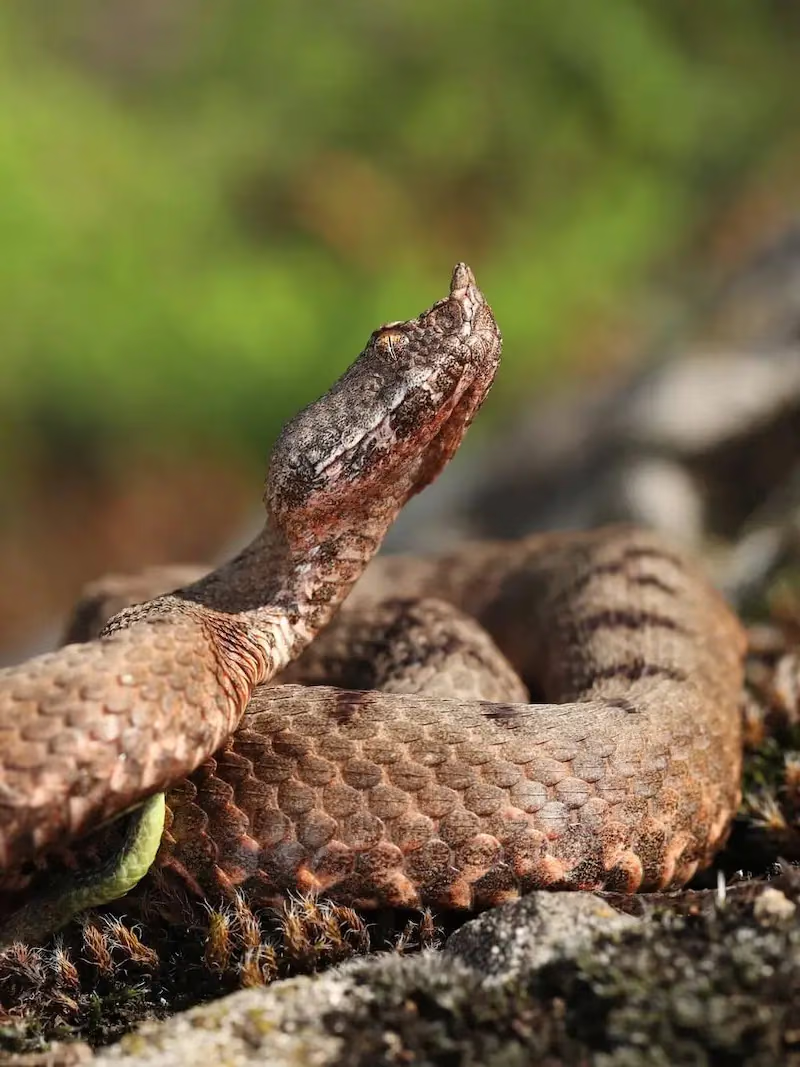


Snakes recorded in Tbilisi in this atlas: Levantine viper (Macrovipera lebetinus), nose-horned viper (Vipera ammodytes transcaucasiana), red-bellied racer, dice snake, grass snake, European cat snake, steppe ratsnake, Dahl’s whip snake, spotted whip snake, javelin sand boa, European blind snake, ring-headed dwarf snake and Transcaucasian ratsnake. The glass lizard (Pseudopus apodus) also lives here, but it is a legless lizard, not a snake. Encounters with these species are more likely in suburbs, valleys, rocky places, and riverside areas.
The Levantine viper and the nose-horned viper are rated high risk in this atlas. The other listed snakes do not pose a venomous danger to people. Keep distance from any unknown snake. If bitten, call 112 immediately. Do not cut the wound, suck out venom, or use a tourniquet.
Reptile encounters are more likely along the Mtkvari, on rocky slopes, in suburban valleys, and in less disturbed green areas than on central city streets. Levantine viper is recorded only rarely around Tbilisi and is more strongly tied to dry habitats of eastern Georgia.
If a snake bites someone, call 112 first. Stay calm and try to move the bitten limb as little as possible. Do not cut the wound, suck out venom, or use a tourniquet. Species identification can wait — calling emergency help matters more.