
Reptiles
How to get snakes out of the yard
There is no reliable method for directly “driving” a snake out of a yard. The most practical approach is to reduce the conditions that attract snakes — hiding places and food. That lowers the chance that a snake will stay in the yard for long.
Why
Why do snakes enter a yard?
No snake-deterrent method is 100% effective. A yard is attractive to snakes mainly because of two things — safe hiding places and food.
01
Shelter
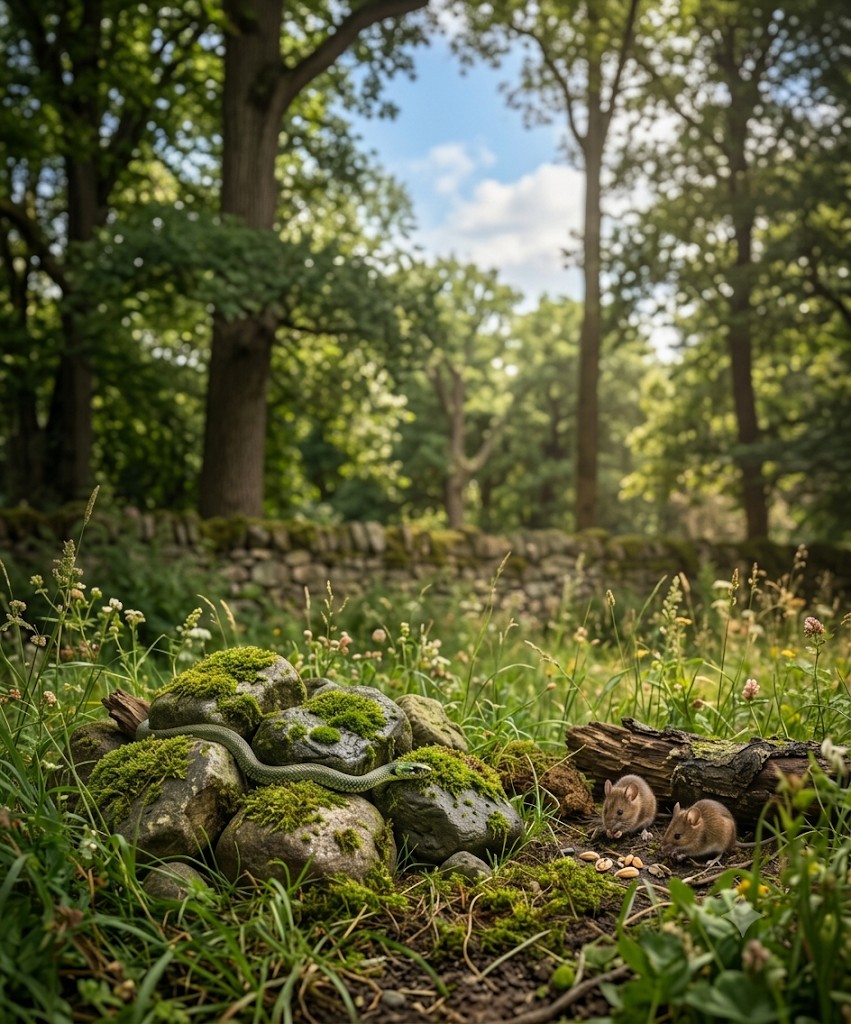
Tall grass, dense shrubs, logs, piles of stones or building materials, and cracks in walls make good hiding places for snakes.
02
Food
Rodents are important food for many snakes. If mice or rats are common in the yard, it is easier for a snake to find food there.
Practice
What can we do to make the yard less attractive to snakes?
The goal is not to catch or kill a snake. The safer, longer-term approach is to reduce hiding places and food sources in the yard.
- 01
Cut tall grass regularly.
Cutting tall grass makes the yard more visible and reduces places where a snake can hide unnoticed.
- 02
Reduce possible hiding places.
Tidy piles of logs, stones, old items, and building materials. Cracks in walls and structures can be safely closed after you are sure no animal is inside. Reducing dense shrubs is especially useful along yard edges. Do not simply fill a burrow or hole if you do not know what animal uses it.
- 03
Control rodents.
If mice or rats appear often in the yard, first address what attracts them — open food, waste, and shelters they can access. As rodents decline, the amount of food available to snakes also declines.
Myths
Which common methods are unreliable?
Many methods are recommended for scaring snakes away, but their effectiveness is often not reliably proven. Time and resources are better spent on yard maintenance and rodent control.
Burning sulfur.
Leaving out milk.
Snake-repellent products and sprays said to scare snakes away.
A snake-repellent device: a sound or vibration unit pushed into the ground.
Indoors
A snake inside the house — what should you do?
A snake indoors follows the same rule as one in the yard: do not catch it and do not kill it. Keep your distance, move children and pets away, and leave it a way out. A repellent product, spray, or device is not a reliable fix. If you need it removed safely, contact the relevant service. If it bites, call 112.
Response
What should you do if a snake is already in the yard?
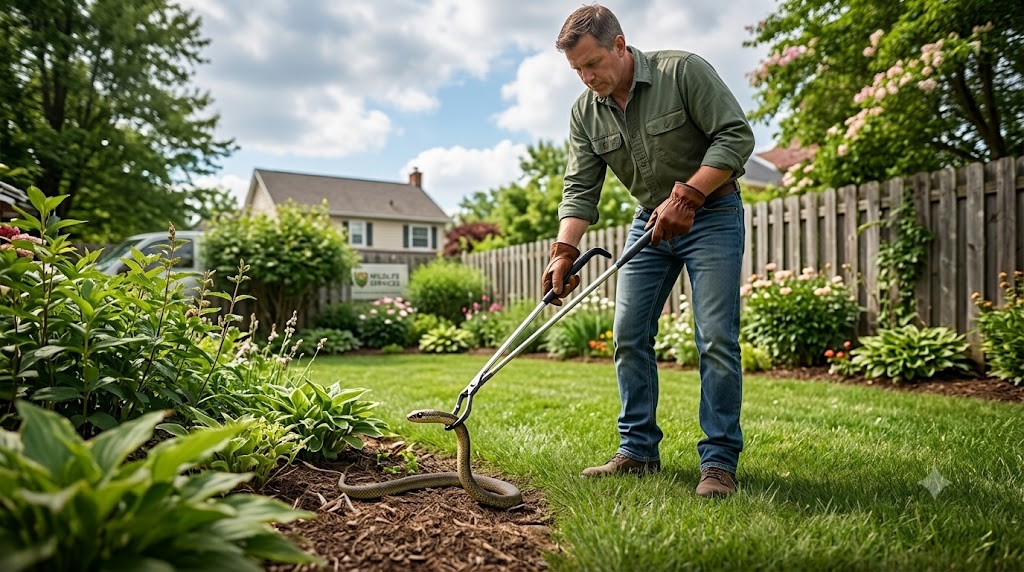
Do not try to catch, kill, or move the snake by hand. That increases bite risk, and many snakes in Georgia are non-venomous. Keep a safe distance, keep children and pets away, and leave the snake an exit. If you need safe removal, contact the appropriate service.
Emergency
If a snake bites someone
If a snake bites you, call 112 immediately. Stay calm and try not to move the bitten limb more than necessary. Do not cut the bite, do not suck it, and do not use a tourniquet.
Safe removal
Animal Monitoring Agency
If you need a snake safely caught or removed from the area, do not try it yourself. Contact the appropriate service.
Related guides
Venomous or not? Then go to the species catalog.
Compare lookalike species, open Georgia’s venomous snakes guide, or view the country’s full snake index.
FAQ
What people ask most
Short answers — practical steps are above; detailed species information is in the atlas.
No. There is no reliable universal snake repellent. The most effective practical approach is to reduce hiding places and food sources. Sprays, sulfur, and similar methods do not deliver reliable results. A snake may still appear by chance in a managed yard, but it will have fewer favorable conditions for staying there.
Snakes often appear in yards because of shelter or food. Tall grass, logs, piles of stones, building materials, and many rodents make the area more favorable for them.
No. Sulfur, milk, and similar “deterrent” methods should not be treated as reliable solutions. It is better to cut tall grass, reduce hiding places, and control rodents.
Do not touch the snake or try to catch it. Watch from a safe distance and leave it an exit. In Tbilisi, for safe snake removal, you can contact the relevant animal monitoring service at 032 272 16 00.
If a snake bites you, call 112 immediately. Stay calm and avoid moving the bitten arm or leg more than necessary. Do not cut the bite, do not try to suck out venom, and do not use a tourniquet.
No. Most snakes in Georgia are non-venomous, and many are often mistakenly considered venomous. If you are not sure of the species, keep a safe distance and do not touch the snake.
Next step
Identify the species — don’t act on fear alone
Yard management lowers risk. If you see a snake, the atlas helps with identification and a safer decision.