

Practice with photos
How to read a snake in a still frame
This page is a quiz, not a field-safety lesson. The question “venomous or harmless?” is answered on the identify guide. Here you get one frame from Georgia, four names, and time to train your eye on the atlas catalog.
Start with the head. A triangular silhouette from above often recalls a viper; an oval head in profile often belongs to a harmless colubrid. Is the neck clearly narrower than the head, or is it one mass? Many harmless snakes flatten the head and “borrow” that cue in a photo. One frame is not a verdict, but it is a start: if head and neck are separate, look toward colubrids first; if the head is broad and the neck short, compare viper profiles.
The pupil, if you can see it. A vertical slit in Georgia often points to a viper; a round pupil often points to a harmless snake. Light changes the cue, and many field photos hide it entirely. If the eye is a blur, do not guess from the pupil alone. Scale sheen is the same trap: a wet grass snake and a dry viper can both look glossy in one crop.
Then the pattern. Zigzag, spots, stripes, a plain back — that is what the quiz asks you to see in a second. The Caucasian viper and the grass snake sit close in photographs: both can show a dark back on a pale ground. The split is often head shape, keeled scales, and whether a yellow collar is visible. The smooth snake and the Transcaucasian viper are the same trap at another angle — small, brown, against forest litter.
Habitat in the background (stream, rock, steppe, leaf litter) helps, but the quiz does not ask where you are standing. Field safety lives on another page: marks, risk, and what not to do. The job here is speed of the eye — so that before you open a species profile you already know what in the frame caught you. Below are six pairs this atlas confuses most often in photographs.
Pairs that confuse a still photo
This is not field diagnosis. It is what the eye mixes in one frame — and where the quiz draws its distractor names.
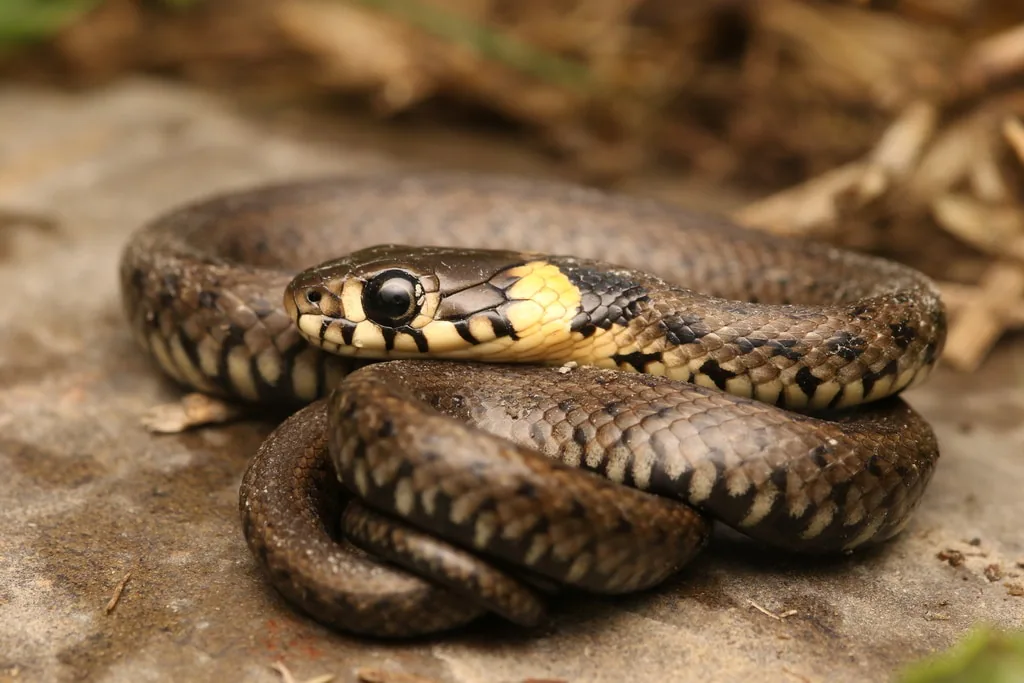
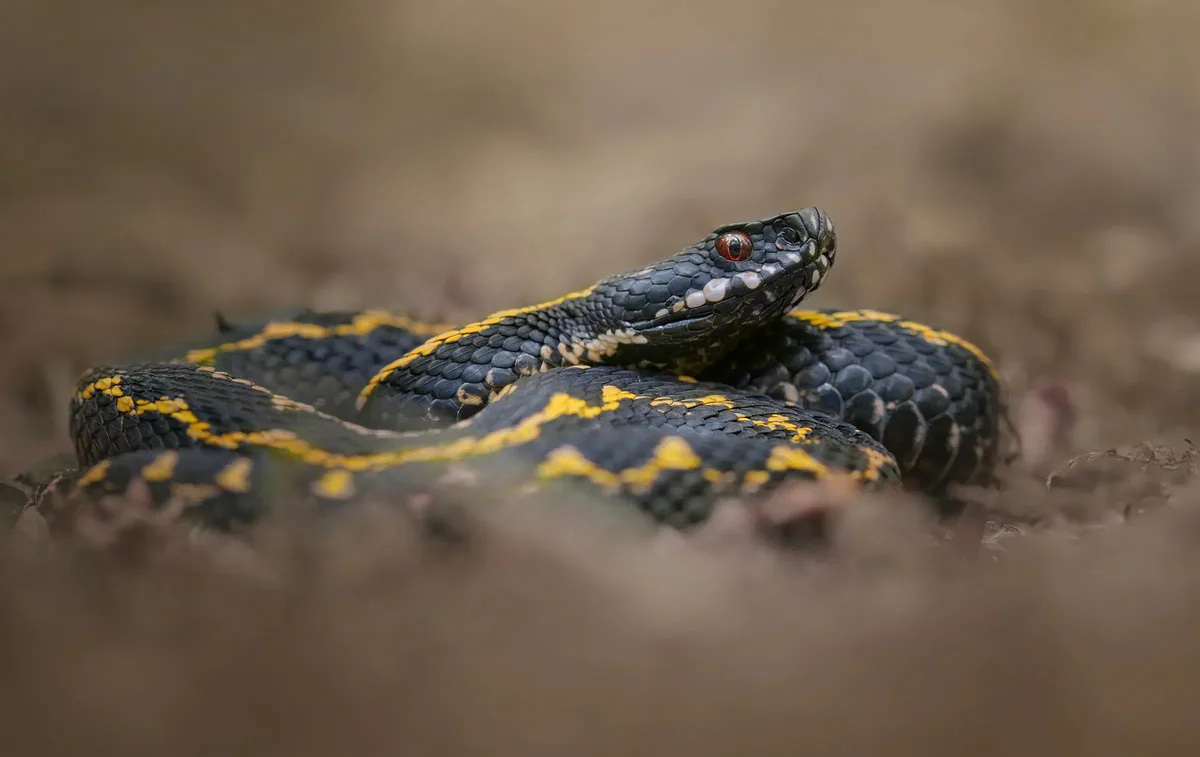
The grass snake often shows a yellow collar and a round pupil; the Caucasian viper a broader head and a vertical pupil when visible. Both are photographed in western forest.
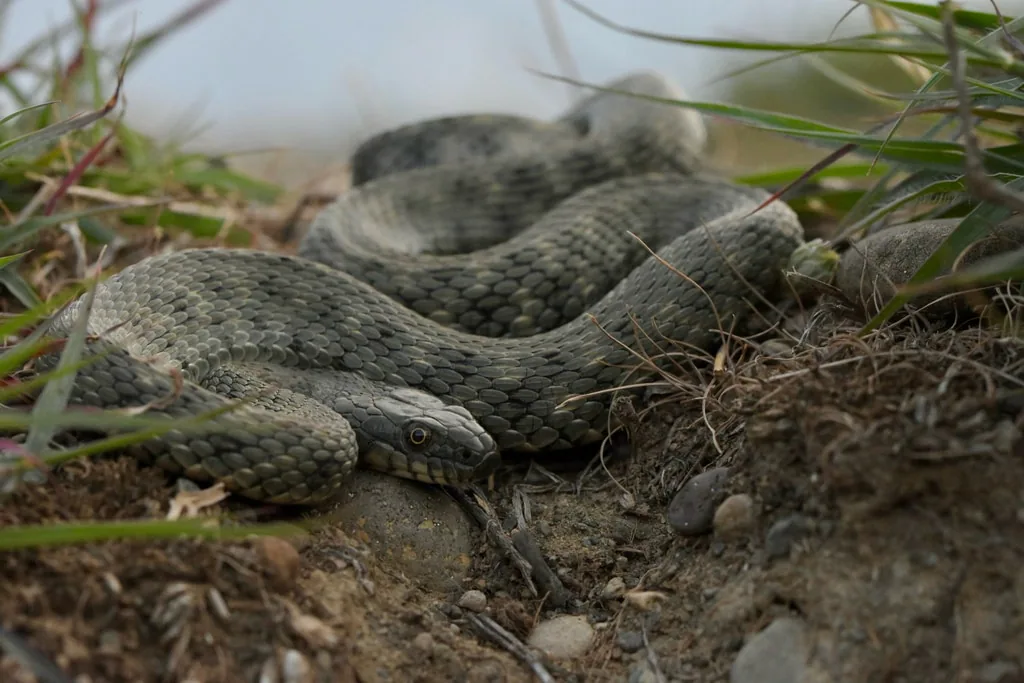
The dice snake is usually narrower-headed, with strongly keeled scales; the same viper is often shorter, with a sharper zigzag. A stream in the background can belong to either.
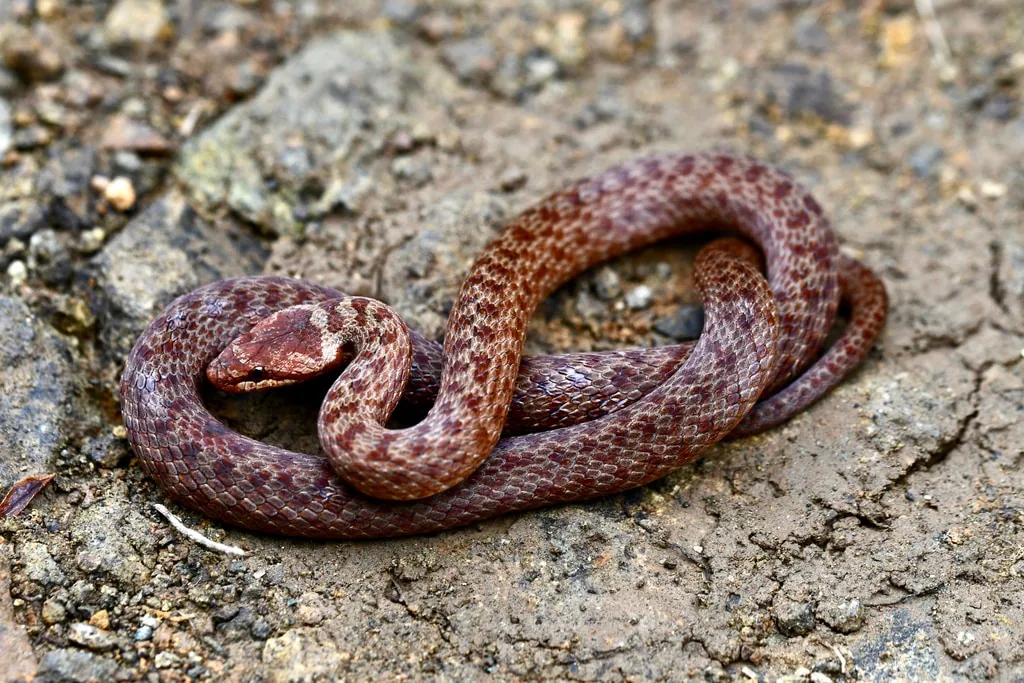
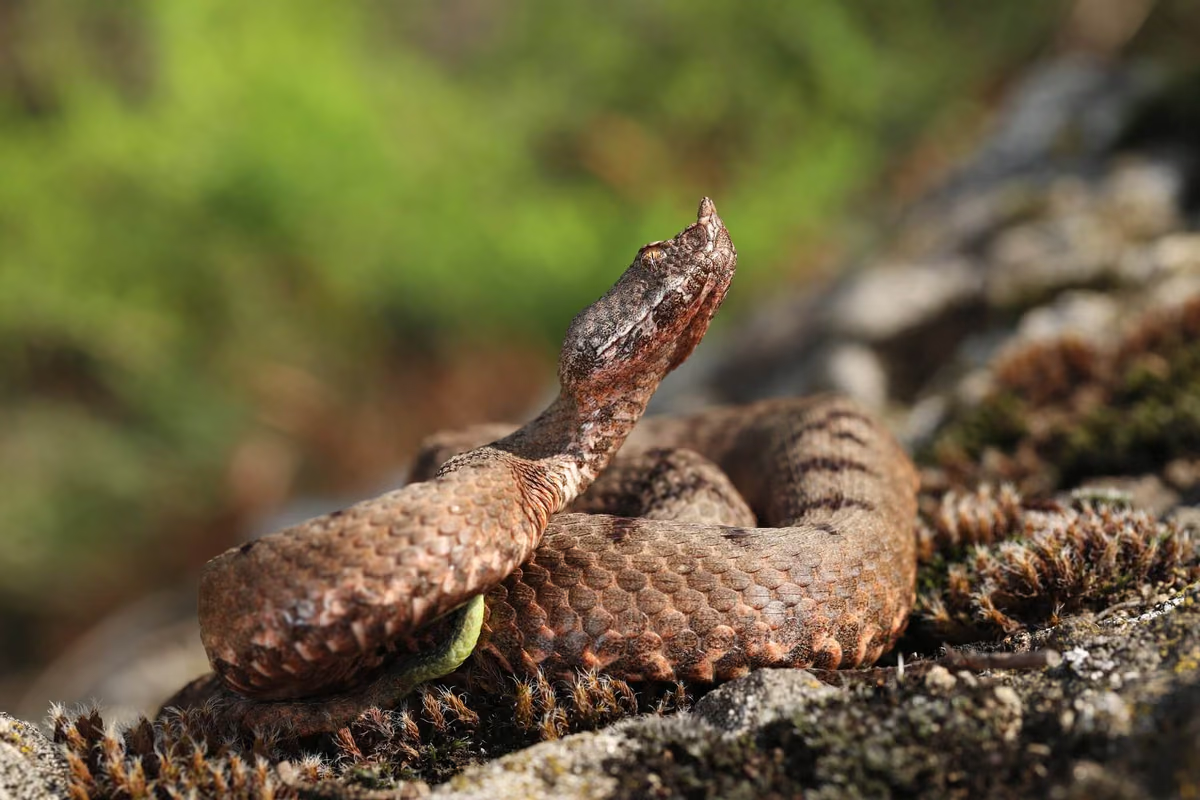
Smooth snake · Nose-horned viper
The smooth snake is small, smooth-scaled, round-headed. The Transcaucasian viper sits in the same browns, but the head is broader and the dorsal pattern breaks differently.
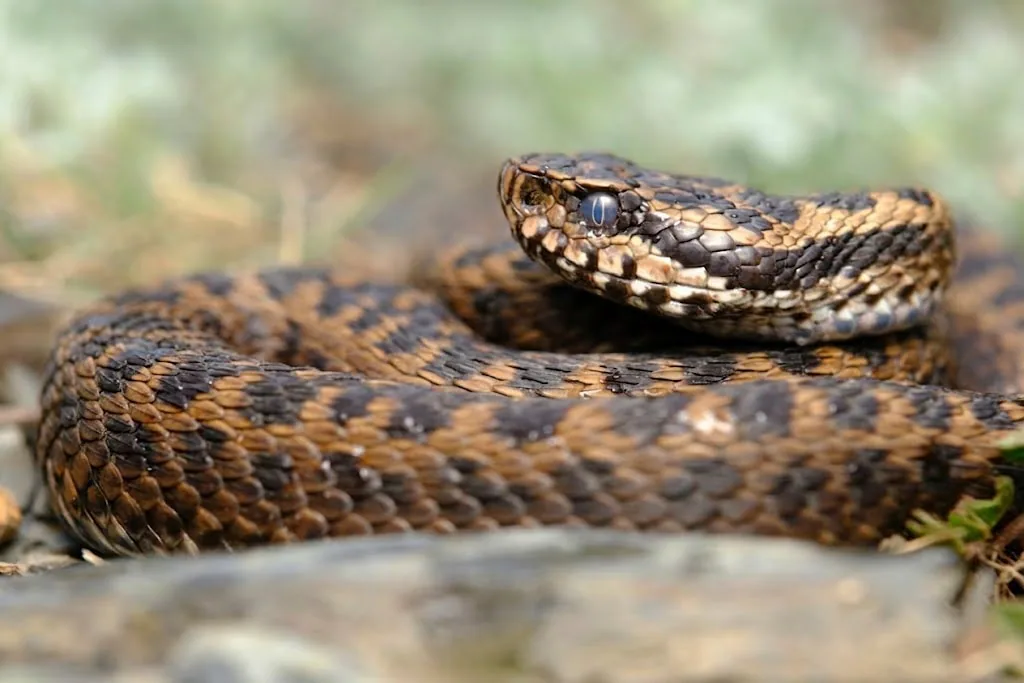
Dinnik’s viper is a high-mountain animal and still matches the smooth snake in size on a photo. Look for head width and the rhythm of the zigzag, not colour alone.
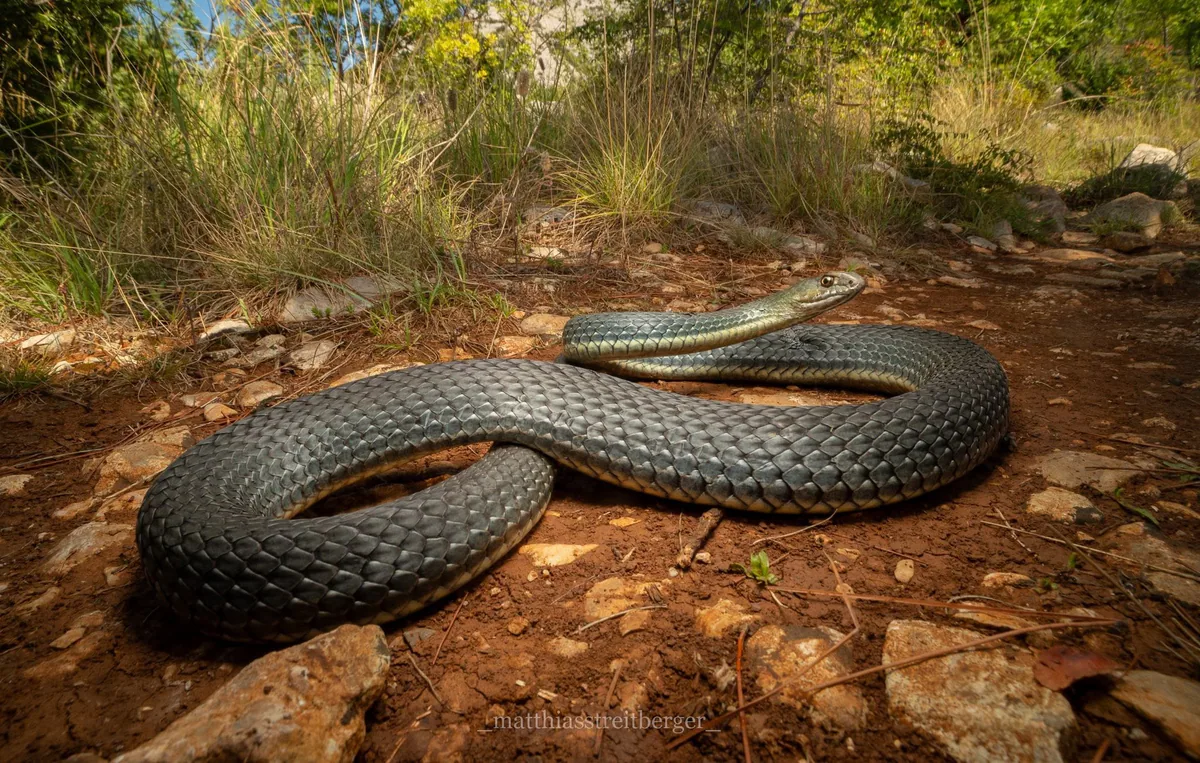
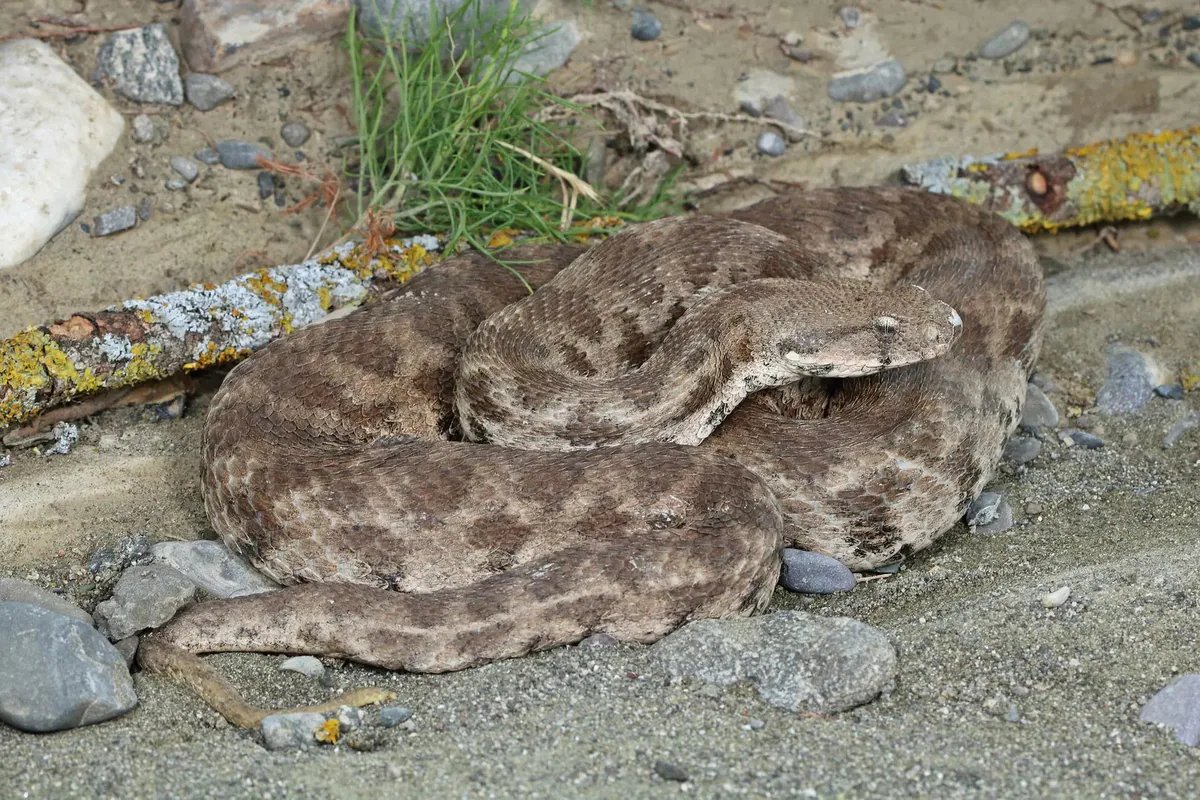
Eastern Montpellier Snake · Levantine viper
The Montpellier snake is long and fast, with a large eye; giurza is heavy, with a blunt snout. Size and head profile still split this pair in a photo, unless the crop is tight.
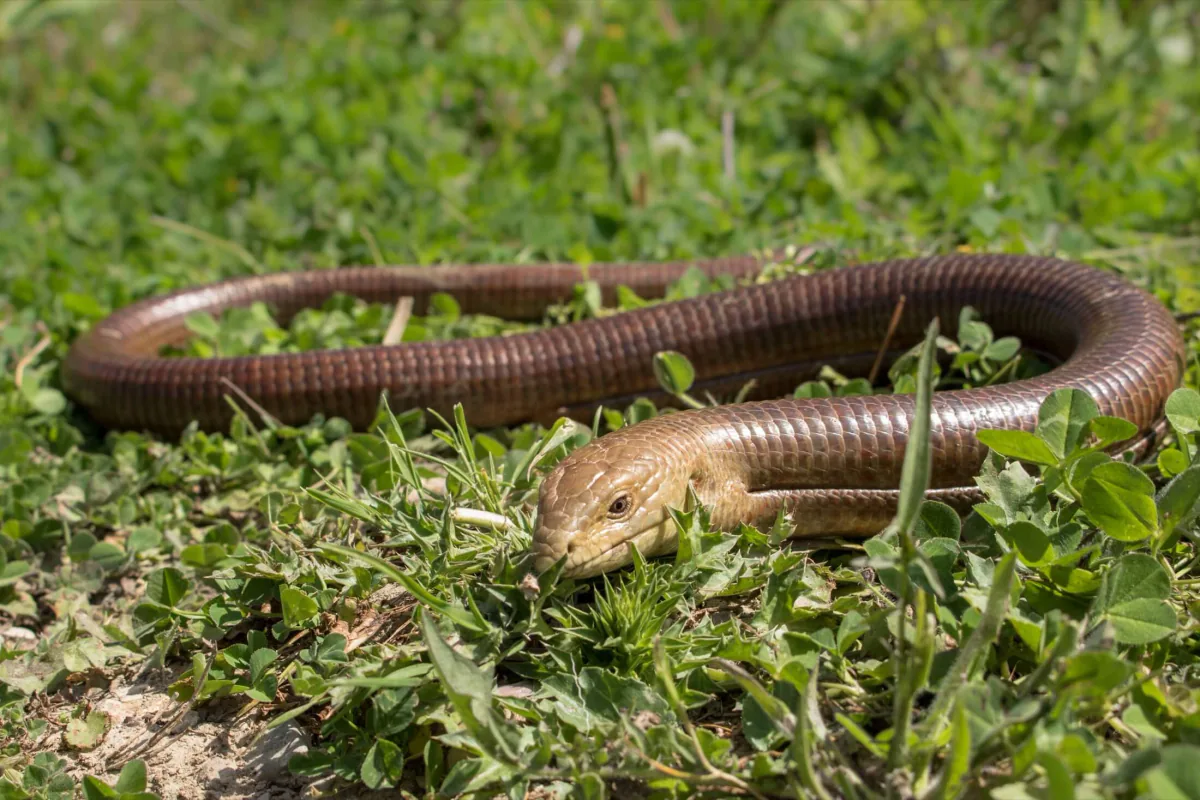
European glass lizard · Grass snake
The glass lizard is a lizard: eyelids and an ear opening. The grass snake has neither. It never appears as a quiz option — it is here so a “snake” in a photo is not always a snake.


Field identification is not this page
If you need venomous-versus-harmless logic in the field, that guide stands alone. This quiz only trains you on catalog photos.
Venomous or not