

Reptiles
Venomous snakes in Georgia (Caucasus)
Georgia’s six medically significant vipers — with identification marks, risk, and regional range. Open a species profile and learn how to act safely during an encounter.
7
Venomous species in the atlas
2
High risk
5
Moderate risk
Quiz
Next: which snake is it?
Venomous vipers appear in the quiz frames too. Ten photos — eye practice; field ID stays on the identify guide.
Catalog
7 species in this guide
This guide brings together 7 venomous snakes with moderate or high risk to humans — six vipers and one rear-fanged species. Each profile includes identification marks, range, and the main safety rules.
Vipers (Viperidae)
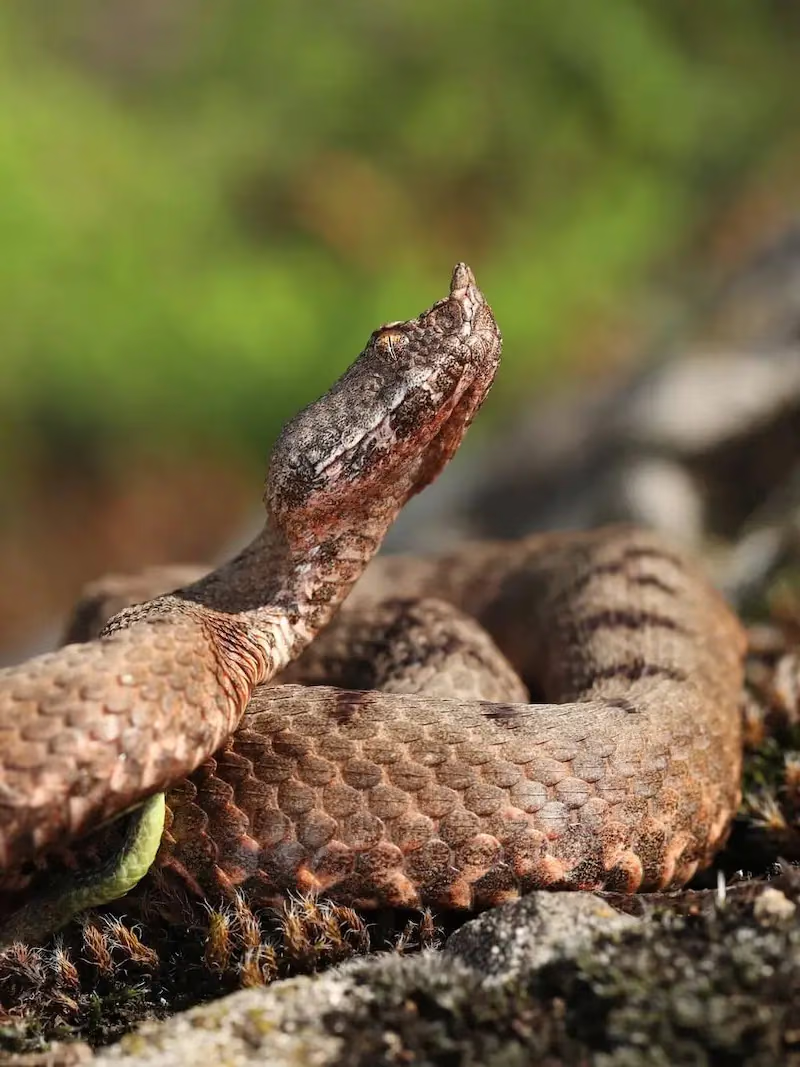
Georgia has six medically significant vipers: the Levantine viper and five species in the genus Vipera. In western Georgia’s humid Colchic forests, look for the Caucasus viper (Vipera kaznakovi), which is treated as moderate risk in this atlas.


Rear-fanged
The eastern Montpellier snake (Malpolon insignitus) is a rear-fanged species and is treated as moderate risk in this atlas. The cat snake (Telescopus fallax) is also rear-fanged, but it is treated as Harmless in this atlas — its venom is mainly used to subdue prey and does not present a significant medical risk to humans. Neither of them is a viper. If bitten by a moderate-risk species, call 112 and read the snakebite guide.


Compare
Vipers vs Montpellier snake
In this atlas, six species in the family Viperidae are medically significant vipers. The Montpellier snake is a rear-fanged snake and is treated as moderate risk — it is often mistaken for the Levantine viper. Use the table for a quick species comparison, then open the relevant profile for detailed identification, range, and safety information.
| Trait | Vipers (Viperidae) | Montpellier snake |
|---|---|---|
| Risk in this atlas | Six species: the Levantine viper and Transcaucasian long-nosed viper are high risk; the Caucasus, Dinnik’s, Darevsky’s, and steppe vipers are moderate risk. | Moderate risk. It is not a viper and not the Levantine viper. |
| Fangs | The venom fangs are in the front of the jaw. | The venom fangs are in the rear of the jaw. |
| Common mix-up | Often confused with grass snakes, racers, and the Montpellier snake. | A large snake found in dry habitats and often mistakenly treated as the Levantine viper. |
| If bitten | Call 112 immediately. Do not cut the bite, suck out venom, or use a tight tourniquet. | Also call 112. Trying to identify the exact snake must not delay medical help. |
Myths
Common errors online and in AI answers
Media, tourist pages, and AI answers often contain incorrect snake counts, outdated scientific names, or species mixed together. The corrections below are based on this atlas and the Tarkhnishvili et al. (2026) checklist.
Myth: Georgia has only three or four venomous snakes.
Reality: In this atlas, six vipers are medically significant for humans. Two rear-fanged species are also shown separately: the Montpellier snake is treated as moderate risk, while the cat snake is treated as Harmless. Short or outdated articles often give an incomplete count of venomous snakes in Georgia.
Myth: The long-nosed viper here is Vipera ammodytes.
Reality: On this site, the Transcaucasian long-nosed viper is presented as Vipera transcaucasiana. Old Vipera ammodytes URLs redirect to that profile and should not be counted as a separate species.
Myth: The Montpellier snake is giurza (Levantine viper).
Reality: Malpolon insignitus is a rear-fanged snake and is treated as moderate risk in this atlas. Macrovipera lebetinus — the Levantine viper — is a front-fanged viper and belongs to the high-risk category. To tell them apart, compare both species profiles.
Myth: A vertical pupil or triangular head always means venomous.
Reality: These marks often point to vipers, but relying on them alone is not reliable. Light, viewing angle, and defensive flattening can change the snake’s appearance and mislead you. Evaluating several species traits and habitat together is much more reliable than identifying by one rule.
Counts
Where the numbers come from
Georgia’s amphibian and reptile counts are based on the Tarkhnishvili et al. (2026) checklist, which lists 12 amphibians and 56 reptiles for Georgia. Candidate taxa remain separate and are not counted among confirmed species.
Safety
What to do if you meet one
Most snakes do not attack people unless they feel threatened. In most cases, staying calm, keeping a safe distance, and giving the snake a way out is enough.
This page is for educational purposes and is not an emergency medical instruction. If a snake bites you, call 112 immediately.
- 01
Do not handle
Do not catch, touch, or try to move a wild snake — bite risk rises exactly in those situations.
- 02
Keep distance
Go around the snake or calmly step back. Keep a safe distance and do not approach even to take a photo.
- 03
Learn the lookalikes
Many harmless snakes look like vipers. Killing them damages the natural ecosystem, so do not touch or kill the snake.
- 04
If bitten — get care
Call 112 immediately. Stay calm and try to move the bitten arm or leg as little as possible. Do not cut the bite and do not apply a tight tourniquet. This information is educational and does not replace a doctor’s advice.
Near home
How to get snakes out of the yard
Preventing snakes from appearing in the yard mostly means reducing hiding places and controlling food sources. Many common “repellent” methods are not effective. Practical steps and safety rules are collected in a separate guide.
Confusion
Species often mistaken for venomous snakes
Grass snakes, smooth snakes, and other fast harmless species are often mistakenly treated as venomous snakes. The cat snake is rear-fanged, but it is treated as Harmless in this atlas and is sometimes mistaken for a viper. The Montpellier snake is also rear-fanged, but it is a moderate-risk species — it is not the Levantine viper. For accurate identification, compare species profiles, external traits, and range.
Related guides
Snake identification and range
To identify a species, use the snake index, regional range maps, and the largest snakes guide. These resources complement the safety guide and help tell similar species apart.
FAQ
What people ask most
Short answers on Georgia’s venomous snakes — full detail lives on each species page.
In this atlas, six vipers in Georgia are treated as medically significant species: the Levantine viper (Macrovipera lebetinus), Transcaucasian long-nosed viper, Caucasus viper, Dinnik’s viper, Darevsky’s viper, and steppe viper. In addition, the eastern Montpellier snake (Malpolon insignitus) is a rear-fanged species and is treated as moderate risk, although it is not a viper. Species counts and status follow the Tarkhnishvili et al. (2026) checklist; confirmed and candidate taxa are discussed separately in the checklist article.
The Levantine viper (Macrovipera lebetinus) is Georgia’s largest high-risk venomous snake. Its bite can cause severe envenoming and may become life-threatening. The Transcaucasian long-nosed viper is also high risk, while the Caucasus, Dinnik’s, Darevsky’s, and steppe vipers are treated as moderate risk in this atlas. The Montpellier snake (Malpolon insignitus) is rear-fanged and is not the Levantine viper — it differs both in fang position and in risk to humans.
The Levantine viper is found mainly in dry, rocky parts of eastern Georgia; the Caucasus viper in western humid Colchic forests and the coastal zone; Dinnik’s viper in the high Greater Caucasus; the Transcaucasian long-nosed viper in the Meskheti–Trialeti and Lesser Caucasus dry zones; Darevsky’s viper in the Javakheti–Erusheti highlands; and the steppe viper on the Javakheti plateau and in eastern steppe habitats. Exact administrative regions and range maps are given in each species profile and in the regional atlas. If a region list is empty on a profile, that means a data gap, not that the species has no range in Georgia.
Vipers often have a vertical pupil and a relatively broad head distinct from the neck, while many harmless snakes have a round pupil. But relying only on these marks is not reliable: light, viewing angle, and defensive flattening can mislead. For example, the Levantine viper and Montpellier snake are often confused. It is more reliable to evaluate several traits together — body shape, color pattern, head structure, habitat, and range — and then compare species profiles.
Call 112 immediately and read the snakebite guide. Stay calm and try to move the bitten arm or leg as little as possible. Do not cut the bite, do not try to suck out venom, and do not use a tight tourniquet or other home “treatment”. This page is for educational purposes and does not replace a doctor’s advice.
Next step
Continue in the atlas — from species to region
The full catalog, harmless species profiles, and regional guides are gathered in one place.