Reptiles

Risk to humans

This atlas uses three labels: harmless, moderate, and high. Here is what each one means — and what to do if you meet the animal.

The scale

A field label, not a medical diagnosis

The badge on a species page is this atlas’s classification of medical risk to people in Georgia. It is not a lab ranking of venom potency, not a measure of how “aggressive” the animal is, and not the same as conservation status.

Educational page — not emergency medical advice. If bitten, call 112.

  1. 01
    High risk

    Serious medical risk

    A bite can cause severe local and systemic illness. Keep distance. If bitten, this is an emergency.

  2. 02
    Moderate risk

    Medically significant

    Venomous, with a lower typical profile than the highest-risk vipers — a bite still needs medical care.

  3. 03
    Harmless

    No medical venom risk

    Most species here. No medically significant venom. Do not pick them up anyway — handling stresses the animal and can confuse lookalikes.

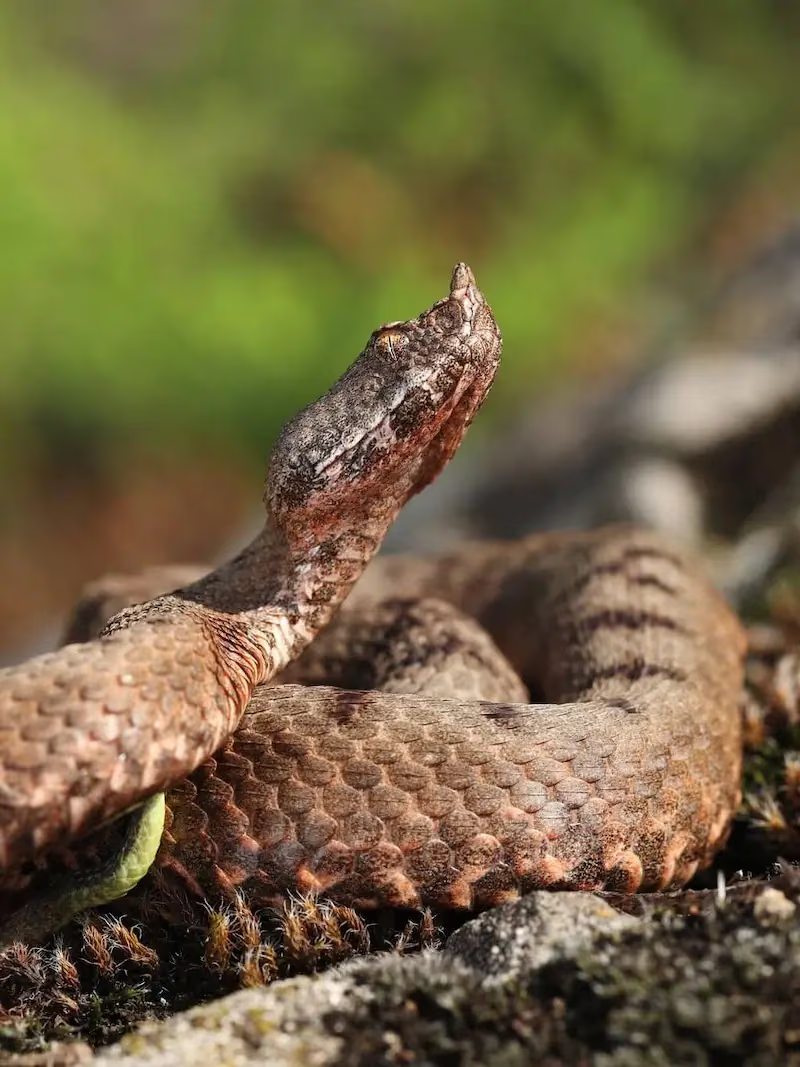
High risk

High risk

In this atlas, high risk means a medically serious bite: local tissue damage and possible systemic effects that need hospital care. These are not animals that hunt people. Most bites happen when someone tries to catch, kill, or move the snake.

  1. What it means

    Two vipers: the Levantine viper (Macrovipera lebetina) — Georgia’s largest venomous snake, with the highest typical venom yield — and the Transcaucasian long-nosed viper (Vipera transcaucasiana). Both can cause a life-threatening bite.

  2. If you meet one

    Do not handle it. Step back or go around. Even for a photo, do not close in. The snake will usually leave if it has a way out.

  3. If bitten

    Call 112 immediately. Stay as still as you can and do not move the bitten limb. Do not cut, suck, or apply a tourniquet. This page does not replace a clinician.

Moderate risk

Moderate risk

Venomous, and a bite is a medical event — but the typical outcome is assessed below the two high-risk vipers. “Moderate” is not “mild”: it still means keep distance and get care after a bite.

  1. What it means

    Four Vipera — Caucasus, Dinnik’s, Darevsky’s, and steppe — plus one rear-fanged species, the eastern Montpellier snake (Malpolon insignitus). The rear-fanged bite is usually milder; it should still be taken seriously.

  2. If you meet one

    The same rule as for high risk: do not pick it up, do not corner it, do not try to move it. Distance settles most encounters.

  3. If bitten

    Call 112. A moderate-risk bite can still cause painful swelling and needs a medical assessment. Do not wait to “see if it gets worse.”

Harmless

Harmless

No medically significant venom. This is the default for lizards, turtles, amphibians, and most snakes in Georgia. Harmless does not mean “pick it up” — and it does not mean the animal never bites if handled.

  1. What it means

    A bite from these species is not a venom emergency. Several harmless snakes flatten the head or hiss so they look like a viper. Identification belongs on the species page, not in the hand.

  2. If you meet one

    Watch it and leave it where it is. Handling stresses the animal, can spread disease in amphibians, and leaves a risk of confusing a viper for a lookalike.

  3. After contact

    Wash your hands. Amphibian skin produces mucus or defensive secretions; moving animals between ponds spreads fungal disease. A hard bite from a large harmless snake is still a wound — clean it, and seek care if it needs stitches.

FAQ

What the labels actually say

Short answers on the three-level scale. Full species detail lives on each profile.

It is this atlas’s label for medical risk to people: harmless, moderate, or high. Clicking it opens this page, scrolled to that level. It is not IUCN status and not a score for how likely the animal is to approach you.

No. Harmless means no medically significant venom. A large colubrid can still bite hard if handled. Several harmless snakes mimic vipers when threatened. Leave the animal where it is.

Malpolon insignitus is rear-fanged, not a viper. Risk to people is usually milder than a viper bite, but it is still medically relevant in this atlas — treat a bite seriously and call 112.

Two: the Levantine viper (Macrovipera lebetina) and the Transcaucasian long-nosed viper (Vipera transcaucasiana). Other vipers in the atlas are moderate. A bite from any of them needs medical care.

Not in this atlas. Venom risk to people applies to certain snakes. Lizards, turtles, and amphibians are labelled harmless. Do not pick them up; wash hands after any contact.

Next step

Open a species — the badge is the same three words

Every profile carries this label. Use it to decide distance, then read identification and range on the page.