Reptiles
Caucasus viper (Vipera kaznakovi) — western Georgia

Caucasus viper

Vipera kaznakovi

A venomous viper of the western Caucasus — a resident of humid Colchic forest and the Black Sea coast.

At a glance

Key facts in one look

Habitat

Colchic forest

Length

approx. 45–60 cm

Conservation

Endangered (EN)

Elevation

0–1,000 m a.s.l.

Family

Viperidae

Overview

What is Caucasus viper

The Caucasus viper (Vipera kaznakovi) is a venomous snake of western Georgia’s humid Colchic forests and the Black Sea coast. It does not occur throughout the country. The type locality is Tsebelda, near Sukhumi (Abkhazia). The range continues into northeastern Turkey and Russia’s Black Sea coast. The 2026 checklist treats it as a candidate in the kaznakovi complex — the boundary with Dinnik’s viper is not yet fully tested with genomic data. Adults are usually about 45–60 cm. In this atlas the risk is moderate. It is Endangered on the IUCN Red List and EN on Georgia’s 2014 Red List.

Last updated

Gallery

Photo: ზაქრო სონგულაშვილი

Photo: Sandro Khakhva

Photo: Sandro Khakhva

Photo: Sandro Khakhva

Photo: მარიამ რომანაძე

Photo: მარიამ რომანაძე

Photo: საბა თოდუა

Photo: Giorgi Elbakidze

Distribution

Where Caucasus viper lives in Georgia

Highlighted regions show where this species has been recorded.

Identification

How to identify Caucasus viper

A small, stout viper with a vertical pupil, keeled scales and often a red-orange ground colour. Habitat — low, humid west — and size are the main cues.

  1. 01

    The body is relatively short and thick. The head is triangular and clearly set off from the neck; there is no nose horn. Adults are usually about 45–60 cm, rarely 65–70 cm. Females are larger than males. In one measured series the largest female was 60 cm and the largest male 47.5 cm.

  2. 02

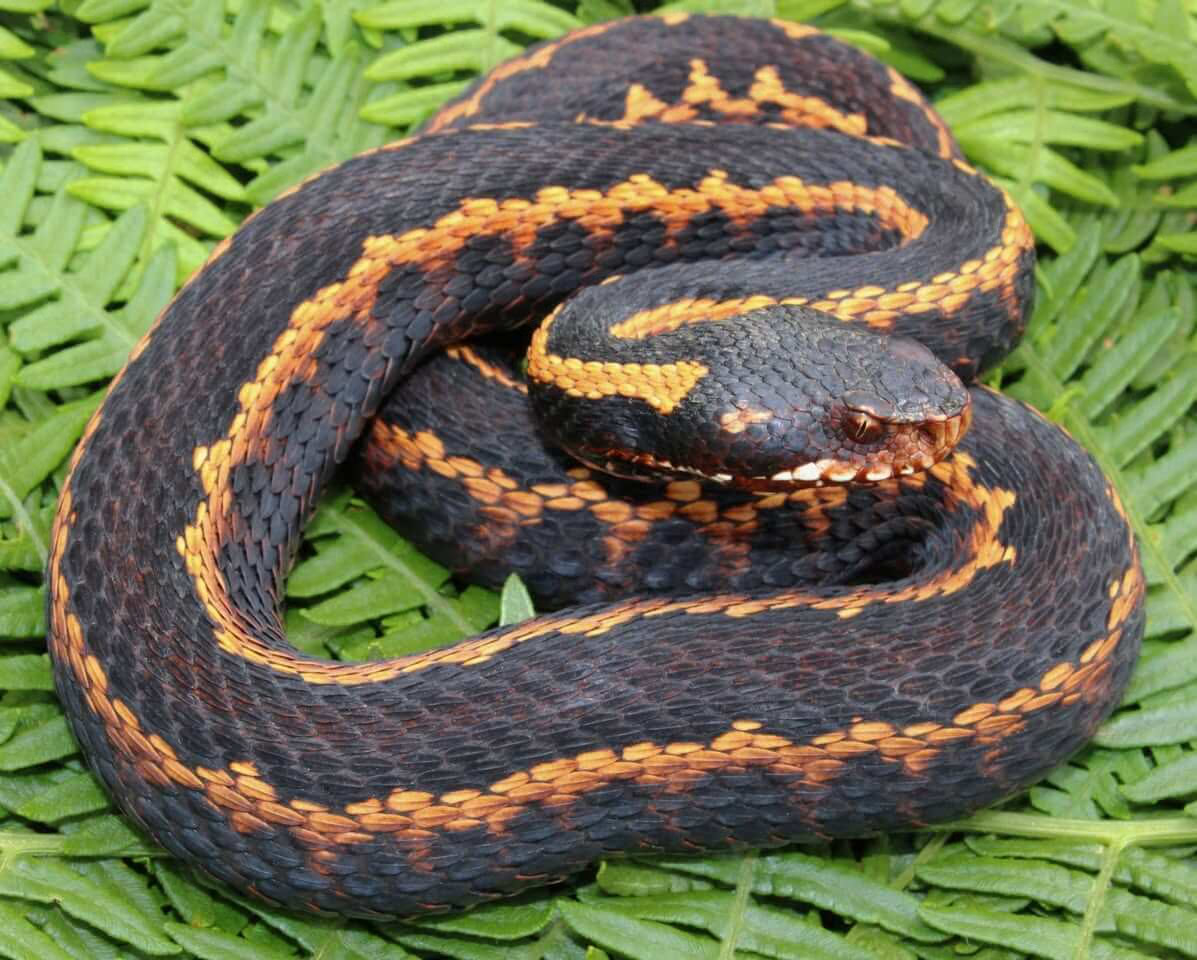
    The pupil is a vertical slit. Dorsal scales are keeled — each has a raised ridge. Ground colour is often brick-red, orange or yellowish brown, with a dark zigzag on the back. Black individuals are also common, but a red or yellow tint usually remains around the mouth.

  3. 03

    The grass snake (Natrix natrix) has a round pupil, a slimmer body and often a yellow collar; it stays near water and is not venomous. The smooth snake (Coronella austriaca) has a round pupil and smooth scales.

  4. 04

    Dinnik’s viper lives in the high mountains (about 1,500–2,800 m), is greyer or browner, and has a narrower head. The Transcaucasian long-nosed viper has a nose horn and is tied to the drier Lesser Caucasus. The Levantine viper is large (about 1–1.5 m) and lives in the dry east.

  5. 05

    It is venomous (moderate risk). A bite needs medical care. Do not pick it up.

Quiz

Next: which snake is it?

Caucasus viper is in the Georgia snake quiz. Ten field photos, four names — eye practice, not field ID.

Start the quiz

Biology

Habitat, diet, behavior, and conservation

Habitat and range

Look for it in humid Colchic forest, at forest edges, in ravines, in beech and chestnut groves, on river terraces and in clearings — not on the dry eastern plains and not in the Greater Caucasus subalpine zone. A Georgian snake-distribution study places it among species of relatively humid climate. This atlas maps Abkhazia, Samegrelo — Zemo Svaneti, Guria, Adjara, Imereti, Racha — Lechkhumi — Kvemo Svaneti, Samtskhe — Javakheti, and Shida Kartli. Colchic records in the west are the most reliable. Snakes from the Borjomi gorge and Baniskhevi were historically assigned to this species. Some studies treat vipers of the left-bank middle Kura as a separate lineage; the 2026 checklist links the forest form of central Georgia to V. dinniki tuniyevi. The Shida Kartli and Borjomi map marks should not be read as confirmed typical Colchic kaznakovi. Elevation is mainly from sea level to about 1,000 m; it rarely enters deep coniferous forest.

Diet

Adults take rodents, lizards and small birds. Juveniles take small lizards and insects, including grasshoppers. It hunts by ambush and subdues prey with venom. There is no separate Georgian diet study on this page; this is species-level data from the western Caucasus.

Behavior

It is secretive. On the coast it often emerges from winter in March; at 600–800 m — in the second half of April or early May. It appears by day, especially in cool weather; in heat it seeks shade. It gives live birth (eggs develop inside the female; the young are born alive). Mating is in spring; in autumn, usually August–September, it bears about 5–10 young. It overwinters on the coast from November, and at higher elevation from late September or early October. This calendar follows western Caucasus literature and has not been measured the same way in every Georgian population. If you meet one, keep your distance and do not pick it up. It defends itself when it feels threatened — it does not hunt people.

Conservation

The 2009 IUCN assessment (2017 errata) lists it as Endangered (B2ab(ii,iii,v)): area of occupancy is under 500 km², the range is fragmented, and the population is declining. Georgia’s 2014 Red List assigns EN, following the global IUCN assessment. Threats include habitat destruction (tourism, urbanisation, agriculture), illegal collection and killing by people. Some coastal populations have already disappeared. In the 2026 checklist it is a candidate: internal boundaries in the complex are not yet fully confirmed with genomic data.

Questions

Frequently asked questions

Short answers to the most important questions about Caucasus viper.

Yes. The type locality is in Abkhazia. It occurs in the humid Colchic west — not throughout the country and not on the dry eastern plains.

In Colchic forest, ravines and forest edges, mainly below 1,000 m. The map marks Abkhazia, Samegrelo — Zemo Svaneti, Guria, Adjara, Imereti and other western regions. The species identity of Borjomi gorge records is disputed.

It is venomous. In this atlas the risk is moderate — lower than the Levantine viper, but a bite still needs medical care. It does not attack unless it feels threatened. Do not pick it up.

Call 112 immediately. Keep the person still and calm; do not cut, suck or apply a tight tourniquet. Treatment is in hospital.

It is a small, stout viper with a vertical pupil, keeled scales and often a red-orange ground colour with a dark zigzag. It has no nose horn. The grass snake has a round pupil.

Adults are usually about 45–60 cm, rarely 65–70 cm. Females are larger than males. It is much shorter than the Levantine viper.

The Caucasus viper lives in low, humid Colchic forest, mainly below 1,000 m, with a broader head and a red-orange ground colour. Dinnik’s viper is a highland species (about 1,500–2,800 m) and is greyer or browner. The 2026 checklist still treats their species boundary as a candidate.

The checklist treats it as a candidate because isolation within the kaznakovi complex is not fully confirmed with genomic data. IUCN lists it as Endangered because the range is narrow, fragmented and declining; Georgia’s Red List assigns EN.