




Lizards
Georgia has 56 reptiles and 12 amphibians — the 2026 checklist
The paper divides species recorded in Georgia into confirmed and candidate taxa — this is not a list of new discoveries.
Read the article
Snakes in Georgia
Snakes in Georgia — a complete guide with the species catalog, risk levels, and a full profile for every snake.
22
Snakes in the atlas
5
Families
7
Venomous species
Guide
This page gathers the snakes of Georgia represented in the atlas — venomous and harmless species, with identification traits, ranges, and links to full profiles.
Some harmless snakes can look like vipers. For more detail, open the venomous snakes guide, the practical guide for finding a snake in the yard, or a specific species profile with photos, identification traits, habitat, and sources.
Catalog
From each entry you can open the species’ full profile, with the common and scientific name, risk level, short overview, and distribution information.
Georgia’s venomous snakes include the Levantine, Dinnik’s, Caucasus, Transcaucasian, Darevsky’s, and steppe vipers. Full information about them is gathered in the separate venomous snakes guide.
Dahl’s whip snake, steppe ratsnake, European cat snake, and Aesculapian snake are harmless snakes that are sometimes confused with venomous species.
Most snakes found in Georgia are not dangerous to humans. Do not rely on colour alone when identifying them — species profiles show appearance traits, habitat, and distribution information.
Other categories
Each category gathers the relevant species on one guide page, where you can continue to a specific snake’s full profile.
FAQ
Short answers — depth lives on species pages.
This atlas gathers snake profiles that are confirmed for Georgia or included in the relevant checklists. The exact number of species can change with taxonomy and newly confirmed data, so this page always presents the current catalog.
Medically significant venomous snakes are gathered in a separate guide. Most snakes in Georgia are harmless, so do not kill an unknown snake by mistake — keep distance and compare its traits with the profiles.
Some vipers have a vertical pupil and a relatively broad, triangular head, but those traits are not enough in every case. For more reliable identification, consider other body traits, habitat, and distribution region.
Georgia’s snakes occur in varied habitats, from forests and high mountain zones to dry eastern landscapes. You can check a specific species’ distribution in its profile and in the regional atlas; one species often occurs in several regions.
Do not handle it, keep distance, and pass aside. If bitten, call 112 and see the bite guide. If a snake is in the yard or you want to reduce visits, see the practical yard guide.
Next step
Pick a species below. Regional maps help when you know the place.
News
Lizards
The paper divides species recorded in Georgia into confirmed and candidate taxa — this is not a list of new discoveries.
Read the article
Snakes
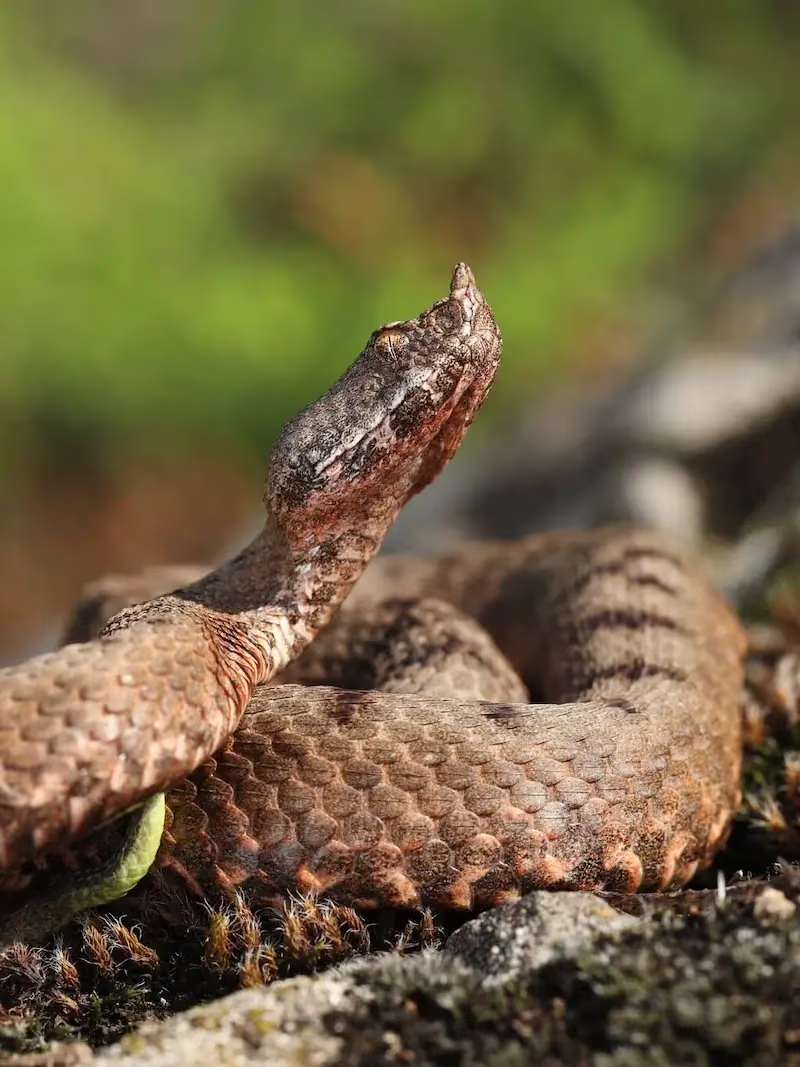
Herpetology Notes describes an adult viper found in the Borjomi valley with intermediate characters. The authors assess it as a hybrid, not a new, third viper species in Georgia.
Read the article