


Darevsky’s viper (Vipera darevskii) is a small venomous snake. In Georgia, it is found in the high mountains of the Lesser Caucasus: on the Javakheti Range, in Erusheti and the Akhaltsikhe Highlands, and on the Abul-Samsari Range and in western Trialeti. It lives on stony, grassy slopes above 2,000 metres. The species is still assessed as facing an extremely high risk of extinction, but that assessment is based on data from when it was known only from a much smaller area. It has since been found in new places.
Identification
How to identify Darevsky's viper
Darevsky’s viper is a small snake that lives high in the mountains. It often has a dark zigzag on its back. Its size, body pattern, and where it lives help identify it, but none of these features alone is enough to determine the species.
Often confused with

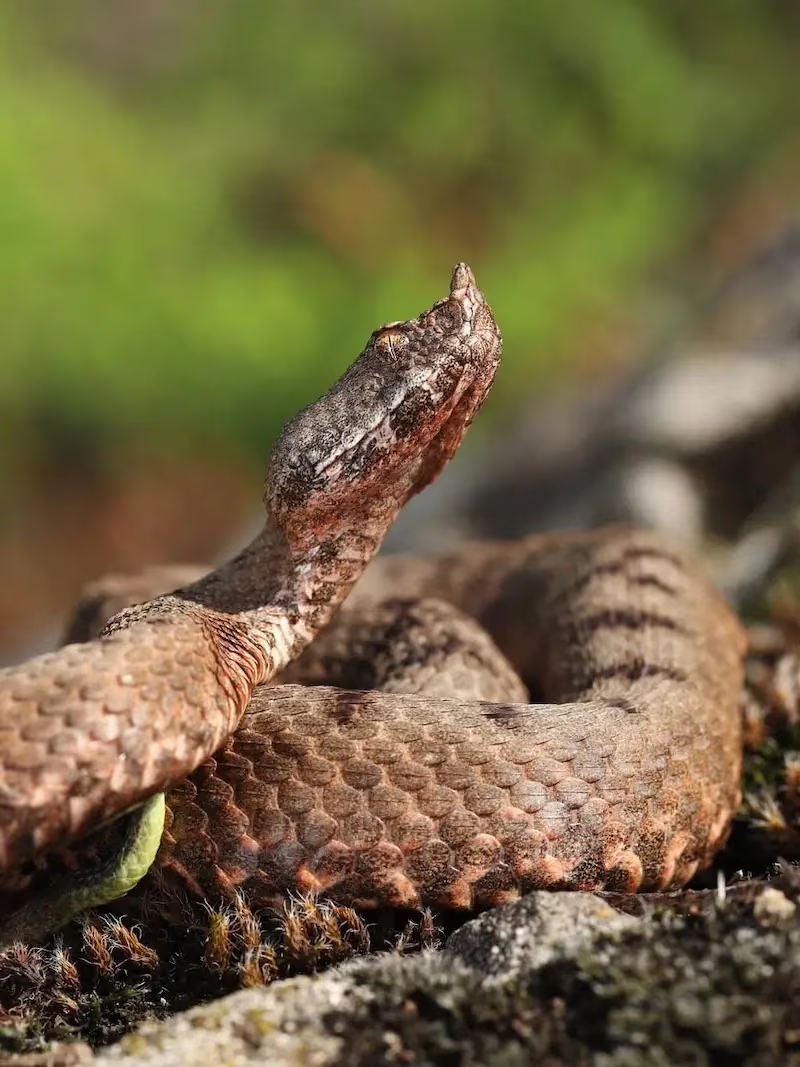
It is a small viper, usually less than 50 cm long. Size alone is not enough to identify it.
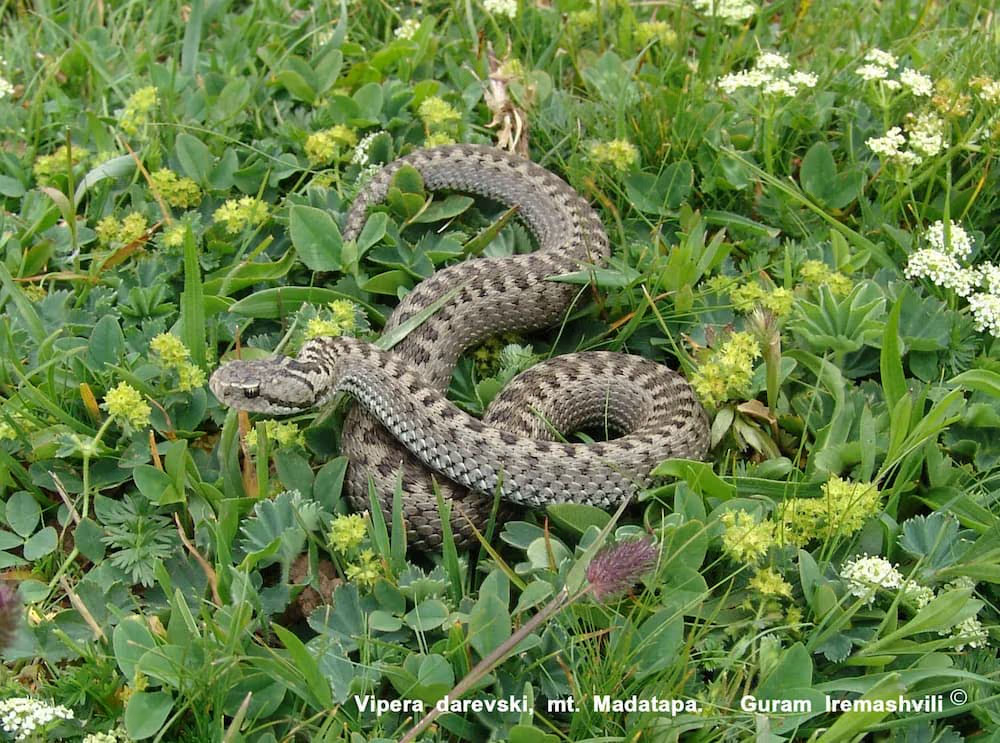
A dark zigzag is visible on its back against a light brown or gray background. Small spots form a row along its sides.
Males often have brighter colors, while females are often more brownish.
In Georgia, it is found in the high mountains of the Lesser Caucasus, including the Abul-Samsari and western Trialeti ranges. Its presence in the Greater Caucasus has not been confirmed.
It is venomous. You cannot tell in advance how serious a bite will be. If bitten, seek medical help immediately.
Gallery
Darevsky's viper in photos
In high mountain meadows, it shelters in gaps between rocks. In Georgia, it has been found among piles of small stones and also among piles of large volcanic rocks at Madatapa and Gumbati. It has also been found in a rocky ravine on the Akhaltsikhe upland. At Madatapa and Gumbati, it has been seen at 2,200–2,600 metres above sea level. This does not mean the species occurs only at those elevations.
Distribution
Where Darevsky's viper distribution is confirmed in Georgia
21 field records2018–20262 regions
Interactive map is loading.
- Field observation
- Several records in one spot
- Confirmed distribution region
| regions | field records | |
|---|---|---|
| Distribution confirmed | ||
| Confirmed distribution region | 18 | |
| Recorded only | ||
| 3 | ||
The Darevsky's viper map uses public iNaturalist observations. Regions are taken from the records-by-region table; only regions with confirmed status count as distribution, while recorded-only regions do not.
Data: Reptiles.ge + iNaturalist · Methodology
Biology
Diet, behavior, and conservation
Diet
Adult vipers eat rock lizards and sometimes small rodents.
Behavior
It is active during the day and shelters among rocks. It gives birth to live young. It spends the winter deep among rocks.
Conservation
The snake has been assessed as facing an extremely high risk of extinction. That assessment is based on old, limited information about where it lives. A study published in 2025 confirmed its presence in other places in Georgia. According to the study, the assessment’s estimate that the snake lives in an area of less than 100 km² is outdated. The assessment has not yet changed. Excessive grazing remains a threat: damage to the grass leaves the snake without shelter and also harms the animals it feeds on.
Questions
Frequently asked questions
Short answers to the most important questions about Darevsky's viper.
It is venomous. You cannot tell in advance how serious a bite will be. If it bites you, call 112 immediately.
In Samtskhe–Javakheti, it has been found on the Javakheti Range, near Madatapa, in Erusheti and on the Akhaltsikhe Upland. More recent reports also place it on the Abul-Samsari Range and in western Trialeti. In Georgia, it is found above 2,000 metres.
Darevsky’s viper is found in the high mountains of the Lesser Caucasus, while Dinnik’s viper is found in the Greater Caucasus. Small size and body markings alone are not enough to identify the species.
The IUCN’s current CR assessment is based on older information, from when only a small area where this species occurs was known. New research shows that its known range is much larger. However, excessive grazing still damages the places where it lives. Its level of threat therefore needs to be reassessed.
Its small size, dark zigzag pattern and the rocky meadows high in the Lesser Caucasus can help you identify it. One feature alone is not enough to tell it apart from similar vipers. Do not approach a snake you do not recognize.
Call 112 immediately and seek medical attention. For more information, see the snakebite guide.
References
Sources
References
Sources
- Tarkhnishvili et al. 2026 — Annotated checklist of Georgia's amphibians and reptiles
- Iankoshvili & Tarkhnishvili 2021 — Distribution of snakes in Georgia
- IUCN Red List
- GBIF
- The Reptile Database
- Mebert et al. 2025 — Darevsky’s viper distribution and conservation, pp. 448–451, fig. 4
- Tuniyev et al. 2014 — Darevsky’s viper records and habitat in Georgia, pp. 282–286
- Geniez & Teynié 2005 — Darevsky’s viper morphology, p. 28
- Aghasyan — Distribution, ecology and conservation of Darevsky’s viper, English summary, PDF p. 29
- WHO — Snakebite envenoming, symptoms and medical attention
- Georgia 112 — Unified emergency number
Species profiles are compiled from peer-reviewed literature and established biodiversity databases, and are reviewed as new taxonomic and conservation data become available.
Related guides


