


Willow warbler
Phylloscopus trochilus


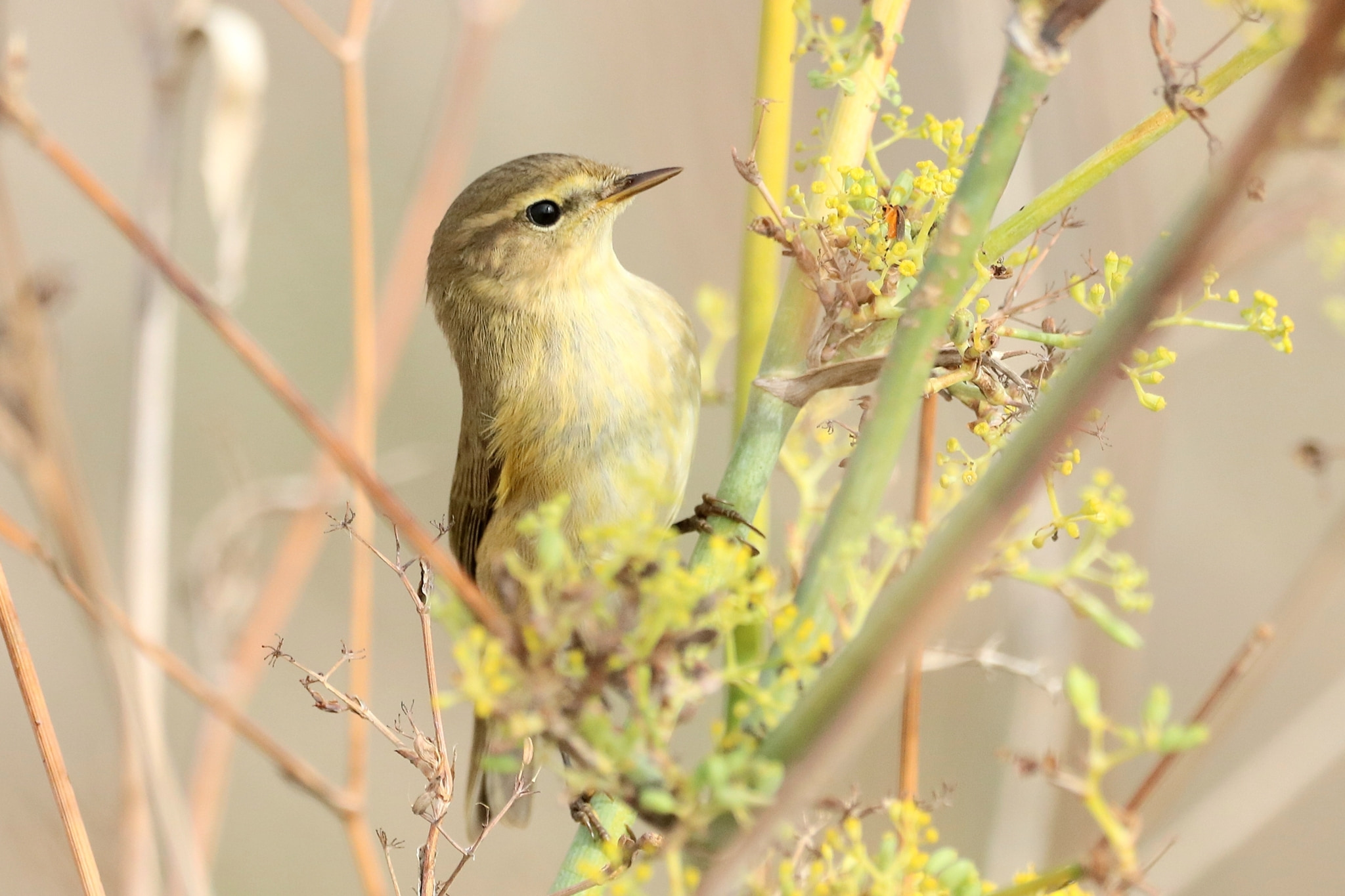
Alexander Abuladze · Tskaltubo, Imereti Georgia field photo
Key facts in one look
- Diet
- Insects and larvae, spiders, berries
- Status in Georgia
- Summer breeder, migrant
- Size
- 11–12.5 cm
- Habitat
- Open young woodland, forest edges, scrub
- Family
- Phylloscopidae
- Protection
- Globally LC, 2024; in Georgia LC, 2021
The willow warbler is small but makes one of the longest migrations of any bird: birds from eastern Siberia fly up to 12,000 km to southern Africa. It weighs 7–15 grams, is greenish brown above and whitish yellow below, with no wing bars. In Georgia it breeds in summer and passes through on migration in spring and autumn. It picks open, young woodland, forest edges and scrub. It looks very like the chiffchaff, so watch the colour of its legs and listen to its voice.
Identification
Willow warbler: how to identify it
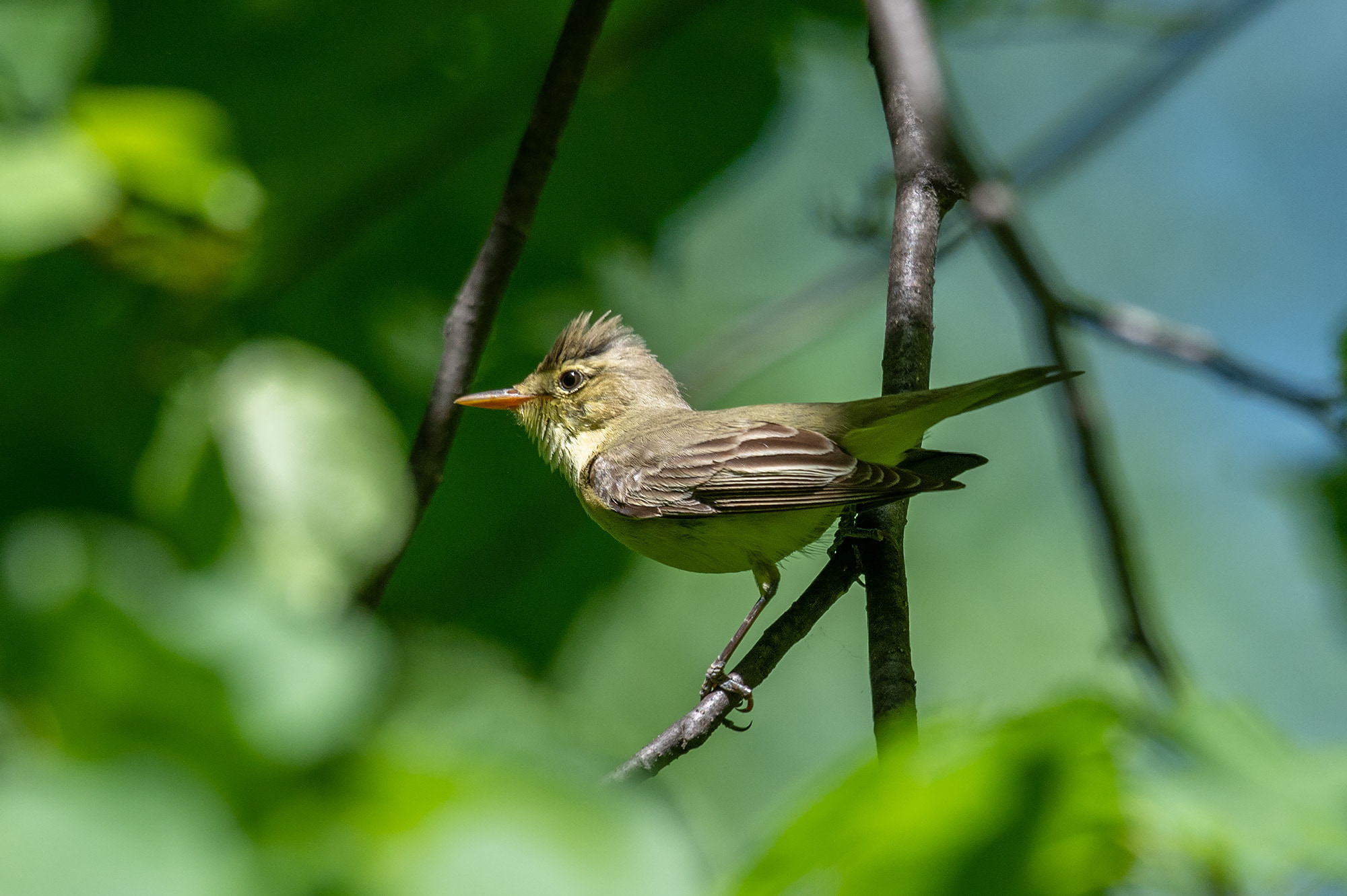
A small leaf warbler, 11–12.5 cm long and 7–15 g. It is greenish brown above, off-white to yellowish below, with no wing bars. A yellowish stripe runs above the eye. It looks very like the chiffchaff.

Length 11–12.5 cm, weight 7–15 g. It has the typical leaf warbler build: a slim, neat body and a thin bill. The folded wing is long and covers almost half of the tail.
It is greenish olive above and whitish below, with a yellowish wash on the throat, breast and sides of the head. A clear yellowish stripe runs above the eye, with a dark stripe through it. There are no pale bars on the wing. Males and females look alike; young birds are yellower below.
The chiffchaff has dark, almost black legs; the willow warbler's are pale and pinkish yellow. The willow warbler's bill is also longer and paler, and its wingtip longer. The wood warbler has longer wings and a brighter yellow breast. If the legs are pale and the wing shows no bars, it is most likely a willow warbler.
Colour
Swatches are illustrative. Do not identify a species by colour alone.



It is a bird of open, young woodland. It picks birch, alder and willow woods, scrubby woodland, forest edges and clearings, and young plantations too. It avoids the depths of the forest and prefers damp places, especially near streams. For the nest it needs dense grass and low shrubs below. In Georgia it breeds in summer and spends the winter in Africa, south of the Sahara.
The willow warbler breeds in Georgia in summer and passes through on migration. Most records match the two migrations, in April and May and in September and October, while June and July have few. Most records come from Adjara, around Batumi, and from Mtskheta-Mtianeti, around Kazbegi. It has also been found in Samtskhe-Javakheti, Kakheti, Tbilisi, Kvemo Kartli, Samegrelo, Abkhazia, Imereti, Shida Kartli and Guria. The oldest record is a museum specimen collected near Mtskheta in 1910.
Data: Reptiles.ge + iNaturalist · Methodology
- Field observation
- Several records in one spot
- Photo record
- Region with records
It eats insects and their larvae, as well as spiders, snails, berries and fruit. Its diet changes with the season and the place: it switches easily to whatever food is plentiful at the time. Among its close relatives it takes medium-sized prey: the chiffchaff catches smaller invertebrates, the wood warbler larger ones. It forages in the tree tops, hopping along branches and making short flights.
It is a strict long-distance migrant: from October to March it winters in Africa, from mid-March to mid-May it returns to the breeding grounds, and in August–October it heads south again. Males start singing on the way, before they have taken a territory. They sing from the tree tops, switching between song and foraging. The song is a soft, melodious whistle of about 3 seconds: it starts loud, then falls in pitch and fades away. The call is a two-syllable "hoo-eet". It hides the nest on or near the ground, in dense grass and low plants. The nest is a dome of moss and grass with a side entrance, lined with feathers. The female lays 4–7 eggs and incubates for about two weeks, and the chicks stay in the nest for up to two weeks. The breeding season runs from late April to August. It usually raises one brood a year, rarely two.
Globally the willow warbler's risk of extinction is rated low (LC, 2024). It is a very common, widespread bird. In Scandinavia it is the commonest bird of all, with up to 1,100 pairs per square kilometre, and Sweden and Finland together hold 24 million pairs. In England, though, its numbers have fallen by 70% on average over the last 25 years. In Georgia's national assessment (2021) its risk is also rated low (LC), and its numbers are stable. The list of the birds of Georgia gives it as a breeder and a migrant.
Alexander Abuladze · nixey · John Bruin · Axel Gosseries · maghielv · Attila Steiner · Nikita Tiunov · hasenzahn
Related guides
Continue with related pages
Yes. It breeds in Georgia in summer and passes through on migration in spring and autumn. It does not spend the winter here: it winters in Africa, south of the Sahara. It picks open, young woodland, forest edges and scrub.
By its legs and its voice. The willow warbler has pale, pinkish-yellow legs, the chiffchaff dark brown to blackish ones. Its bill is longer and paler, and its wingtip longer. The call is a two-syllable "hoo-eet", the chiffchaff's is closer to one syllable. If the bird is singing, telling them apart by voice is easiest.
Insects and their larvae, spiders, snails, as well as berries and fruit. Among its close relatives it takes medium-sized prey. It looks for food in the tree tops, among branches and leaves. Its diet changes with the season.
On or near the ground, in dense grass and low plants. The nest is a dome of moss and grass with a side entrance. It lays 4–7 eggs, and the female incubates for about two weeks. It usually raises one brood a year.
To Africa, south of the Sahara: almost the whole population winters there. It stays in Africa from October to March. Birds from eastern Siberia fly up to 12,000 km to southern Africa. That is one of the longest migrations of any bird its size.
No, it is harmless to people. Globally its risk of extinction is low (LC, 2024). In Georgia's national assessment (2021) its risk is also low (LC), and its numbers are stable. Do not catch wild birds.
References
What this profile is based on
Species profiles are compiled from peer-reviewed literature and established biodiversity databases, and are reviewed as new taxonomic and conservation data become available.
Prepared by the Reptiles.ge editorial team from the sources listed here.


