
Icterine warbler
Hippolais icterina
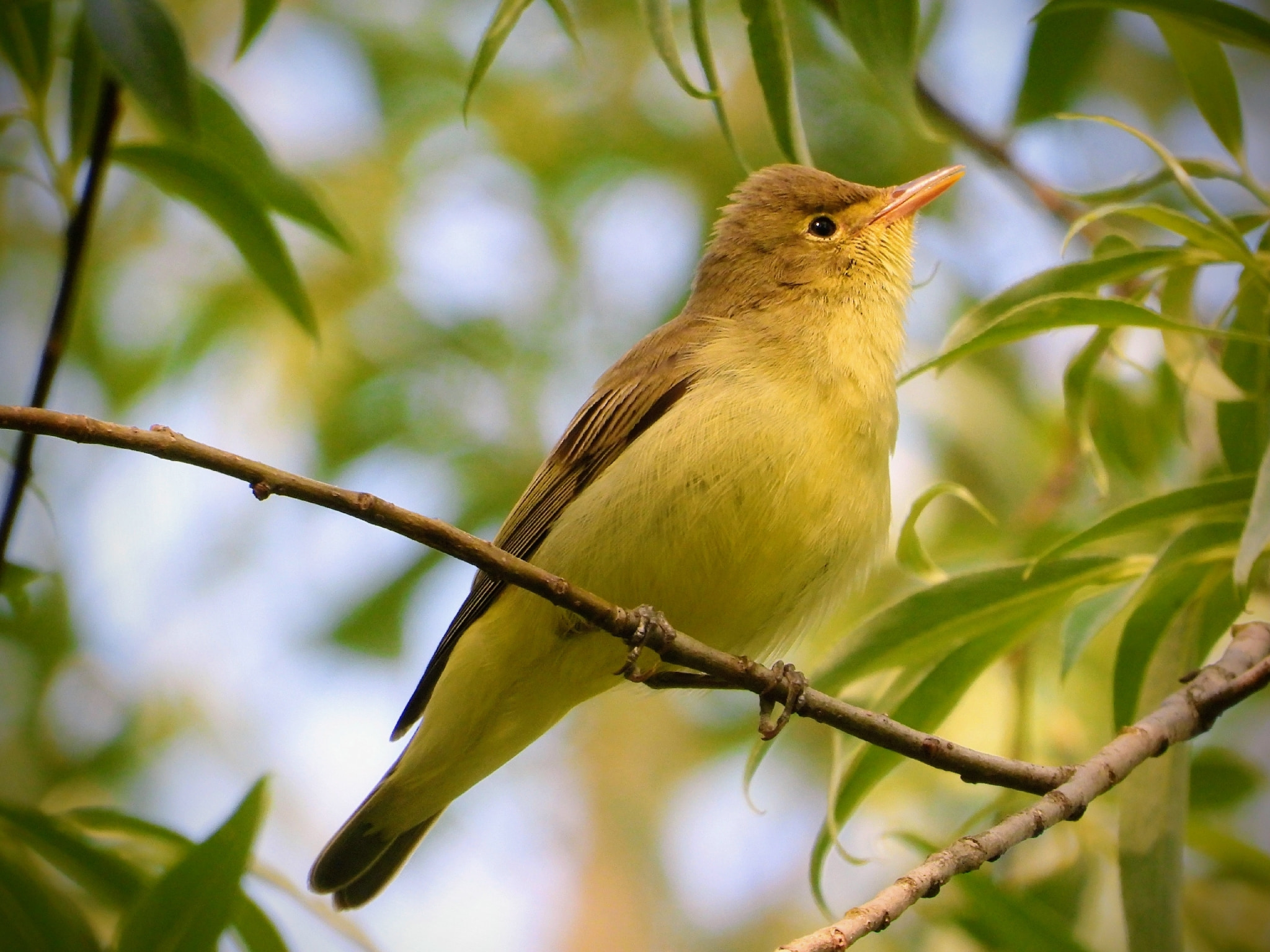
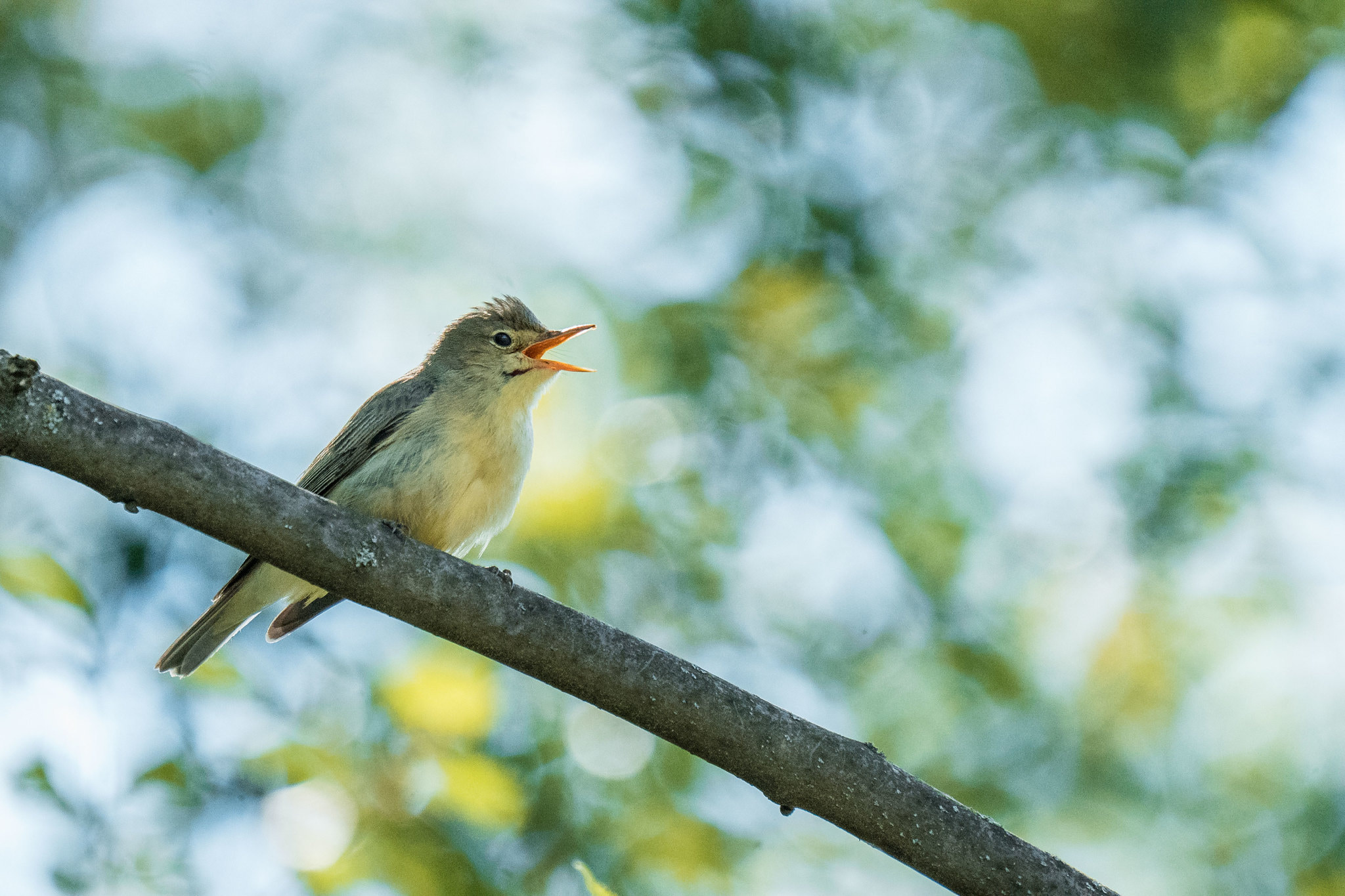
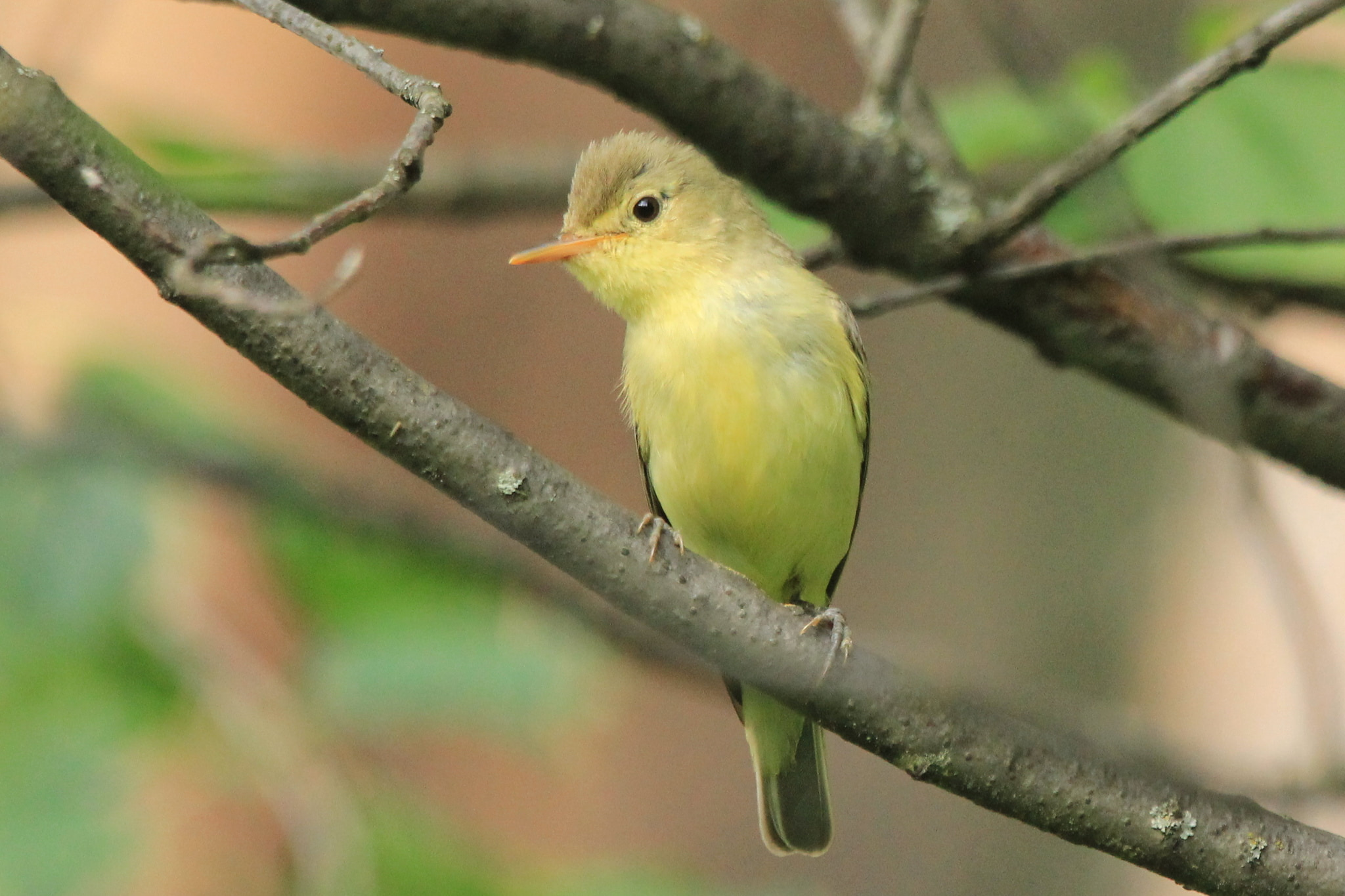
Vladimir Bryukhov · Borsky District
Key facts in one look
- Diet
- Insects and larvae; berries in late summer
- Status in Georgia
- Breeder, migrant
- Size
- 12–13.5 cm
- Habitat
- Woodland edges, well-spaced broad-leaved trees, gardens and parks
- Family
- Acrocephalidae
- Protection
- Globally LC, 2017; in Georgia LC, 2021
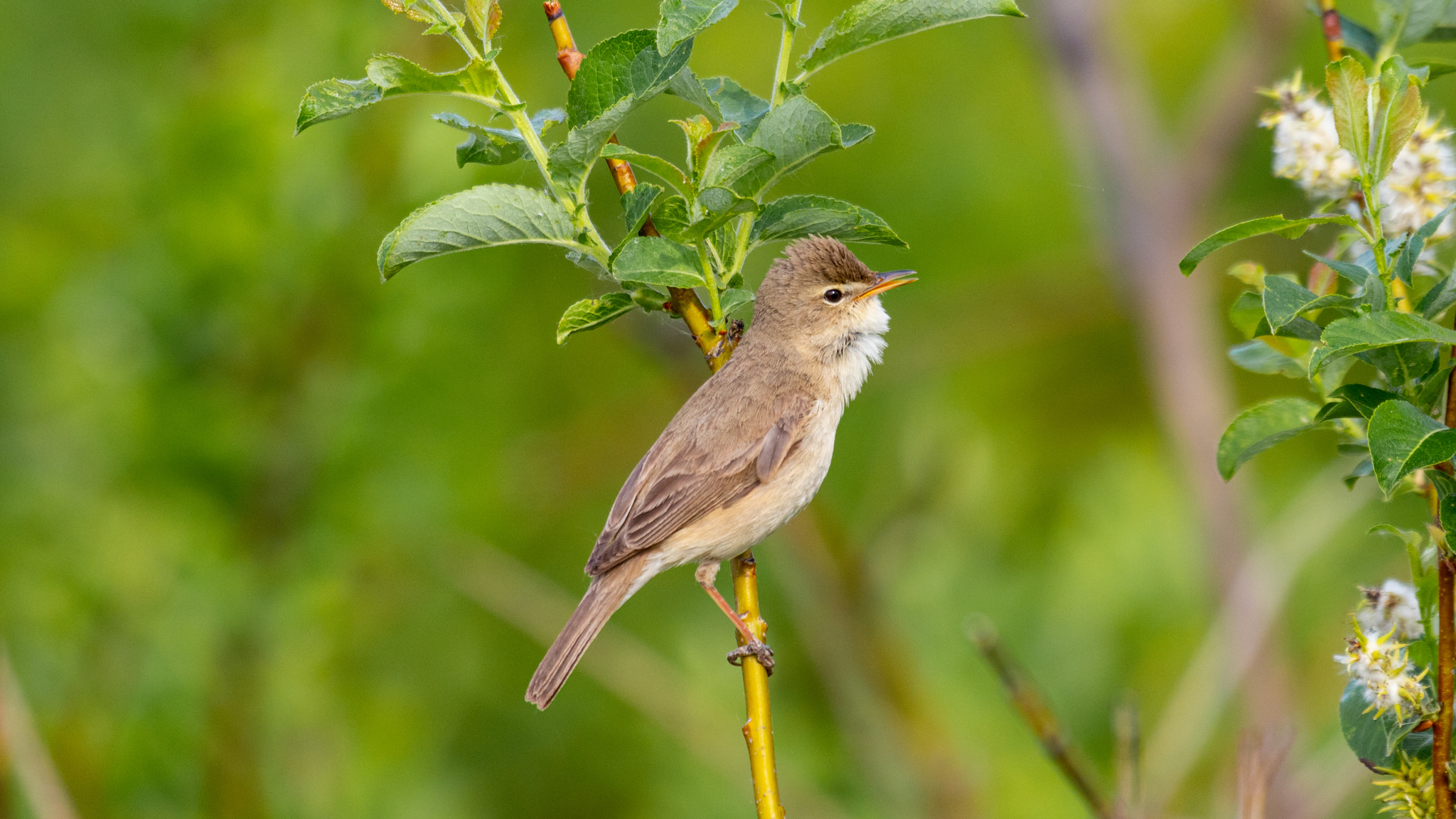
The icterine warbler's song is a fast, nasal babble full of imitations of other birds. It is 12–13.5 cm long, with a big head, a broad-based bill, long wings and a short, square-ended tail. It is greenish-grey above and uniformly pale yellow below, with a pale panel on the folded wing. It chooses woodland edges and well-spaced broad-leaved trees, and also breeds in gardens and parks. In Georgia it breeds and also occurs on migration. The whole population spends the winter south of the Sahara, in Africa.
Identification
Icterine warbler: how to identify it
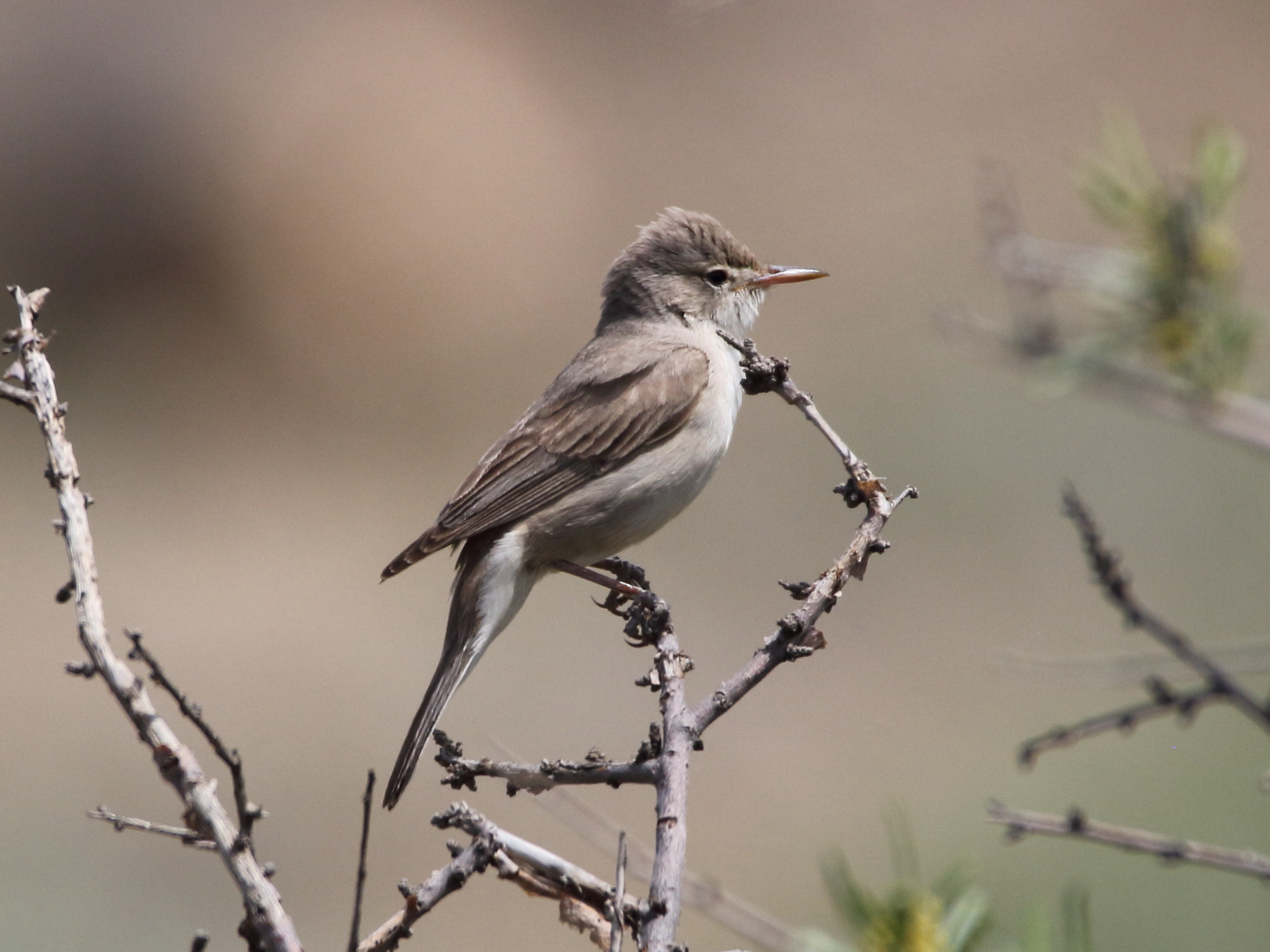
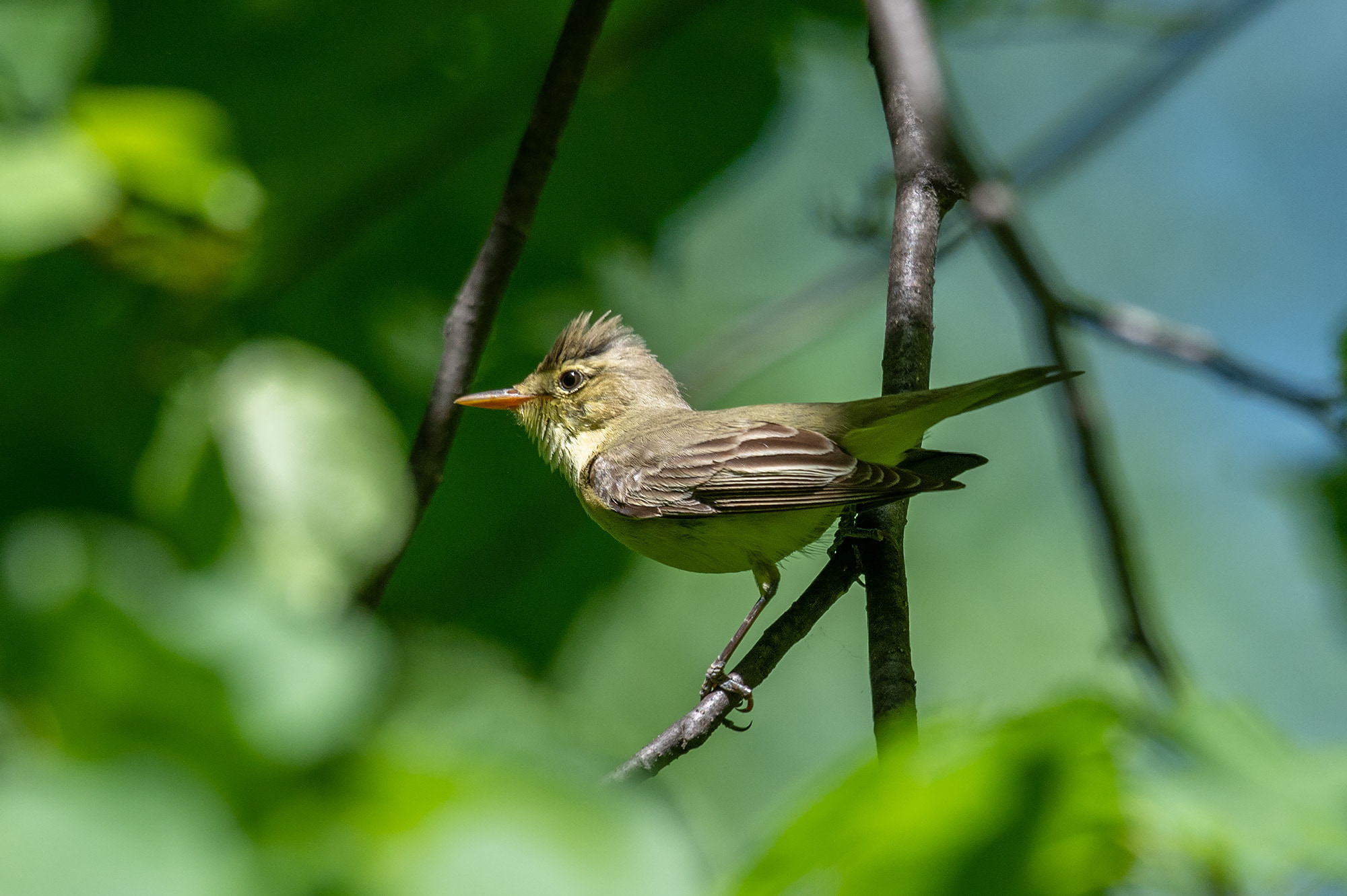
A bird 12–13.5 cm long, with a big head, a broad-based bill, long wings and a short, square-ended tail. It is greenish-grey above and uniformly pale yellow below. A pale panel shows on the folded wing.
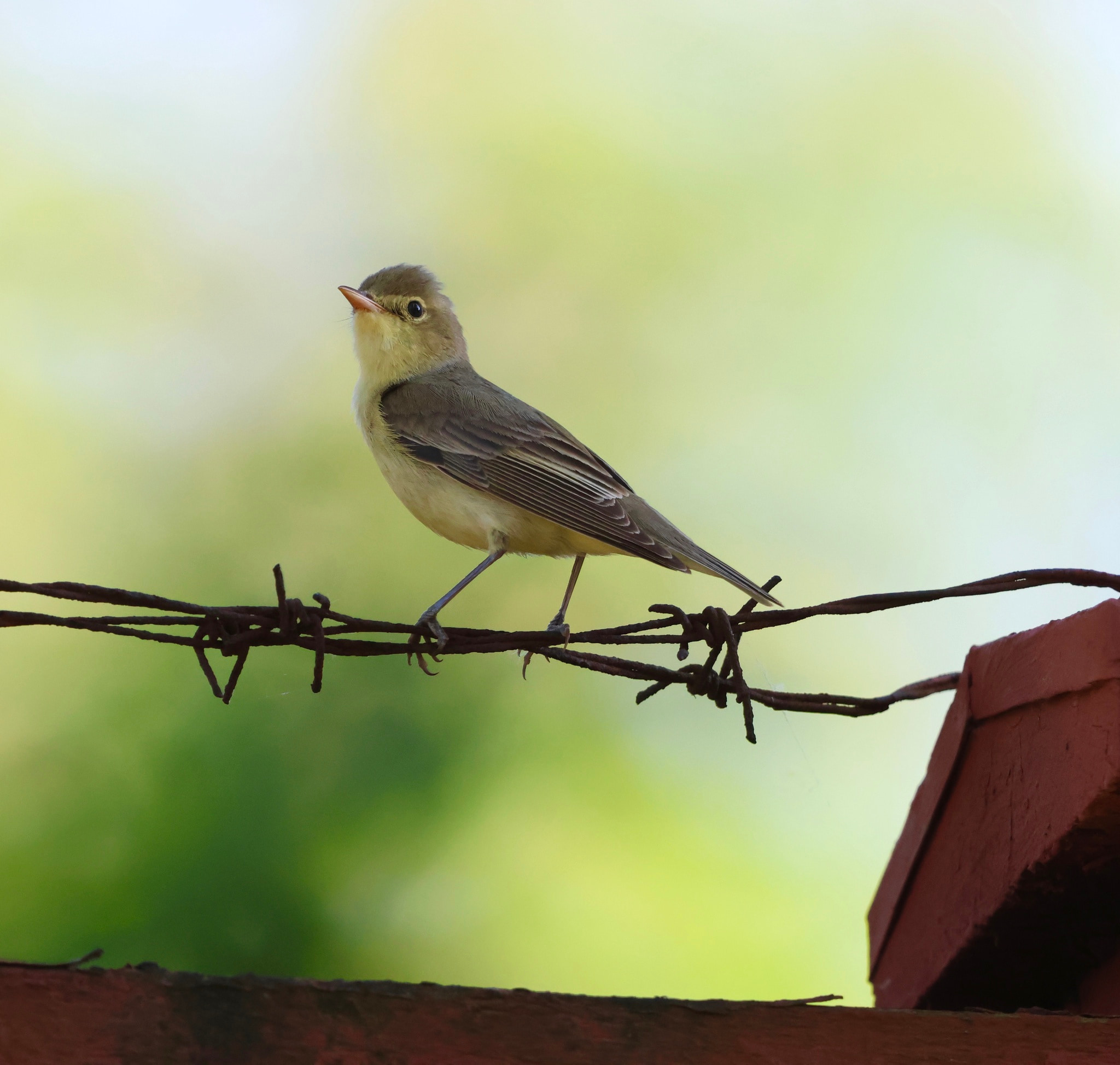
Length 12–13.5 cm. It has a big head, a broad-based, orange-tinged bill, long wings and a short, square-ended tail.
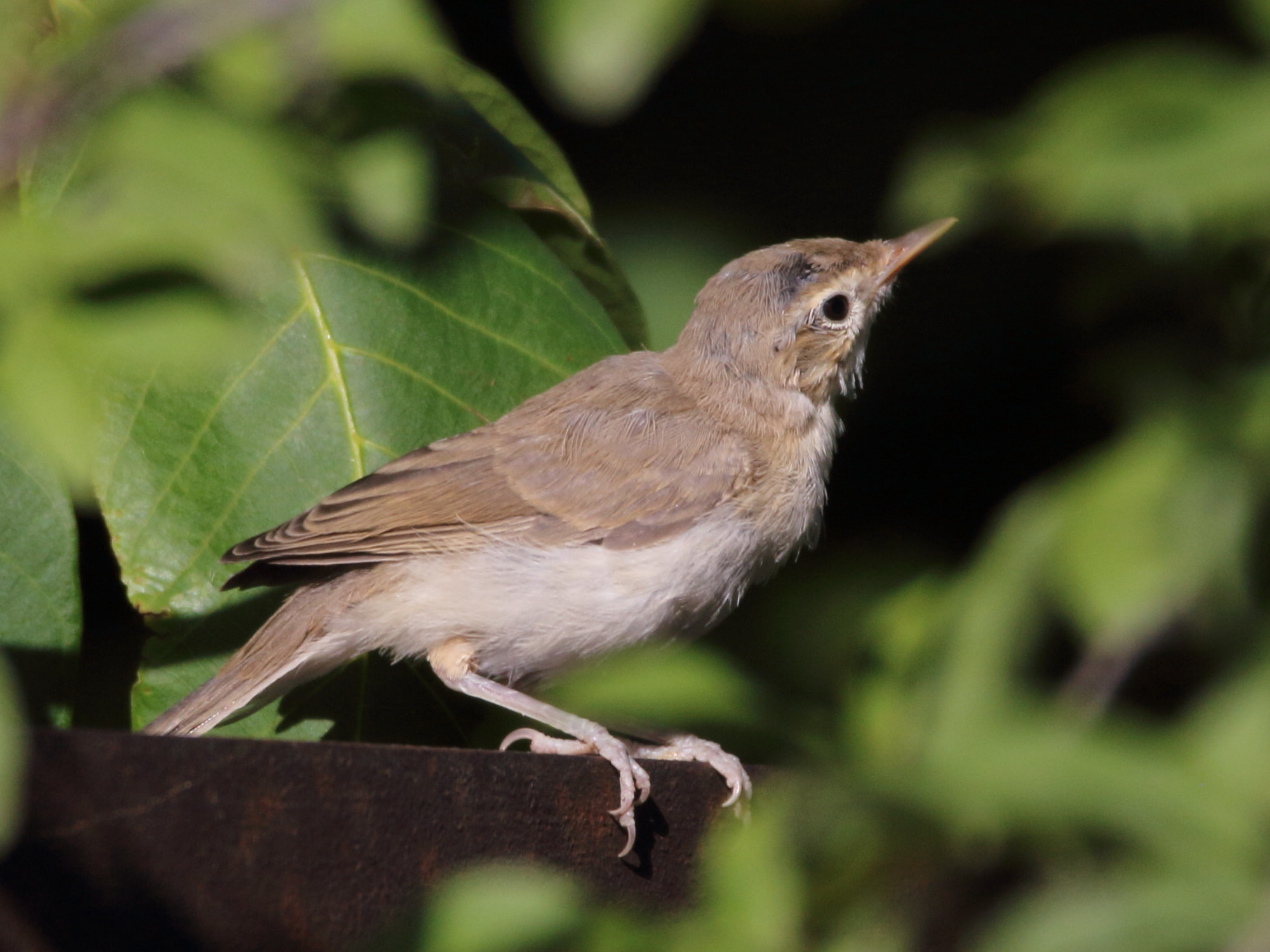
The upperparts are greenish-grey, the underparts uniformly pale yellow. The lores are pale, with a faint yellowish stripe over the eye and a pale eye ring. On the folded wing, the pale edges of the secondaries and tertials form a pale panel. The legs are grey, sometimes bluish. Both sexes look alike.
Young birds have paler bellies. It looks like a leaf warbler but is larger and moves clumsily among the leaves. If a yellow belly comes with a pale wing panel and a heavy bill, it is an icterine warbler.
Colour
Swatches are illustrative. Do not identify a species by colour alone.
Often confused with


It is a bird of woodland edges and glades: it chooses the crowns of well-spaced trees with tall undergrowth beneath. It prefers broad-leaved trees but also lives in mixed broad-leaved and conifer woodland, and it likes damp broad-leaved forest too. It also lives in copses, orchards, parks and gardens, shelterbelts and tall hedges with trees.
The icterine warbler breeds in Georgia and also passes through on migration. Records run from late April to September, and most fall in May. Most records come from Kakheti and Adjara. It has also been found in Mtskheta-Mtianeti, Imereti, Tbilisi, Kvemo Kartli and Samegrelo. The oldest record dates from June 2004, in Imereti.
Data: Reptiles.ge + iNaturalist · Methodology
- Field observation
- Several records in one spot
- Region with records
It mainly eats insects and their larvae: caterpillars, leaf beetles, aphids. It picks insects from leaves, hovers at foliage and also catches them in the air. In late summer and autumn it also eats berries, such as currants. Among the leaves it moves more clumsily than the smaller leaf warblers.
It is a migrant. It starts moving south in late July, most birds leave in early August, and it returns to its breeding grounds in late May. It winters south of the Sahara, mainly beyond the equator. It is rather solitary and holds a territory both on its breeding grounds and in winter. The song is a fast, nasal babble with imitations of other birds, and the call is "teck" or "tec, tec, tec". The nest is a deep cup in a fork of branches of a tree or shrub, often a young tree or bush such as rowan or lilac. It is camouflaged on the outside with bark and other material. It lays 4–6 eggs. The eggs are pale pink with dark blackish-brown spots, about 18 mm long. The male stops singing when the young hatch.
Globally the icterine warbler's risk of extinction is rated low (LC, 2017). It breeds across most of Europe except the southwest, from northern France and Norway east to the River Ob. Of the four Hippolais species, it has the most northerly and widest range. In Georgia's national assessment (2021) its risk is also rated low (LC), and its numbers are stable. The list of the birds of Georgia gives it as a breeder and a migrant.
Related guides
Continue with related pages
Yes. In Georgia it breeds and also occurs on migration. It chooses woodland edges, well-spaced broad-leaved trees, orchards and parks. It spends the winter in Africa, so you can see it only in the warm season.
By size and build. The icterine warbler is larger, with a big head and a broad-based bill, and it moves clumsily among the leaves. The belly is uniformly pale yellow, and a pale panel shows on the folded wing. The legs are grey or bluish. If you see a pale wing panel and a heavy bill, it is an icterine warbler.
Mostly insects and their larvae: caterpillars, leaf beetles, aphids. It picks insects from leaves and also catches them in the air. In late summer and autumn it eats berries too. At that time it also feeds on currants.
In a fork of branches of a tree or shrub, often a young tree such as rowan or lilac. The nest is a deep cup, camouflaged on the outside with bark. It lays 4–6 pale pink eggs with dark spots.
Yes. The whole population winters south of the Sahara in Africa, mainly beyond the equator. It starts moving south in late July, and most birds leave in early August. It returns to its breeding grounds in late May.
No, it is harmless to people. Globally its risk of extinction is low (LC, 2017). In Georgia's national assessment (2021) its risk is also low (LC), and its numbers are stable. Do not catch wild birds.
References
What this profile is based on
Species profiles are compiled from peer-reviewed literature and established biodiversity databases, and are reviewed as new taxonomic and conservation data become available.
Prepared by the Reptiles.ge editorial team from the sources listed here.