


Wood warbler
Phylloscopus sibilatrix


Fernando Mateos-González · Mörbylånga
Key facts in one look
- Diet
- Insects, spiders, berries
- Status in Georgia
- Scarce visitor, migrant
- Size
- 11–12.5 cm
- Habitat
- Old broadleaf forest, beech and oak
- Family
- Phylloscopidae
- Conservation
- Global LC, 2016; Georgia LC, 2021
The wood warbler is a strong migrant: it breeds in Europe, and the whole population spends the winter in tropical Africa. A yellow eyebrow, a yellow throat and a white belly are its main marks. It is a bird of old, shady broadleaf forest, especially beech and oak. In Georgia it is a scarce, irregular visitor and turns up mostly on migration. If you hear a metallic, accelerating trill in a broadleaf wood, listen closely: it may be its song.
Identification
Wood warbler: how to identify it
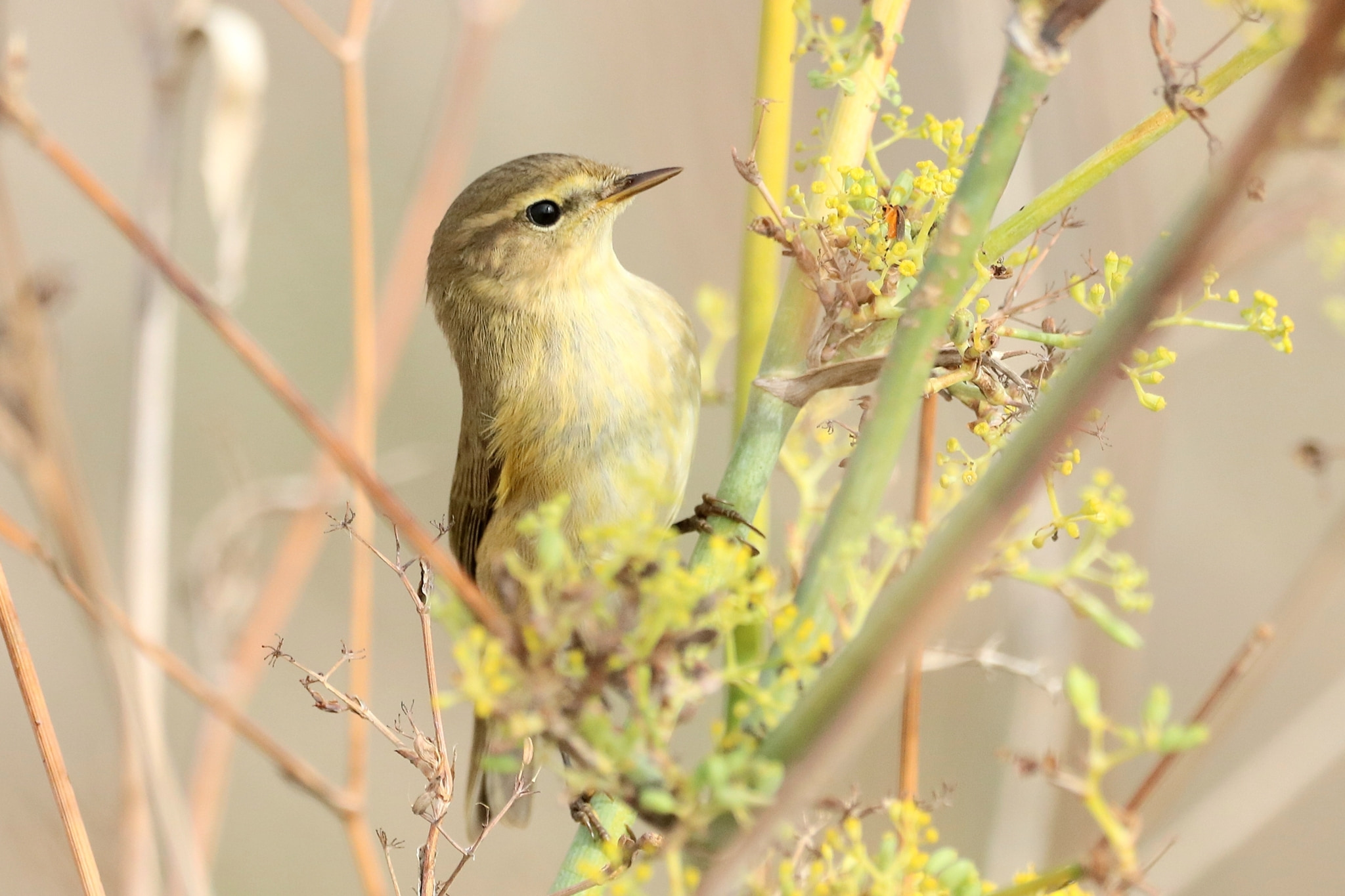
A leaf warbler 11–12.5 cm long and weighing 8–13 g. It is green above and white below, with a lemon-yellow throat, upper breast and eyebrow.

Length 11–12.5 cm, weight 8–13 g, wingspan 19–24 cm. The wings are long, the tail short and broad. Males and females look alike.
The back is green, the belly white. The throat, upper breast and eyebrow are lemon yellow. The tertials have pale edges.
It looks like a common chiffchaff and a willow warbler. Its yellow eyebrow, throat and upper breast, longer wing tip and shorter, broader tail set it apart. If the belly below a yellow throat is white, it is a wood warbler.
Colour
Swatches are illustrative. Do not identify a species by colour alone.

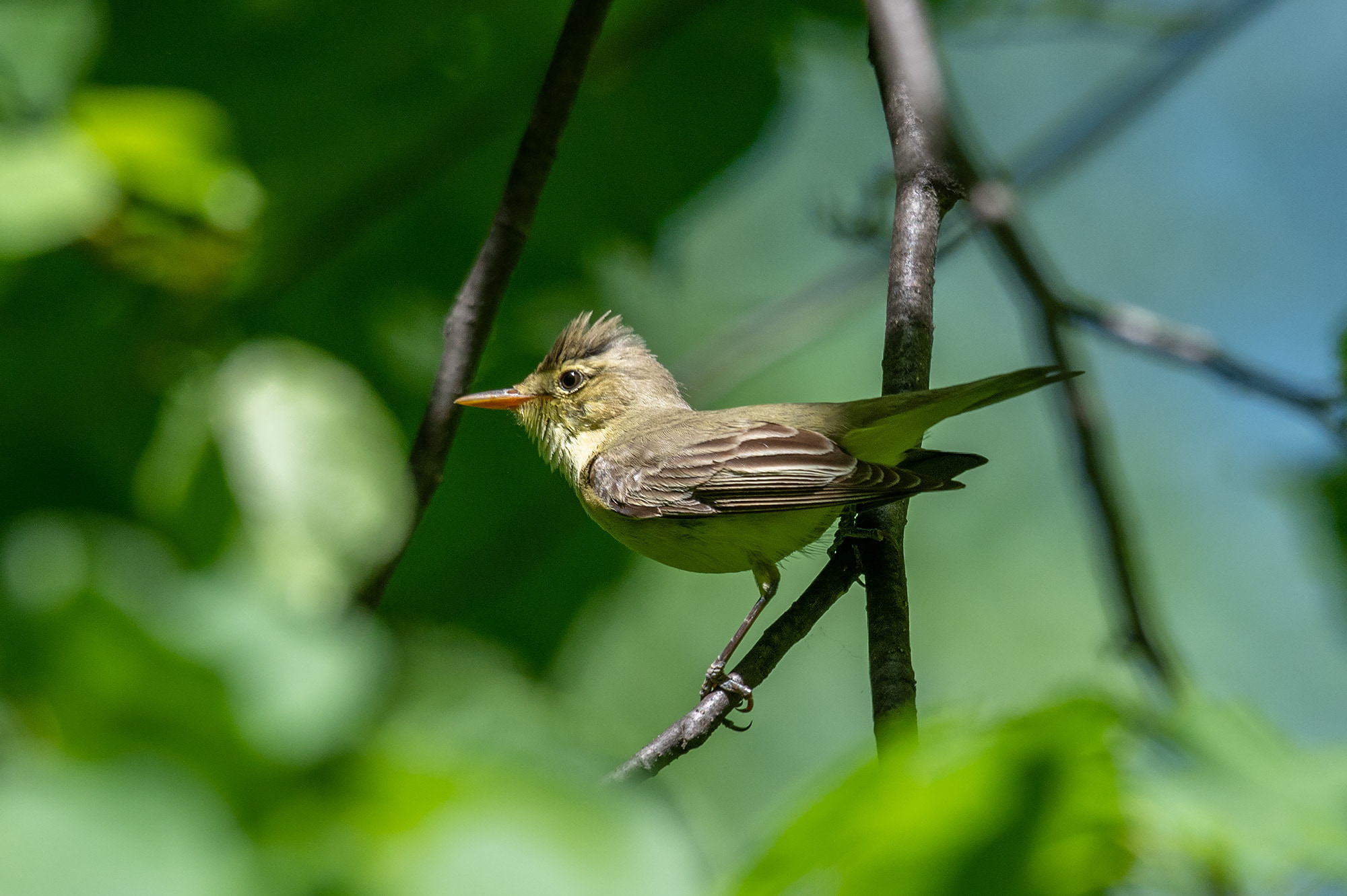
It is a bird of open but shady mature broadleaf forest, especially beech and oak. Compared with its relatives it prefers older, closed forest with open space under the canopy and sparse grass and shrubs on the ground. It also lives in parks. It breeds in northern and temperate Europe, east to the southern Urals, and winters in tropical Africa.
The wood warbler is a scarce, irregular visitor and migrant in Georgia. Most records come from Adjara, around Batumi, and fall in August and September, during autumn migration. In spring, in April and May, it has been found in Adjara, Samtskhe-Javakheti, Mtskheta-Mtianeti and Tbilisi. It has been seen once in Kvemo Kartli, in June, and once in Abkhazia.
Data: Reptiles.ge + iNaturalist · Methodology
- Field observation
- Several records in one spot
- Region with records
It eats insects and their larvae, as well as spiders, molluscs and berries. It takes relatively large prey compared with related warblers. It spends energy freely on food: it hovers in one spot in the air and catches insects with jumps from the branches.
It is a strong migrant: in Central Europe it stays from April to September and spends the winter in tropical Africa. It has two song types and often sings them in turn. The first is a high, metallic trill that speeds up and lasts 2–3 seconds. The second is a series of 3–5 lower, falling piping notes, "piu-piu-piu". The contact call is a soft single "piu". It hides its domed nest on the ground in low, dense shrubs and builds it from stems and grass. In May it lays 6–7 eggs, and sometimes raises a second brood. The female incubates for 12–14 days, and the chicks stay in the nest for 12–13 days. In a primeval forest in Poland, nests are lost mostly to medium-sized carnivorous mammals, which find them at night by sound and smell. So the older and louder the chicks grow, the greater the danger to the nest.
Globally the wood warbler's risk of extinction is rated low (LC, 2016). It is a forest bird, and the structure of the forest matters most to it: slope, forest cover, the share of broadleaf trees, canopy height and the length of forest edge. In some places, such as Britain, it has declined in recent years. Forest is shrinking in its wintering areas, for example in Ghana, but so far it also uses well-wooded farms. Further loss of trees will probably harm it. In Georgia's national assessment (2021) its risk is also rated low (LC), and its numbers are stable. The list of the birds of Georgia gives it as a scarce, irregular visitor and a migrant, and its seasonal status here is not fully understood.
Related guides
Continue with related pages
Yes, but rarely. The list of the birds of Georgia gives it as a scarce, irregular visitor and a migrant. Its seasonal status here is not fully understood. Its main breeding range is in Europe, and it winters in tropical Africa.
All three are green leaf warblers, but the wood warbler has a yellow eyebrow, throat and upper breast and a white belly. Its wings are longer, its tail shorter and broader. The tertials have pale edges. The song is quite different too: a metallic, accelerating trill.
Mostly insects and their larvae. Also spiders, molluscs and berries. It takes relatively large prey compared with related warblers. It catches insects by hovering in the air or jumping from a branch.
On the ground, in low, dense shrubs. The nest is domed and built from stems and grass. In May it lays 6–7 eggs, and sometimes raises a second brood. The female incubates for 12–14 days.
In tropical Africa: the whole population goes there. In Central Europe it stays from April to September. In its wintering areas it also prefers forest, but uses well-wooded farms as well. It passes through Georgia rarely, on migration.
No, it is harmless to people. Globally its risk of extinction is low (LC, 2016). In Georgia's national assessment (2021) its risk is also low (LC), and its numbers are stable. Do not catch wild birds.
References
What this profile is based on
Species profiles are compiled from peer-reviewed literature and established biodiversity databases, and are reviewed as new taxonomic and conservation data become available.
Prepared by the Reptiles.ge editorial team from the sources listed here.


