



Common chiffchaff
Phylloscopus collybita
Rails and roadtrips · 07860 Formentera
Key facts in one look
- Size
- 10–12 cm
- Diet
- Insects, mainly flies; elderberries
- Status in Georgia
- Breeder and migrant
- Habitat
- Open woodland with grassy or shrubby ground cover
- Family
- Phylloscopidae
- Conservation
- Global LC, 2024; Georgia LC, 2021
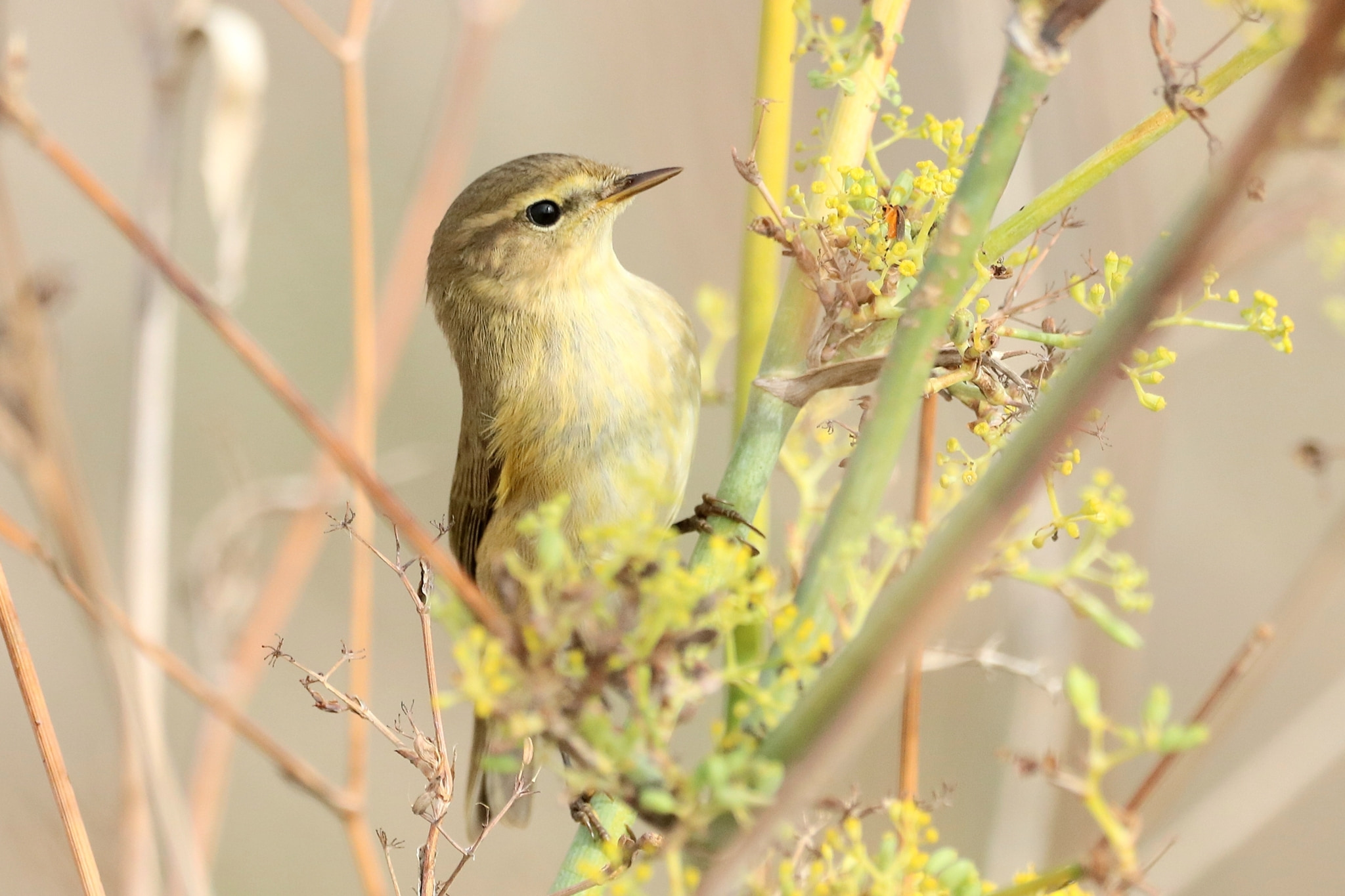
The common chiffchaff is one of the first birds to return in spring and one of the last to leave in late autumn. Its repeated "chiff-chaff" song is one of the first signs of spring. It is a small, greenish-brown bird with a whitish belly and dark legs. In Georgia it breeds and also passes through on migration, and in the Caucasus it lives in the forest belt. It looks very like a willow warbler, so watch the legs and listen to the song.
Identification
Common chiffchaff: how to identify it
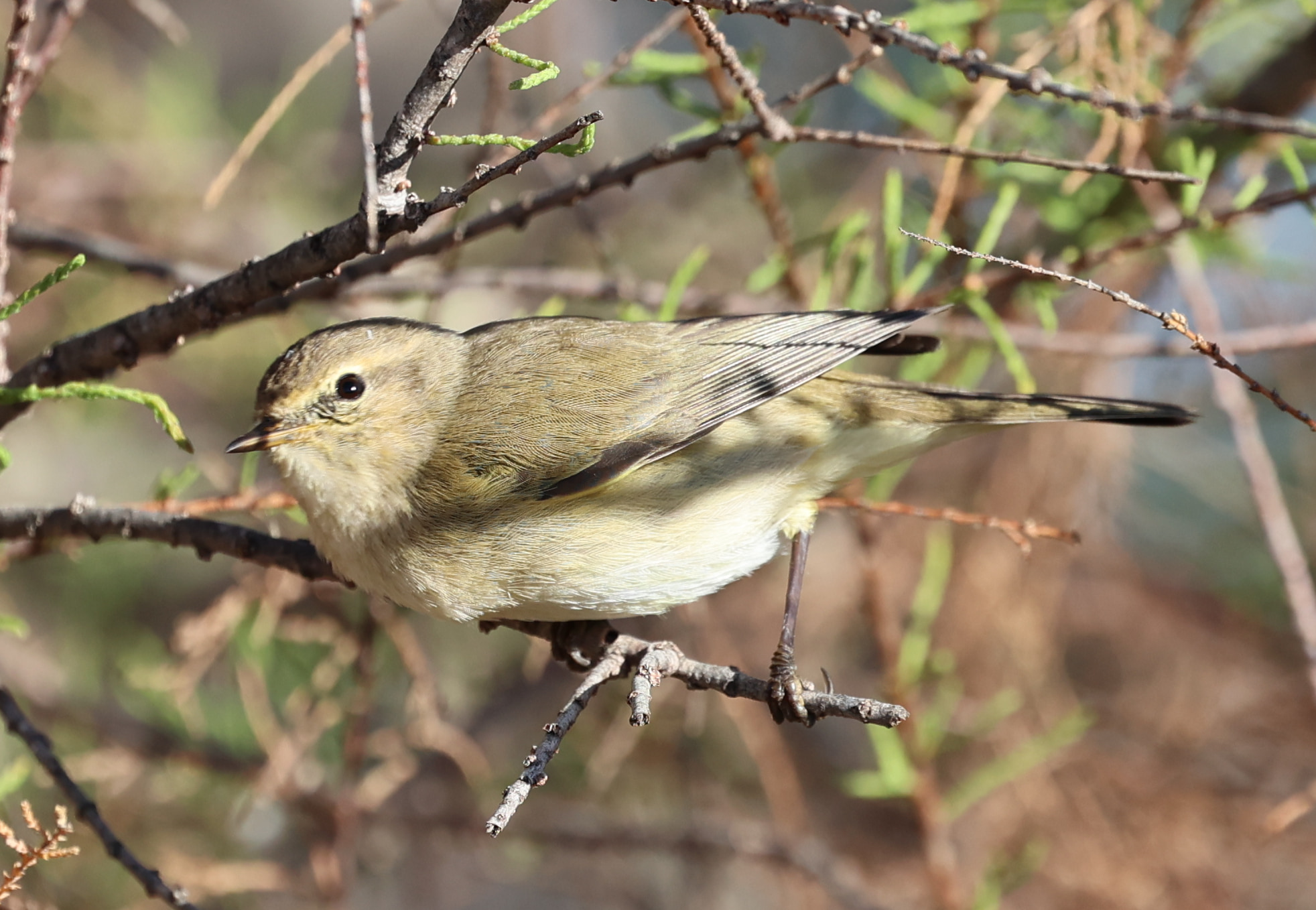
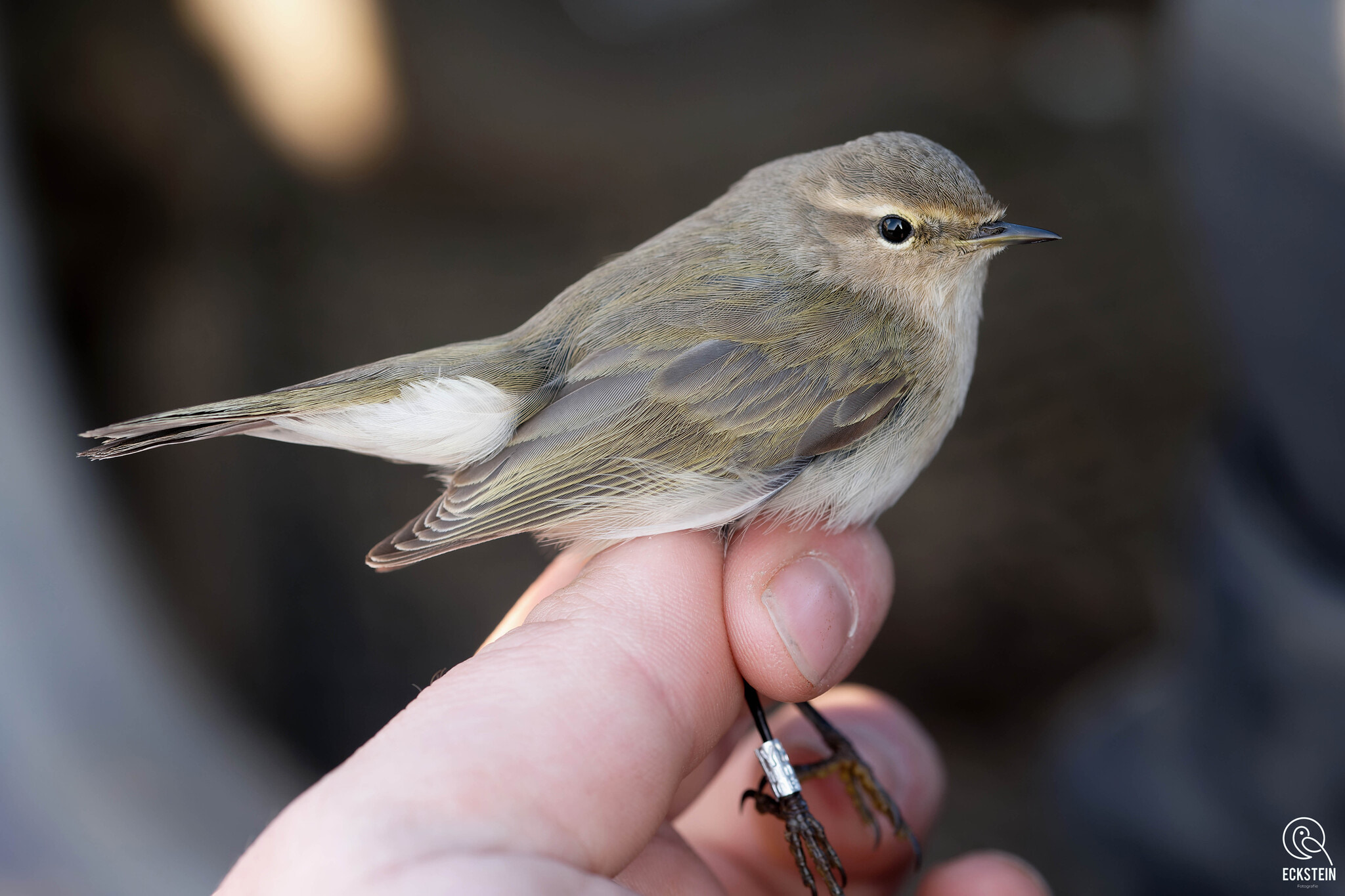
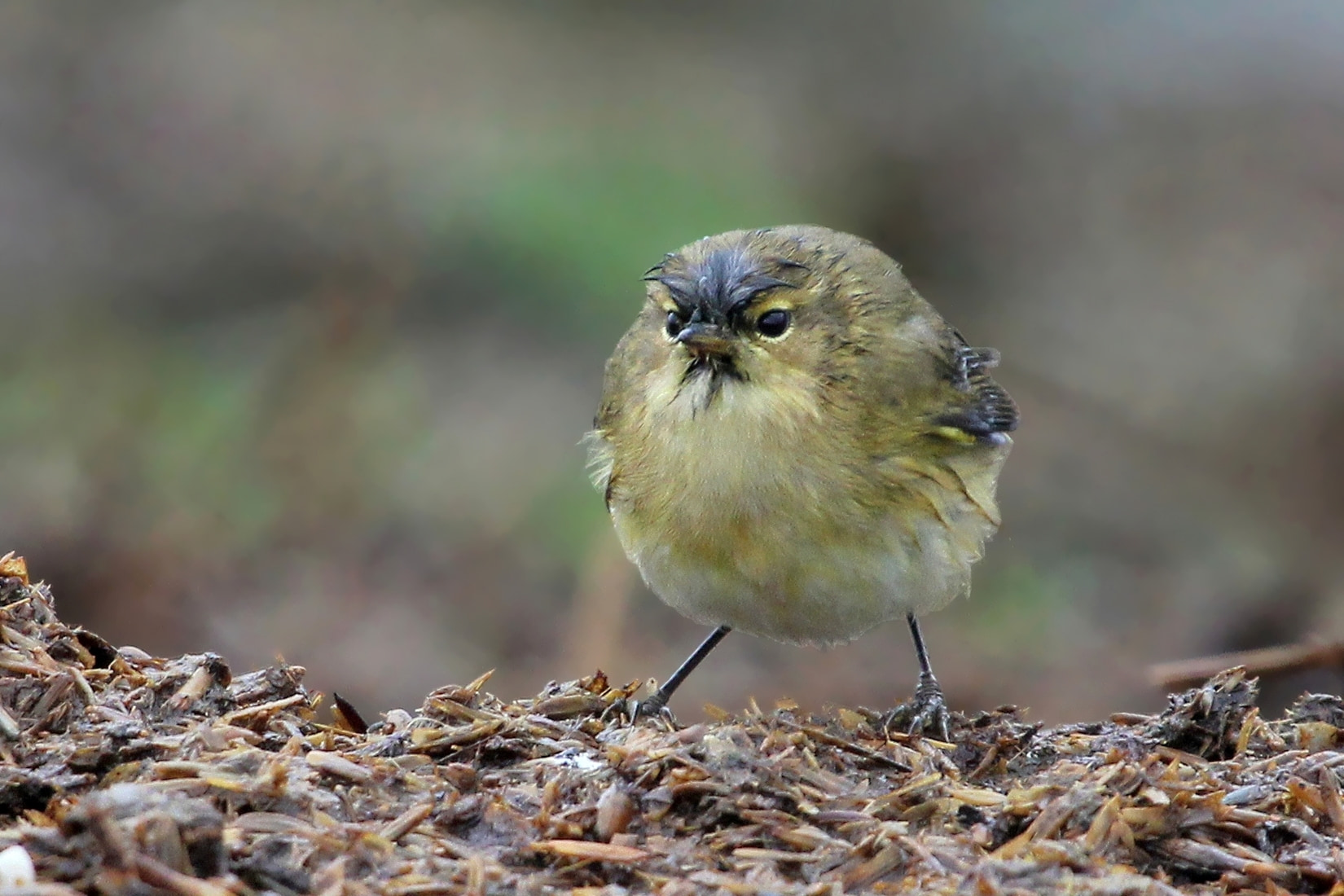
A small, compact leaf warbler, 10–12 cm long, with a short tail and rounded wings. The upperparts are greenish brown, the underparts whitish, the flanks yellowish. The legs and the fine bill are dark.
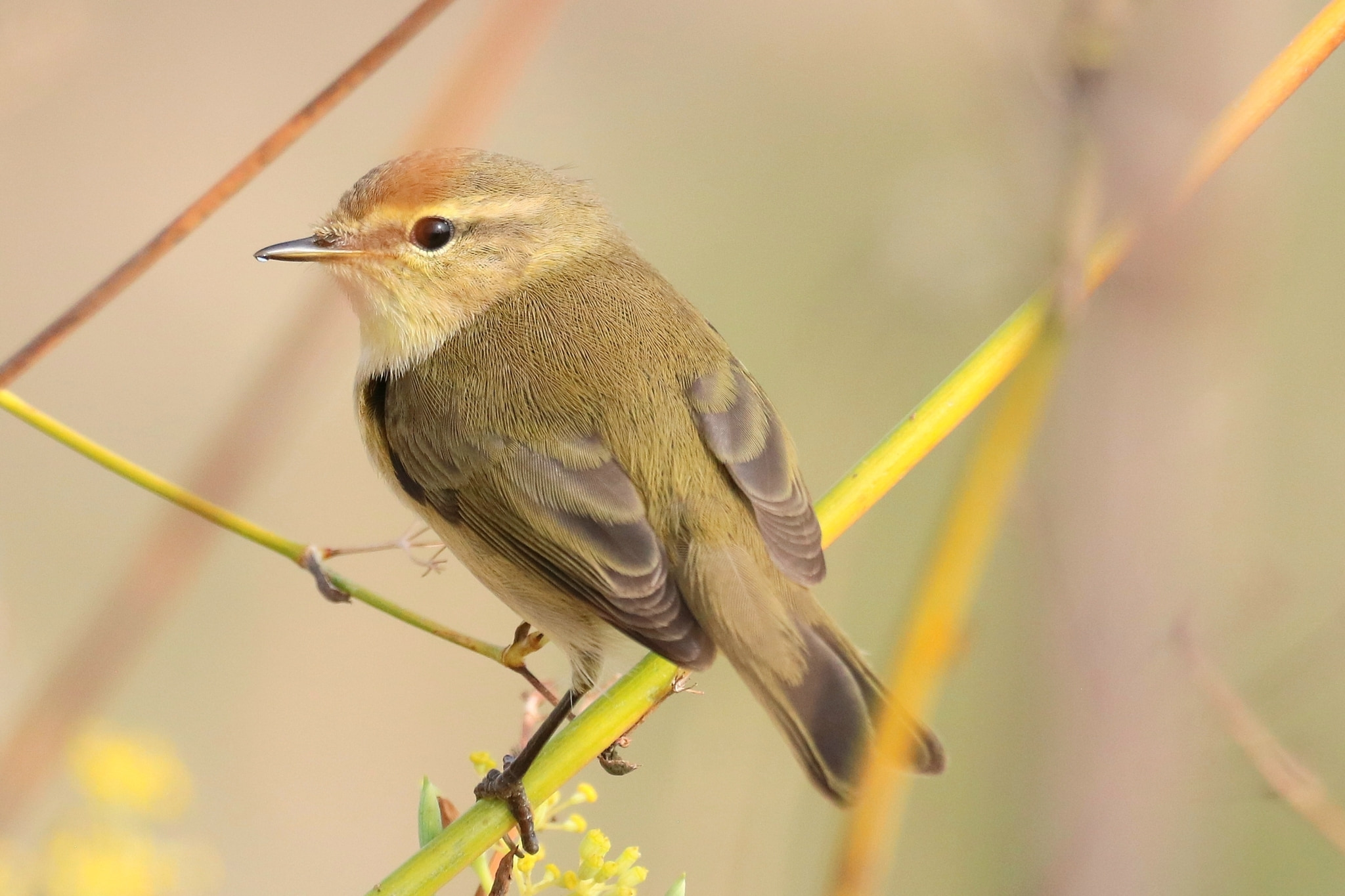
Length 10–12 cm. Males weigh 7–8 g, females 6–7 g. The body is compact, the tail short, the wings rounded. It often wags its tail.
In spring the upperparts are dull green washed with brown, the underparts whitish, yellowish on the flanks. The eyebrow is short and whitish. Young birds are browner above and yellowish white below. After the moult the upperparts become brighter and greener.
It looks very like a willow warbler. The common chiffchaff has dark legs, the willow warbler generally pale ones, and the willow warbler's primaries project further along the wing. The "hweet" call is less two-syllabled than the willow warbler's "hooeet". Watch the legs and the tail wagging.
Colour
Swatches are illustrative. Do not identify a species by colour alone.


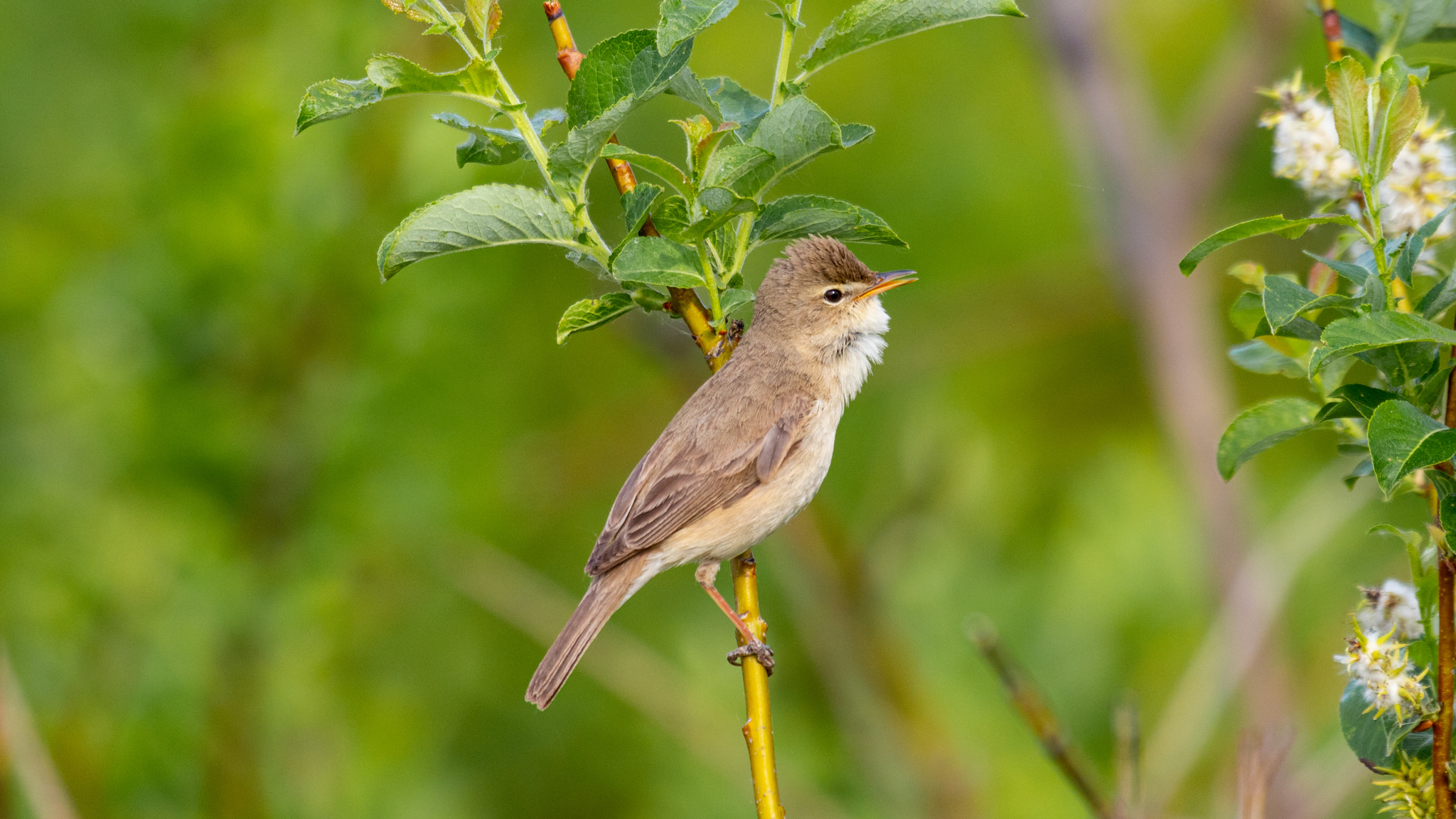


It breeds in open woodland with trees taller than 5 m and ground cover of grass, bracken or nettles. Caucasian chiffchaffs live in the forest belt and rarely go up into the subalpine zone. On migration and in winter it uses a wider range of places, scrub included, often near water. In Georgia it has been seen at Kazbegi in May and near Tbilisi, in the Ponichala reserve, in March.
The common chiffchaff breeds in Georgia and also passes through on migration. Records pick up in March, the spring peak is in April and the autumn peak in September and October, with October the busiest month of the year. A few birds have also been seen in November and from December to February. Most records come from Adjara, followed by Mtskheta-Mtianeti, Kvemo Kartli, Tbilisi, Samtskhe-Javakheti and Kakheti. It has also been found in Samegrelo, Abkhazia, Imereti, Shida Kartli, Guria and Racha. The oldest record is a museum specimen collected near Mtskheta in 1910.
Data: Reptiles.ge + iNaturalist · Methodology
- Field observation
- Several records in one spot
- Region with records
It eats insects: it moves restlessly through the leaves and sometimes hovers briefly. It takes mainly flies, from more than 50 families, and other small invertebrates too. It takes the eggs and larvae of butterflies and moths, and also eats elderberries. It needs about a third of its body weight in insects a day. In autumn, before migration, it feeds almost without a break to build up fat.
It is a migrant: in spring it is one of the first to return and in late autumn one of the last to leave. Males arrive two or three weeks before females and claim territories by singing. They defend about 20 m around the nest and will attack even stoats and jays near it. The song is a cheerful, repeated "chiff-chaff", the call a "hweet". After breeding it leaves its territory and sometimes joins mixed flocks of other warblers. Only the female builds the nest, on or near the ground in brambles, nettles or dense low vegetation. The nest is domed, with a side entrance, and lined with feathers. It lays 2–7 eggs, usually 5–6, which the female incubates alone for 13–14 days. She feeds the chicks for 14–15 days and looks after them for another three to four weeks after they leave the nest. In the north it raises one brood a year; in central and southern areas two broods are common.
Globally the common chiffchaff's risk of extinction is rated low (LC, 2024). Its range covers about 10 million km², and Europe alone holds 60–120 million birds. In some countries its numbers are rising and its range is spreading north. Only woodland clearance is seen as a serious threat. In Georgia's national assessment (2021) its risk is also rated low (LC), and its numbers are stable. The list of the birds of Georgia gives it as a breeder and migrant.
Related guides
Continue with related pages
Yes. It breeds in Georgia and also passes through on migration. In the Caucasus it lives in the forest belt and rarely goes up into the subalpine zone. It has been seen at Kazbegi in May and near Tbilisi, in the Ponichala reserve, in March. In spring, listen for its "chiff-chaff".
By the legs and the voice. The common chiffchaff has dark legs and a fine dark bill, while the willow warbler generally has pale legs. The willow warbler's primaries project further along the wing. The chiffchaff wags its tail and repeats its "chiff-chaff". If the legs are dark and the tail wags, it is a chiffchaff.
Insects, above all flies, and other small invertebrates. It takes the eggs and larvae of butterflies and moths, and also eats elderberries. It needs about a third of its body weight in insects a day. It searches the leaves and sometimes hovers briefly.
On or near the ground, in brambles, nettles or dense low vegetation. The nest is domed, with a side entrance. It lays 2–7 eggs, usually 5–6. Only the female cares for the nest and the chicks; the male guards the territory.
Yes, most leave Georgia for the winter, though a few birds have been seen here from December to February. It winters in southern and western Europe, southern Asia and North Africa. In spring it is one of the first to return, in late autumn one of the last to leave. It winters more and more often in western Europe.
No, it is harmless to people. Globally its risk of extinction is low (LC, 2024). In Georgia's national assessment (2021) its risk is also low (LC), and its numbers are stable. Do not catch wild birds.
References
What this profile is based on
Species profiles are compiled from peer-reviewed literature and established biodiversity databases, and are reviewed as new taxonomic and conservation data become available.
Prepared by the Reptiles.ge editorial team from the sources listed here.


