
Booted warbler
Iduna caligata
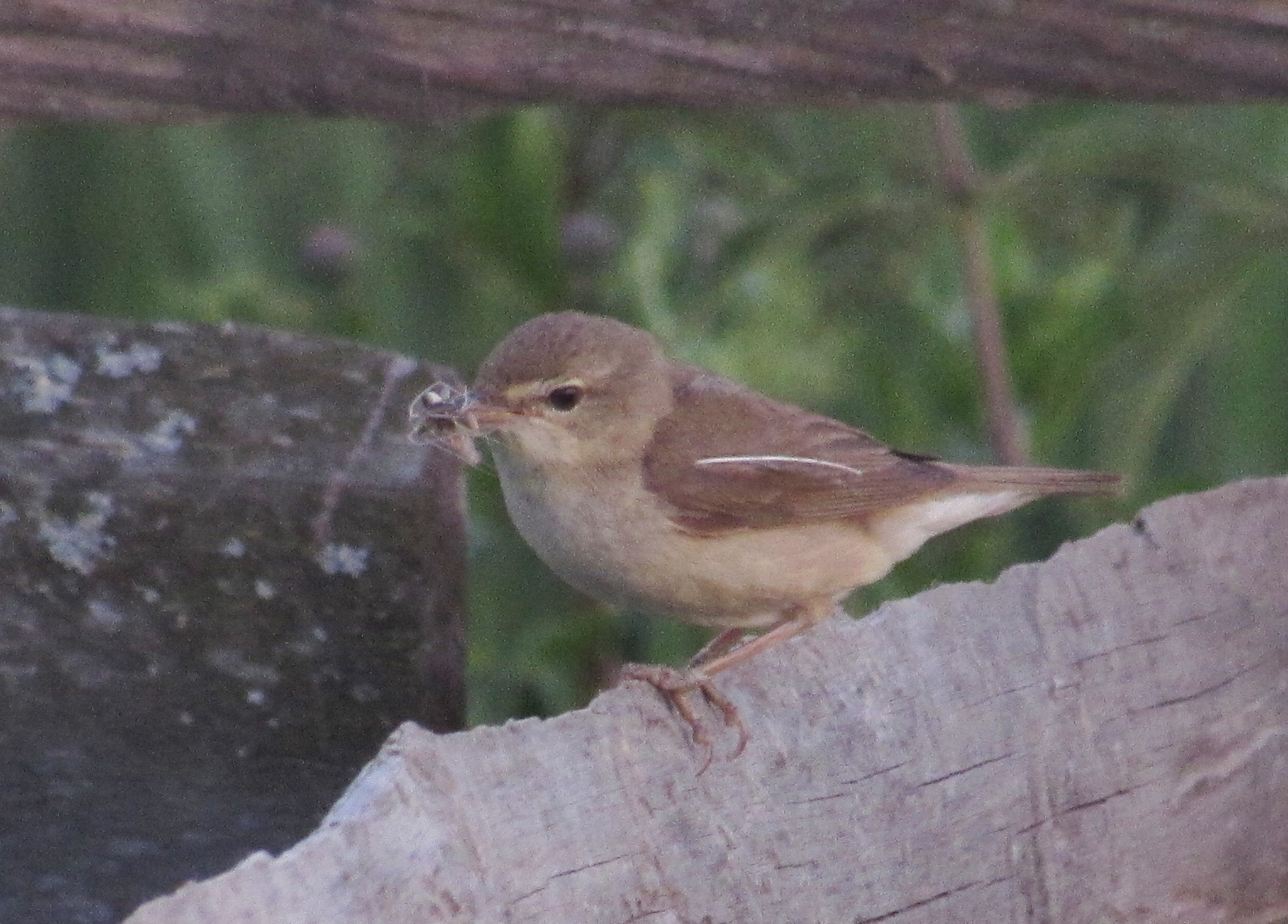
Filipp Suvorov · Kamensky District
Key facts in one look
- Diet
- Insects
- Status in Georgia
- Migrant
- Size
- 11–12.5 cm
- Habitat
- Bushy steppe, meadows, pastures
- Family
- Acrocephalidae
- Protection
- Globally LC, 2017; in Georgia LC, 2021
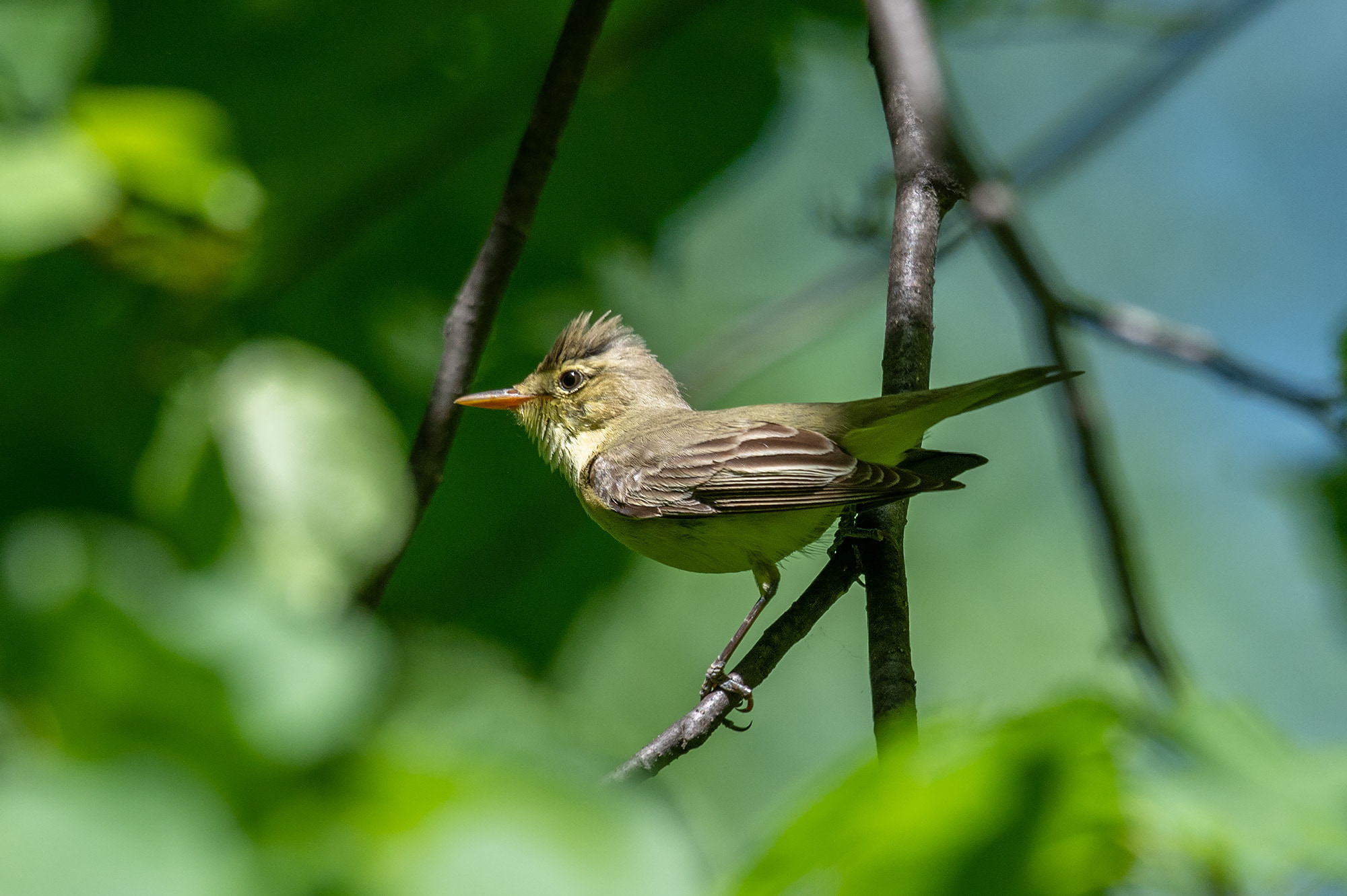
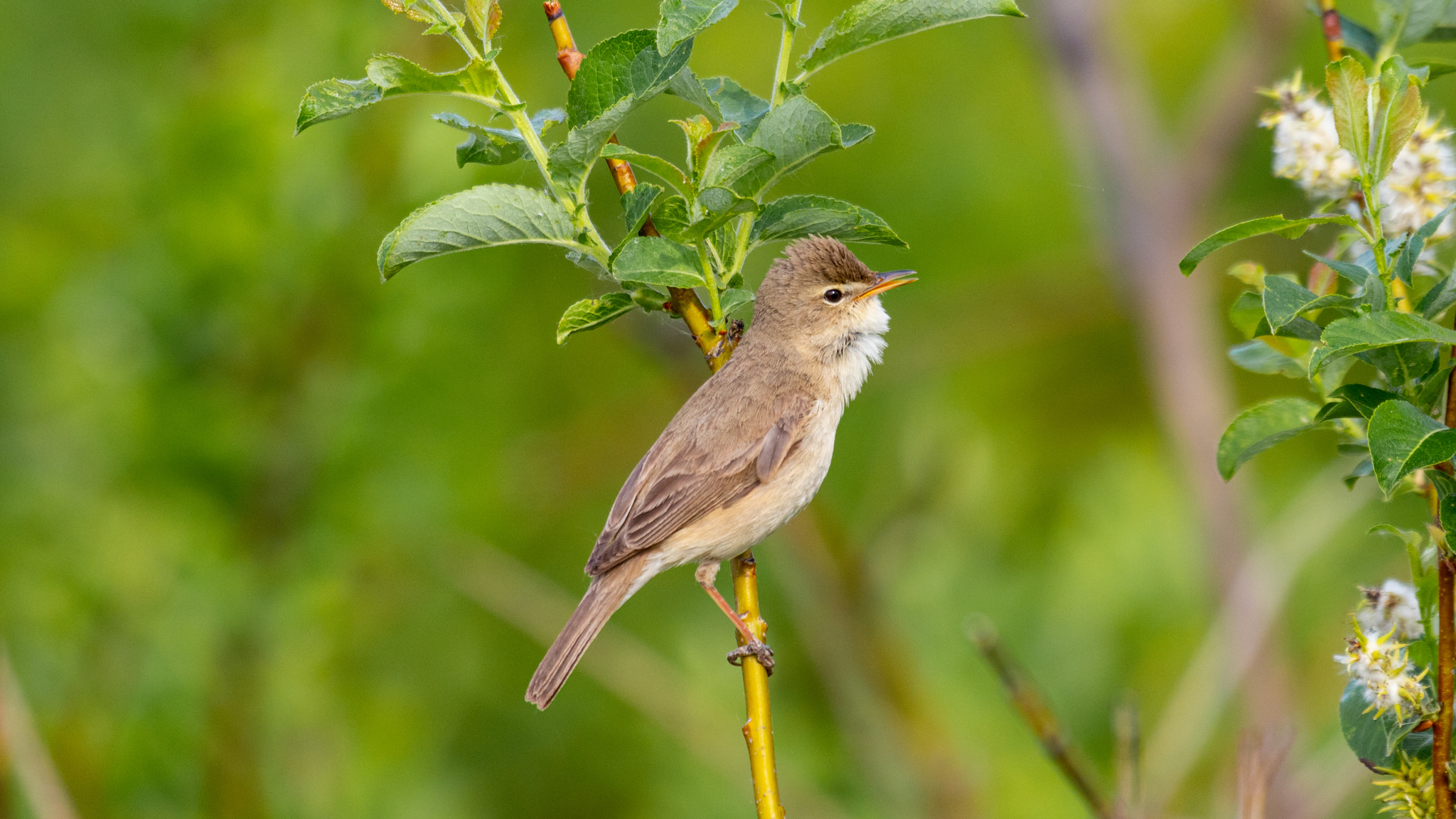
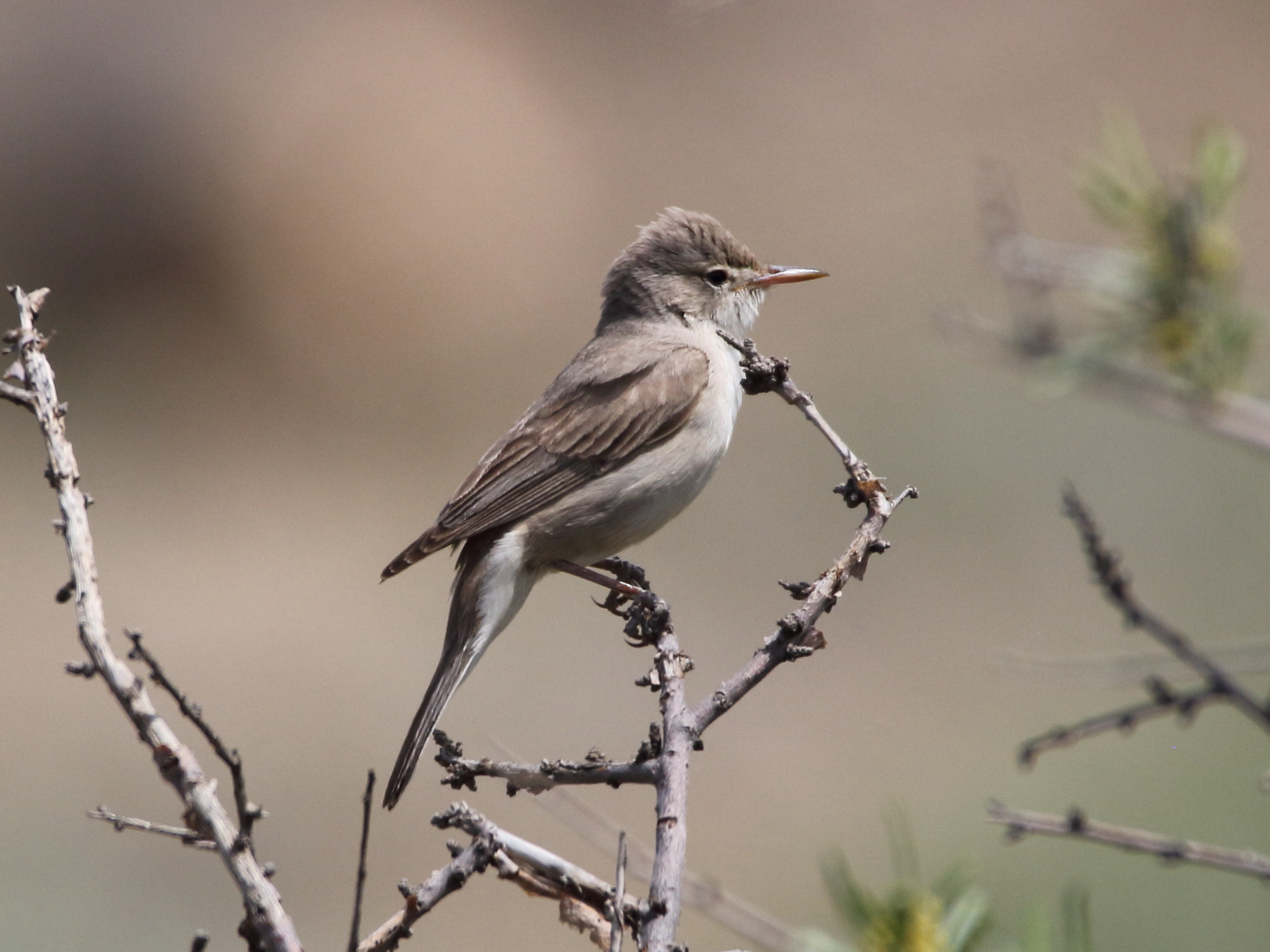
The booted warbler is the smallest of the tree warblers, only slightly bigger than a chiffchaff. It is plain brownish grey above and whitish below, with a short pale eyebrow, so it looks more like a leaf warbler than a tree warbler. It breeds from Russia and Central Asia to western China and spends the winter in India and Sri Lanka. In Georgia it is a migrant and is seen mostly in spring and autumn. If you see a brownish, chiffchaff-like bird with a short, square tail in the bushes, take a photo.
Identification
Booted warbler: how to identify it
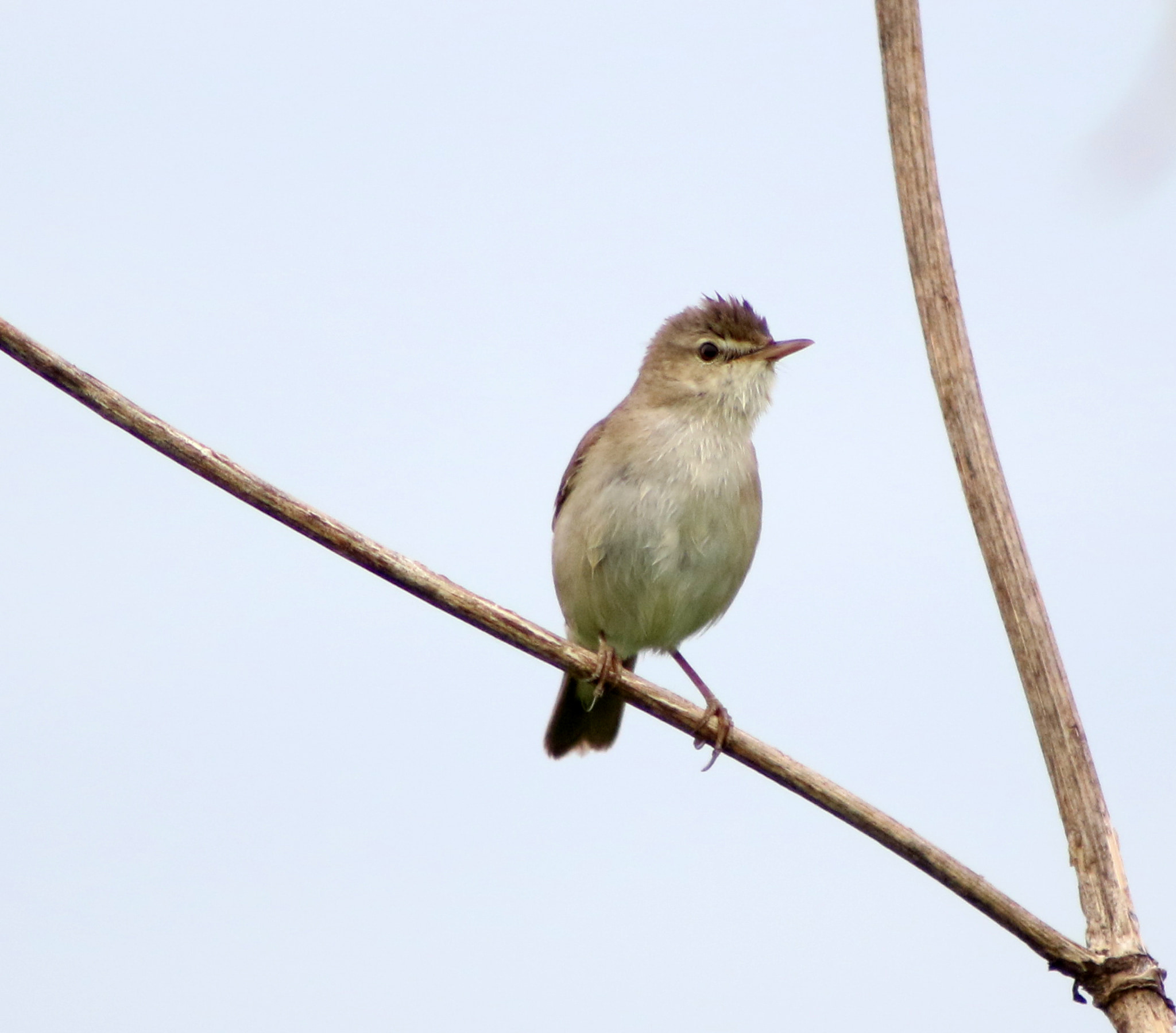
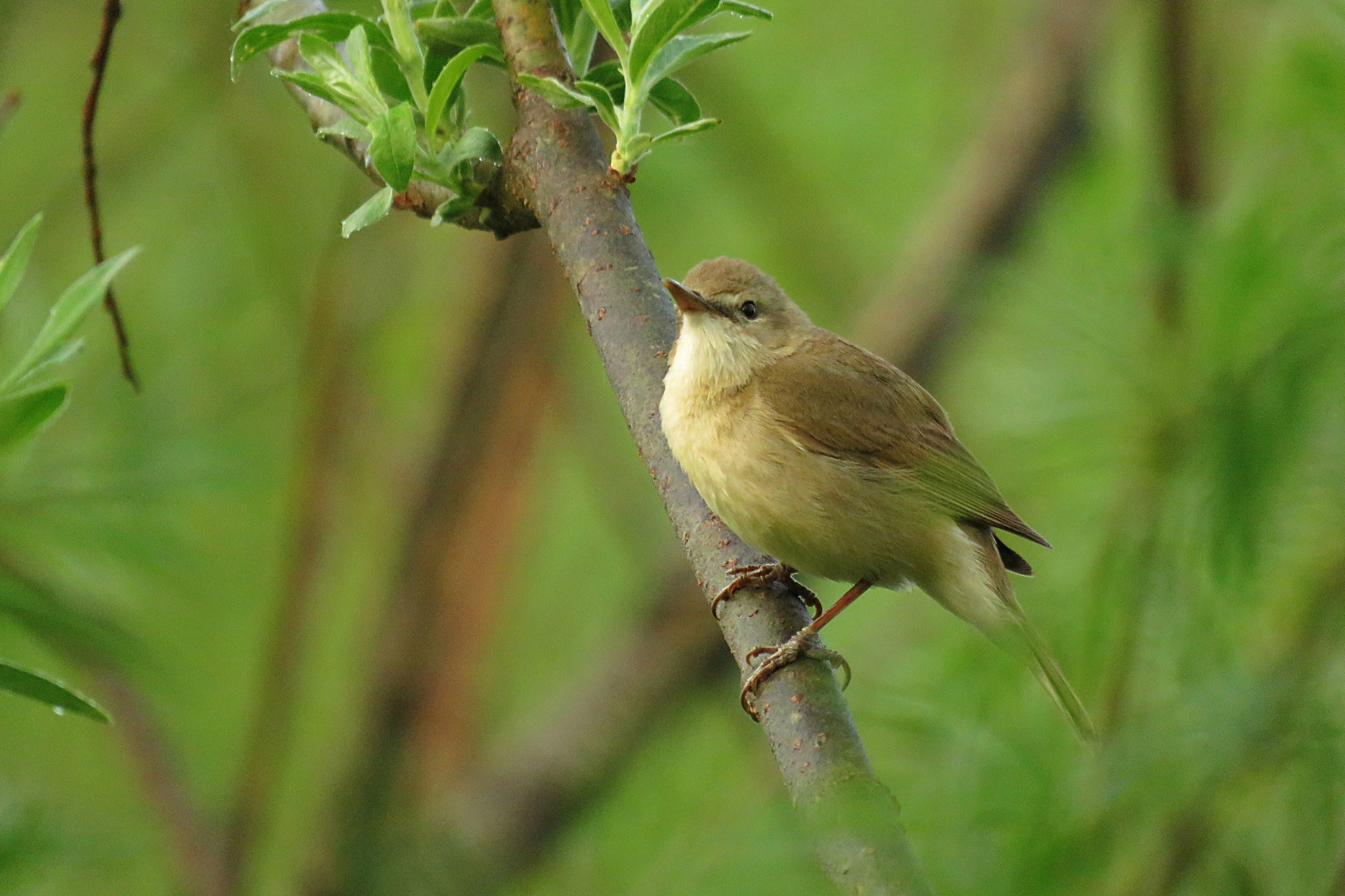
A small, plain warbler, 11–12.5 cm long and slightly bigger than a chiffchaff. It is brownish grey above and whitish below, with a short pale eyebrow. The tail is short and square-ended. It is easily confused with the olivaceous warbler and the chiffchaff.
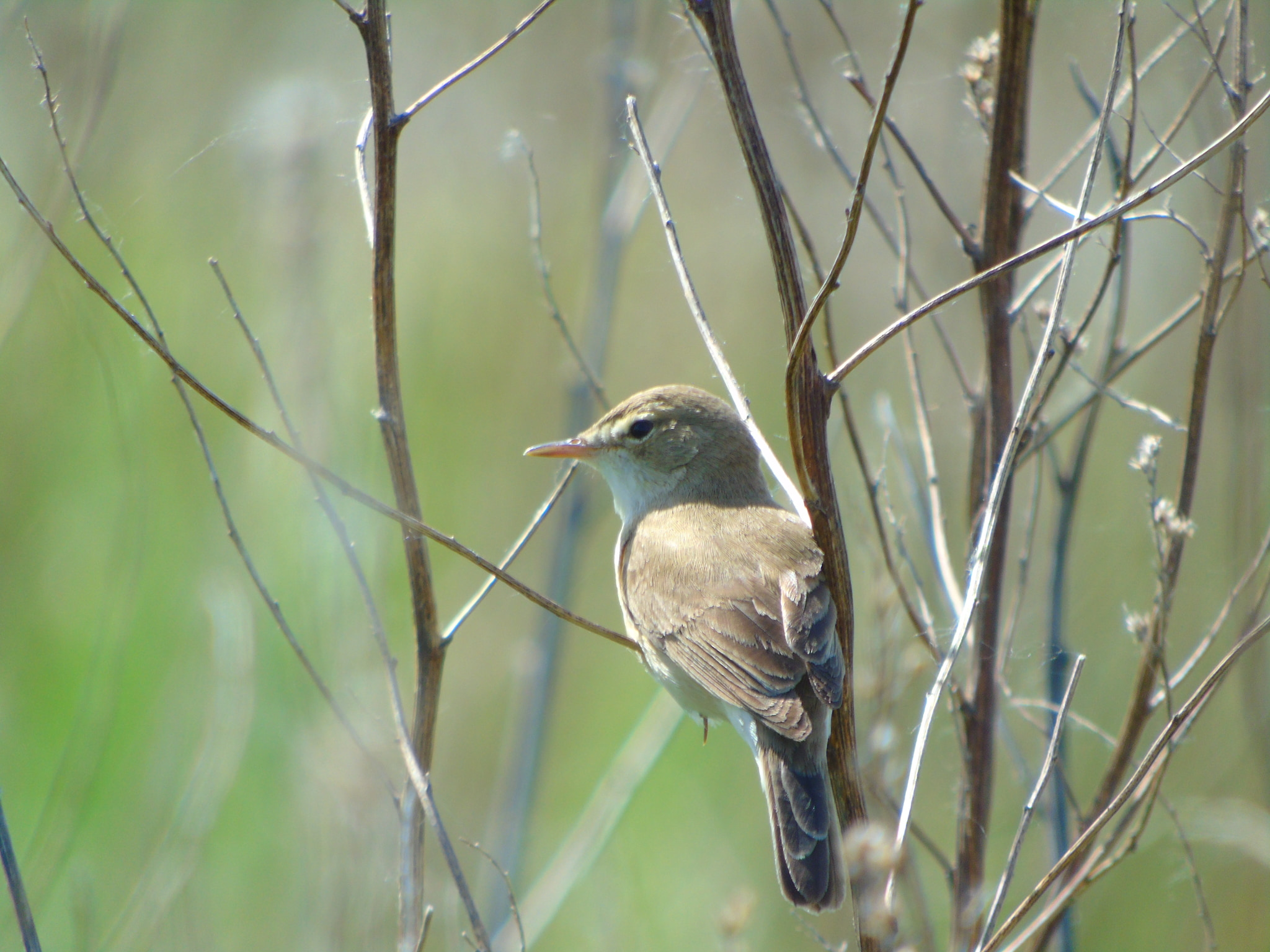
Length 11–12.5 cm: it is the smallest of the tree warblers and slightly bigger than a chiffchaff. It is short-winged and rather pot-bellied, with a short, square-ended tail. The bill is short, fairly dark above, with a clearly dark tip and a pale pinkish-brown base.
The upperparts are buffy brown in fresh plumage and greyer at other times. The flanks are tinged rusty buff, the rest of the underparts whitish. The short pale eyebrow makes it look more like a leaf warbler than a tree warbler. The legs are brownish pink, the toes dark grey. Young birds are olive-brown above with an ochre wash.
The olivaceous warbler is greyer and keeps dipping its tail downwards. Upcher's warbler is much bigger, with a long, dark tail that it wags slowly and spreads. The booted warbler is hard to identify, so take a photo and record its voice: its song speeds up and grows louder, and it does not mimic other birds.
Colour
Swatches are illustrative. Do not identify a species by colour alone.
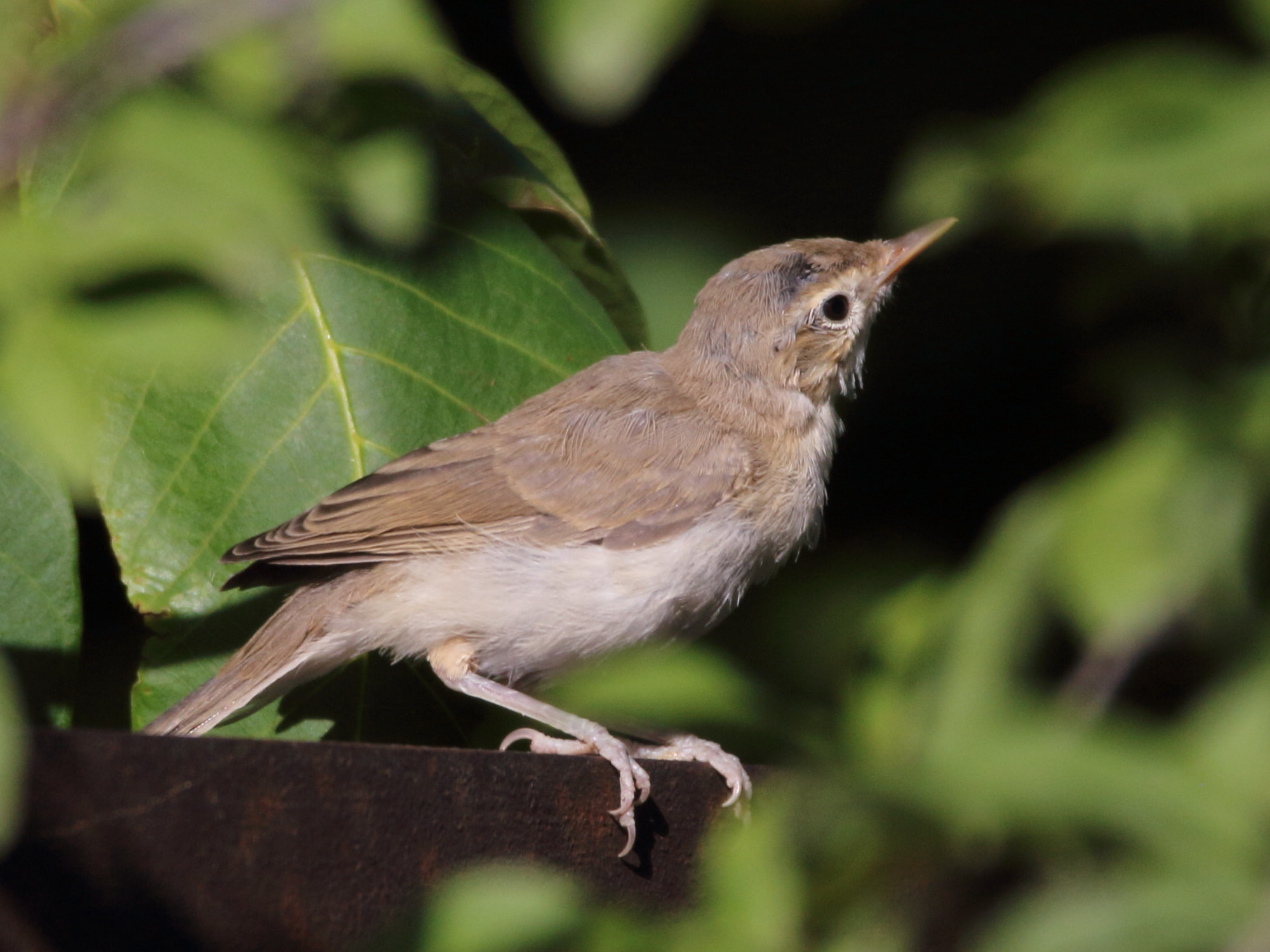
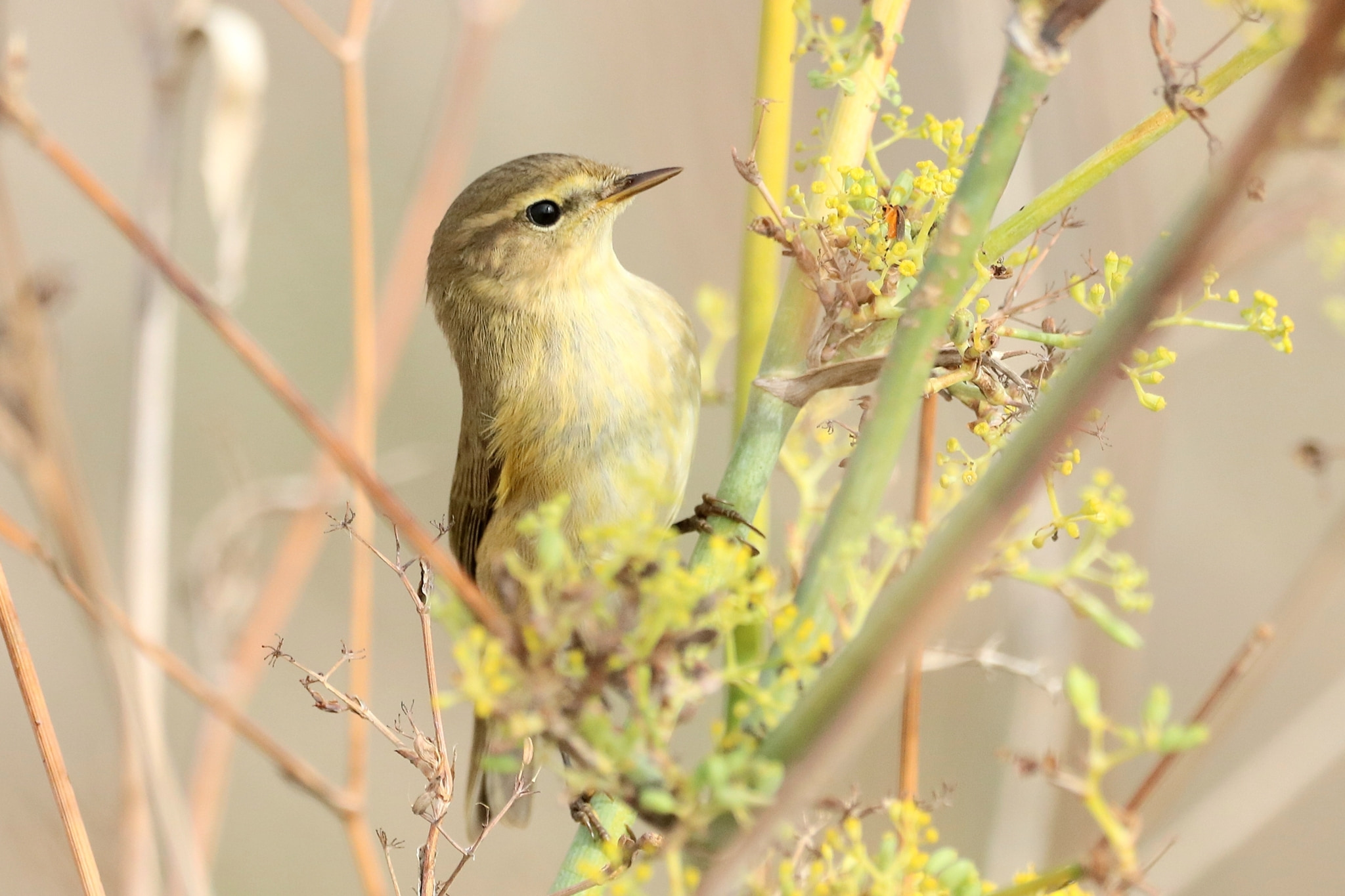

It breeds in steppe, meadows, pastures and other open country with medium-high scrub. In Russia it lives in bushy meadows, at forest edges, in clearings, and in thickets of meadowsweet and willow. In the north of its range it sometimes breeds at the edge of the taiga, and in the drier south often along water. It also picks open and cultivated land covered with bushes and tall plants.
The booted warbler occurs in Georgia only on migration. Most records are from August and September, during the autumn passage. Spring records are far fewer and run from late April to early June. Almost all records come from Adjara, around Batumi and the Chorokhi delta. It has also been found in Samegrelo, Mtskheta-Mtianeti, Kvemo Kartli, Racha and Kakheti. The oldest record dates from August 2010, in Adjara.
Data: Reptiles.ge + iNaturalist · Methodology
- Field observation
- Several records in one spot
- Region with records
Like other warblers it is insectivorous and eats a range of insects. It searches for food mostly close to the ground, in bushes and grass. Sometimes it comes down to the ground as well.
It is a long-distance migrant. In the south it leaves its breeding grounds at the end of July, as soon as the young have fledged; in the north most stay until mid- or late August. It arrives in India in September, starts back from April and reaches its breeding grounds in May–June. It often flicks its tail and wings. The song is a 2–6 second phrase of nasal, twittering and harsh notes: it starts slow and low, then quickly speeds up and grows louder. It does not mimic other birds, and the call is a short, clicking "chrek". It hides its nest on or near the ground, no higher than 1 m, in dense undergrowth. The cup-shaped nest is made of twigs, roots, stems and leaves, lined with feathers, hair and plant down. It lays 4–6 pale pink or pale lilac eggs with dark specks. It usually breeds once a year. The young leave the nest after 13–14 days, and the parents feed them for about as long again.
Globally the booted warbler's risk of extinction is rated low (LC, 2017). Its range covers about 1,990,000 km², and the world population is 560,000–1,260,000 adult birds and increasing. In parts of its Russian range adders, crows and harriers take eggs and nestlings, which in some years causes local declines. In Georgia's national assessment (2021) its risk is also rated low (LC), and its numbers are stable. The list of the birds of Georgia gives it as a migrant.
Related guides
Continue with related pages
Yes, but only on migration. It does not breed here and is seen mostly in spring and autumn. It has been photographed in Georgia and ringed. It breeds to the north and east, in Russia and Central Asia, and spends the winter in India and Sri Lanka.
By the colour and the tail movement. The booted warbler is browner, the olivaceous warbler greyer. The olivaceous warbler keeps dipping its tail downwards, while the booted warbler only flicks its tail and wings. On the booted warbler the greater coverts and flight feathers have only narrow, faint pale edges. The two are very alike, so take a photo of the bird.
Insects. Like other warblers it is insectivorous. It searches for food mostly close to the ground, in bushes and grass, and sometimes comes down to the ground.
On or near the ground, no higher than 1 m, in dense undergrowth. The nest is a cup of twigs, roots, stems and leaves, lined with feathers, hair and plant down. It lays 4–6 eggs. It does not breed in Georgia: its nests are in Russia and Central Asia.
In India, south as far as Sri Lanka. It arrives in India in September and starts back from April. It reaches its breeding grounds in May–June and leaves them again in July–August.
No, it is harmless to people. Globally its risk of extinction is low (LC, 2017), and the world population is increasing. In Georgia's national assessment (2021) its risk is also low (LC), and its numbers are stable. Do not catch wild birds.
References
What this profile is based on
Species profiles are compiled from peer-reviewed literature and established biodiversity databases, and are reviewed as new taxonomic and conservation data become available.
Prepared by the Reptiles.ge editorial team from the sources listed here.