

Long-bodied cellar spider
Pholcus phalangioides
Overview
Long-bodied cellar spider in Georgia
The long-bodied cellar spider (Pholcus phalangioides) is a spider in the family Pholcidae. In English it is known as the long-bodied cellar spider, cosmopolitan cellar spider, and daddy long-legs spider. The last name is also used for other arachnids, so the scientific name is more reliable when naming the species precisely. In Georgia, the species is confirmed. The Caucasian Spiders database includes many Georgian records, including Tbilisi, Kutaisi, Batumi, Borjomi-Kharagauli, Lagodekhi, Gori, Mtskheta, and Kazbegi. It is a small, pale spider with very long and slender legs. It is often found in ceiling corners, cellars, garages, caves, and other quiet, relatively dark places, where it builds a loose and irregular web. Body length is usually about 6-10 mm, although the long legs make it look much larger. It is not considered dangerous to people. It has venom for subduing prey, but its bite is not treated as a medically significant risk. The species has not been globally assessed by the IUCN and is not included in Georgia's 2014 Red List.
Last updated
Gallery
Long-bodied cellar spider in photos
Photo: Zauri Khachidze
Tashiskari
Georgia field photo
Photo: Arvidas M
Georgia field photo
Photo: Arvidas M
Georgia field photo
Photo: Sandro Kiladze
Georgia field photo
Photo: Sandro Kiladze
Georgia field photo
Photo: Vanya Mitin
Georgia field photo
Identification
How to identify Long-bodied cellar spider
A small, pale brownish or greyish spider with very long and slender legs. The legs are several times longer than the body, so the spider looks much larger than its real size. It often hangs in an irregular web in a building corner or another quiet, dark place.
Body length is about 6-10 mm, although the very long legs make the spider look much larger. The legs are thin and long, and the body is narrow, pale brownish or greyish.
A Pholcus web is not round. It is loose and irregular, and is often found in ceiling corners, cellars, stairwells, garages, and other quiet places.
When disturbed, Pholcus often rapidly shakes its body and web. This characteristic defensive behaviour also helps identify it among many other long-legged house spiders.
The long-bodied cellar spider should not be confused with a harvestman, a different type of arachnid. A harvestman's body appears as one piece and it does not spin webs. Pholcus is a true spider with two main body parts and builds silk webs.
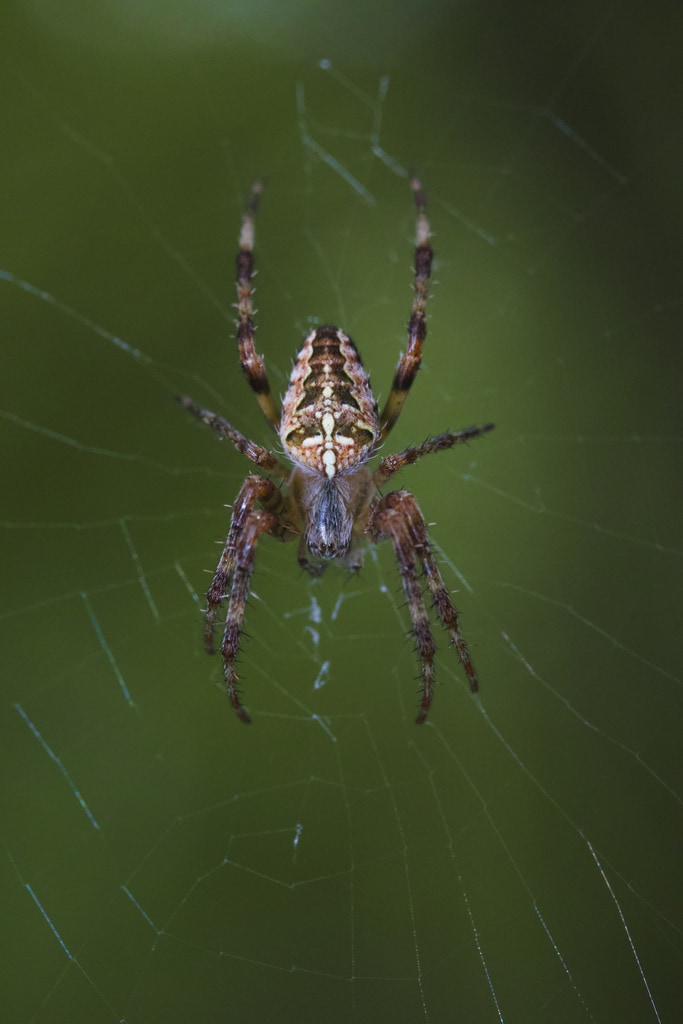
The European garden spider builds a large round orb web and often has a white cross-shaped mark on the upper side of the abdomen. The long-bodied cellar spider has a loose, irregular web, and its legs are much longer and thinner.
Biology
Habitat, diet, behavior, and conservation
Habitat and range
The long-bodied cellar spider often lives in environments associated with people. In Georgia, it can be found in houses, cellars, stairwells, storage rooms, garages, under buildings and bridges, and in natural and artificial caves. In the Caucasian Spiders data, Georgian records are known from Tbilisi, Kutaisi, Batumi, Borjomi-Kharagauli, Lagodekhi, Gori, Mtskheta, Kazbegi, Sighnaghi, Zestaponi, Oni, Kobuleti, Akhaltsikhe, Chiatura, and other places. The number of records indicates broad occurrence, but it does not confirm the species in every municipality of Georgia.
Diet
The long-bodied cellar spider is a predator and catches small arthropods that enter or approach its web. Its prey may include small insects, other spiders, and other small invertebrates living indoors. It often stays in one place for a long time and senses prey movement through web vibrations. It also catches other spiders, so its presence in a house should not by itself be treated as a sign of a pest problem.
Behavior
The web is loose, irregular, and three-dimensional: not round like orb webs. The spider often hangs upside down in it. When disturbed, it rapidly shakes its body and web, a defensive behaviour that may confuse a predator or another disturbing animal. The species is often found in dark places. In buildings it may be seen at different times of year, although the sources used here do not establish a separate seasonal calendar for Georgia. Females carry eggs in a silk sac, often near the mouthparts. Spiderlings disperse after hatching. This is general species biology, not the result of a separate study of the Georgian population.
Conservation
The current scientific name of the species is Pholcus phalangioides, and it belongs to the family Pholcidae. Older sources may list it under other names, but modern usage accepts Pholcus phalangioides. According to the World Spider Catalog, the species' natural range is associated with western Asia, although today it is widespread in many parts of the world, including Europe, the Americas, Africa, other regions of Asia, Australia, and New Zealand. In Georgia, the species is confirmed by the Caucasian Spiders checklist and many local records. The IUCN has not globally assessed it, and it is not included in Georgia's 2014 Red List. The sources used here do not define a special protection status or quantified population trend for Georgia.
Questions
Frequently asked questions
Short answers to the most important questions about Long-bodied cellar spider.
Yes. The long-bodied cellar spider is a confirmed species in Georgia. It is listed in the Caucasian Spiders Georgia checklist, and the species page presents many Georgian records.
Most often in buildings, cellars, ceiling corners, garages, and other quiet, dark places. In the sources, Georgian records are known from Tbilisi, Kutaisi, Batumi, Borjomi-Kharagauli, Lagodekhi, Gori, Mtskheta, Kazbegi, and other places.
No. The long-bodied cellar spider is considered harmless to people. Its presence in a house is not a danger, although there is no need to handle it.
Yes, it has venom, like most spiders, but it uses it to subdue prey. It is not considered a medically significant danger to people.
When disturbed, Pholcus often rapidly shakes its body and web. This is a defensive behaviour that helps confuse a predator or another disturbing animal.
No. A harvestman is a different type of arachnid: it does not spin a web, and its body appears as one piece. The long-bodied cellar spider is a true spider, builds webs, and has two main body parts.
The IUCN has not globally assessed the long-bodied cellar spider, and it is not included in Georgia's 2014 Red List.
References
Sources
References
Sources
- World Spider Catalog — Pholcus phalangioides (Fuesslin, 1775)
- Nentwig et al. 2026 — Spiders of Europe, Pholcus phalangioides
- Otto 2022 — Caucasian Spiders, Pholcus phalangioides datasheet
- Otto 2022 — Caucasian Spiders, Georgia country checklist
- Otto & Japoshvili 2018 — Spiders of Lagodekhi Reserve, Georgia
- საქართველოს მთავრობის დადგენილება №190 (2014) — წითელი ნუსხა
Species profiles are compiled from peer-reviewed literature and established biodiversity databases, and are reviewed as new taxonomic and conservation data become available.
Related guides


