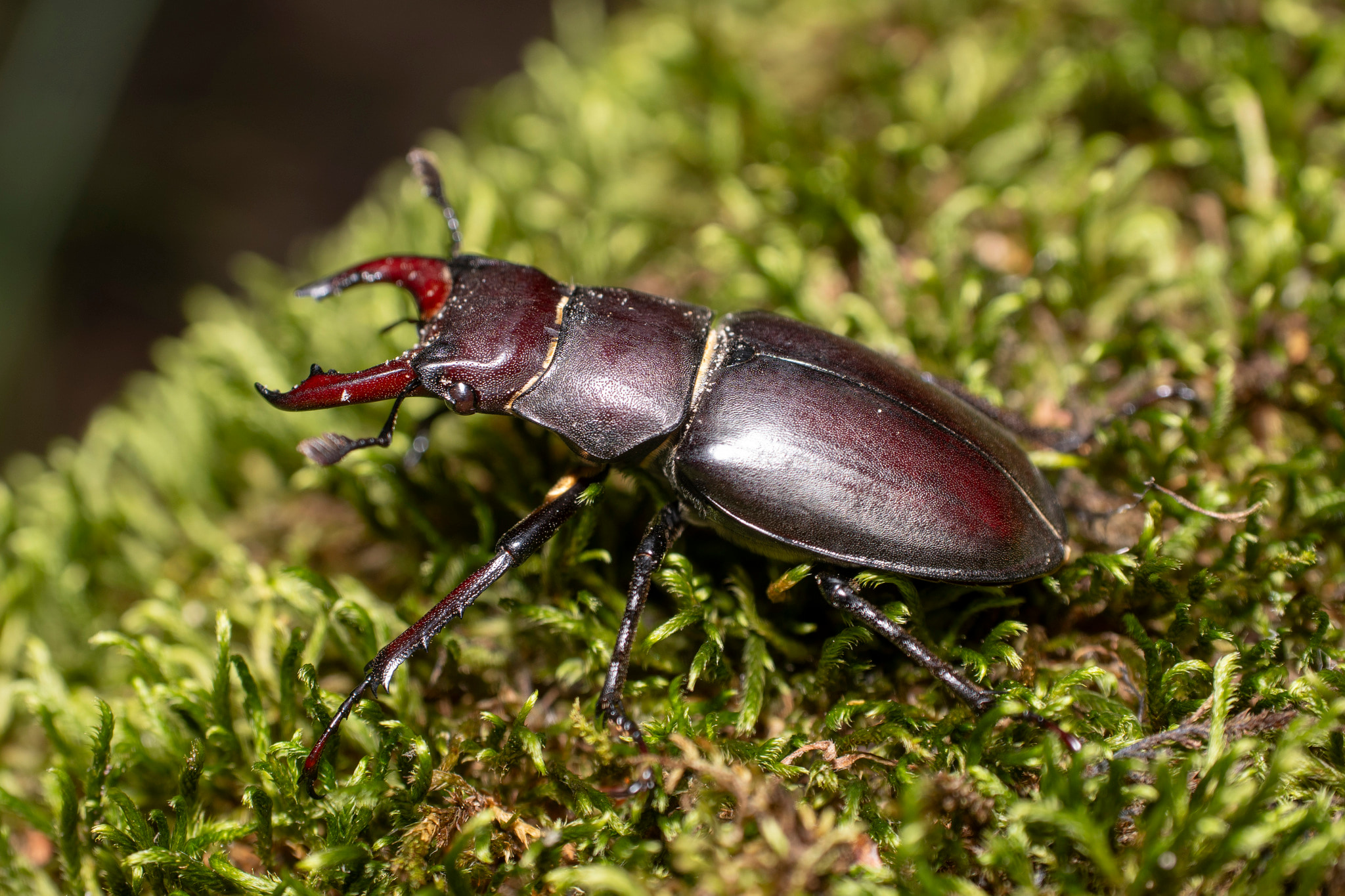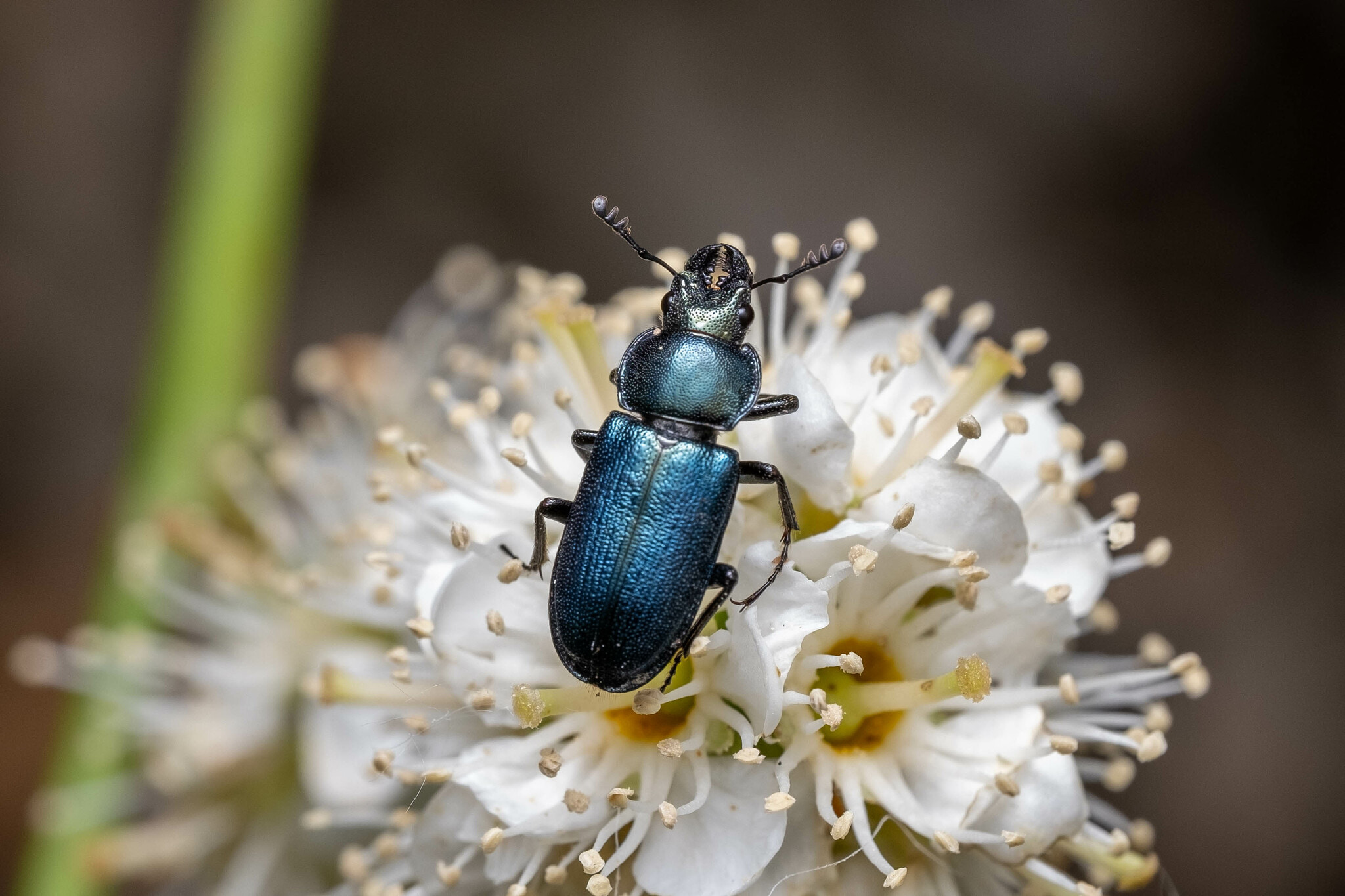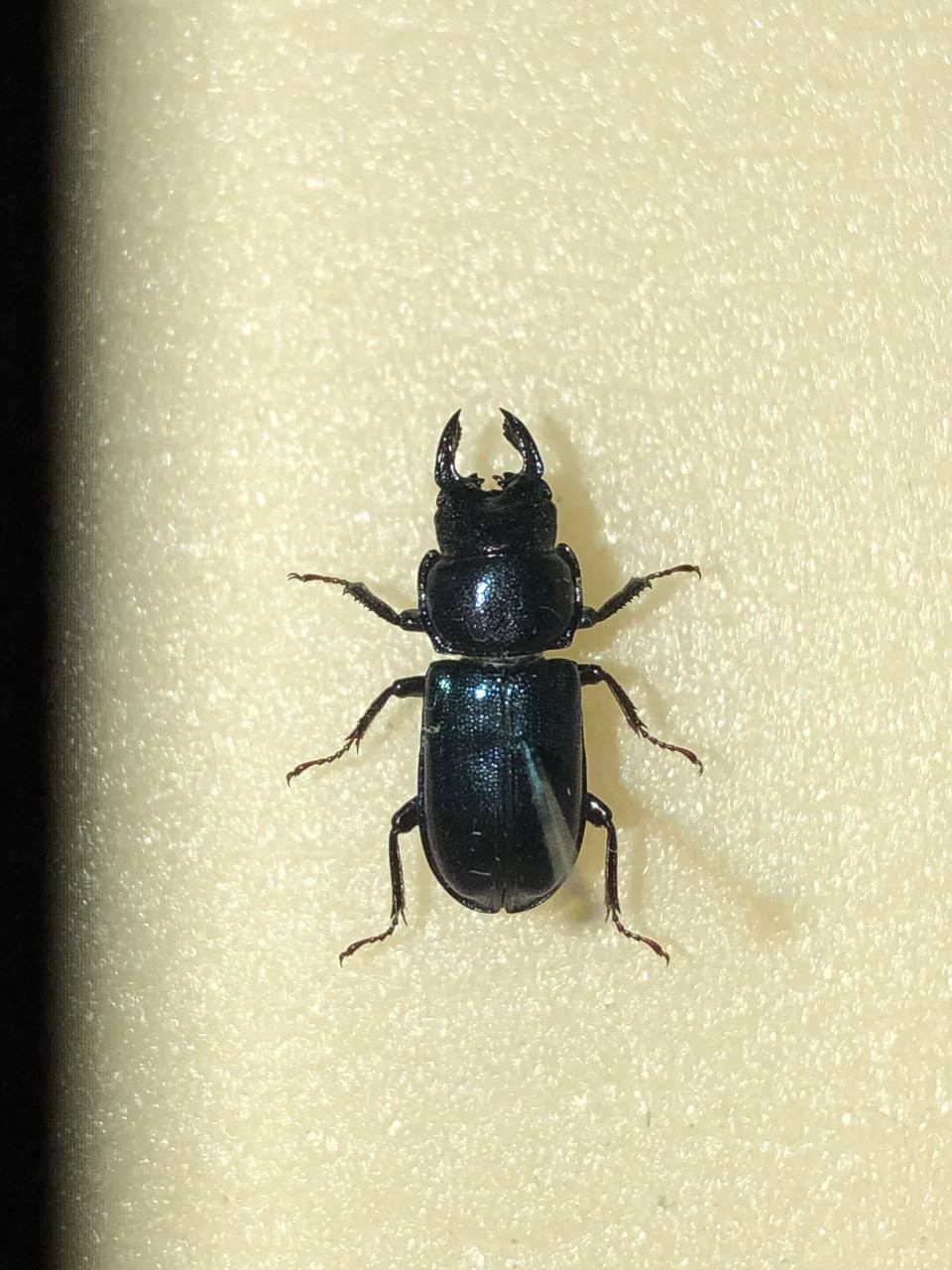

Horned stag beetle
Sinodendron cylindricum
Johan Kjær Prehn · 8400 Ebeltoft
Key facts in one look
- Size
- 12–16 mm
- Group
- Insect
- Family
- Lucanidae
- Status in Georgia
- Listed for the country's fauna
- Activity
- Spring–summer
- Conservation
- NE
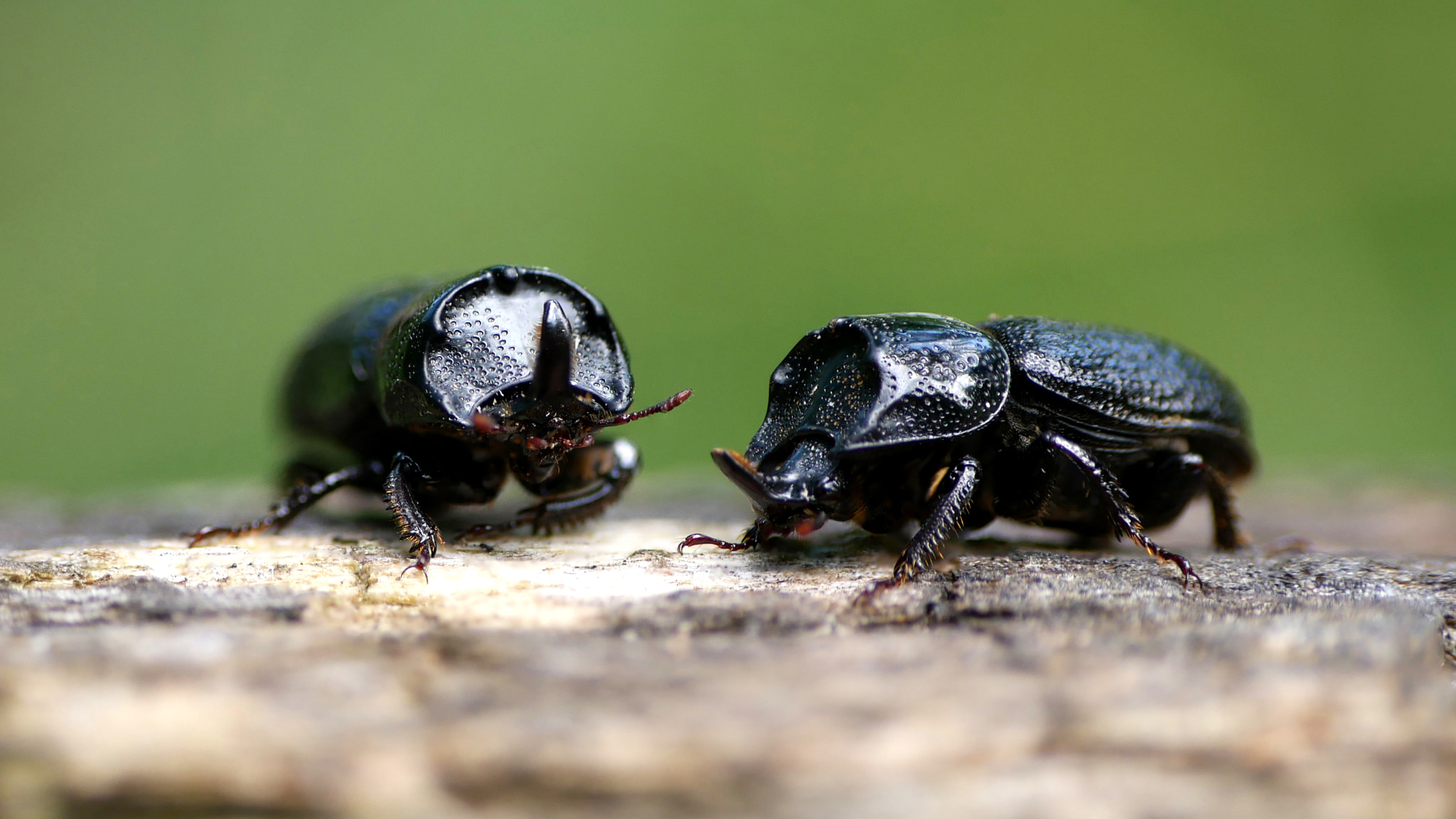
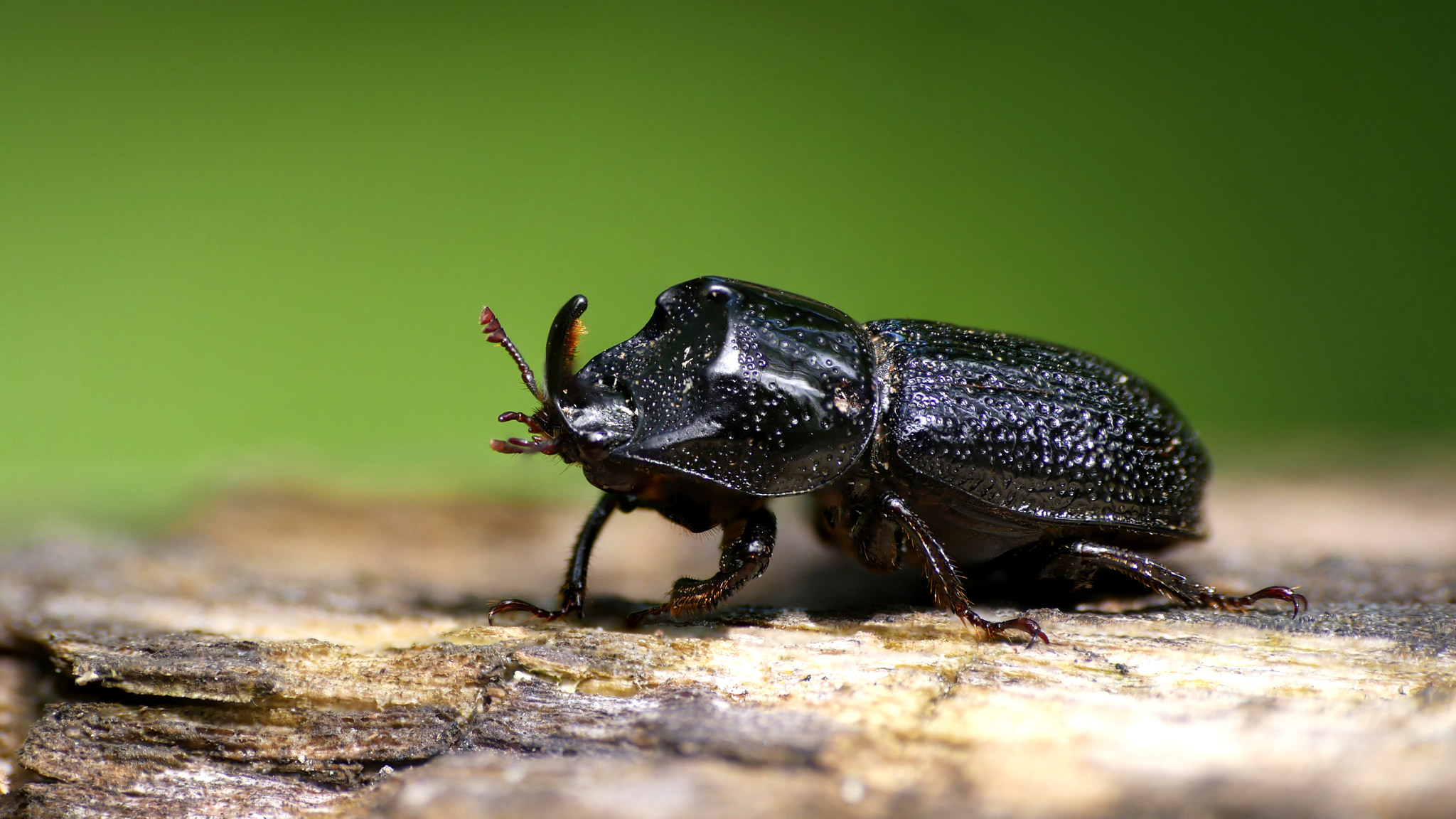
The horned stag beetle (Sinodendron cylindricum) belongs to the stag beetle family, yet it looks more like a true rhinoceros beetle. The male has a well-developed horn on his head, the female a much smaller one. It is 12–16 mm long, with a cylindrical, very shiny black body, sometimes with a turquoise sheen. Its larva develops for three to four years in the white-rotted wood of broad-leaved trees. In Georgia it is known from the Khevsha area and the Racha Range, so take a careful look at old stumps and fallen trees in the woods.
Identification
Horned stag beetle: how to identify it
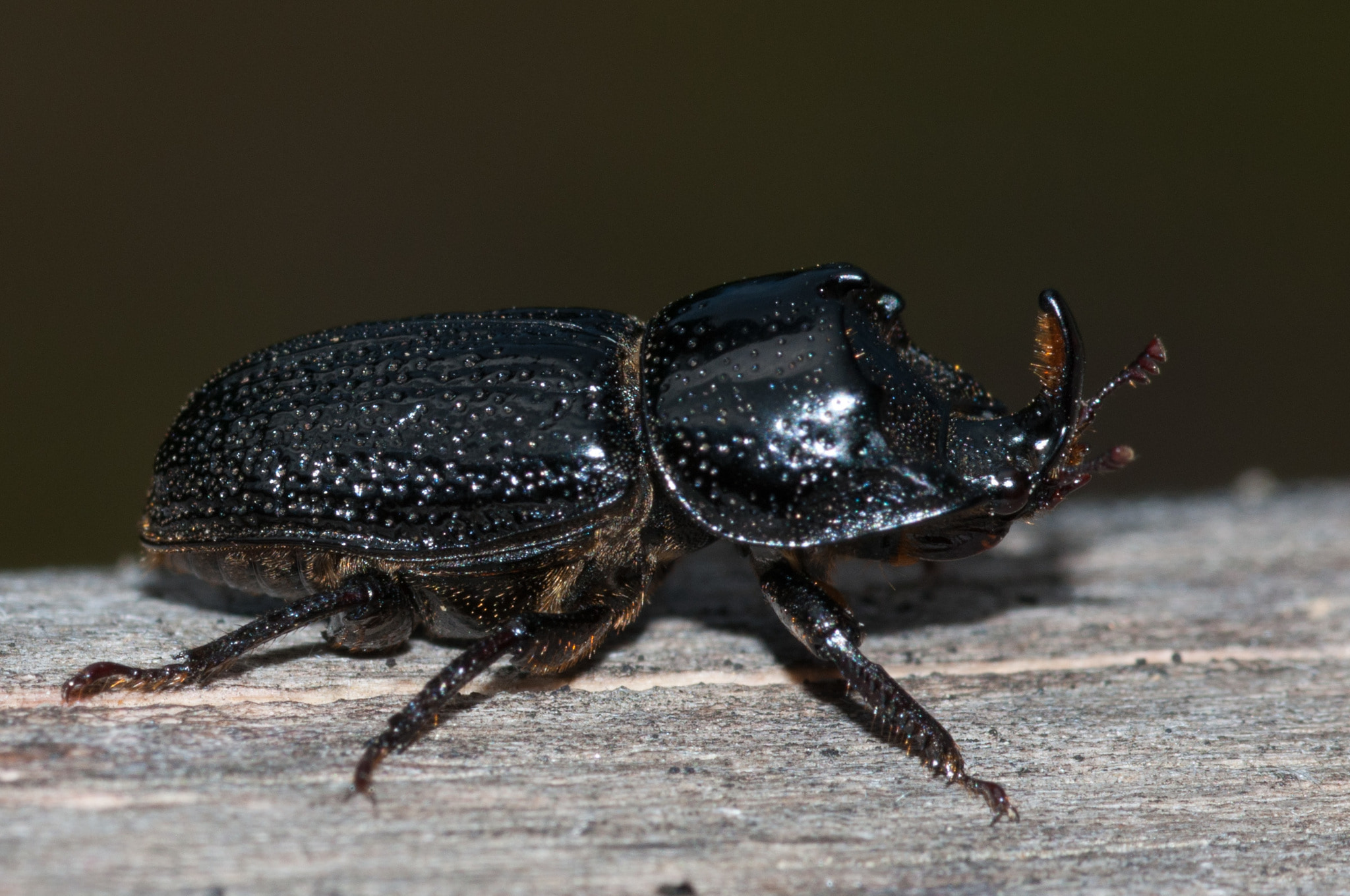
A cylindrical, shiny black beetle 12–16 mm long. The first thing you notice is the horn rising from the male's head. It has nothing like a stag beetle's jaws and at first glance looks like a small rhinoceros beetle.
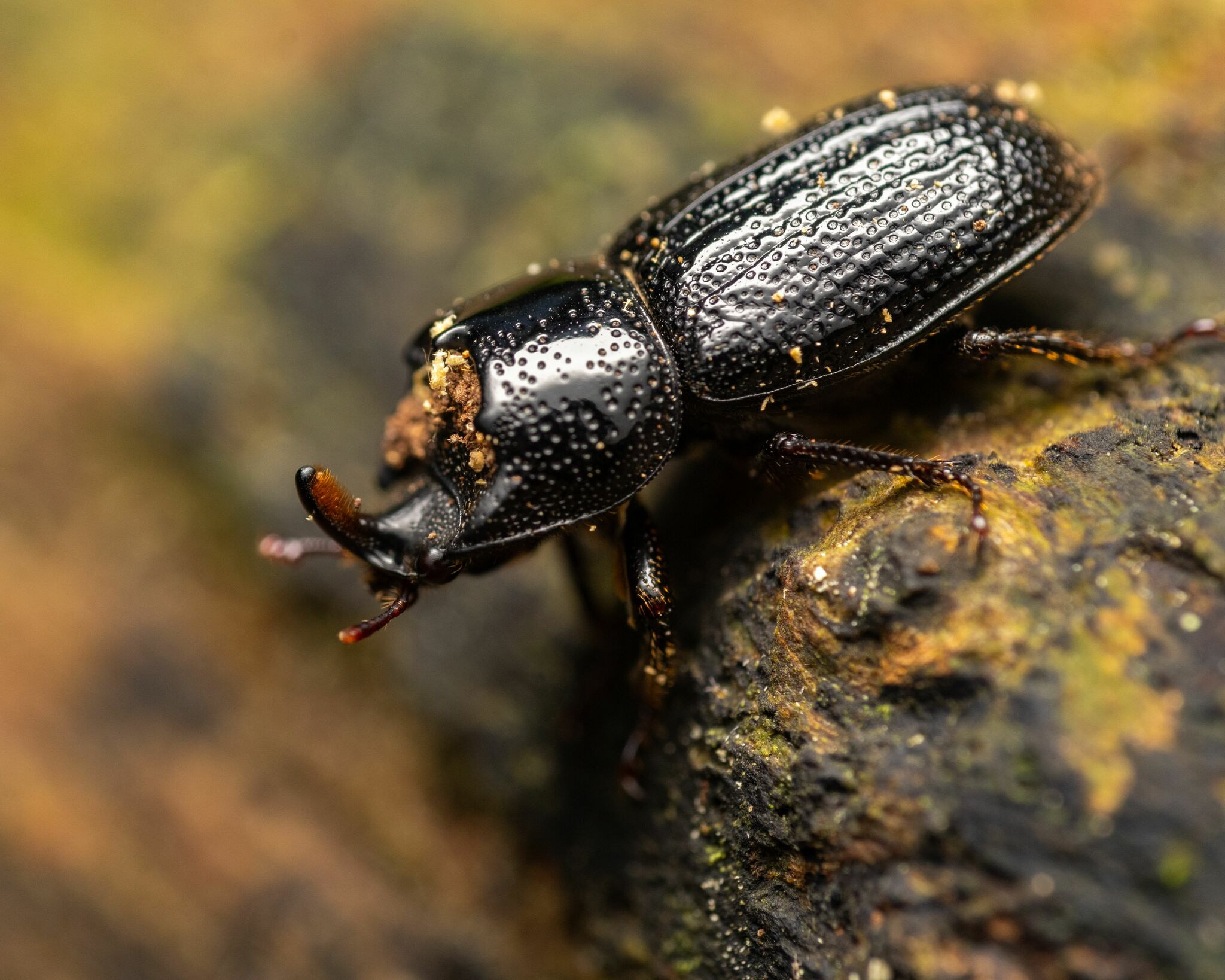
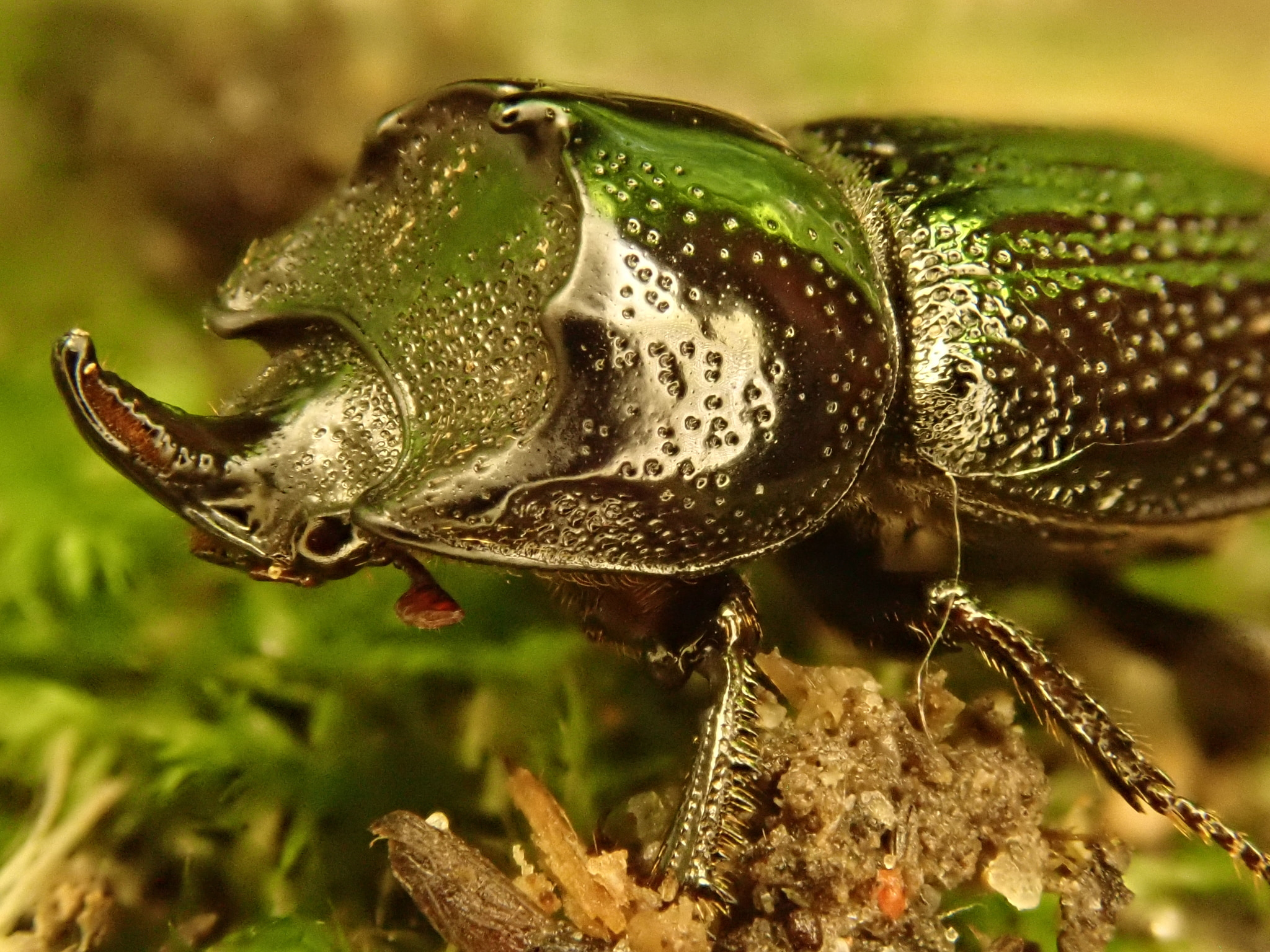
The male has a well-developed horn on his head, the female a much smaller one. The male's pronotum has deep hollows, the female's shallow ones. So you can tell the sex even from a photo taken from above.
The body is rounded and shaped like a cylinder. The wing cases and pronotum carry rows of pits and grooves. These features show well in a close photo or with a hand lens.
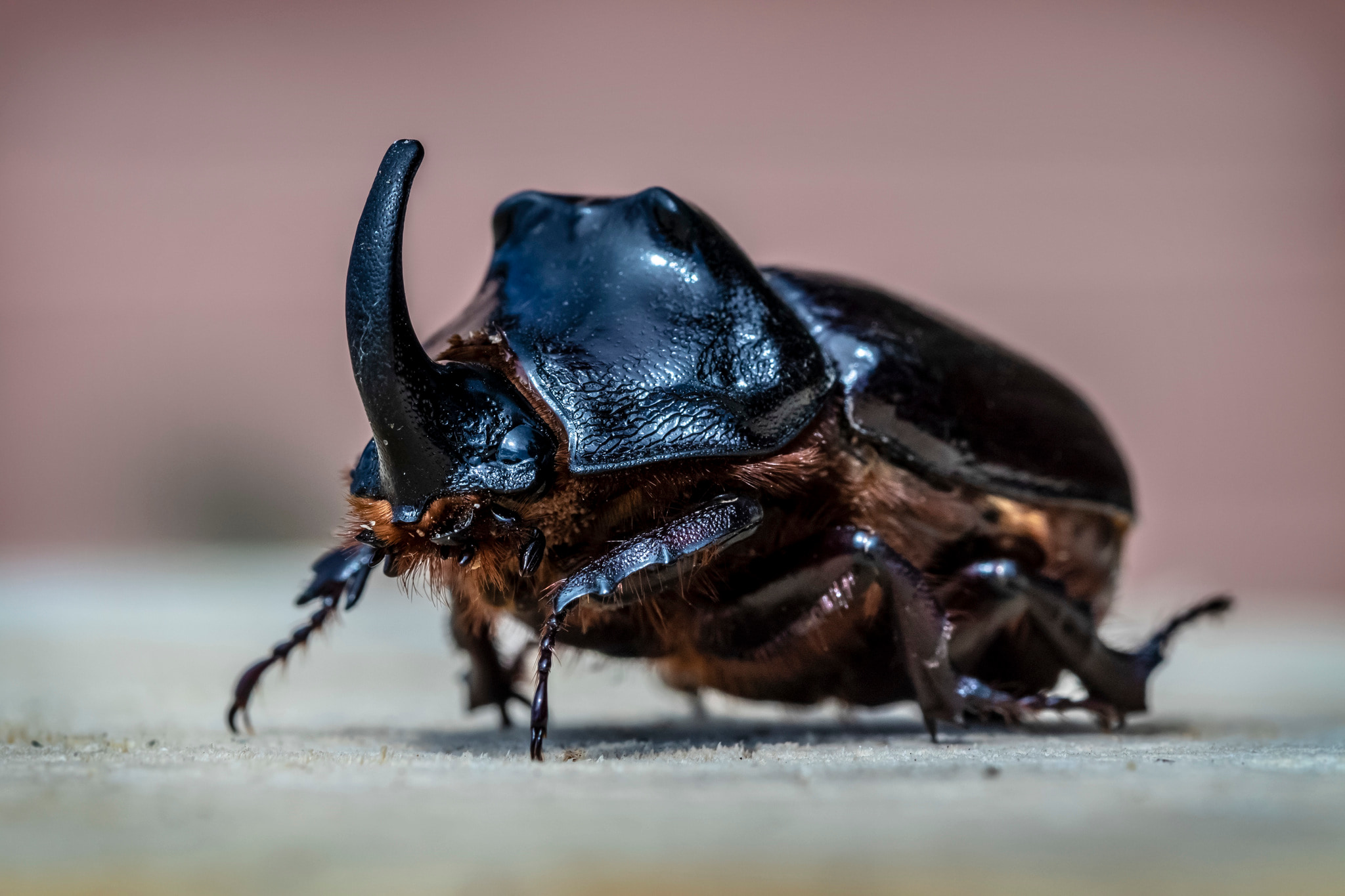
Because of the horn it can be mistaken for a rhinoceros beetle. The horned stag beetle, however, is only 12–16 mm long, shiny black and cylindrical. If the beetle is small and black, the horn makes it easy to recognise.
Colour
It is a very shiny black, sometimes with a turquoise sheen. It has no pale spots or stripes. Rows of pits and grooves show on the wing cases and the pronotum.
Swatches are illustrative. Do not identify a species by colour alone.
Often confused with
It is a beetle of broad-leaved woodland that depends on old, rotting wood. It prefers natural broad-leaved forest, especially in cooler places higher up. Beyond woodland it also lives in old willow stands, avenue trees, parkland, hedgerows and orchards. In Georgia it is known from the Khevsha area and the Racha Range.
The horned stag beetle is listed for Georgia's fauna. Its three records come from three regions: Imereti (Nunisi), Samtskhe-Javakheti (Borjomi Municipality) and Adjara (Batumi). It has been found in April, June and July. The Batumi find is a collection specimen taken in April 2022.
Data: Reptiles.ge + iNaturalist · Methodology
- Field observation
- Several records in one spot
- Region with records
The larva eats the white-rotted wood of broad-leaved trees, from stumps to fallen logs. It uses a long list of trees: oak, beech, birch, alder, hornbeam, aspen, willow, lime, maple, horse chestnut, ash, rowan, apple, cherry, pear and plum, and also fir. It is often found in wood broken down by bracket fungi such as the artist's bracket and the tinder fungus. The adult feeds on tree sap.
Adults emerge in spring or summer. They are active by day and often live in groups in the rotting wood of willow, birch and lime. Both larvae and adults survive the winter. The larva is white and soft, with a brown head. It develops for three to four years in rotting wood, pupates right there, and the new beetle comes out of the wood.
It has not been assessed on the global IUCN Red List (NE). On the IUCN European Red List it is assessed as Least Concern (LC, 2010). It is not on Georgia's Red List. It is rare in Central Europe and is listed in the Red Data Books of several Russian regions, for example Smolensk, Leningrad and Rostov. It needs old trees and rotting wood left in the forest.
Related guides
Continue with related pages
Yes, it is on the list of Georgia's stag beetles. It is known from the Khevsha area and the Racha Range. It chooses broad-leaved woodland with old, rotting wood. Its full distribution in Georgia has not yet been described.
A stag beetle. Because of the horn on the male's head it looks like a true rhinoceros beetle, but it belongs to the stag beetle family, Lucanidae. The rhinoceros beetle belongs to another family, Scarabaeidae. The horned stag beetle is cylindrical, shiny black and only 12–16 mm long. If you find a small, black, horned beetle in rotting wood, photograph it from above and from the side: size and shape separate the two well.
No, it is completely harmless to people and has no venom. The male's horn is only a feature of its appearance and does people no harm. If you need to move it, let it walk onto a leaf or a piece of bark and leave it where it is.
The larva develops for three to four years in the white-rotted wood of broad-leaved trees. It pupates right there, in the wood. The new beetles emerge in spring or summer. So it needs one rotten stump for several years.
References
What this profile is based on
Species profiles are compiled from peer-reviewed literature and established biodiversity databases, and are reviewed as new taxonomic and conservation data become available.
Prepared by the Reptiles.ge editorial team from the sources listed here.