Platycerus caucasicus
Platycerus caucasicus
Andrey Davydenko · Seversky District
Key facts in one look
- Size
- 10–12 mm (male up to 15 mm with jaws)
- Group
- Insect
- Family
- Lucanidae
- Status in Georgia
- Listed for the country's fauna
- Range
- Caucasus, northern Iran, Turkey
- Conservation
- NE
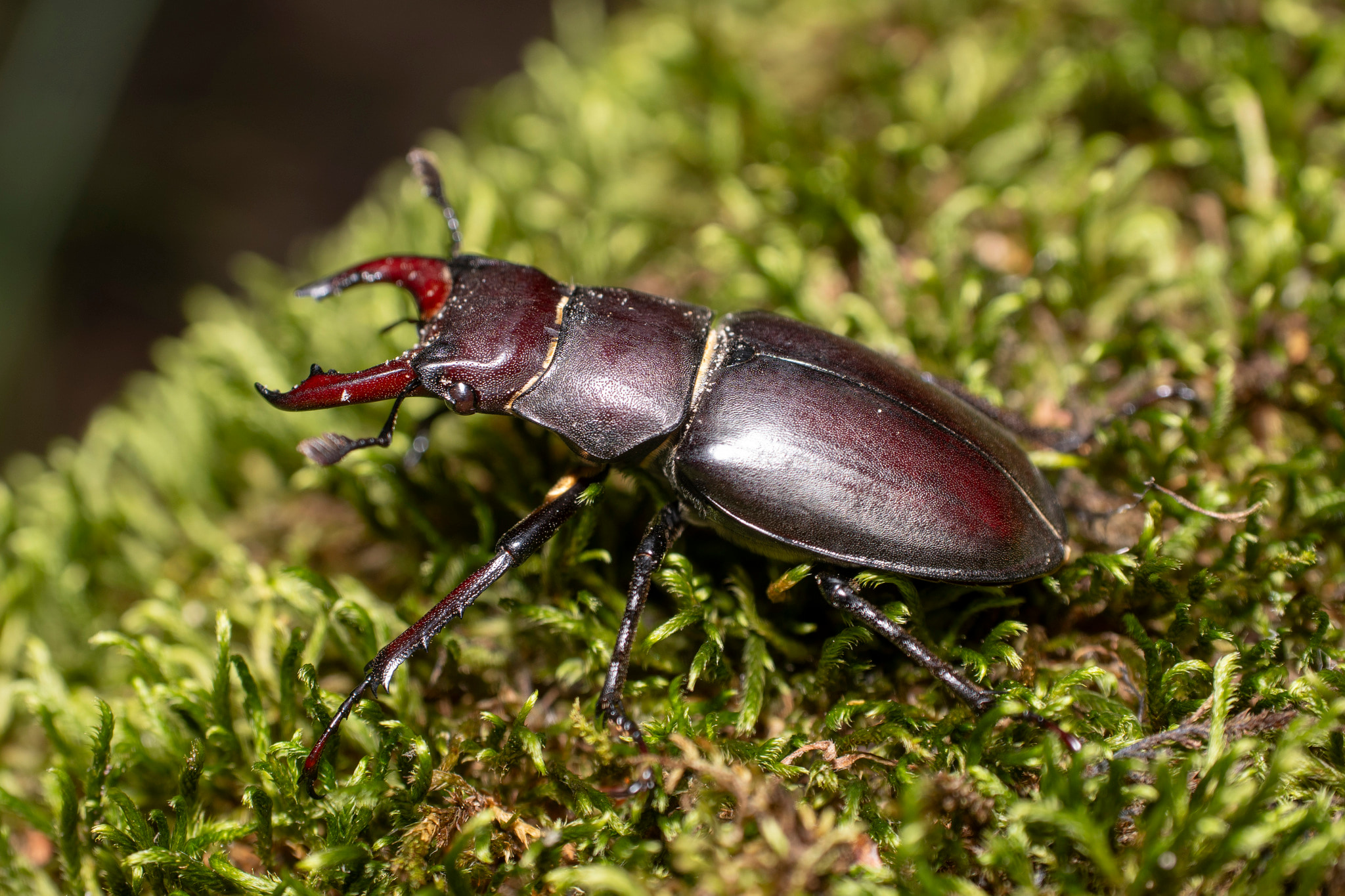
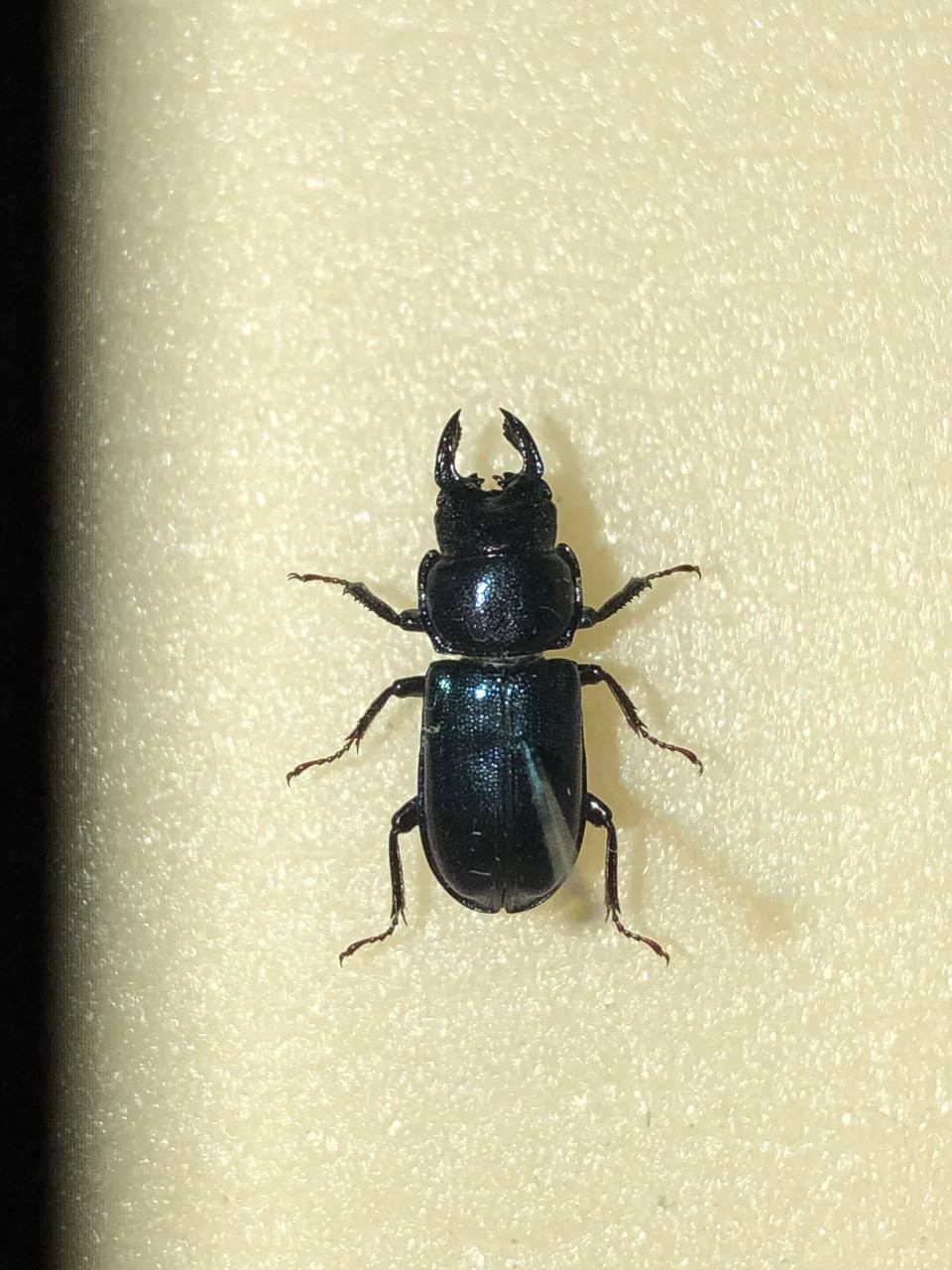
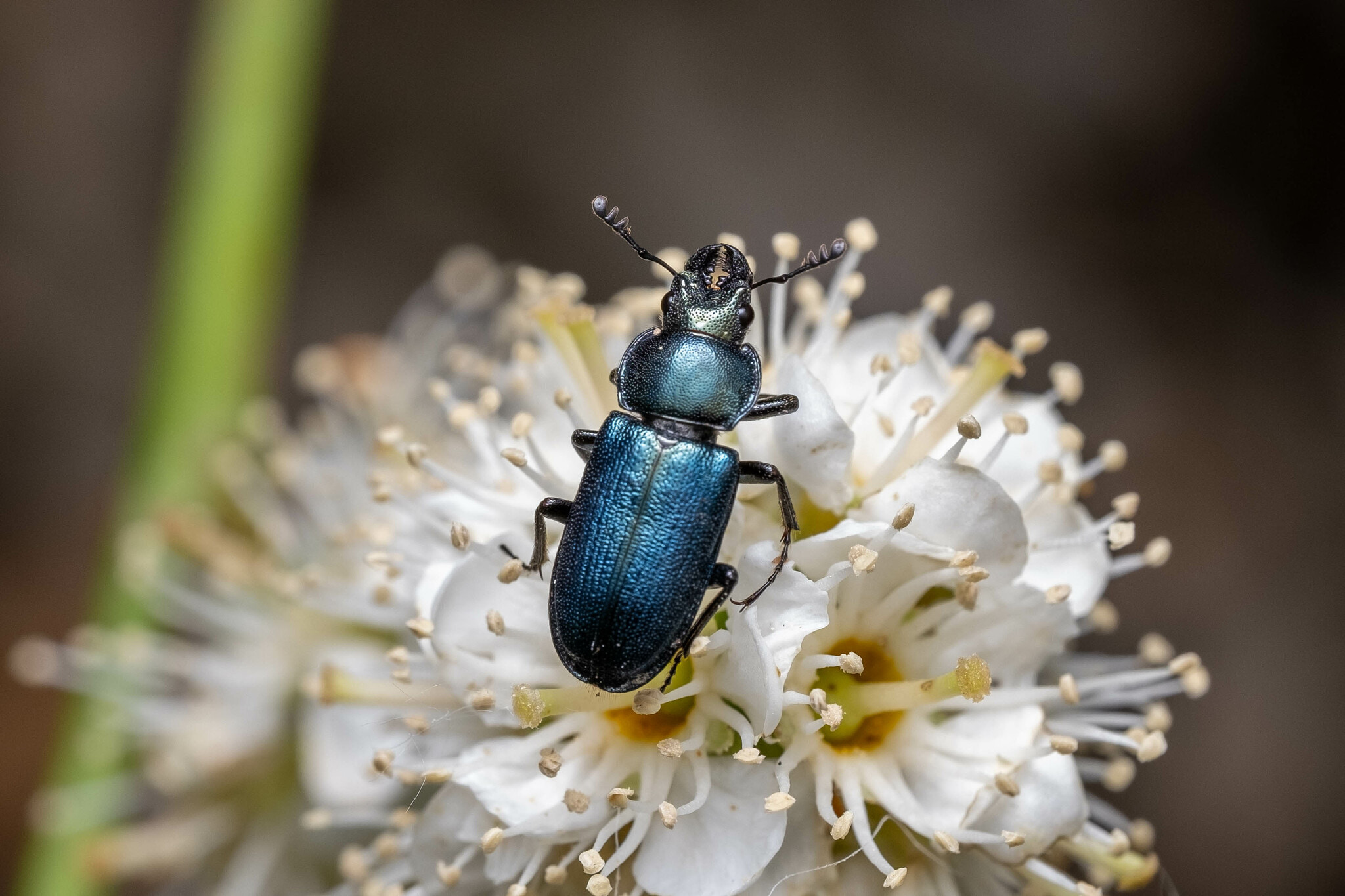
Platycerus caucasicus is a small stag beetle of the broad-leaved and beech forests of the Caucasus. It is 10–12 mm long, and a large male reaches 15 mm including the jaws. Its colour ranges from dark bronze to green, blue and violet-black. It was described in 1864 from material that probably came from Georgia, yet its larva has still not been described. If you find a small, shiny stag beetle in the woods, take a close photo: it is easily mistaken for Platycerus caraboides.
Identification
Platycerus caucasicus: how to identify it
A small stag beetle 10–12 mm long. Males and females are the same size, except that a large male reaches 15 mm including the jaws. The first thing you notice is the metallic sheen. It is most easily mistaken for Platycerus caraboides.
Males come in two forms. Large males have jaws longer than the head, small ones shorter. The long jaws of a large male are what separate it from Platycerus caraboides, whose male has jaws shorter than the head.
Small males and females look very much like Platycerus caraboides. The two species are almost the same size. Such a beetle is identified from a close photo or with a hand lens, and sometimes only by a specialist.
Colour
The colour varies greatly: dark bronze, green, blue or violet-black. The body shines like metal. Colour will not identify the species, because Platycerus caraboides shines in a similar way.
Swatches are illustrative. Do not identify a species by colour alone.
Often confused with
It is a beetle of the broad-leaved and beech forests of the Caucasus. In the Caucasus it occurs from the northern foothills to Armenia and Azerbaijan. Outside the Caucasus it also lives in northern Iran and Turkey. In Georgia it is known from the Khevsha area.
Platycerus caucasicus is listed for Georgia's fauna. One museum specimen with an exact place comes from the Meskheti Range, in Imereti. When it was collected is not known.
Data: Reptiles.ge + iNaturalist · Methodology
- Field observation
- Region with records
What the larva feeds on has not been studied: neither the larva nor the pupa has been described. The adult's food is not known either. All that is known is that it lives in broad-leaved and beech forests.
The life of Platycerus caucasicus is poorly studied. Its development from egg to adult has not been described, and the larva and pupa are unknown. Males come in two forms: large males have jaws longer than the head, small ones shorter.
Related guides
Continue with related pages
Yes, it is on the list of Georgia's stag beetles and is known from the Khevsha area. The species was described in 1864 from material that probably came from Georgia. It chooses the broad-leaved and beech forests of the Caucasus. Its exact distribution in Georgia has not yet been described.
With difficulty. Both are small stag beetles with a metallic sheen, and the colour of both varies. Large males of Platycerus caucasicus have jaws longer than the head. The male Platycerus caraboides has jaws shorter than the head. This feature does not work for small males and females, so a specialist identifies the species from a close photo.
No, it is completely harmless to people and has no venom. It is a beetle 10–12 mm long, and a large male measures 15 mm including the jaws. If one crawls onto your hand, let it walk onto a leaf or a twig and leave it where it is.
Almost nothing. The larva and pupa of Platycerus caucasicus have still not been described. Its development has not been studied. So we do not know which trees it develops in or for how long.
References
What this profile is based on
Species profiles are compiled from peer-reviewed literature and established biodiversity databases, and are reviewed as new taxonomic and conservation data become available.
Prepared by the Reptiles.ge editorial team from the sources listed here.