
Caucasian owlfly
Libelloides ustulatus
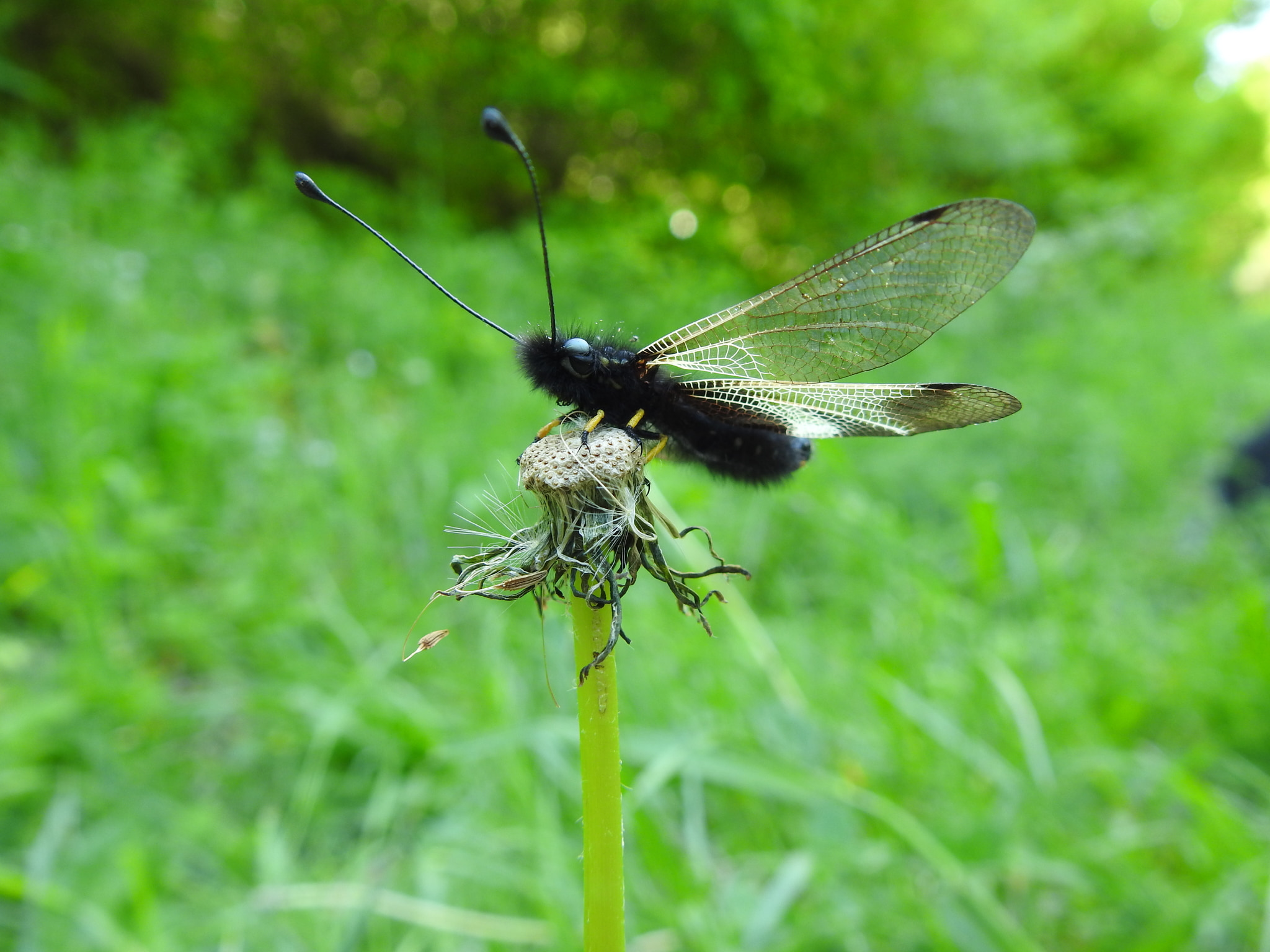
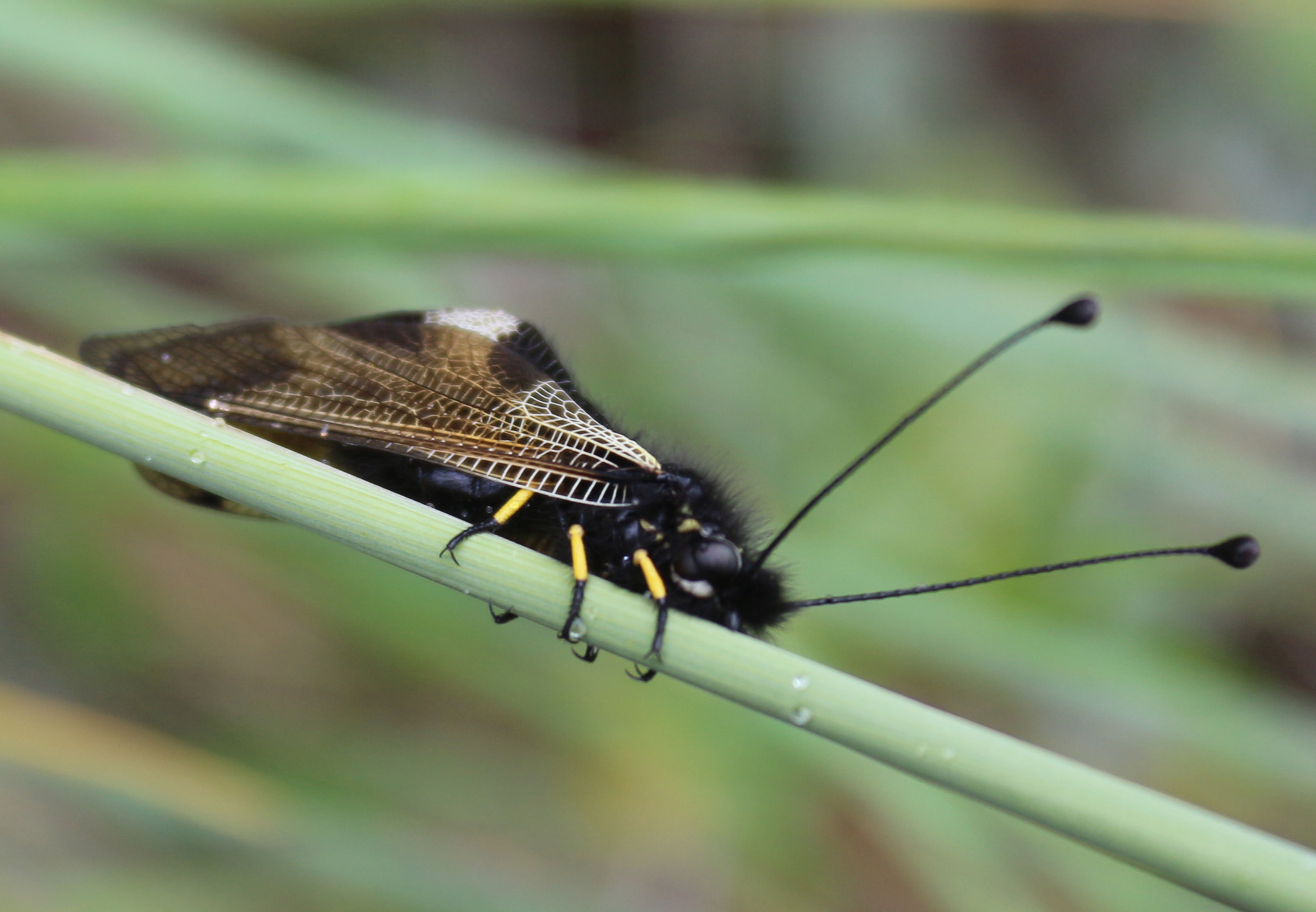
Natalia Bulbulashvili · Shida Kartli Georgia field photo
Key facts in one look
- Group
- Insect
- Family
- Ascalaphidae
- Altitude in Georgia
- 700–2,200 m
- Flight period
- May–June, into July in the mountains
- Status in Georgia
- Native species
- Conservation
- NE
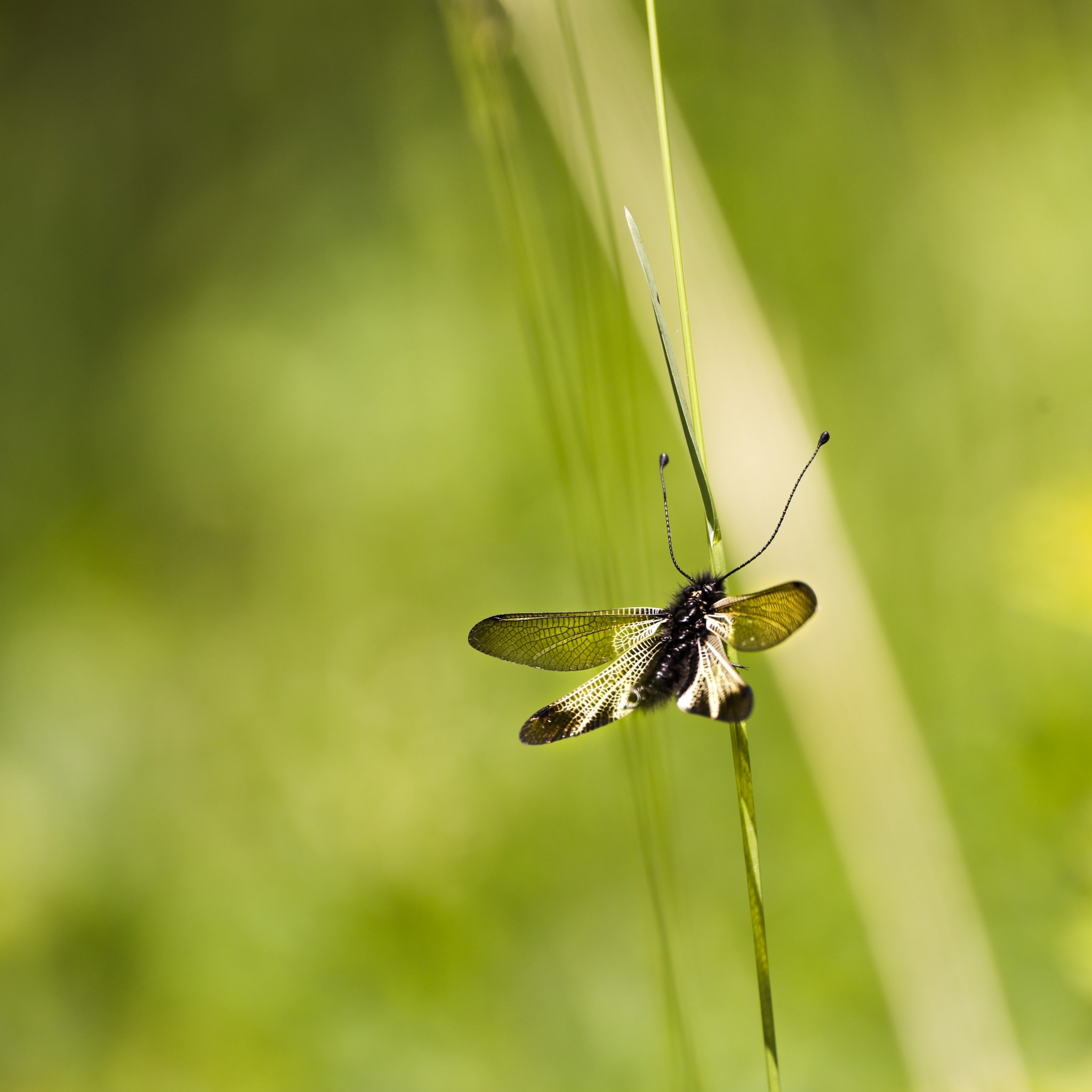
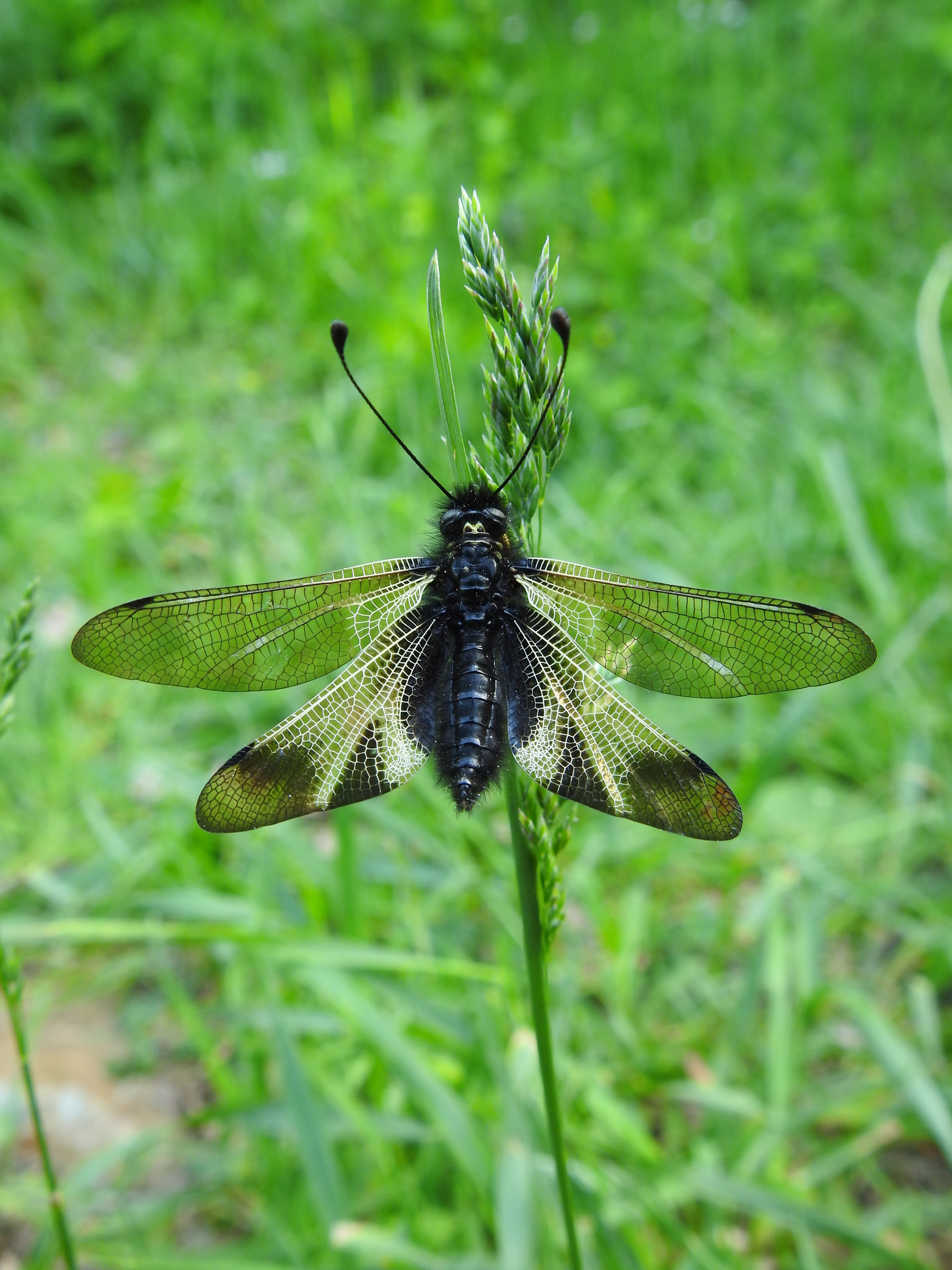
From a distance the Caucasian owlfly (Libelloides ustulatus) looks like a dragonfly, but it is a lacewing relative, close to the antlions. It lives in the Caucasus and Anatolia. In Georgia it lives mainly from the Meskheti Range to the outskirts of Tbilisi, on forest meadows at 700–2,200 m. It flies mainly in May–June, and in the mountains into July. It is harmless to people, so take a photo and leave it where it is.
Identification
Caucasian owlfly: how to identify it
An owlfly of the genus Libelloides, in the lacewing order. Owlflies have large, bulging eyes and long antennae with a knob at the tip. It is so similar to Libelloides hispanicus that some treat it as a subspecies of that species. Its size and the features that identify it reliably have not yet been described.
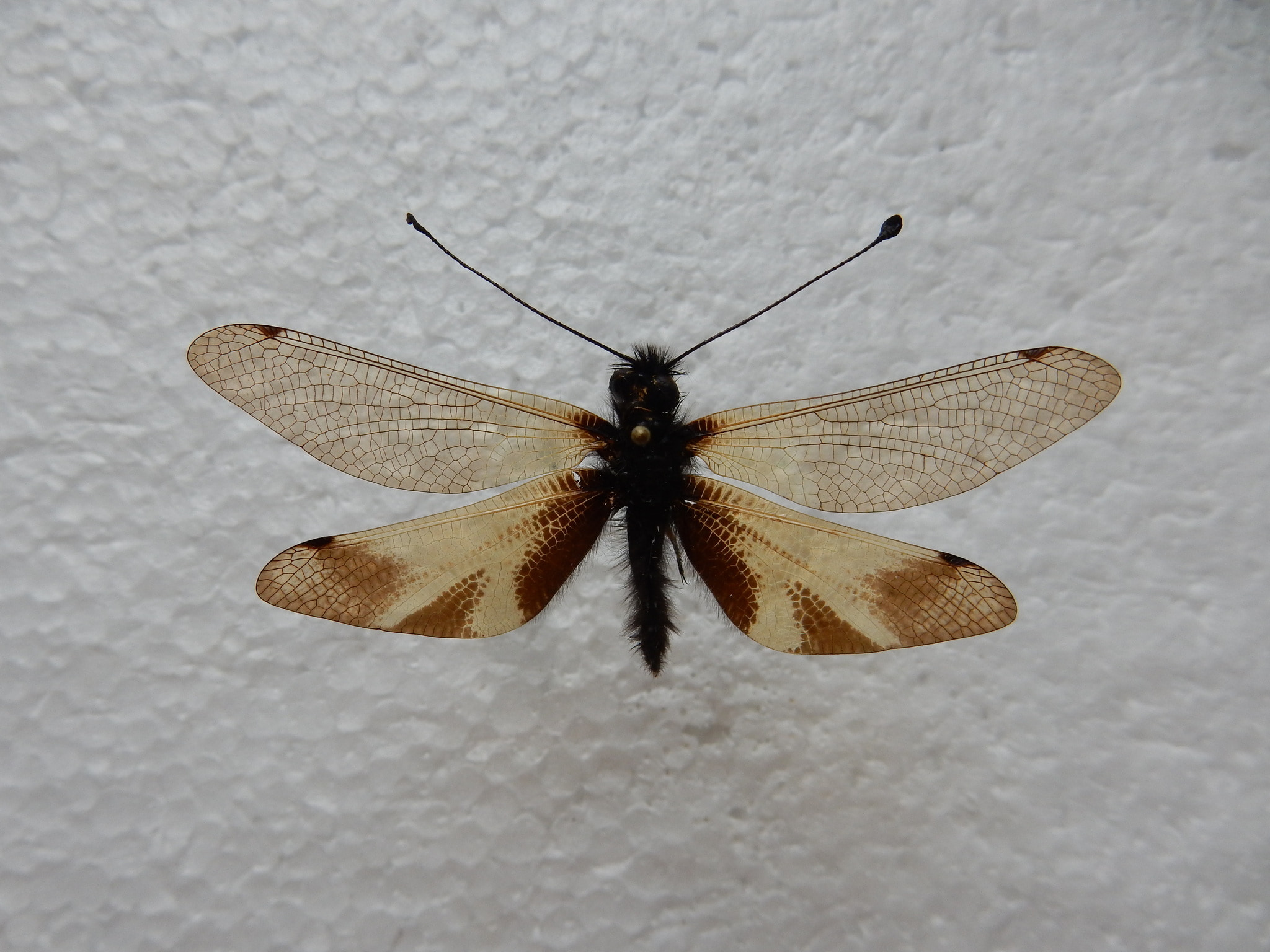
The antennae are long and sharply knobbed at the tip. This separates an owlfly from a dragonfly, which has short, bristle-like antennae. An antlion has short, weakly clubbed antennae.
In European owlflies the large compound eyes are divided in two. This is a family feature and does not identify the species. Get the head, antennae and wings in the same photo.
Georgia's other Libelloides, L. macaronius, flies at a different time and place: from May to August, mostly in dry areas of central and south-eastern Georgia. The Caucasian owlfly flies mainly in May–June on forest meadows. Note the place and date with your photo.
Colour
A white form is also known: such a male was collected in 1912 at Likani, near Borjomi. Its usual colouring has not been described separately, so do not rely on colour.
Swatches are illustrative. Do not identify a species by colour alone.
The Caucasian owlfly is an insect of mountain forest meadows. Unlike Georgia's other owlflies, it lives mostly higher up, on meadows at forest edges. It occurs mainly on the Meskheti Range and as far as the outskirts of Tbilisi, at 700–2,200 m. It has been found on meadows at forest edges, in a pine plantation and by coniferous forest. It very likely also lives in the subalpine belt of the northern mountains.
The Caucasian owlfly is native to Georgia. Most records come from Kvemo Kartli, around Didgori and Kiketi, and from Samtskhe-Javakheti, around Borjomi and Abastumani. It has also been found in Shida Kartli, Mtskheta-Mtianeti and Tbilisi, and in the mountains of Svaneti, in Samegrelo — Zemo Svaneti and Racha — Lechkhumi — Kvemo Svaneti. It occurs from late April to mid-July, most often in May. In July it has been found only in the mountains of Svaneti.
Data: Reptiles.ge + iNaturalist · Methodology
- Field observation
- Several records in one spot
- Photo record
- Region with records
Adult owlflies are predators: they catch other flying insects in mid-air. Their larvae are predators too. They lie in wait at the soil surface, in leaf litter or on plants and seize prey with their large, toothed jaws. What the Caucasian owlfly itself eats has not been described separately.
The Caucasian owlfly flies mainly in late spring and early summer. It is usually seen in May, and above 2,000 m until the end of June. In the mountains of Svaneti it has also been found in the first half of July. Most European owlflies have one generation a year or take more than a year to develop, and they always spend the winter as larvae. The larva of this species has not yet been described. Owlflies are fast flyers and are active by day or at dusk. They lay their eggs on twigs and plant stems, and the larva pupates in a round silk cocoon in leaf litter or soil.
It has not been assessed on the global IUCN Red List (NE). It is not on Georgia's 2014 Red List. It is little studied and rarely seen: even its larva has not yet been described. It lives in the Caucasus and Anatolia, and in Georgia it is mostly tied to the forest meadows of the Meskheti Range.
Related guides
Continue with related pages
Neither. The Caucasian owlfly is an insect of the lacewing order and a close relative of the antlions. You can tell it from a dragonfly by its antennae: an owlfly has long antennae with a knob at the tip, while a dragonfly's are short and bristle-like. Many owlflies have broad, spotted wings, which make them look like butterflies.
Mainly on the Meskheti Range and along its extension to the outskirts of Tbilisi, at 700–2,200 m. It is known from Samtskhe-Javakheti, Shida Kartli, Kvemo Kartli, Mtskheta-Mtianeti and Tbilisi. It has also been found in the mountains of Svaneti, in Samegrelo — Zemo Svaneti and Racha — Lechkhumi — Kvemo Svaneti. It was collected at Borjomi as early as 1911–1912. It very likely also lives in the subalpine belt of the northern mountains.
Mostly in May and June. It usually flies in May, and above 2,000 m it can be seen until the end of June. In the mountains of Svaneti it has also been found in the first half of July. Georgia's other species of the genus, Libelloides macaronius, flies from May to August and prefers drier places. So an owlfly seen on a forest meadow in early summer is probably the Caucasian one.
No, the Caucasian owlfly is harmless to people. It has no venom and does not attack people. It hunts other insects. If you find one, take a photo and leave it where it is.
References
What this profile is based on
Species profiles are compiled from peer-reviewed literature and established biodiversity databases, and are reviewed as new taxonomic and conservation data become available.
Prepared by the Reptiles.ge editorial team from the sources listed here.