
Platycerus caraboides
Platycerus caraboides
Julien C. · 70 Stuttgart-Sillenbuch
Key facts in one look
- Size
- 9–13 mm
- Group
- Insect
- Family
- Lucanidae
- Status in Georgia
- Listed for the country's fauna
- Activity
- May–Jul
- Conservation
- NE
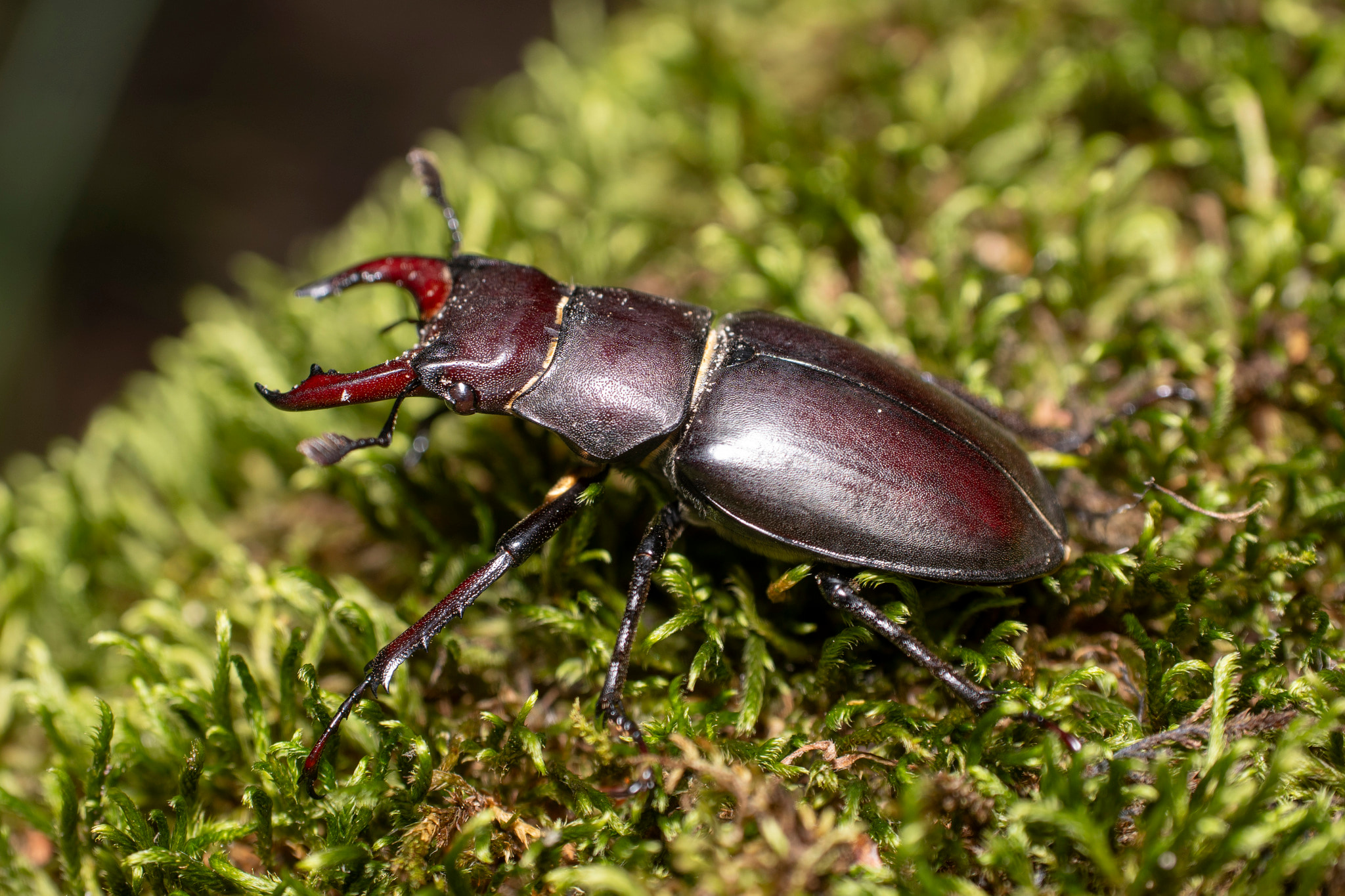
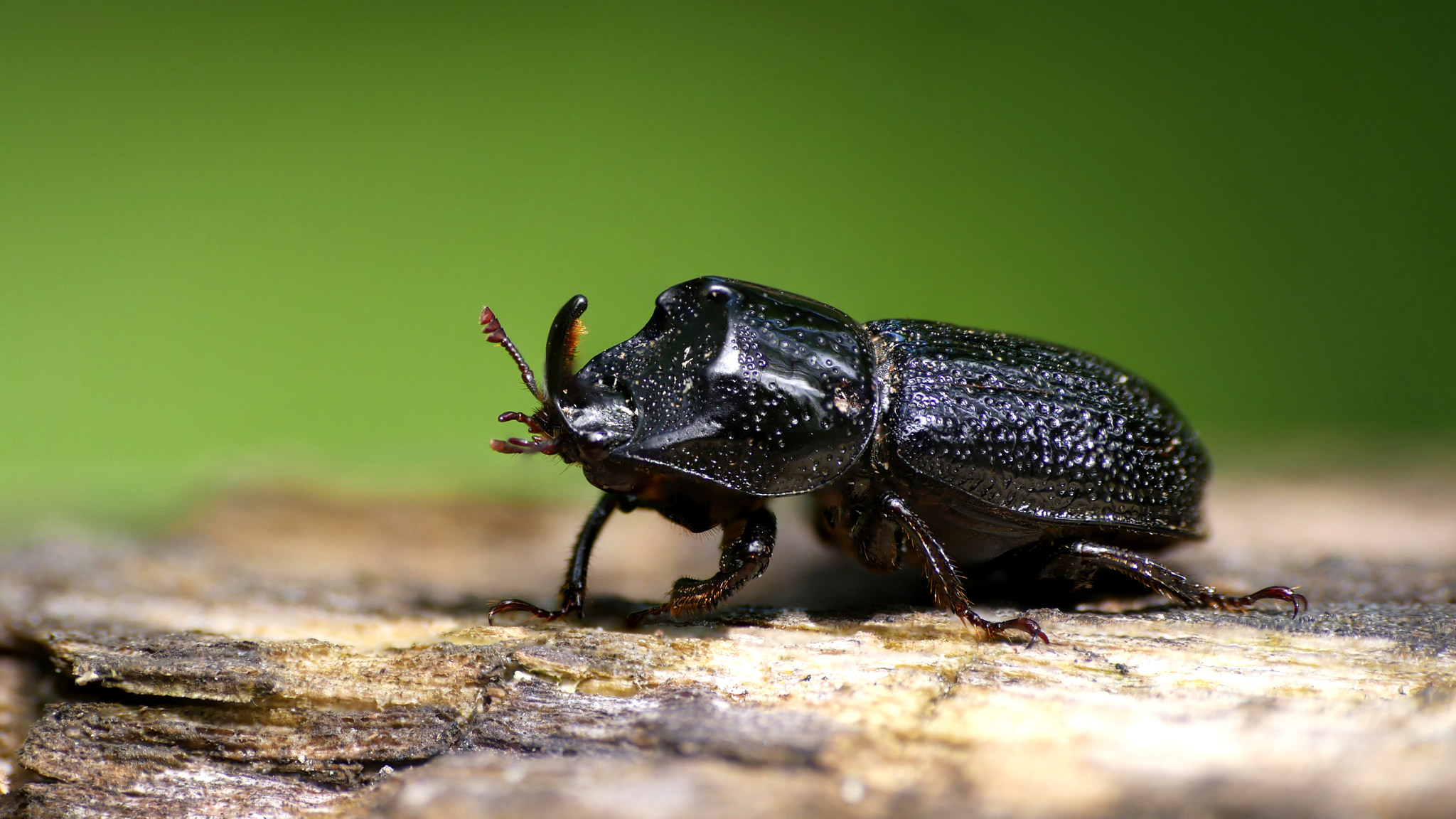
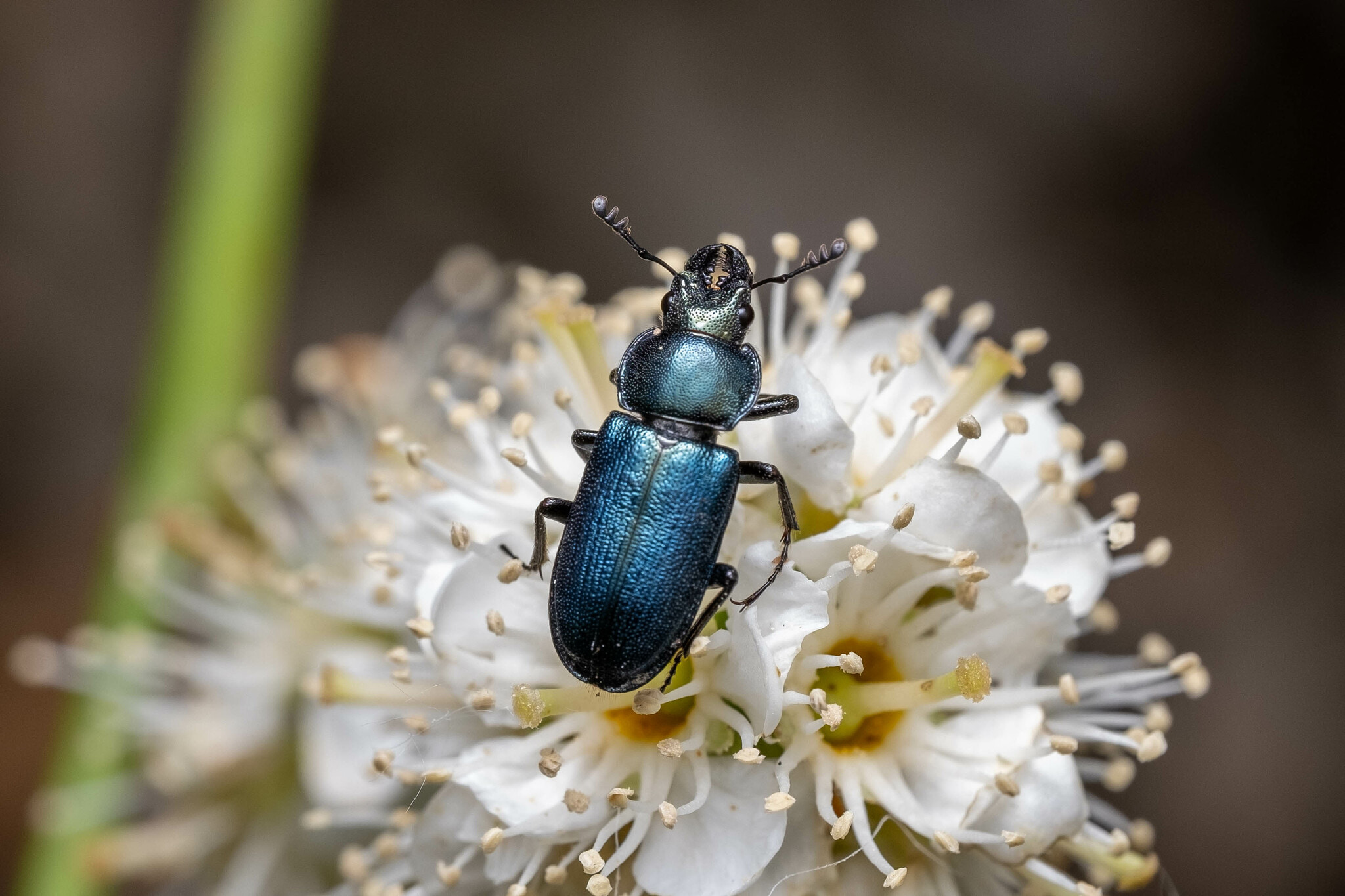
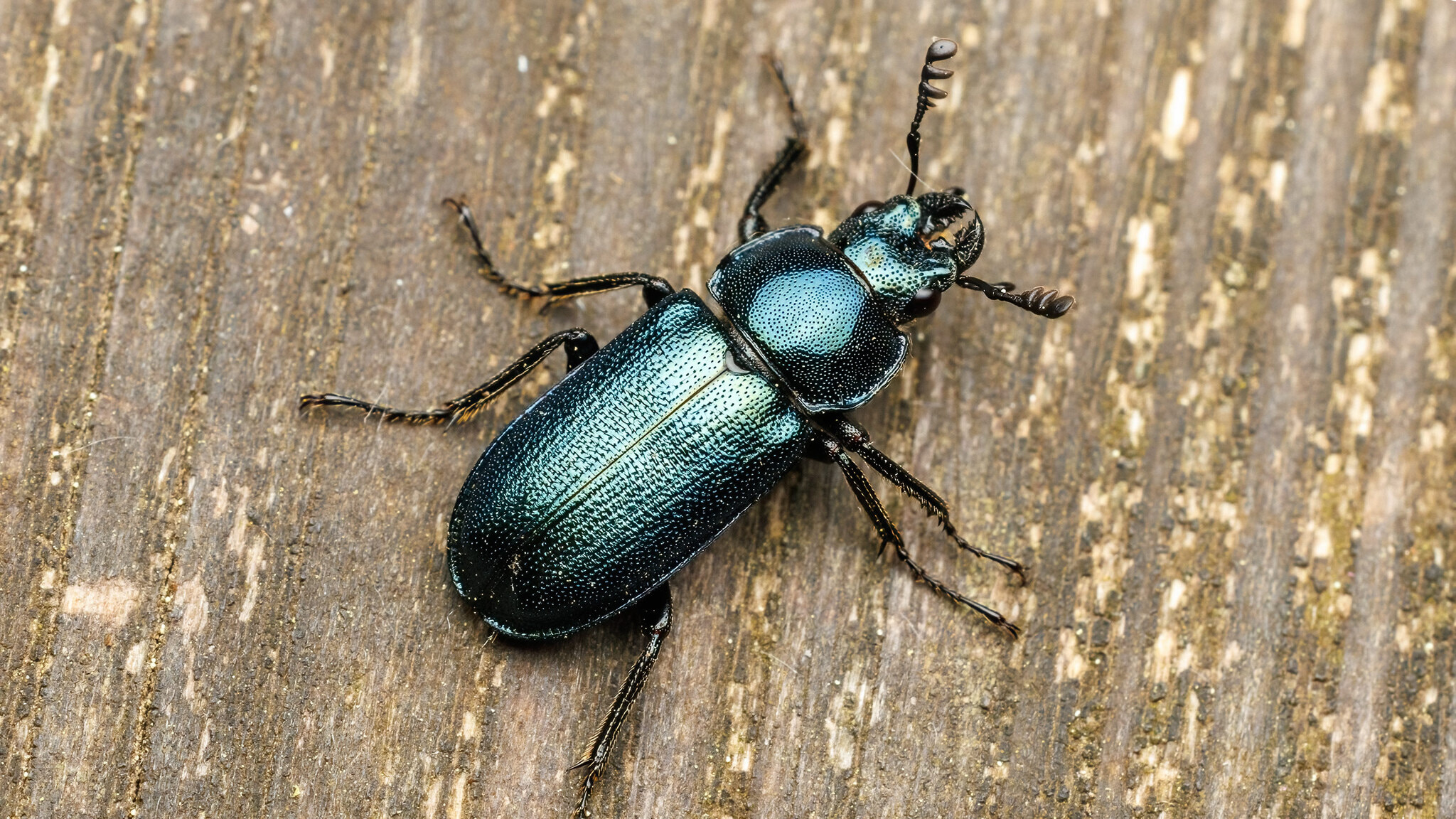
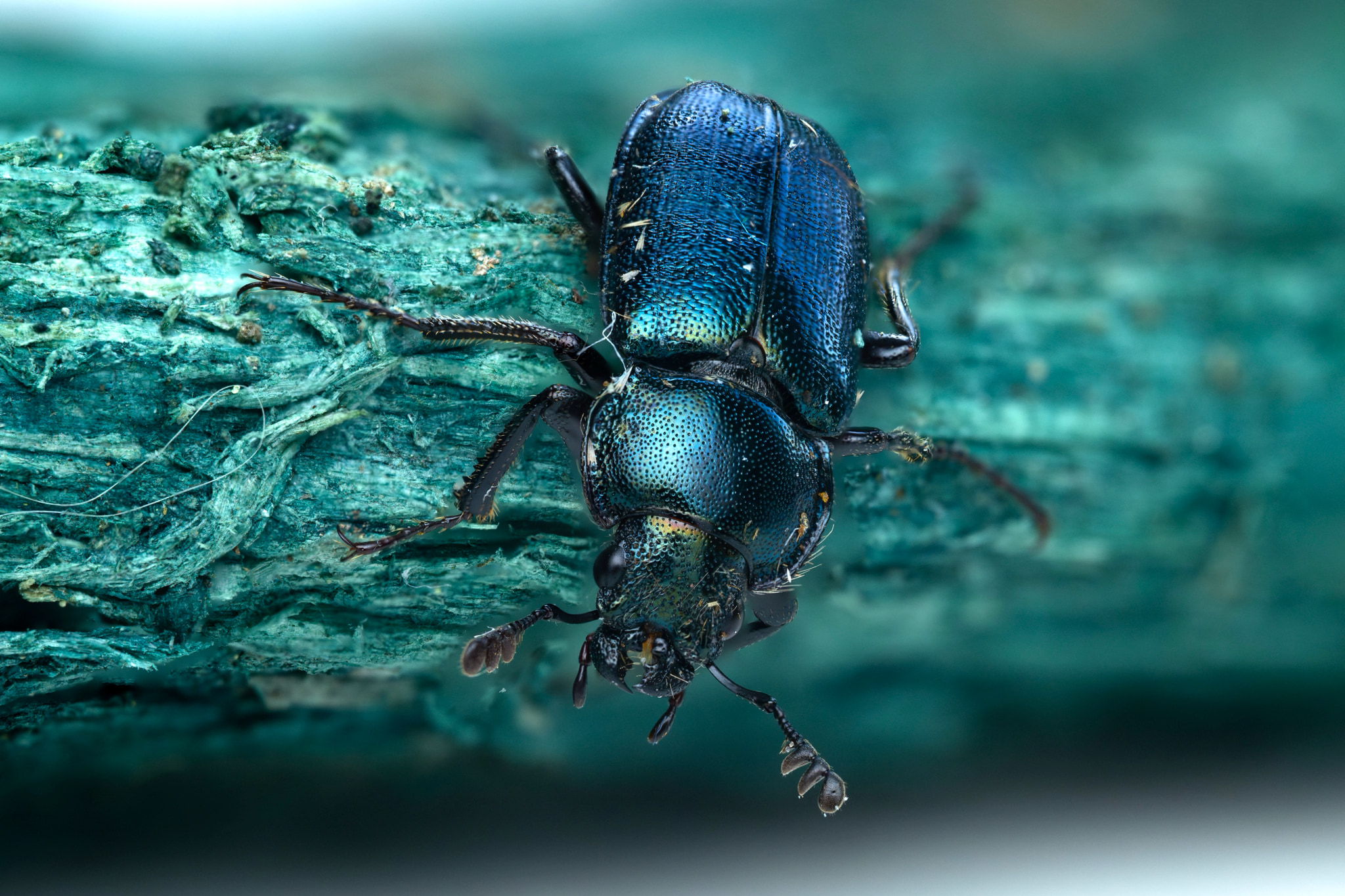
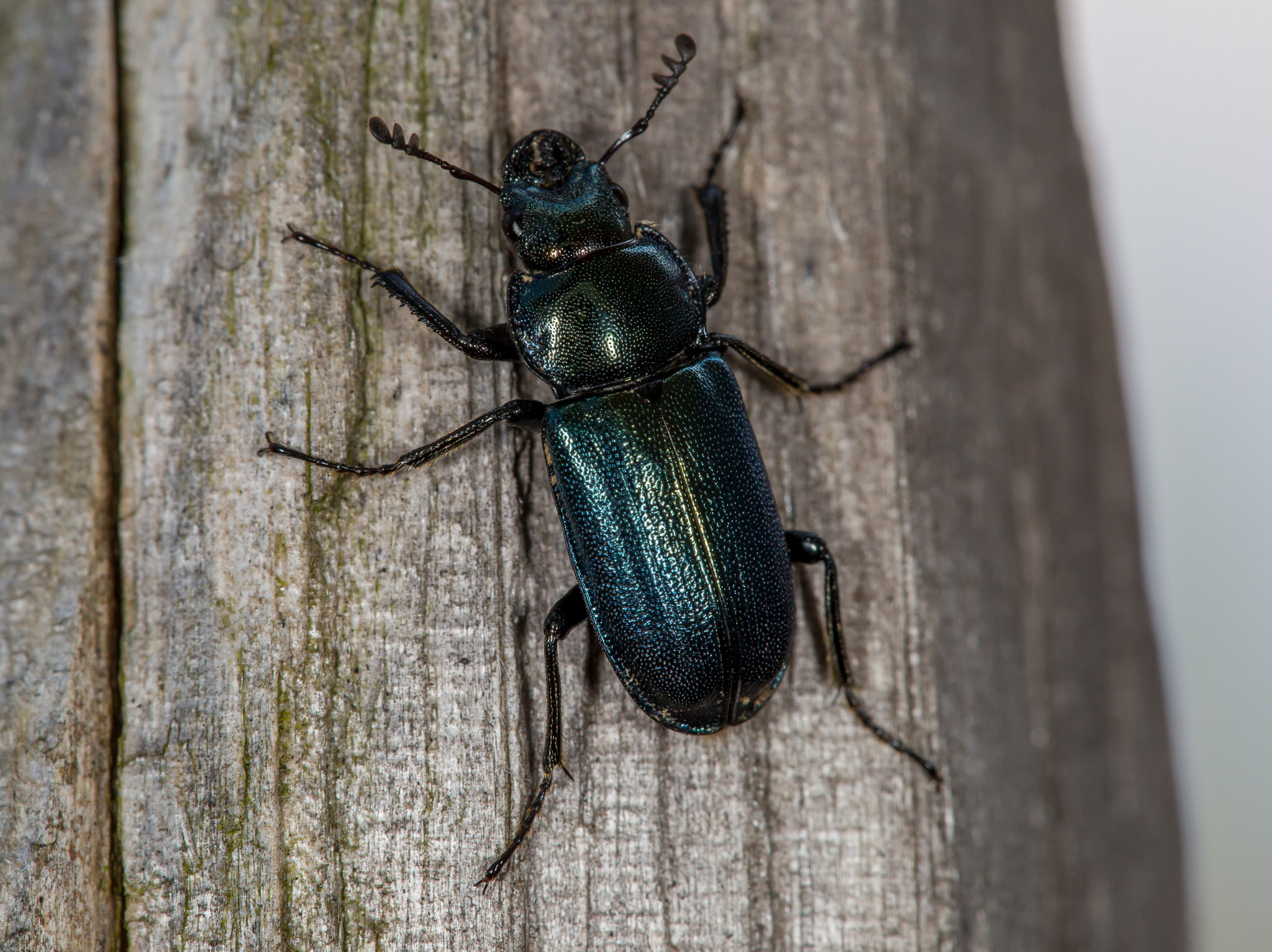
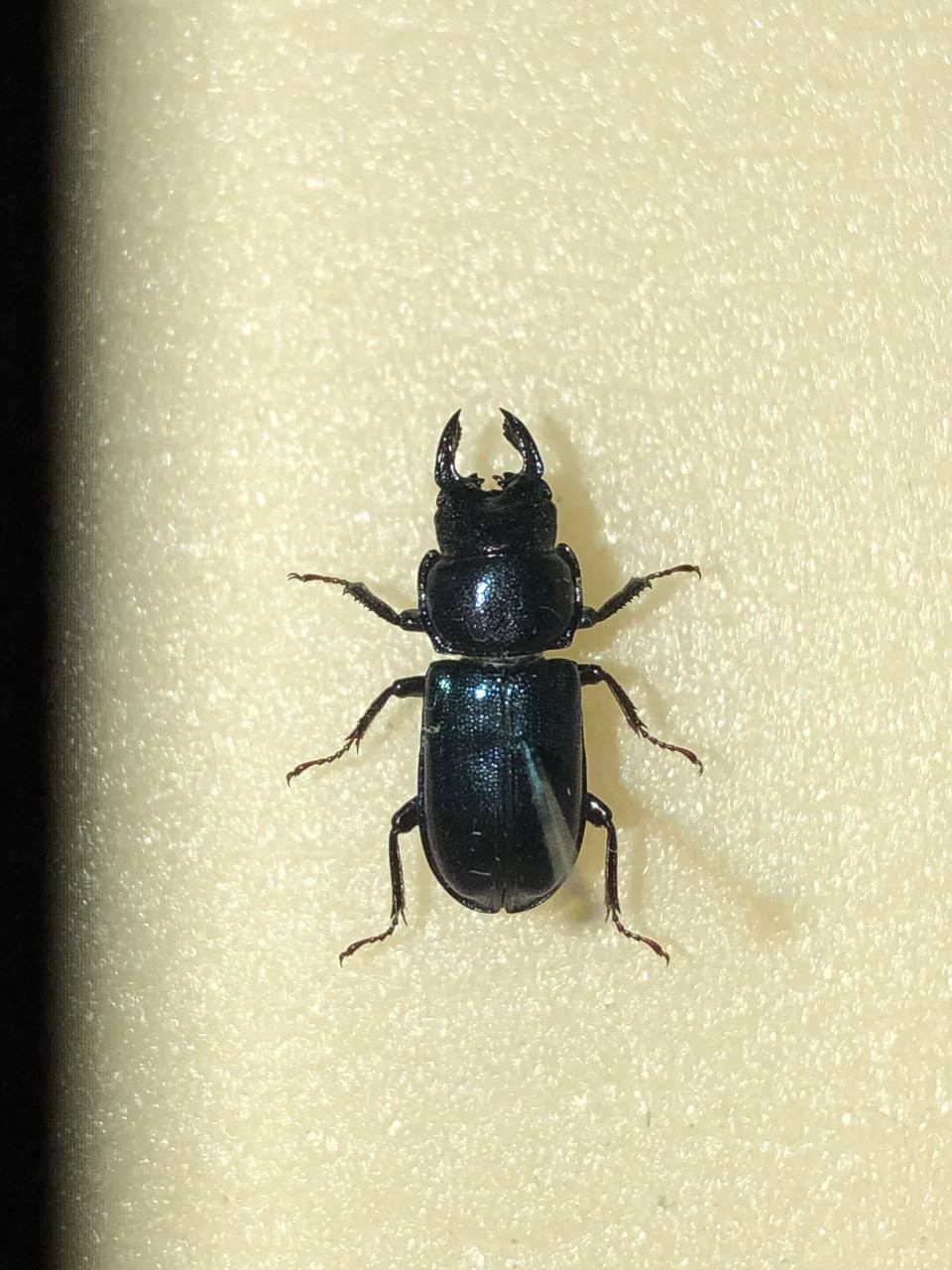
Platycerus caraboides is a small stag beetle that never grows antler-like jaws. It is 9–13 mm long, and its body shines like metal: steel blue, greenish or black. Adults fly by day in broad-leaved woodland or sit on rotten branches on the ground. It is on the list of Georgia's stag beetles, as is its close relative Platycerus caucasicus. If you find a small blue-green beetle on a rotten branch in the woods, take a close photo: the two species look very much alike.
Identification
Platycerus caraboides: how to identify it
A small, flat, compact stag beetle 9–13 mm long. The first thing you notice is the metallic blue or green sheen. It has no antler-like jaws. It is most easily mistaken for Platycerus caucasicus.
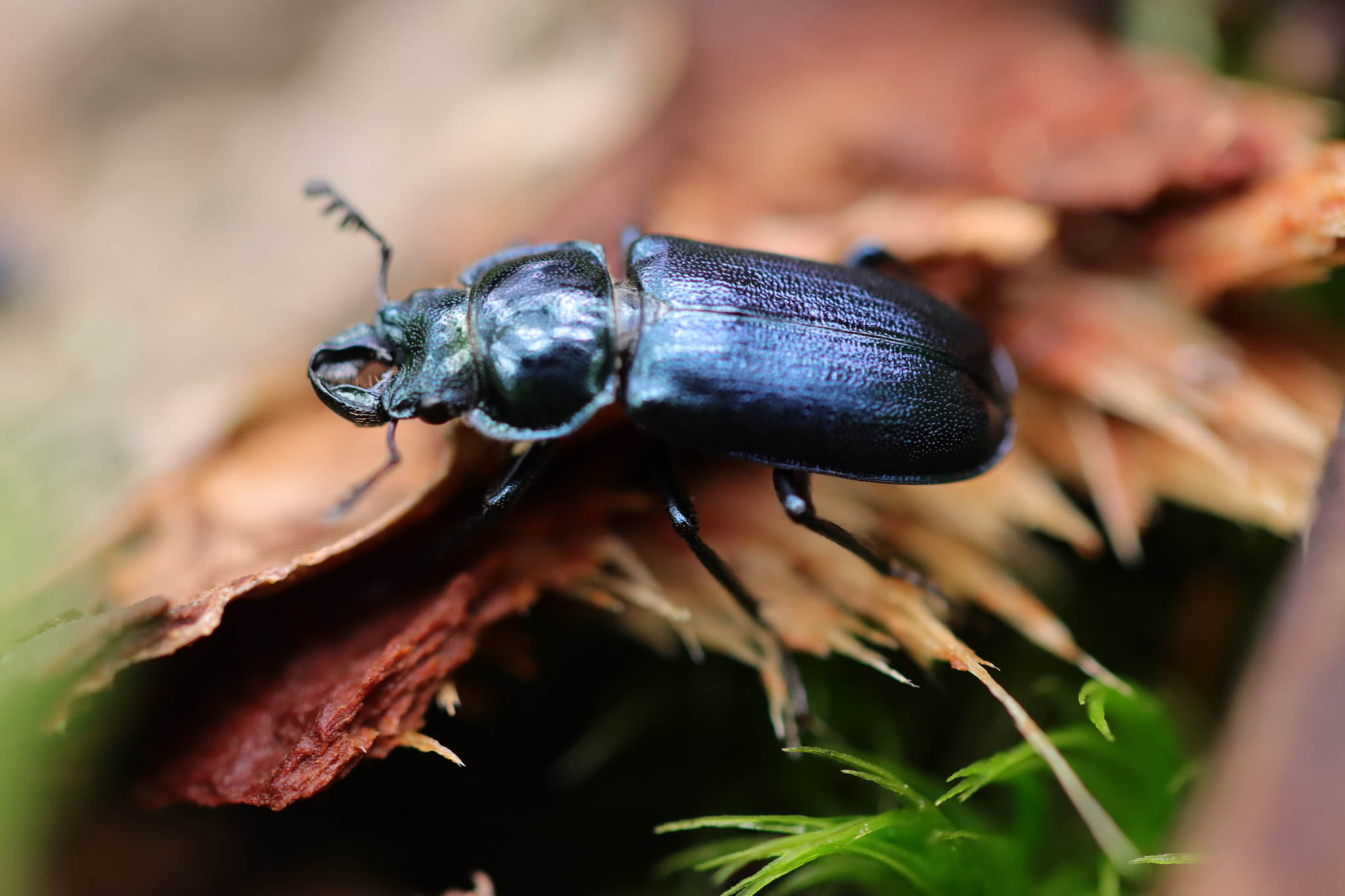
The male's jaws are shorter than his head, and their inner edge is toothed. The antennae are elbowed and end in a club of flat plates. You will only see these features in a close photo or with a hand lens.
Males and females differ in the colour of their legs. The male has black legs and a black underside, the female rust-brown ones. A photo from the side or from below will easily show you the sex.
Large males of Platycerus caucasicus have jaws longer than the head, while the male Platycerus caraboides has short ones. This feature does not help with small males or females. In such cases a specialist identifies the species from a photo.
Colour
The body shines like metal: black, steel blue or greenish. The male has black legs and underside, the female rust-brown ones. The colour varies between individuals, so colour alone will not identify the species.
Swatches are illustrative. Do not identify a species by colour alone.
Often confused with
It is a beetle of broad-leaved woodland that depends on dead, rotting wood. The larvae live mostly in the decayed wood of oak and beech, less often in conifers, mainly pine. Adults fly through the woods or sit on rotten branches on the ground. In Georgia it is known from the Ananuri area.
Platycerus caraboides is listed for Georgia's fauna. Its known localities lie in five regions: Lagodekhi and Telavi in Kakheti, Khashuri and Surami in Shida Kartli, Tianeti and Sioni in Mtskheta-Mtianeti, Tetri Tskaro in Kvemo Kartli and Bakuriani in Samtskhe-Javakheti. When it was found there is not known. Adults are mostly seen from May to July.
Data: Reptiles.ge + iNaturalist · Methodology
- Field observation
- Several records in one spot
- Region with records
The larva eats dead wood, mainly that of broad-leaved trees. It most often develops in the decayed wood of oak and beech, and sometimes in pine. The adult feeds on the leaves and buds of broad-leaved trees and drinks the sap that oozes from wounded trees.
Adults are mostly seen from May to July. They are active by day: they fly through broad-leaved woodland or sit on rotten branches on the ground. The larva develops in rotting wood for one to two years and grows to 30 mm. The new beetle leaves the pupa in autumn, but it spends the winter in its pupal chamber and comes out only in spring.
It has not been assessed on the global IUCN Red List (NE). On the IUCN European Red List it is assessed as Least Concern (LC, 2010). It is not on Georgia's Red List. In Central Europe it is relatively rare, and some German states list it as threatened. What it needs most is dead, rotting wood left in the forest.
Related guides
Continue with related pages
Yes, it is on the list of Georgia's stag beetles and is known from the Ananuri area. It chooses broad-leaved woodland with dead, rotting wood. A second species of the same genus, Platycerus caucasicus, also lives in Georgia. So a small blue-green stag beetle is identified to species from a close photo.
With difficulty. Both are small beetles with a metallic sheen, and the colour of both varies. The male Platycerus caraboides has jaws shorter than its head. Large males of Platycerus caucasicus have jaws longer than the head. In small males this difference disappears, so a close photo is needed for a reliable identification.
No, it is harmless to people and has no venom. Its jaws are small, in the male even shorter than the head. If one crawls onto your hand, simply let it walk onto a leaf or a twig and leave it where it is.
The larva develops in rotting wood for one to two years. The new beetle leaves the pupa in autumn but spends the winter right there, in its pupal chamber. It comes out in spring and is mostly seen from May to July.
References
What this profile is based on
Species profiles are compiled from peer-reviewed literature and established biodiversity databases, and are reviewed as new taxonomic and conservation data become available.
Prepared by the Reptiles.ge editorial team from the sources listed here.