
European rhinoceros beetle
Oryctes nasicornis
eleramo · Ryazan District
Key facts in one look
- Size
- 20–42 mm, up to 47 mm
- Group
- Insect
- Family
- Scarabaeidae
- Status in Georgia
- Native species
- Activity
- Mostly Jun–Jul, at dusk and at night
- Conservation
- NE
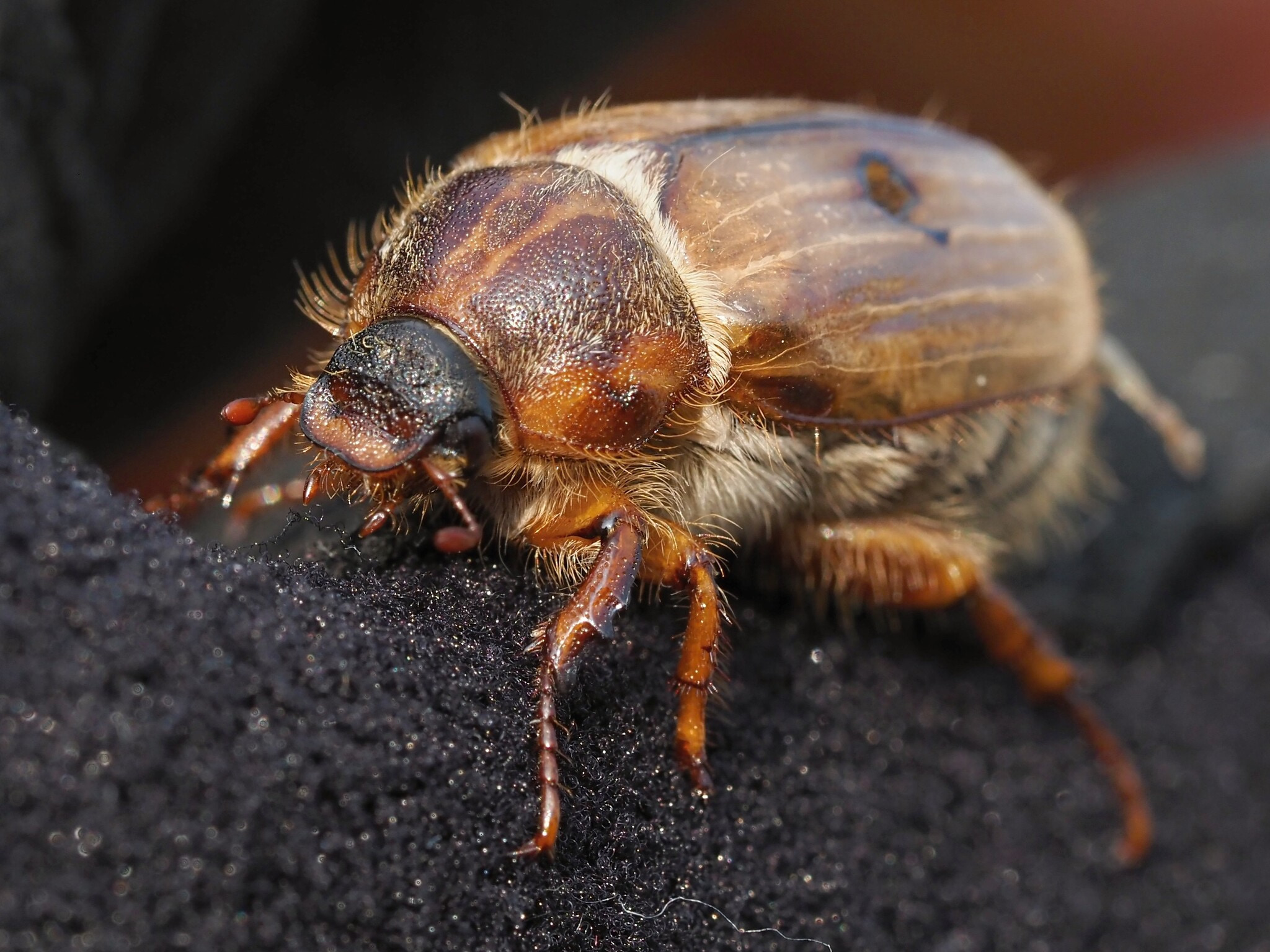
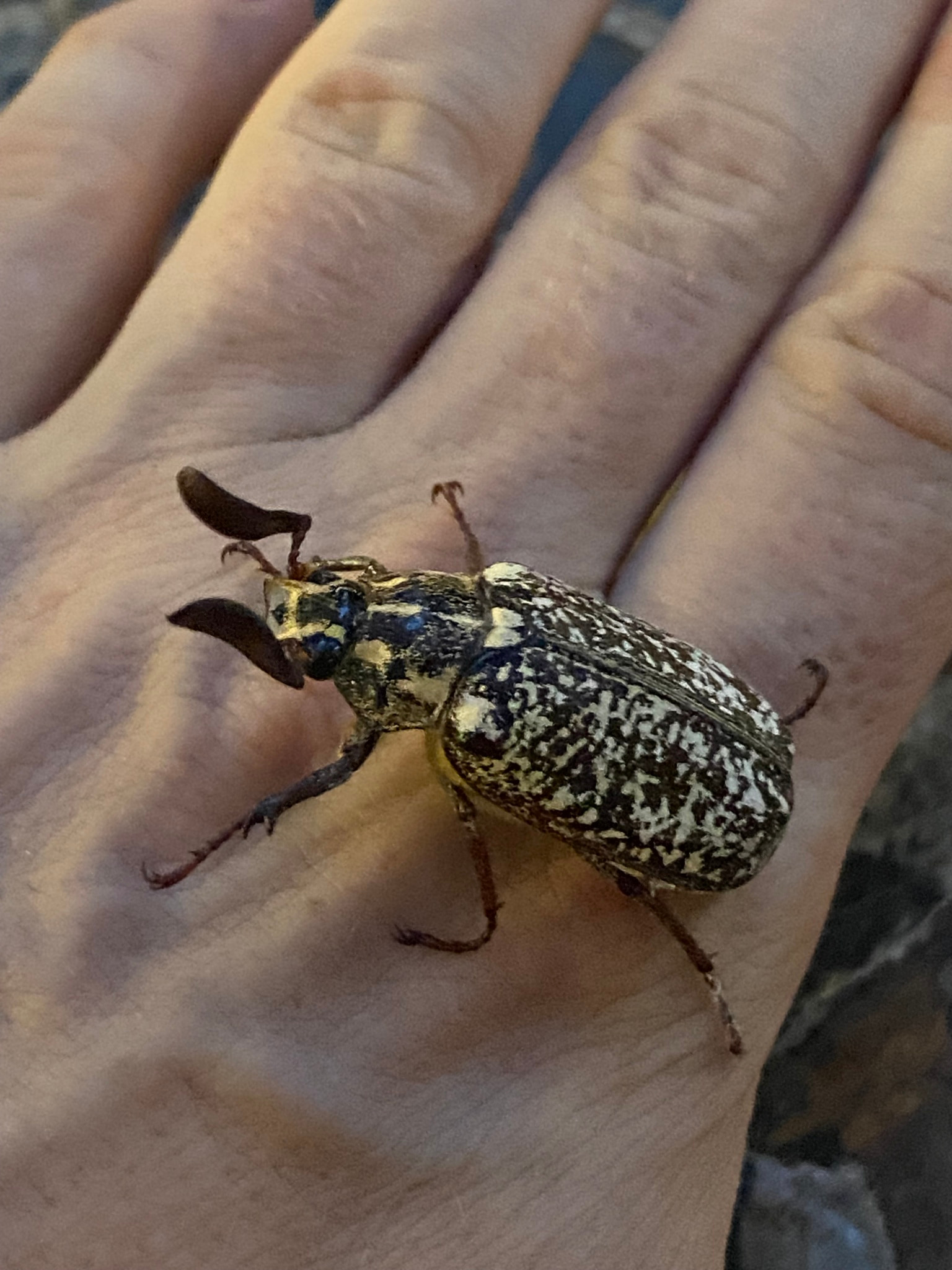
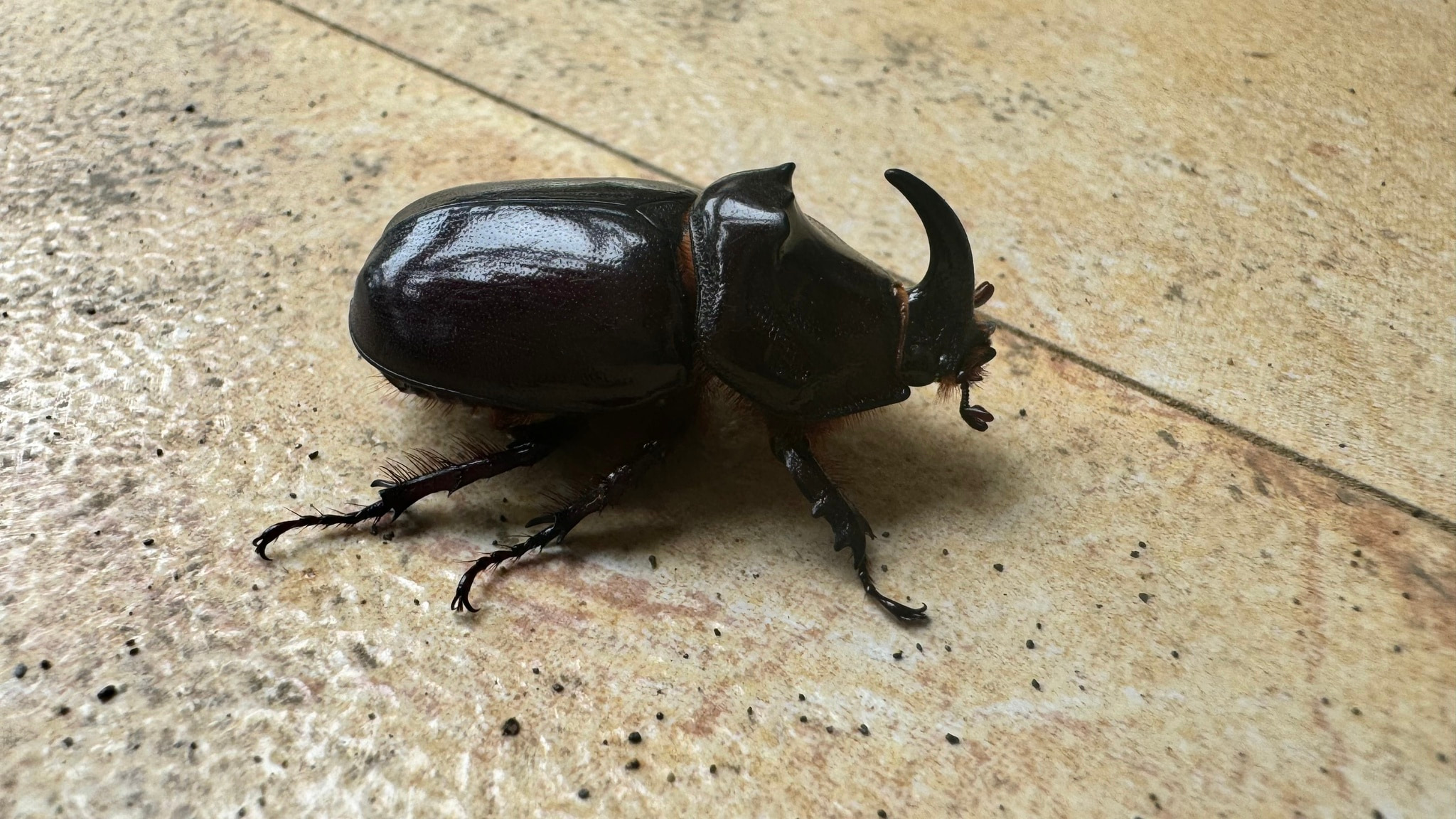
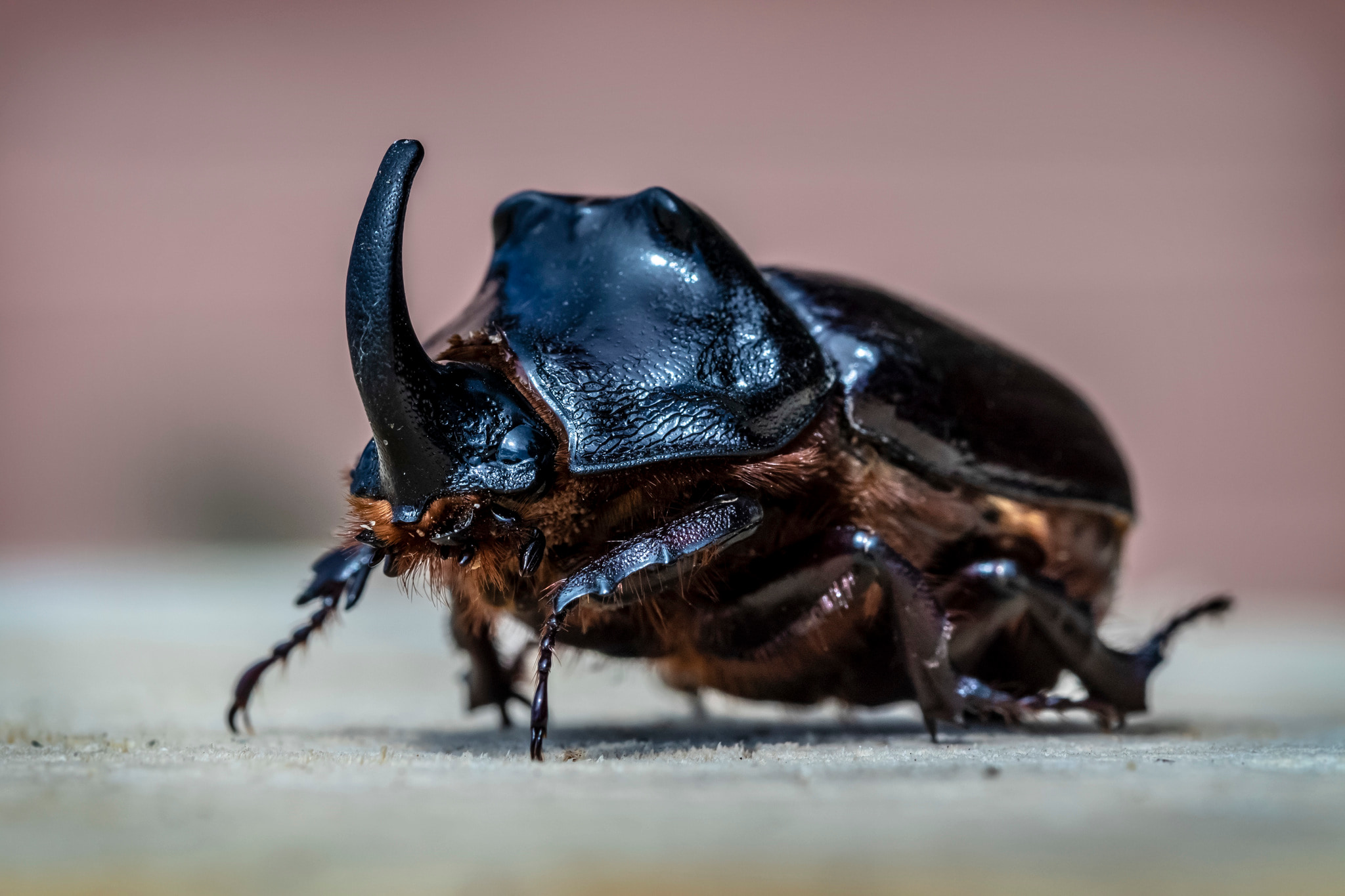
The European rhinoceros beetle (Oryctes nasicornis) is one of the largest beetles in Europe: it is 20–42 mm long, and the largest reach 47 mm. The male has a long, backward-curving horn on its head, which it uses to fight other males for a female. It is a glossy, reddish-brown beetle with long red hair underneath. The larva grows for 2–4 years in rotting wood, sawdust and compost heaps. If you find a big, white, C-shaped grub in your garden compost, it may well be one of these, so leave it where it is.
Identification
European rhinoceros beetle: how to identify it
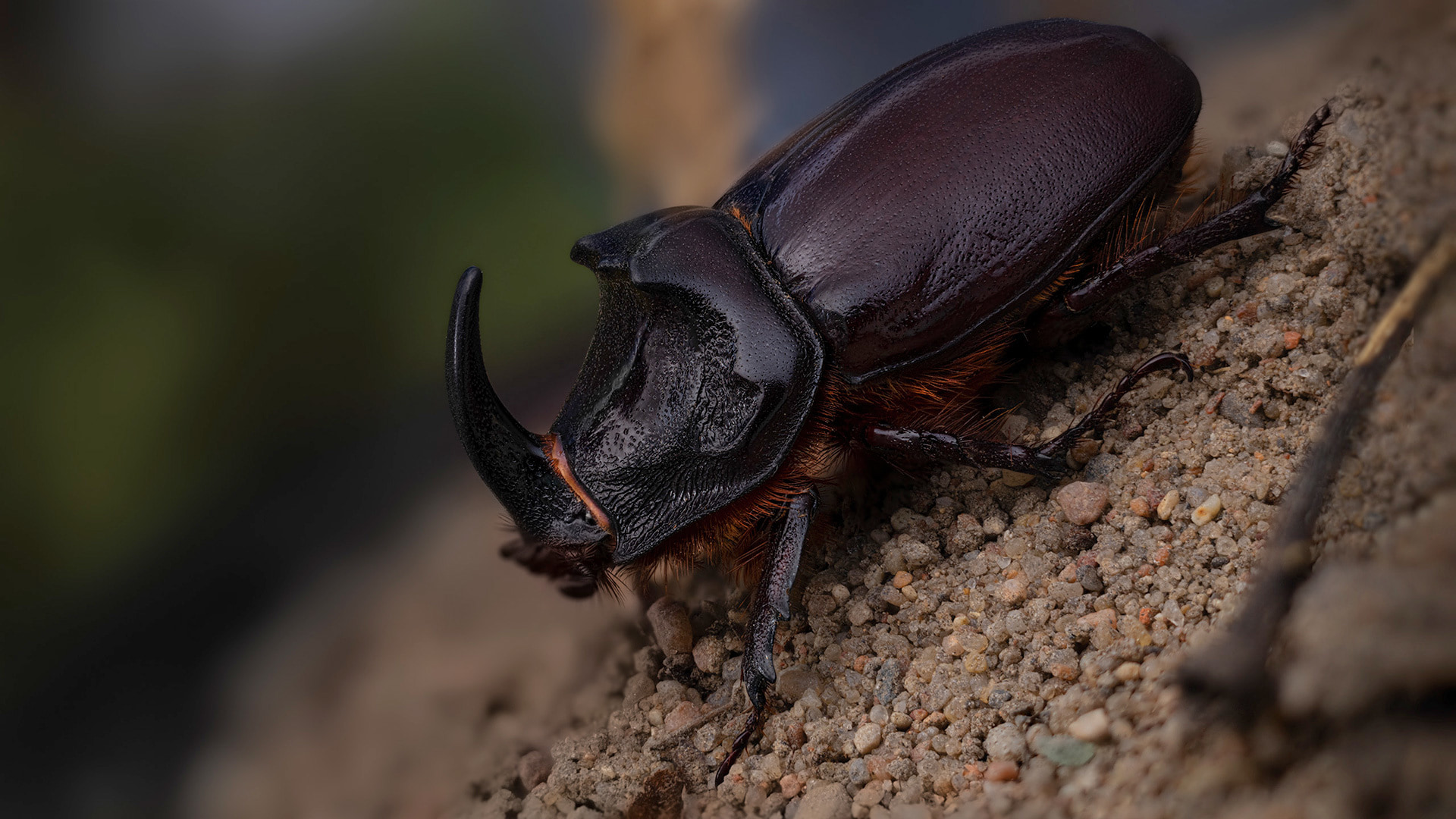
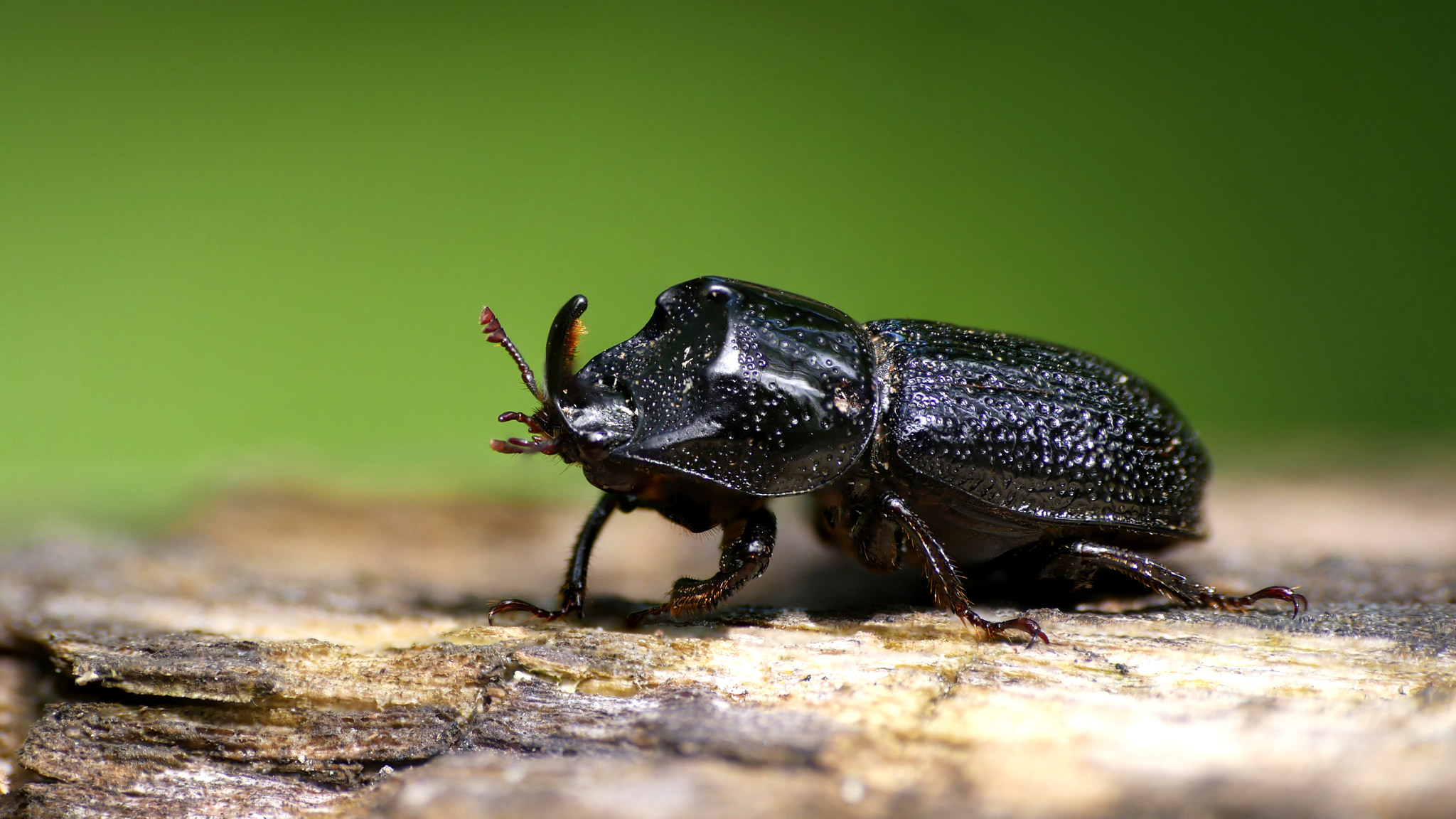
A large, cylindrical, glossy reddish-brown beetle, 20–42 mm long, the largest up to 47 mm. The male has a long, backward-curving horn on its head and a transverse ridge with three bumps on the pronotum. The female has only a short horn or a bump. The upper side is bare, while the underside is covered in red hair.
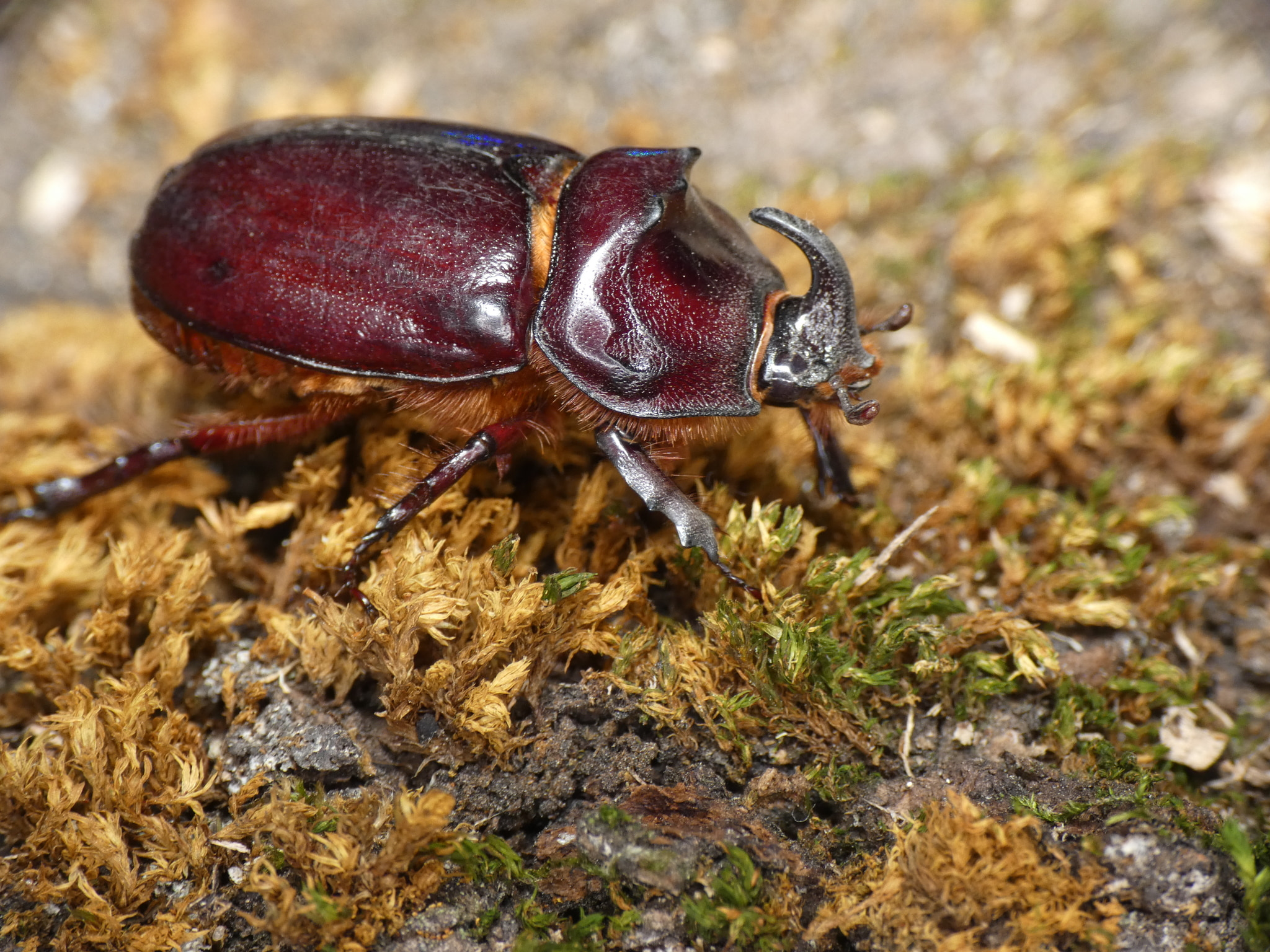
The male's horn points up and back from its base and tapers gradually to the tip. At the back of the pronotum there is a ridge with three clear bumps. Weakly developed males have a small horn and a small ridge.
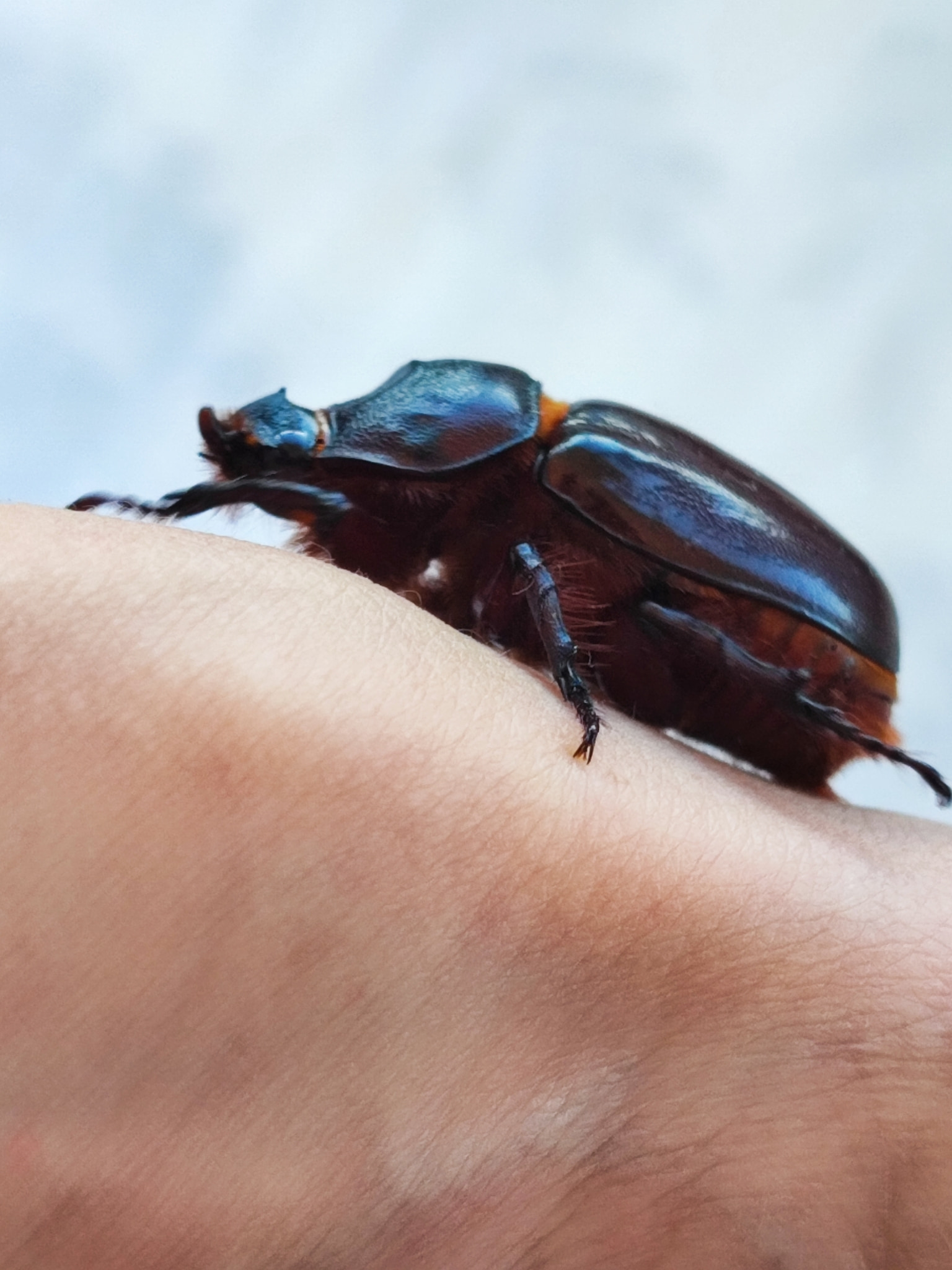
The female has only a short horn or a bump on her head, and instead of bumps a vague hollow at the front of the pronotum. A small, hornless male looks like a female. You tell them apart by the pygidium: bare in the male, hairy in the female.
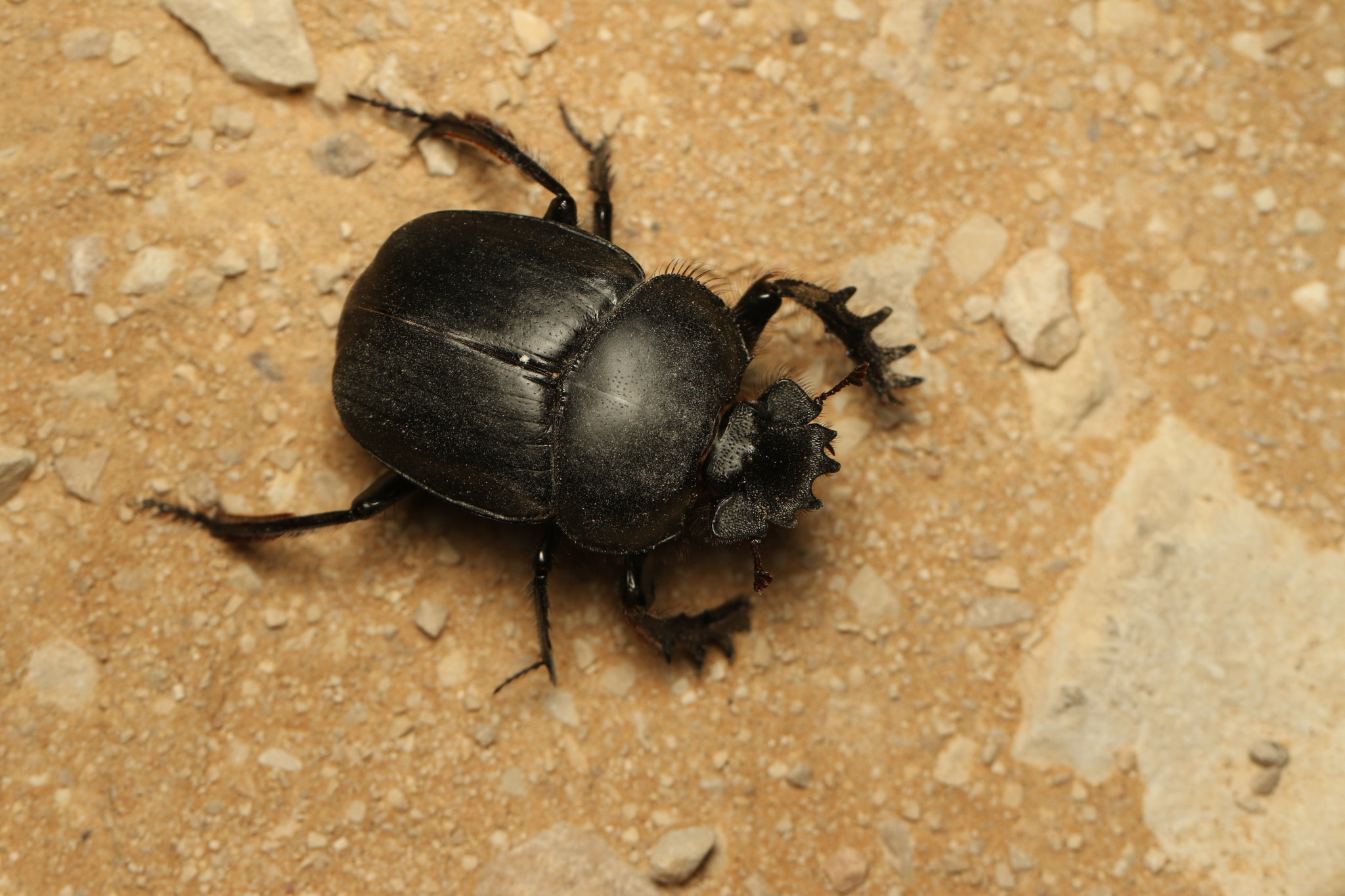
The tibiae of all three pairs of legs are built for digging: slightly flattened, widened and coarsely toothed on the outer edge. The antenna ends in a three-segmented club. The mandibles are widened like leaves and are easy to see from above.
Colour
The wing cases are reddish brown or chestnut, glossy as if glazed, with the head and pronotum slightly darker. Some beetles are almost black or dark brown. The underside and legs are covered in long red hair. Large beetles tend to be darker, small ones paler.
Swatches are illustrative. Do not identify a species by colour alone.
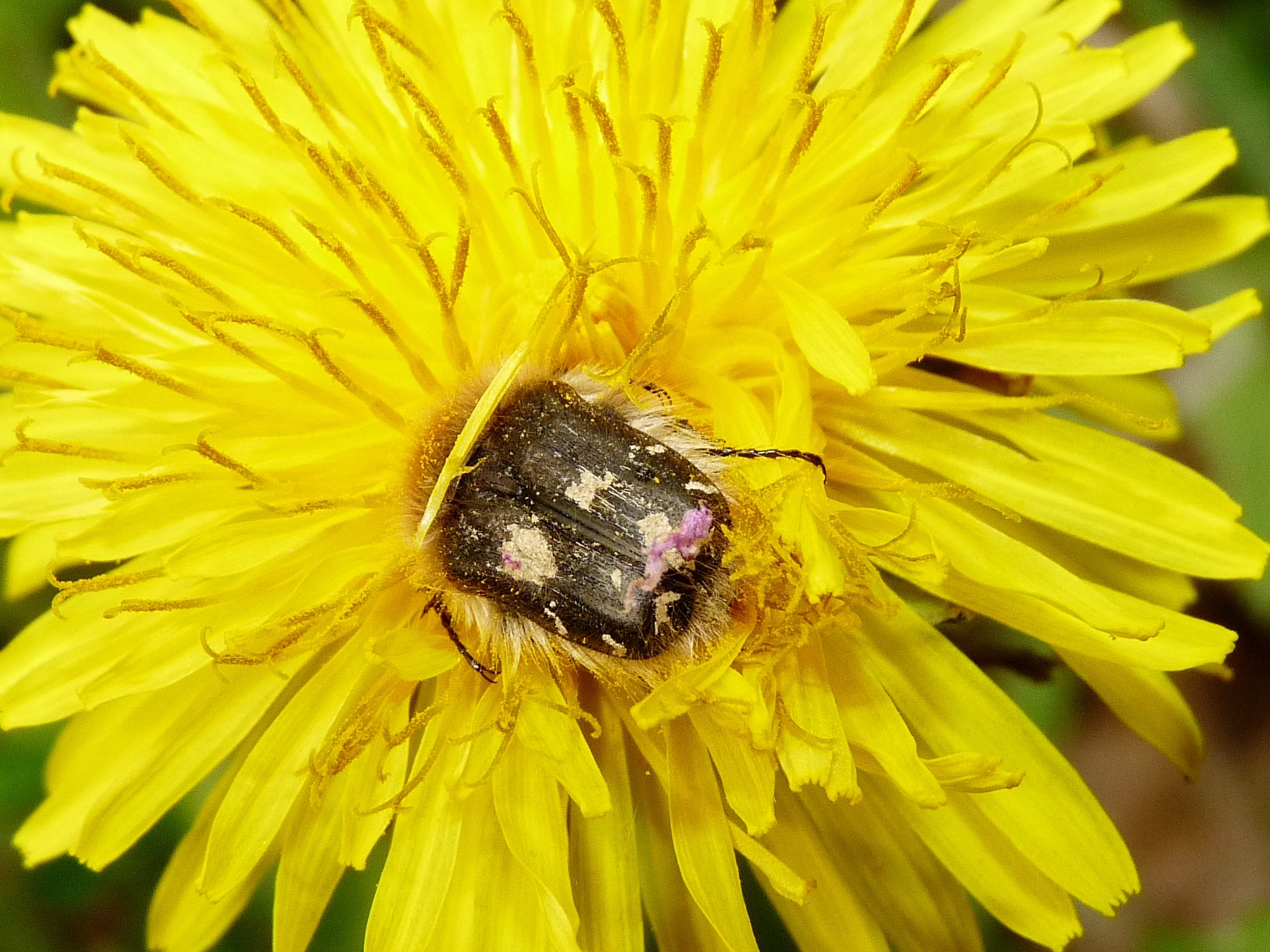
Often confused with
By nature it is a beetle of broadleaf forests, including mountain and floodplain woods. The larvae grow in the roots and bases of old, dead broadleaf trees, in tree hollows and in fallen trunks. Thanks to people it has taken to many new places: sawdust heaps at sawmills, bark mulch, compost, rotted manure and greenhouses. So it often lives near settlements and in gardens. It is a native species in Georgia and has been found in every region, from Abkhazia and Adjara to Kakheti.
The European rhinoceros beetle is a native species of Georgia and has been found in every region of the country. Most records come from Kakheti and Tbilisi, followed by Abkhazia, Adjara, Mtskheta-Mtianeti and Kvemo Kartli. It has also been found in Samtskhe-Javakheti, Imereti, Shida Kartli, Racha, Guria and Samegrelo. The beetles have been seen from April to November, most of them in June and July.
Data: Reptiles.ge + iNaturalist · Methodology
- Field observation
- Several records in one spot
- Photo record
- Region with records
The larva eats rotting wood and plant debris. Cellulose is broken down in its hindgut, which works as a fermentation chamber much like a cow's rumen: symbiotic bacteria do the work there and methane is released. It sometimes gnaws the roots of living plants too, such as grapevines, roses and lemons. The adult probably does not feed at all and lives on reserves built up as a larva.
The adults emerge from late March to May and live a few months, until autumn. They are seen most often in June–July. By day they hide; at dusk and at night they fly actively and come to lights. Males use their horns in fights with rivals. The female lays her eggs in rotting wood, stumps, compost and sawdust. The larva grows to 60–100 mm and develops for 2–4 years, overwintering only as a larva. At the end it builds a cocoon of clay and sawdust the size of a hen's egg and pupates inside.
It has not been assessed on the global IUCN Red List (NE). It is not on Georgia's Red List. Its population trend in Georgia is unknown. It is protected in some European countries: Germany, Switzerland, the Czech Republic, Slovakia and Poland, and it is in Moldova's Red Book. Unlike many other wood beetles, it has adapted well to places made by people, such as sawdust and compost, and in central Europe it is no longer rare.
Related guides
Continue with related pages
Yes, it is a native species of Georgia's fauna. The Caucasus is part of its range, and the subspecies given for the Caucasus is O. n. latipennis. It has been found in every region of the country, from Abkhazia to Kakheti. Look for it in old broadleaf woods and near settlements, where there is rotting wood and compost.
No, it is harmless to people and has no venom. Males need the horn for fights with each other. The adult beetle probably does not even feed. If you find one, take a photo and leave it where it is.
The larva eats rotting wood, sawdust and plant debris, and digests the cellulose with the help of bacteria in its gut. It sometimes gnaws living roots too. How the adults feed is not well studied. If they feed at all, they probably drink tree sap and live on the reserves they built up as larvae.
No. Small males often lack a horn and look like females. The female has only a short horn or a bump instead. Such a male is told from a female by the pygidium, the last plate of the abdomen that sticks out behind the wing cases: bare in the male, hairy in the female. So a photo of the tip of the abdomen helps to tell the sexes apart.
References
What this profile is based on
Species profiles are compiled from peer-reviewed literature and established biodiversity databases, and are reviewed as new taxonomic and conservation data become available.
Prepared by the Reptiles.ge editorial team from the sources listed here.