
Lucanus ibericus
Lucanus ibericus
aleksandrabrusova · Shpakovsky District
Key facts in one look
- Size
- 22–46 mm
- Group
- Insect
- Family
- Lucanidae
- Status in Georgia
- Listed for the country's fauna
- Activity
- May–Aug, most in July
- Conservation
- NE; DD in Europe
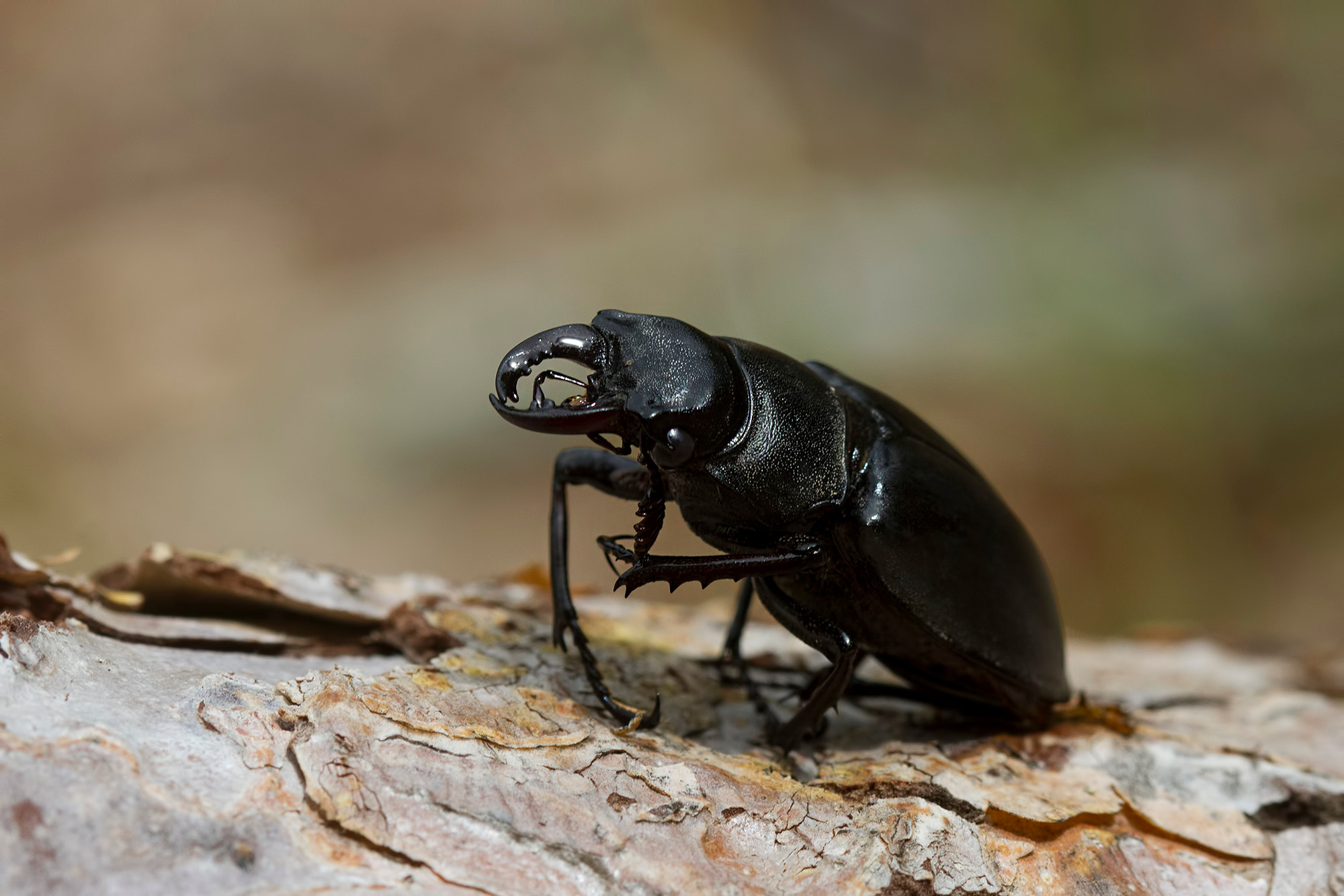
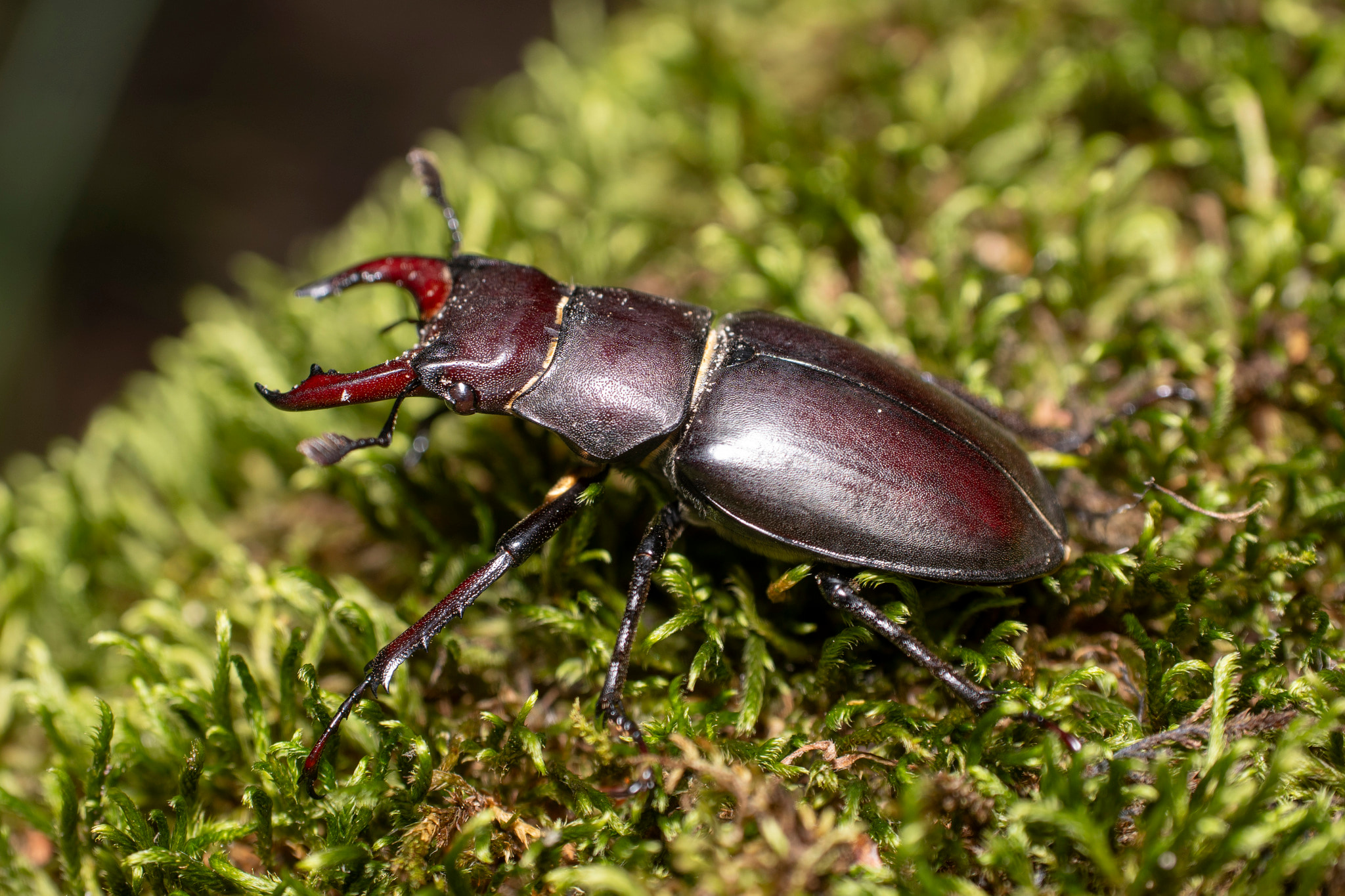
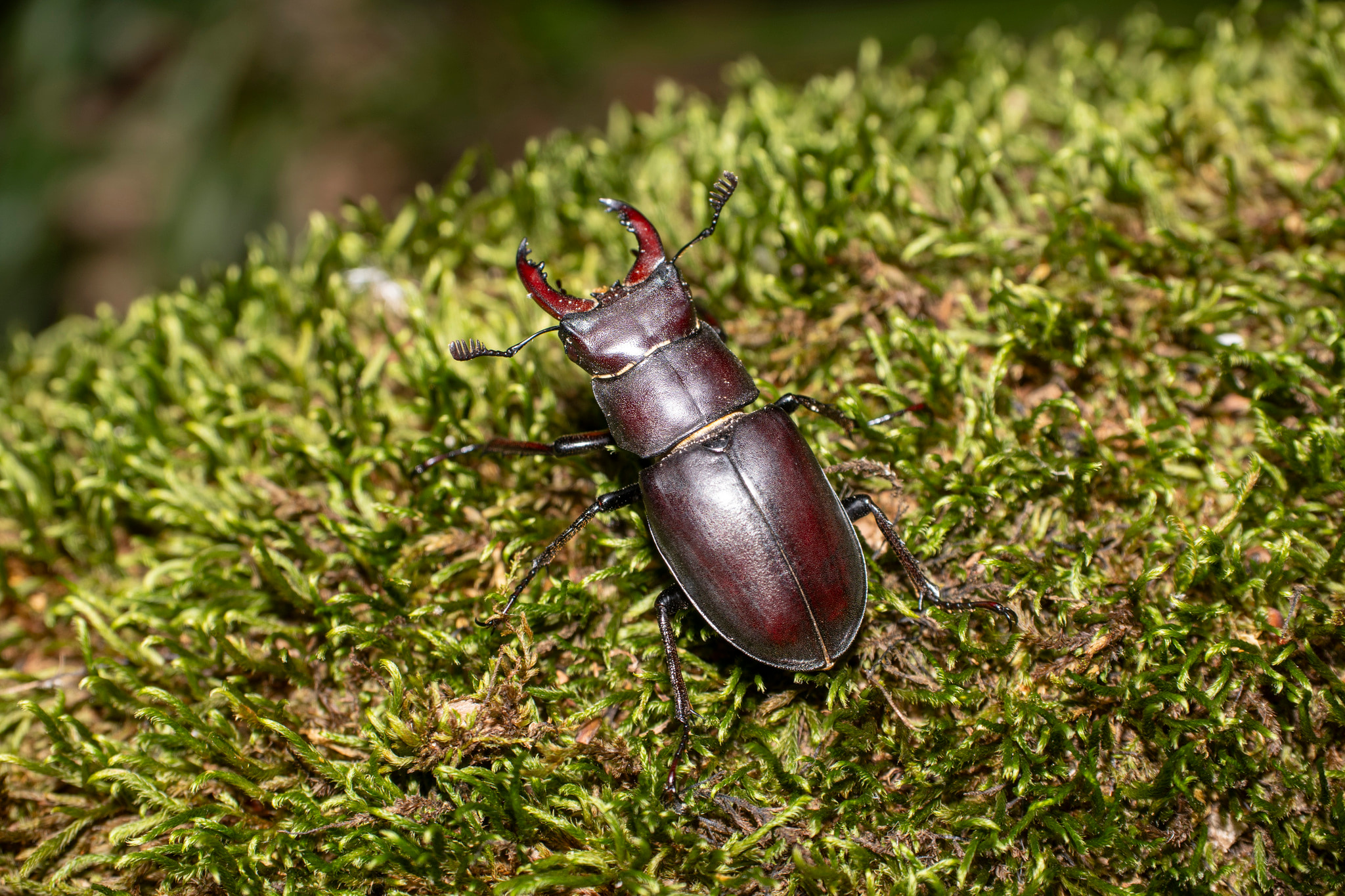
Lucanus ibericus is a stag beetle of the forests of the Caucasus, Asia Minor and northern Iran. It is 22–46 mm long and pitch black, and the male has reddish-brown jaws, sometimes longer than the rest of his head. It looks very like the European stag beetle, and the most reliable feature is the tip of the antenna: Lucanus ibericus has six segments in the club, the European stag beetle, where both live, four. In Georgia it is known from Khulo and Abastumani to the surroundings of Tbilisi and Lagodekhi. Look for it in oak and hornbeam woods in summer, especially in July.
Identification
Lucanus ibericus: how to identify it
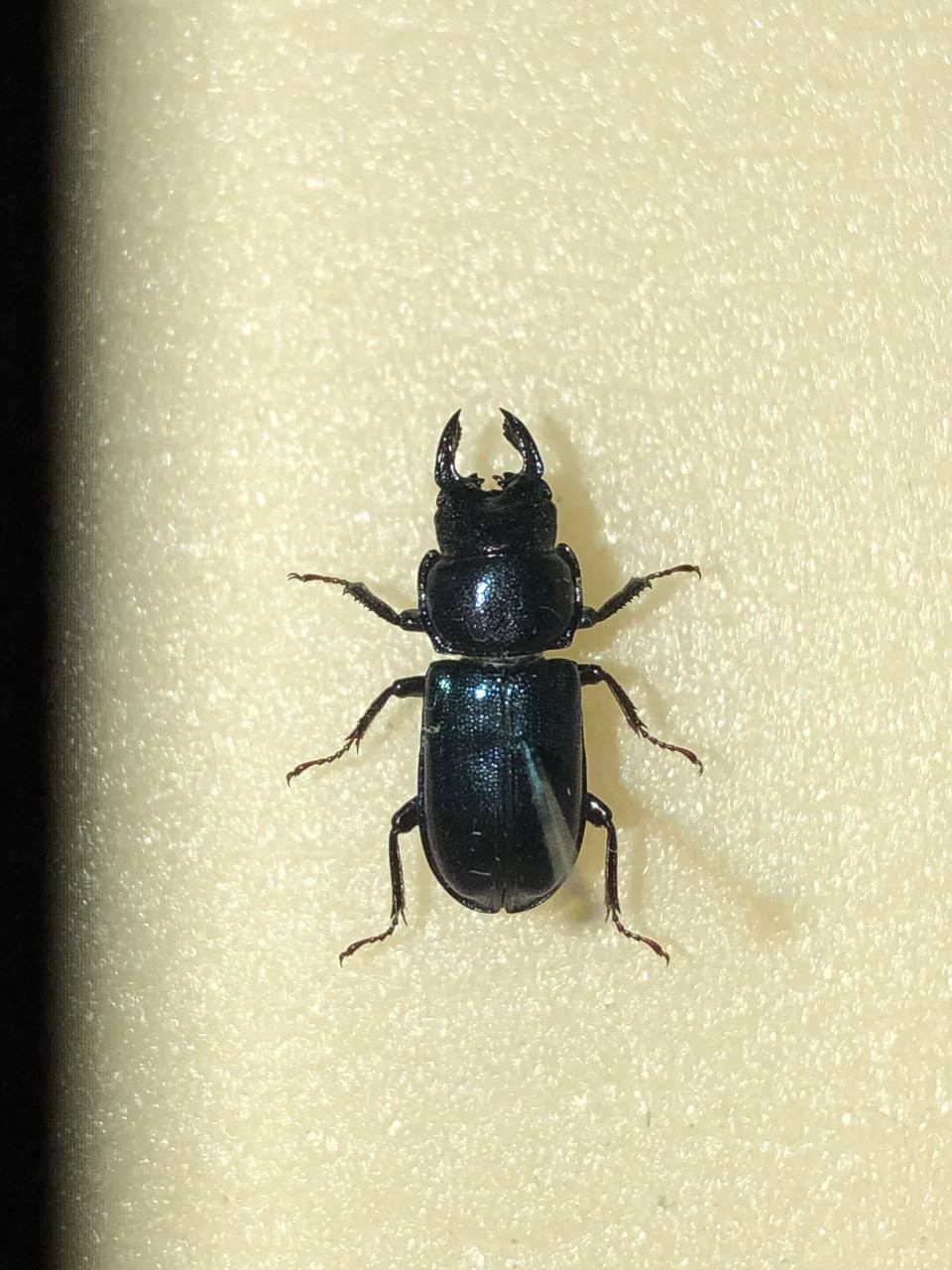
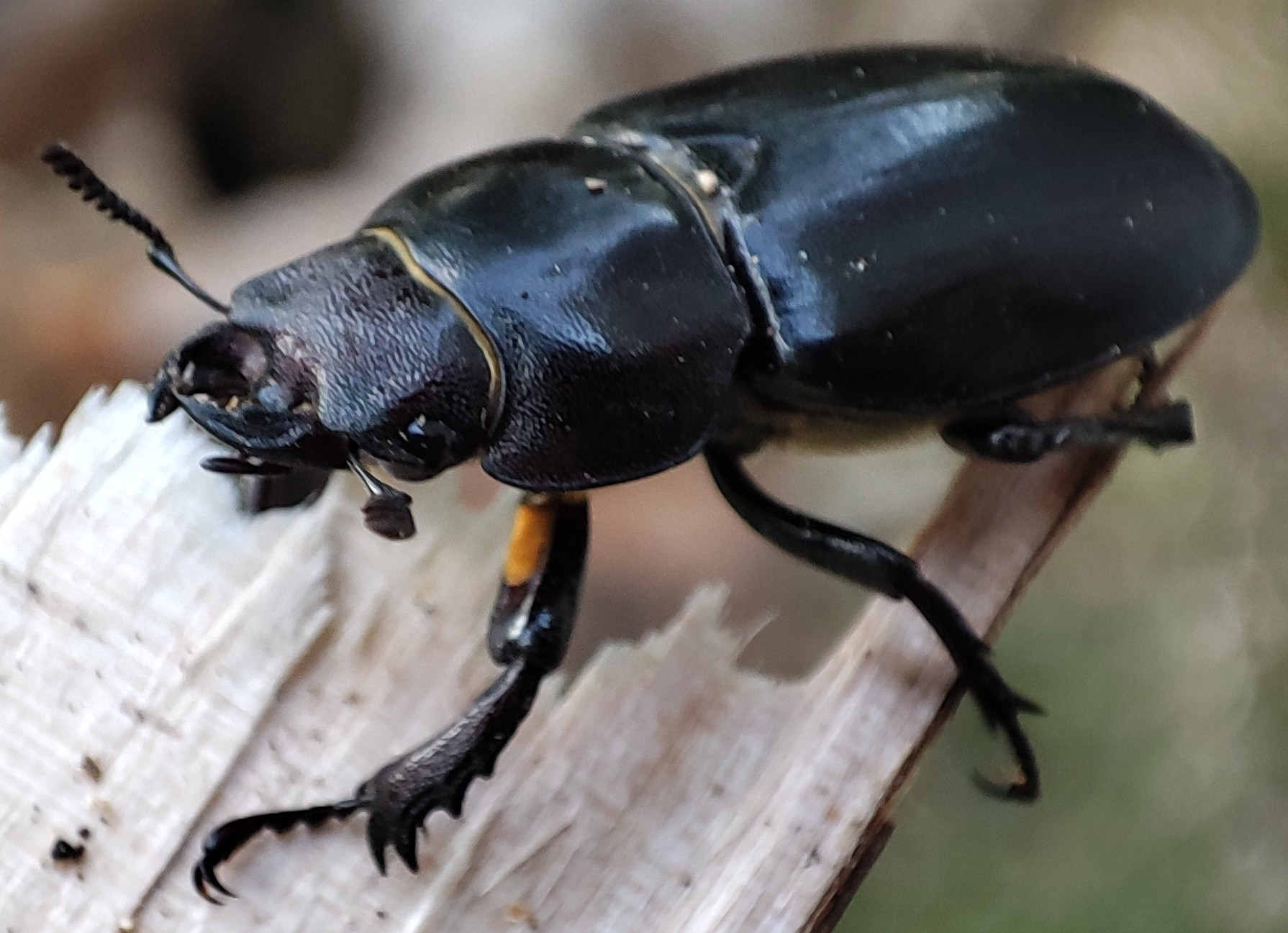
A flat stag beetle 22–46 mm long. It is pitch black, and the male has reddish-brown jaws. The female is 22–37 mm long. You can tell it from the European stag beetle by the tip of the antenna; size and colour are not enough.
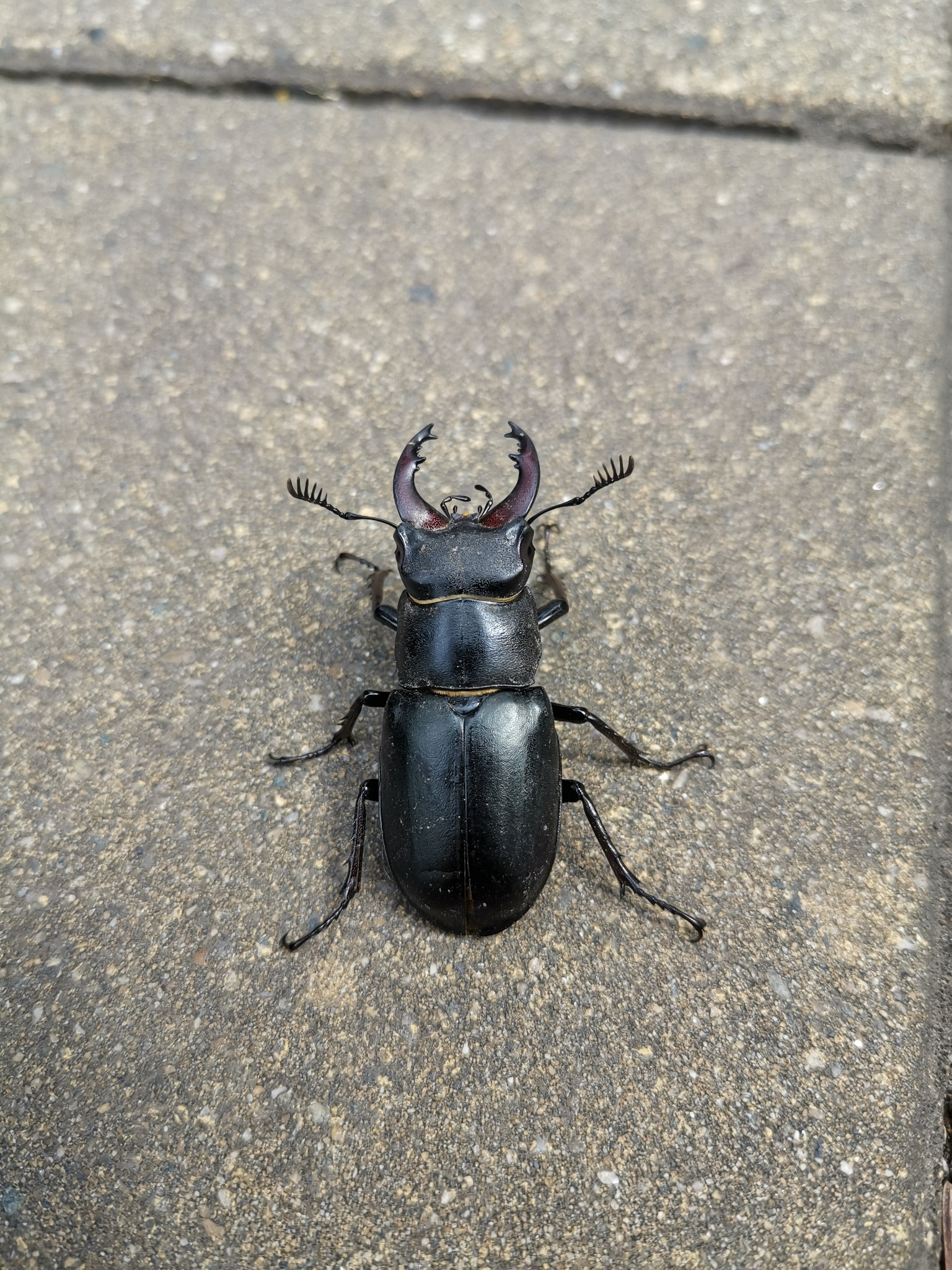
The antennal club has six segments. Where both species live, the European stag beetle has four. This is the most reliable feature, but it only shows in a close photo.
The male's head has angular, projecting cheeks and a high ridge. His jaws are sometimes longer than the rest of the head. Large males have 5–6 extra inner teeth on each jaw, small males only two.
The body is flattened. The upper side is finely and very densely punctured, and the underside is covered with sparse, fine brown hairs. These features show with a hand lens or in a close photo.
Colour
It is pitch black with reddish-brown jaws. Sometimes the whole beetle is dark brown or uniformly pitch black. Colour will not tell it from the European stag beetle.
Swatches are illustrative. Do not identify a species by colour alone.
It is a beetle of moderately humid forests with oak, beech and hornbeam. In foothill forests it reaches 1,500 m above sea level. In Georgia it has been found in many places: Khulo, Adigeni, Abastumani, Borjomi, Manglisi, Kojori, Mtskheta, Saguramo, Gori, Telavi, Kvareli and Lagodekhi.
Lucanus ibericus is part of the fauna of Georgia and has been found in many parts of the country. Most records come from Kakheti, followed by Mtskheta-Mtianeti and Kvemo Kartli. It has also been found in Samtskhe-Javakheti, Tbilisi, Shida Kartli, Racha, Adjara and Imereti. Adults have been seen from April to October, but most records fall in July and August, with the most in July.
Data: Reptiles.ge + iNaturalist · Methodology
- Field observation
- Several records in one spot
- Photo record
- Region with records
The larva eats dead wood, mainly oak and hornbeam. It develops in the underground parts of dead trunks and in old stumps. Adults readily drink sap oozing from trees.
Adults are seen from May–June to August, and they fly most actively in July. Its way of life is similar to that of the European stag beetle. The female lays her eggs under the bark at the base of dead trees. One generation takes four years to develop. The larva pupates in the soil, 15–20 cm deep.
It has not been assessed on the global IUCN Red List (NE). On the IUCN European Red List it is Data Deficient (DD, 2010), and within the EU it is assessed as Vulnerable (VU, 2010). It is not on Georgia's Red List. Its larva develops for years in dead oak and hornbeam, so it depends on old stumps and dead trunks.
aleksandrabrusova · zhenaru · Mehmet Çelik · blazecaller · Fabian A. Boetzl · elenasolodovnik · Nikita Tiunov
Related guides
Continue with related pages
Yes, it is on the list of Georgia's stag beetles and has been found in many parts of the country. It is known from Khulo, Abastumani, Borjomi, Manglisi, Mtskheta, Gori, Telavi and Lagodekhi. It lives in moderately humid forests of oak, beech and hornbeam. It is easiest to notice in July, when it flies most actively.
By the tip of the antenna. Lucanus ibericus has six segments in the antennal club, while the European stag beetle, where both live, has four. Lucanus ibericus is also smaller, up to 46 mm, while a European stag beetle male grows to 75 mm. Colour will not separate them, so take a close photo of the antenna.
It is a separate species, Lucanus ibericus Motschulsky, 1845. Together with the European stag beetle it belongs to the genus Lucanus. It differs from it in its six-segmented antennal club and smaller size. Large and small males are two forms of the same species and differ in the number of teeth on their jaws.
No, it has no venom and is harmless to people. Its larva develops in dead wood, not in living trees. If you find one, take a photo and leave it where it is.
References
What this profile is based on
Species profiles are compiled from peer-reviewed literature and established biodiversity databases, and are reviewed as new taxonomic and conservation data become available.
Prepared by the Reptiles.ge editorial team from the sources listed here.