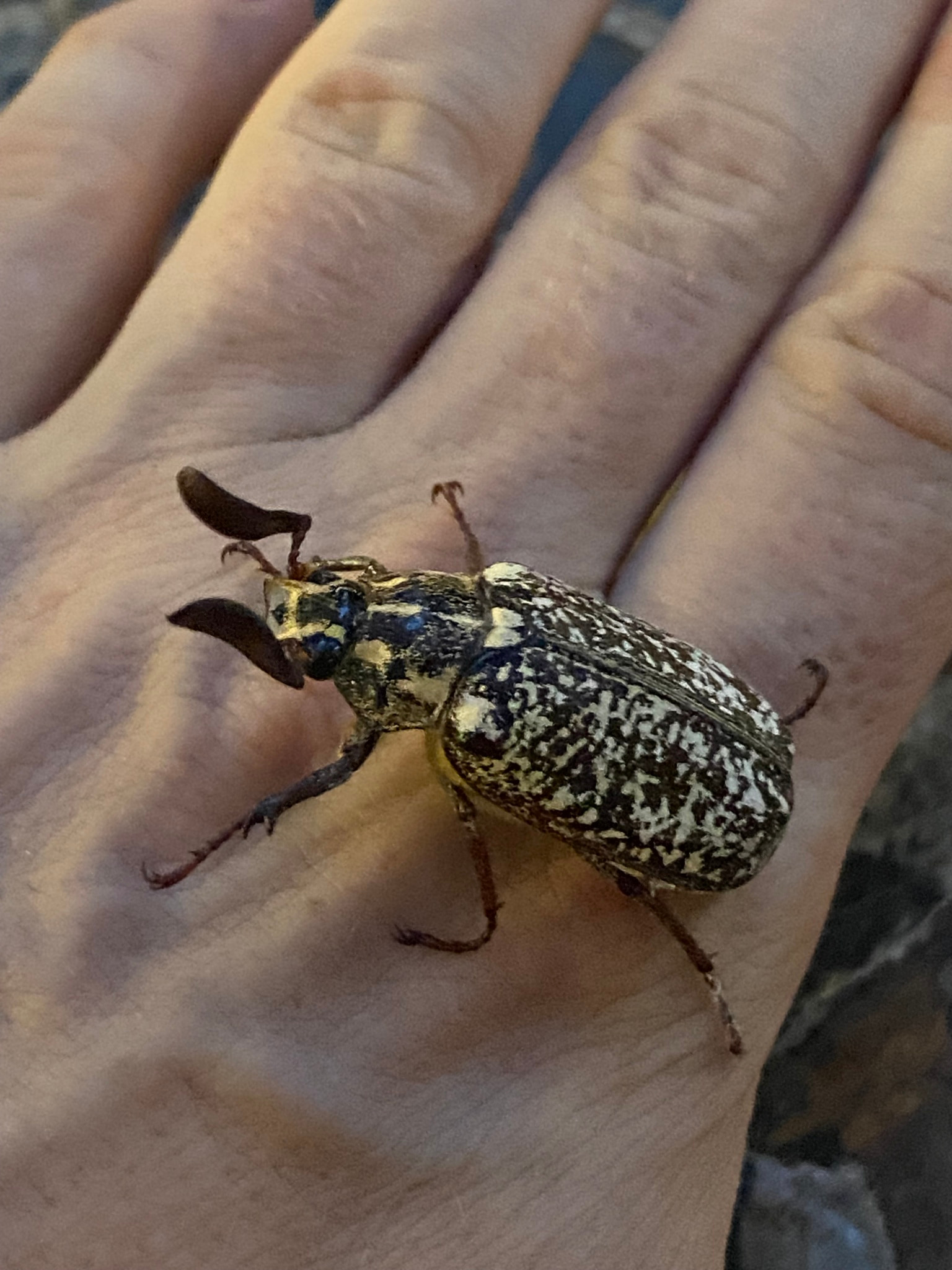

Polyphylla olivieri
Polyphylla olivieri
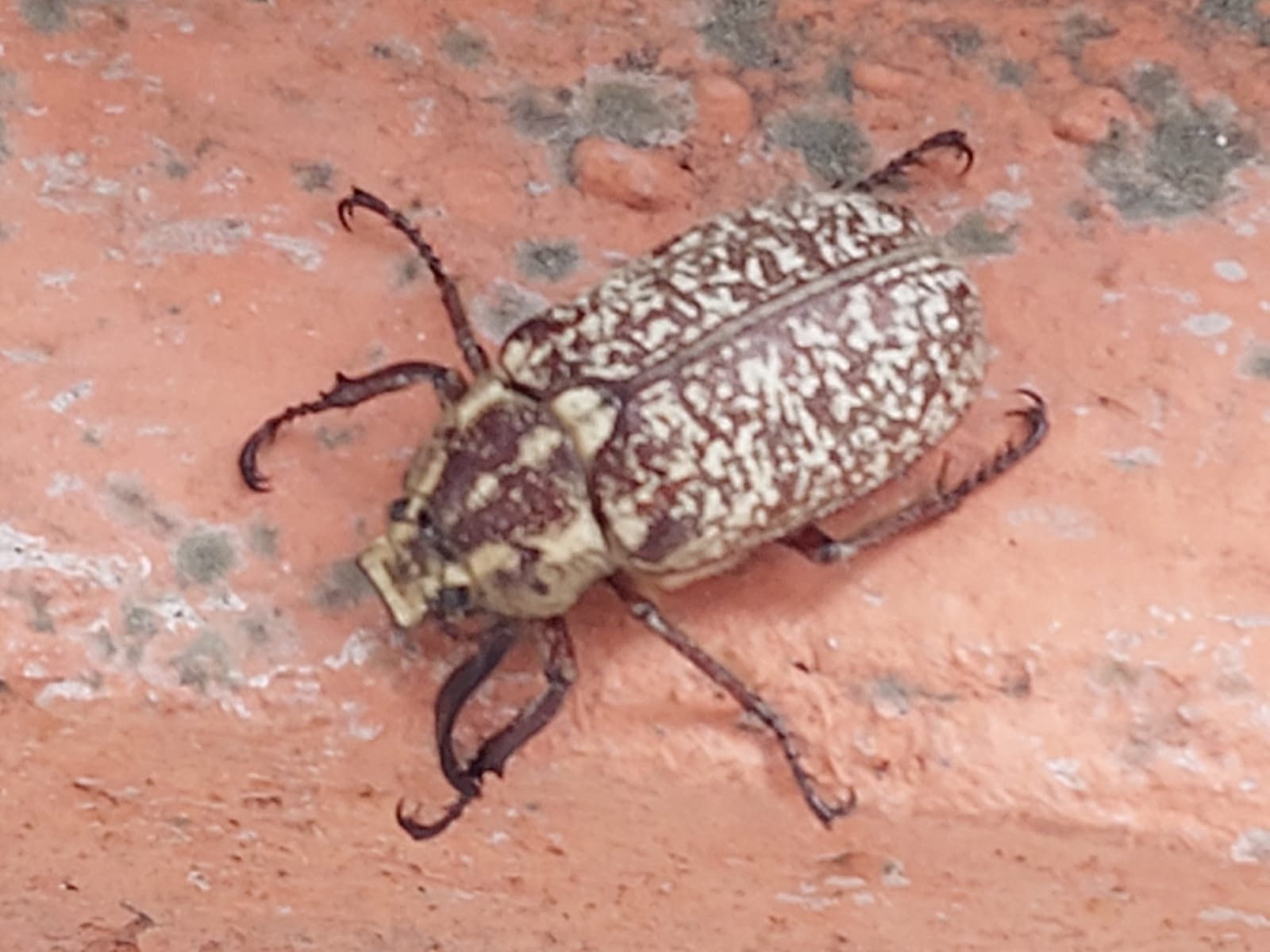
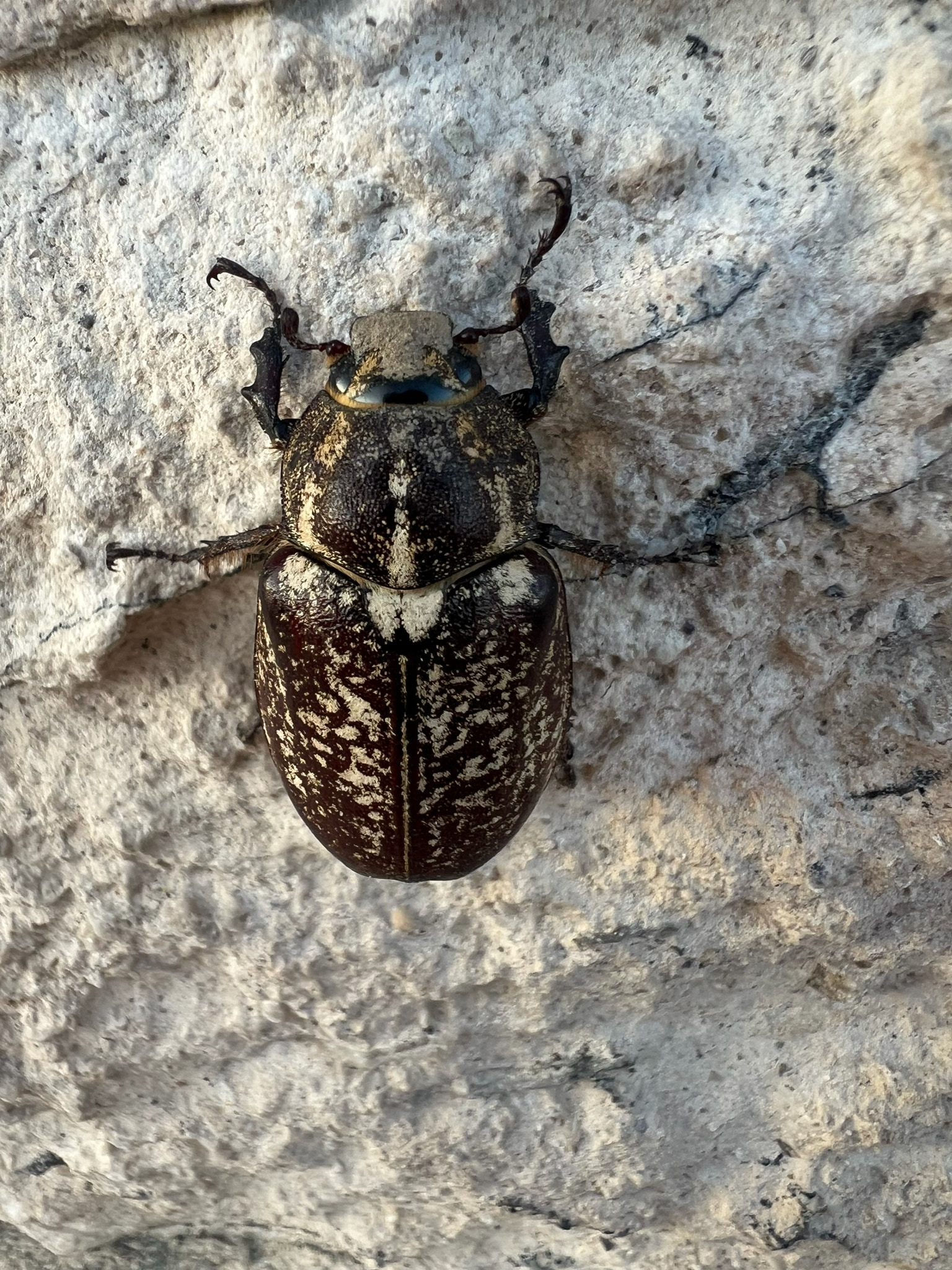
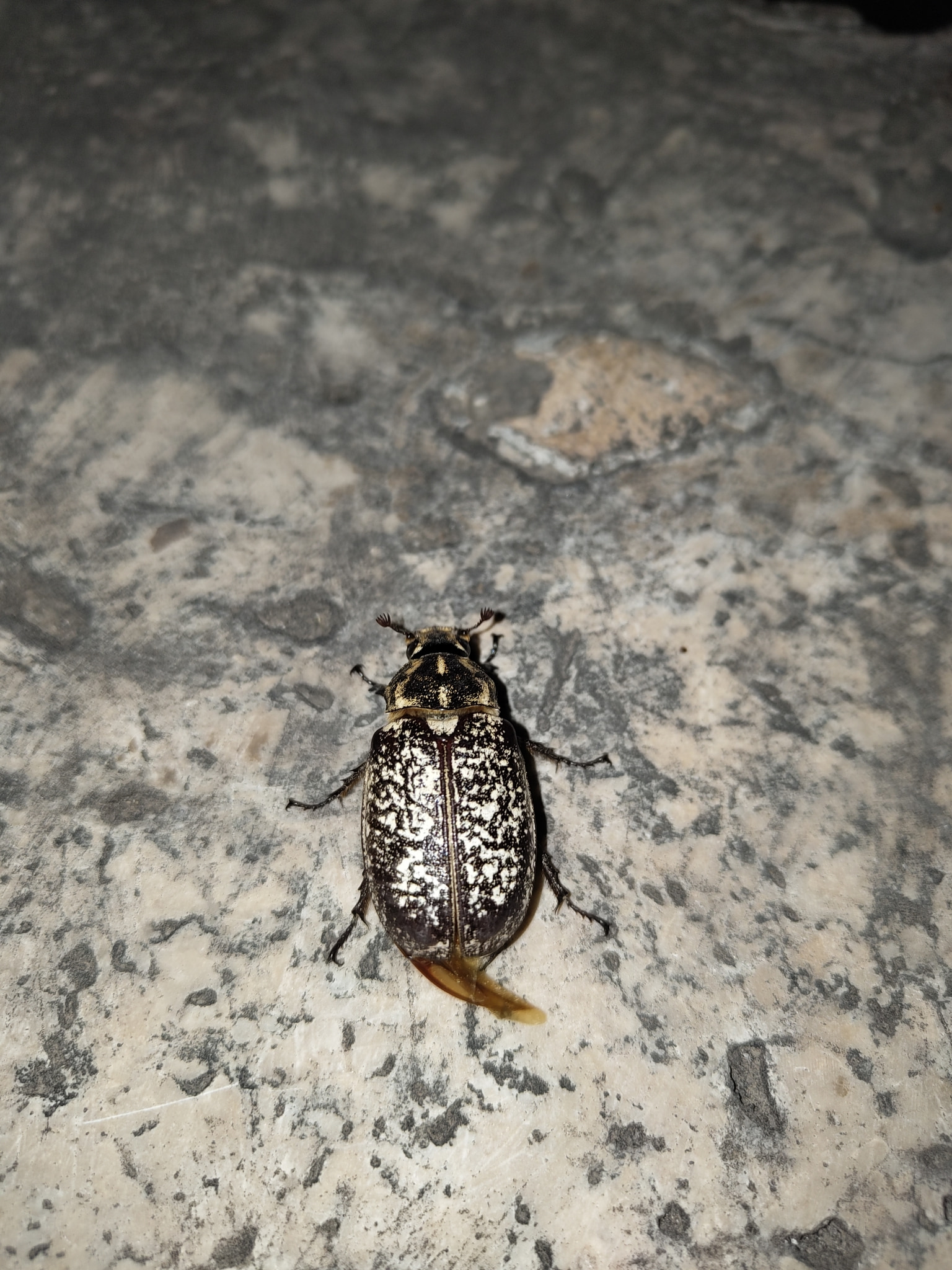
Vanya Mitin · Tbilisi Georgia field photo
Key facts in one look
- Group
- Insect
- Family
- Scarabaeidae
- Size
- 30–37.8 mm
- Status in Georgia
- Widespread
- Activity
- At dusk, after sunset
- Conservation
- NE
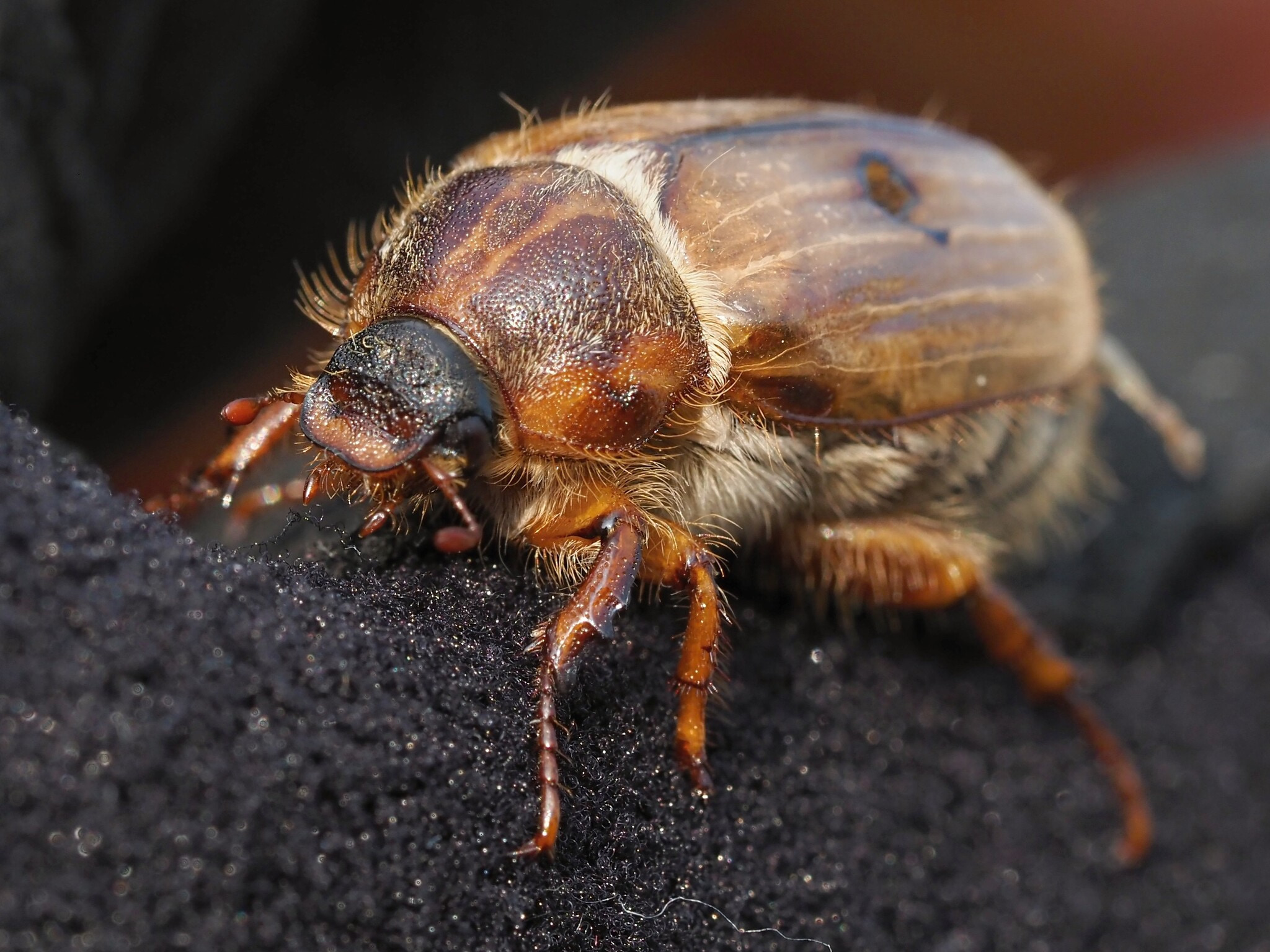
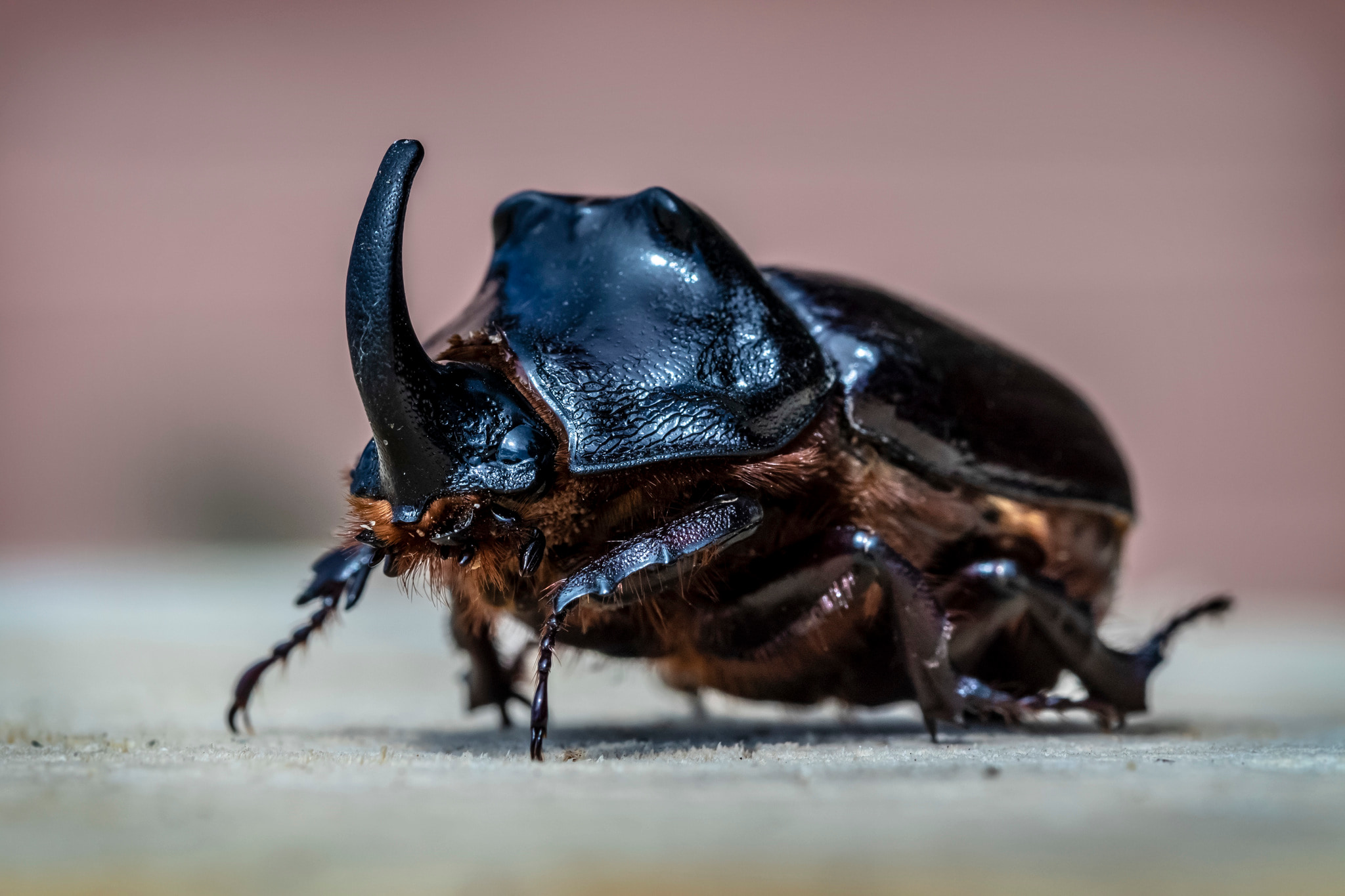
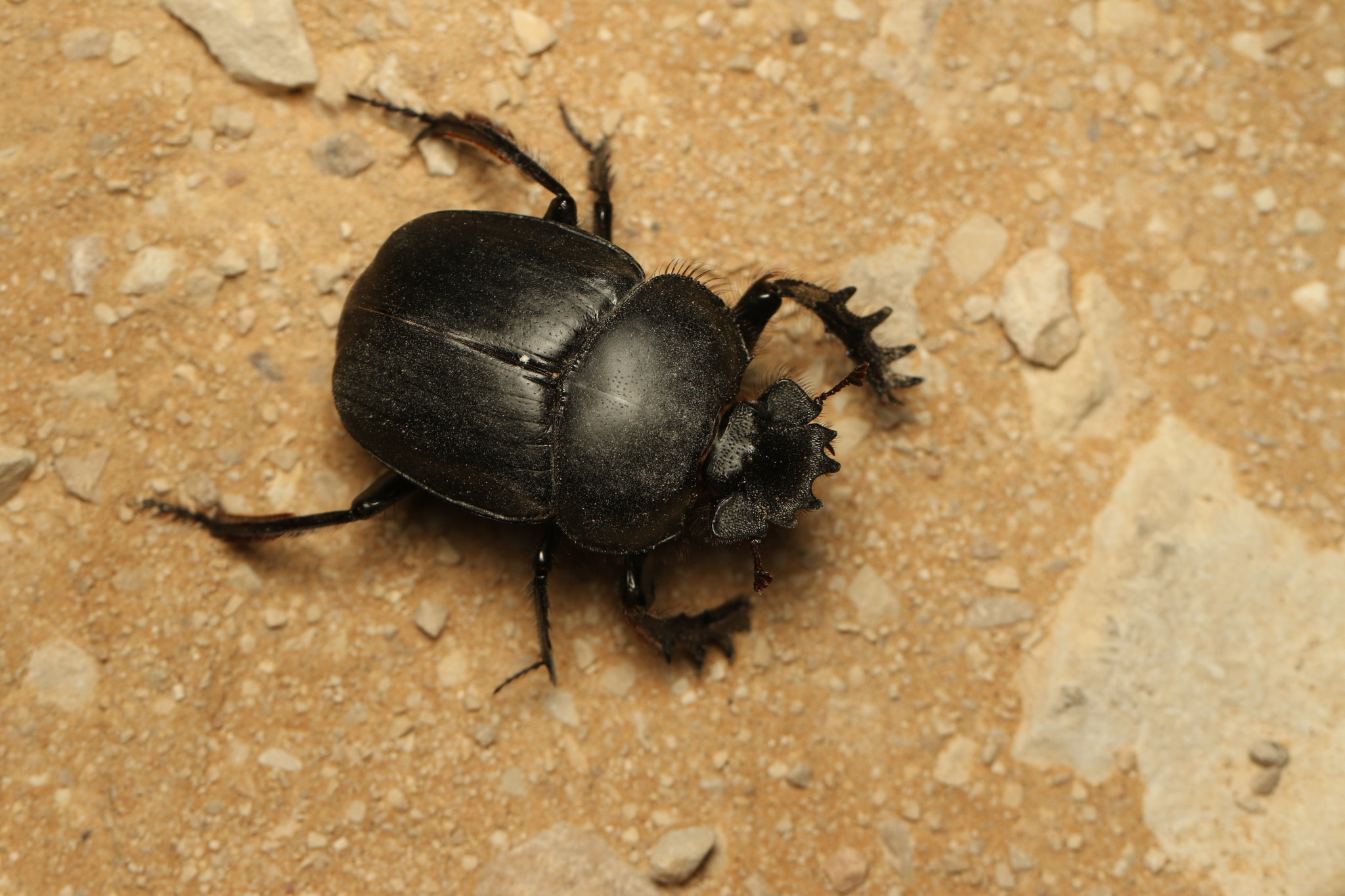
Polyphylla olivieri is a large chafer: it is 30–37.8 mm long, with white marbled spots on black or brownish-black wing cases. It occurs in Transcaucasia, Turkey, Iran, the Levant and Greece, and it is widespread in Georgia. Unlike its relative Polyphylla fullo, it chooses dense, clayey soil rather than sand. The larva develops in the soil for 3–5 years and eats roots, especially those of young grapevines and fruit trees. By day the beetle hides in the soil and comes out only at dusk, so you will rarely notice it in daylight.
Identification
Polyphylla olivieri: how to identify it
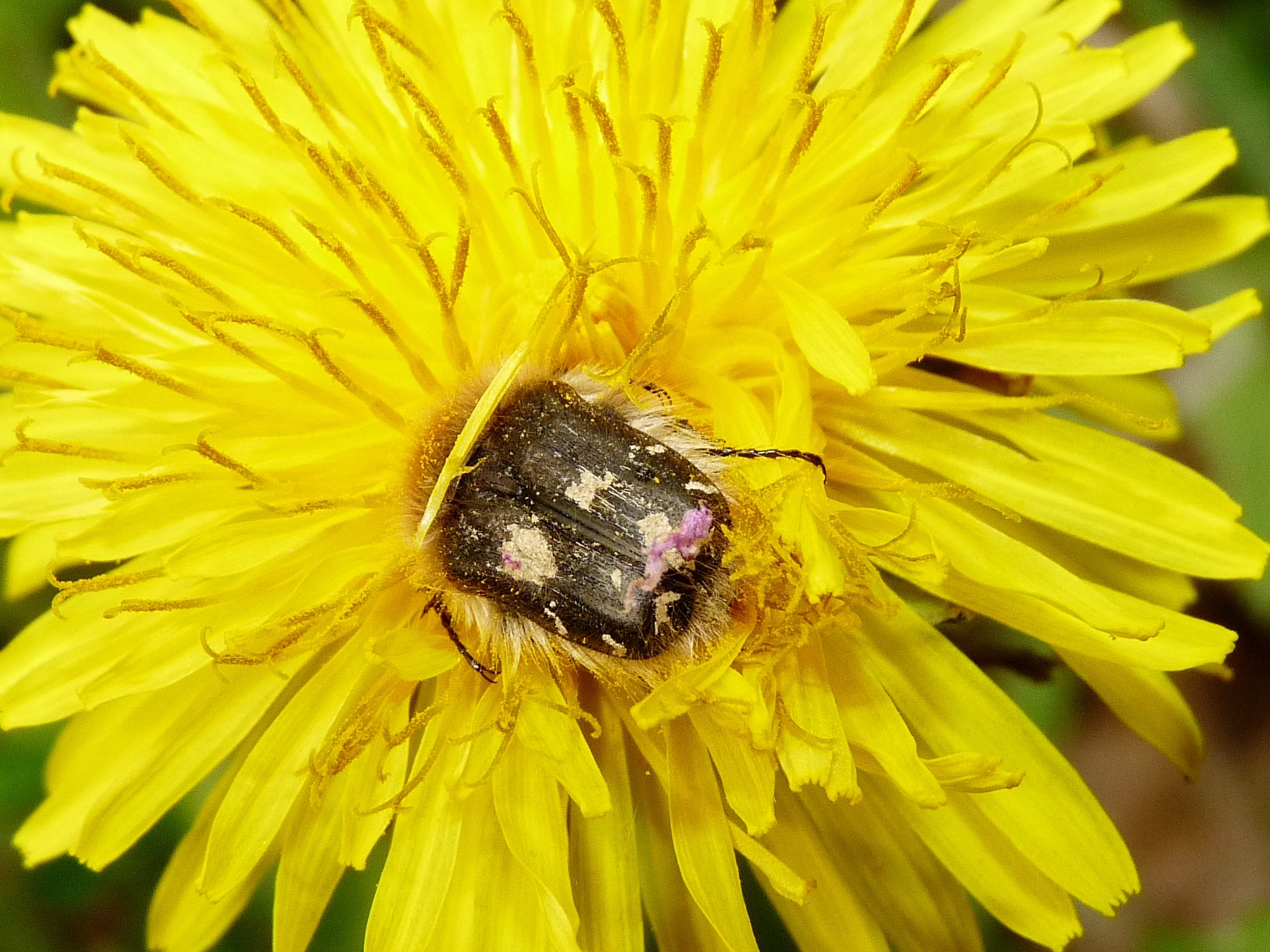
A large chafer, 30–37.8 mm long and 14.2–18.5 mm wide. The first thing you notice is the white, marbled spots on the dark wing cases. The head and pronotum have a yellow pattern. The place also helps to tell it from the similar Polyphylla fullo: this species lives on dense soil, fullo on sands.
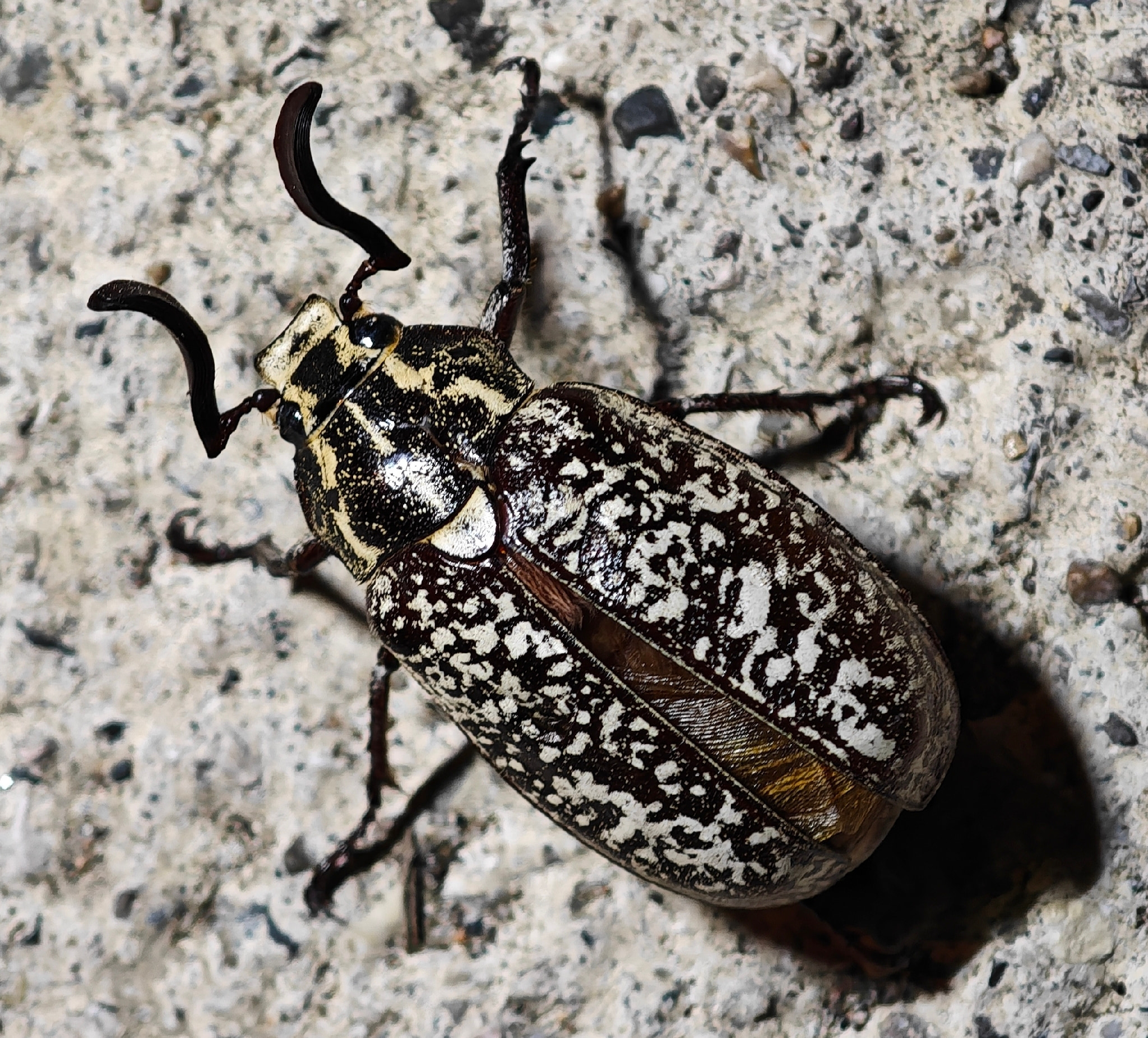
The wing cases are black or brownish black and covered in spots of white scales, like marble. The scutellum also has a pattern of white scales. This pattern shows well in a photo taken from above.
On the head and pronotum the pattern is made of yellow, not white, scales. The antenna ends in a blackish-brown club. Check these two features in a photo together with the pattern on the wing cases.
It is 30–37.8 mm long and 14.2–18.5 mm wide. Polyphylla fullo lives on sands, while this species lives on clayey soil and weathered limestone. So along with a photo, a description of the place helps to identify the species.
Colour
The body is black or brownish black. The head and pronotum carry a pattern of yellow scales, while the scutellum and wing cases have white, marbled spots. The antennal club is blackish brown.
Swatches are illustrative. Do not identify a species by colour alone.
It is a beetle of dense soils: it lives on clayey soil and on weathered limestone. This sets it apart from Polyphylla fullo, which lives on sands. By day it hides in the soil, and the larva spends its whole development underground. It is widespread in Georgia, and in neighbouring Azerbaijan it occurs almost everywhere except in the arid districts.
Polyphylla olivieri is widespread in Georgia. Most records come from Adjara and Abkhazia, followed by Kakheti, Guria, Imereti and Tbilisi. It has also been found in Samegrelo, Kvemo Kartli, Samtskhe-Javakheti, Mtskheta-Mtianeti and Shida Kartli. The beetles have been seen from June to October, most of them in July. The oldest record is a collection specimen taken near Leselidze in July 1961.
Data: Reptiles.ge + iNaturalist · Methodology
- Field observation
- Several records in one spot
- Photo record
- Region with records
The larva feeds in the soil on plant roots. It especially eats the roots of young grapevines and fruit trees. It lives in the soil for several years and gnaws roots all that time. What the adult beetle eats has not been described.
The adults fly at dusk, after sunset, and hide in the soil by day. The female lays up to 40 eggs in clayey soil. In Georgia the beetles have been seen from June to October, most of them in July. The larva is yellow, curved like an arc, and grows to 8 cm. One generation takes 3–5 years to develop, so the larva overwinters in the soil several times.
Related guides
Continue with related pages
Yes, it is widespread in Georgia. Transcaucasia is part of its range, and in neighbouring Azerbaijan it occurs almost everywhere except in the arid districts. It chooses dense, clayey soil. Here it occurs in both the west and the east, from Adjara and Abkhazia to Kakheti.
Above all by the soil it lives on. Polyphylla olivieri lives on clayey soil and weathered limestone, Polyphylla fullo on sands. It has black or brownish-black wing cases with white scale spots and a yellow pattern on the head and pronotum. So along with a photo, note what kind of soil you found it on.
No, it is harmless to people and has no venom. Only plants are harmed: the larva eats roots, especially those of young grapevines and fruit trees. If you find a beetle, take a photo and leave it where it is.
One generation takes 3–5 years to develop. The larva is yellow, curved like an arc, and grows to 8 cm. During that time it overwinters in the soil several times and eats roots. The female lays up to 40 eggs in clayey soil.
References
What this profile is based on
Species profiles are compiled from peer-reviewed literature and established biodiversity databases, and are reviewed as new taxonomic and conservation data become available.
Prepared by the Reptiles.ge editorial team from the sources listed here.