
Sacred scarab
Scarabaeus sacer
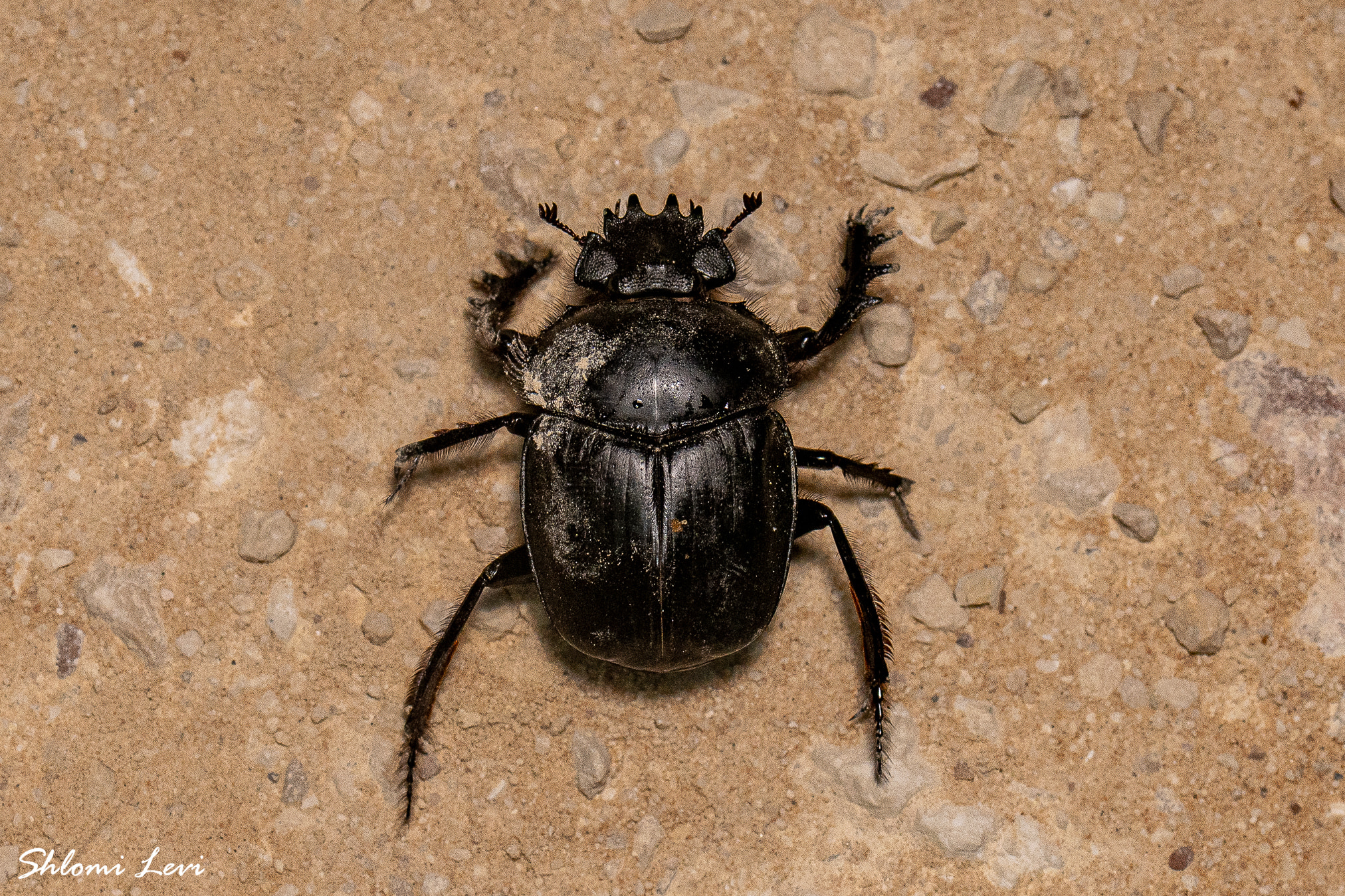
Chaym Turak · HaBesor Reservoir
Key facts in one look
- Size
- 25–37 mm
- Group
- Insect
- Family
- Scarabaeidae
- Status in Georgia
- Listed for the country's fauna
- Activity
- Mid-March–end of July, mostly at night
- Conservation
- NE
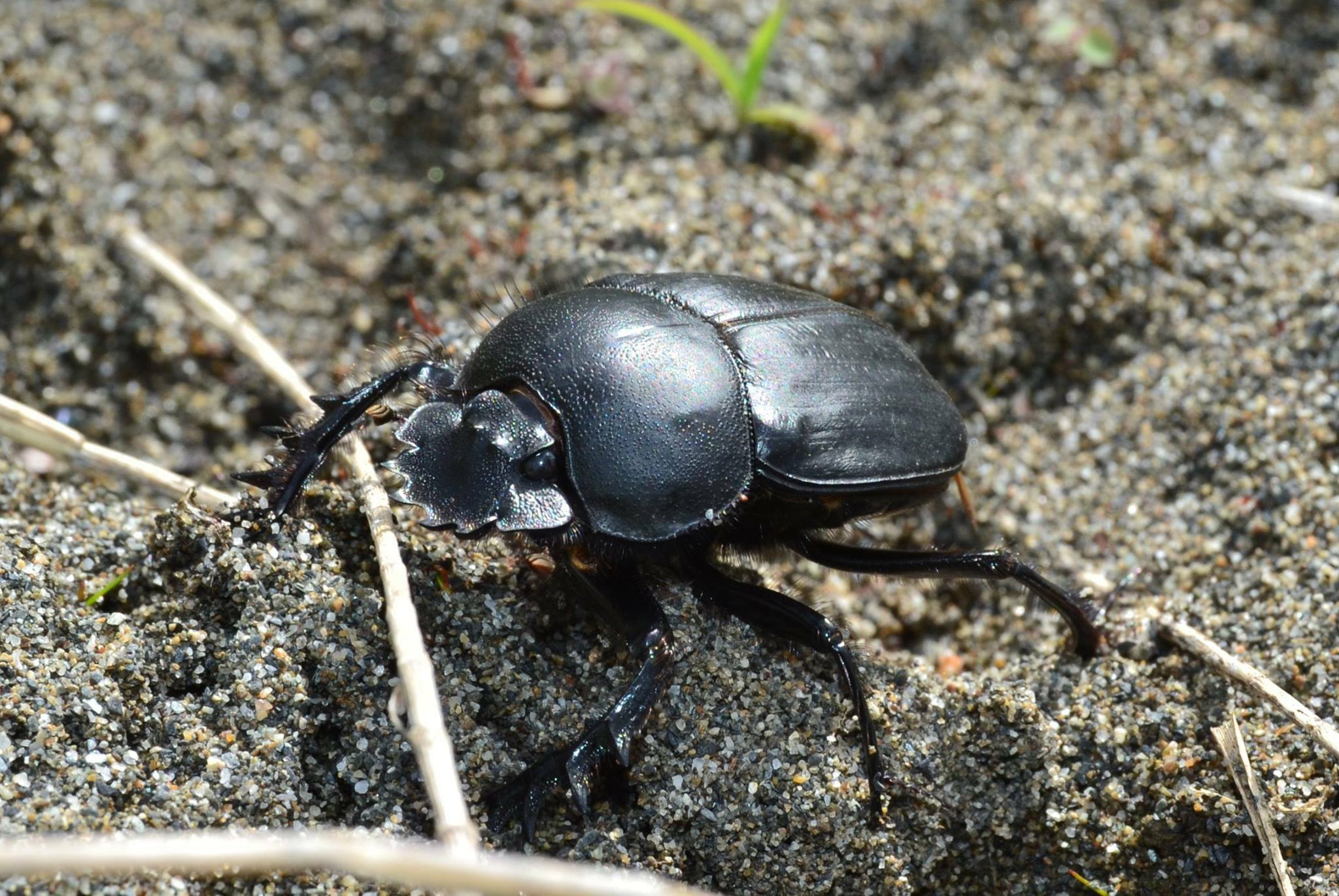
The sacred scarab (Scarabaeus sacer) is the beetle the ancient Egyptians took as the symbol of Khepri, god of the rising sun. It shapes dung into a ball, sometimes far larger than itself, and rolls it tens of metres. Then it buries the ball and eats it underground, or turns it into food for its larva. It is 25–37 mm long and entirely black, with six teeth like sun rays along the front of its head. Look for it in spring and summer on sandy ground near pastures, at piles of dung.
Identification
Sacred scarab: how to identify it
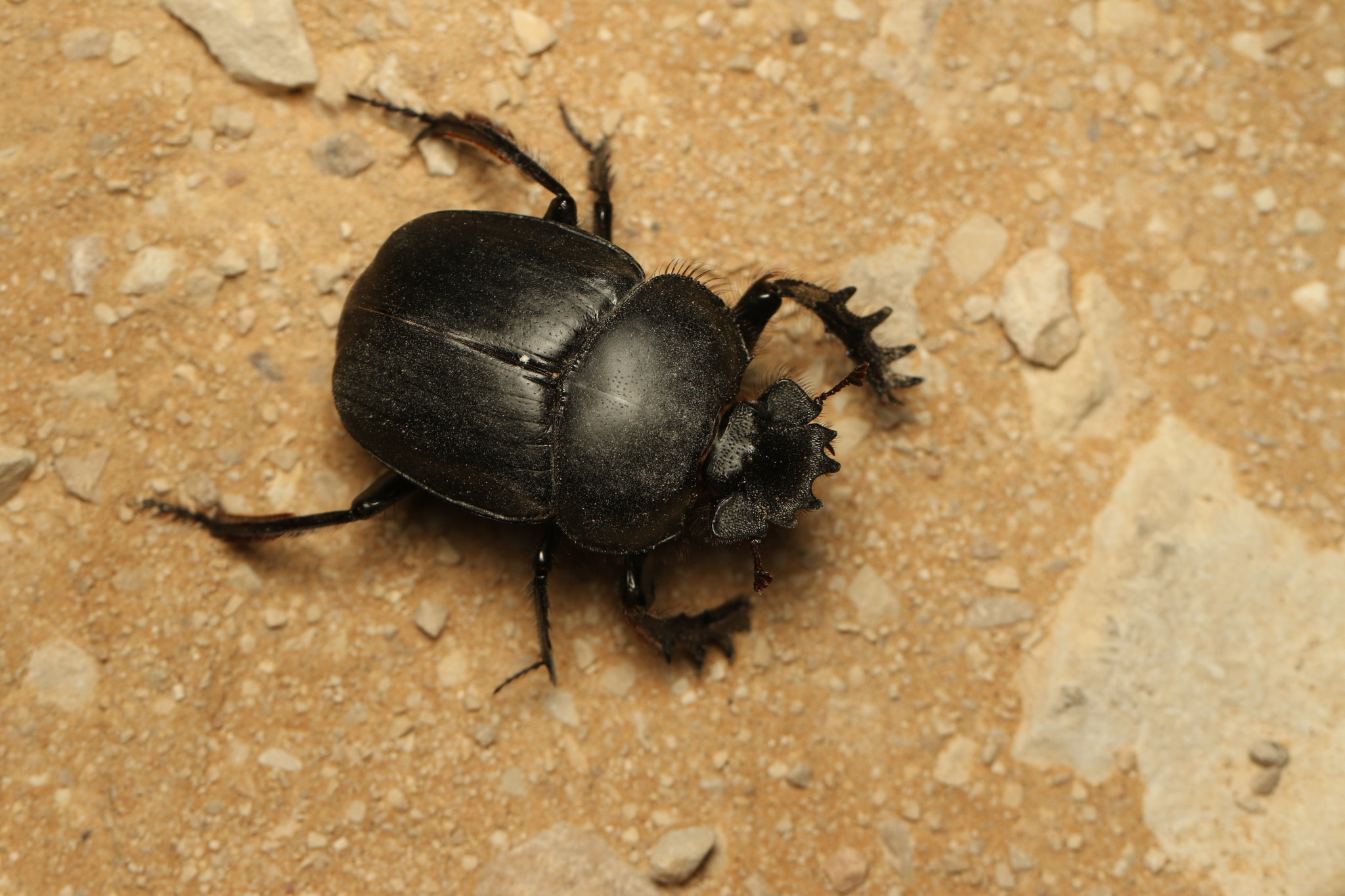
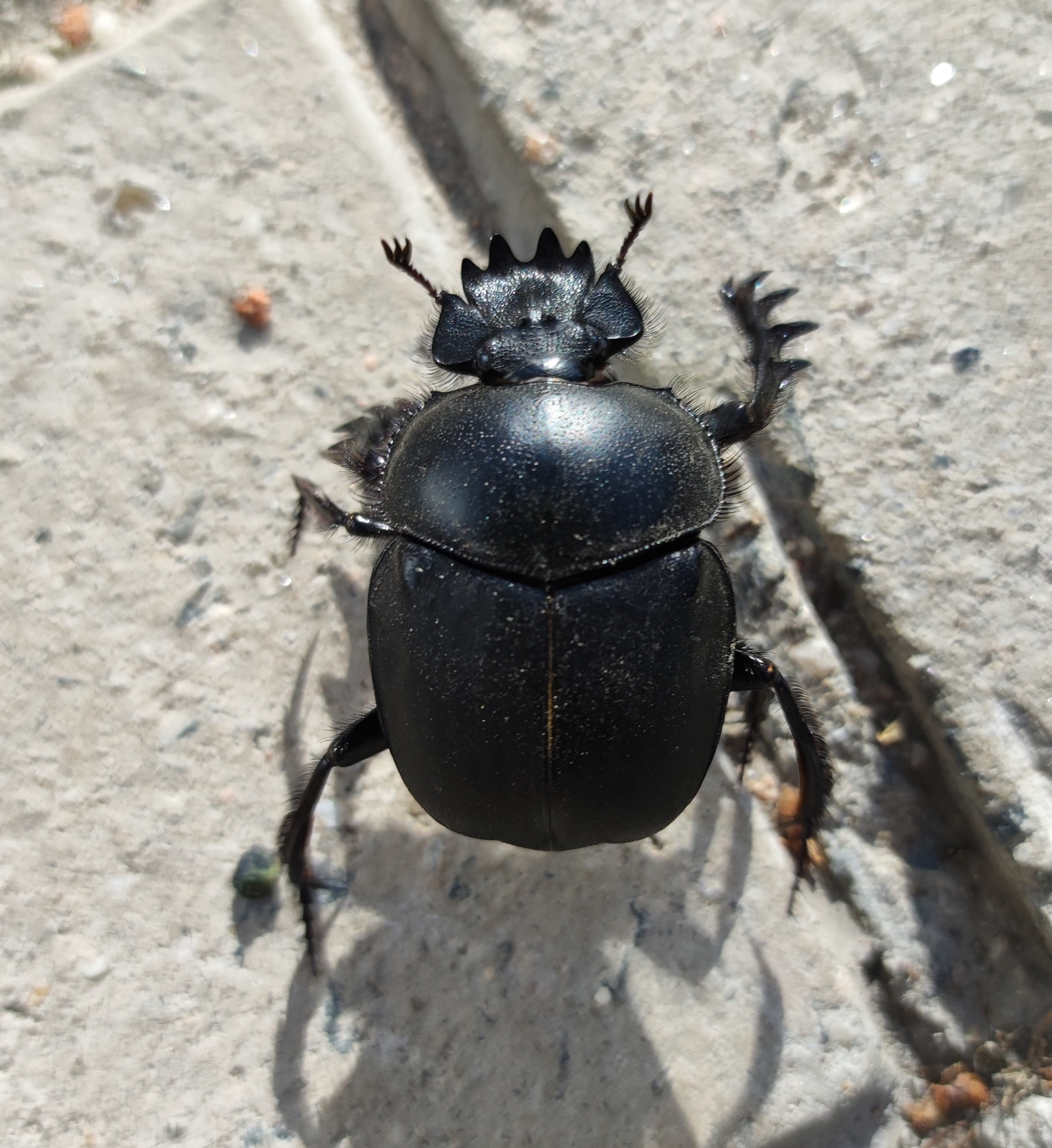
A broad, stout black beetle, 25–37 mm long. The first thing you notice is the head: flat, shovel-like, with six teeth along its front edge. The front tibiae carry four more teeth each, and together they form an arc of 14 "rays".
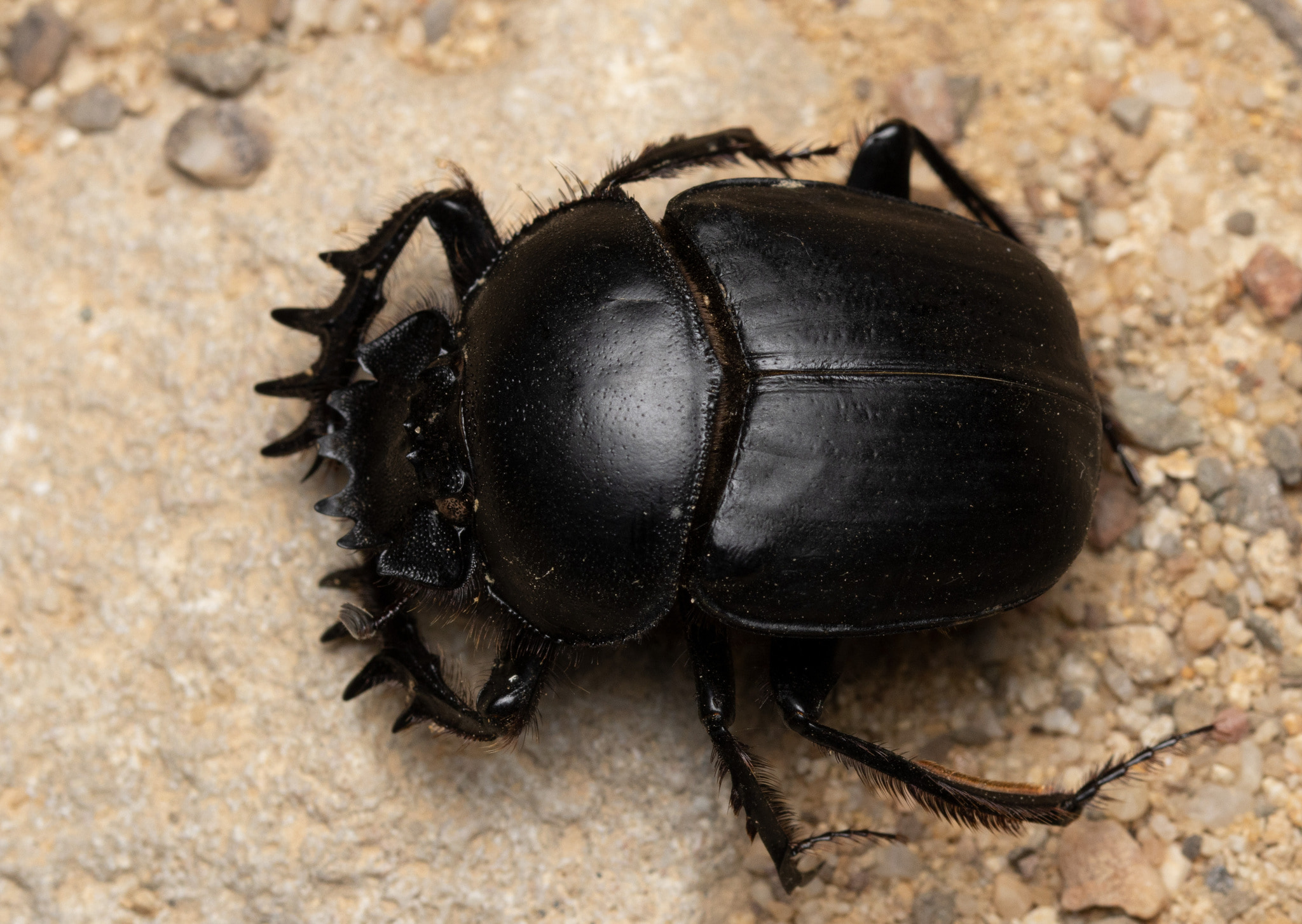
The front edge of the head has six ray-like teeth, and each front tibia has four. The beetle uses these teeth to dig and to shape dung into a ball. A photo from above shows the whole arc well.
The front legs have no tarsi, only the remnant of a claw. The middle and hind legs have normal, five-segmented tarsi. The front legs are built for digging and for shaping the ball.
The male has a fringe of golden-red hairs on the inner edge of the hind tibia; the female has none. The female's last body segment is more convex than the male's. To tell the sexes apart you need a close photo of the hind legs.
Colour
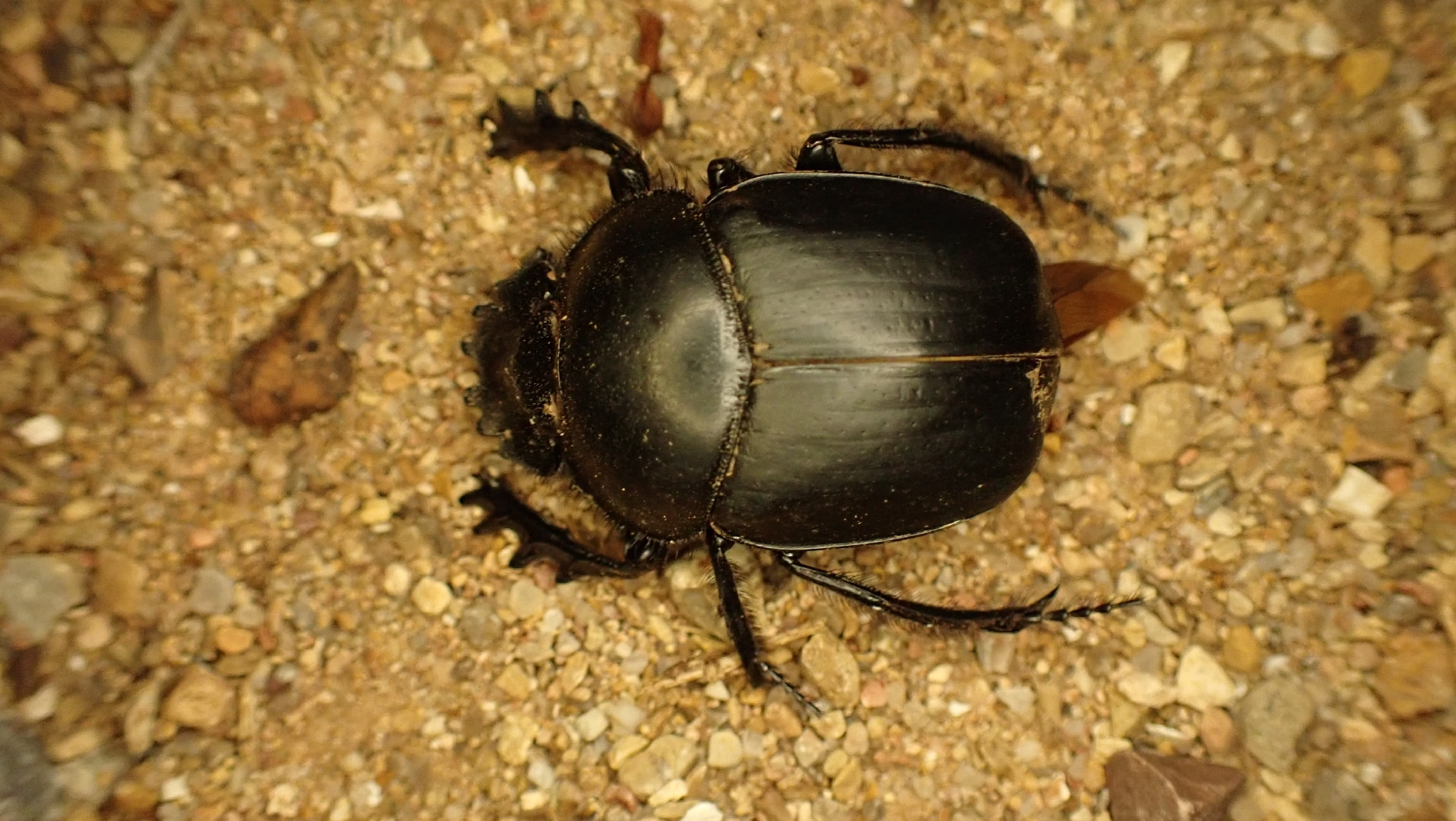
An entirely black, matt beetle. Old, worn beetles become shiny. The underside of the body and the legs are covered in dark brown hairs.
Swatches are illustrative. Do not identify a species by colour alone.
The sacred scarab is a beetle of dry, open country with hot summers. It chooses sandy soils and avoids saline ground. In Europe it lives mostly near the Mediterranean and Black Sea coasts, often in sand dunes and marshy places. It does not climb high into the mountains. In Georgia it is on the fauna list and is known from western Georgia.
The sacred scarab is listed for Georgia's fauna. Records come from western Georgia, from Abkhazia, Adjara, Guria and Samegrelo, and from the east, from Tbilisi, Kvemo Kartli and Shida Kartli. Dated records show adult beetles from June to September.
Data: Reptiles.ge + iNaturalist · Methodology
- Field observation
- Several records in one spot
- Photo record
- Region with records
The sacred scarab feeds on dung, mainly that of cattle and horses. It shapes the dung into a ball, hides it in a chamber dug in the ground and eats it there over several days. The larva eats the pear-shaped ball in which the female laid her egg.
Adults fly and roll balls from mid-March to the end of July, mostly at night. They roll a ball tens of metres from the dung pile and bury it in a suitable spot, alone or in twos. Beetles often fight over a ball. While rolling a ball together, a male and a female form a pair and prepare food for their young together. The pair digs a burrow 10–30 cm deep that ends in a brood chamber. There the female makes one to three pear-shaped balls of dung and lays a single egg in the narrow end of each. The egg takes 5–12 days, the larva 30–35 days and the pupa about two weeks. The young beetle stays for a long time inside the hardened ball until autumn or spring rain softens it, and sometimes it spends the winter there.
Chaym Turak · Álvaro Alemany · Sónika Leconte · Blanchemain Joël · Shlomi Levi · Giorgi Iankoshvili · Sara Navarro · Mohamed Mousaid
Related guides
Continue with related pages
Yes, it is listed in the catalogue of Georgia's scarab beetles and is known from western Georgia. It chooses sandy, open places near pastures, where there is plenty of dung. It does not climb high into the mountains. Its exact distribution in the country has not yet been described in detail.
For food and for its young. The beetle rolls the ball away from the dung pile, buries it and eats it over several days. When breeding, the female makes a pear-shaped ball from finer dung and lays a single egg in it. The larva that hatches eats this ball and grows underground.
It was a holy beetle in ancient Egypt. In the rolling ball the Egyptians saw the god Khepri rolling the sun across the sky. Young beetles emerging from the ball were taken as a sign of rebirth. That is why scarab amulets were also placed in tombs.
No. The sacred scarab does not bite, has no venom and does people no harm. The flesh-eating scarab of the films is fiction. This beetle feeds only on dung. If you find one, leave it where it is.
References
What this profile is based on
Species profiles are compiled from peer-reviewed literature and established biodiversity databases, and are reviewed as new taxonomic and conservation data become available.
Prepared by the Reptiles.ge editorial team from the sources listed here.