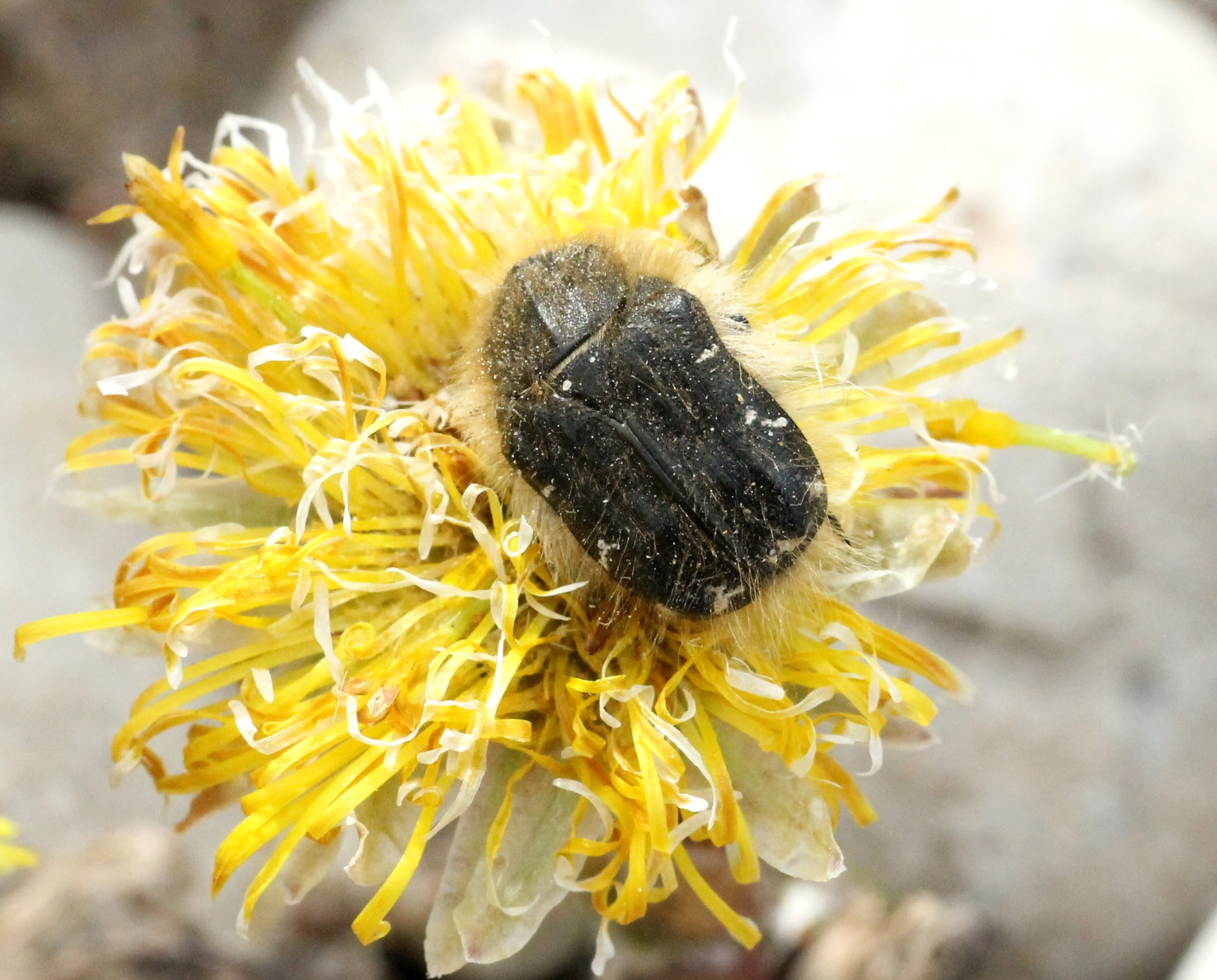
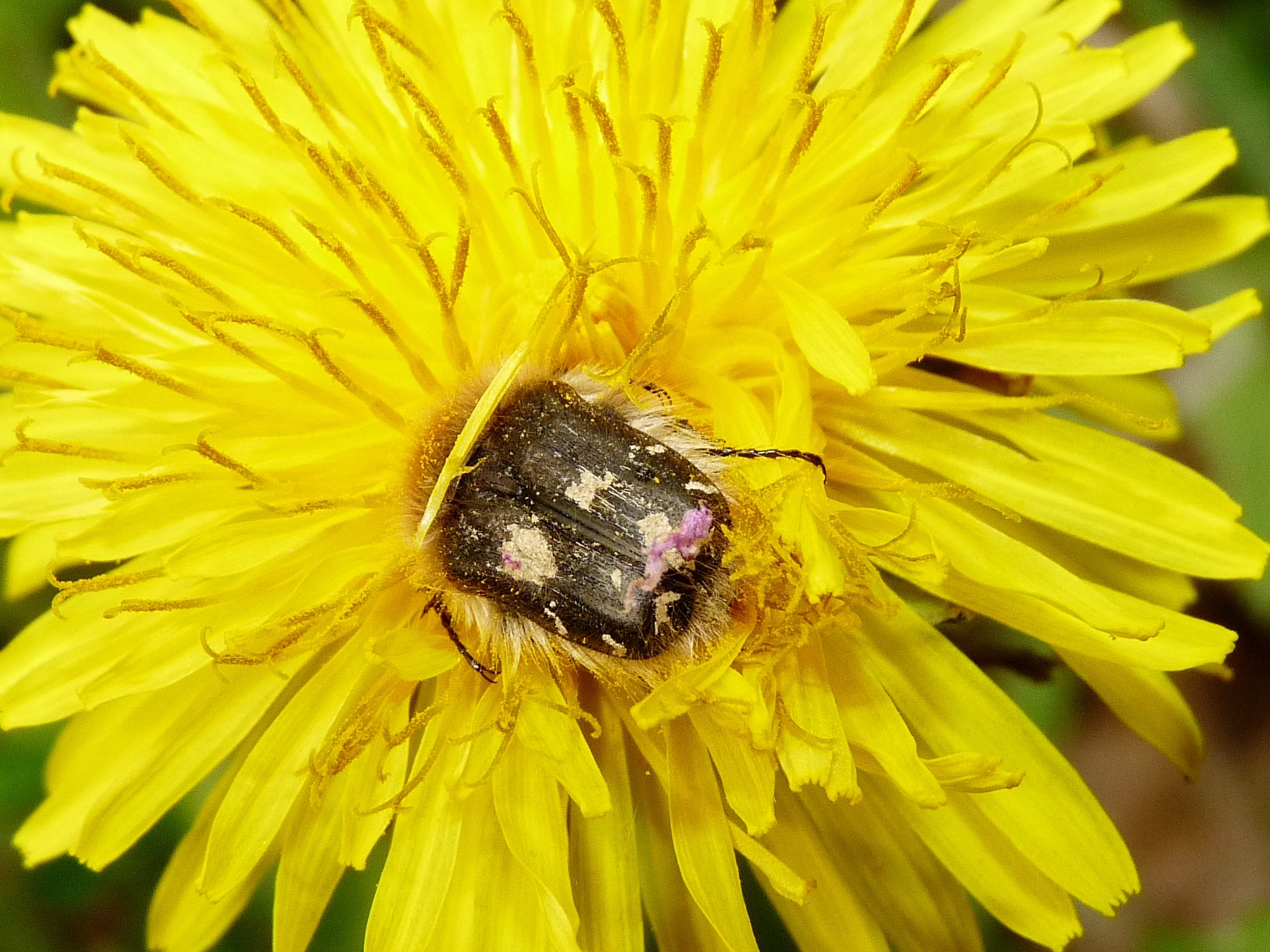

Apple blossom beetle
Tropinota hirta
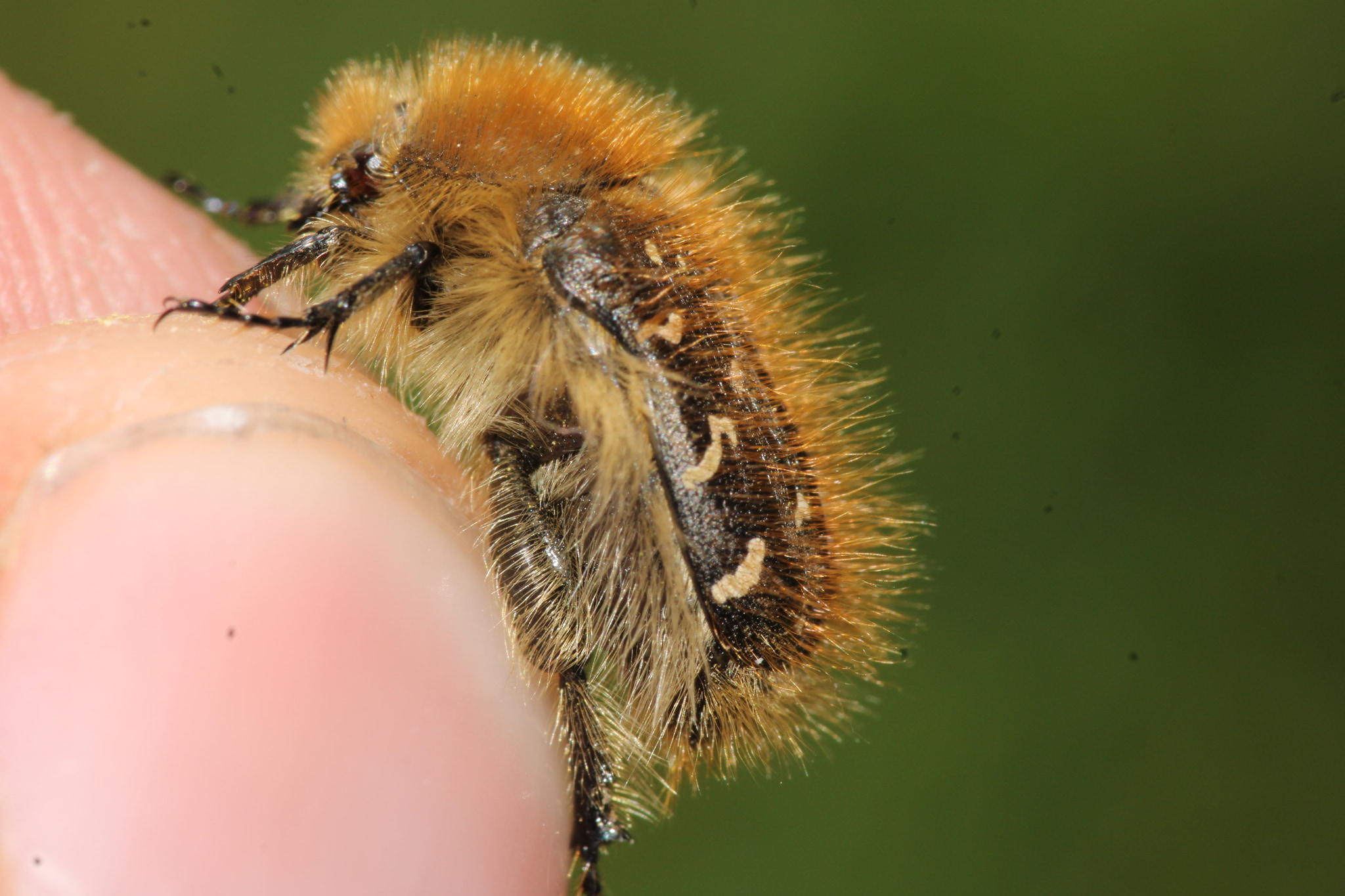
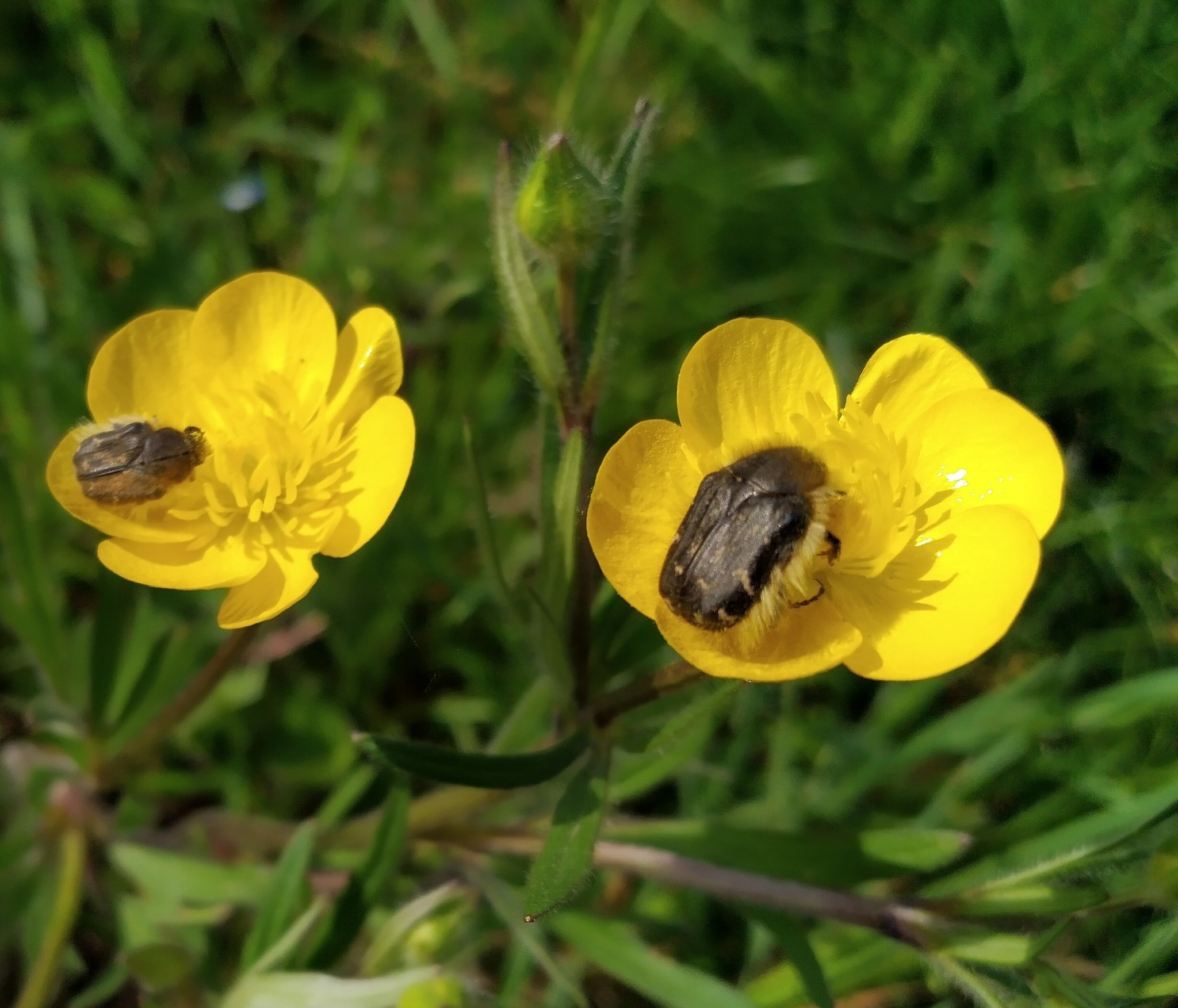
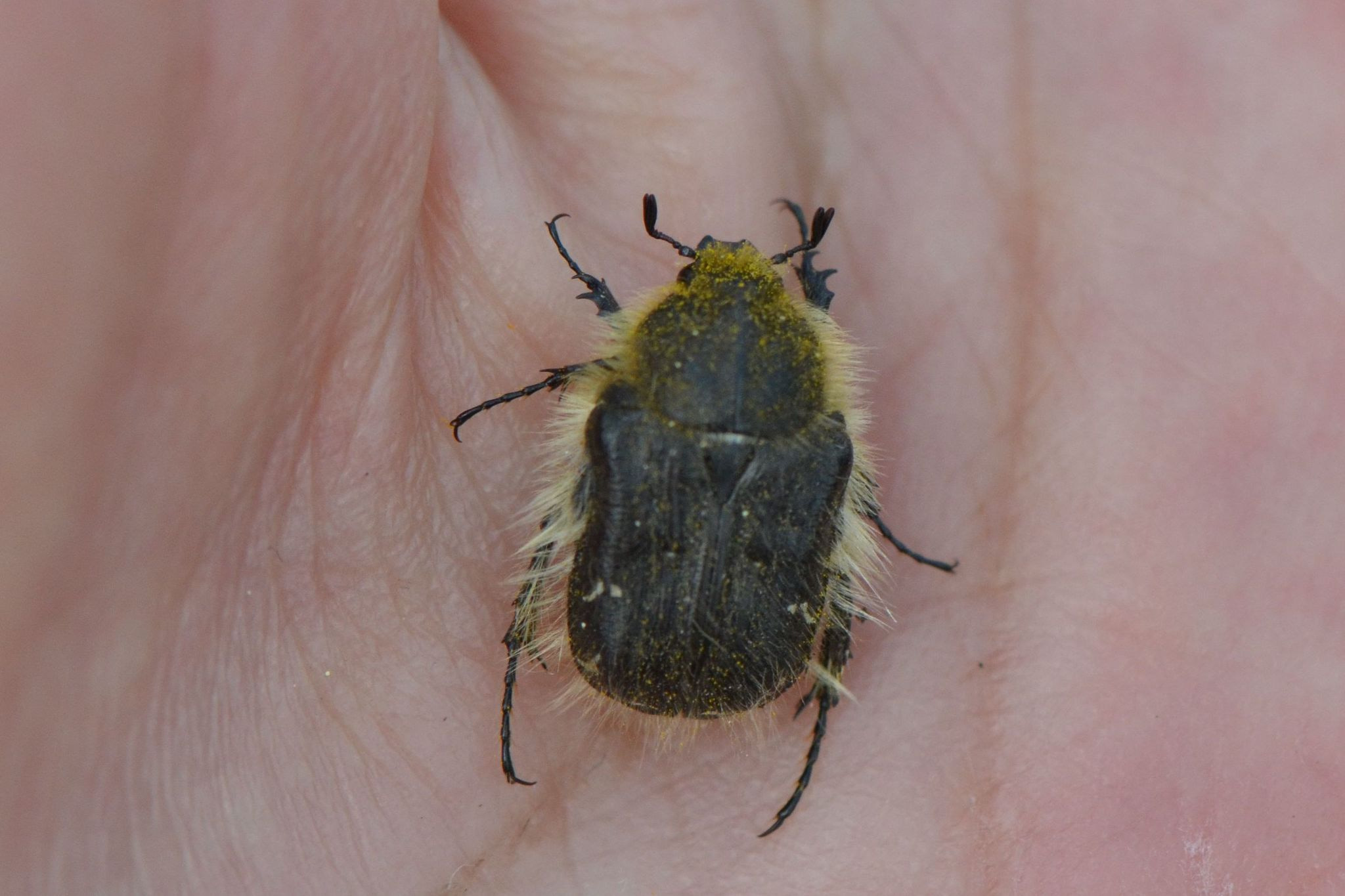
lastovka · Jennersdorf
Key facts in one look
- Size
- 8–13 mm
- Group
- Insect
- Family
- Scarabaeidae
- Status in Georgia
- Throughout the country
- Activity
- Spring, during flowering; in places until mid-July
- Conservation
- NE
The apple blossom beetle (Tropinota hirta) is a beetle of spring flowers: it appears when fruit trees bloom and eats parts of the flowers. It is a pest of many crops, because a damaged flower can no longer set fruit. It is 8–13 mm long, matt black with white or yellowish spots, and its whole body is covered in hairs. It occurs throughout Georgia. Watch the flowers in a blooming orchard in spring and you will probably see it.
Identification
Apple blossom beetle: how to identify it
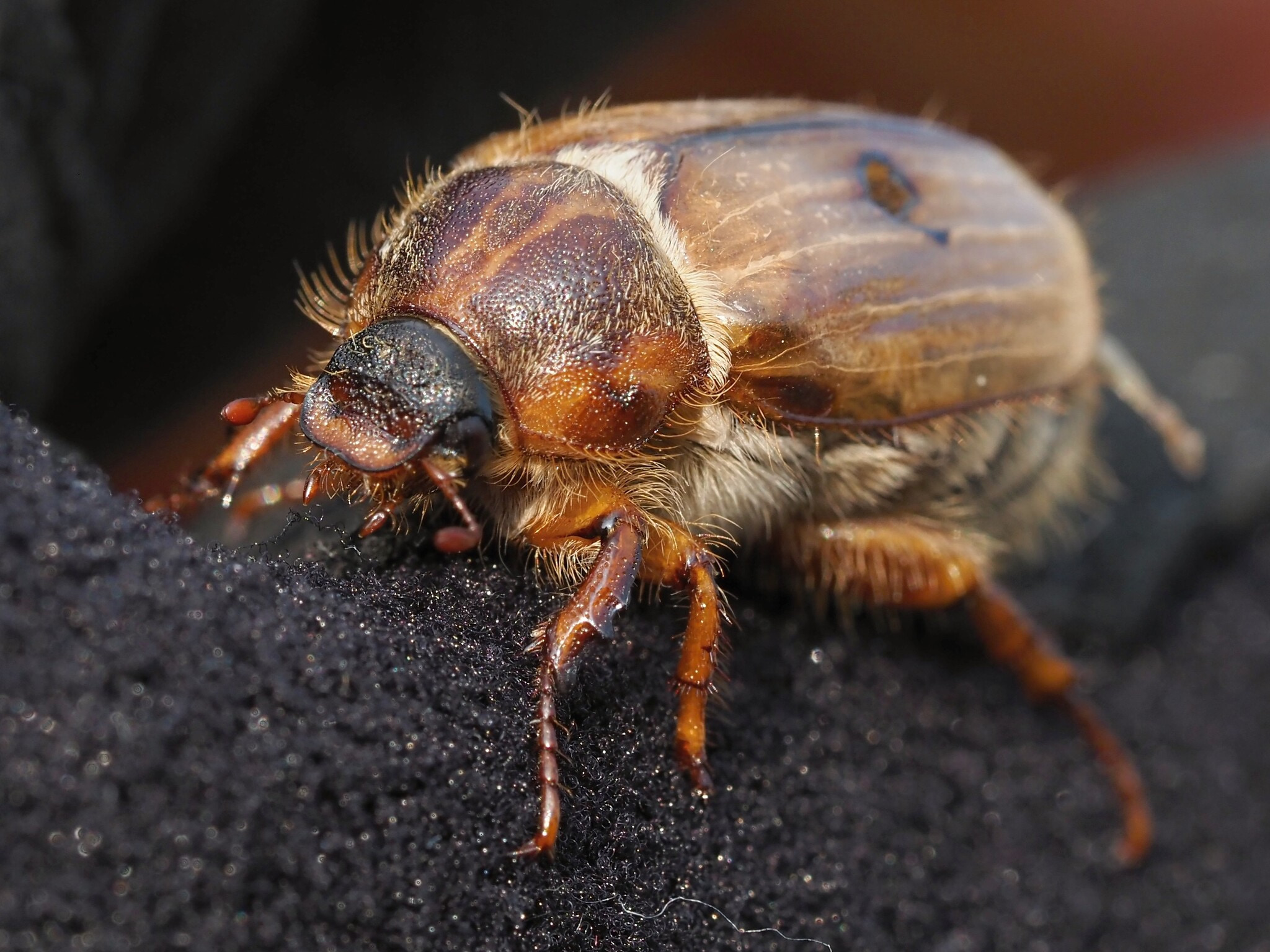
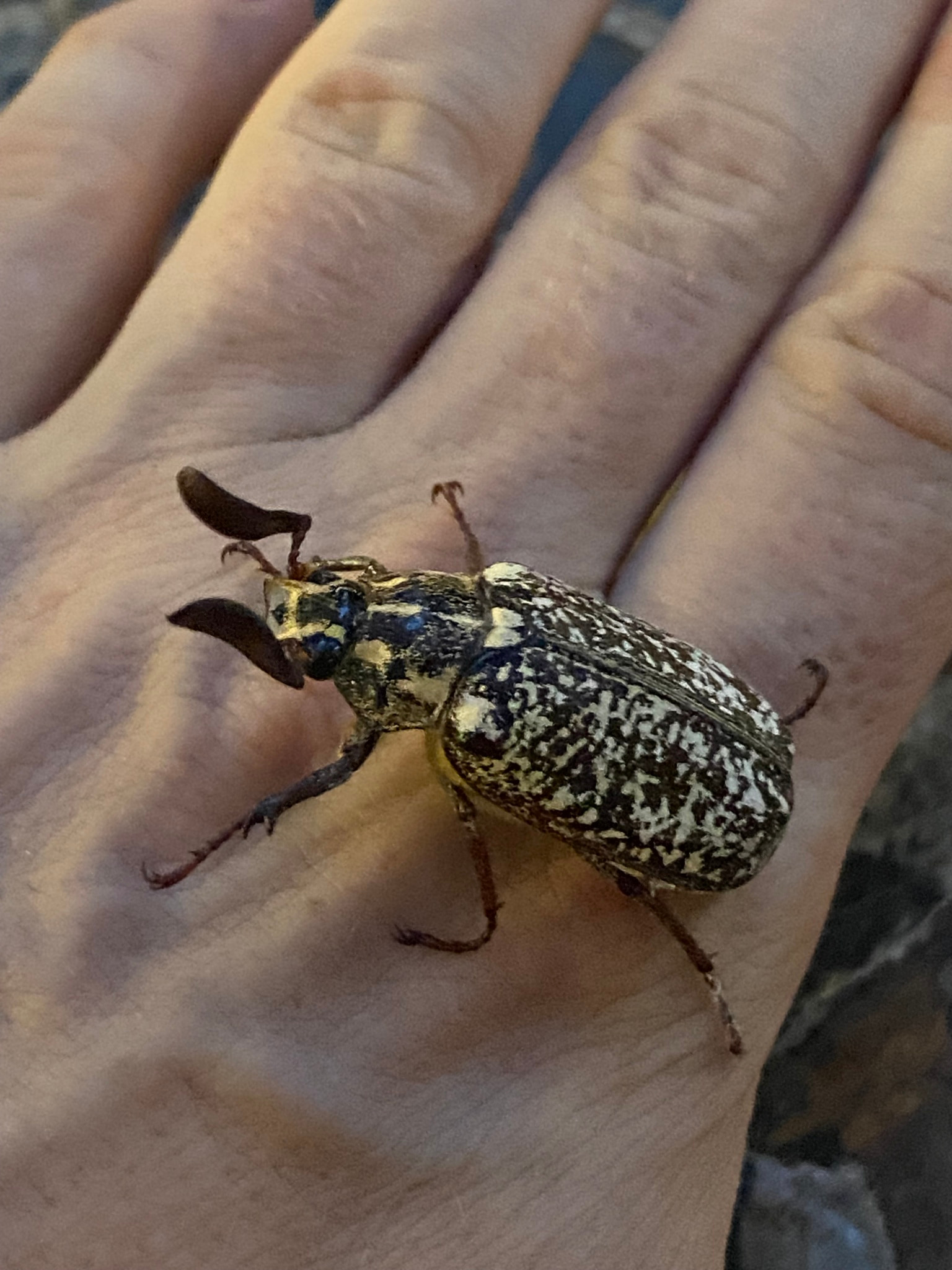
A small, hairy black flower chafer, 8–13 mm long. The first things you notice are the hairs and the white or yellowish spots on a black background. It looks very like Oxythyrea funesta and Tropinota squalida, so check the features together.
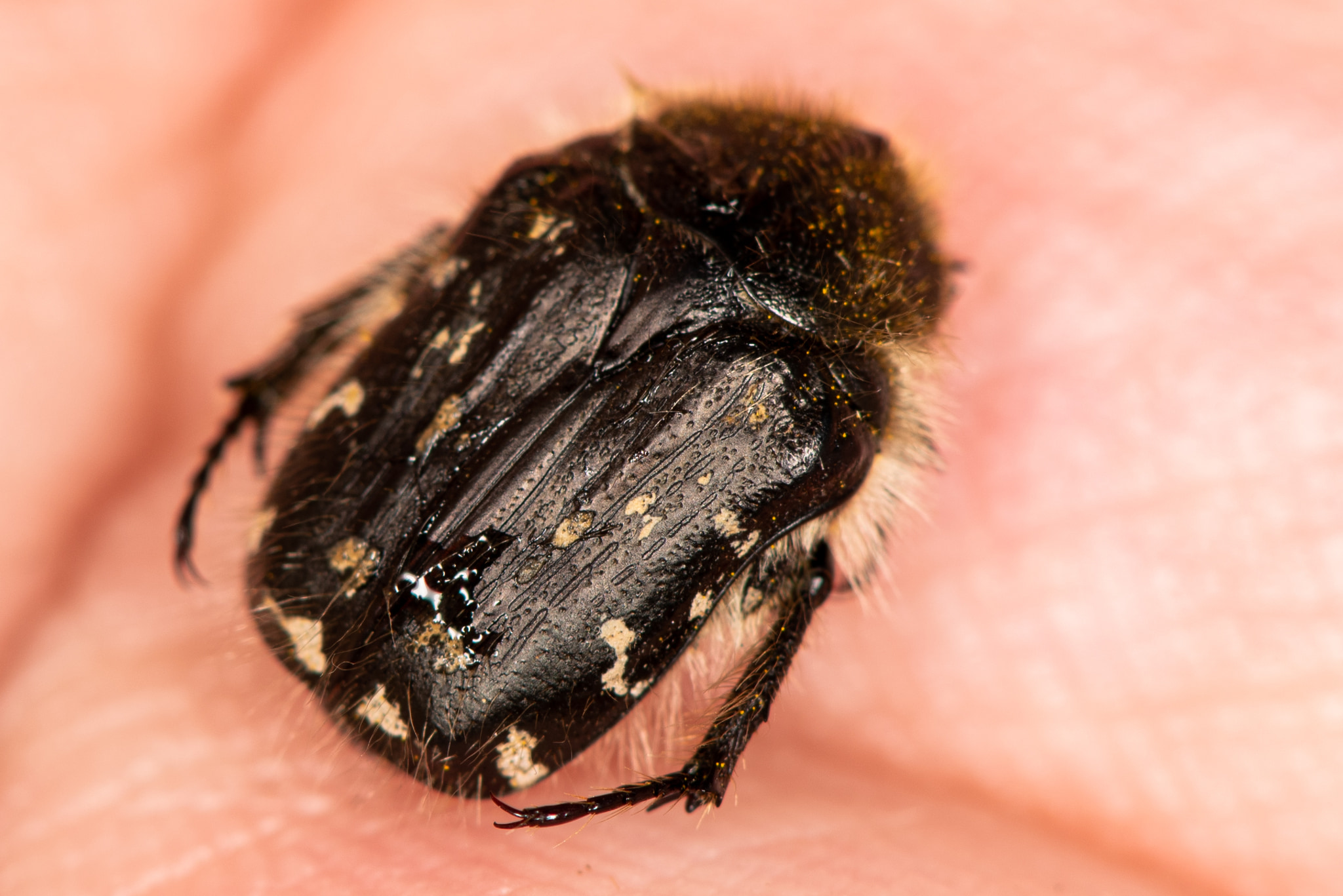
The whole body is covered in hairs, and the underside with dense, pale hairs. It is hairier than Oxythyrea funesta, which is where its name comes from. The back carries relatively few hairs.
The tibia has three spines; Oxythyrea funesta has two. This is the most reliable feature for telling these two beetles apart. To count them you need a close photo of the leg.
It is hard to tell from Tropinota squalida without magnification. Tropinota squalida tolerates cold poorly and lives mostly in the Mediterranean basin. A photo often will not separate the two.
Colour
Matt black. The upper side has yellowish or white spots and stripes whose pattern varies greatly. The hairs are two-coloured, grey and yellow. The underside of the body is pale and covered in dense hairs.
Swatches are illustrative. Do not identify a species by colour alone.
The apple blossom beetle is a beetle of forest-steppe and steppe. It is widespread in these zones of central and southern Europe and West Asia. In spring it appears in gardens and orchards where the trees are in bloom. The larva develops in humus-rich soil. In Georgia it occurs throughout the country.
The apple blossom beetle occurs throughout Georgia. Most records come from Tbilisi and Mtskheta-Mtianeti, followed by Shida Kartli, Kvemo Kartli and Kakheti. It has also been found in Abkhazia and Samegrelo. Adults have been recorded from March to June, with most records in April.
Data: Reptiles.ge + iNaturalist · Methodology
- Field observation
- Several records in one spot
- Region with records
The adult feeds on flowers and buds. On the flowers of fruit trees, strawberries, roses and cereals it eats the male and female parts, so such a flower can no longer set fruit. The larva eats decaying wood, dead leaves, the roots of annual plants and humus in the soil. In orchards the larva does no damage.
It spends the winter in the soil as a larva and as an adult. Adults come out in spring, when fruit trees and other plants bloom, and are common on flowers from April. They are most numerous in late spring, and in some places they fly until mid-July. They are good flyers, so they move easily from one plant to another. The female lays her eggs in humus-rich soil. The larvae hatch after 1–2 weeks, feed in the soil and pupate there. The beetle is attracted to the colour blue.
It has not been assessed on the global IUCN Red List (NE). It is not on Georgia's Red List. It is not threatened: it is a widespread, common beetle, and traps in orchards catch thousands in a single season. It is a pest of fruit, vegetables and cereals that causes significant economic losses.
Related guides
Continue with related pages
Yes, it occurs throughout Georgia. It is also listed in the catalogue of the country's scarab beetles. It appears in gardens and orchards in spring, when the trees bloom. At that time it is often seen on flowers.
Because the adult beetle eats flowers. It damages the male and female parts of the flower, so such a flower can no longer set fruit. It damages fruit trees, strawberries, roses and cereals. The larva lives in the soil and does not harm the orchard.
By the hairs and the tibiae. Oxythyrea funesta looks very similar: it is also black with white spots and hairy. The apple blossom beetle is hairier, while Oxythyrea funesta is often smaller. The apple blossom beetle has three spines on the tibia, Oxythyrea two. You will only see this in a close photo.
No. The apple blossom beetle does not bite, has no venom and does people no harm. It only damages flowers. If one lands on your hand, simply brush it off.
References
What this profile is based on
Species profiles are compiled from peer-reviewed literature and established biodiversity databases, and are reviewed as new taxonomic and conservation data become available.
Prepared by the Reptiles.ge editorial team from the sources listed here.