
Summer chafer
Amphimallon solstitiale
bsteer · Canterbury
Key facts in one look
- Size
- 14–18 mm
- Group
- Insect
- Family
- Scarabaeidae
- Status in Georgia
- Listed for the country's fauna
- Activity
- April–July, at dusk
- Conservation
- NE
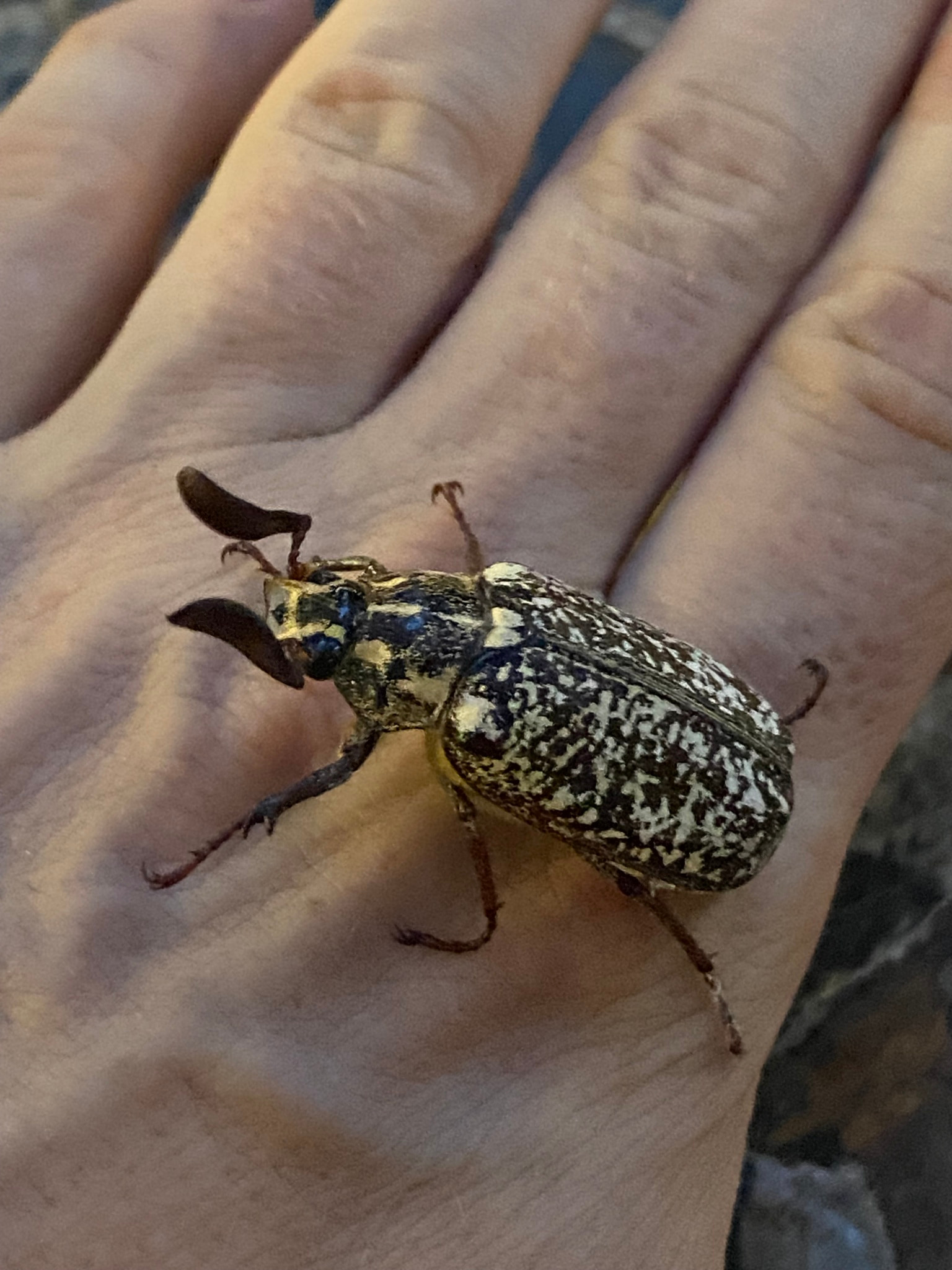
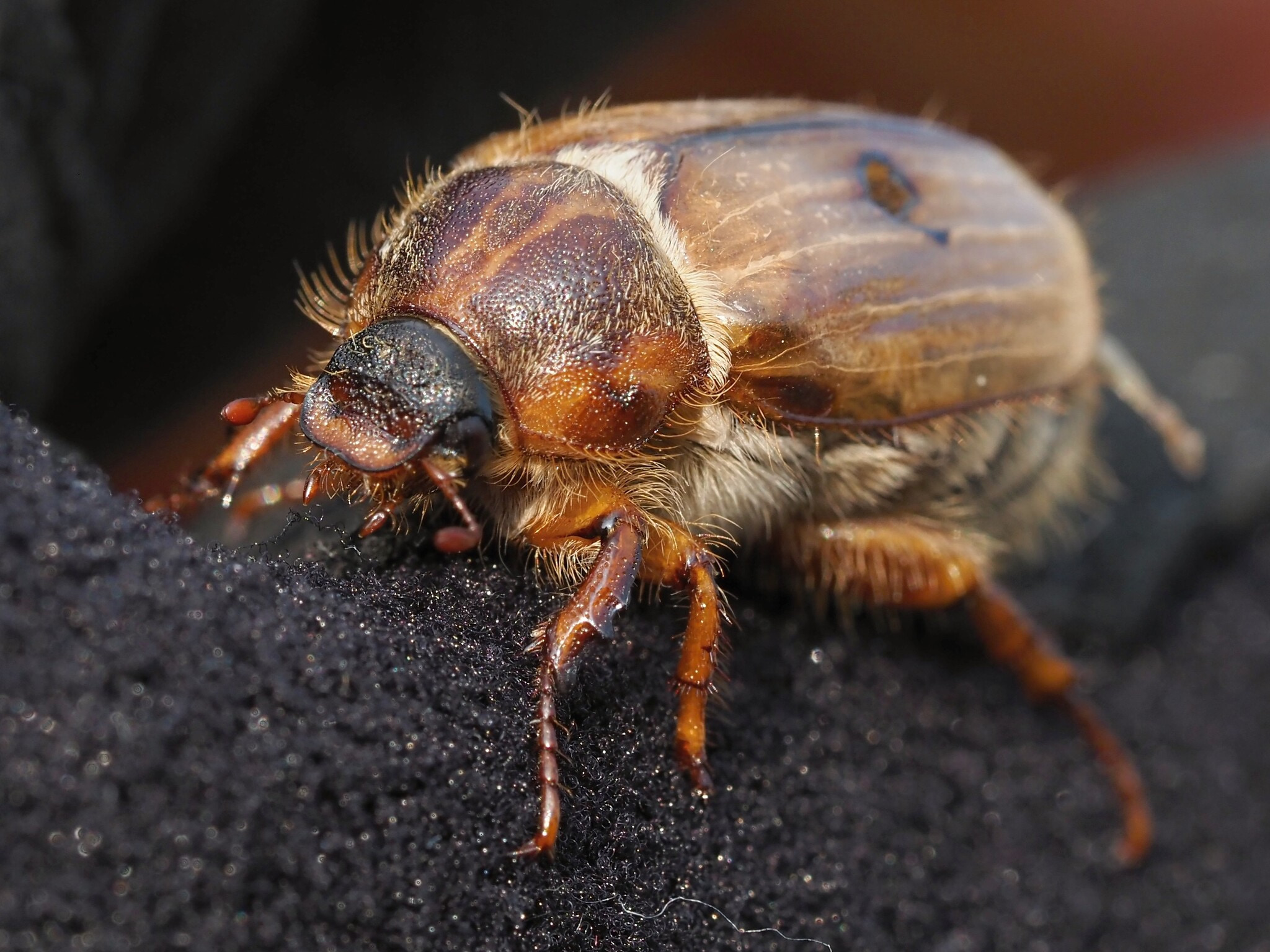
The summer chafer (Amphimallon solstitiale) looks like a cockchafer but is much smaller: it is 14–18 mm long and leather-yellow to brown. On warm nights, at dusk, it flies around treetops, often in large swarms. It is attracted to light, so it comes in through open, lit windows and flies noisily around lamps. The larva feeds on roots in the soil and damages some crops. If one flies into your room on a summer evening, simply let it out.
Identification
Summer chafer: how to identify it
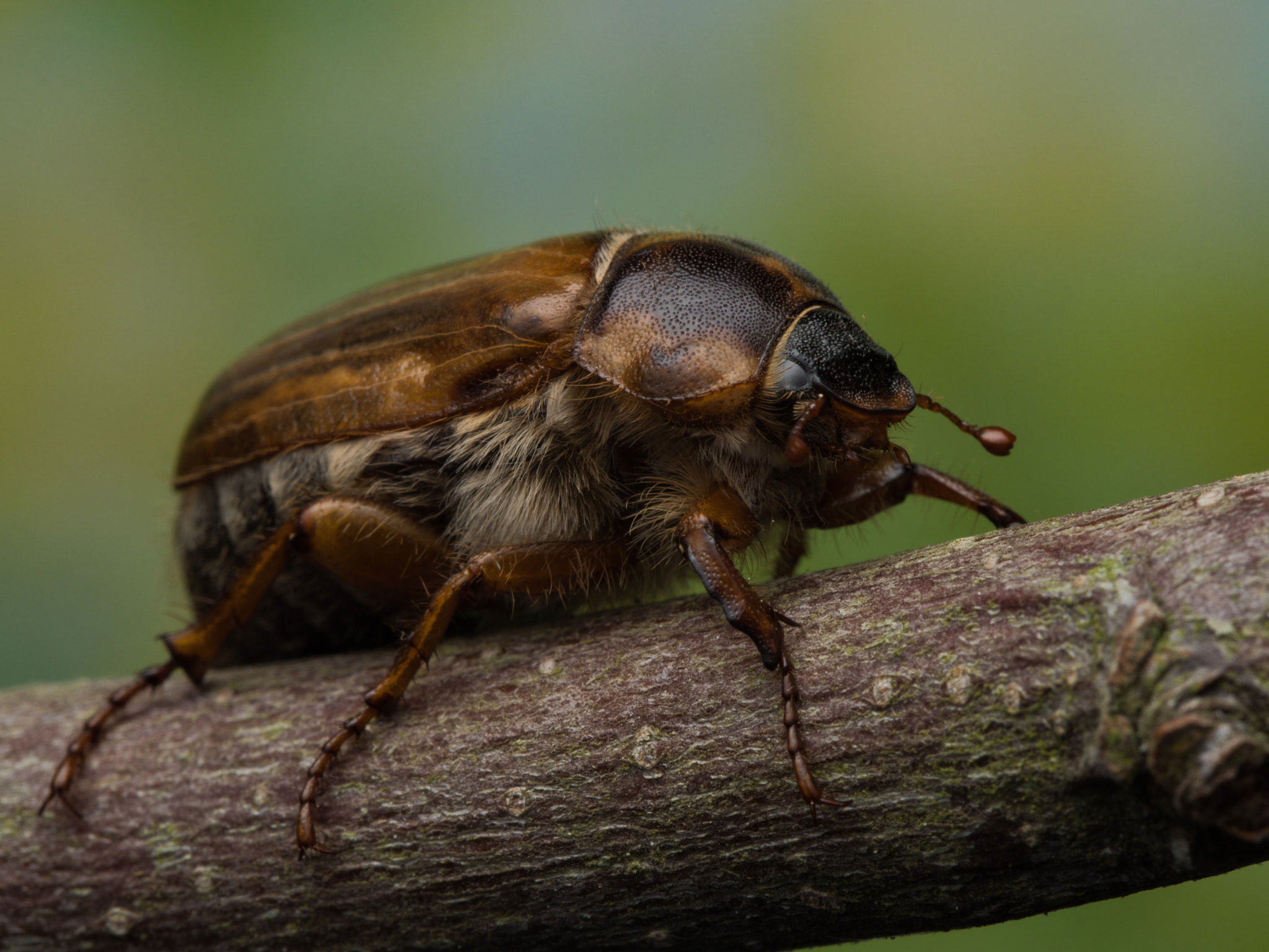
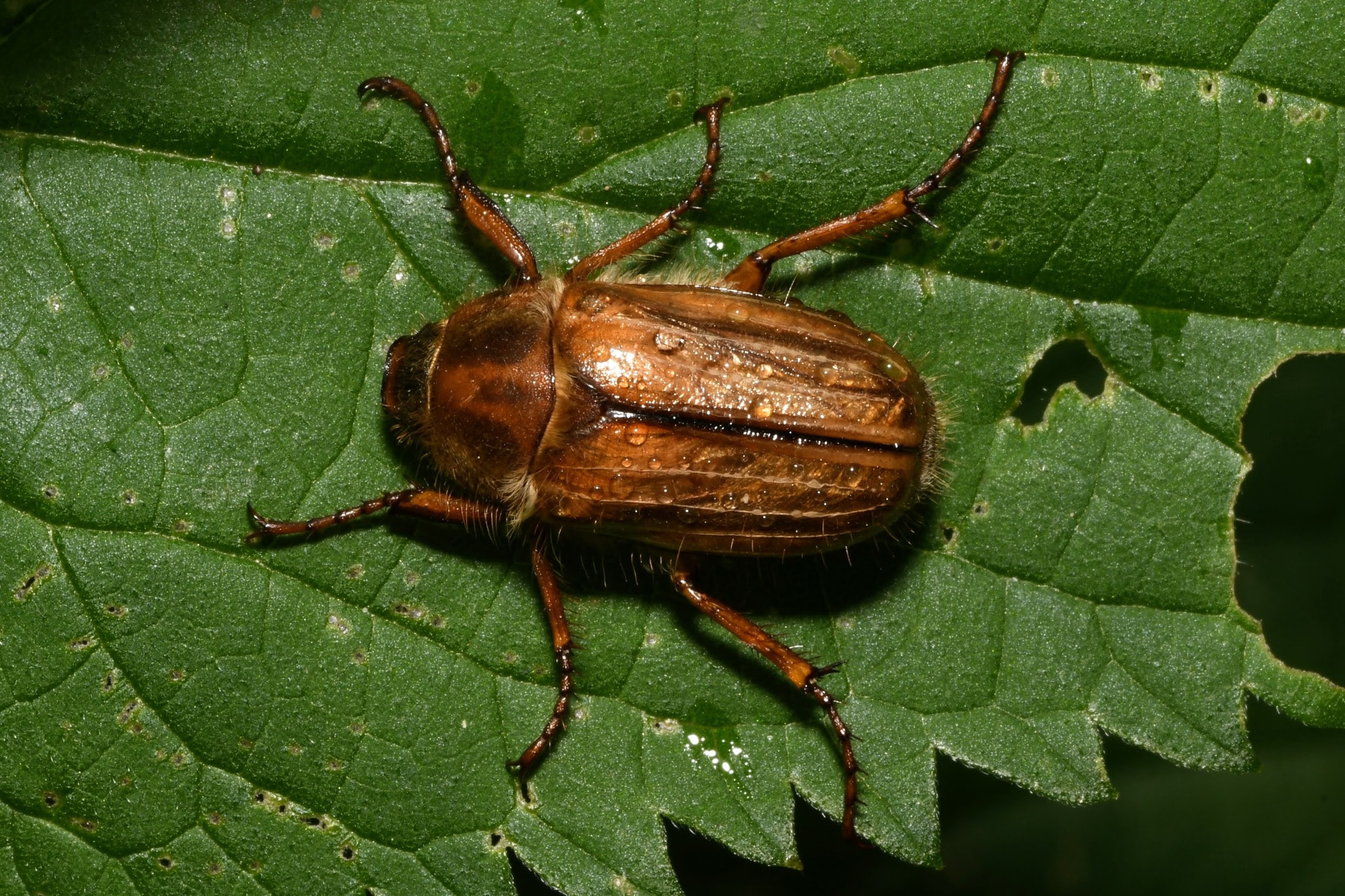
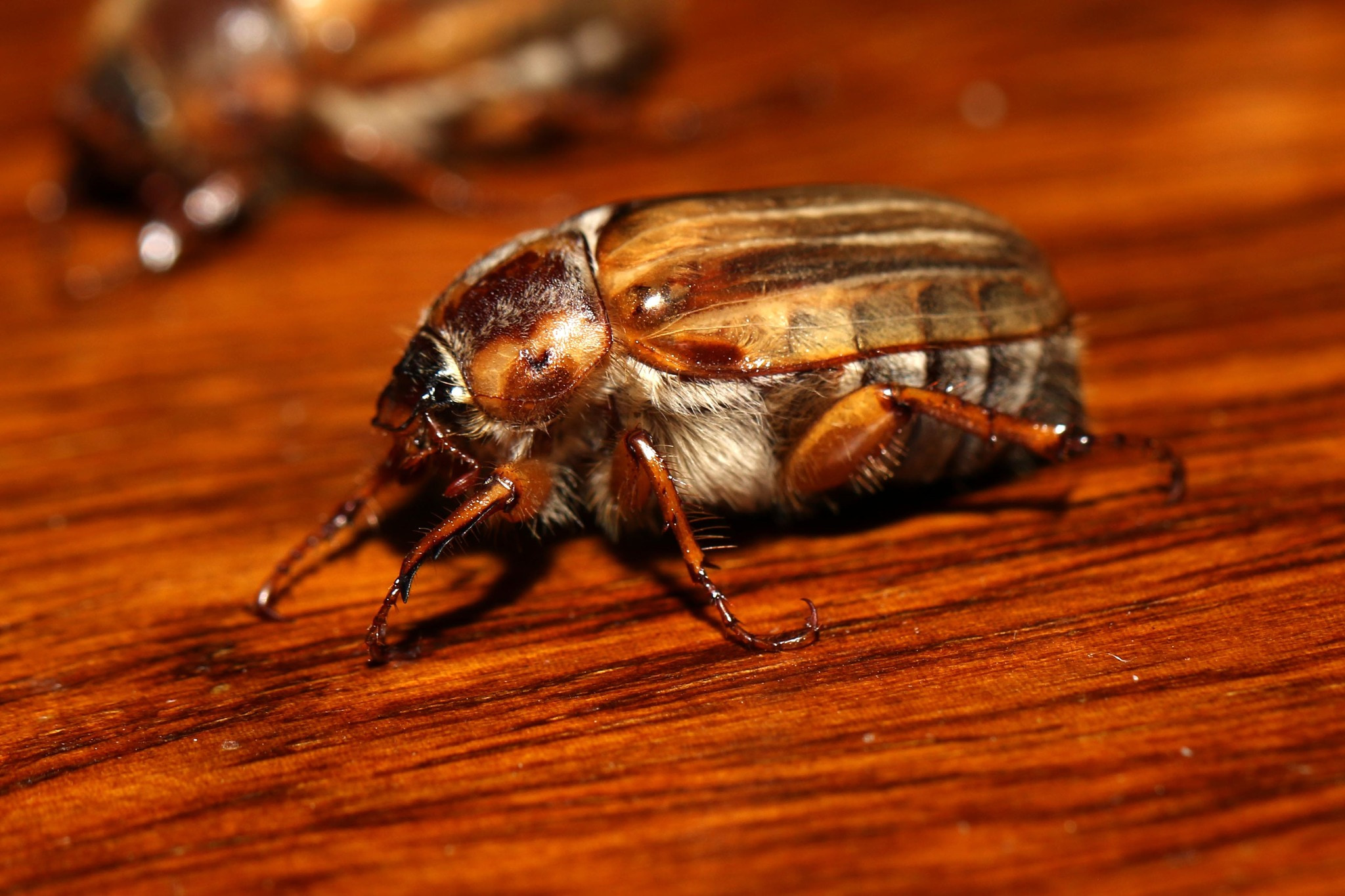
A chafer like a cockchafer but much smaller, 14–18 mm long. The body is leather-yellow or brown and covered in long hairs. Three raised ribs run along each wing case. It is most easily confused with the rust-coloured, day-flying Amphimallon ochraceum.
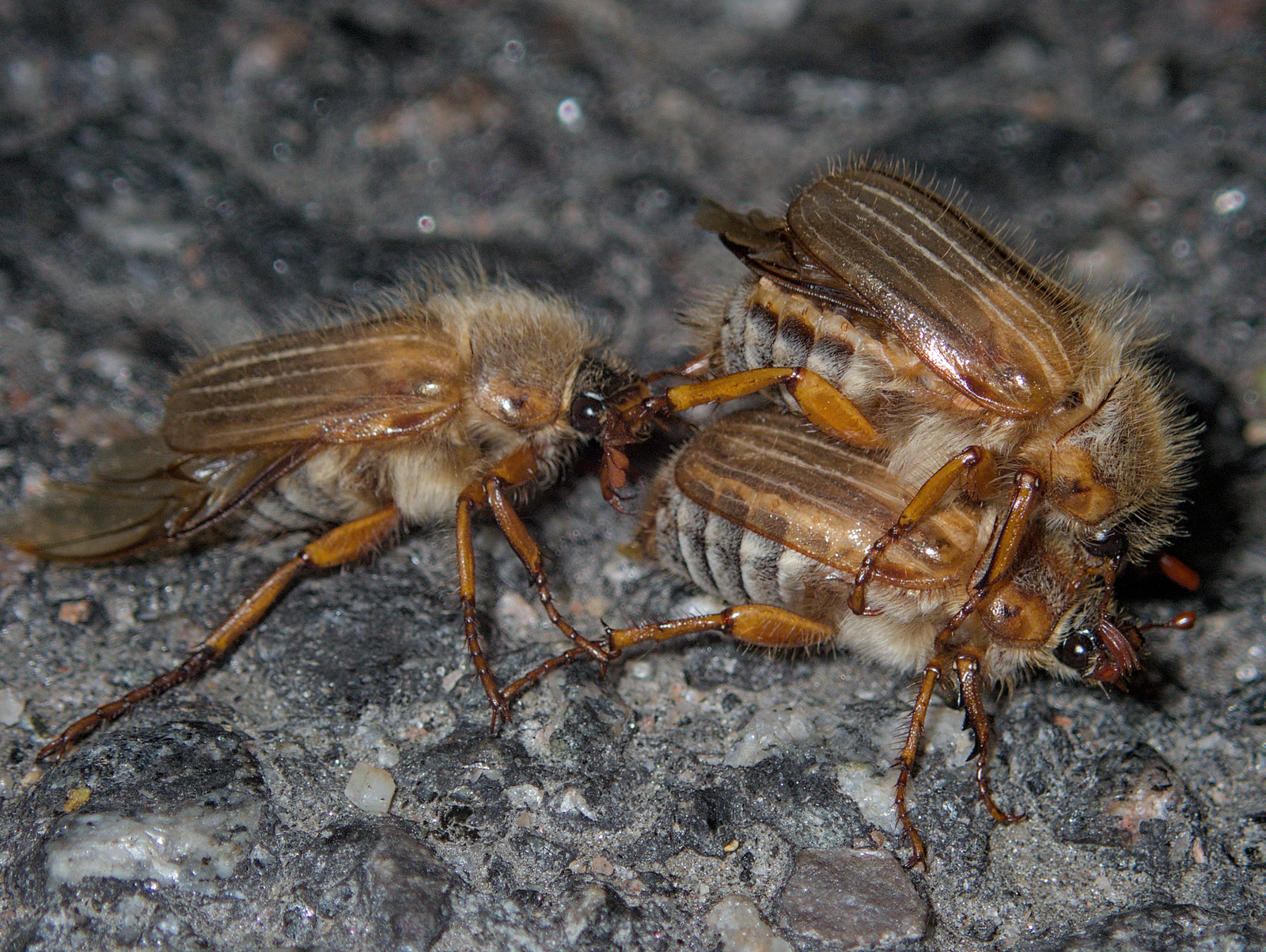
Each wing case has three raised ribs, with punctures and hairs between them. The pronotum and the base and edges of the wing cases carry long bristles and short hairs. A pale line divides the pronotum down the middle.
The antenna ends in a three-segmented club. In the male it is almost as long as the rest of the antenna, in the female shorter. On the outer edge of the front tibia the female has three teeth, the male two.
Amphimallon ochraceum is smaller, rusty red, active by day and has bare edges to its wing cases. From Rhizotrogus marginipes the summer chafer differs by the long bristles set in rows along the sides of its wing cases. So a close photo of the wing-case edge helps to identify the species.
Colour
The body is leather-yellow to brown, with the crown of the head and the pronotum darker. A pale line runs down the middle of the pronotum. The chest is covered in long, fluffy, whitish hairs.
Swatches are illustrative. Do not identify a species by colour alone.
The summer chafer is a beetle of open and half-open places. It lives on woodland edges, in gardens, parks, fields and avenues, and in meadows and hedgerows. It occurs from the lowlands to hill country, and in the mountains only locally. The larvae are especially common in sandy or loamy soil, where they go 10–12 cm deep. It is listed for Georgia's fauna and is known from the east of the country: Kakheti, Tbilisi, Kvemo Kartli, Shida Kartli and Mtskheta-Mtianeti.
The summer chafer is listed for Georgia's fauna, and its population here is assessed as stable. All records come from eastern Georgia: Kakheti, Tbilisi and Kvemo Kartli, with one record each from Shida Kartli and Mtskheta-Mtianeti. The beetles have been seen from April to July, most of them in April and May.
Data: Reptiles.ge + iNaturalist · Methodology
- Field observation
- Several records in one spot
- Region with records
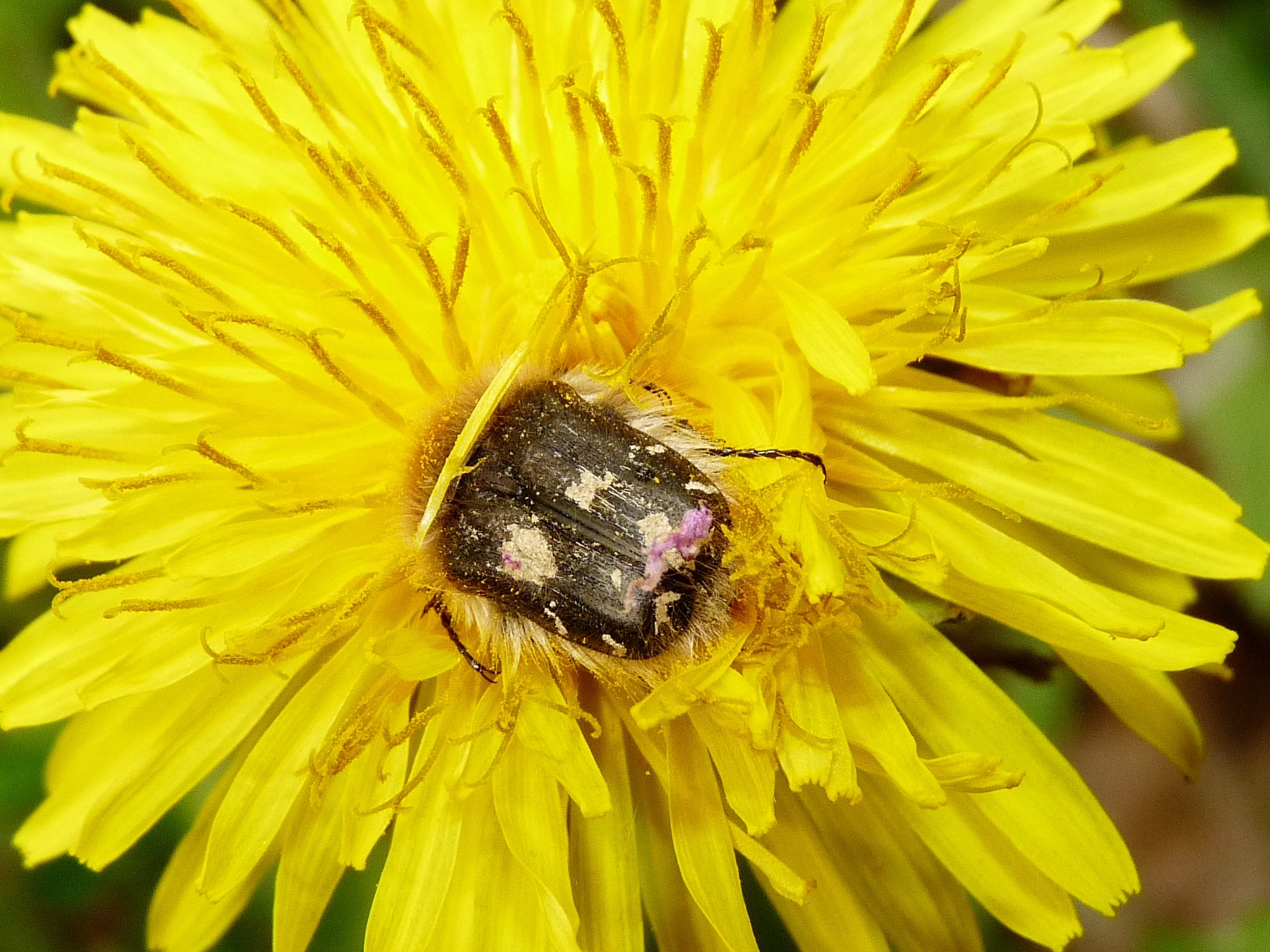
The adult beetle feeds on leaves and flowers. It eats the leaves of poplars, willows, beech, pine and fruit trees, young shoots, and sometimes the flowers of cereals. The larva feeds in the soil on fine roots and plant debris. This makes it a root pest of potatoes, rape, legumes, chestnuts and turfgrass.
The adults fly on warm nights at dusk. In Georgia they are seen from April to July. By day they hide. Two thirds of the flying beetles are males, searching for females around the treetops. In the morning, beetles are often found drowned in pools of water. At the end of July the fertilised female lays about 35 eggs in the soil and soon dies. The larva is yellowish white and grows to about 50 mm. It overwinters twice and pupates in the spring of its third year. In northern Europe its development takes four years.
Related guides
Continue with related pages
Yes, it is listed for Georgia's fauna, and its population here is assessed as stable. The Caucasus is part of the species' wide range. Here it is known from eastern Georgia: Kakheti, Tbilisi, Kvemo Kartli, Shida Kartli and Mtskheta-Mtianeti. Look for it on woodland edges, in gardens and parks, on a warm summer evening.
Above all by size. The summer chafer looks like a cockchafer but is much smaller, 14–18 mm. Each wing case has three raised ribs, and the body is covered in long hairs. In Georgia the adults are seen from April to July.
No, it is harmless to people and has no venom. It can only harm plants: the larva eats roots and the beetle eats leaves. If one flies indoors, simply let it out of the window.
It is attracted to light. On warm summer evenings it comes in through open, lit windows and flies noisily around lamps, often bumping into them. These beetles often fly in large swarms. If you do not want them inside, switch off the light or close the window in the evening.
References
What this profile is based on
Species profiles are compiled from peer-reviewed literature and established biodiversity databases, and are reviewed as new taxonomic and conservation data become available.
Prepared by the Reptiles.ge editorial team from the sources listed here.