



Dunnock
Prunella modularis
Alexander Balayev · Troitsky Administrative District
Key facts in one look
- Diet
- Insects and spiders; seeds in autumn
- Status in Georgia
- Year-round resident, breeds
- Size
- 13–14.5 cm
- Habitat
- Forest undergrowth, scrub, gardens
- Family
- Prunellidae
- Protection
- Globally LC, 2018; in Georgia LC, 2021
From a distance the dunnock looks like a sparrow, but its bill is thin and pointed, and its head and breast are grey. In Georgia it lives and breeds all year round. It lives in dense undergrowth, scrub and gardens, and in the Caucasus it goes up to 2,600 m. It is a shy, inconspicuous bird: you will usually hear its thin, tinkling voice before you see it. If a small brown bird shuffles on the ground under a bush, flicking its wings, look at the bill: a thin bill marks a dunnock.
Identification
Dunnock: how to identify it
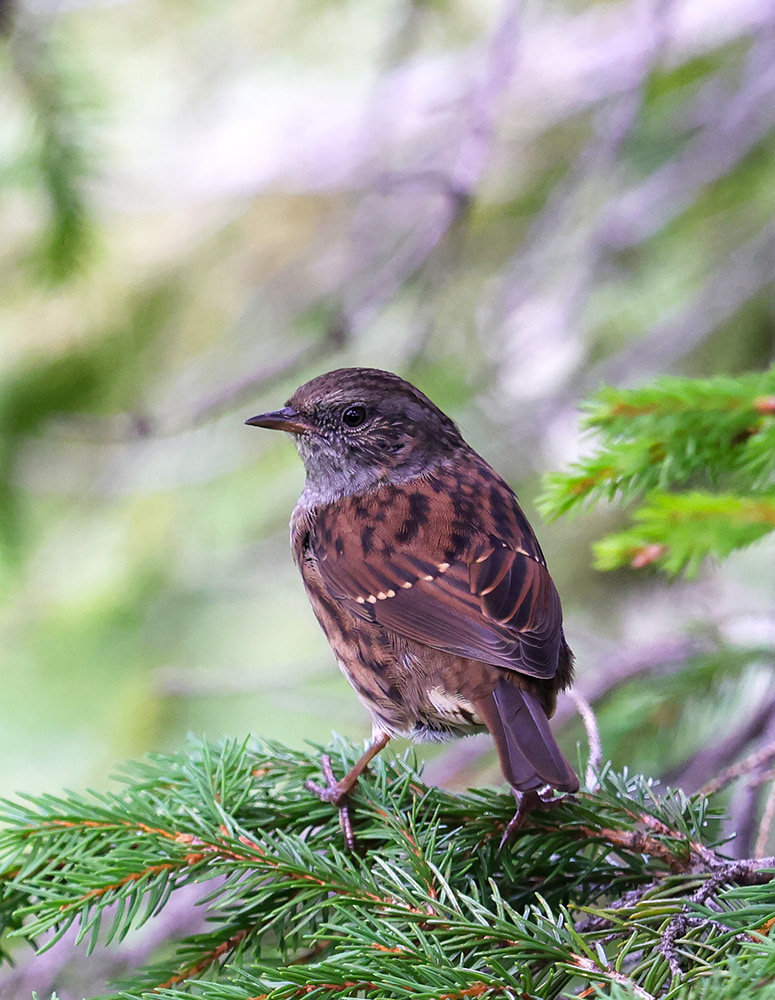
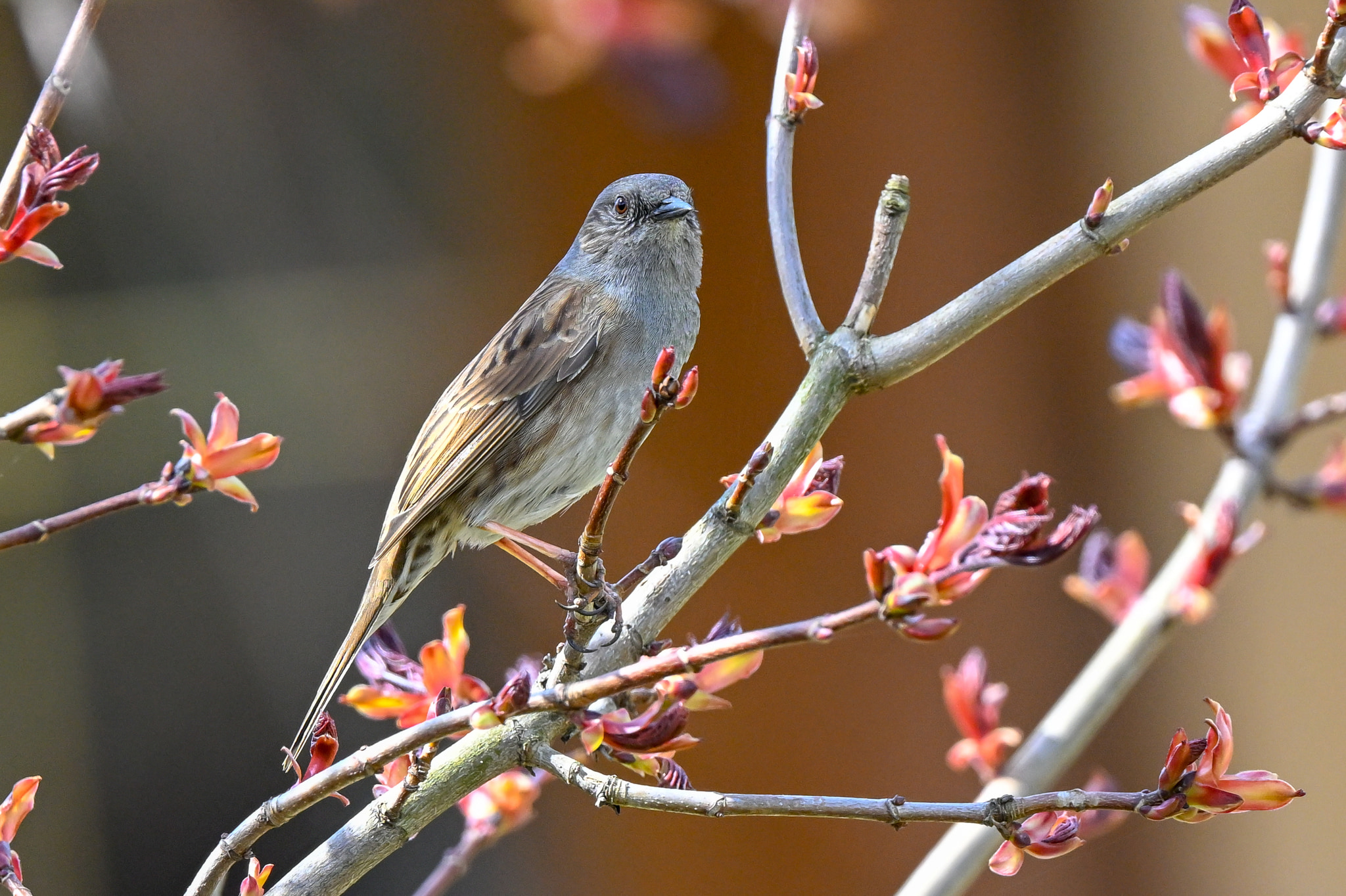
A small bird, 13–14.5 cm long and 19–20 g. The head and breast are grey, the back brown with black streaks. The thin, pointed bill tells it from a sparrow at once.
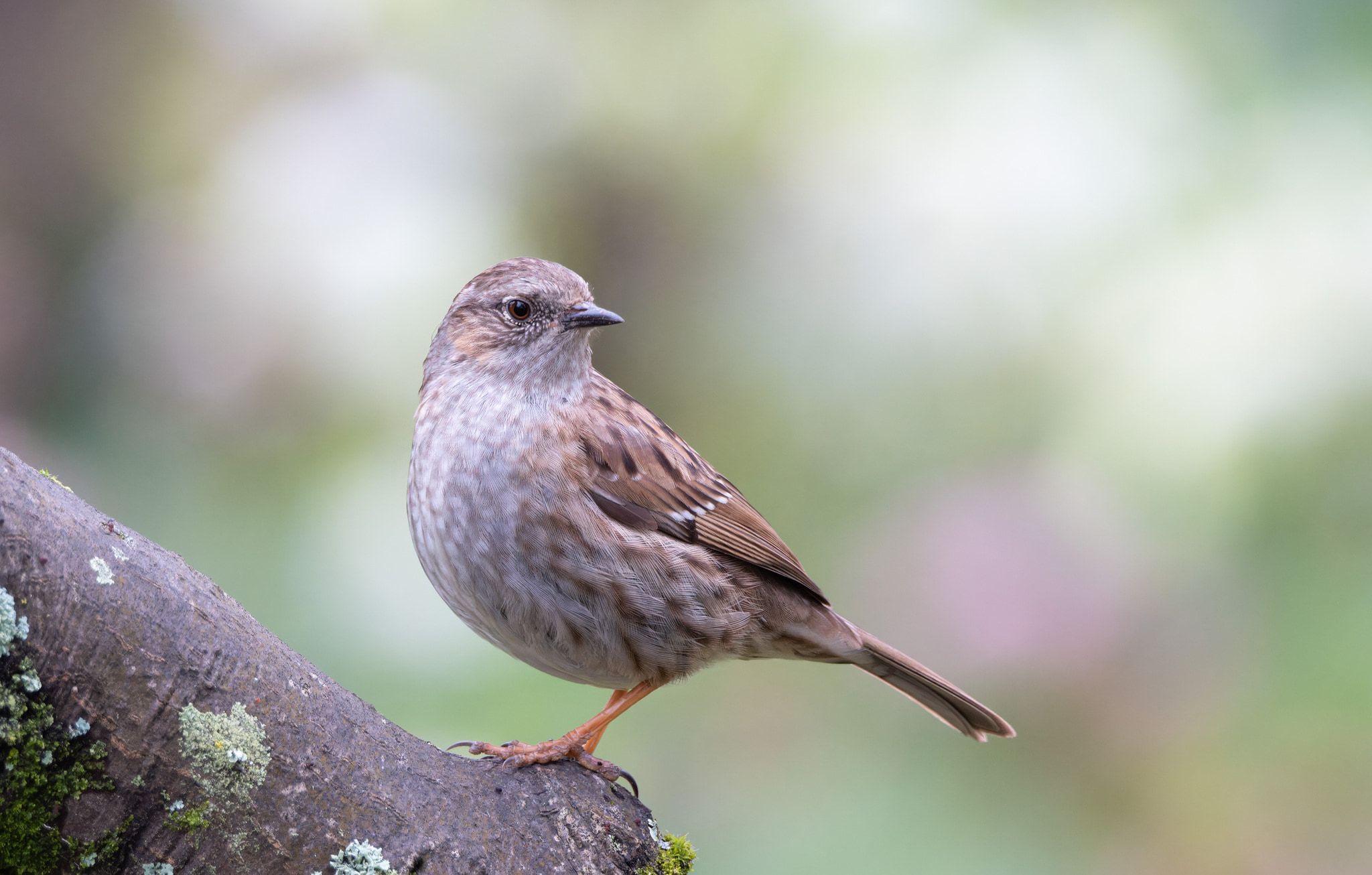
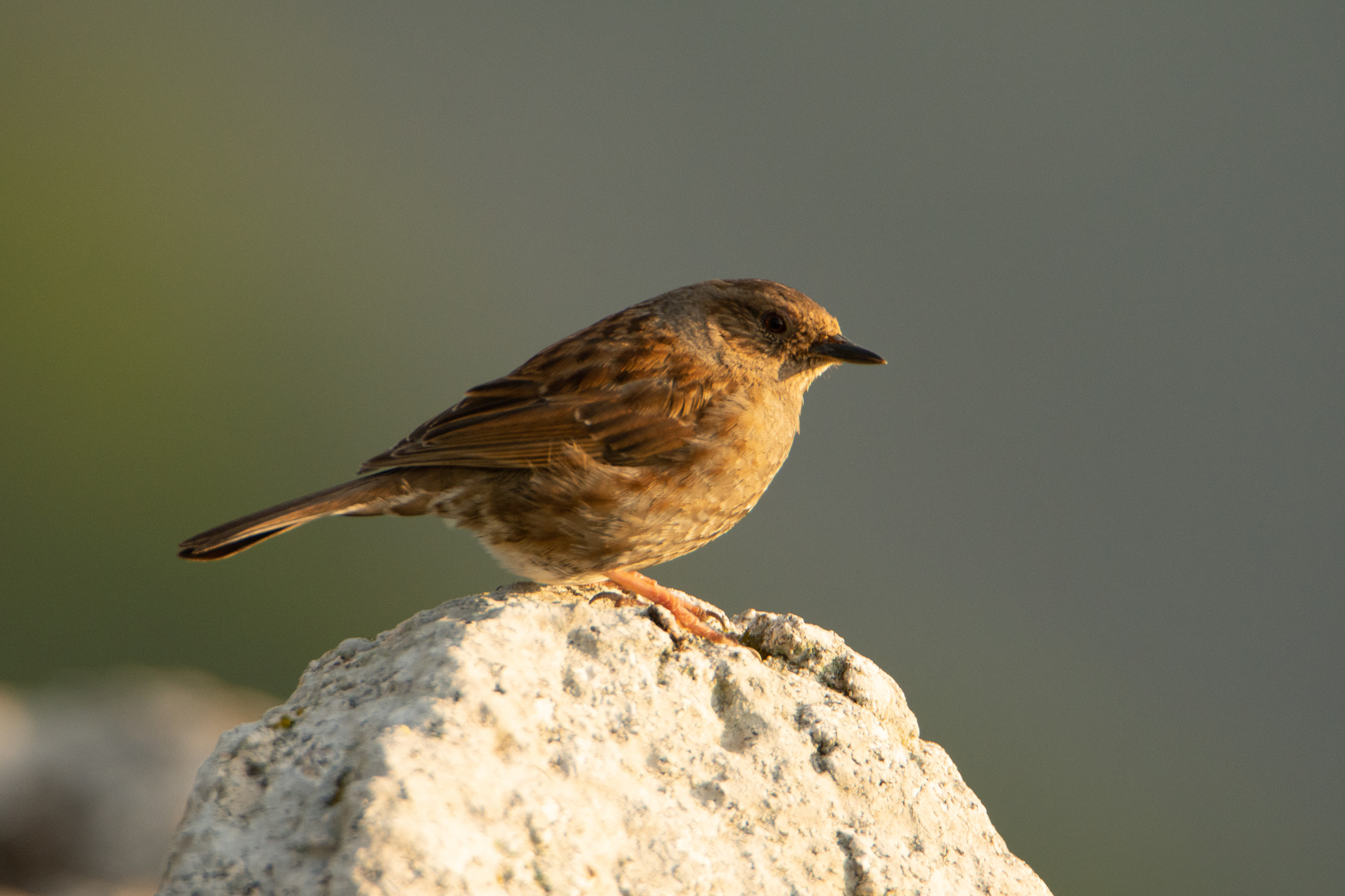
Length 13–14.5 cm, weight 19–20 g. It is the size of a robin. The bill is thin and pointed, the legs reddish-brown.
The head, throat, neck and breast are grey, with dark brown patches on the crown and nape. The back and wing coverts are rusty brown with black streaks, the belly whitish. Caucasian birds have a buff-tinged chin, a brown nape and a pale brown eyebrow. The sexes are alike; the female is slightly duller.
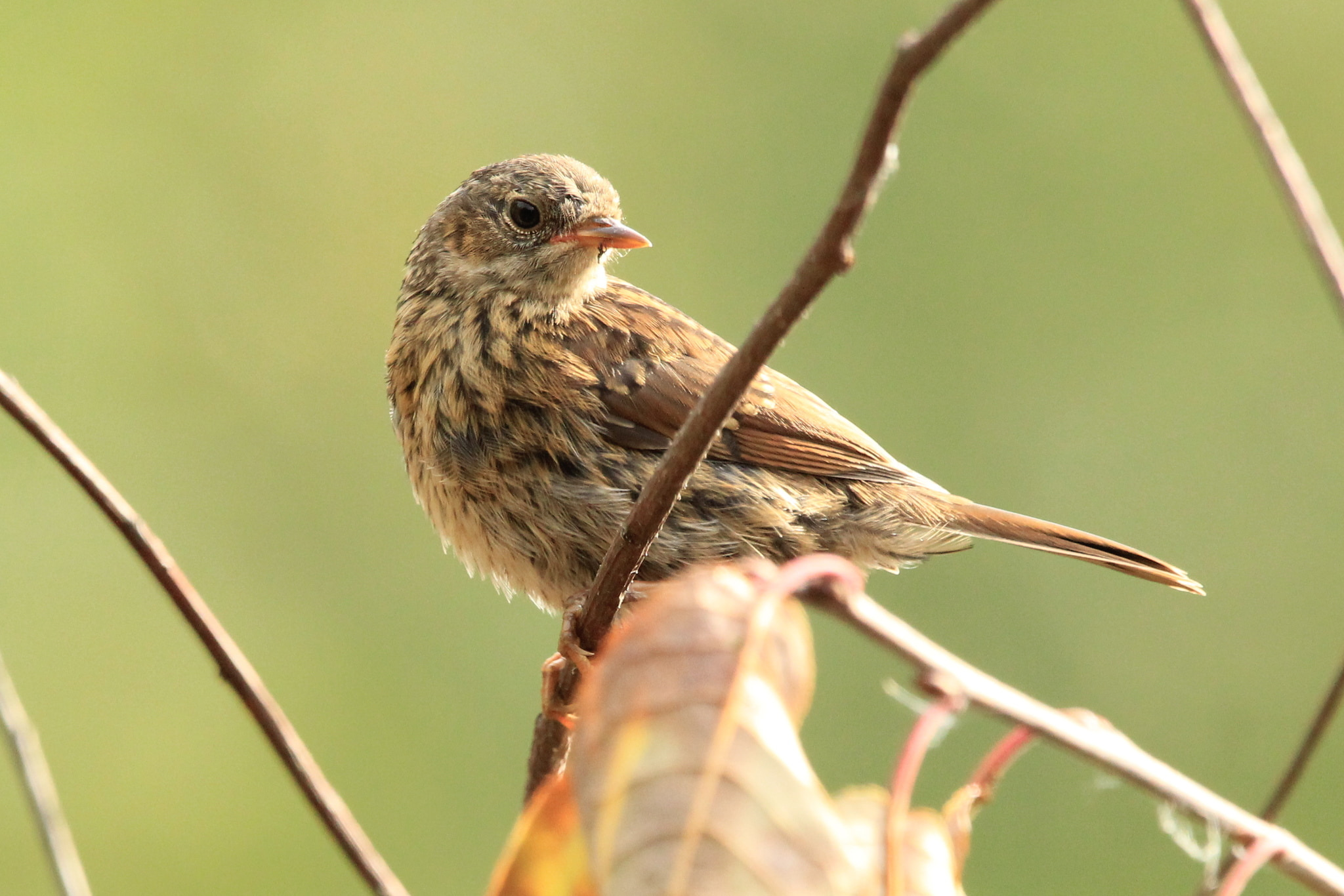
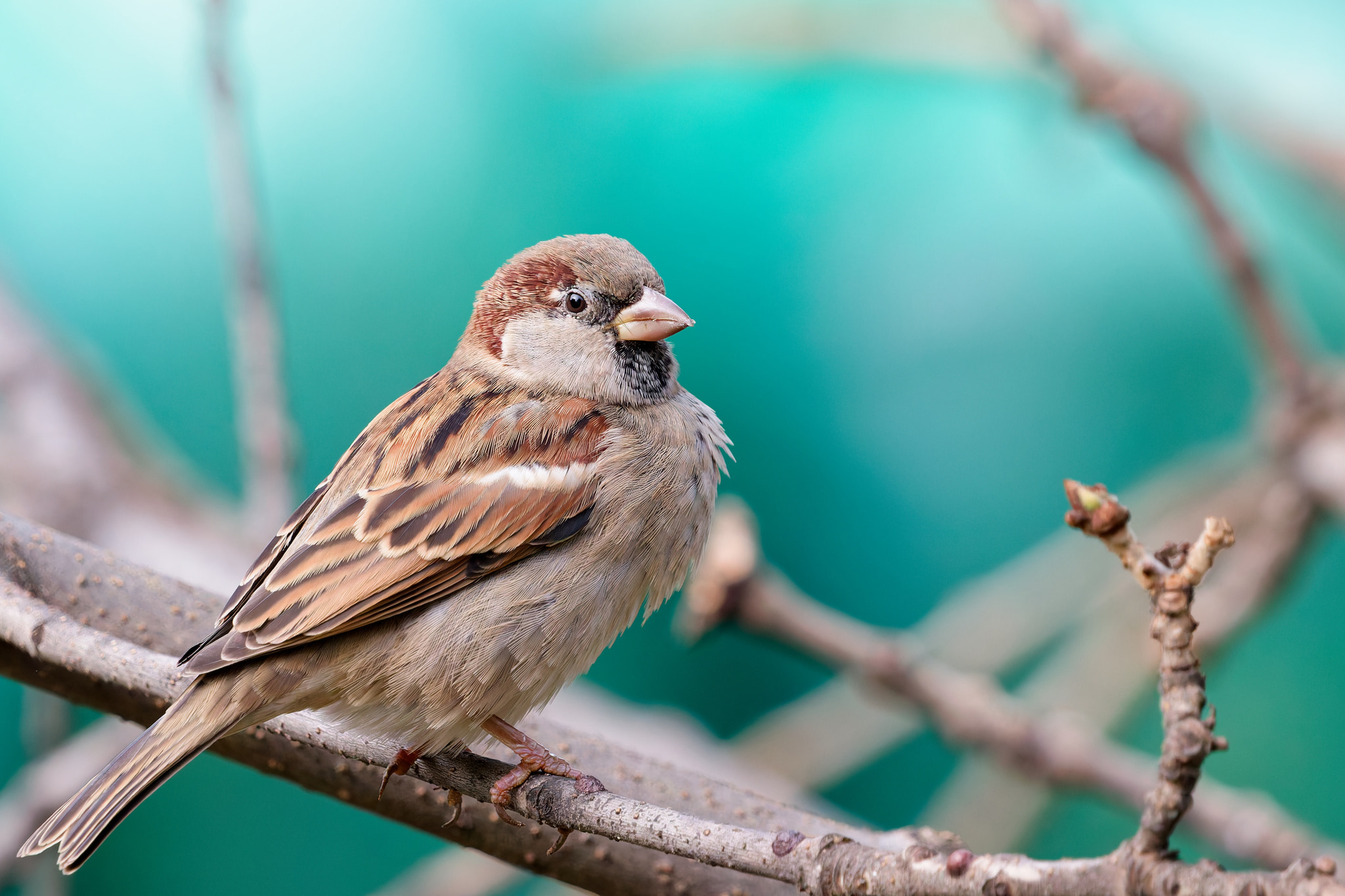
Young birds are more rusty and more streaked, with fluffy plumage. From a distance it looks like a sparrow, but a sparrow has a thick, conical bill. If the bill is thin and pointed, it is a dunnock.
Colour
Swatches are illustrative. Do not identify a species by colour alone.

It is a bird of dense undergrowth: in forest it picks scrub, often along rivers and streams. In western Europe it also lives on farms, in gardens and in parks with hedges, and in the mountains it uses low forest and scrub. In the Caucasus it breeds up to 2,600 m. In Georgia it lives and breeds all year round.
The dunnock lives and breeds in Georgia all year round. Records come from every month of the year, most of them from April and May, with a smaller rise in September and October. Most records come from Mtskheta-Mtianeti, especially around Stepantsminda, followed by Samegrelo-Zemo Svaneti, Adjara, Kakheti, Samtskhe-Javakheti and Tbilisi. It has also been found in Kvemo Kartli, Imereti, Abkhazia, Racha-Lechkhumi and Kvemo Svaneti, Shida Kartli and Guria.
Data: Reptiles.ge + iNaturalist · Methodology
- Field observation
- Several records in one spot
- Region with records
In the breeding season it eats mainly insects and spiders, along with other small invertebrates. In autumn it switches to seeds, picking those of sorrel, bilberry and sedges. It looks for food on the ground, under bushes. In winter it also visits feeders.
The male sings from a treetop: a high, melodious trill lasts 2–4 seconds, and his repertoire holds 10–15 tunes. Caucasian birds sing longer and lower songs that almost lack the rattles usual in other populations. Outside the breeding season it is quiet and gives only short calls. It often flicks its wings, especially in territorial disputes. Northern populations migrate and winter, among other places, in Turkey, the North Caucasus and northern Iran. The female builds the nest: a cup of twigs and moss lined with wool or feathers. It sits 0.5–3.5 m above the ground, most often at 1–2 m, in a young spruce or juniper. The clutch is 3–5 unspotted blue eggs. The female incubates for 12–13 days, and the young start to fly at about 12 days old. It usually raises two broods a year, sometimes three. It is one of the main hosts of the common cuckoo and does not throw out eggs of a different colour.
Globally the dunnock's risk of extinction is rated low (LC, 2018). It is widespread from Europe to Asian Russia and in south-west Asia, including the Caucasus. It was deliberately introduced to New Zealand in the 19th century and is widespread there too. In Georgia's national assessment (2021) its risk is also rated low (LC), and its numbers are stable. The list of the birds of Georgia gives it as a year-round resident and breeder.
Related guides
Continue with related pages
Yes. It lives and breeds in Georgia all year round. Birds here belong to the Caucasian form, P. m. obscura, which some treat as a species of its own. In the Caucasus it breeds up to 2,600 m.
By the bill. A sparrow has a thick, conical bill, the dunnock a thin, pointed one. The dunnock's head and breast are grey, the back brown with black streaks. It often flicks its wings and shuffles on the ground under bushes. If the bill is thin, it is not a sparrow.
In summer mainly insects and spiders. In autumn it switches to seeds, picking those of sorrel, bilberry and sedges. It looks for food on the ground, under bushes. In winter it also visits feeders.
Low down, 0.5–3.5 m above the ground, often in a young spruce or juniper. The nest is a cup of twigs and moss lined with wool or feathers. The clutch is 3–5 unspotted blue eggs. It usually raises two broods a year.
In Georgia it stays all year. Northern populations, though, migrate. They winter, among other places, in Turkey, the North Caucasus and northern Iran. In winter it also shows up in gardens and at feeders.
No, it is harmless to people. Globally its risk of extinction is low (LC, 2018). In Georgia's national assessment (2021) its risk is also low (LC), and its numbers are stable. Do not catch wild birds.
References
What this profile is based on
Species profiles are compiled from peer-reviewed literature and established biodiversity databases, and are reviewed as new taxonomic and conservation data become available.
Prepared by the Reptiles.ge editorial team from the sources listed here.


