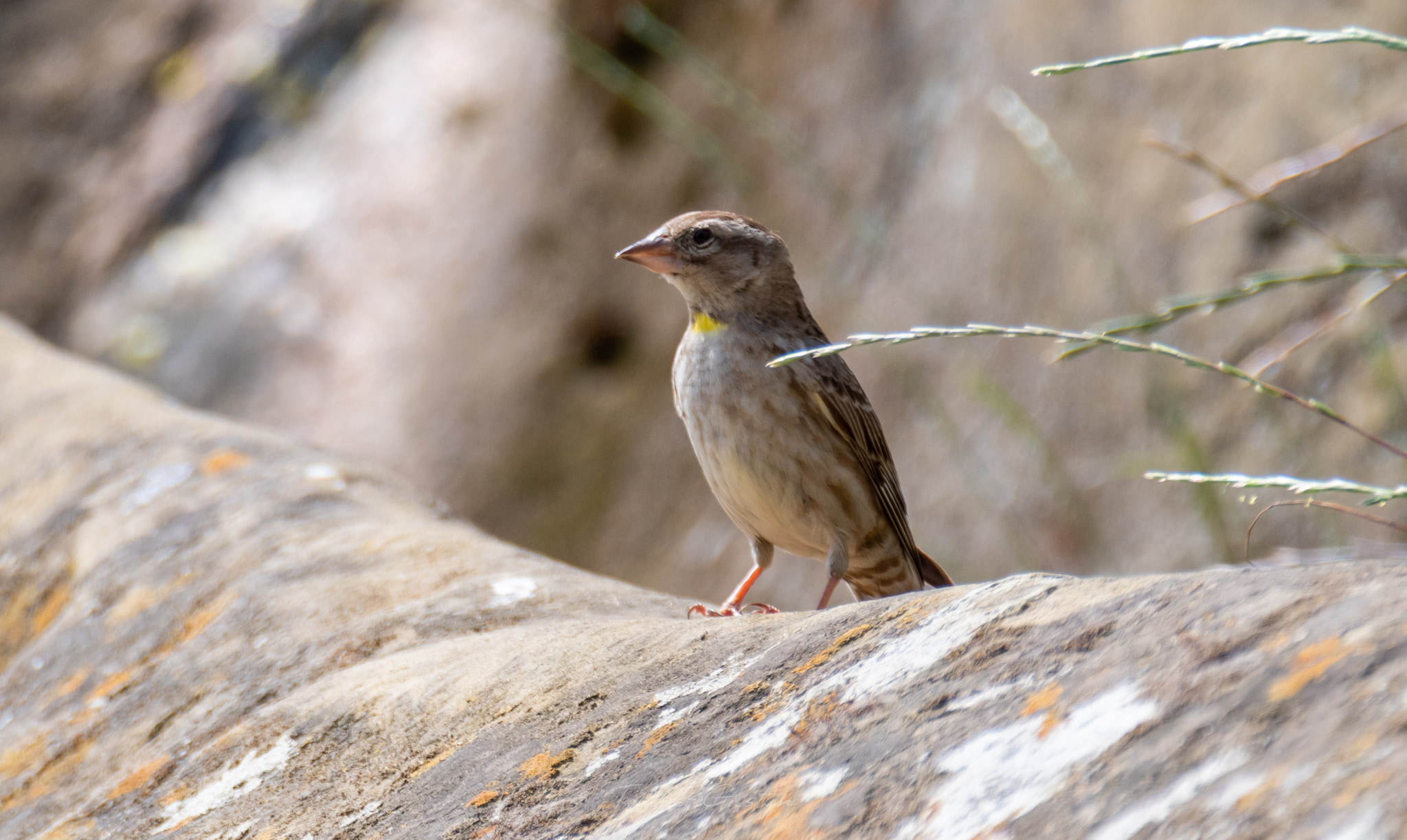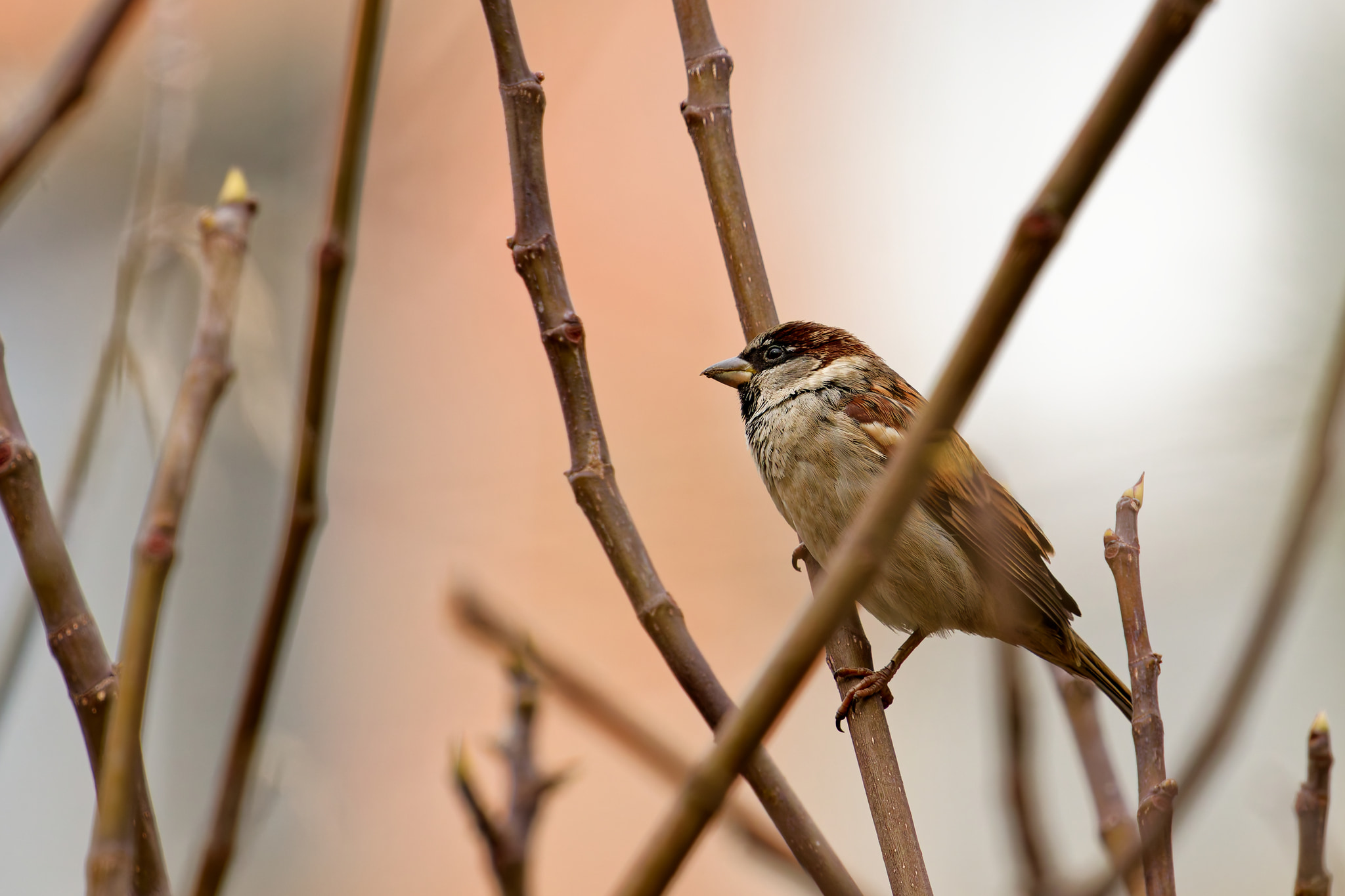
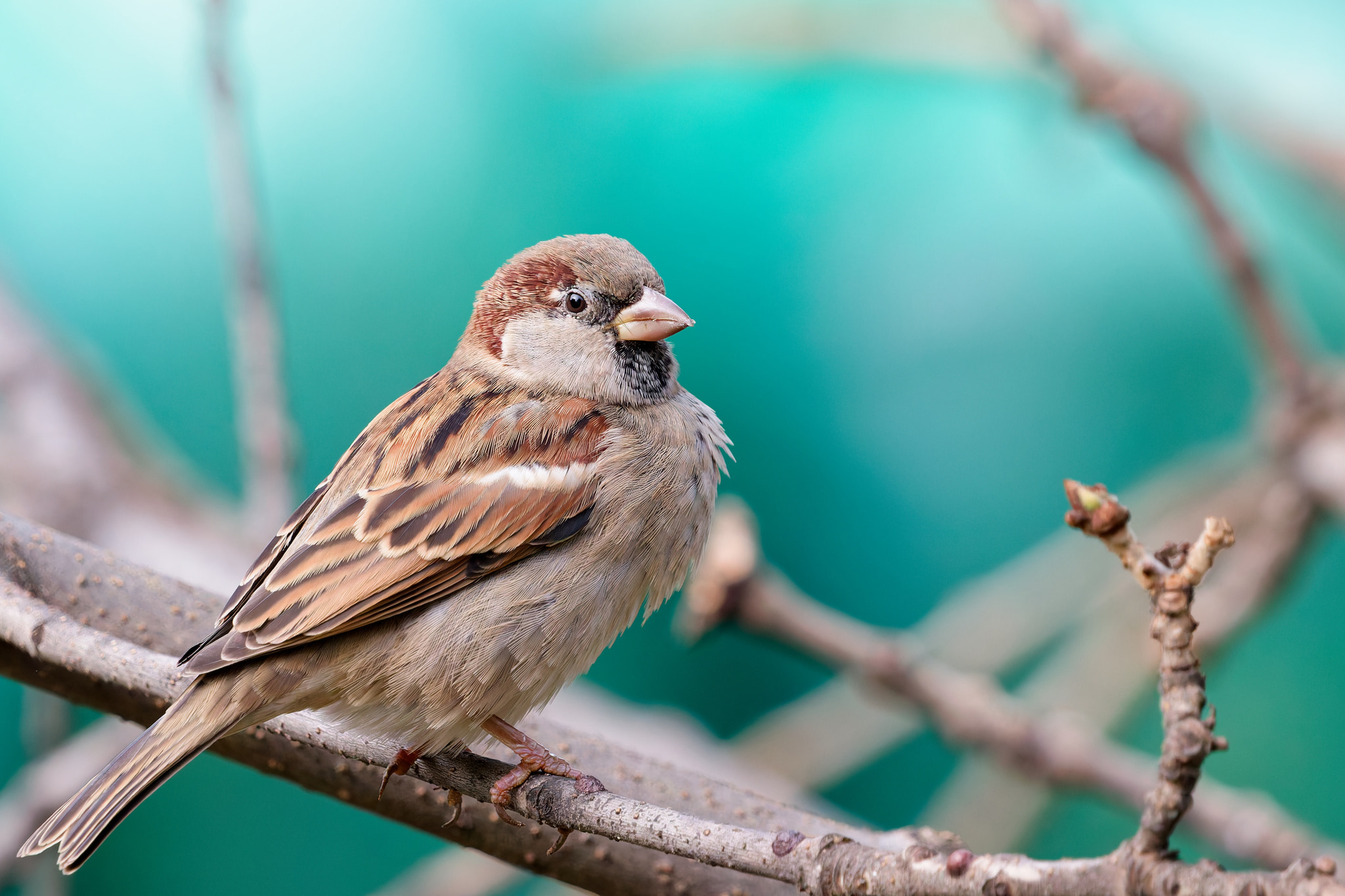

House sparrow
Passer domesticus
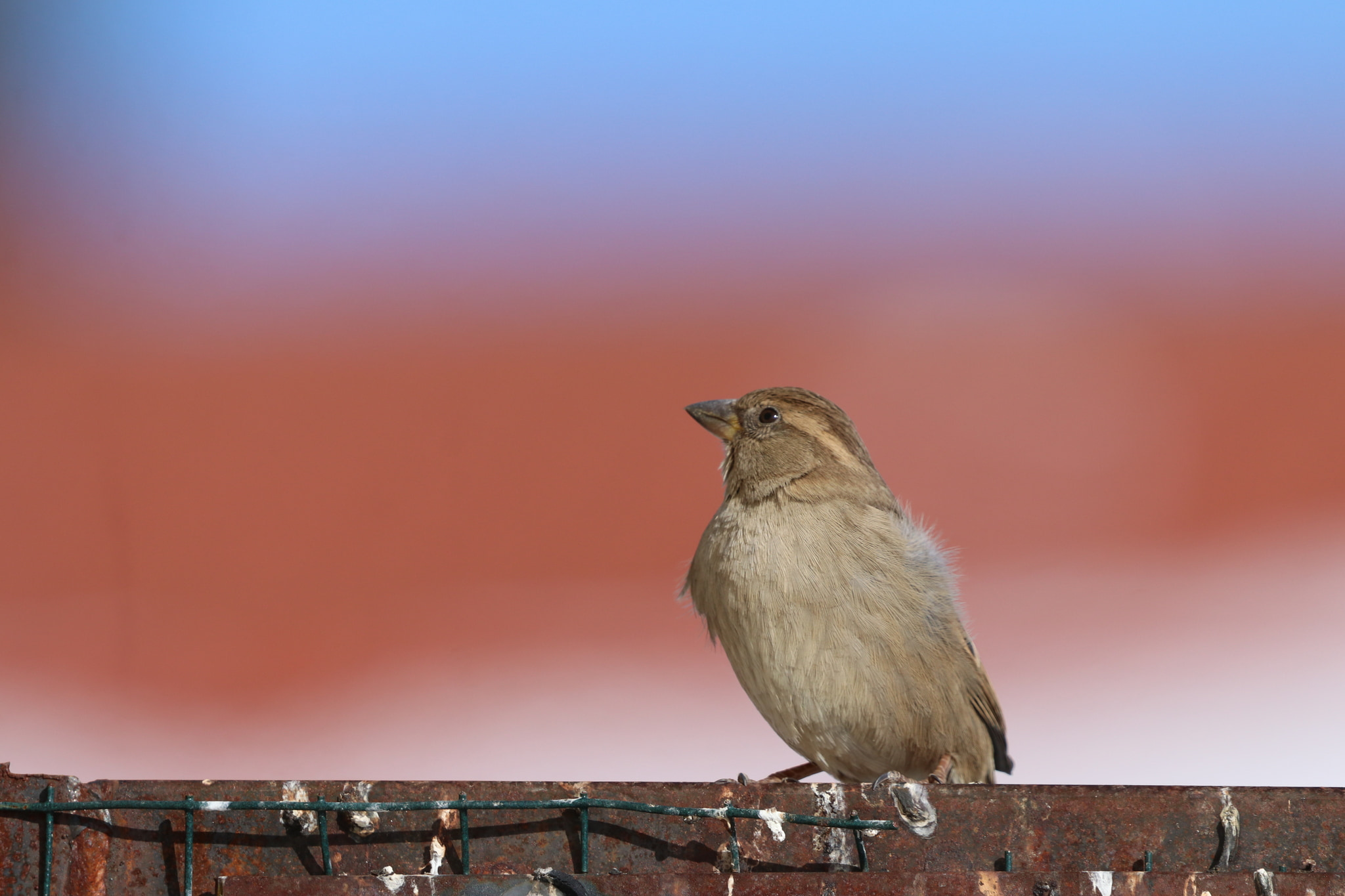
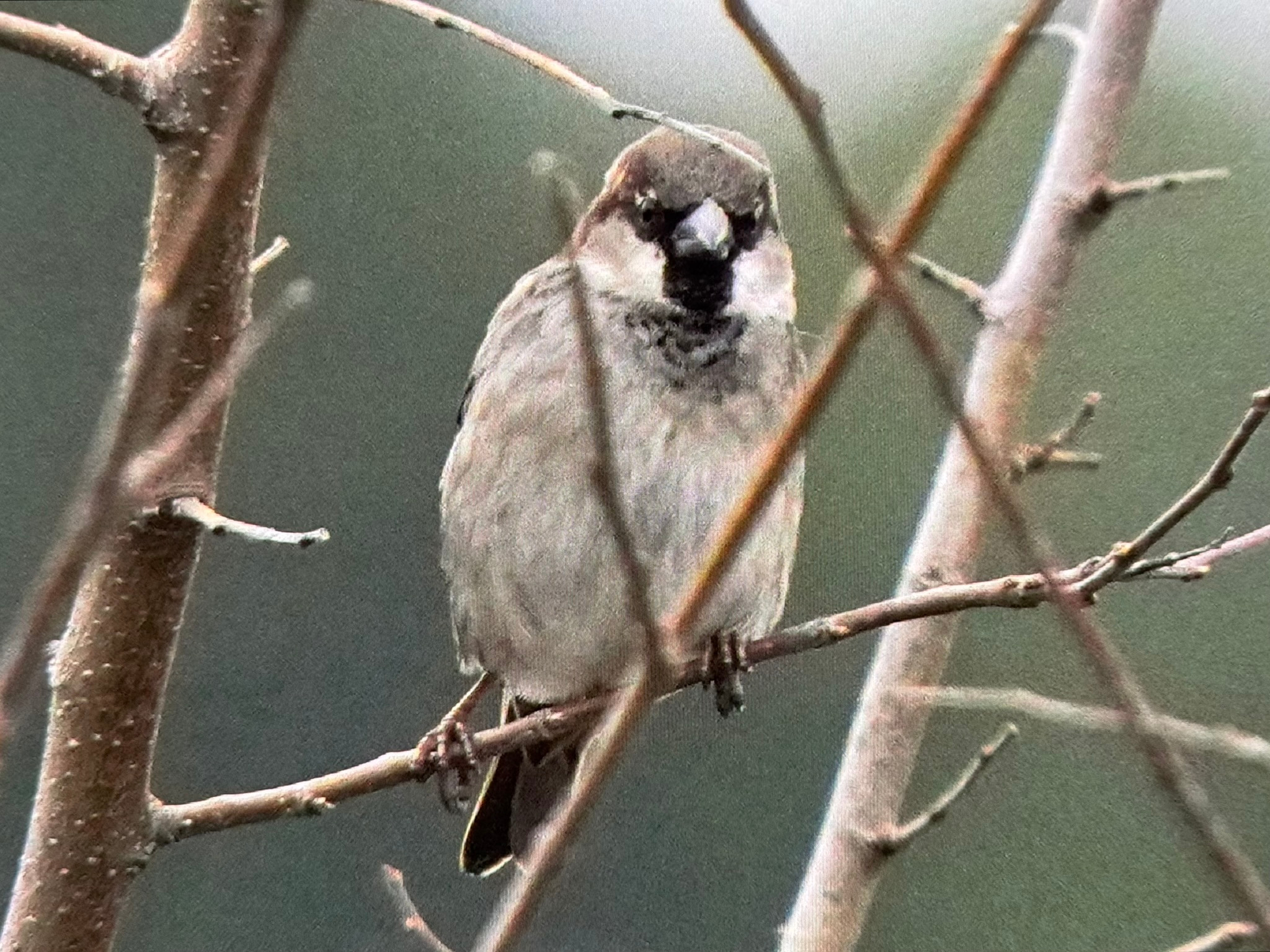
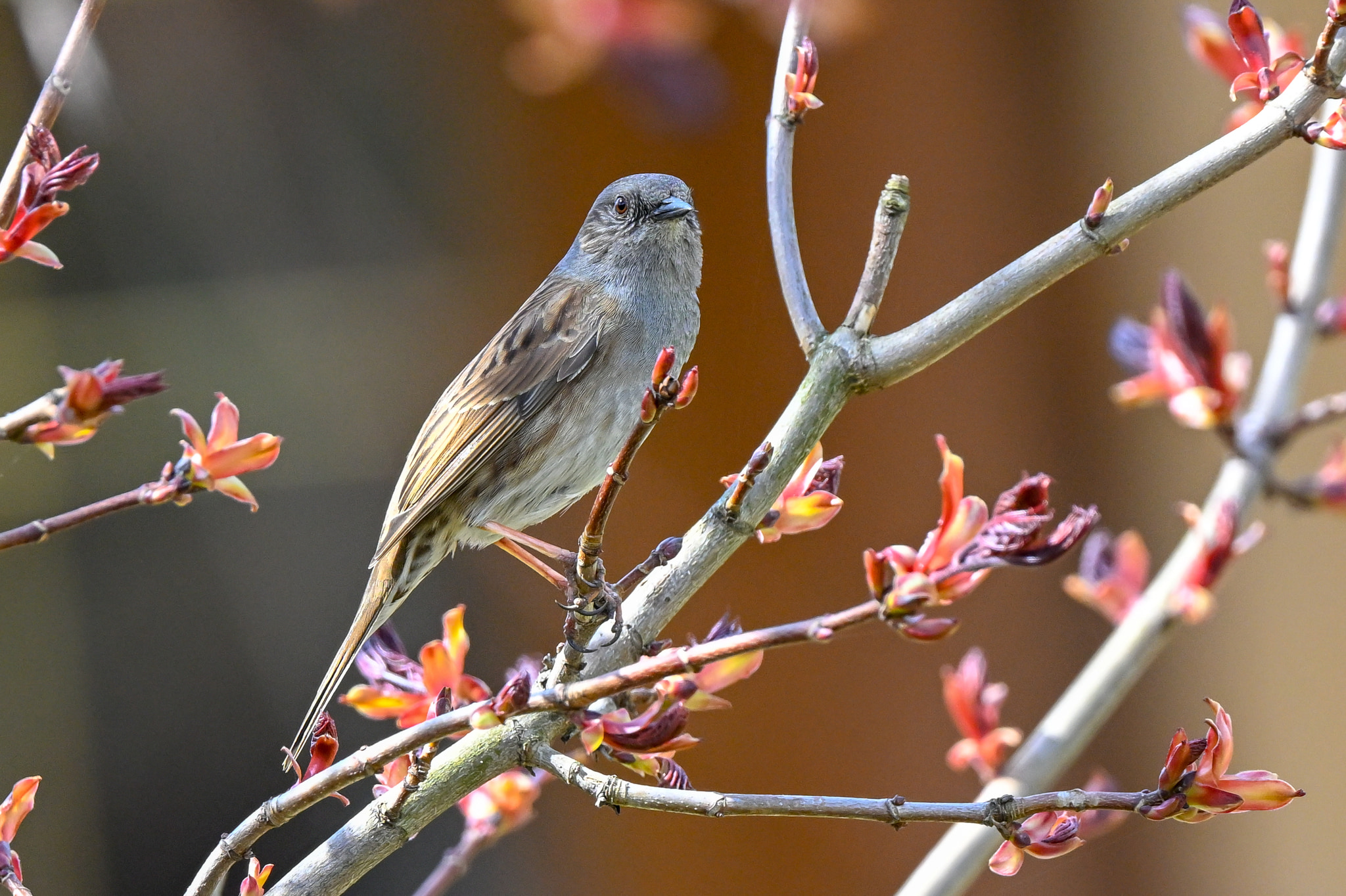
Nikoloz Donadze · Vake-Saburtalo, Tbilisi Georgia field photo
Key facts in one look
- Size
- 14–18 cm, typically 16 cm
- Diet
- Cereal and weed seeds; insects
- Status in Georgia
- Year-round resident, breeds
- Habitat
- Towns, villages, farmland
- Family
- Passeridae
- Protection
- Globally LC, 2019; in Georgia LC, 2021
The house sparrow has lived alongside people for about 10,000 years and is one of the most numerous birds on Earth. It nests mostly under house roofs and in cracks in walls. The male has a grey cap, chestnut sides to the head and a black patch on the throat; the female is brownish. In Georgia it lives and breeds all year round. In Europe its numbers have fallen sharply in recent decades, so even this everyday sparrow deserves attention.
Identification
House sparrow: how to identify it
A compact, round-headed sparrow about 16 cm long, with a stout conical bill. The male has a grey cap and a black patch on the throat and breast; the female is brownish, with a pale eyebrow. The female often cannot be told from females of other sparrows.
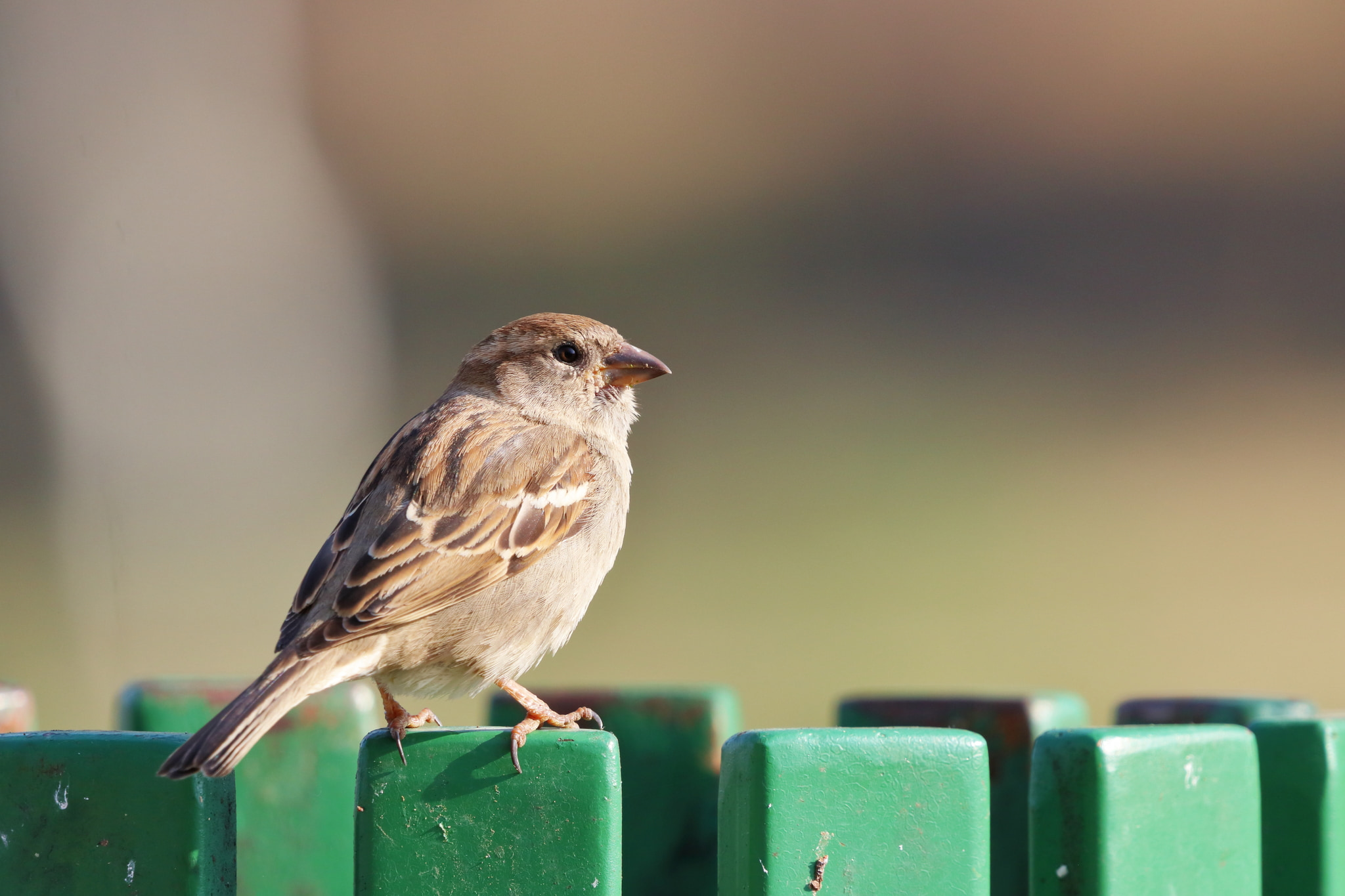
Length about 16 cm (14–18 cm), weight 24–39.5 g. The body is compact, the chest full, the head large and round. The bill is stout and conical, built for eating seeds, and the tail is short.
The male has a grey crown with a chestnut band on each side. A black patch covers the area around the bill, the throat and the breast; the cheeks are whitish grey and the back warm brown with black streaks. The black patch grows with age. In the breeding season the bill is black, and in fresh winter plumage the male is duller.
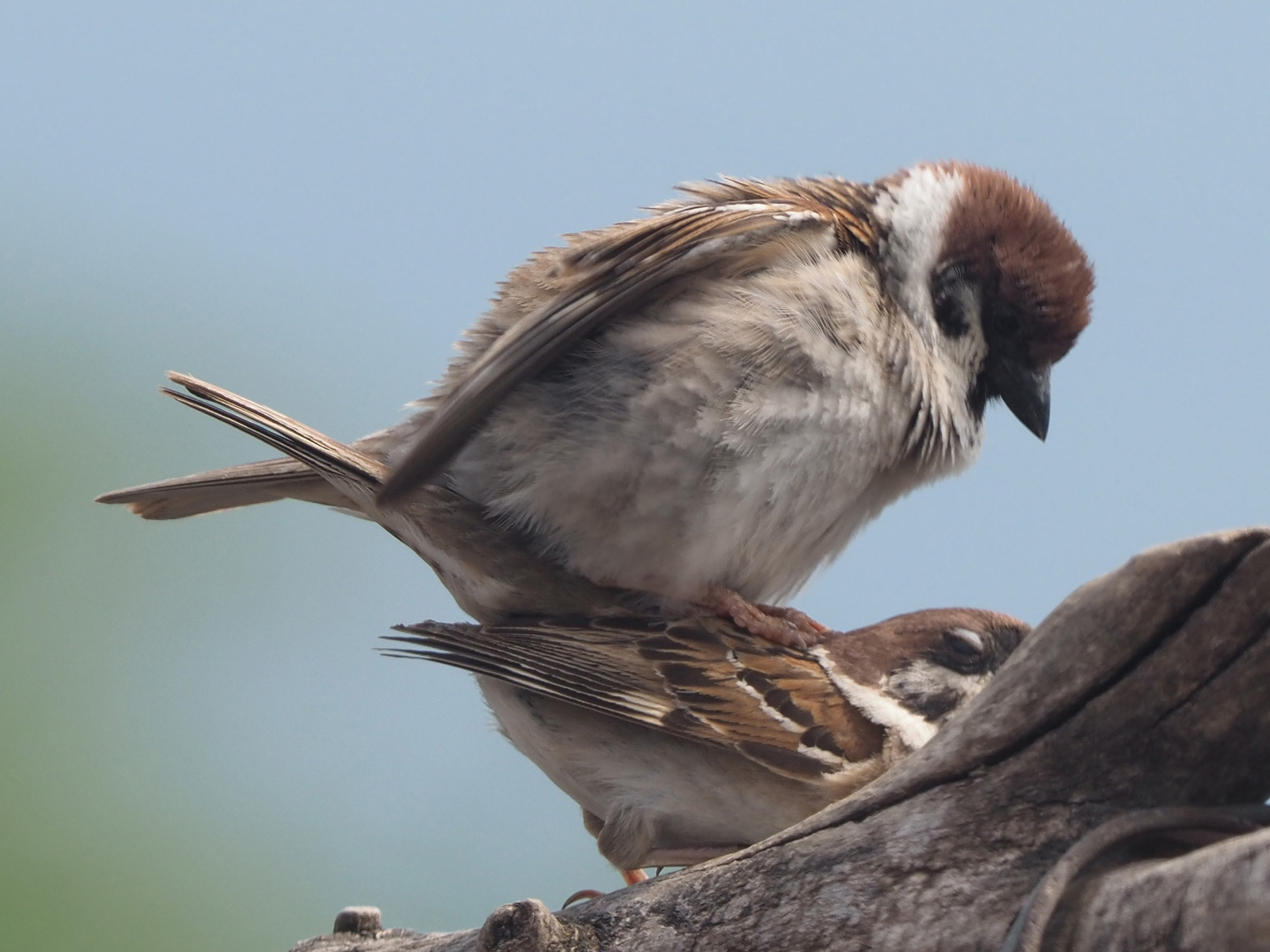
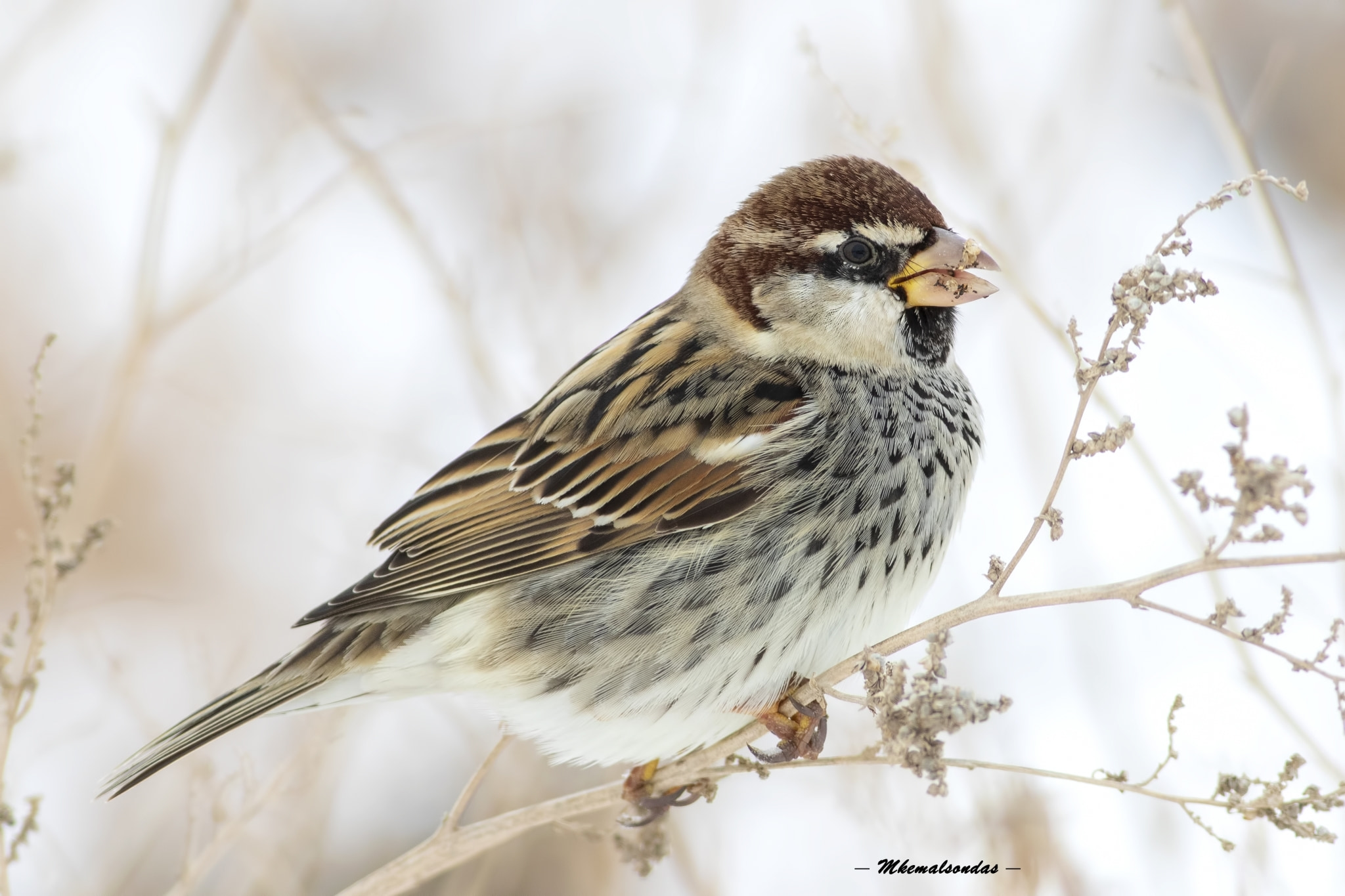
The female has no black patch and no grey cap: the upperparts are brown with dark streaks, with a pale eyebrow above the eye. She is almost impossible to tell from a female Spanish sparrow. The Eurasian tree sparrow is smaller, with a chestnut cap and a black cheek spot. A grey cap and a clean cheek mean a male house sparrow.
Colour
Swatches are illustrative. Do not identify a species by colour alone.
It is tied to human homes and farmland, in towns and villages alike. It is most densely packed in city centres, but raises chicks more successfully in suburbs, where insects are more plentiful. It avoids dense forest, extensive grassland and deserts far from settlements. In Georgia it has been seen in Tbilisi, in Vake Park in March and at Shindisi in February, and at Shilda.
The house sparrow lives and breeds in Georgia all year round, in towns and villages. Records come from every month of the year. Most are from Tbilisi, followed by Adjara, Kakheti, Mtskheta-Mtianeti and Kvemo Kartli. It has also been found in Imereti, Samtskhe-Javakheti, Samegrelo-Zemo Svaneti, Abkhazia, Shida Kartli, Guria, and Racha-Lechkhumi and Kvemo Svaneti. The oldest record is a museum specimen collected in Kutaisi in 1892.
Data: Reptiles.ge + iNaturalist · Methodology
- Field observation
- Several records in one spot
- Photo record
- Region with records
It eats mainly the seeds of cereals and weeds. In farmland, seeds make up about 90% of its food, and given a choice it prefers oats, wheat and maize. In towns it picks up bread and food scraps, and it also eats buds, berries, grapes and cherries. Its animal food is mostly insects: beetles, caterpillars, flies and aphids. For the first 15 days the chicks are fed mostly on insects, often grasshoppers and crickets. It swallows small grit to help digest hard food.
It is a resident bird: most individuals never move more than a few kilometres in their lifetime. Birds that live in the mountains move lower in winter. Its main sound is a short, frequent chirp. Flocks use it to keep in contact, and in spring the male uses it to claim a nest site and call a female. On the ground it hops. It is monogamous, and a pair usually stays together for life. It nests in a cavity: under a roof, in a crack in a wall, in a hole in a cliff or tree, even in an old swallow nest. The clutch is usually 4–5 eggs, laid at least twice a year in temperate climates and up to four times. The female does most of the 11–14 days of incubation, and both parents feed the young in the nest for 14–16 days.
Globally the house sparrow's risk of extinction is rated low (LC, 2019). It is one of the most numerous birds on Earth, but in many places it is declining. In Europe, 21 years of data showed a fall of nearly 60% by 2021, and in Great Britain of 68% since the early 1970s. The main cause is thought to be a shortage of insects to feed the chicks, along with lost nest sites in new buildings, predators and disease. In Georgia's national assessment (2021) its risk is rated low (LC), and its numbers are stable. The list of the birds of Georgia gives it as a year-round resident and breeder.
Related guides
Continue with related pages
Yes. It lives and breeds in Georgia all year round. It follows human settlement, so it lives in towns and villages. It has been seen in Tbilisi, in Vake Park and at Shindisi, and at Shilda.
By the cap and the cheek. The Eurasian tree sparrow is smaller and neater, with a chestnut cap and a black spot on the cheek. The male house sparrow has a grey cap and no cheek spot. The male Spanish sparrow also has a chestnut cap. If the cap is grey and the cheek is clean, you are looking at a house sparrow.
Mainly seeds, especially cereals: oats, wheat, maize. In towns it also eats bread and food scraps. It catches insects too, and for the first 15 days the chicks are fed mostly on insects.
Mostly under house roofs and in cracks in walls. It also uses holes in cliffs and trees and old swallow nests, and in warm regions it even builds in tree branches. The clutch is usually 4–5 eggs, laid at least twice a year. New buildings have fewer such gaps, so an old roof matters to it.
In many places, yes. In Europe, 21 years of data showed a fall of nearly 60% by 2021, and in Great Britain of 68% since the early 1970s. The main cause is thought to be a shortage of insects for the chicks. Other causes are lost nest sites, predators and disease. In Georgia its numbers are assessed as stable.
No, it is harmless to people. Globally its risk of extinction is low (LC, 2019). In Georgia's national assessment (2021) its risk is also low (LC), and its numbers are stable. Do not catch wild birds.
References
What this profile is based on
Species profiles are compiled from peer-reviewed literature and established biodiversity databases, and are reviewed as new taxonomic and conservation data become available.
Prepared by the Reptiles.ge editorial team from the sources listed here.