



Alpine accentor
Prunella collaris
Matthieu Gauvain · Montpeyroux
Key facts in one look
- Diet
- Insects, spiders, snails; seeds in winter
- Status in Georgia
- Year-round resident, breeds
- Size
- 15–17.5 cm
- Habitat
- High-mountain cliffs and alpine meadows
- Family
- Prunellidae
- Protection
- Globally LC, 2024; in Georgia LC, 2021
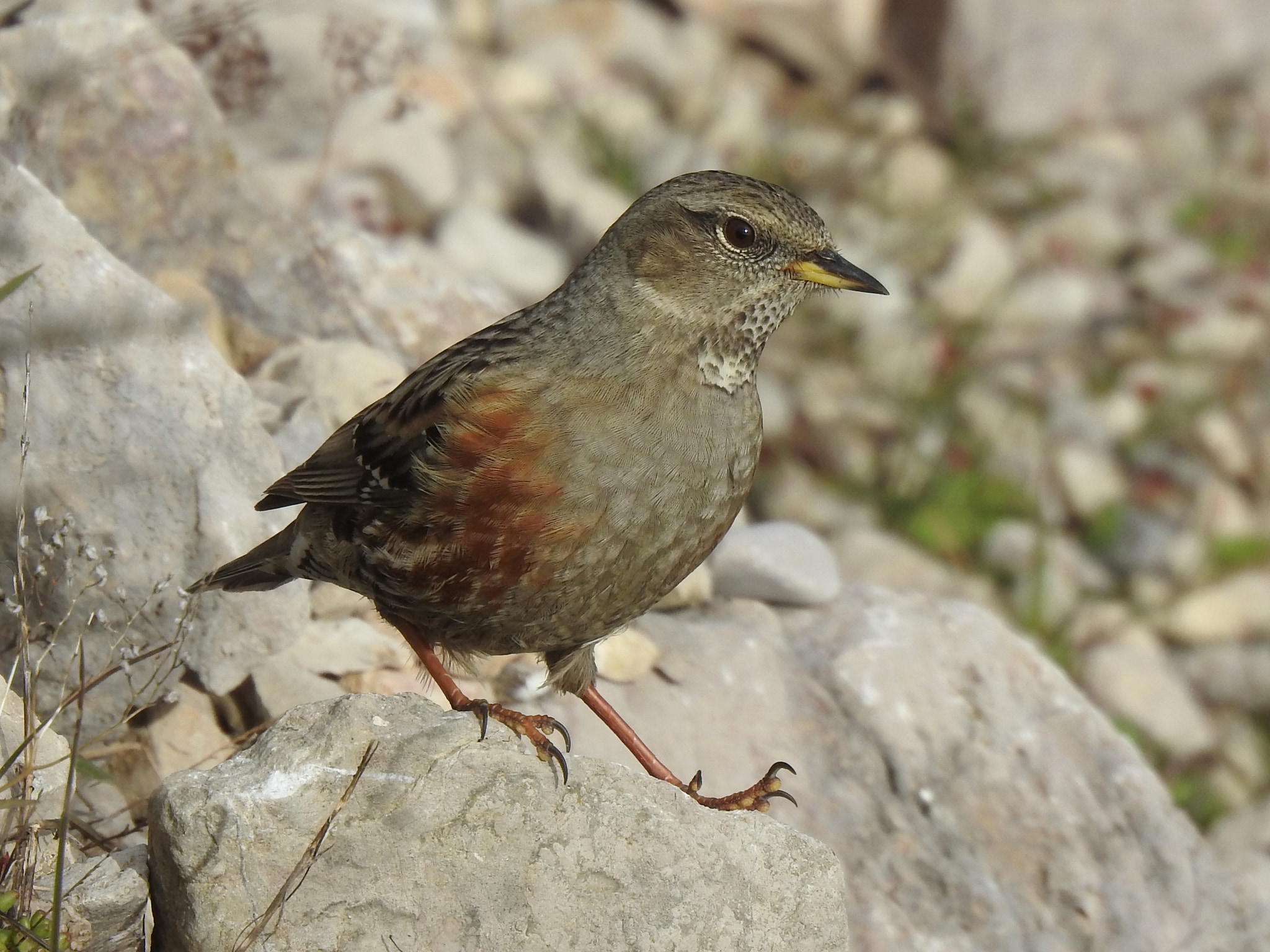
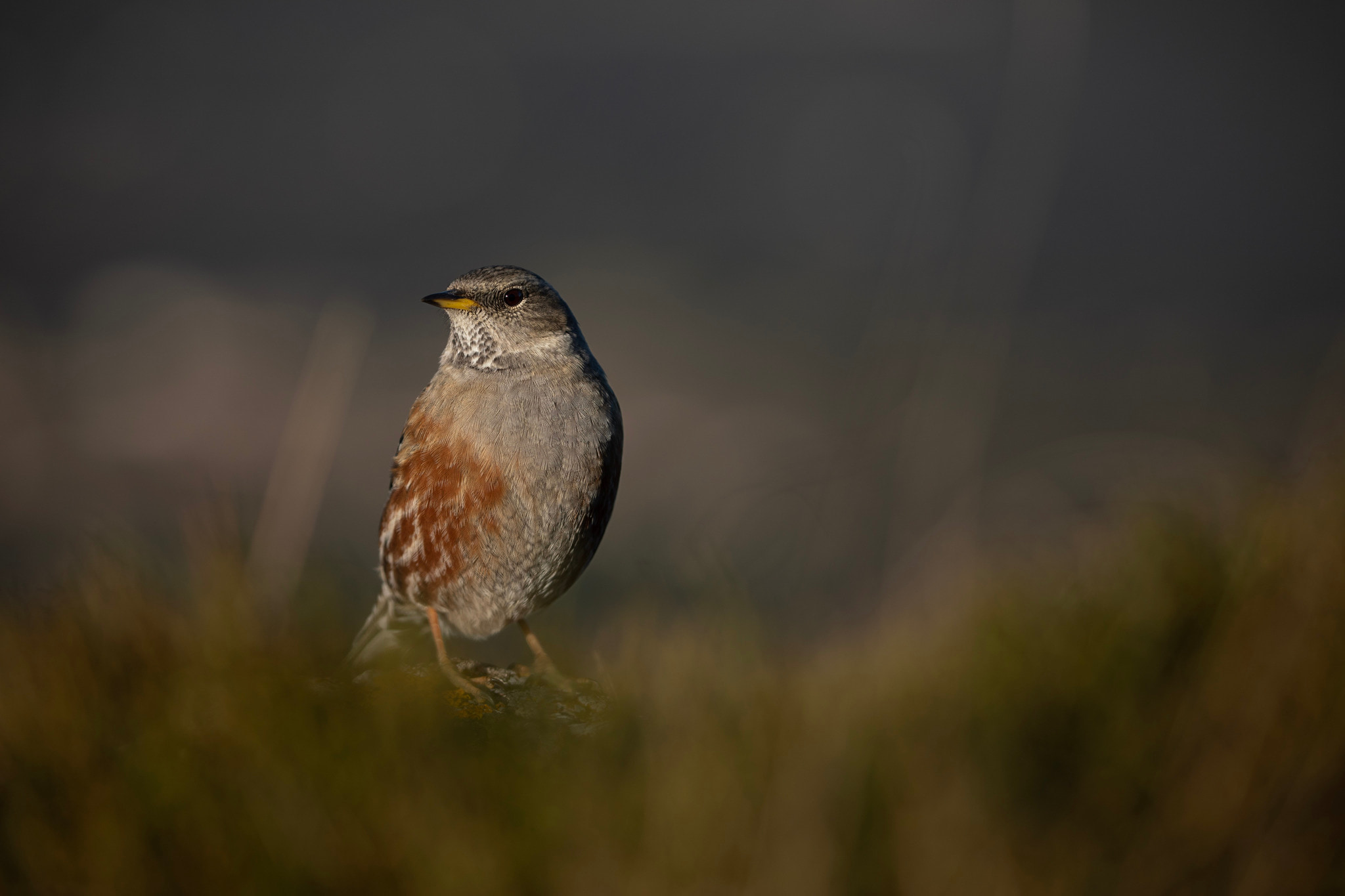
The Alpine accentor lives above the tree line, on cliffs and stony meadows, and is more brightly and boldly coloured than the dunnock. A grey head, a white, black-spotted throat and rufous flanks are its main marks. In Georgia it lives and breeds all year round. In winter it moves lower and appears at ski resorts. If you see a grey-headed bird, streaked like a sparrow, on the snow at Gudauri, look at its throat.
Identification
Alpine accentor: how to identify it
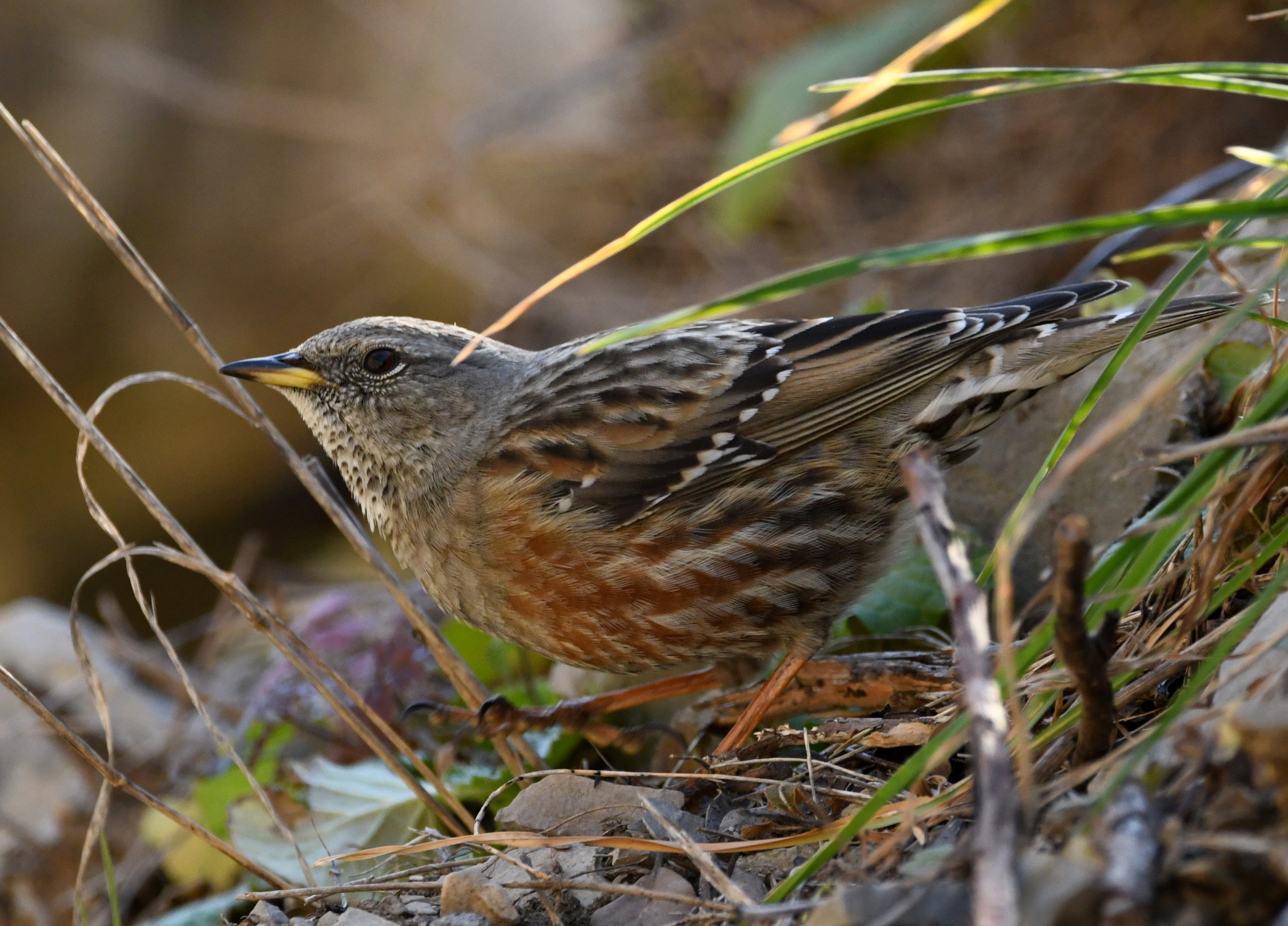
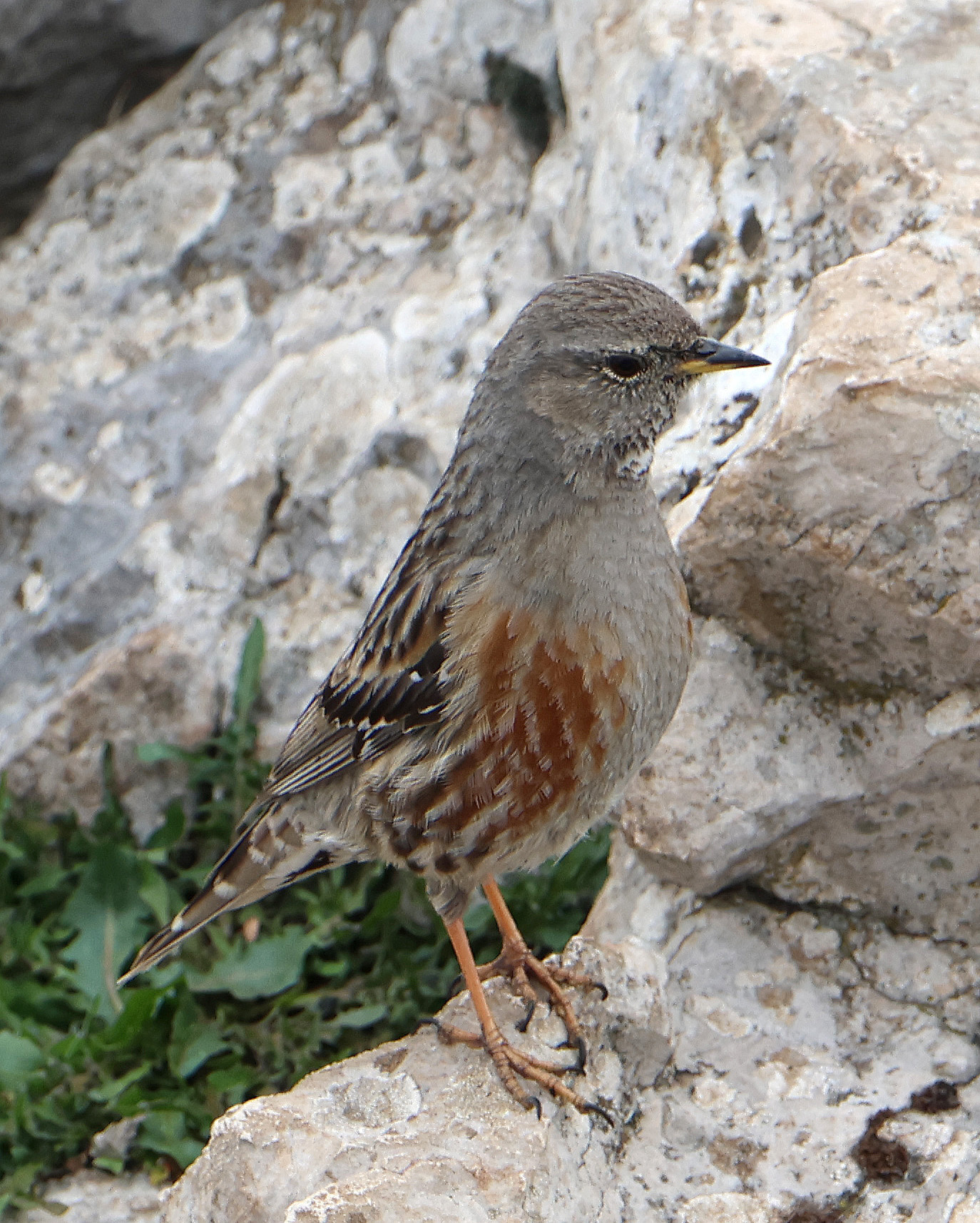
An accentor 15–17.5 cm long and about 40 g, the size of a robin. The head and breast are grey, the throat white with black spots, the flanks rufous-brown and the back streaked brown.
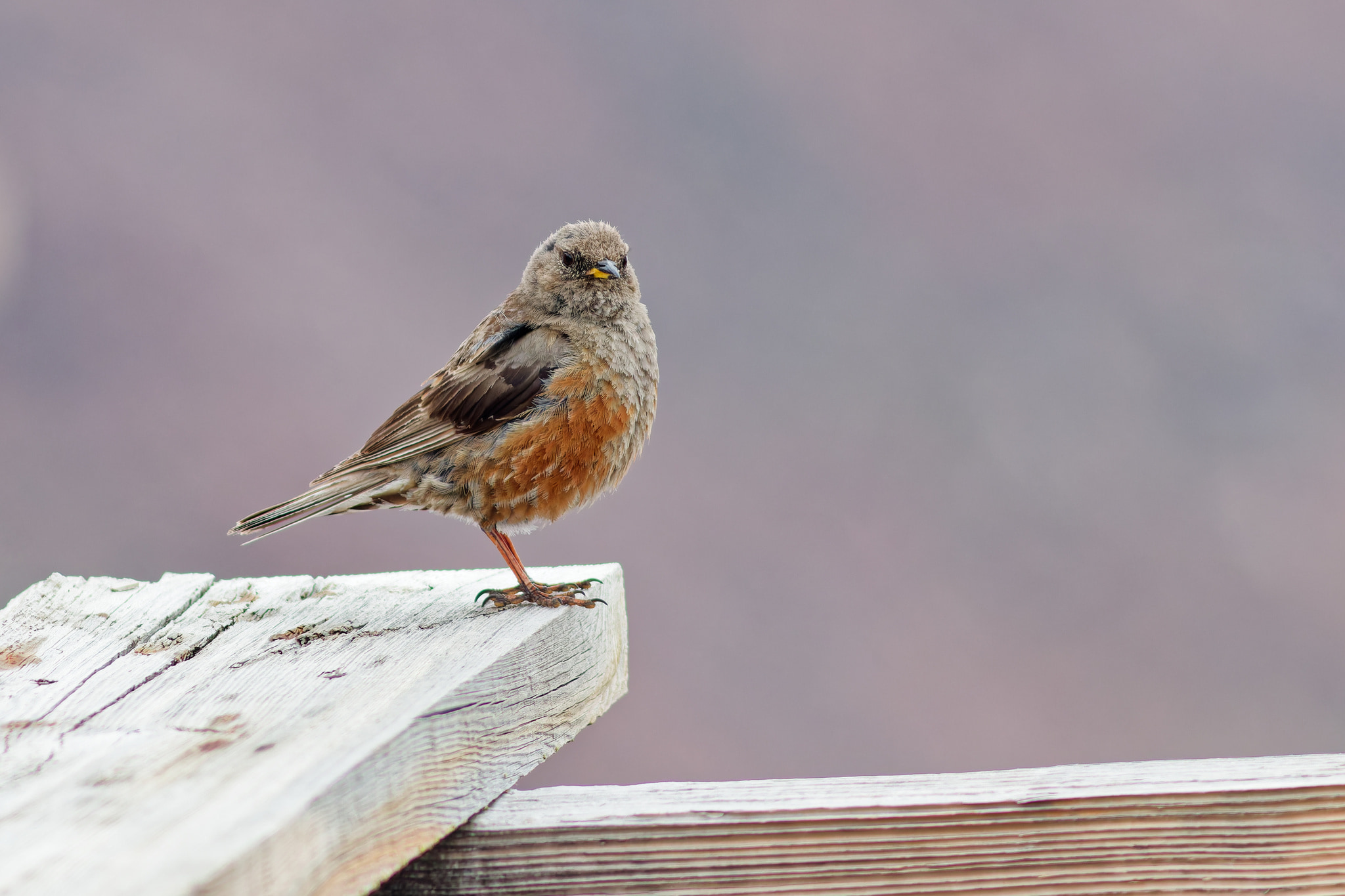
Length 15–17.5 cm, weight about 40 g. It is the size of a robin and slightly larger than its close relative, the dunnock. The bill is fine and pointed, typical of an insect eater.
The head and front of the body are lead-grey. The throat is white with dense black spots, and the flanks carry rufous-brown spots. The back is streaked brown, like a sparrow's. It has two white wing bars and a whitish tail tip. Males and females look almost the same.
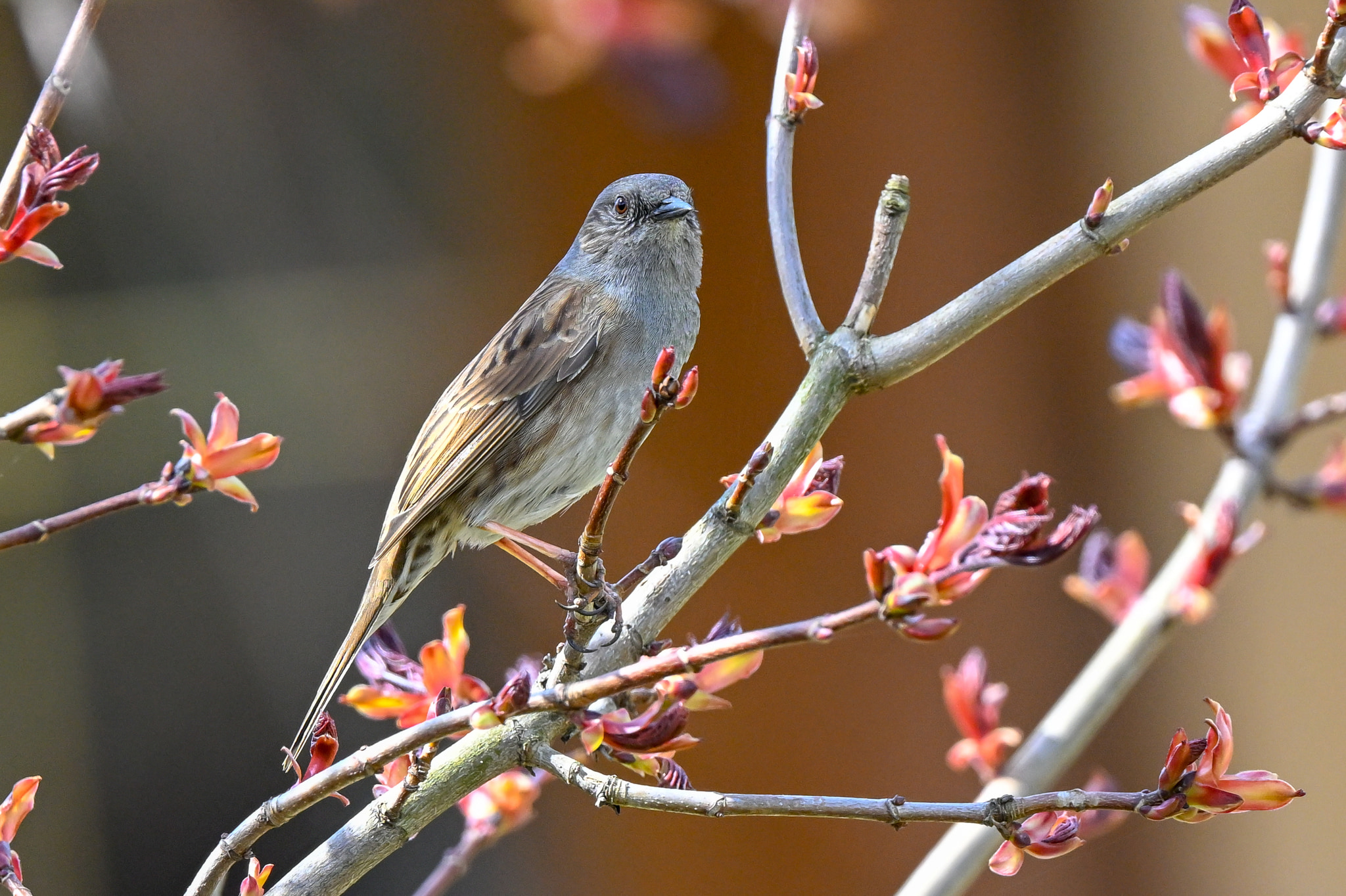
Young birds have browner heads and underparts and a plain grey throat. The dunnock is smaller and duller: if you see a bird with a spotted throat and red flanks on rocks high in the mountains, it is an Alpine accentor.
Colour
Swatches are illustrative. Do not identify a species by colour alone.
Often confused with
It is a typical high-mountain bird. In the breeding season it lives above the tree line up to the snow line, on sunny rocky slopes and stony alpine meadows. In the mountains of Europe this is 1,500–3,000 m above sea level. In winter it moves lower, to mountain villages and ski resorts. In Georgia it has been seen on the Zekari Pass in 2015 and at Gudauri in the winter of 2017–2018.
The Alpine accentor lives and breeds in Georgia all year round. Records run from February to December, with most in May, August and September. Most records come from Mtskheta-Mtianeti and Samegrelo-Zemo Svaneti. It has also been found in Kakheti, Samtskhe-Javakheti, Kvemo Kartli, Imereti and Adjara. The oldest record is a museum specimen collected near Gudauri in 1909.
Data: Reptiles.ge + iNaturalist · Methodology
- Field observation
- Several records in one spot
- Photo record
- Region with records
In summer it eats mainly insects, as well as worms, spiders and snails. It searches for this food on the ground and between stones. Sometimes it picks through horse dung. In autumn and winter it switches to the seeds of various plants. In winter it visits feeders and scraps at ski resorts and mountain hotels.
It is a resident bird: in winter it leaves the high mountains and comes down to mountain villages and ski resorts. It spends much of its time on the ground, and when in danger it hides in a rock crevice or under a stone. The song is a mix of twitters and trills that recalls a skylark. It sings perched on the ground or in a display flight. The call is a rolling "trrli" or "trrüi". In the wild it lives up to 8 years. The nest sits in a hollow in the ground or a rock crevice, sometimes under a bush. It is a cup of stems and roots, lined with moss, lichens and sometimes feathers and hair. It lays 3–5 unspotted sky-blue eggs. In the mountains of Europe nesting starts at the end of May, and it may raise two broods a year. Both parents feed the young, which leave the nest at about 16 days, before they can fly.
Globally the Alpine accentor's risk of extinction is rated low (LC, 2024). It is widespread in the mountains of Eurasia and North Africa, from the mountains of Europe through the Caucasus and the Himalayas to Japan. In Georgia's national assessment (2021) its risk is also rated low (LC), and its numbers are stable. The list of the birds of Georgia gives it as a year-round resident and breeder.
Related guides
Continue with related pages
Yes. It lives and breeds in Georgia all year round. The subspecies in the Caucasus is P. c. montana. It has been seen on the Zekari Pass in 2015 and at Gudauri in winter. In winter look for it near ski resorts, in summer on rocky slopes above the tree line.
The Alpine accentor is larger, and its colours are brighter and more contrasting. The throat is white with black spots, the flanks are spotted rufous-brown. It has two white wing bars. The dunnock is a bird of scrub and forest, the Alpine accentor of bare, rocky high mountains.
In summer insects, worms, spiders and snails. In autumn and winter plant seeds. Sometimes it picks through horse dung. In winter it comes to feeders and scraps at ski resorts.
In a hollow in the ground or a rock crevice, on sparsely vegetated rocky slopes above the tree line. Sometimes a bush covers it. The nest is a cup of stems and roots lined with moss and lichens. It lays 3–5 sky-blue eggs.
No, it is a resident bird. In winter it leaves the high mountains and moves lower down. Then it also shows up in mountain villages and at ski resorts. In Georgia it has been seen at Gudauri in winter.
No, it is harmless to people. Globally its risk of extinction is low (LC, 2024). In Georgia's national assessment (2021) its risk is also low (LC), and its numbers are stable. Do not catch wild birds.
References
What this profile is based on
Species profiles are compiled from peer-reviewed literature and established biodiversity databases, and are reviewed as new taxonomic and conservation data become available.
Prepared by the Reptiles.ge editorial team from the sources listed here.


