



Radde's accentor
Prunella ocularis
Mehmet ÜNLÜ · 38500 Yahyalı/Kayseri
Key facts in one look
- Size
- 14–15 cm
- Diet
- Seeds and small insects
- Status in Georgia
- Not established
- Habitat
- Mountain pastures and gullies, 1,000–3,500 m
- Family
- Prunellidae
- Protection
- Globally LC, 2018; in Georgia LC, 2021
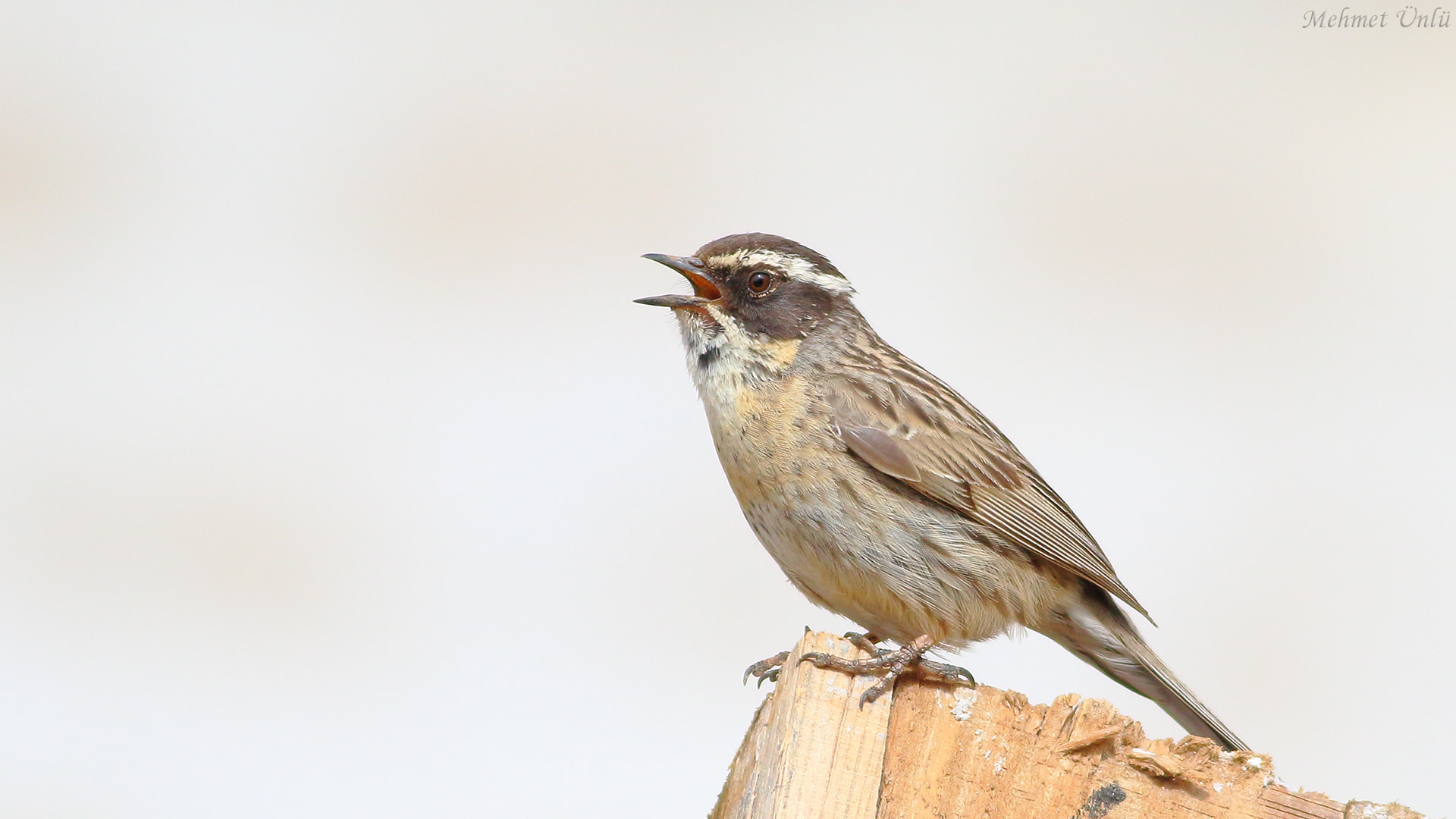
Radde's accentor is a bird of high, rocky mountains and lives at 1,000–3,500 m. A long white eyebrow runs above the eye on its black head, and the breast is buff-orange. Its main range runs from the mountains of Turkey through Armenia, Azerbaijan and Iran to Turkmenistan and Afghanistan. In Georgia it is confirmed by photographs, but whether it is resident, a breeder or only a visitor has not been established. If you see a black-headed, white-browed accentor among mountain bushes, take a photo and note the date and place.
Identification
Radde's accentor: how to identify it
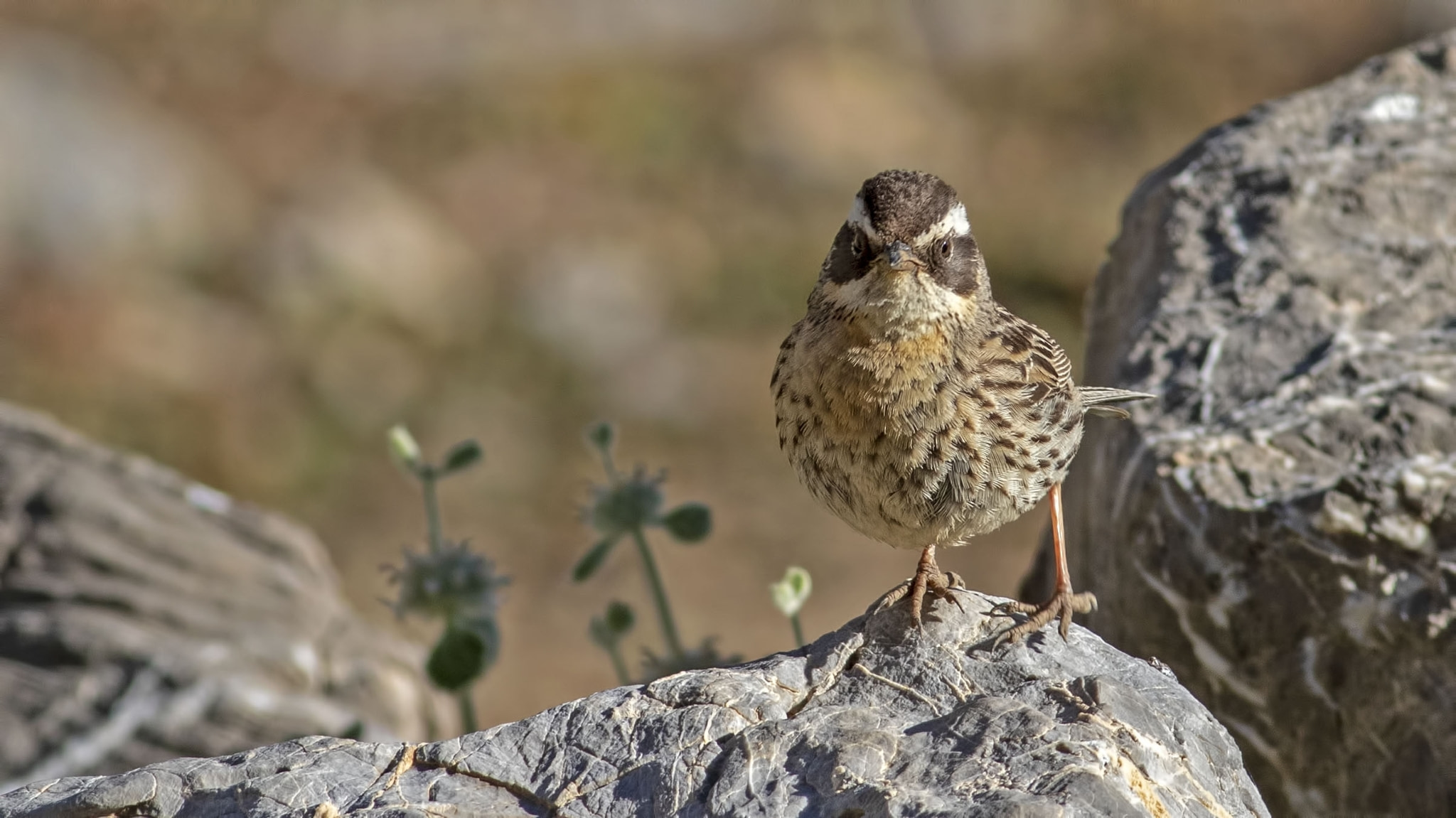
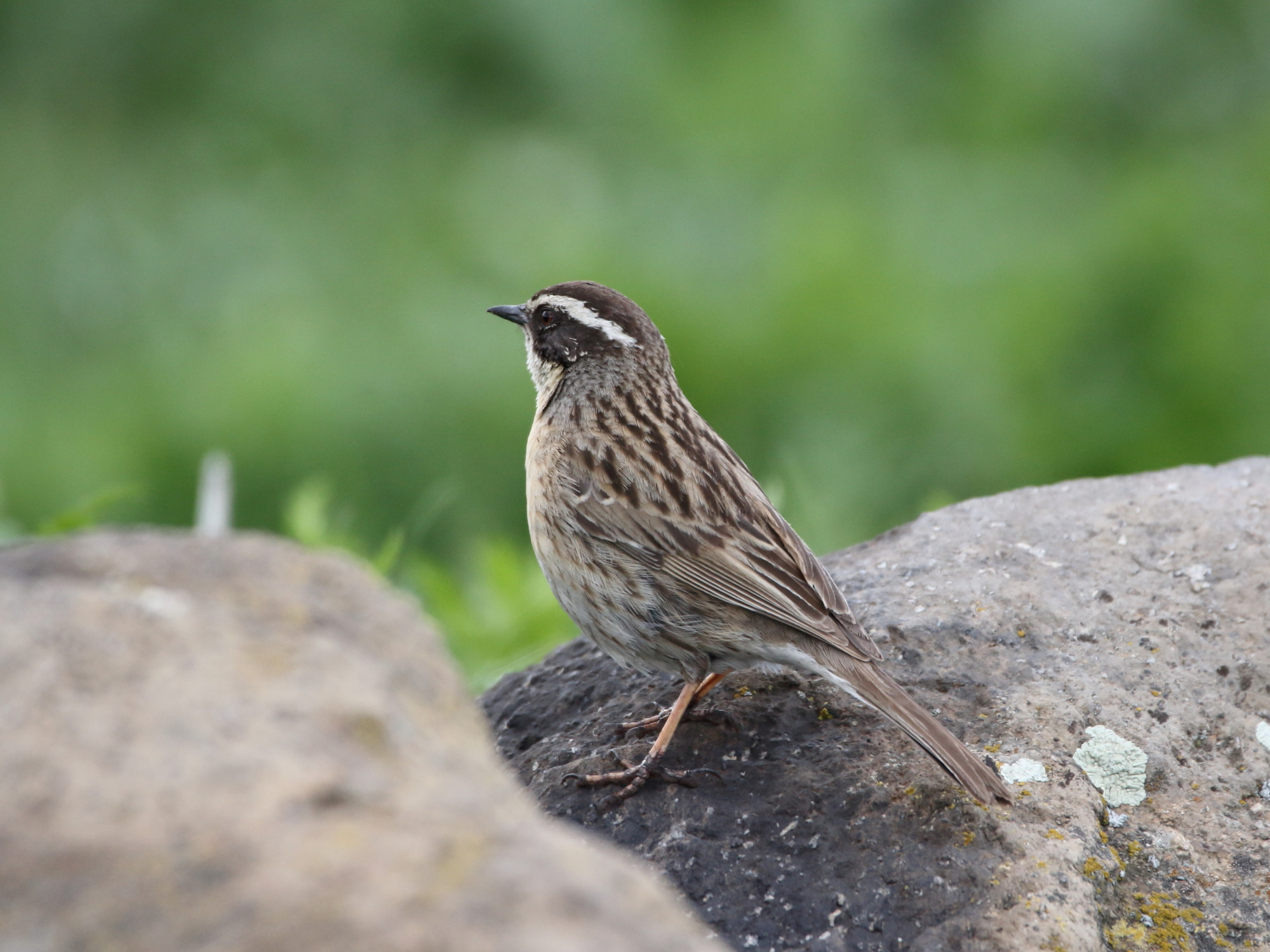
An accentor 14–15 cm long and 20–25 g. The head is black, with a long white eyebrow above the eye. The breast is buff-orange, the back chestnut-black.
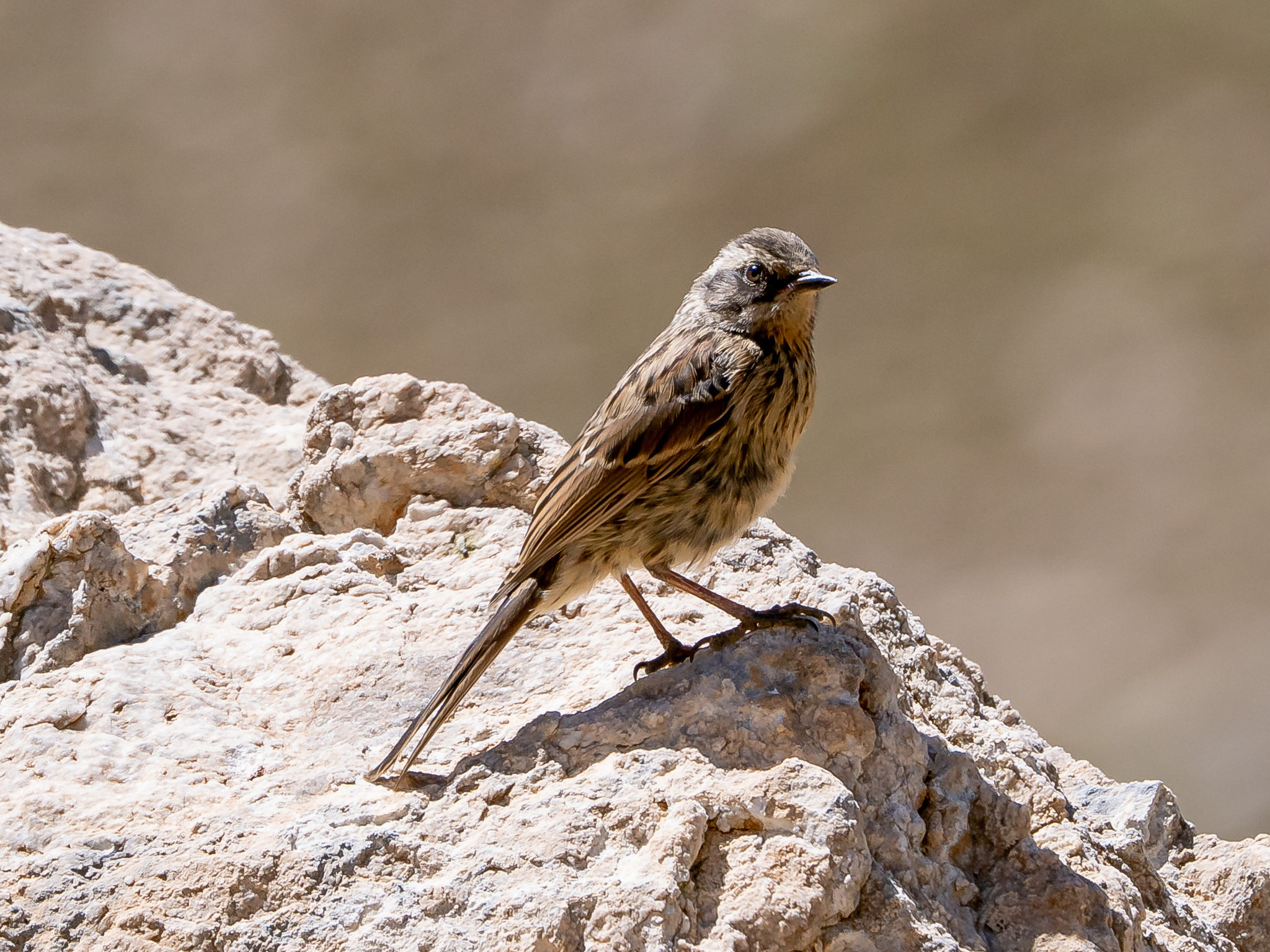
Length 14–15 cm, weight 20–25 g, wingspan about 22 cm. It is slightly larger than a dunnock. The bill is thin and pointed, as in all accentors.
The head is black, with a long white eyebrow above the eye. The throat is grey, the breast buff-orange, the belly and undertail whitish. The back is chestnut-black, and the flanks carry fine chestnut streaks. The sexes are nearly alike.
The dunnock has a grey head and breast and no bright white eyebrow. A black head, a white eyebrow and an orange breast together mark Radde's accentor. If you see such a bird in Georgia, take a photo: its status here is still not established.
Colour
Swatches are illustrative. Do not identify a species by colour alone.
Often confused with
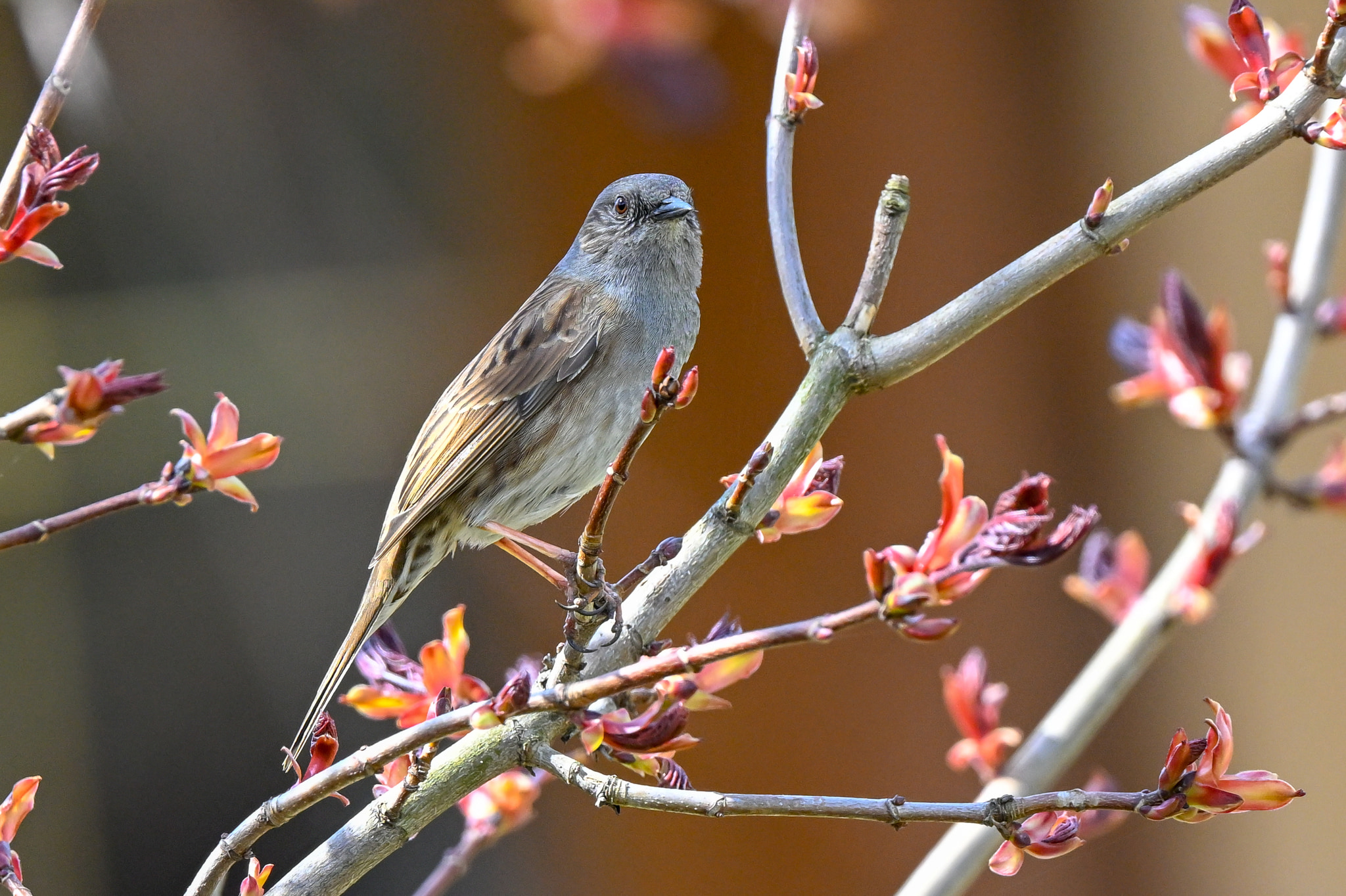
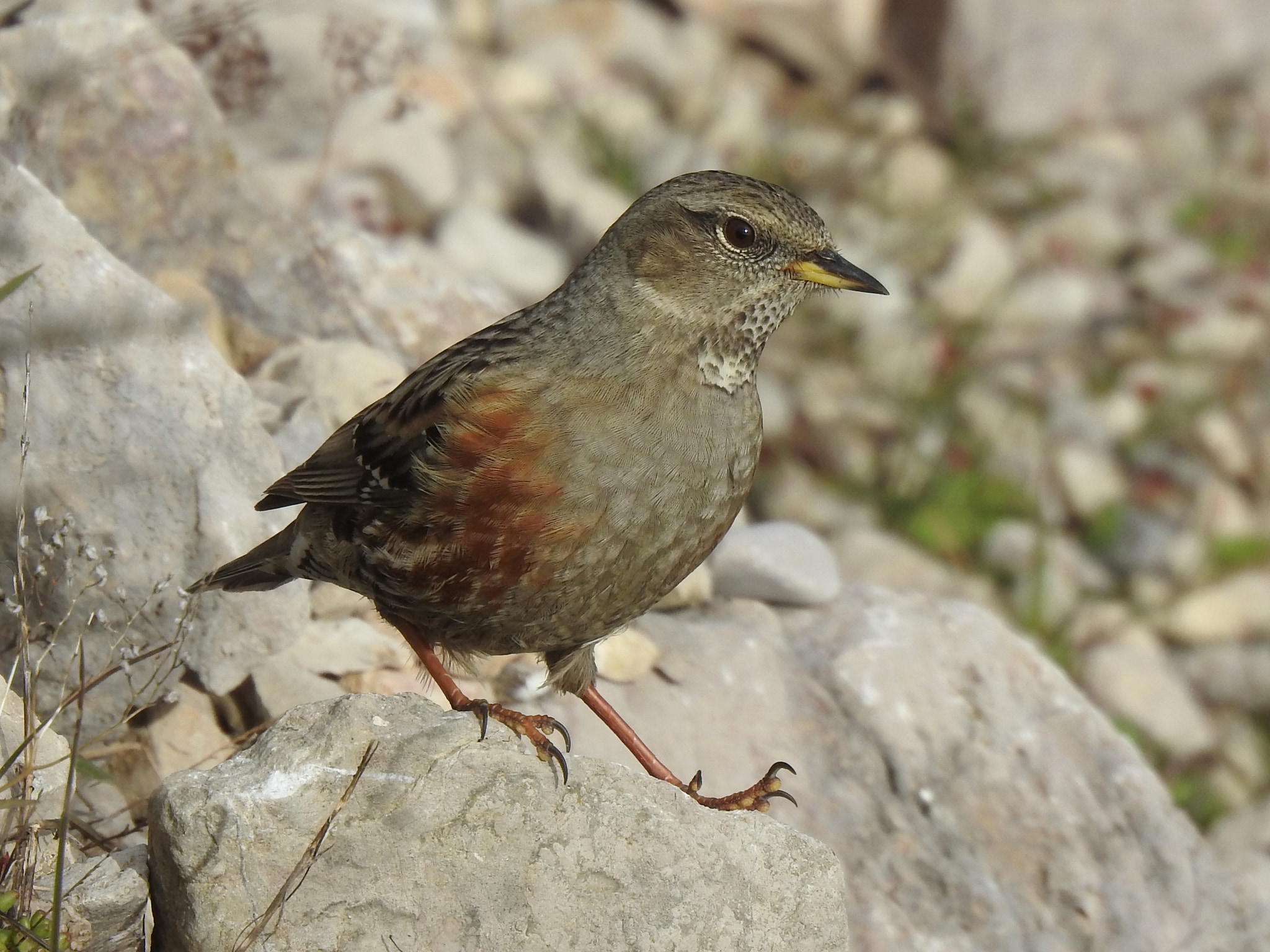
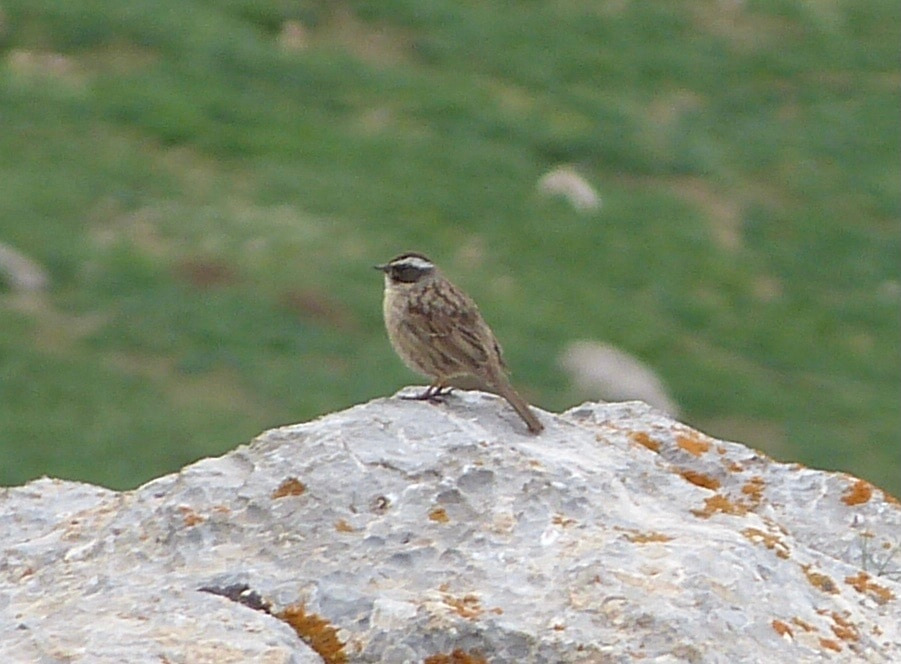
It lives on the pastures and in the gullies of high, rocky mountains, at 1,000–3,500 m. It picks open, stony slopes with clumps of bushes, and spends much of its time on bare ground between them. Its main range lies in the mountains of Turkey, Armenia, Azerbaijan and Iran.
The status of Radde's accentor in Georgia has not been established. Both records come from Samtskhe-Javakheti: one from April 2011, the other from June 2019. Each time a single bird was seen.
Data: Reptiles.ge + iNaturalist · Methodology
- Field observation
- Several records in one spot
- Region with records
It is omnivorous: on the ground it picks up seeds and small insects. It looks for food on bare ground between bushes. While doing so it often flicks its wings.
It hops on bare ground between bushes and often flicks its wings. The song is a ringing one, like the dunnock's. It is partly migratory: some birds leave their breeding grounds in winter, others stay. It breeds in June–August. The nest sits in a dense bush, about 30 cm above the ground. It is a cup of twigs and roots, thickly lined with plant down. The clutch is 3–4 eggs. It first breeds at about one year old.
Globally the risk of extinction of Radde's accentor is rated low (LC, 2018). A preliminary estimate puts the world population at 40,000–121,000 mature birds. There is no sign of decline or serious threats, so its numbers are probably stable. In Georgia's national assessment (2021) its risk is also rated low (LC), and its numbers are stable. It is on the list of the birds of Georgia and confirmed here by photographs, but its seasonal status has not been established.
Related guides
Continue with related pages
Yes, but its status here has not been established. It is confirmed in Georgia by photographs, yet whether it is resident, a breeder or a migrant is still unknown. Its main range lies to the south, in the mountains of Turkey, Armenia and Iran.
By the head. Radde's accentor has a black head with a long, bright white eyebrow and a buff-orange breast. The dunnock's head and breast are grey. The dunnock keeps to undergrowth, Radde's accentor to open, stony mountain slopes. Their songs are alike, so make sure you see the bird.
At 1,000–3,500 m. It picks the pastures and gullies of high, rocky mountains, with clumps of bushes. It spends much of its time on bare ground between the bushes.
Seeds and small insects. It is omnivorous and picks its food from the ground. It hops on bare ground between bushes, flicking its wings.
In a dense bush, about 30 cm above the ground. The nest is a cup of twigs and roots, thickly lined with plant down. It breeds in June–August and lays 3–4 eggs. At that time, do not disturb mountain bushes.
No, it is harmless to people. Globally its risk of extinction is low (LC, 2018). In Georgia's national assessment (2021) its risk is also low (LC), and its numbers are stable. Do not catch wild birds.
References
What this profile is based on
Species profiles are compiled from peer-reviewed literature and established biodiversity databases, and are reviewed as new taxonomic and conservation data become available.
Prepared by the Reptiles.ge editorial team from the sources listed here.


