


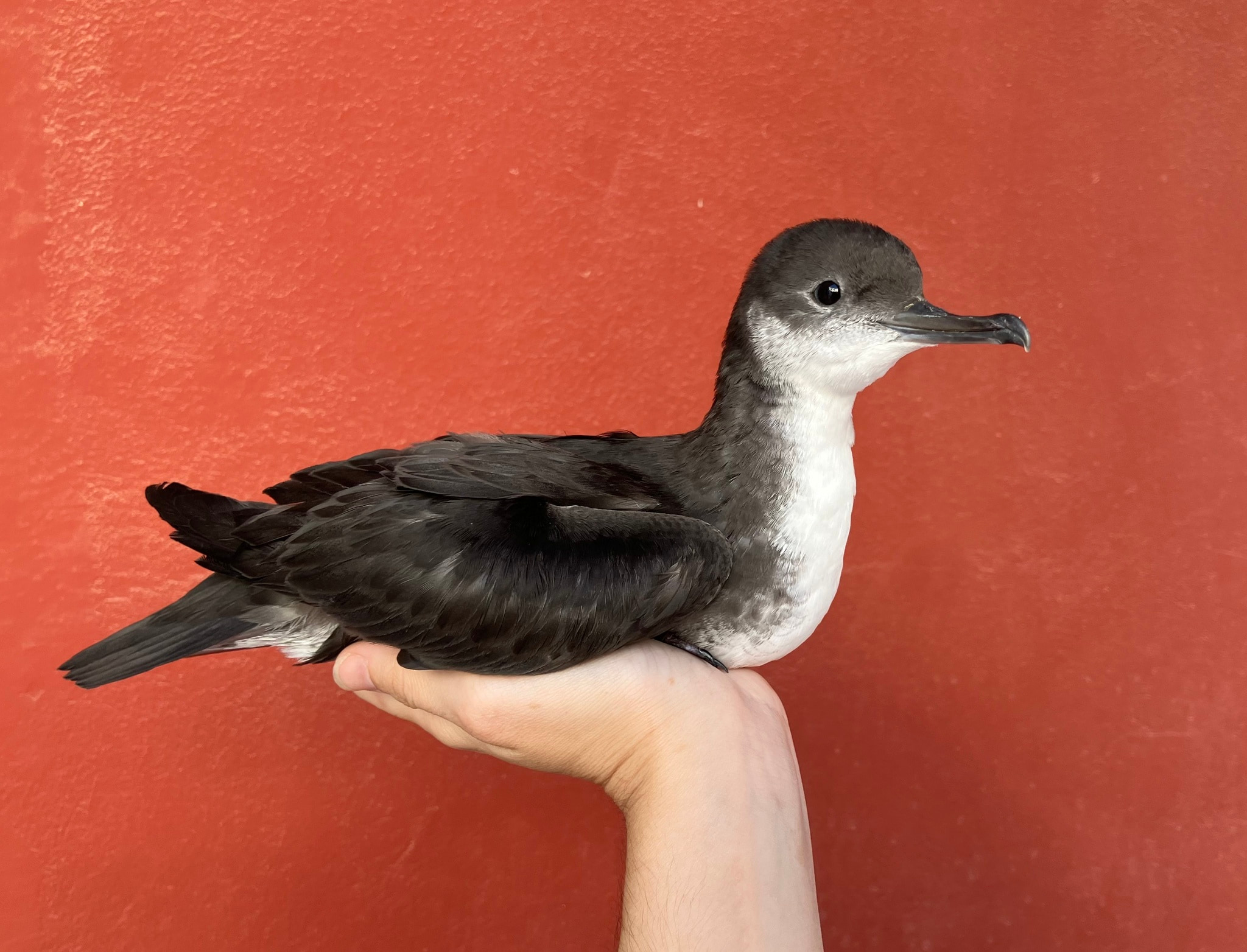

Yelkouan shearwater
Puffinus yelkouan
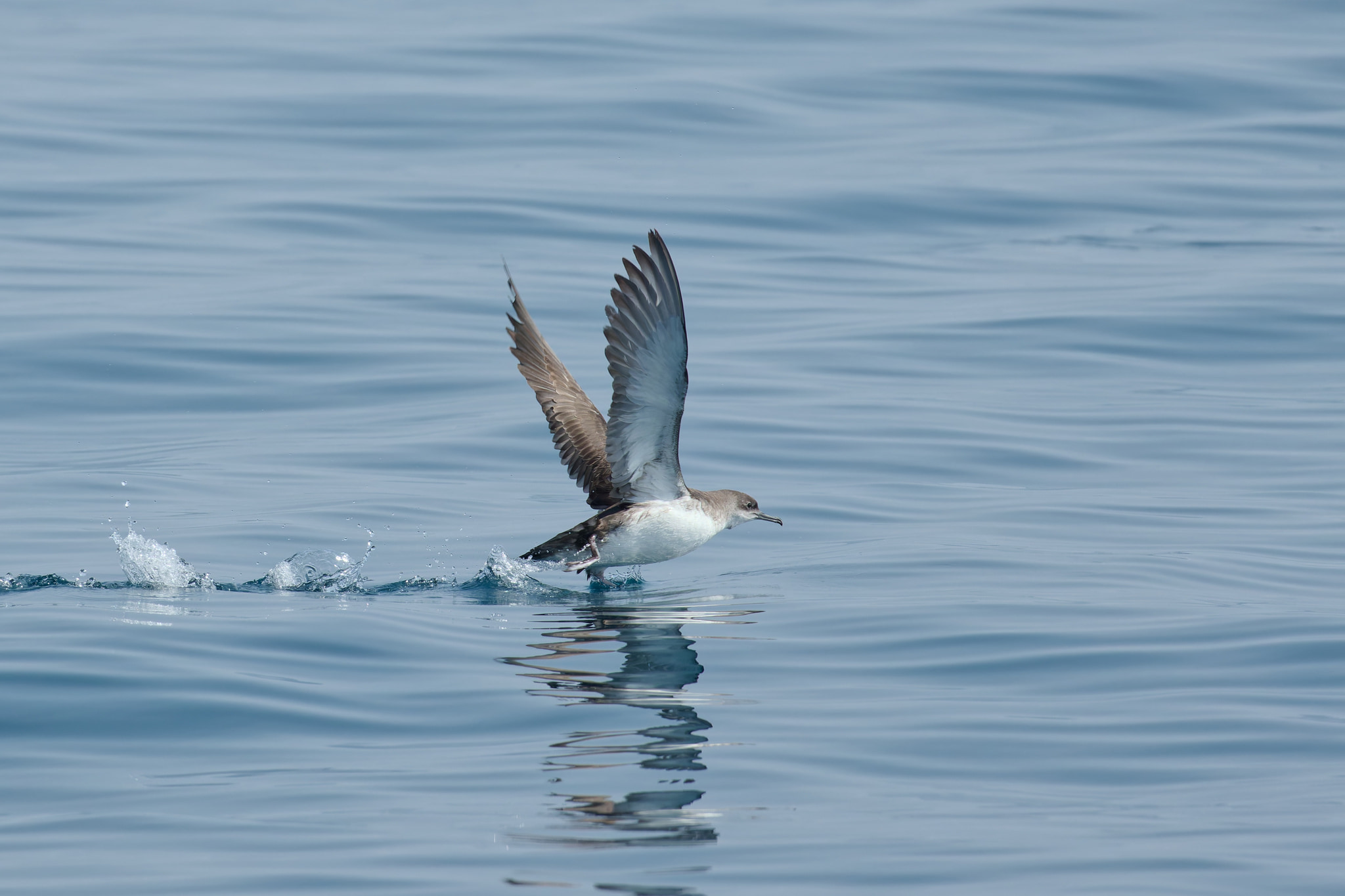
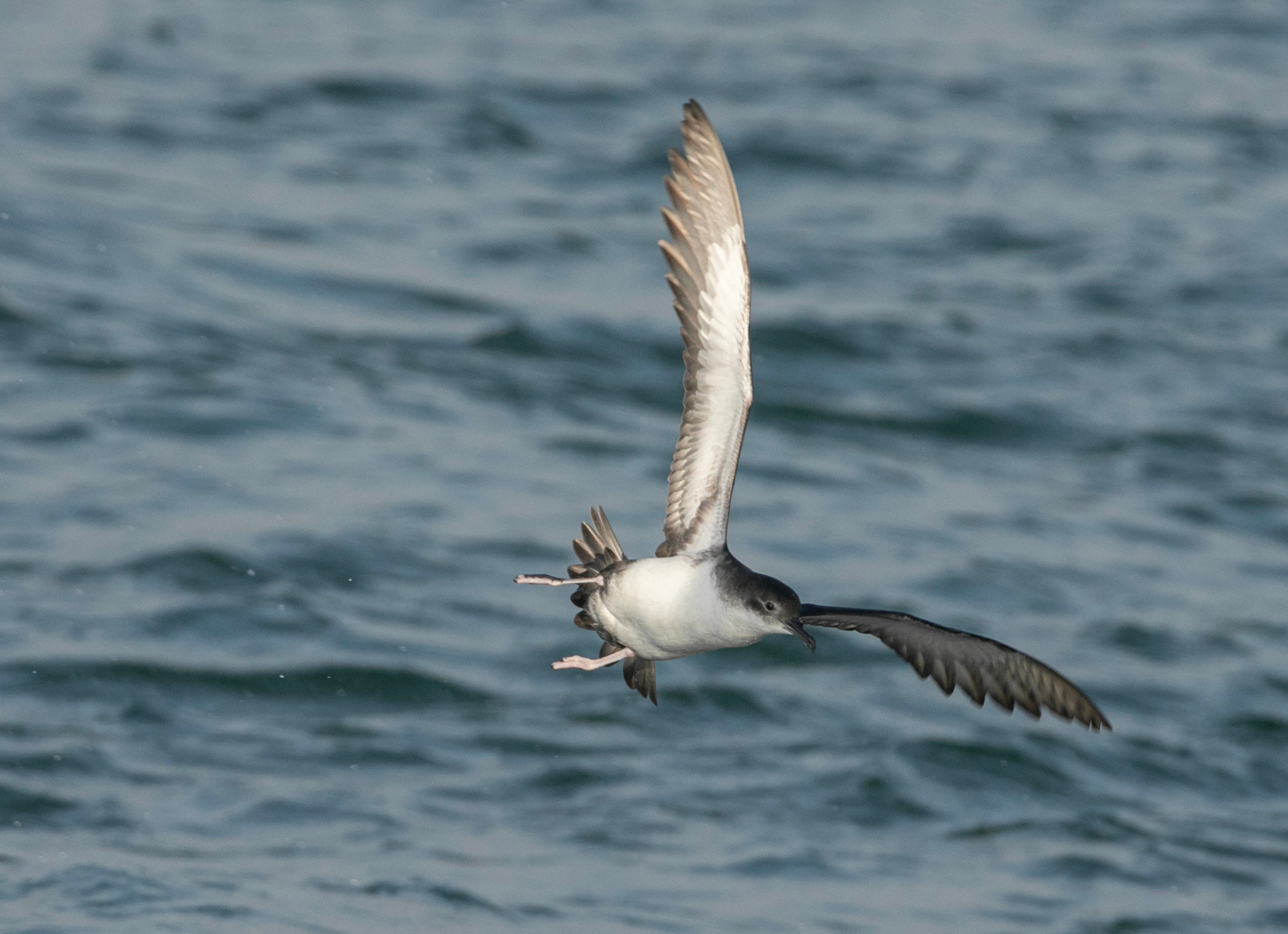
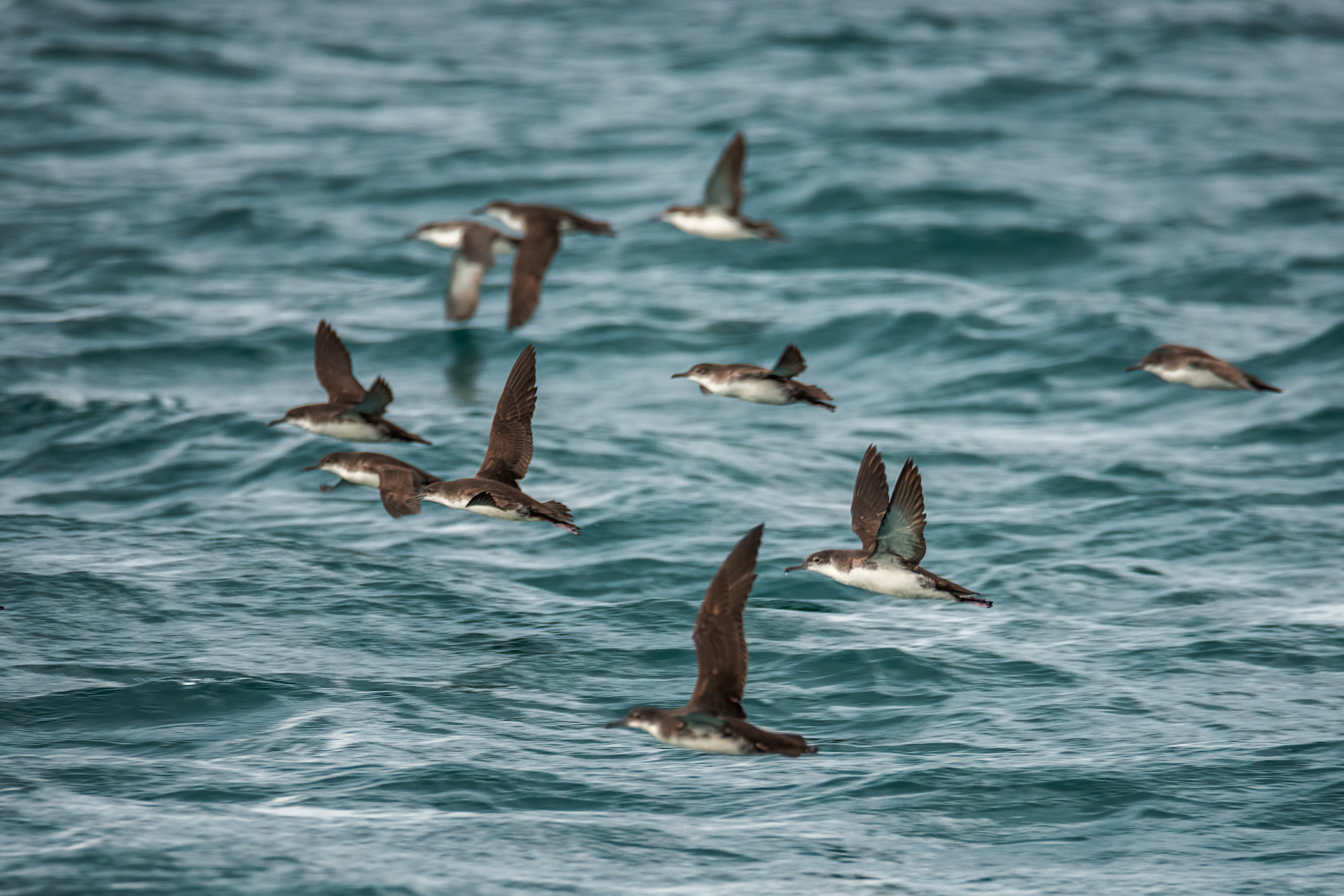
Valia Pavlou · Crete
Key facts in one look
- Size
- 30–35 cm; wingspan 70–84 cm
- Diet
- Small fish, crustaceans, molluscs
- Status in Georgia
- Year-round visitor and winter visitor, does not breed
- Habitat
- Open sea; breeds on islands and coastal cliffs
- Family
- Procellariidae
- Protection
- Globally VU, 2018; in Georgia VU, 2021
The yelkouan shearwater is a medium-sized seabird, 30–35 cm long with a wingspan of 70–84 cm. It is dark above and white below, so over the sea it flashes dark, then white. It breeds on islands and coastal cliffs in the eastern and central Mediterranean. It wanders the Black Sea all year and reaches as far as Crimea and the Sea of Azov. In Georgia it does not breed: it is a year-round visitor and a winter visitor.
Identification
Yelkouan shearwater: how to identify it
A seabird 30–35 cm long with a wingspan of 70–84 cm. The upperparts are blackish brown, the underparts white. The bill is small, thin and black, with tubular nostrils.
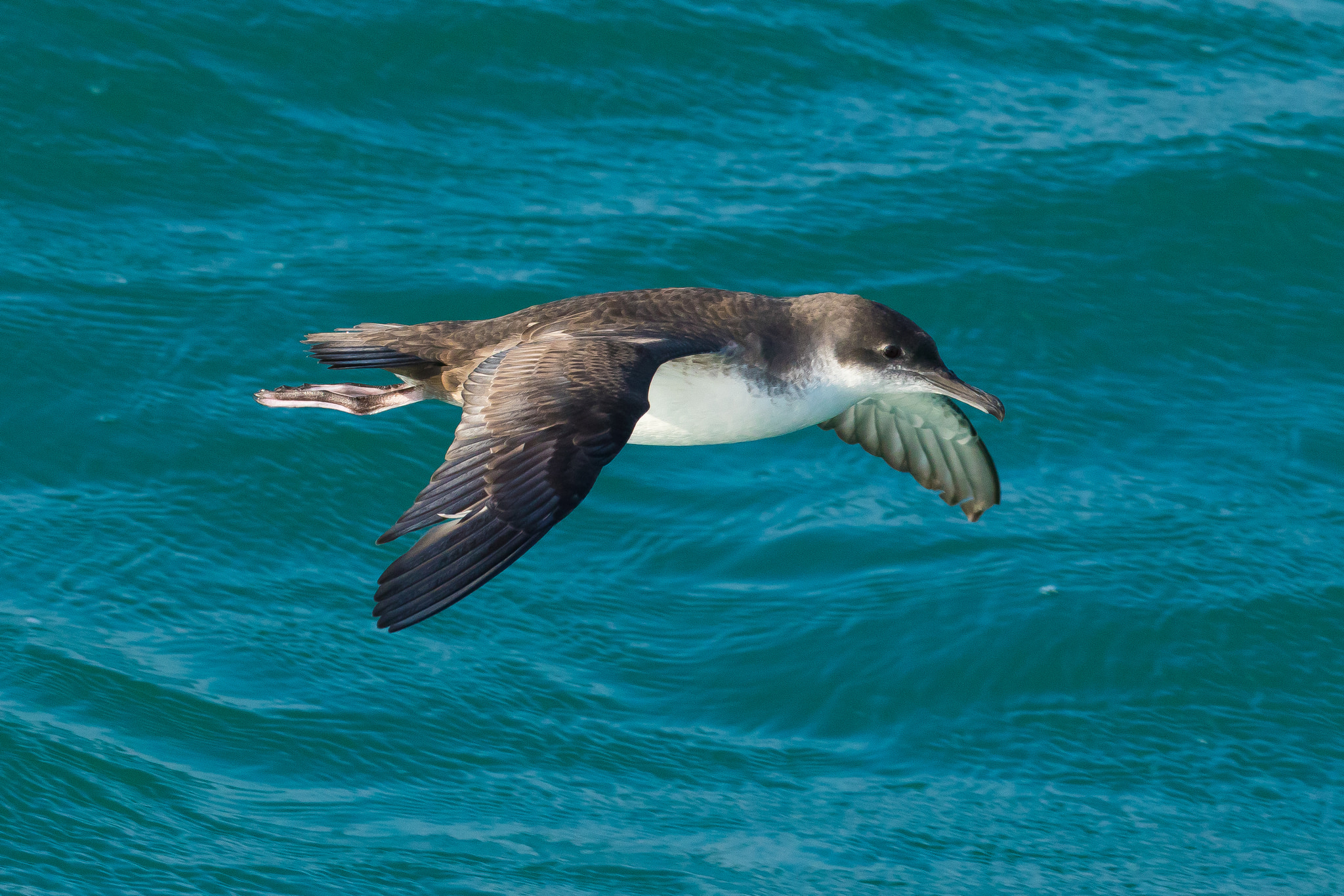
Length 30–35 cm, wingspan 70–84 cm, weight 330–480 g. The wings are long and narrow. Males and females look alike.
The upperparts are very dark, blackish brown, the underparts white. The bill is small, thin and black, with nostril tubes on top. The legs are greyish pink with dark spots. In flight it holds its wings at right angles to the body and looks like a flying cross.
The Balearic shearwater is brown above and dirty white below, with less contrast. The Manx shearwater (Puffinus puffinus) is very similar, and a bird out of its usual range is hard to identify with certainty. If a dark-backed, white-bellied bird skims low over the waves on stiff wings, it is one of the shearwaters.
Colour
Swatches are illustrative. Do not identify a species by colour alone.
It is a bird of the open sea and comes near the shore only to breed. For nesting it picks steep slopes, rocky islets and stony slopes close to the sea: on the Aegean islands, off the west coast of Greece and on islands in the Sea of Marmara. It often moves through the Bosphorus, the Sea of Marmara and the Dardanelles. In the Black Sea its numbers change with the season: from June to the end of August the fewest birds are near the coast.
The yelkouan shearwater does not breed in Georgia: it is a year-round visitor and a winter visitor. The great majority of records come from the coast of Adjara, with a few from Samegrelo-Zemo Svaneti, Guria and Abkhazia. Records run from January to May and from August to November, with the most in September and October; there are none from June or July. The oldest record is a museum specimen collected near Poti in January 1958.
Data: Reptiles.ge + iNaturalist · Methodology
- Field observation
- Several records in one spot
- Region with records
It eats small fish, crustaceans and molluscs. It feeds on the open sea, often in large flocks. It follows fishing boats when offal is thrown overboard. In the breeding season the parents feed the chick once a day, at night.
It is a gregarious bird, especially in autumn, when large flocks can be seen from boats or headlands. It has the typical shearing flight: on stiff wings with few beats it tilts from side to side, the wingtips almost touching the water. It is silent at sea, but at night the colonies are full of loud, cackling calls. It breeds in colonies, in burrows that it visits only at night to avoid large gulls. Pairs are faithful and stay together for several years. Breeding begins at the end of March or in early April. The female lays a single white egg, which both parents incubate for about 50 days. The chick stays in the nest for about 70 days, goes to sea only at night and at first swims more than it flies.
Globally the yelkouan shearwater is assessed as Vulnerable (VU, 2018). It used to be rated low risk, was moved to Near Threatened in 2008 and to Vulnerable in 2012, as it turned out to be rarer than believed. The main threats are holiday resorts built near its breeding sites, and rats and cats: on the island of Le Levant cats kill thousands of birds every year. In Georgia's national assessment (2021) it is also assessed as Vulnerable (VU), and its numbers are falling. The list of the birds of Georgia gives it as a non-breeding year-round visitor and a winter visitor.
Related guides
Continue with related pages
Yes, but it does not breed here. The list of the birds of Georgia gives it as a non-breeding year-round visitor and a winter visitor. It is a bird of the open sea and comes near the shore only to breed, which it does in the Mediterranean. So it is rarely seen from land: look for it out at sea.
It is blackish above and white below. It flies low over the waves on stiff wings, tilting from side to side with the wingtips almost touching the water. So it flashes dark, then white. It holds its wings at right angles to the body and looks like a flying cross.
Small fish, crustaceans and molluscs. It feeds on the open sea. It follows fishing boats when offal is thrown overboard. The parents feed the chick once a day, at night.
On islands and coastal cliffs in the eastern and central Mediterranean, in colonies, in burrows. The female lays a single white egg, which both parents incubate for about 50 days. The chick stays in the nest for about 70 days. It does not breed in Georgia.
To avoid large gulls. It visits its burrows only at night, and then the colony fills with loud, cackling calls. The chick is fed at night too, and the young bird goes to sea at night. By day at sea it is silent.
No, it is harmless to people. Globally it is assessed as Vulnerable (VU, 2018). In Georgia's national assessment (2021) it is also Vulnerable (VU), and its numbers are falling. Do not catch wild birds.
References
What this profile is based on
Species profiles are compiled from peer-reviewed literature and established biodiversity databases, and are reviewed as new taxonomic and conservation data become available.
Prepared by the Reptiles.ge editorial team from the sources listed here.


