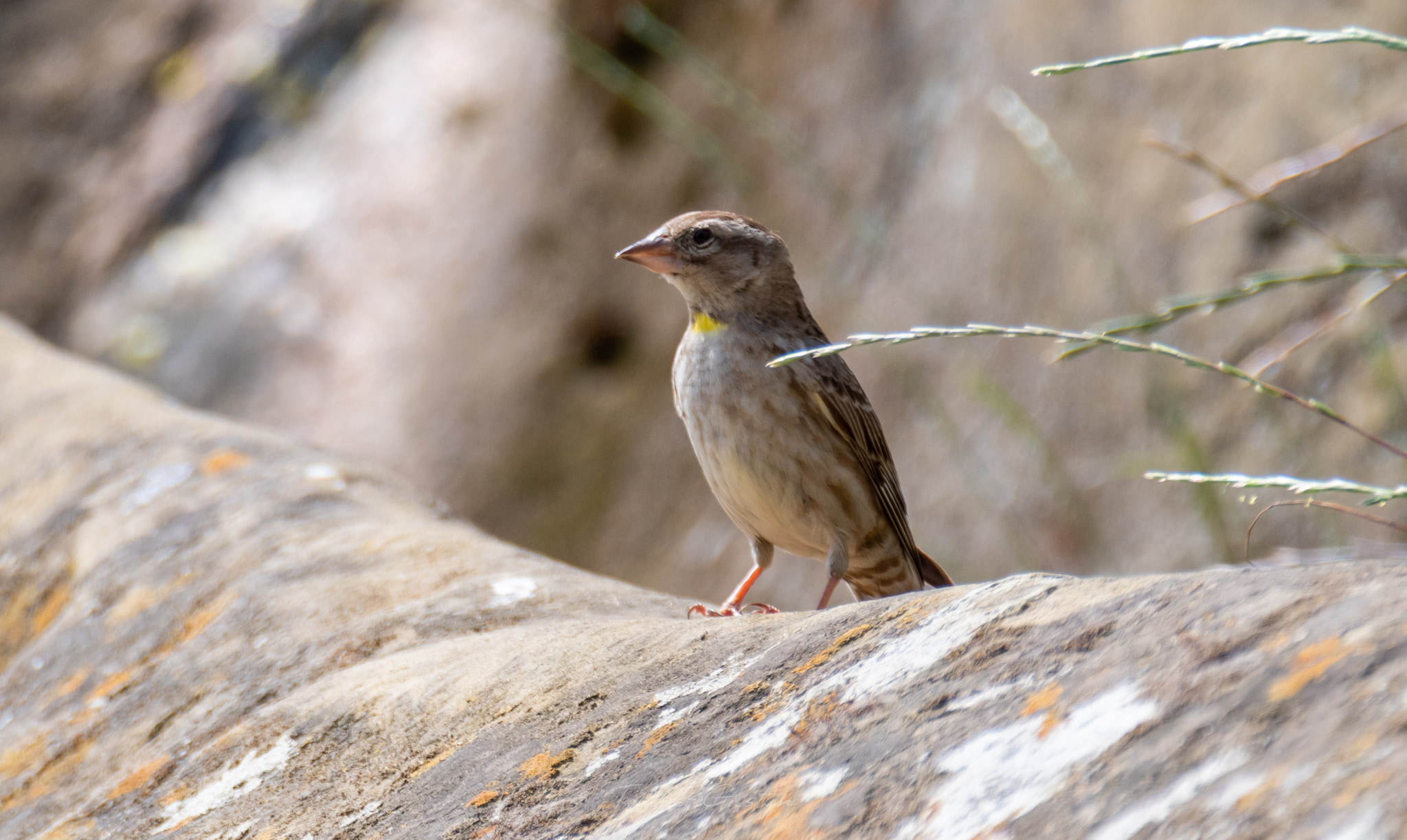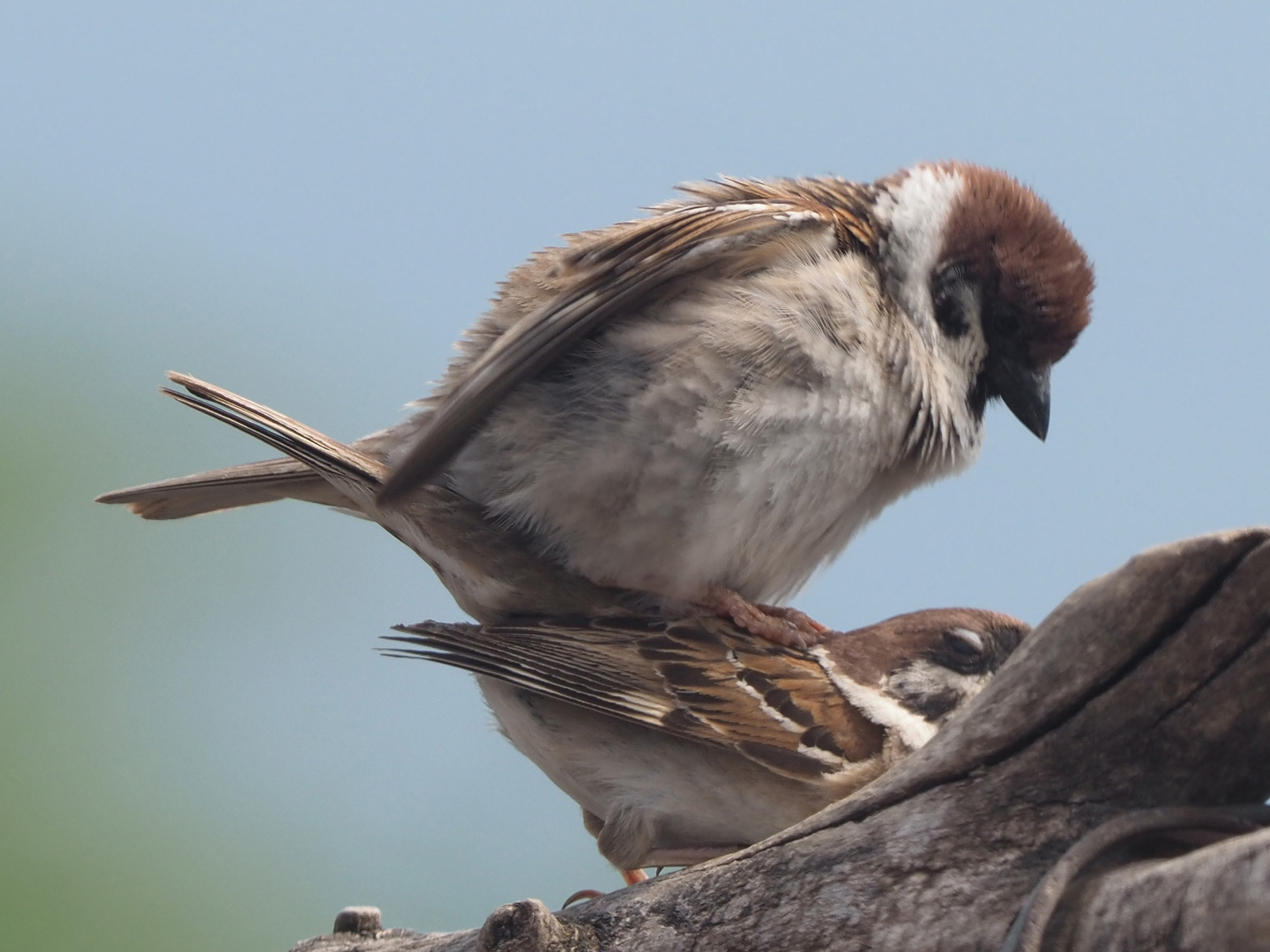

Eurasian tree sparrow
Passer montanus
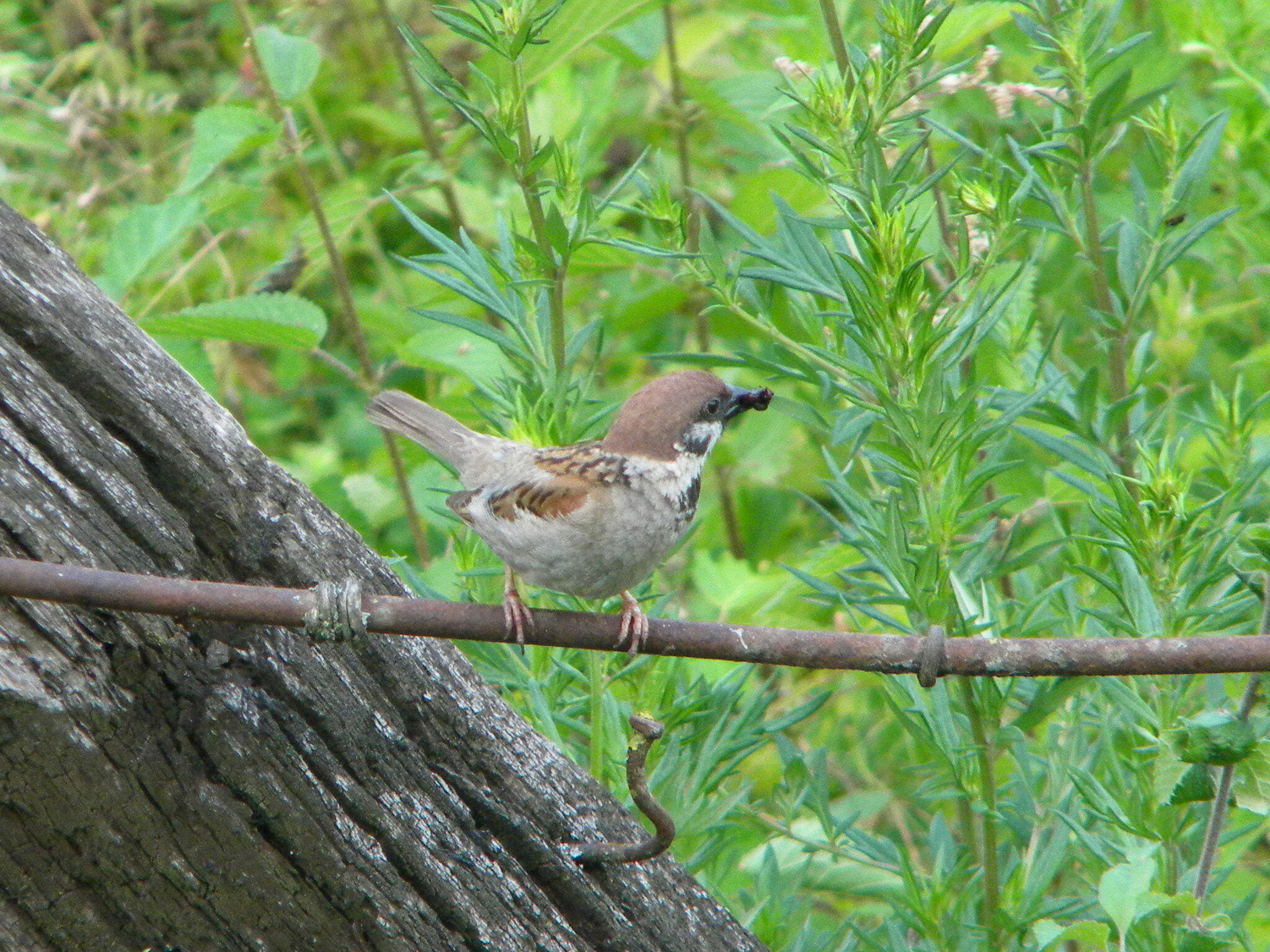
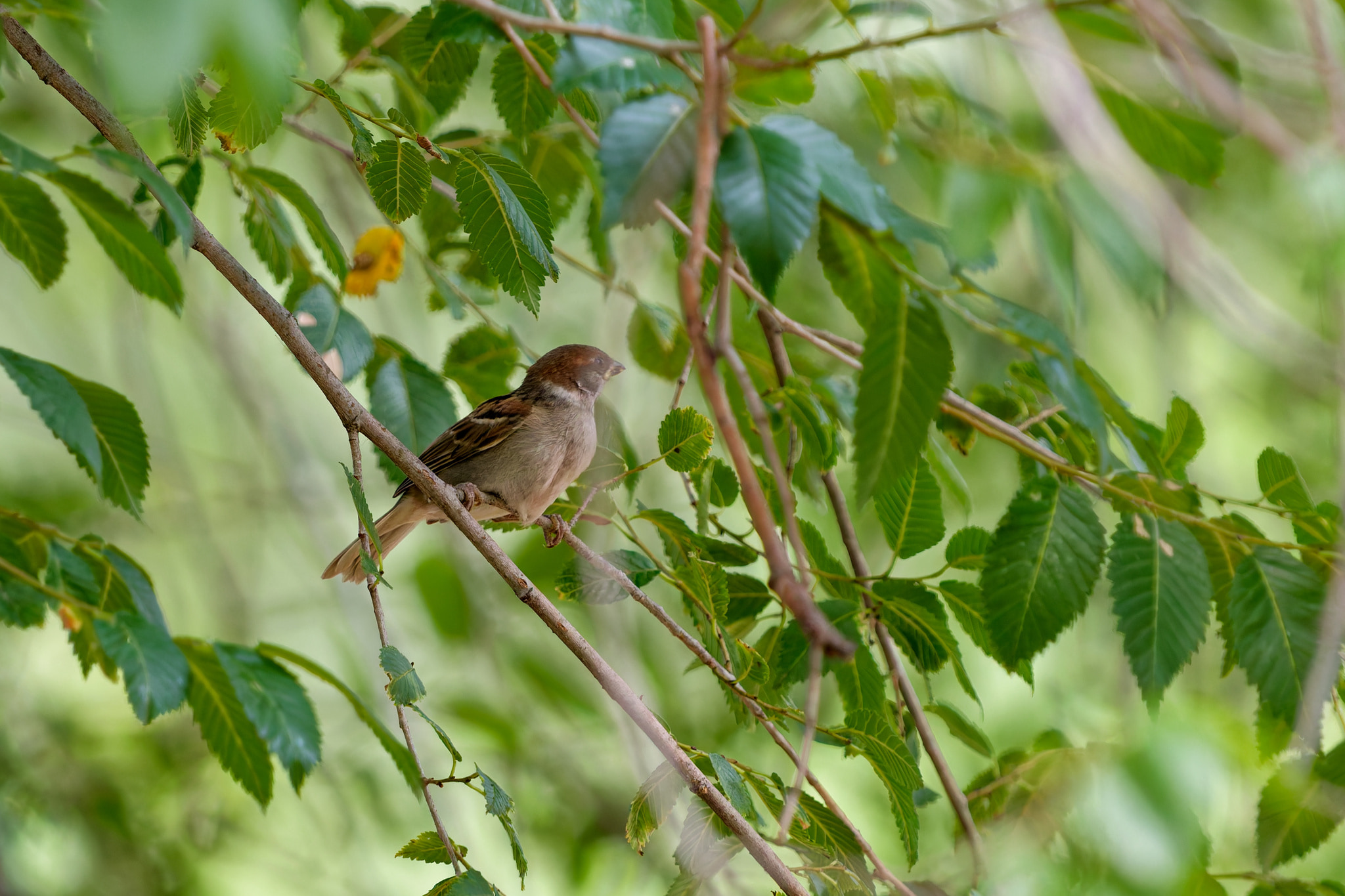
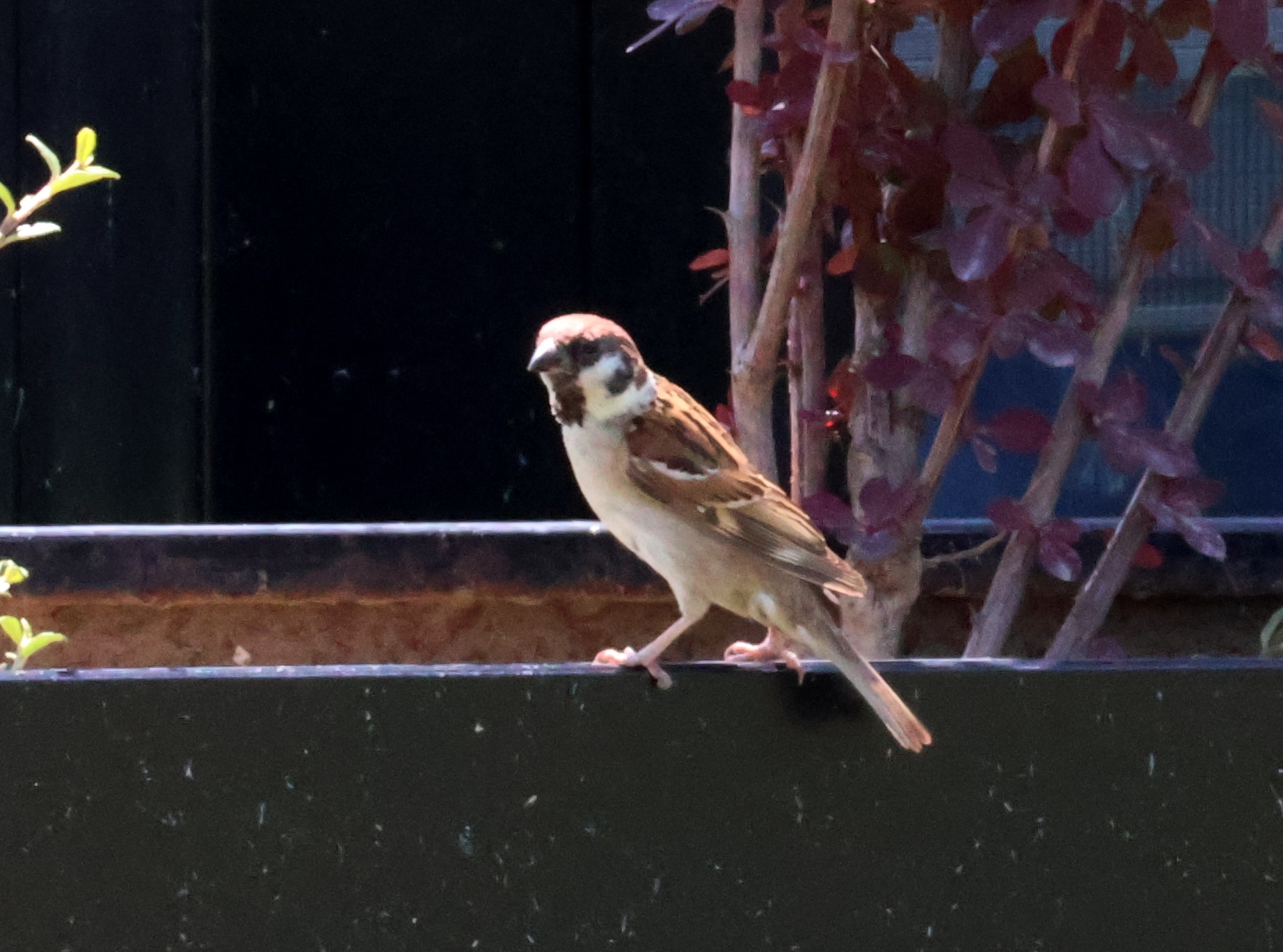
Felix Riegel · Kakheti Georgia field photo
Key facts in one look
- Size
- 12.5–14 cm
- Diet
- Seeds and grain; insects when breeding
- Status in Georgia
- Year-round resident, breeds
- Habitat
- Villages, orchards, vineyards, open woodland
- Family
- Passeridae
- Protection
- Globally LC, 2017; in Georgia LC, 2021
The Eurasian tree sparrow is the exception in its genus: males and females have the same plumage. A chestnut cap and a black spot on a clean white cheek mark it out at any age. It is roughly 10% smaller than a house sparrow. In Georgia it lives and breeds all year round. In Europe it is a country bird: where both live, the house sparrow breeds in town and the tree sparrow in gardens and fields. If a sparrow has a black spot on a white cheek, it is a tree sparrow.
Identification
Eurasian tree sparrow: how to identify it
A sparrow 12.5–14 cm long and about 24 g, roughly 10% smaller than a house sparrow. The crown and nape are chestnut, with a black spot on a clean white cheek. Males and females look alike.
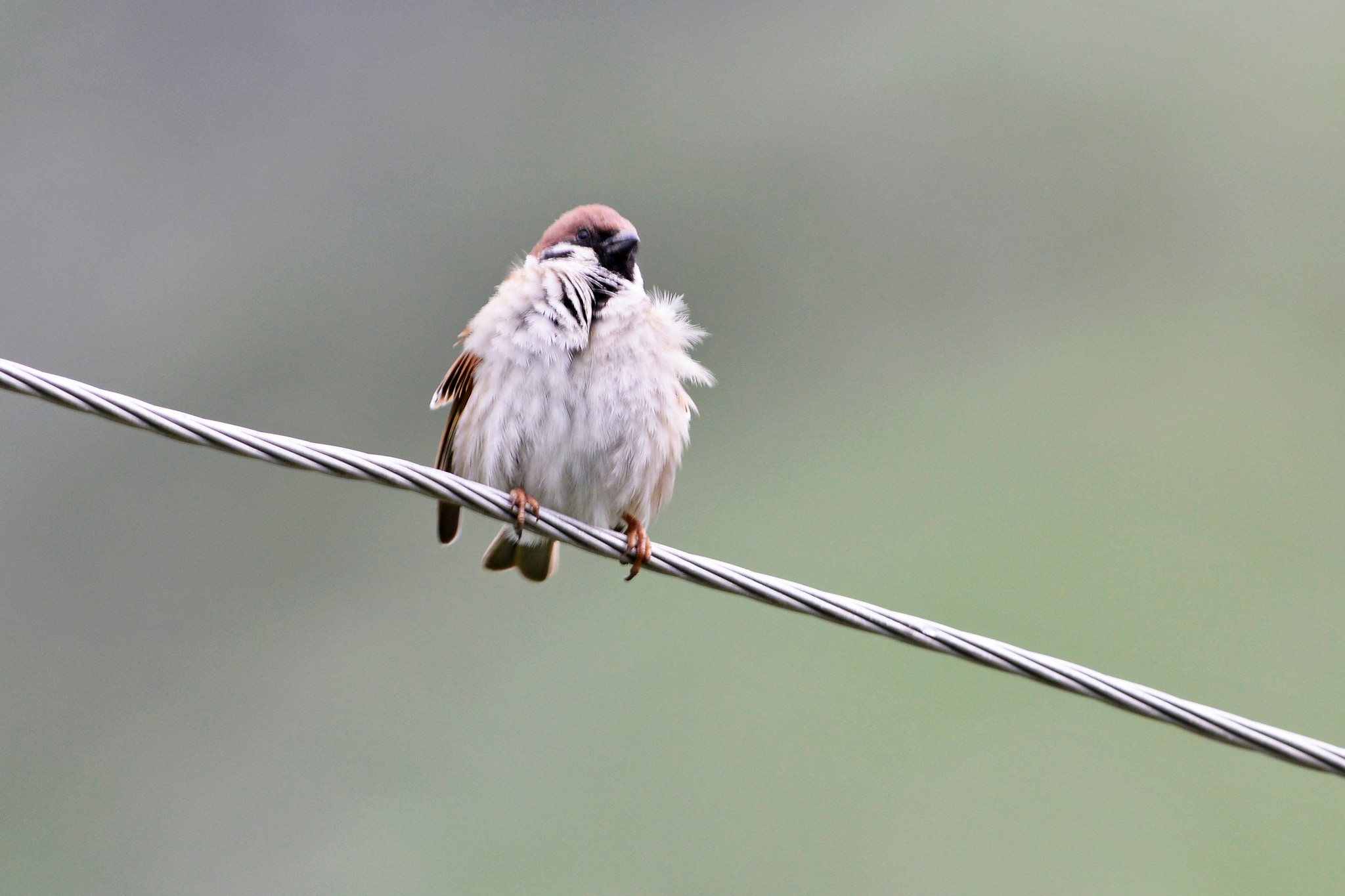
Length 12.5–14 cm, wingspan about 21 cm, weight about 24 g. It is roughly 10% smaller than a house sparrow. The build is neat.
The crown and nape are rich chestnut, and a kidney-shaped black spot sits on each pure white cheek. The chin and throat are black, but the patch is small and does not reach the breast. The back is light brown streaked with black, and the brown wings have two narrow white bars. The belly is greyish white. The bill is lead-grey in summer and turns almost black in winter.
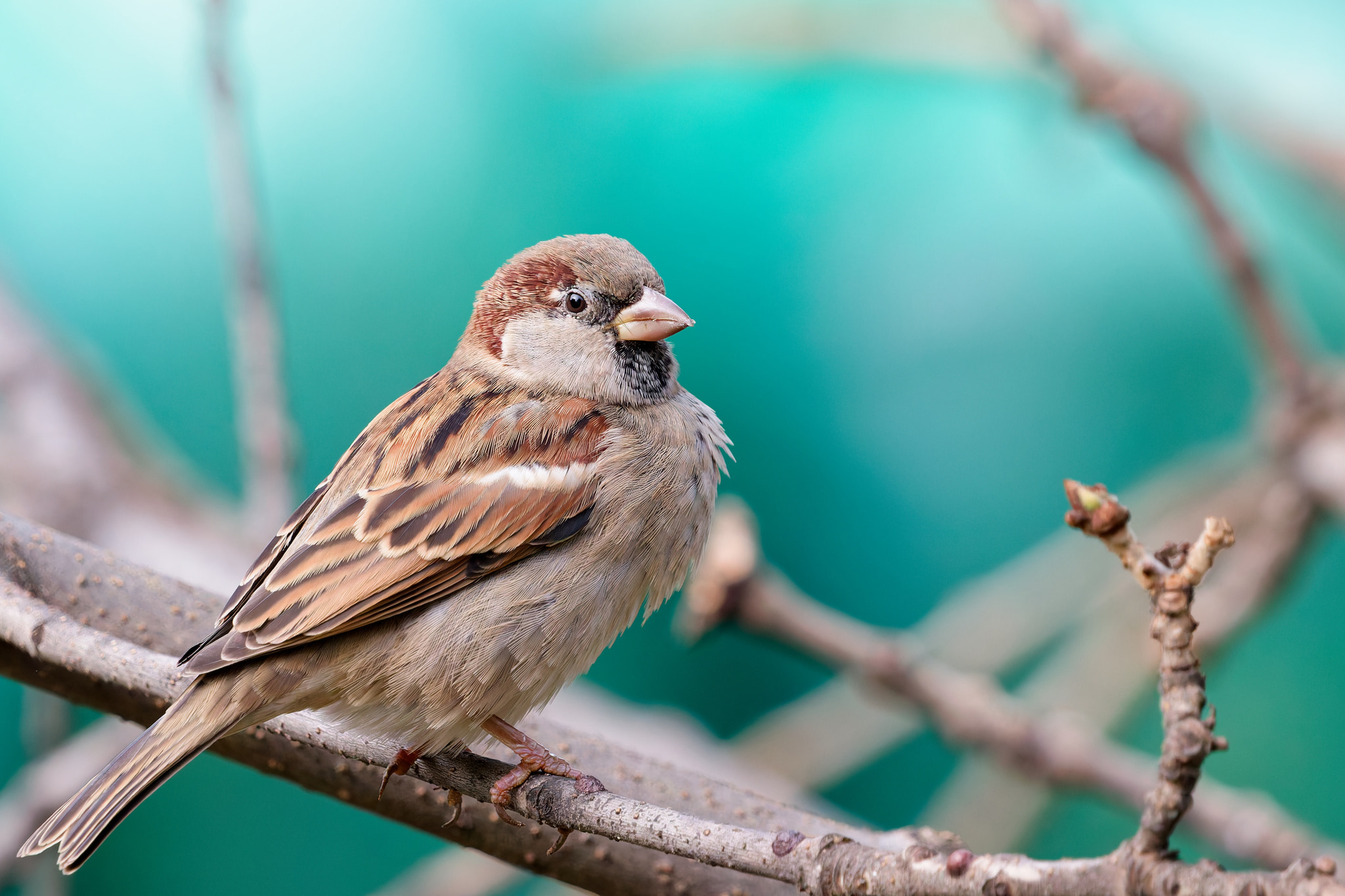
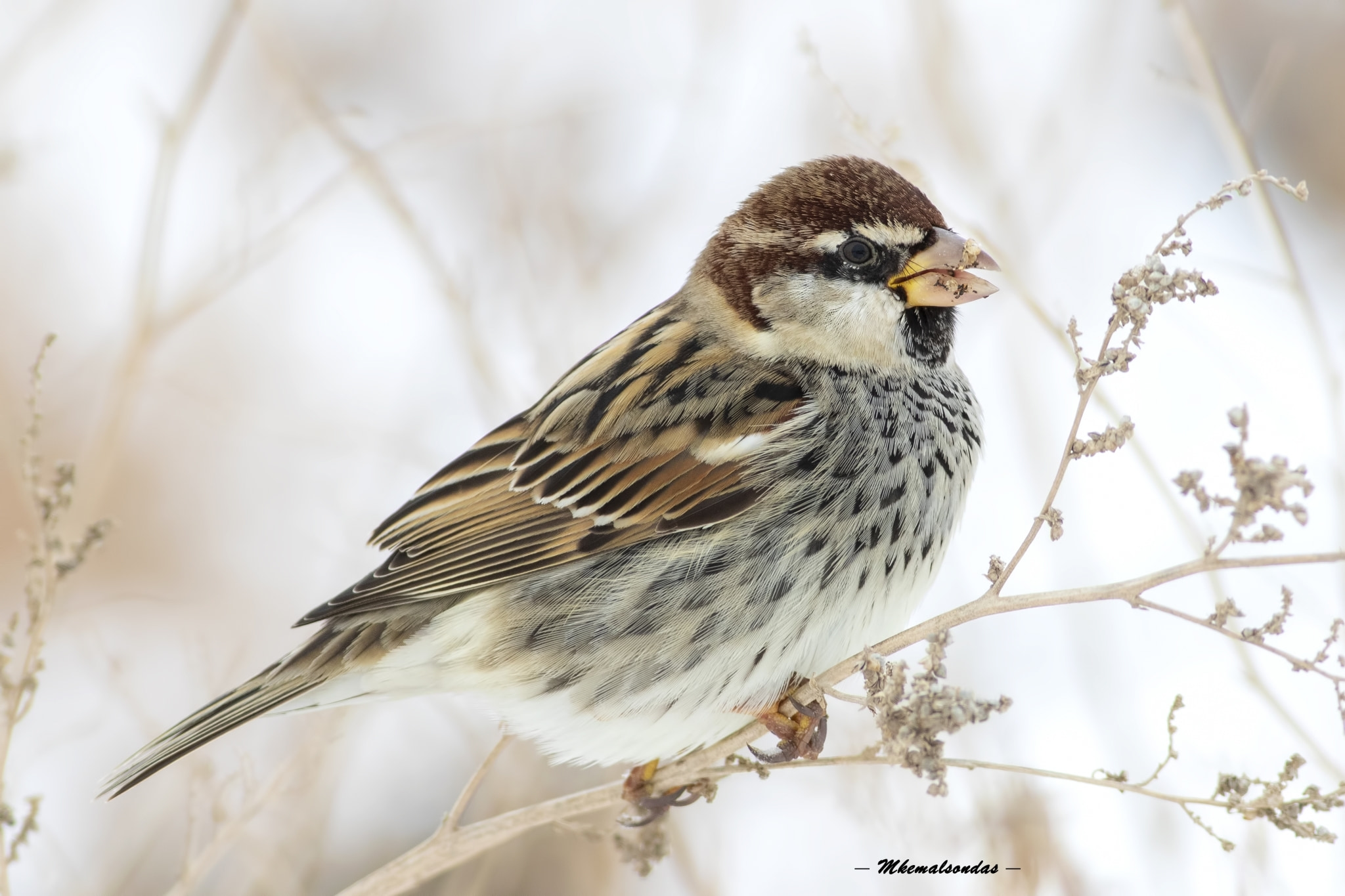
It is the exception in its genus: males and females have the same plumage. Young birds look like adults but duller. The male house sparrow has a grey crown and no black cheek spot: if there is a black spot on a white cheek, it is a tree sparrow.
Colour
Swatches are illustrative. Do not identify a species by colour alone.
Often confused with
It is a bird of open, lightly wooded country. It lives on the edges of settlements, in abandoned villages, near grain fields, in orchards and vineyards, and in the wild in open woodland, scrub and steppe. When breeding it stays close to wet places and avoids intensively farmed land. Despite its name it is not a mountain bird, although it has bred at 1700 m in the northern Caucasus. In Georgia it has been seen in Khobi in July 2015 and near Vardzia in 2015.
The Eurasian tree sparrow lives and breeds in Georgia all year round. There are records from every month: most fall in May, with a second rise in September and October. Most records come from Samtskhe-Javakheti, Kvemo Kartli and Kakheti. It has also been found in Mtskheta-Mtianeti, Tbilisi, Adjara, Shida Kartli, Samegrelo, Abkhazia, Imereti, Guria and Racha. The oldest record is a museum specimen collected near Khashuri in 1904.
Data: Reptiles.ge + iNaturalist · Methodology
- Field observation
- Several records in one spot
- Photo record
- Region with records
It mainly eats seeds and grain. It feeds on the ground in flocks, often with house sparrows, finches and buntings. It takes weed seeds such as goosefoot and spilled grain, and comes to feeders too. In autumn it gathers in orchards, crop fields and vineyards, and in winter it eats weed seeds and tree buds. When breeding it catches insects, spiders, millipedes and other invertebrates, and feeds its chicks mainly on animal food.
Over most of its range it is a resident bird; only the northernmost populations move south for the winter. It lives in flocks. It has no true song: the male repeats excited "chip-chip" calls, and the flight call is a harsh "teck". In spring the male calls near the nest site to claim it and carries nest material into the hole. He repeats this in autumn. It breeds within a year of hatching. It nests in a hole in an old tree, a crack in a rock face, a roof cavity, a disused magpie nest or a stork's nest, and readily takes to nest boxes. The nest is untidy, made of hay, grass and wool, lined with feathers and roofed over. The usual clutch is 5–6 eggs; both parents incubate for 12–13 days, and the chicks leave the nest 15–18 days later. Two or three broods are raised a year. A typical lifespan is about three years, and the oldest known bird was over 13.
Globally the Eurasian tree sparrow's risk of extinction is rated low (LC, 2017). Its range covers 98.3 million km², and the population is estimated at 190–310 million birds. Numbers are falling, but not fast enough for the species to count as threatened. In Western Europe it has declined sharply, partly because of more herbicide use and the loss of winter stubble fields. In Georgia's national assessment (2021) its risk is also rated low (LC), and its numbers are stable. The list of the birds of Georgia gives it as a year-round resident and breeder.
Felix Riegel · Tom Heijnen · Alexander Abuladze · Nikoloz Donadze · Irina Komarova · David J Barton · James Heal · Markus Ackermann
Related guides
Continue with related pages
Yes. It lives and breeds in Georgia all year round. It has been seen in Khobi in July and near Vardzia. The subspecies P. m. transcaucasicus, duller and greyer than the nominate one, breeds from the southern Caucasus to northern Iran.
By the black spot on the white cheek. The tree sparrow has a chestnut cap, the male house sparrow a grey one. The black throat patch is small and does not reach the breast, and the wing has two white bars where the house sparrow has one. Males and females look alike, so a flock of tree sparrows looks uniform.
Mainly seeds and grain. It eats weed seeds, spilled grain and, in winter, tree buds. When breeding it catches insects and spiders and feeds its chicks mainly on animal food. It comes to feeders as well.
In a hole. In an old tree, a crack in a rock, under a roof, or in a magpie's or stork's nest. It readily takes to nest boxes. The usual clutch is 5–6 eggs, and it raises two or three broods a year.
Rarely in Europe. Where the house sparrow lives too, the house sparrow breeds in town and the tree sparrow in the countryside. European and Siberian birds avoid high-rise areas and choose villages, gardens and parks. In eastern Asia, though, it is a common city bird.
No, it is harmless to people. Globally its risk of extinction is low (LC, 2017). In Georgia's national assessment (2021) its risk is also low (LC), and its numbers are stable. Do not catch wild birds.
References
What this profile is based on
Species profiles are compiled from peer-reviewed literature and established biodiversity databases, and are reviewed as new taxonomic and conservation data become available.
Prepared by the Reptiles.ge editorial team from the sources listed here.