
Spanish sparrow
Passer hispaniolensis
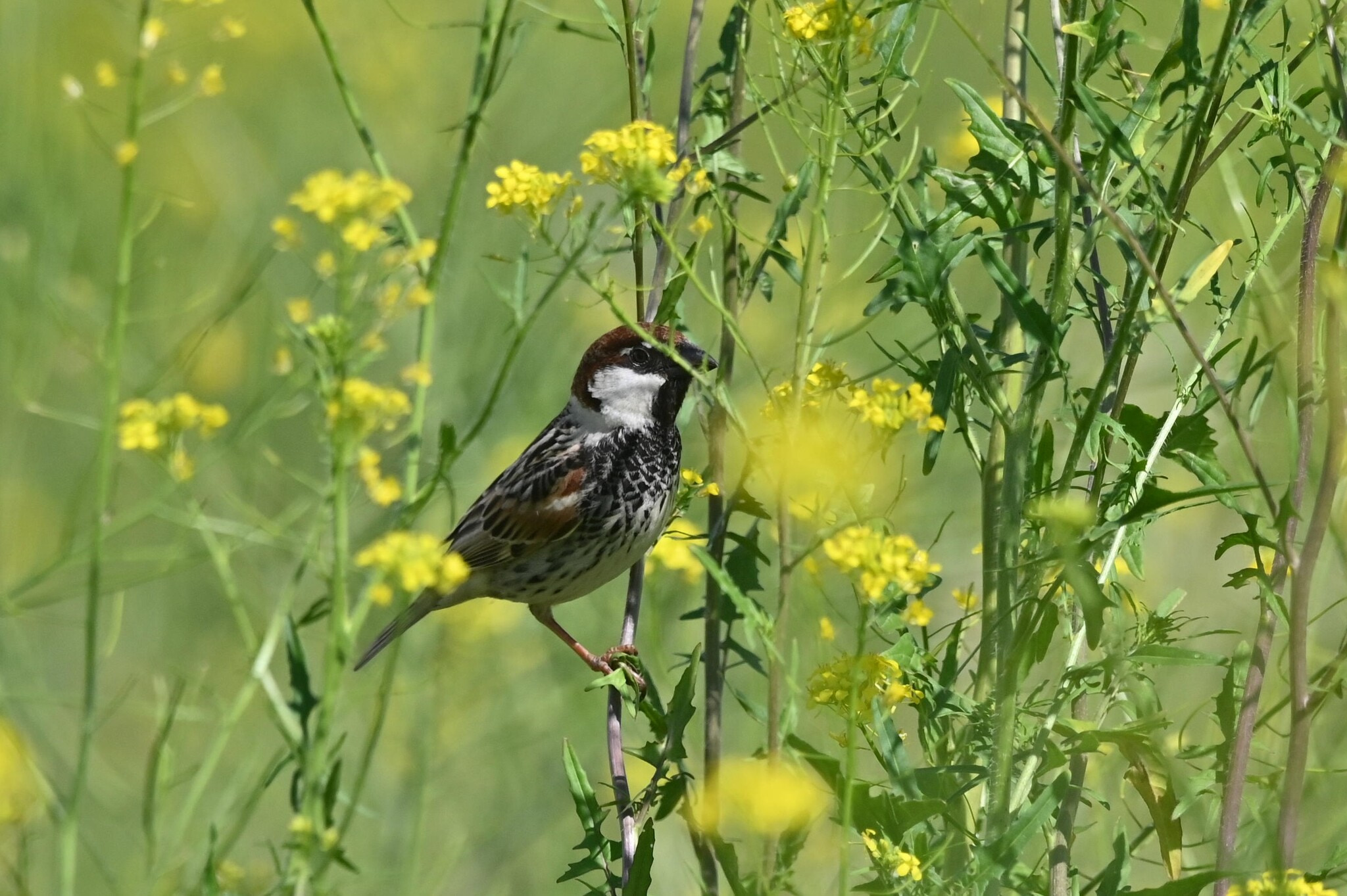
ksondas · Altıyüzevler
Key facts in one look
- Size
- 15–16 cm
- Diet
- Cereal and grass seeds; chicks fed on insects
- Status in Georgia
- Year-round resident, breeds
- Habitat
- Farmland, light woodland, shelterbelts, settlements
- Family
- Passeridae
- Protection
- Globally LC, 2019; in Georgia LC, 2021
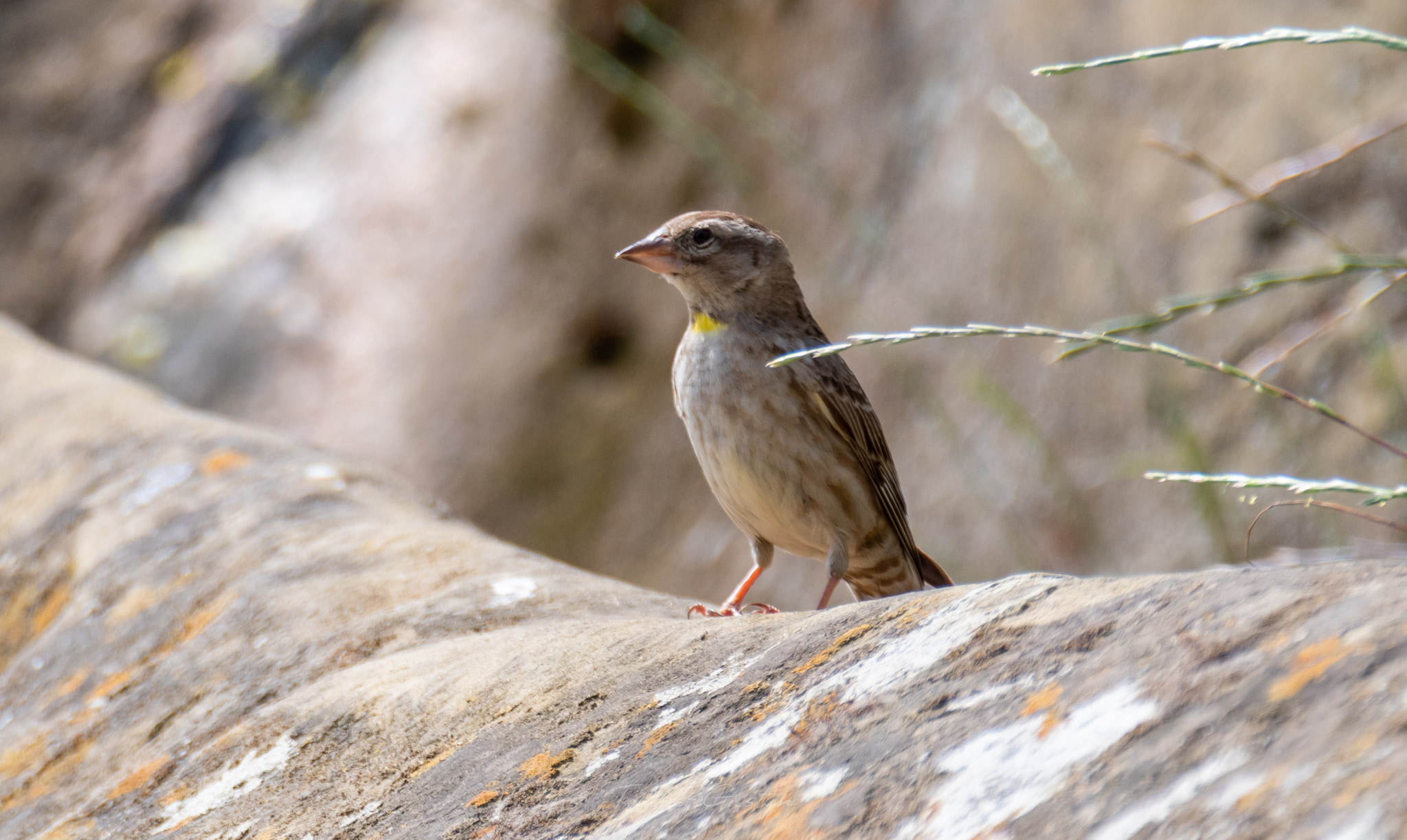
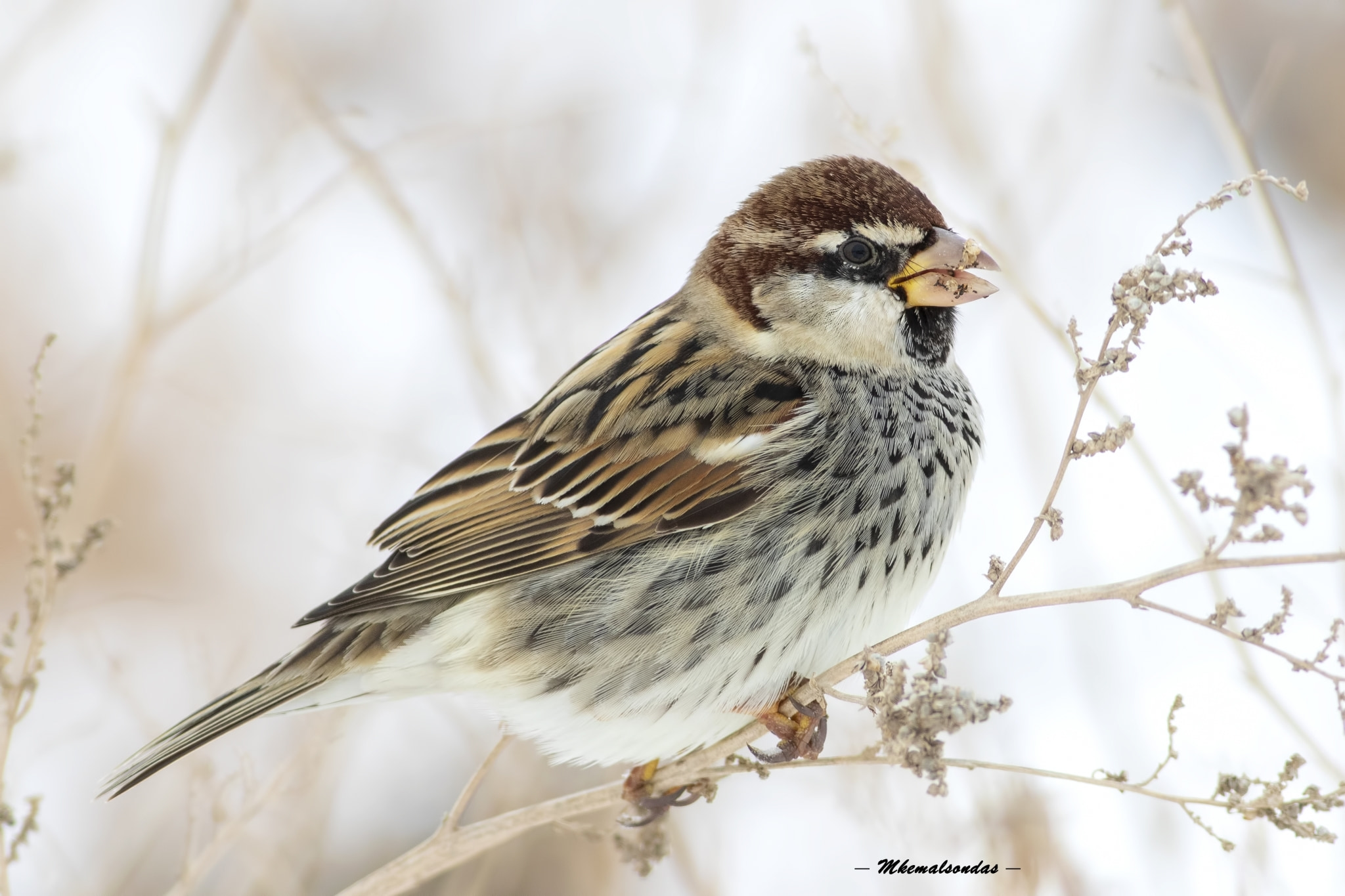
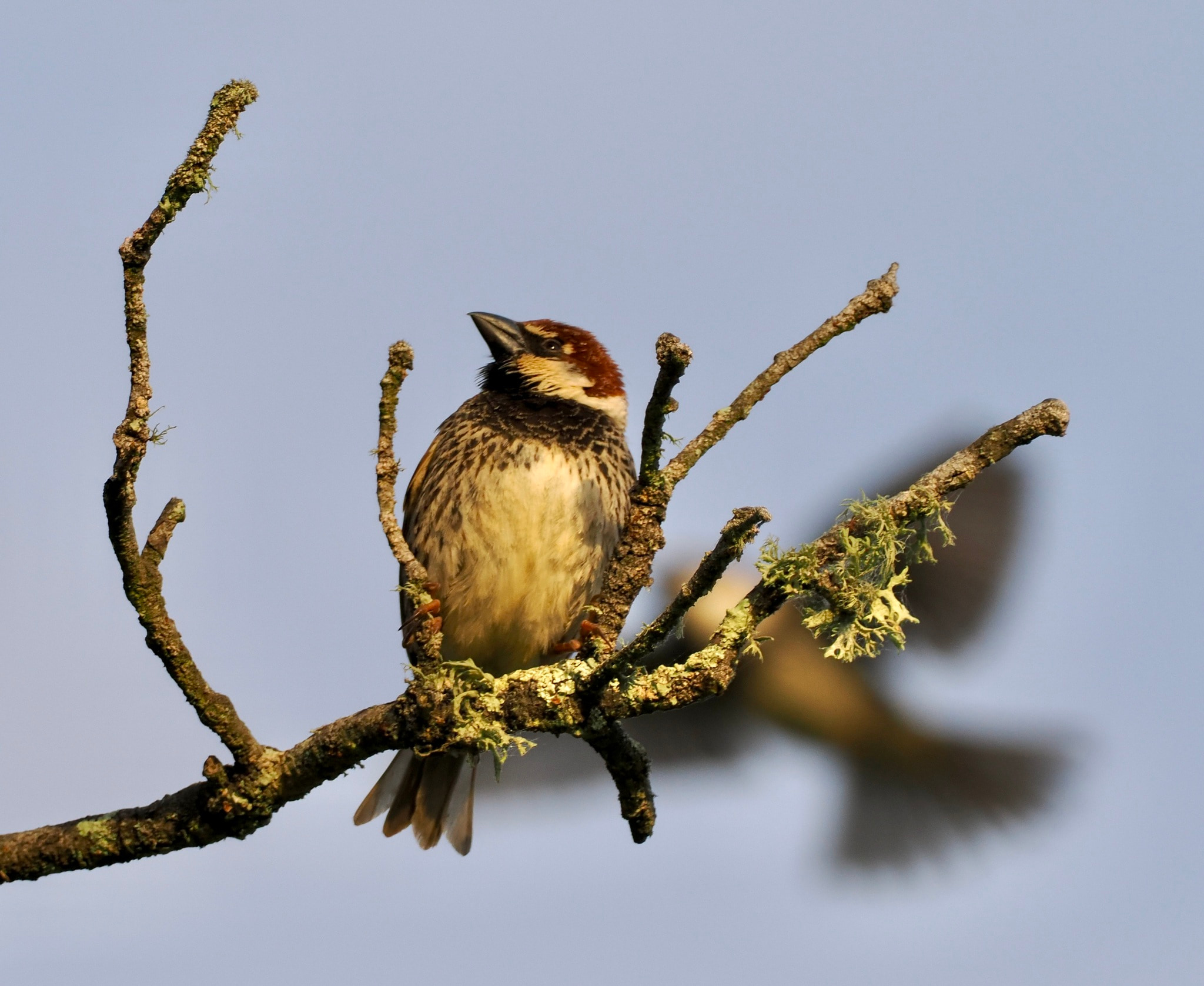
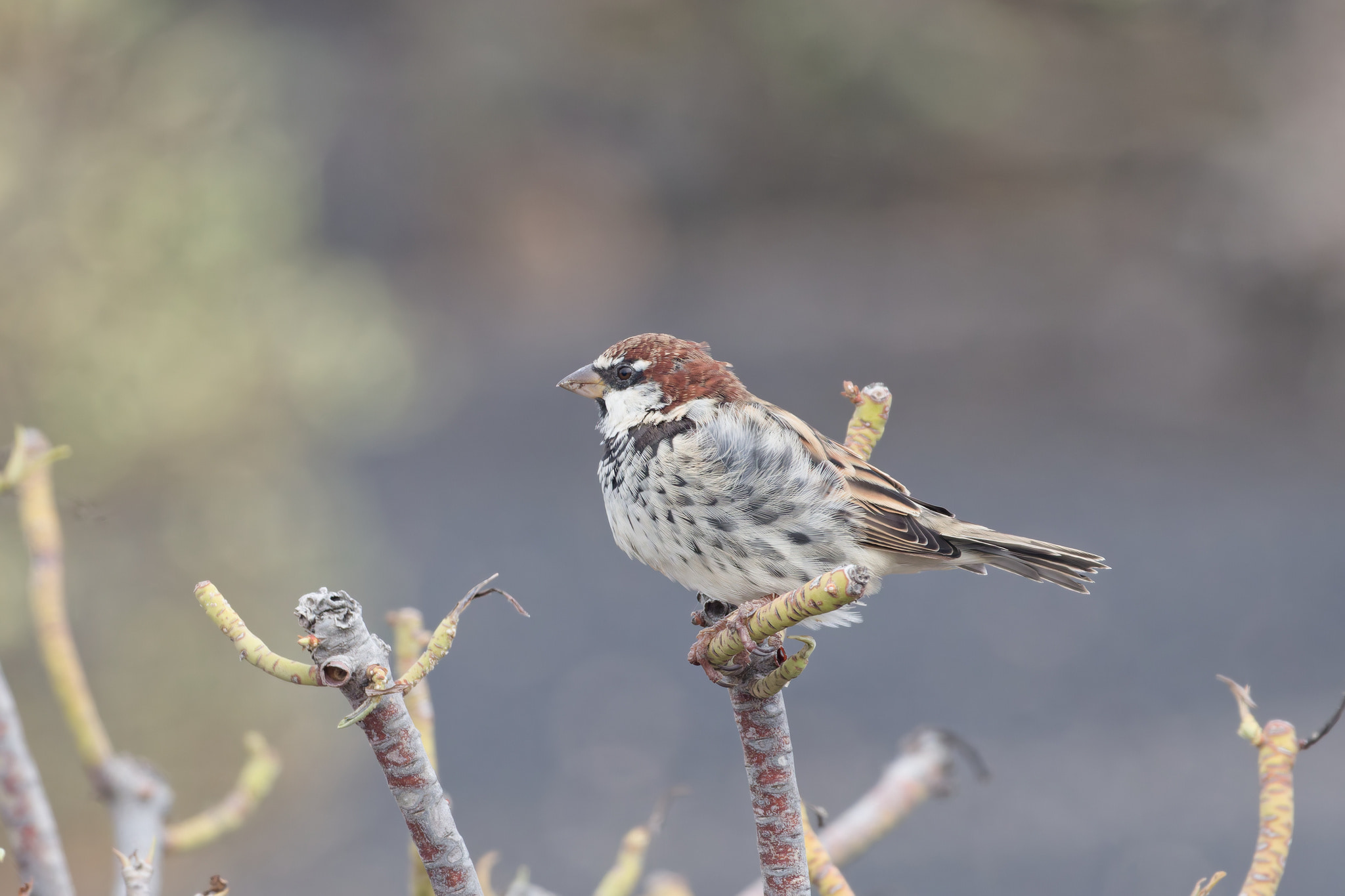
The Spanish sparrow is a close relative of the house sparrow, slightly larger and with a heavier bill. The male stands out by his black breast: heavy black streaks run from the breast down the flanks, the crown is chestnut and the cheeks white. The female, though, can hardly be told from a female house sparrow. In Georgia it lives and breeds all year round. It is a strongly social bird that travels in flocks and nests in colonies in trees and bushes. Identify the species by the male.
Identification
Spanish sparrow: how to identify it
A sparrow 15–16 cm long and 22–36 g, slightly larger than a house sparrow and with a heavier bill. The male has a chestnut crown, white cheeks, a black throat and a breast and flanks streaked with black. The female can hardly be told from a female house sparrow.
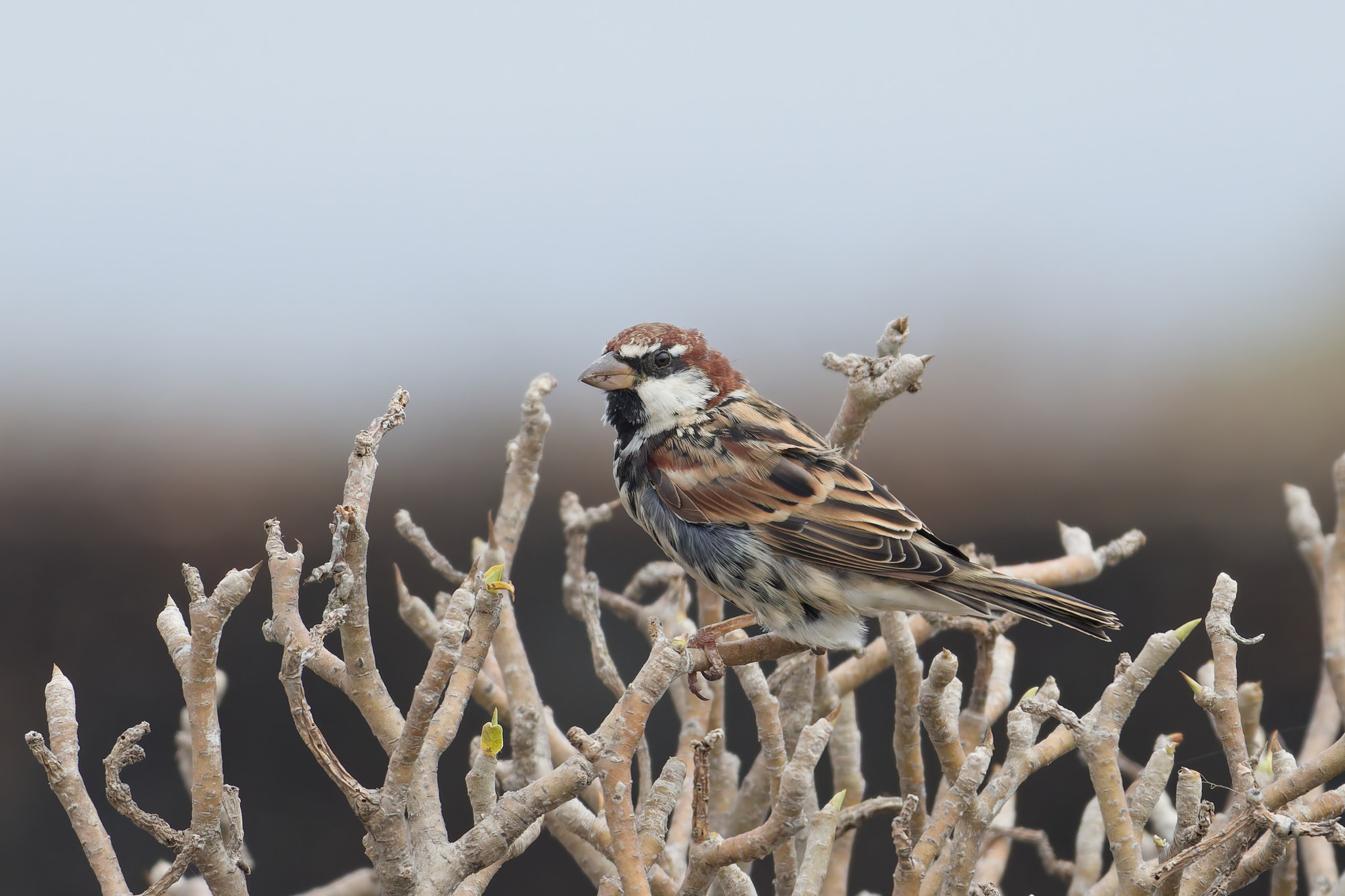
Length 15–16 cm, weight 22–36 g. It is slightly larger and heavier than a house sparrow, with a slightly longer and stouter bill. The body is compact.
In breeding plumage the male has a chestnut crown, white cheeks and a black throat and upper breast. The breast and flanks are covered in heavy black streaks. The back is rufous-brown with broad black streaks, and a white bar runs across the wing. After the autumn moult the male is paler and more buff, and the black breast patch breaks up into separate spots.
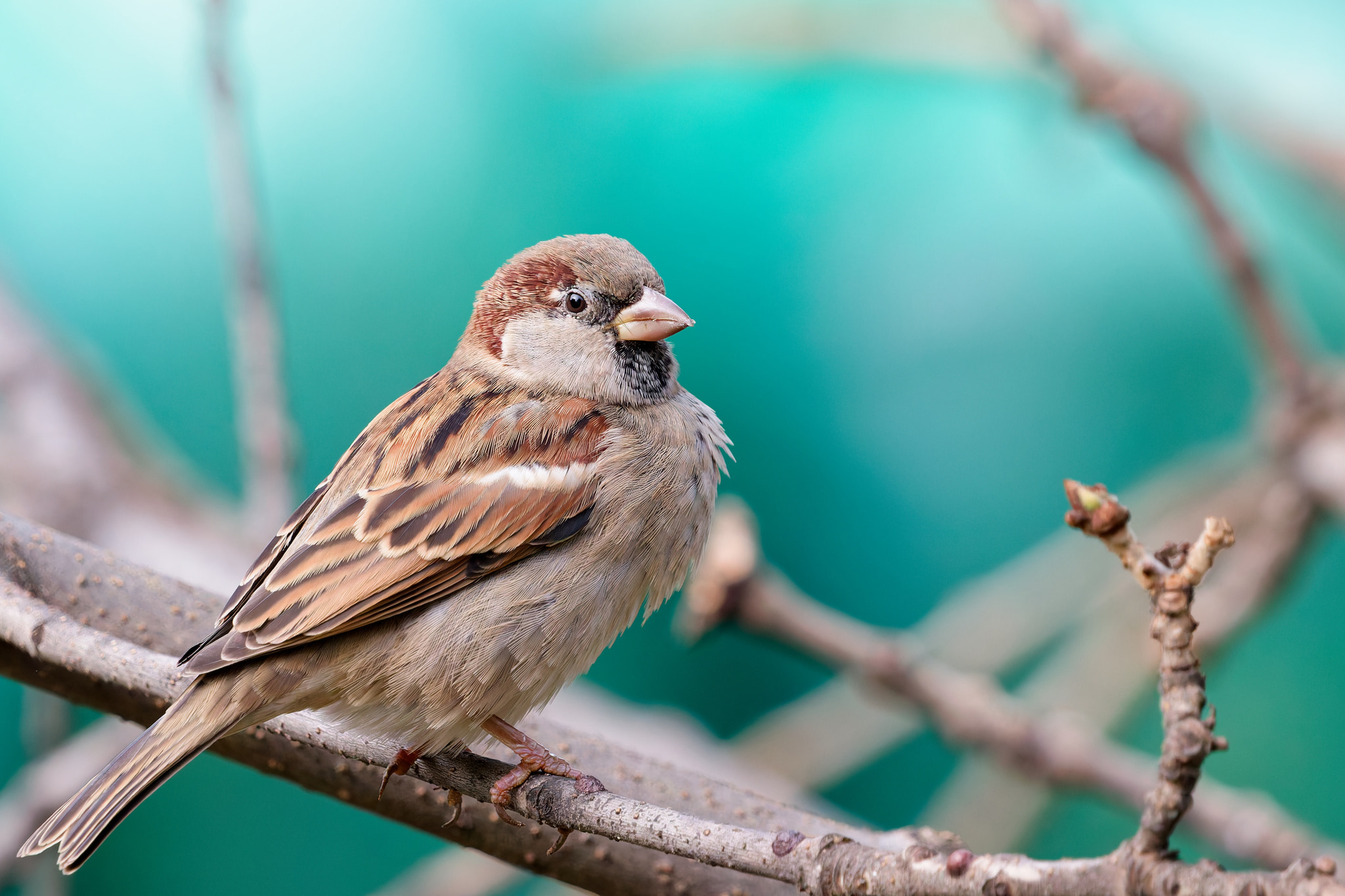
The female is grey-brown and almost identical to a female house sparrow. Her markings are slightly bolder: light streaks on the flanks, a pale cream eyebrow and broad cream streaks on the back. Young birds look like the female but duller. The male house sparrow has a grey crown and grey cheeks: if the crown is chestnut, the cheeks white and the breast streaked black, it is a Spanish sparrow.
Colour
Swatches are illustrative. Do not identify a species by colour alone.
Often confused with
It is a bird of farmland and open, light woodland. Where the house sparrow lives too, the Spanish sparrow picks moister places. It lives in shelterbelts and parks and, like other sparrows, often in settlements. In Georgia it has been seen in Shiraki in 2015, near Chachuna in June 2017 and near Kumisi on 31 December 2024.
The Spanish sparrow lives and breeds in Georgia all year round. There are records from every month, most of them in April and May. By far the most records come from Kakheti, followed by Kvemo Kartli and Tbilisi. It has also been found in Adjara, Mtskheta-Mtianeti, Samegrelo, Shida Kartli, Abkhazia, Imereti, Samtskhe-Javakheti and Guria.
Data: Reptiles.ge + iNaturalist · Methodology
- Field observation
- Several records in one spot
- Region with records
It mainly eats the seeds of cereals and other grasses, along with leaves, fruit and other plant food. Before and during the breeding season it also catches many insects, taking whatever is most plentiful at the time. In Central Asia these are caterpillars, ants, grasshoppers and crickets. For the first few days the chicks are fed almost only on insects, then grain is added bit by bit. Insects make up from 75% to over 90% of the nestlings' food.
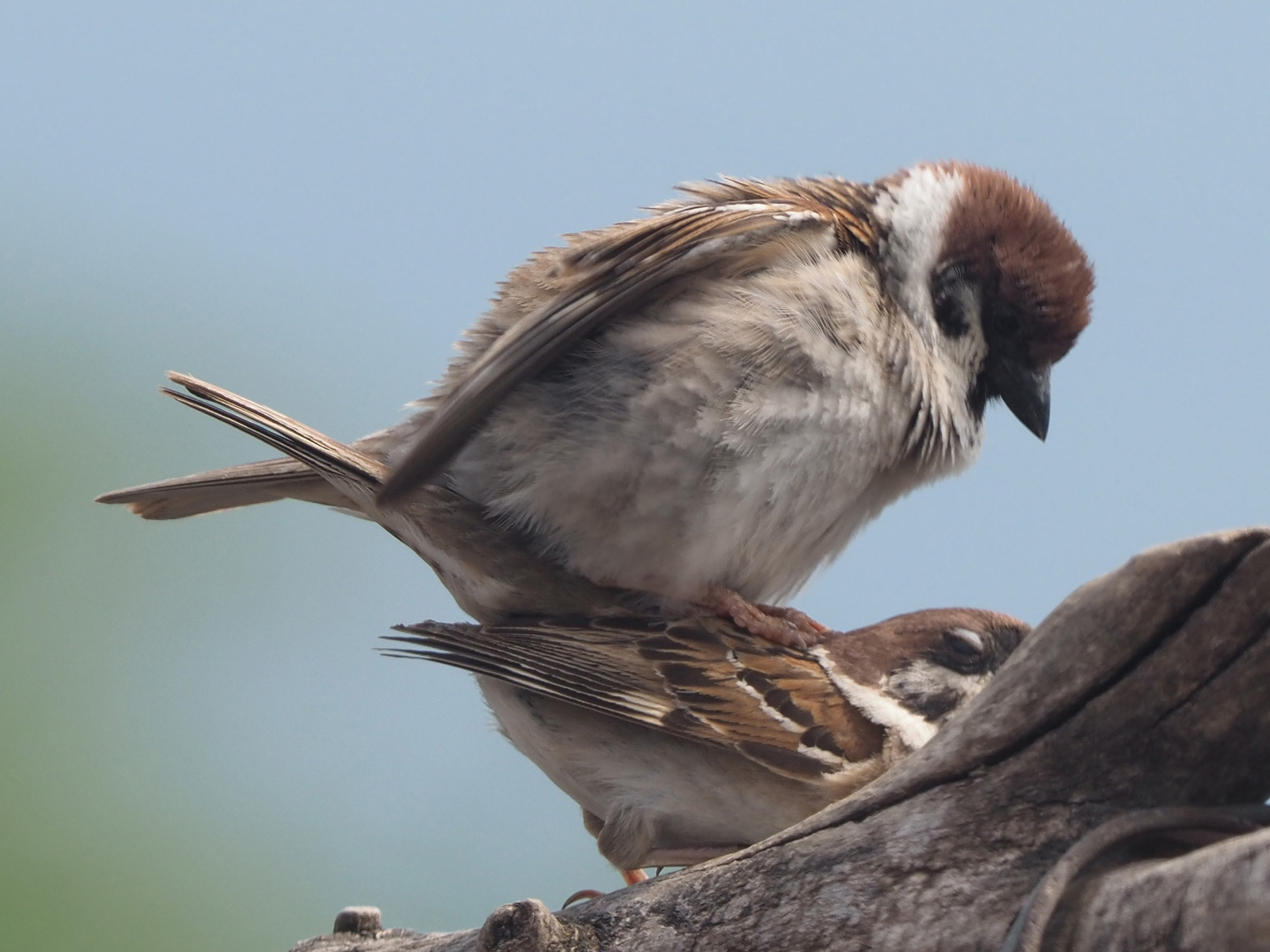
It is a strongly social bird: it travels in flocks and breeds in groups. Over much of its range it wanders in winter or makes regular migrations, but in Georgia it stays all year. Its voice is like the house sparrow's chirping, only louder and higher. At the nest the male gives a strident, two-note "chweeng-chweeng". The oldest known bird was 11 years old. It nests in colonies, with nests packed close together and sometimes several built as one. It builds a ball-shaped nest among the branches of a tree or bush, sometimes underneath the nest of a larger bird such as a white stork. One colony may hold anything from ten pairs to hundreds of thousands. Males spend more time building the nest than females. The clutch is 3–8 eggs, the chicks hatch after 12 days and leave the nest at about 14 days old.
Globally the Spanish sparrow's risk of extinction is rated low (LC, 2019). The world population is estimated at 17–74 million birds, and 2.8–6.2 million pairs breed in Europe. Numbers have fallen in some parts of Europe and risen in others. In Georgia's national assessment (2021) its risk is also rated low (LC), and its numbers are stable. The list of the birds of Georgia gives it as a year-round resident and breeder.
Related guides
Continue with related pages
Yes. It lives and breeds in Georgia all year round. It has been seen in Shiraki, near Chachuna in June and near Kumisi at the end of December. It lives alongside house sparrows, so look for males with black-streaked breasts in a flock.
By the male. The male Spanish sparrow has a chestnut crown, white cheeks and heavy black streaks on the breast and flanks. The male house sparrow has a grey crown and grey cheeks and no such black streaks on the flanks. The females are almost identical, so a female on its own cannot be named to species.
Mainly the seeds of cereals and grasses, plus leaves and fruit. When breeding it catches many insects: caterpillars, ants, grasshoppers and crickets. For the first few days the chicks get almost only insects. In Central Asia large flocks damage crops.
In trees and bushes, in colonies. It builds a ball-shaped nest among the branches, sometimes beneath a white stork's nest. A colony may hold from ten pairs to hundreds of thousands. The clutch is 3–8 eggs, which hatch after 12 days.
Not from Georgia: here it stays all year and has been seen near Kumisi at the end of December. Over much of its range it wanders in winter or migrates regularly. Eastern birds winter on the plains of the Indian subcontinent and around the Persian Gulf.
No, it is harmless to people. Globally its risk of extinction is low (LC, 2019). In Georgia's national assessment (2021) its risk is also low (LC), and its numbers are stable. Do not catch wild birds.
References
What this profile is based on
Species profiles are compiled from peer-reviewed literature and established biodiversity databases, and are reviewed as new taxonomic and conservation data become available.
Prepared by the Reptiles.ge editorial team from the sources listed here.