
Upcher's warbler
Hippolais languida
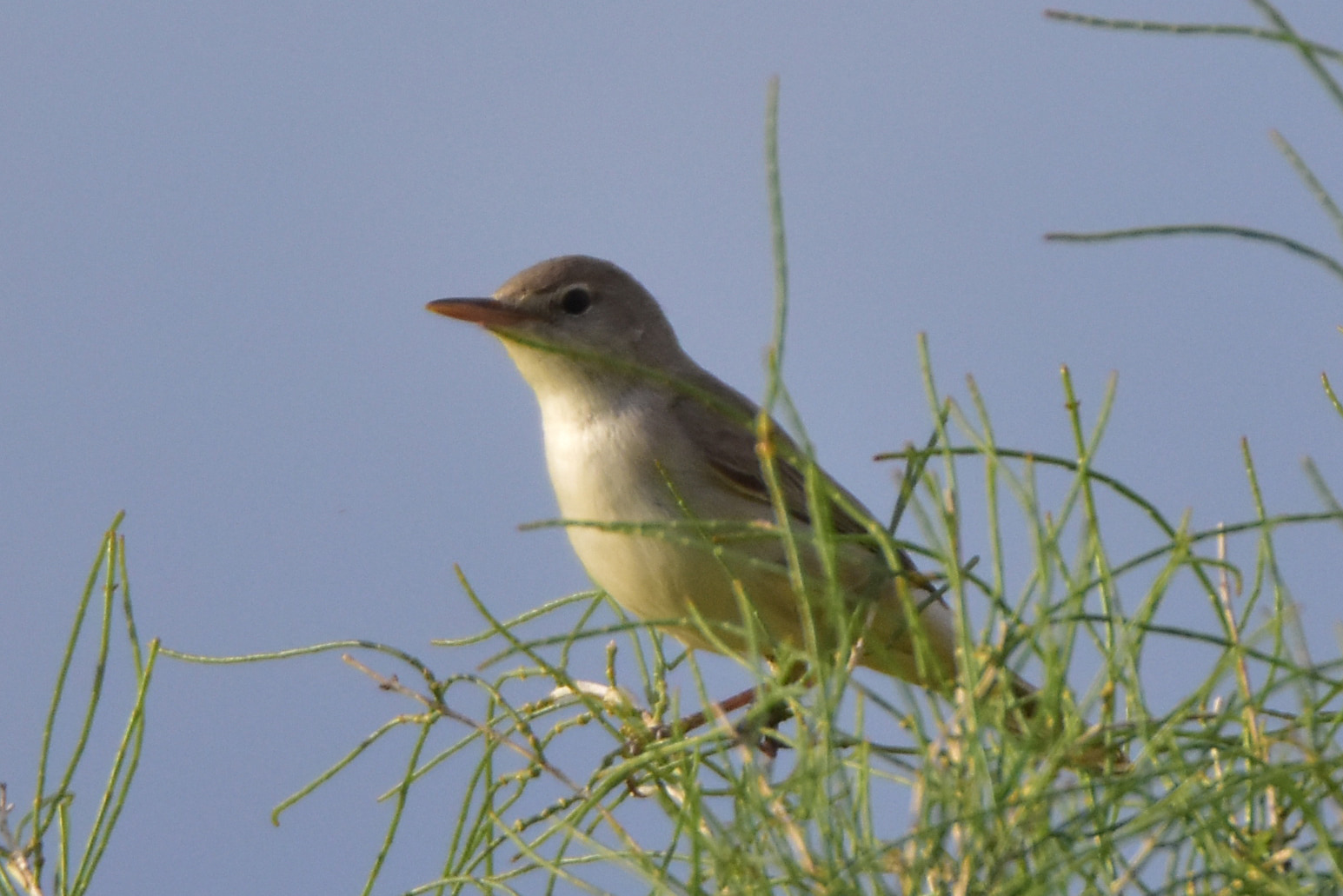
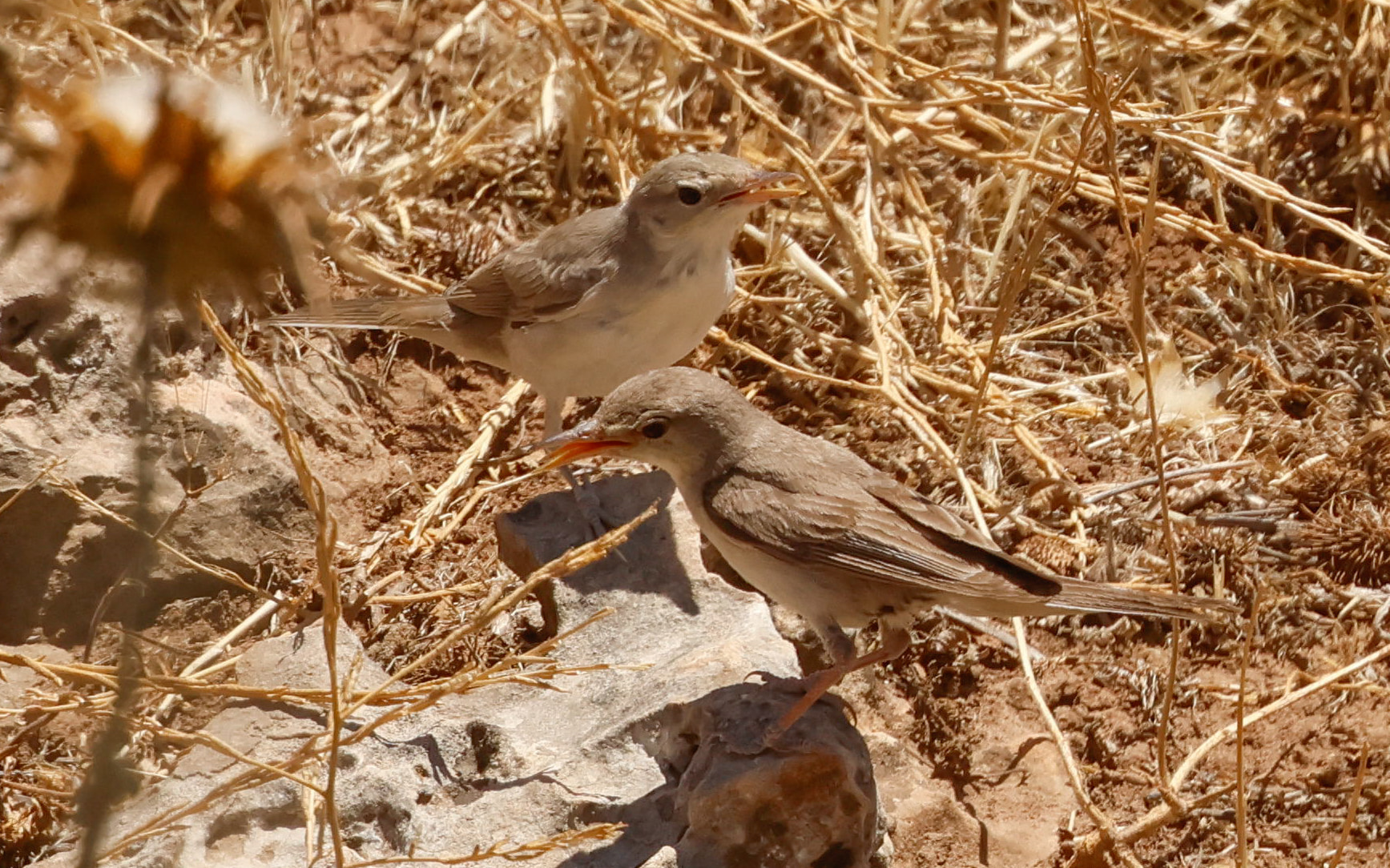
Ani Sarkisyan · Armenia
Key facts in one look
- Diet
- Insects and other invertebrates
- Status in Georgia
- Breeder, migrant
- Size
- About 14 cm
- Habitat
- Dry scrub, rocky slopes, ravines
- Family
- Acrocephalidae
- Protection
- Globally LC, 2016; in Georgia LC, 2021
The tail is the main mark of Upcher's warbler: it wags and spreads its long tail, darker towards the tip, often and unhurriedly. It is about 14 cm long, pale grey-brown above and whitish below. It picks warm, dry places: semi-desert with bushes, rocky slopes and ravines. In Georgia it breeds and also passes through on migration, and it spends the winter in East Africa. If you see a grey warbler on a dry slope, watch its tail.
Identification
Upcher's warbler: how to identify it
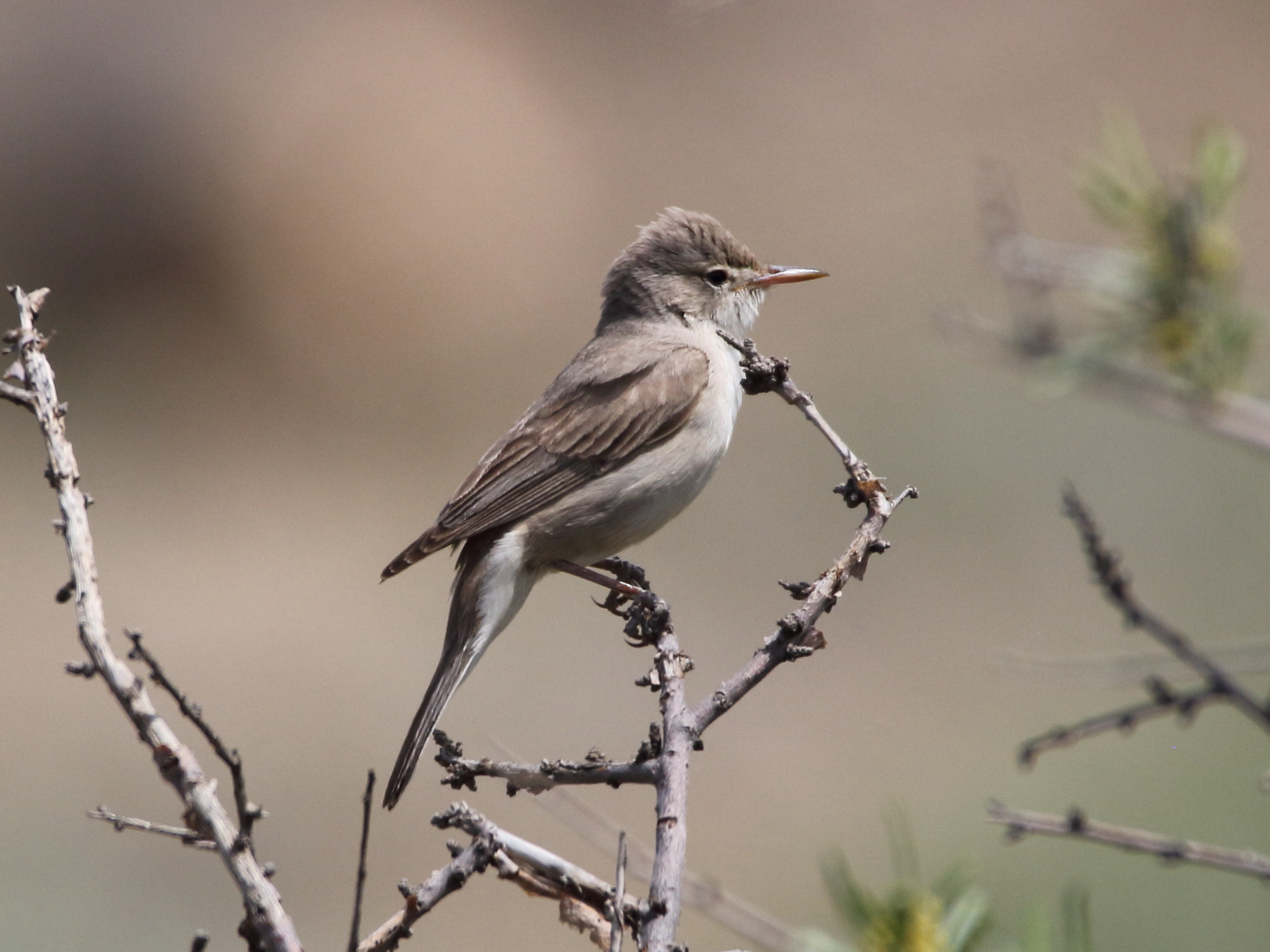
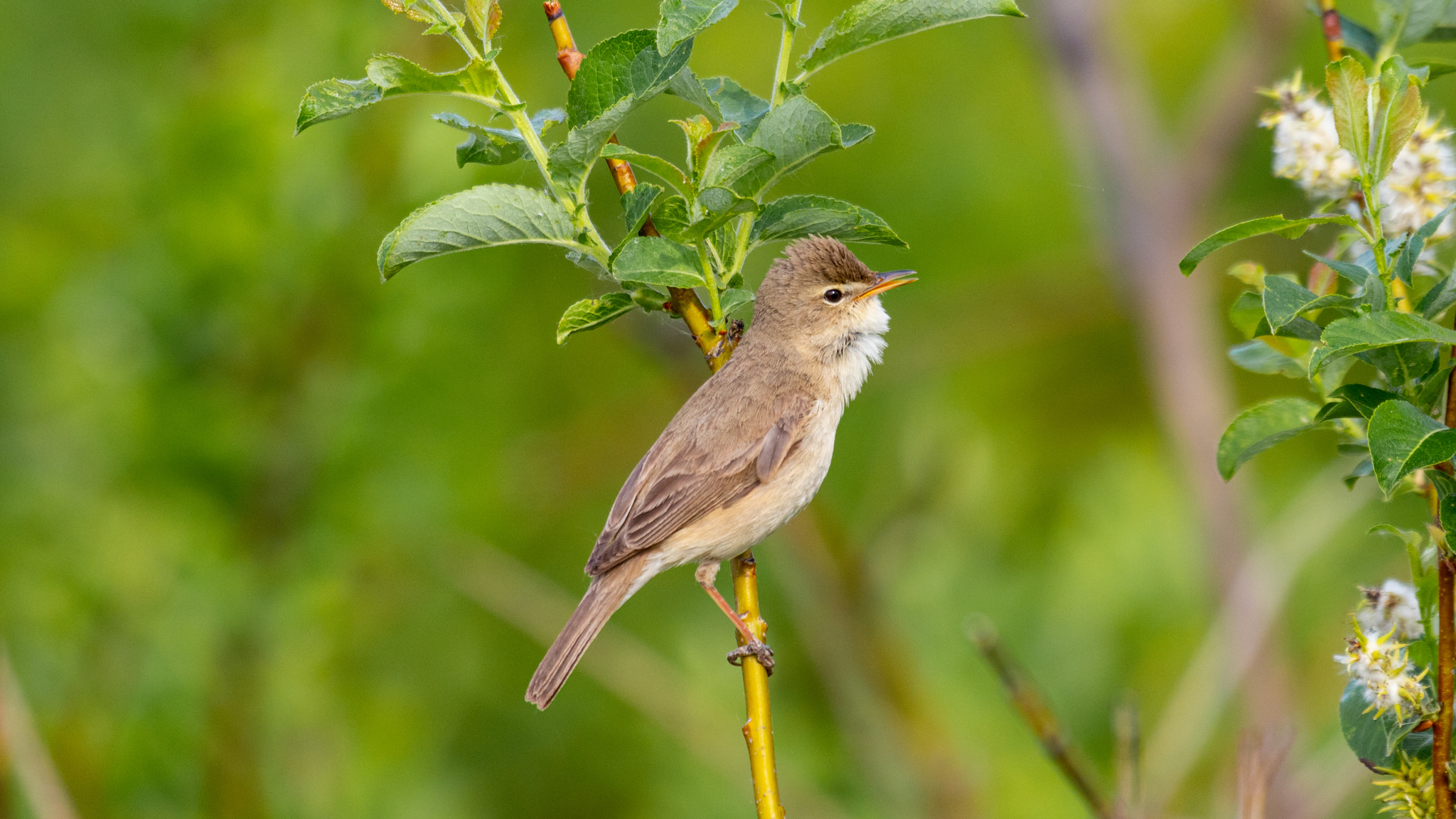
A pale grey-brown warbler, about 14 cm long and 10–14 g. The tail is long and darkens to blackish brown towards the tip. It has a pale stripe above the eye. The best mark is the slow wagging and spreading of the tail.
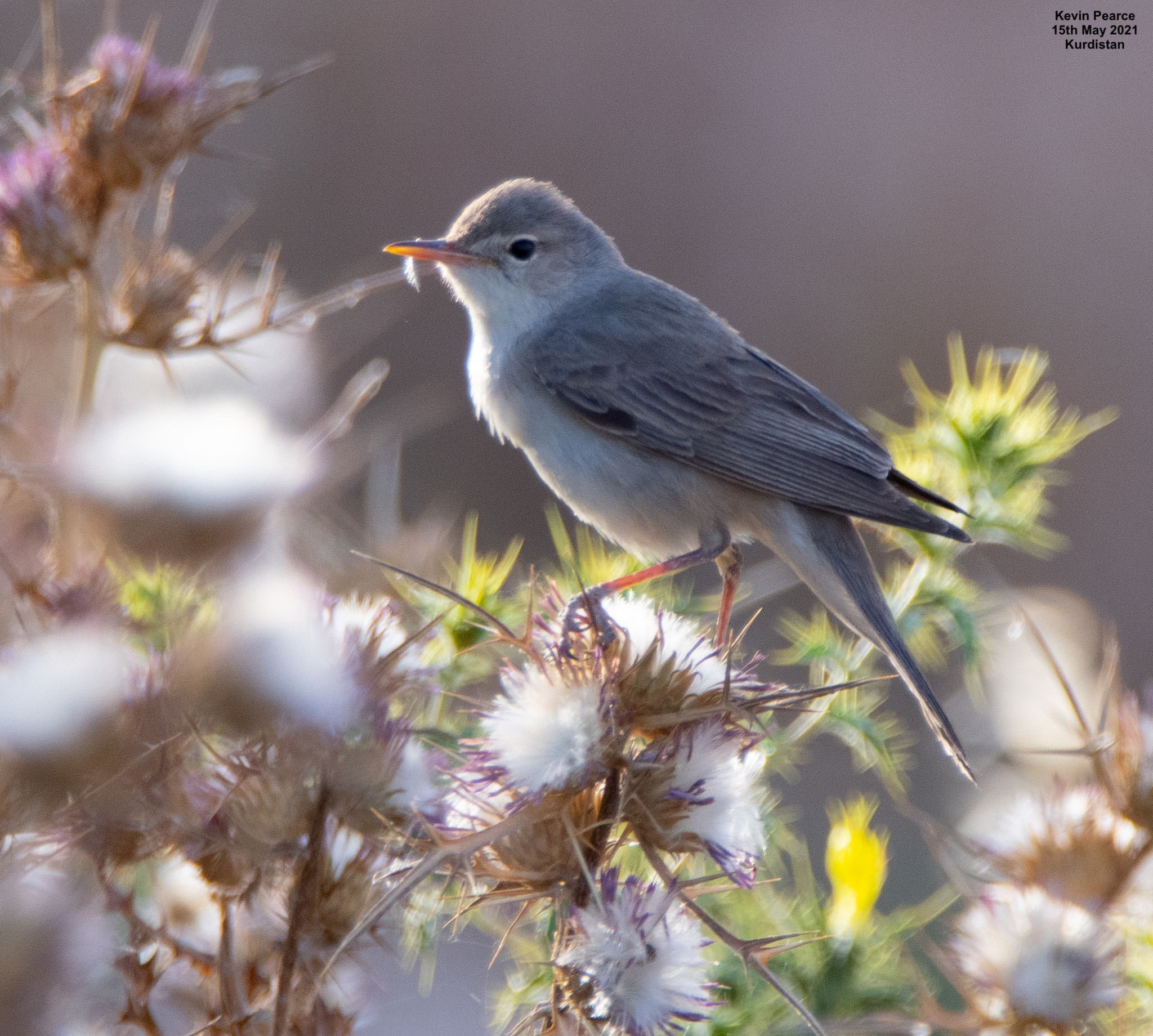
Length about 14 cm, weight 10–14 g. It is the size of an icterine warbler, but with a slightly longer bill, shorter wings and a longer tail. The long, heavy tail makes it look stocky.
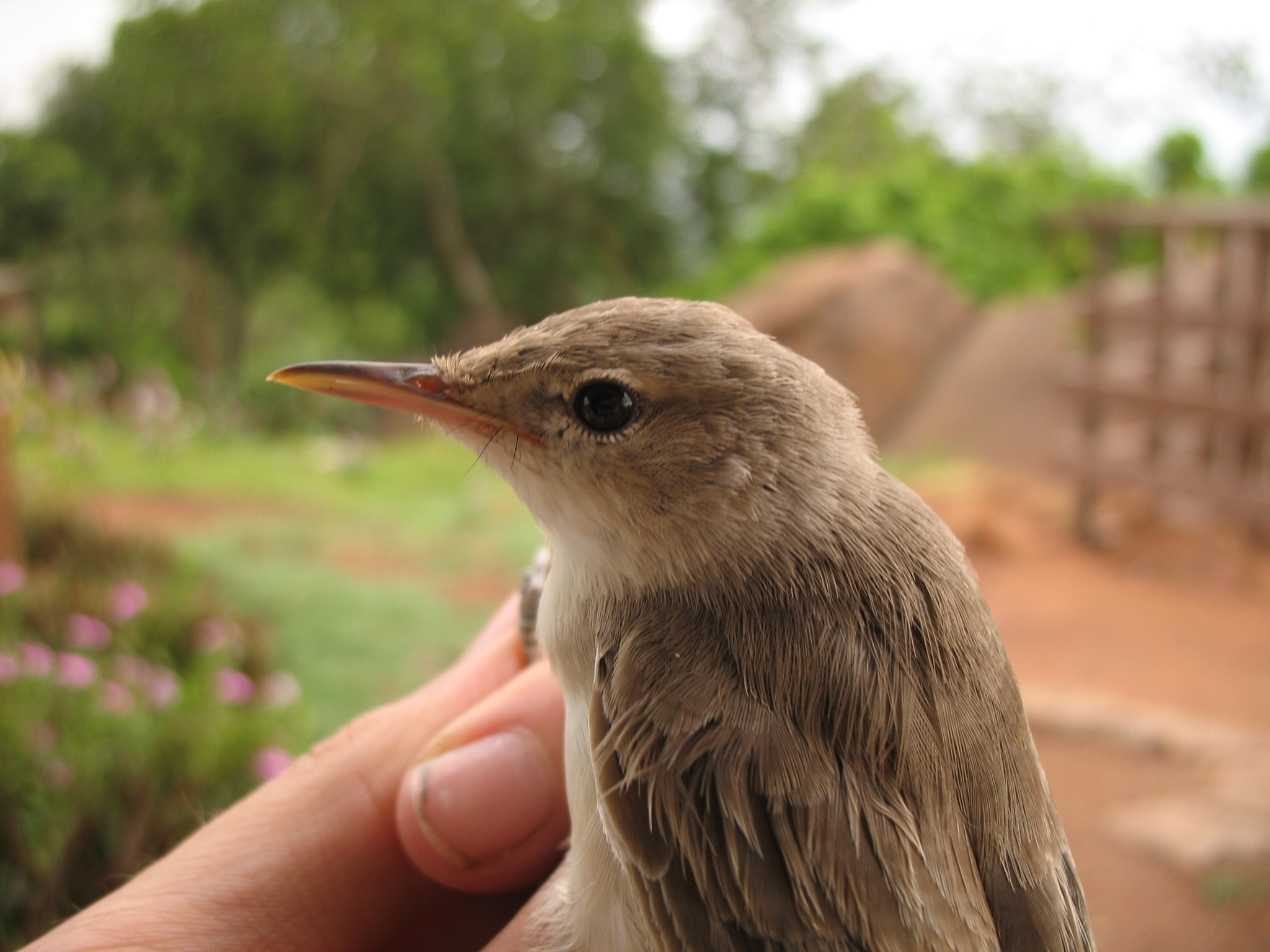
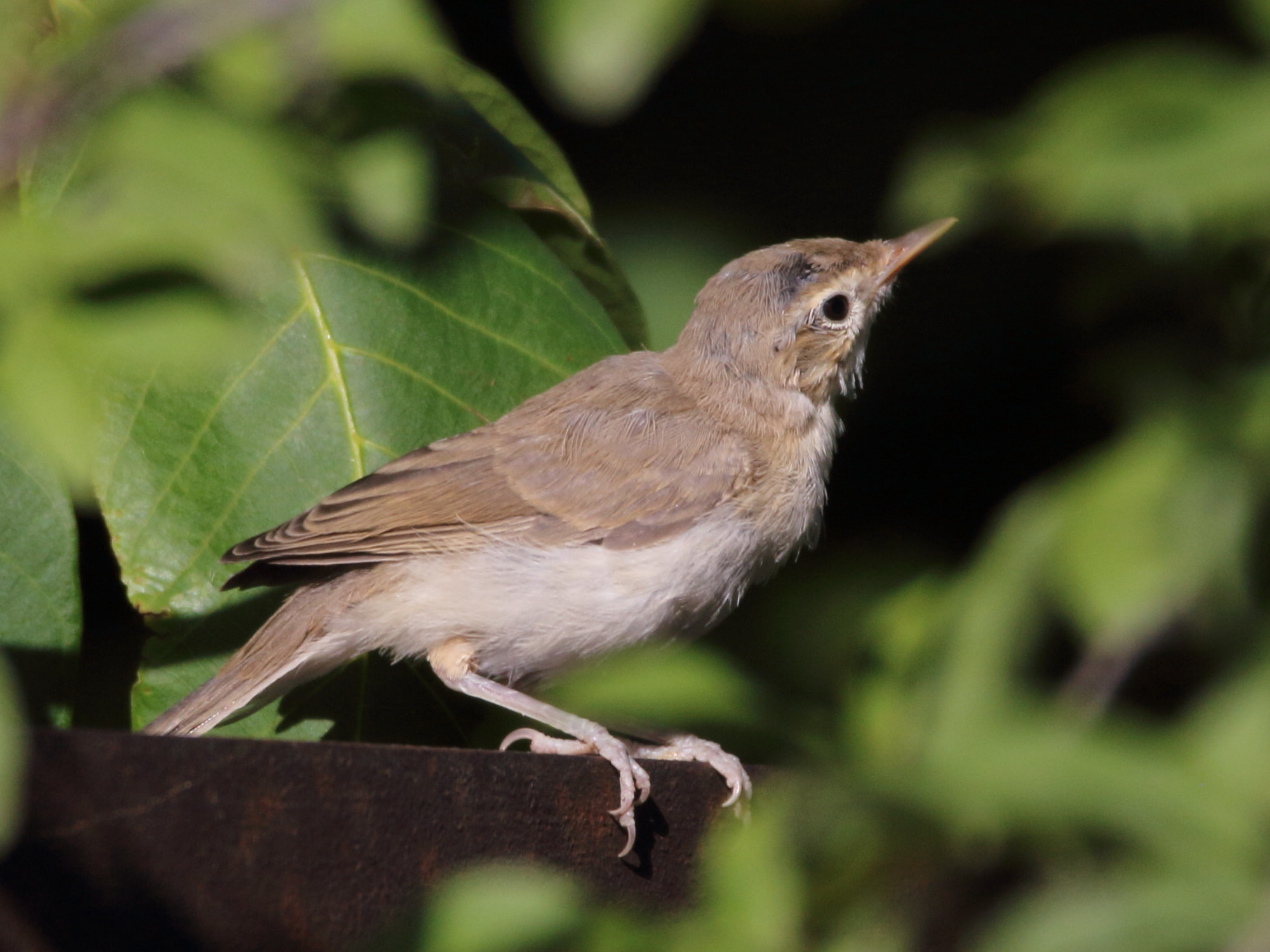
It is pale grey-brown above and whitish below, with an almost white throat and breast. A pale stripe runs from the bill to the eye. The tail is brownish grey at the base and darkens to blackish brown towards the tip, and the folded wing shows a pale panel. Male and female look alike; young birds are paler and duller.
The olivaceous warbler has similar grey plumage but is smaller and slimmer, with a shorter, paler tail. The booted warbler is much smaller, browner above, and never wags its tail. If the bird wags and spreads its tail slowly, it is an Upcher's warbler.
Colour
Swatches are illustrative. Do not identify a species by colour alone.
Often confused with
It is a bird of warm, dry places. It lives in semi-desert, on rocky mountain slopes, in deep, winding valleys and ravines, in open woodland, orchards and vineyards. It picks scattered bushes: tamarisk, wormwood and other thorny shrubs. It breeds up to 2400 m. On migration and in winter it stops in hot, dry places, usually below 1200 m.
Upcher's warbler breeds in Georgia and also passes through on migration. Records run from May to September, and most fall in May. Most records come from Kakheti. It has also been found in Kvemo Kartli, Adjara and Samegrelo. The records on the coast are from August and September. The oldest record dates from May 2009, in Kakheti.
Data: Reptiles.ge + iNaturalist · Methodology
- Field observation
- Several records in one spot
- Region with records
It feeds on invertebrates, above all insects. It picks insects from the twigs of bushes. It often hops about on stony ground under the bushes and searches for food there too. Sometimes it flies out from a perch and catches an insect in the air, like a flycatcher.
It is a migratory bird. It usually leaves its breeding grounds in July–September, winters in East Africa, in southern Somalia and Kenya, and returns in April–May. When breeding and on migration it is bold and confiding; in winter it is shyer. It moves unhurriedly, wags its tail about once a second and spreads it, and often flicks its wings too. When excited it raises its head feathers into a small peak on the crown. The song is a run of fast, alternating scratchy and melodious trills, like the song of a Sylvia warbler. The commonest call is a quiet, dry "tak", like two stones knocked together. It is territorial, yet several pairs often nest close to one another. Breeding runs from mid-May to June, usually once a year. The nest is a cup of small twigs and stems, lined with fine grass and animal hair. It sits in the fork of a bush or small tree such as pistachio, oak or peach, usually 0.5–2.5 m above the ground. The female incubates 3–5 eggs for about 12 days, both parents feed the chicks, and they fledge after 11–12 days.
Globally Upcher's warbler's risk of extinction is rated low (LC, 2016). It breeds in western and Central Asia, from Turkey to Pakistan and Kazakhstan. In Turkey it is a local and rare breeder; in the rest of its range it is common to very common. In Georgia's national assessment (2021) its risk is also rated low (LC), and its numbers are stable. The list of the birds of Georgia gives it as a breeder and a migrant.
Related guides
Continue with related pages
Yes. It breeds in Georgia and also passes through on migration in spring and autumn. It has been photographed here and ringed. It does not stay for the winter: it flies to East Africa, to southern Somalia and Kenya.
By the tail and the behaviour. Upcher's warbler is bigger and stockier, with a long tail, darker towards the tip, which it wags slowly, about once a second, and spreads. The olivaceous warbler keeps moving in dense bushes and often dips its tail downwards, each movement with a "tak" call. Upcher's warbler sits in the open more often, on top of a bush or on the ground. The song tells them apart easily too.
Invertebrates, above all insects. It picks them from the twigs of bushes and also searches stony ground under the bushes. Sometimes it flies out from a perch and catches an insect in the air.
In the fork of a bush or small tree, usually 0.5–2.5 m above the ground. The nest is a cup of small twigs and stems, lined with fine grass and hair. It breeds from mid-May to June and lays 3–5 eggs. At that time do not disturb nests in dry scrub.
In East Africa. It winters most often in southern Somalia and eastern Kenya, more rarely in southern Ethiopia, northern Kenya and parts of Tanzania and Uganda. It usually leaves its breeding grounds in July–September and returns in April–May.
No, it is harmless to people. Globally its risk of extinction is low (LC, 2016). In Georgia's national assessment (2021) its risk is also low (LC), and its numbers are stable. Do not catch wild birds.
References
What this profile is based on
Species profiles are compiled from peer-reviewed literature and established biodiversity databases, and are reviewed as new taxonomic and conservation data become available.
Prepared by the Reptiles.ge editorial team from the sources listed here.