


Garden warbler
Sylvia borin


s_t_l · Śródmieście Północne
Key facts in one look
- Diet
- Insects; berries and figs in late summer
- Status in Georgia
- Breeds in summer, migrant
- Size
- 13–14.5 cm
- Habitat
- Open woodland with dense scrub, woodland edges, riverside thickets
- Family
- Sylviidae
- Protection
- Globally LC, 2017; in Georgia LC, 2021
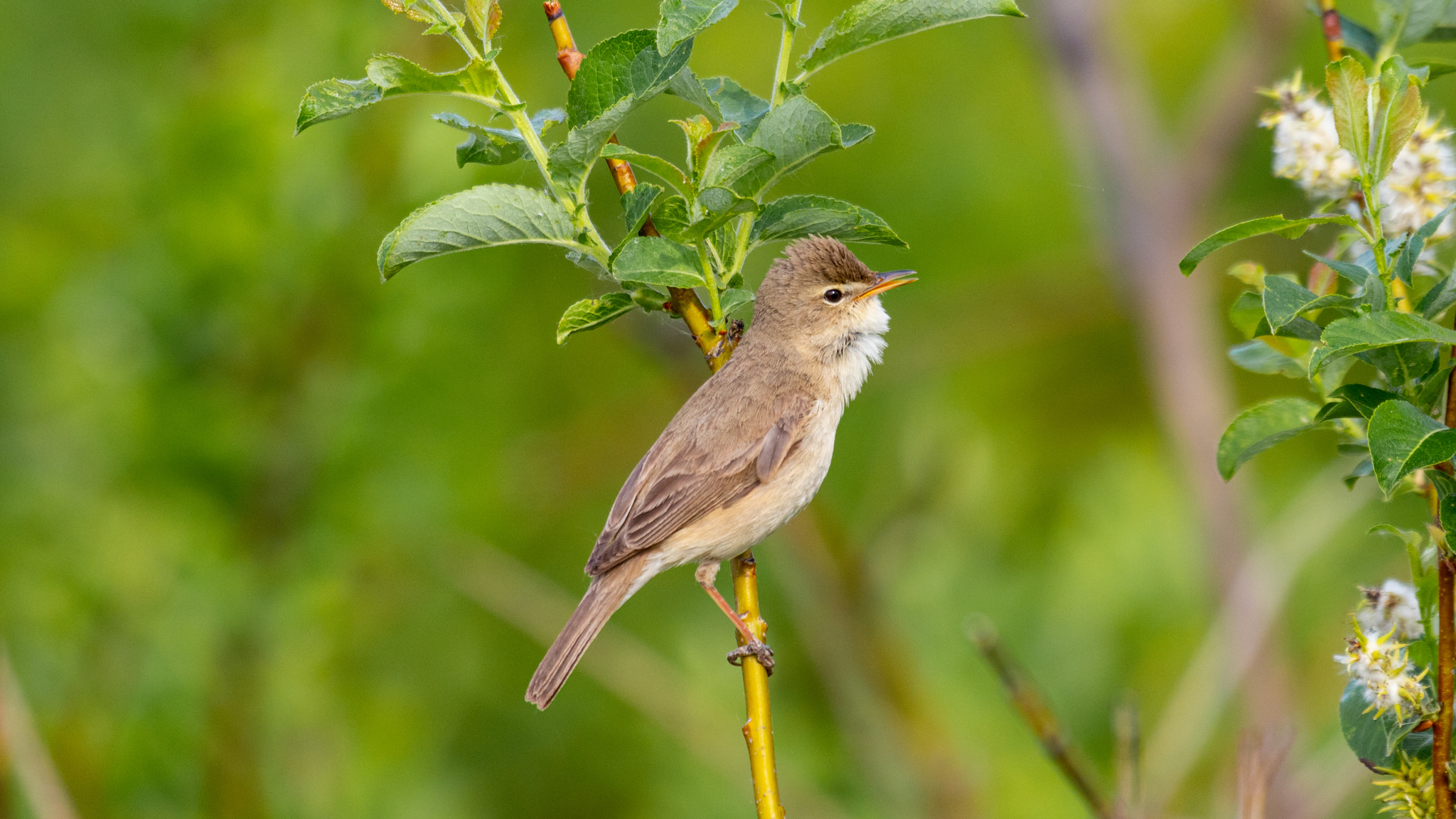
The garden warbler has almost nothing that catches the eye: the back is olive-brown, the belly dull white, with no streaks or spots. What it has instead is a rich, melodious song, much like the blackcap's. In Georgia it breeds and also passes through on migration. Despite its name, it rarely nests in gardens: it picks open woodland with dense, low undergrowth. It spends the winter in Africa, south of the Sahara.
Identification
Garden warbler: how to identify it
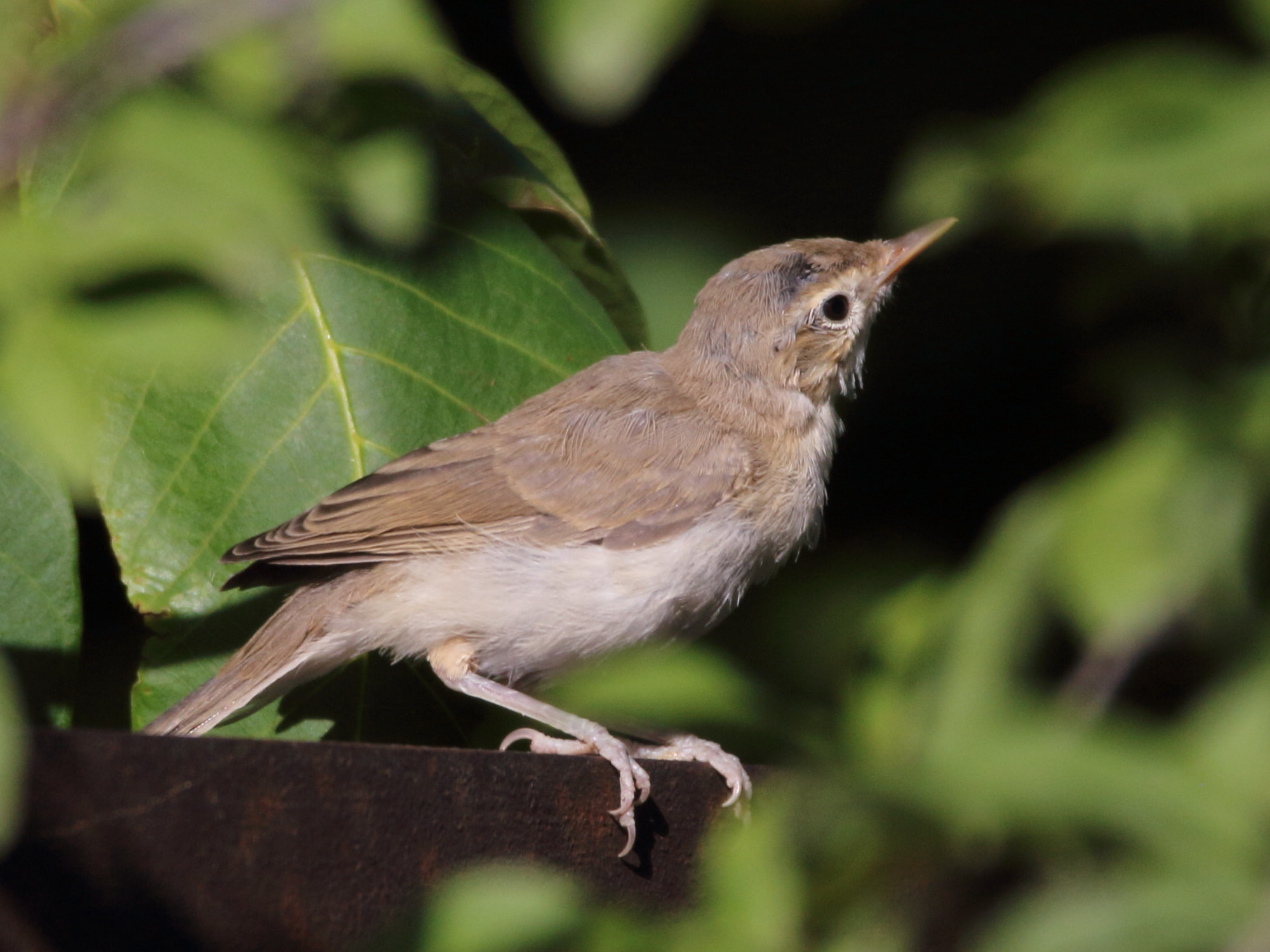
A warbler 13–14.5 cm long and 16–22 g, with long wings and a long tail. It is olive-brown above and dull white below, with no streaks or spots. That plain look is exactly what makes it hard to identify: it is easily confused with several other unstreaked warblers.

Length 13–14.5 cm, weight usually 16–22 g. Before migration it lays down fat and can weigh up to 35.5 g. The wings and tail are long and the bill is strong: grey above, paler grey below.
It has a whitish eye-ring and a faint, barely visible pale stripe over the eye. The throat and flanks have a buff wash, and the legs are bluish-grey. Male and female look the same; young birds have looser, paler, greyer plumage.
The booted warbler is similar in colour but smaller, more delicately built, with a flesh-coloured bill. The olivaceous warbler is also small, with white outer tail feathers and a pinkish bill. The icterine warbler has a long bill and a yellowish tint. If a bird is completely plain and has a strong grey bill, think of the garden warbler.
Colour
Swatches are illustrative. Do not identify a species by colour alone.


It is a bird of open woodland with dense low scrub or a herb layer. It likes shady places, woodland edges, thickets and woods next to rivers or reed beds. It copes well with willow, alder and birch, so it breeds farther north and higher up than any other European Sylvia warbler. It avoids mature conifers and dense plantations, although young conifer plantations with thick undergrowth will do for nesting. In its African winter quarters it uses wooded places but avoids closed forest and dry, treeless country.
The garden warbler breeds in Georgia and also passes through on migration. Records run from March to October, with most in May, August and September. Most records come from Adjara, Mtskheta-Mtianeti, Kakheti and Samtskhe-Javakheti. It has also been found in Kvemo Kartli, Tbilisi, Samegrelo-Zemo Svaneti, Abkhazia, Imereti, Guria and Shida Kartli. The oldest record is a museum specimen collected near Mtskheta in 1910.
Data: Reptiles.ge + iNaturalist · Methodology
- Field observation
- Several records in one spot
- Region with records
In the breeding season it mainly eats insects, beetles and caterpillars, and spiders too. It picks prey off leaves and twigs, sometimes hovering to do so. It usually feeds less than 6 m above the ground. After nesting it switches to berries and soft fruit: in late summer it goes for raspberries, bilberries and elderberries. Before migration figs are a particular favourite, and a mix of fruit and insects fattens it fastest.
It is a migrant and spends the winter south of the Sahara, as far as South Africa. It crosses the Sahara at night and rests motionless in the shade by day, without feeding. On the way it burns not only fat but up to 19% of its breast and leg muscle and up to 39% of its digestive tract. The male sings from dense cover: a rich, musical warble in bursts of a few seconds. The most common call is a sharp "kek-kek", repeated fast when the bird is alarmed. The male takes a territory and attracts a female with song and rapid wing beats. He builds several simple nests to show her, but she usually starts a new one. The nest sits in dense vegetation, often bramble, 0.3–1.2 m above the ground: a cup of dry grass, moss and twigs with a soft lining. The clutch is 4–5 eggs, and both parents incubate for 11–12 days. The chicks hatch naked with closed eyes and leave the nest after about 10 days. The typical lifespan is two years, but one bird in Sweden lived to ten years and two months.
Globally the garden warbler's risk of extinction is rated low (LC, 2017). Its range is huge, about 9.65 million km², and 17–31 million pairs breed in Europe. Numbers in Europe have fallen slightly since 1980, while in Scandinavia they are growing and the breeding range is spreading north. In Georgia's national assessment (2021) its risk is also rated low (LC), and its numbers are stable. The list of the birds of Georgia gives it as a breeder and a migrant.
Related guides
Continue with related pages
Yes. It breeds in Georgia and also passes through on migration. It does not stay for the winter: all populations winter in Africa, south of the Sahara. In the national assessment (2021) its numbers are rated stable.
Its best mark is the lack of marks. The back is olive-brown, the belly dull white, it has a whitish eye-ring and a strong grey bill. Booted and olivaceous warblers are smaller and have pale bills. Its song is like the blackcap's, but slightly lower, more mellow and less broken up. In dense scrub you are more likely to hear it than see it.
In early summer mainly insects: beetles, caterpillars, and spiders too. After nesting it switches to berries and soft fruit, including raspberries, bilberries and elderberries. Before migration figs are a particular favourite. This is how it puts on weight fast and gets ready for the long journey.
In dense scrub or tall herbage, often bramble, 0.3–1.2 m above the ground. The nest is a cup of dry grass, moss and twigs. The clutch is 4–5 eggs, and both parents incubate for 11–12 days. The chicks leave the nest after about 10 days, before they can fly.
Yes, all populations are migratory. It winters in Africa south of the Sahara, as far as South Africa. It crosses the Sahara at night and rests motionless in the shade by day. In spring it returns to Europe and Asia to breed.
No, it is harmless to people. Globally its risk of extinction is low (LC, 2017). In Georgia's national assessment (2021) its risk is also low (LC), and its numbers are stable. Do not catch wild birds.
References
What this profile is based on
Species profiles are compiled from peer-reviewed literature and established biodiversity databases, and are reviewed as new taxonomic and conservation data become available.
Prepared by the Reptiles.ge editorial team from the sources listed here.


