
Transparent burnet
Zygaena purpuralis
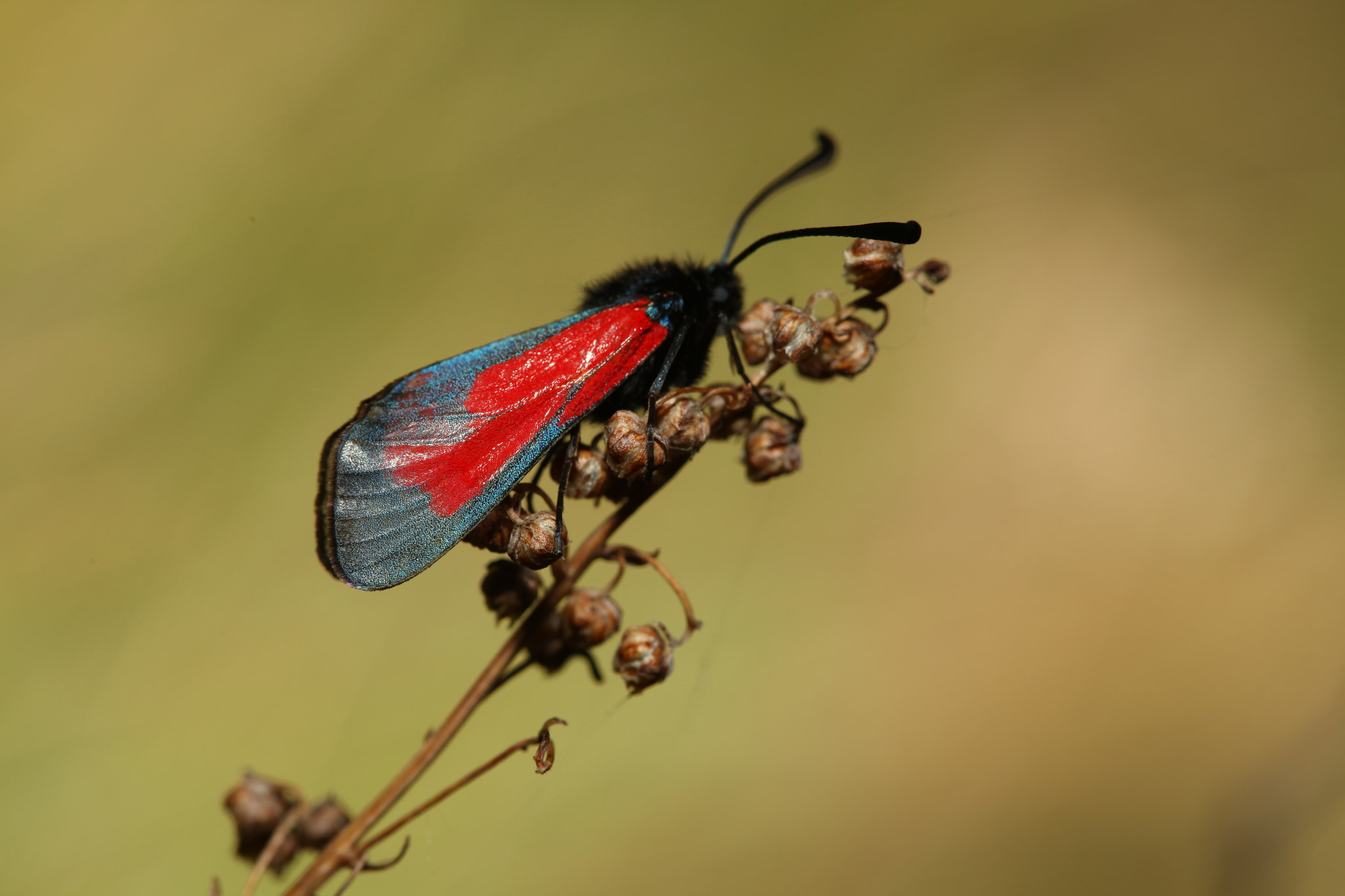
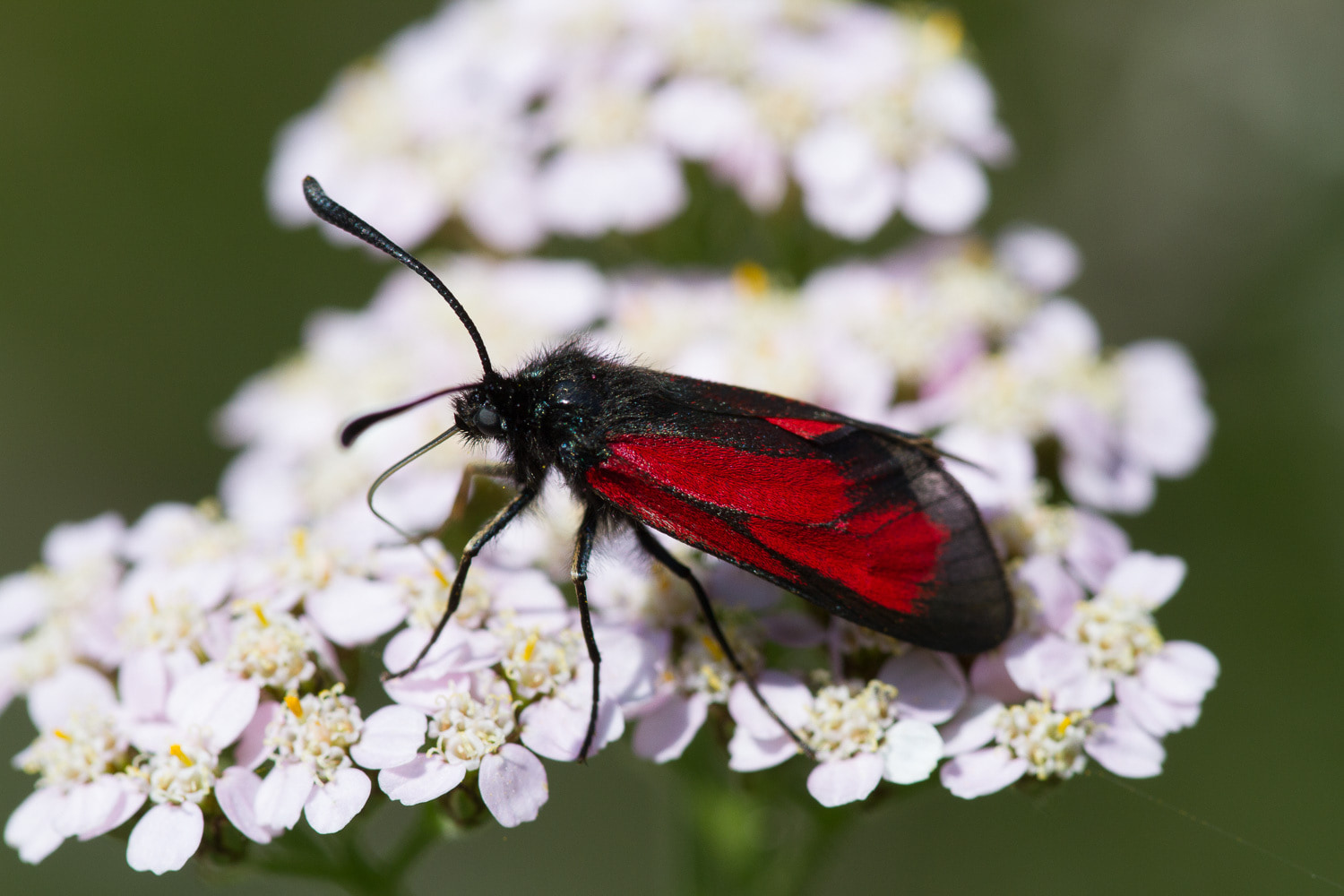
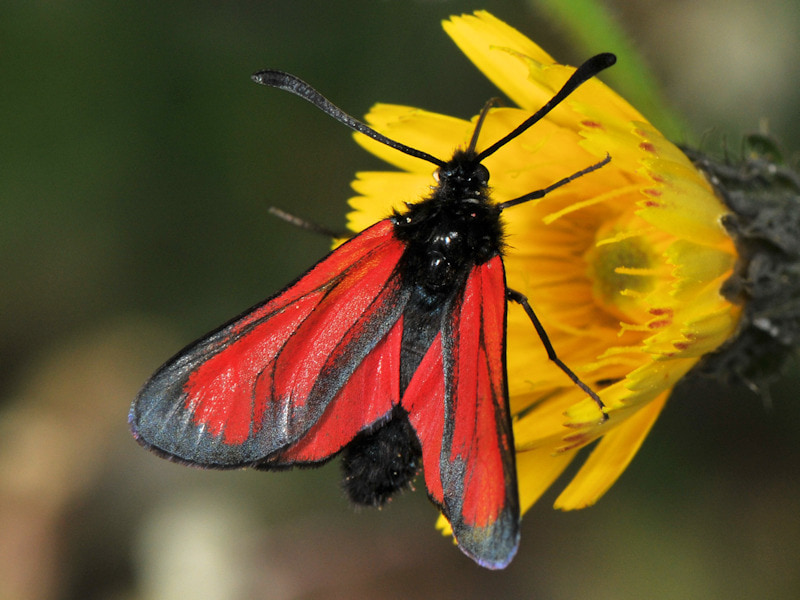
Markus Ackermann · Khashuri, Shida Kartli Georgia field photo
Key facts in one look
- Size
- Wingspan 30–34 mm
- Group
- Insect
- Family
- Zygaenidae
- Status in Georgia
- Native species
- Activity
- Late May–August, by day
- Conservation
- NE
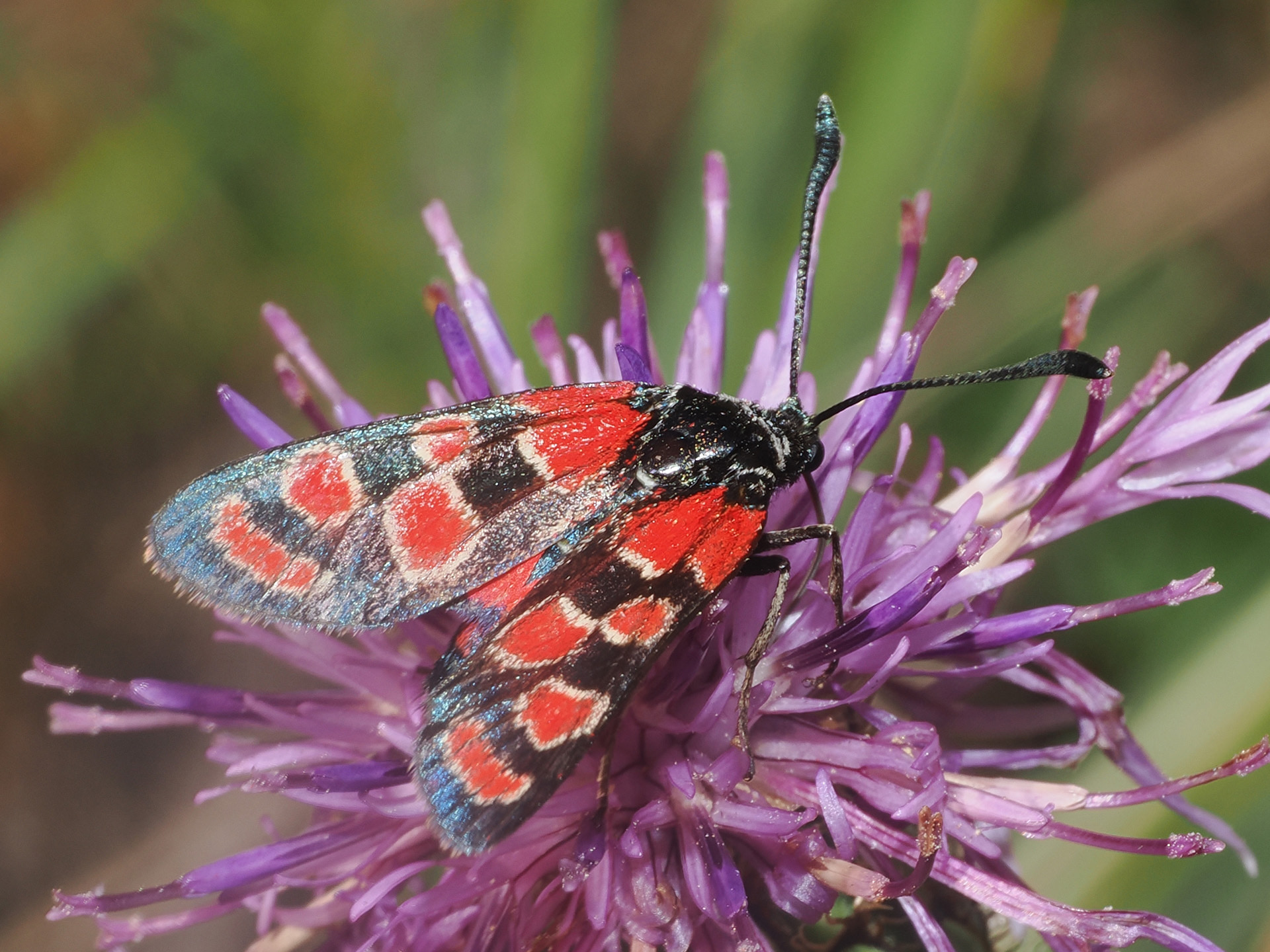
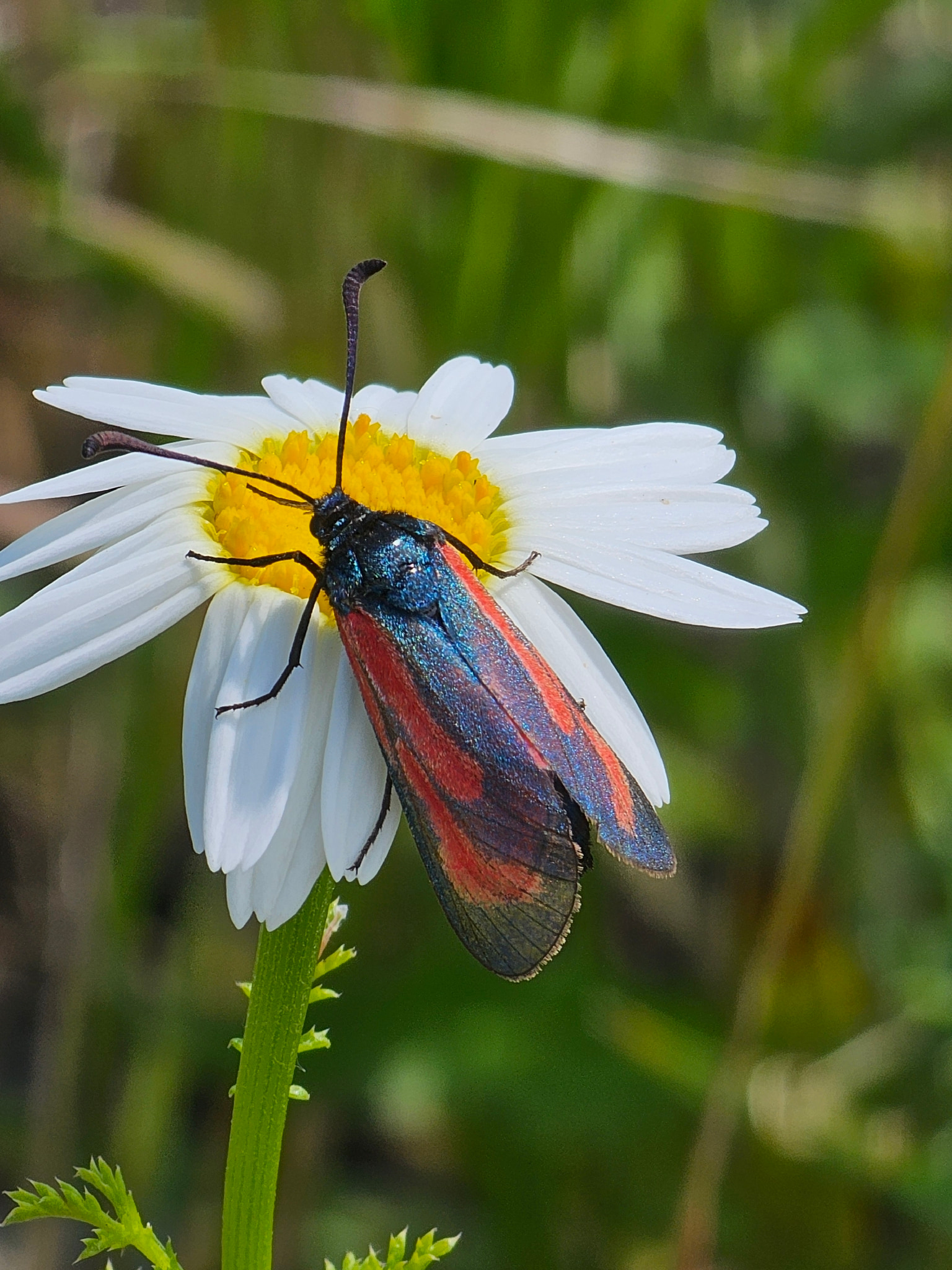
The transparent burnet (Zygaena purpuralis) is the only European burnet whose caterpillar eats neither legumes nor umbellifers: it feeds mainly on thyme (Thymus). Its forewing has three red streaks, and the wing edges are almost transparent and greyish blue. The hindwing is mostly or entirely red. It chooses sunny, grassy slopes and dry grassland. You cannot tell an adult from Zygaena minos by its looks, so do not name the species with confidence from a photo.
Identification
Transparent burnet: how to identify it
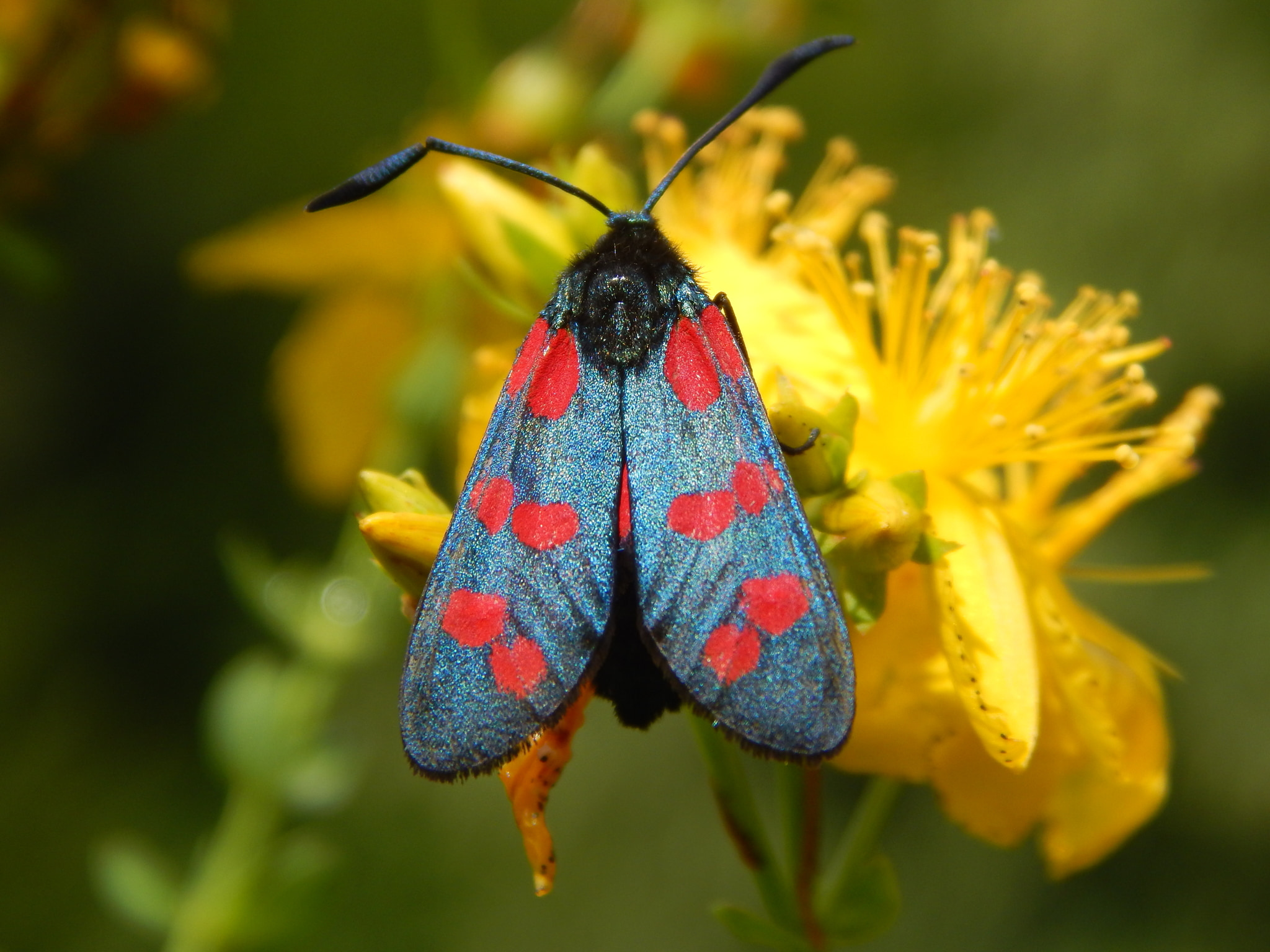
A small burnet with a wingspan of 30–34 mm. The forewing has three broad red streaks, and its edges are almost transparent and greyish blue. The hindwing is mostly or entirely red. You cannot tell an adult from Zygaena minos by its looks.
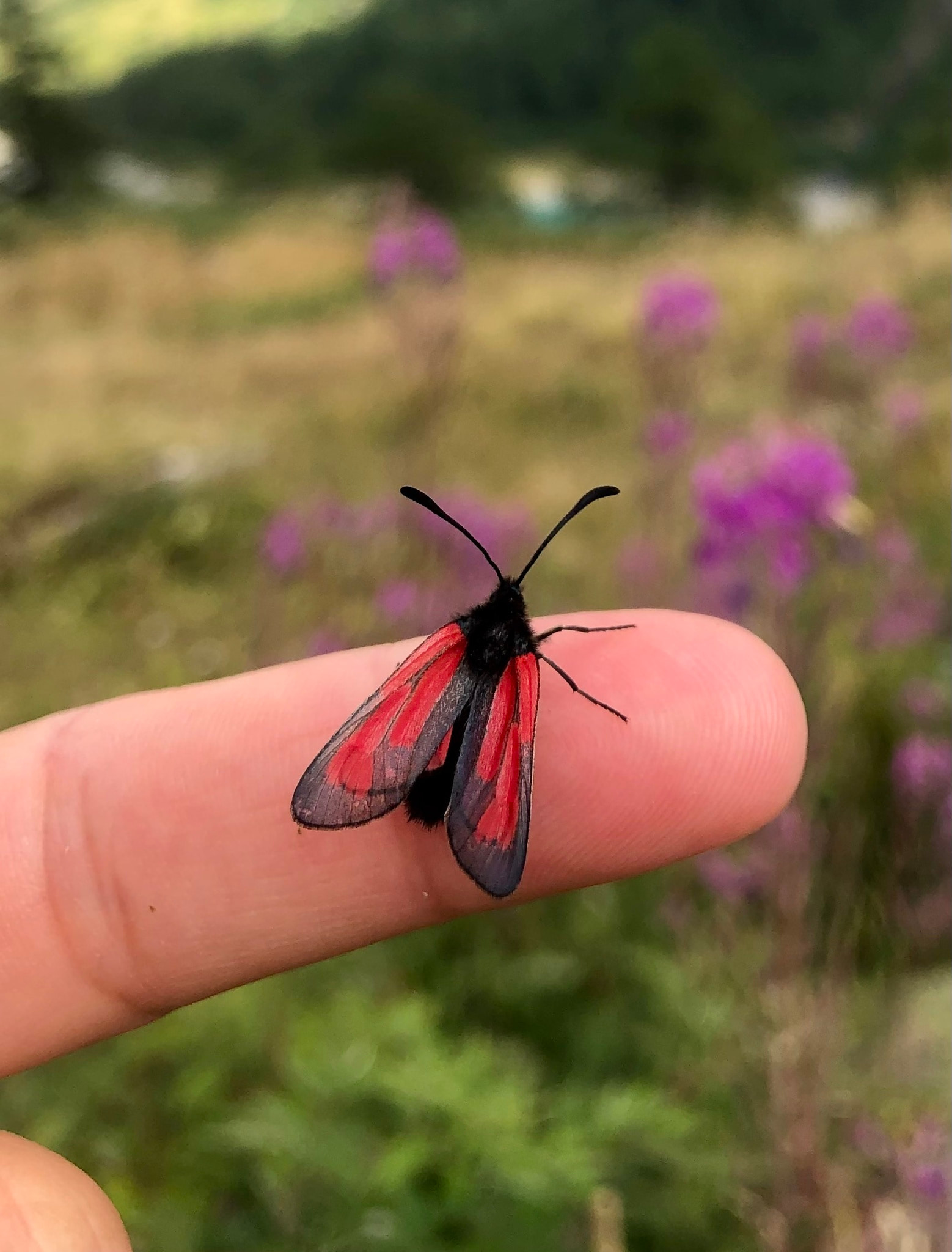
The middle streak of the forewing widens towards the tip and ends in an axe-like shape. The shape of the streaks is very variable. The wing scales are thin, so the edges are almost transparent.
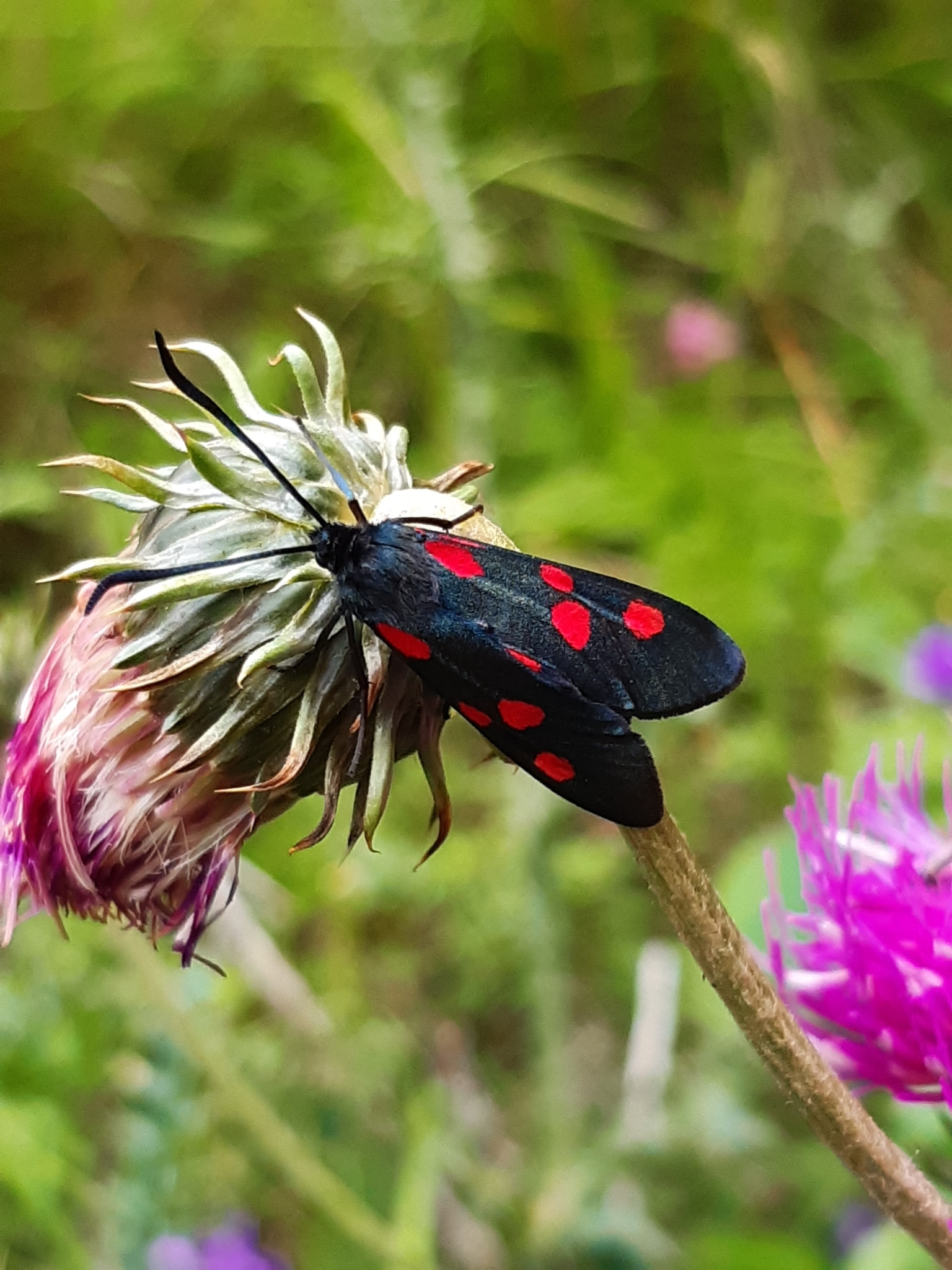
The antennae are thick and clubbed, with a blunt, cut-off tip. You will only see this in a close photo. It differs from five-spot burnets by having streaks instead of spots.
Zygaena minos looks very similar and often flies at the same place and time. Adults are separated only by their genitalia, and caterpillars by colour and food plant. So you cannot identify an adult moth from a photo with certainty.
Colour
The streaks are usually bright red, sometimes yellowish orange. The head and thorax are black and the abdomen dark blue. The female has a white collar.
Swatches are illustrative. Do not identify a species by colour alone.
The transparent burnet is a moth of sunny, grassy slopes, the foot of cliffs and dry grassland. It lives in poor, stony and calcareous grassland where thyme is plentiful, and also on mountain slopes and pastures. It also occurs on sandy soils and in other warm, sunny places. In the mountains it reaches 2,500 m. It is native to Georgia and has been known from the country since 1884.
The transparent burnet is native to Georgia. Most records come from eastern Georgia: Kakheti, Kvemo Kartli and Mtskheta-Mtianeti. It has also been found in Shida Kartli, Tbilisi and Samtskhe-Javakheti. Adult moths have been recorded from May to September, mostly in June and July. An adult cannot be told from Zygaena minos by its looks, so some of the moths seen in photos may belong to that species.
Data: Reptiles.ge + iNaturalist · Methodology
- Field observation
- Several records in one spot
- Photo record
- Region with records
The caterpillar feeds mainly on thyme, including Thymus serpyllum, T. pulegioides and T. praecox. The adult moth drinks nectar and gathers on flowers in small groups. It prefers violet flowers such as Knautia, Stachys and viper's bugloss (Echium), but also visits yellow flowers.
It flies by day, especially in warm, sunny weather. On dull days it sits in the open on flowers or grass stems. Depending on the place, it is on the wing from late May to August, with one generation a year. The female lays yellow eggs in clusters on the undersides of thyme leaves, and the caterpillars hatch after about nine days. The caterpillar is found from August to May and overwinters once or twice. It stays close to the ground and does not climb its food plant at night. To pupate, it spins a boat-shaped cocoon on the ground, in moss, and the moth emerges 18–20 days later.
Related guides
Continue with related pages
Yes. It is native to Georgia and has been known from the country since 1884. The very similar Zygaena minos also occurs in Georgia. So you cannot name the species with confidence from a photo of a moth in this group.
Not by the adult's looks. The two are cryptic species, separated by the male and female genitalia, the caterpillar and its food plant. The transparent burnet's caterpillar is yellow and eats thyme, while that of Zygaena minos is whitish and feeds on species of Pimpinella. Both often fly at the same place and time, so a caterpillar found on its food plant tells you more than a photo of the moth.
No, it is harmless to people. Burnets contain hydrogen cyanide at every stage of their life, and their bright colours warn predators that they taste bad. This defence works against birds and other predators. Ordinary handling poses no risk, but there is no need to catch the moth either.
The caterpillar eats mainly thyme. It is the only European burnet whose caterpillar feeds on neither legumes nor umbellifers. The adult drinks nectar and prefers violet flowers. A thyme-covered slope is both its food and its home.
References
What this profile is based on
Species profiles are compiled from peer-reviewed literature and established biodiversity databases, and are reviewed as new taxonomic and conservation data become available.
Prepared by the Reptiles.ge editorial team from the sources listed here.