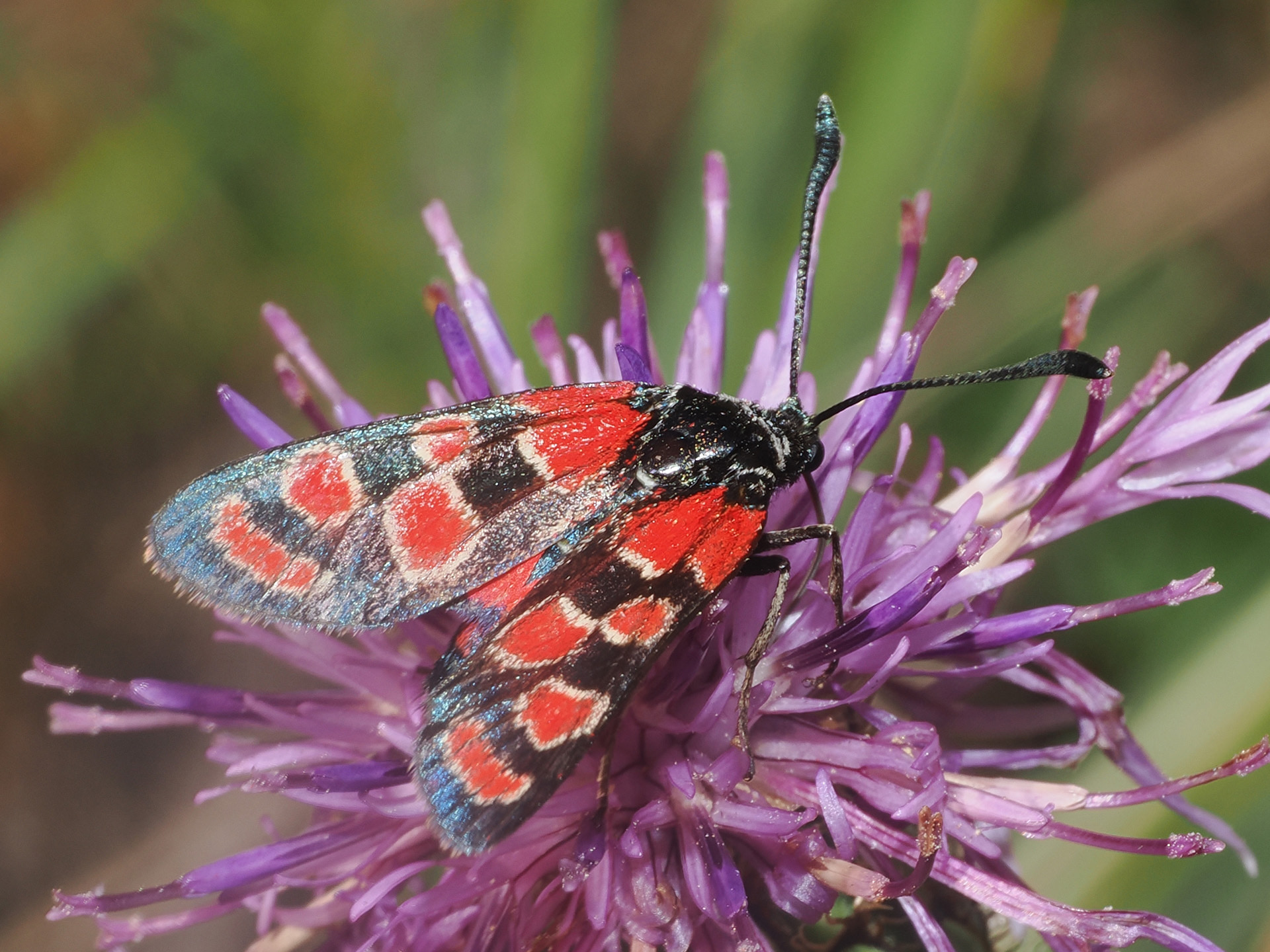

Crepuscular burnet
Zygaena carniolica
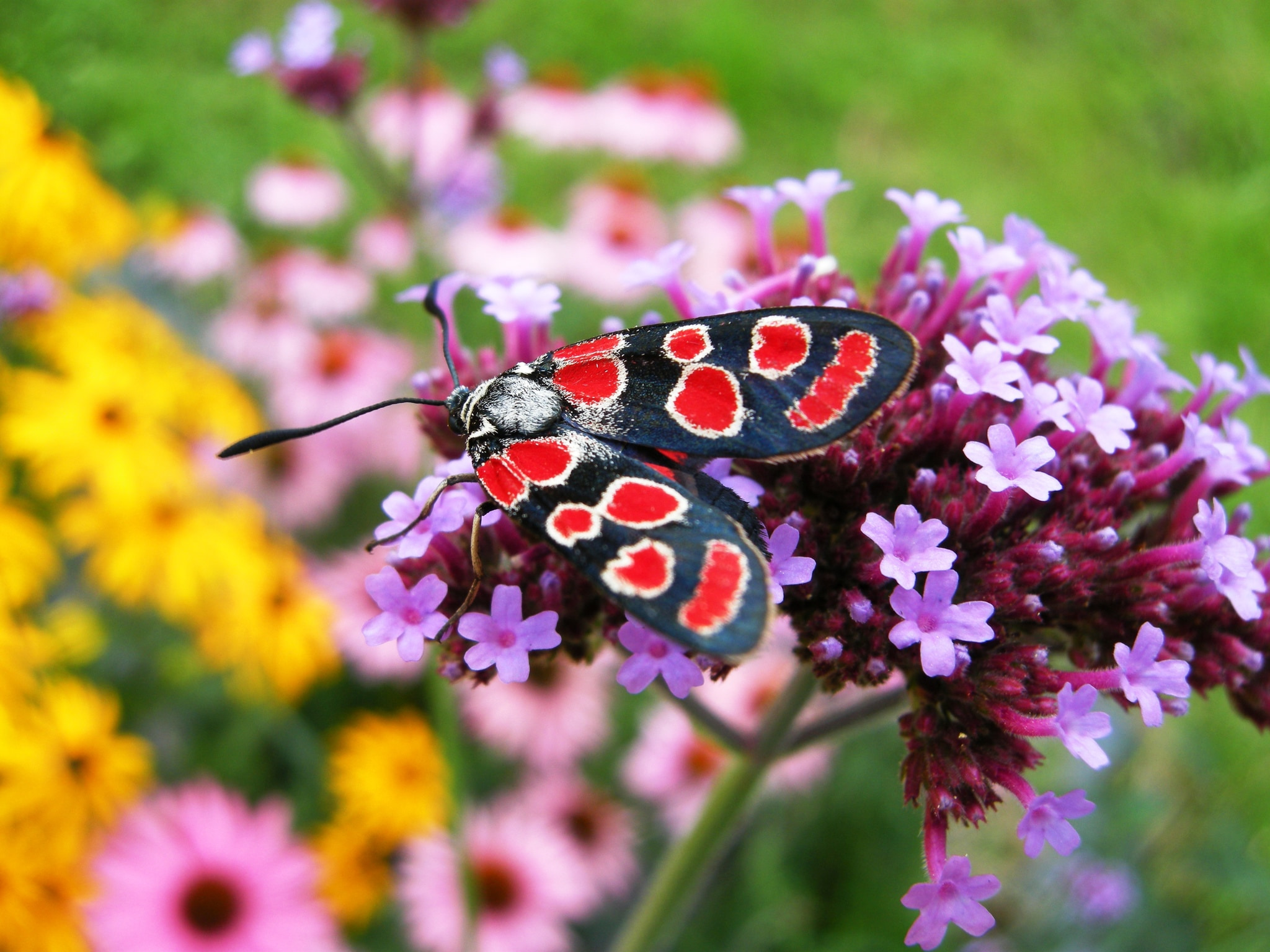
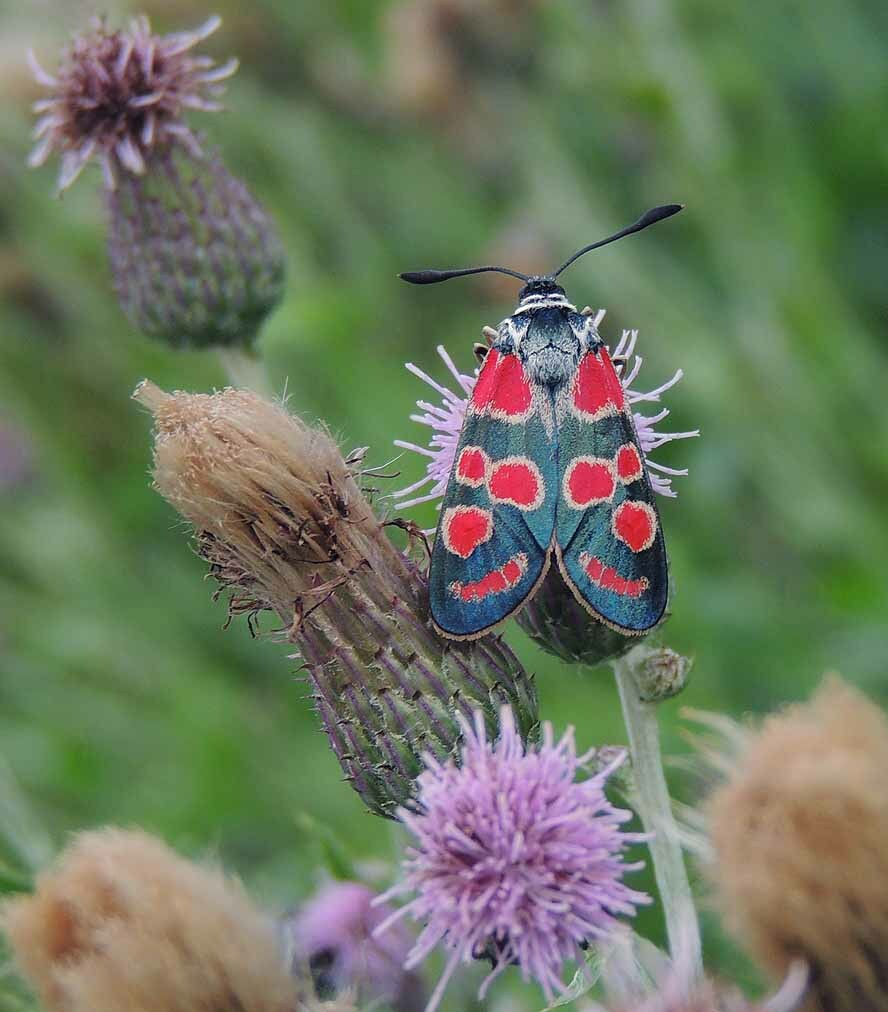
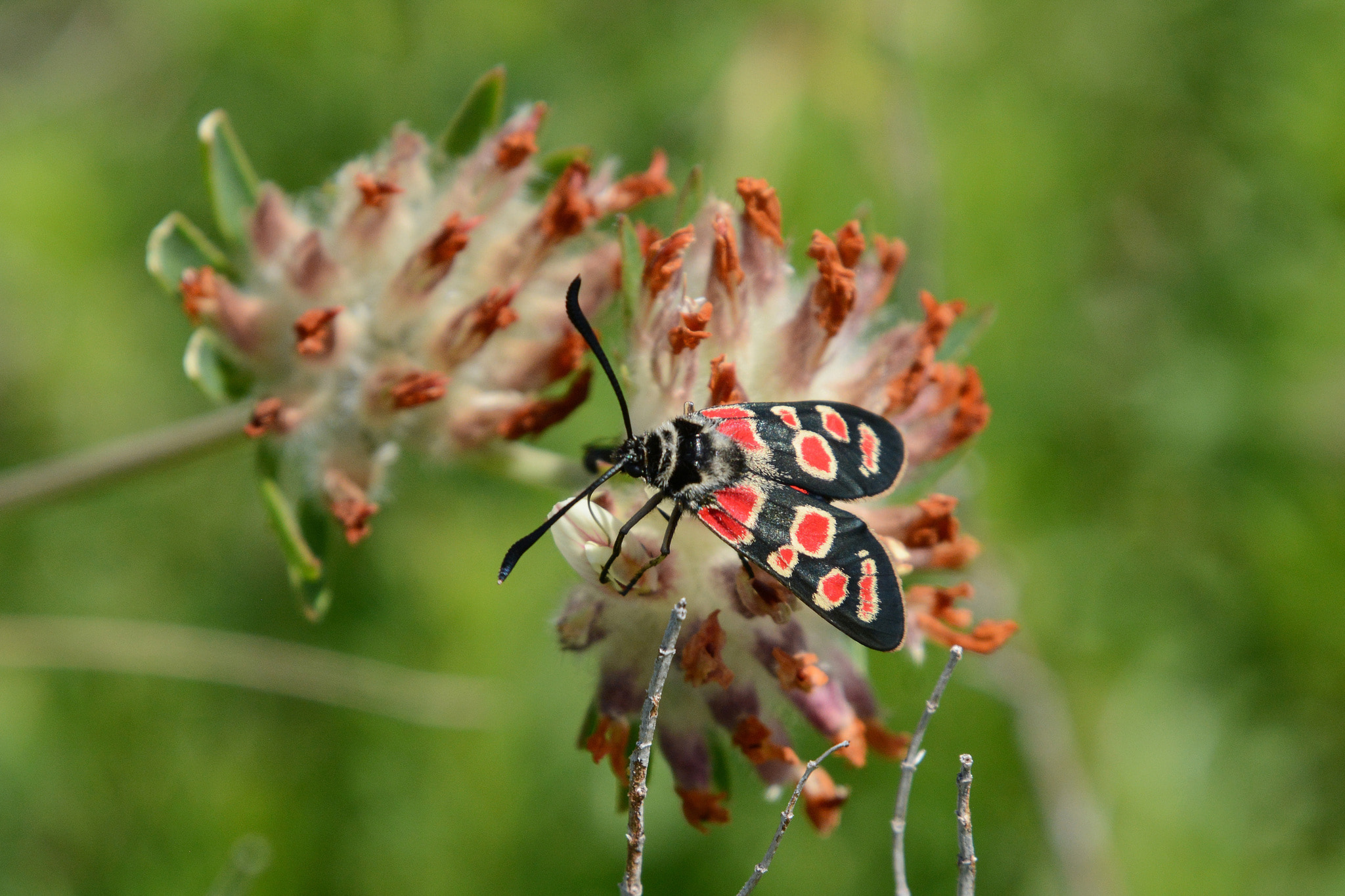
Felix Riegel · Pondel
Key facts in one look
- Size
- Wingspan 30–35 mm
- Group
- Insect
- Family
- Zygaenidae
- Status in Georgia
- Listed for the country's fauna
- Activity
- Jun–Aug, one generation a year
- Conservation
- NE
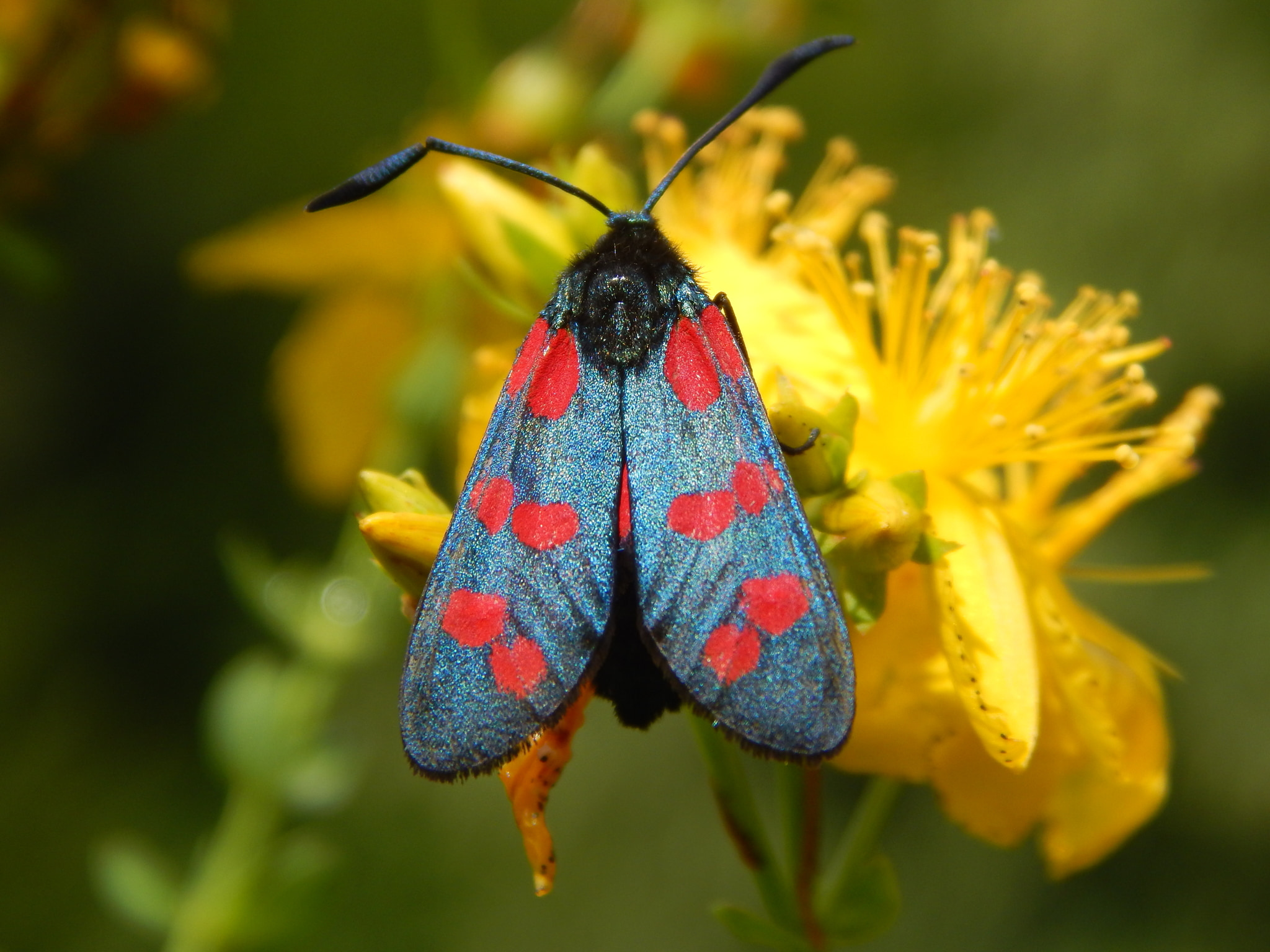
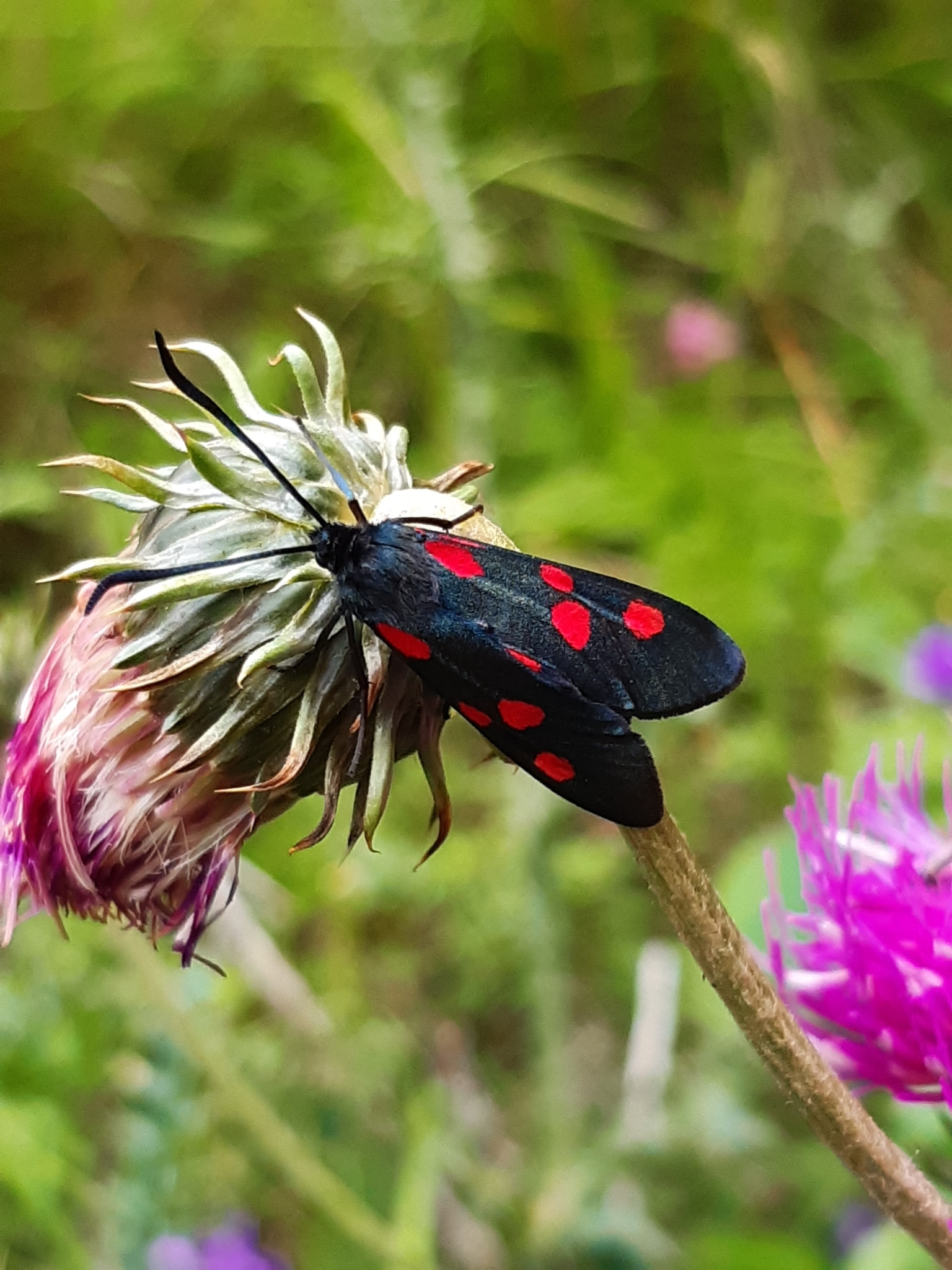
The crepuscular burnet's bold colours are a warning: the bodies of both caterpillar and adult hold cyanogenic compounds, so predators cannot eat it. Its bluish-black forewing has six red spots, usually edged white or yellowish, and the wingspan is 30–35 mm. It lives on warm, dry grasslands and steppe slopes, and the caterpillar feeds on legumes, sainfoin among them. It flies slowly, and several often sit together on one flower. On a flowery summer slope you will have plenty of time for a photo.
Identification
Crepuscular burnet: how to identify it
A small burnet with a wingspan of 30–35 mm. The bluish-black forewing has six red spots, usually edged white or yellowish, and the outer spot is often crescent-shaped. The hindwing is red with a black edge. The border is sometimes weak or missing, so check the features together.
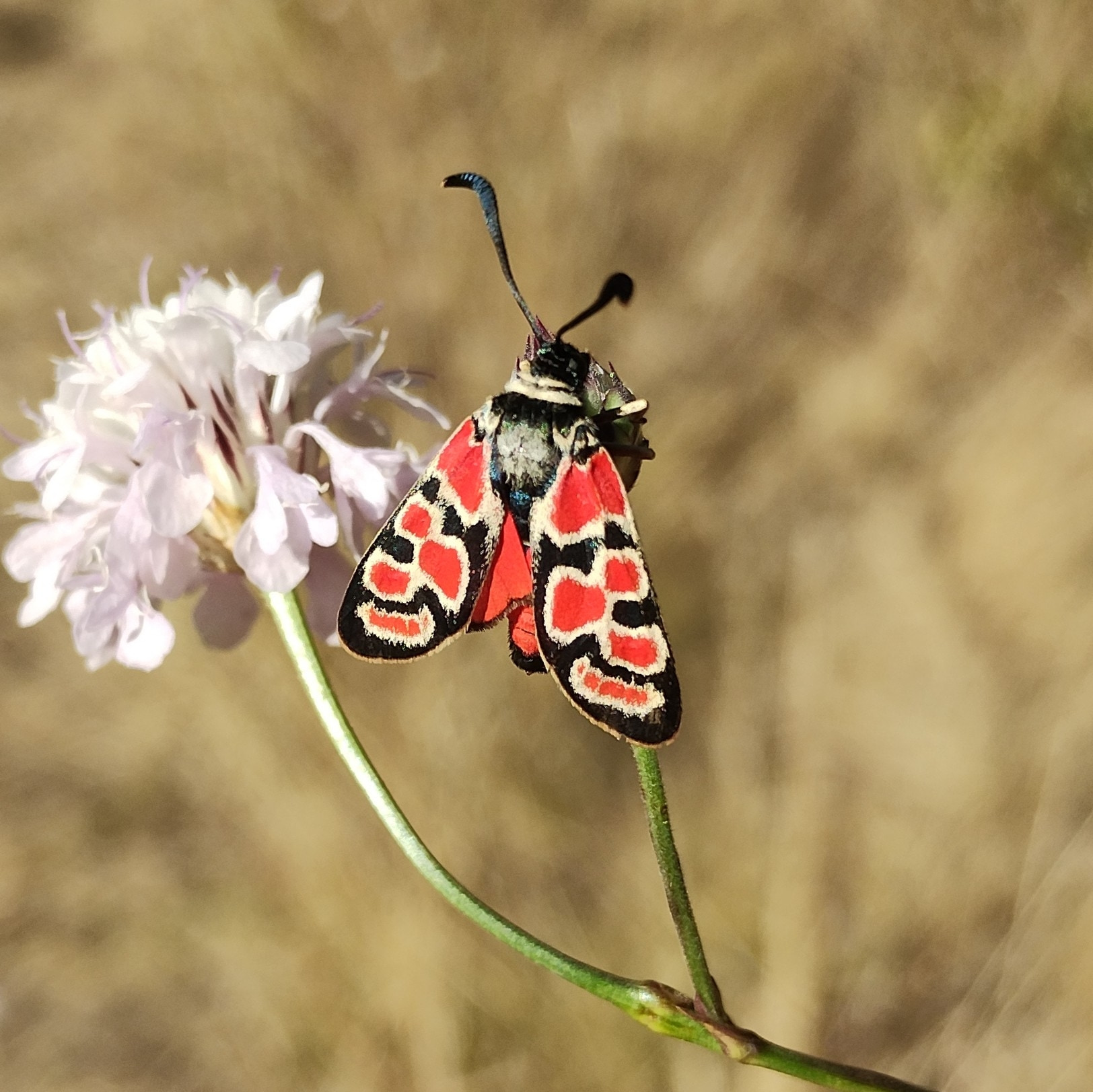
The forewing has six red spots with white or yellowish borders. The outer spot is often crescent-shaped and runs parallel to the wing edge. In Central Europe this border makes it easy to tell from other burnets.
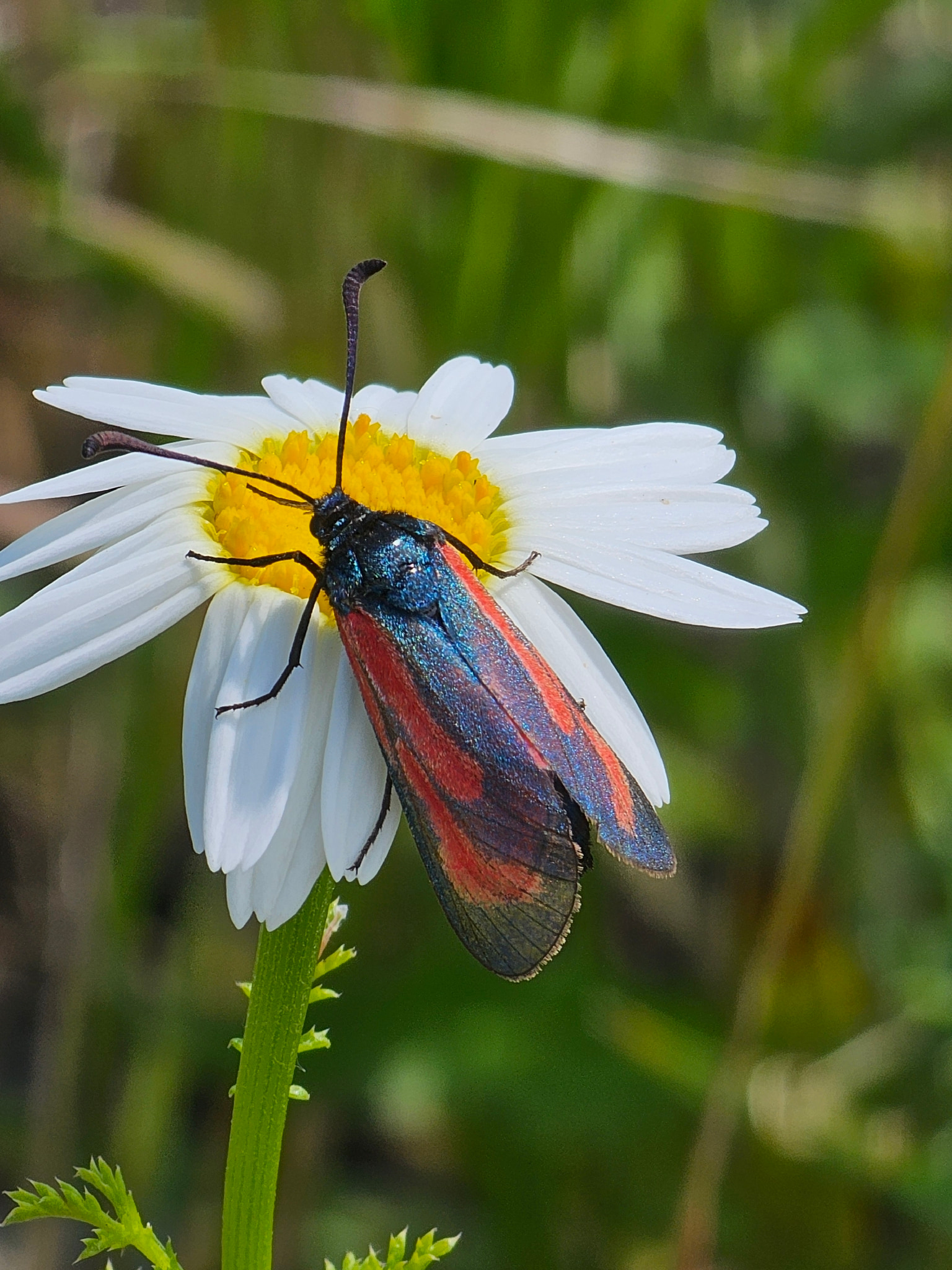
The border is sometimes very weak or absent, and the red varies in strength. The species unites some twenty different forms. Do not identify it by one feature alone.
The abdomen is bluish-black, sometimes with a red belt. The antennae thicken towards the tip into a stout club. The legs are bluish-black, yellowish underneath.
Colour
The ground colour is bluish-black with a metallic sheen, with red spots and white or yellowish borders. The hindwing is red with a black edge. Colour and pattern vary a great deal: some have straw-yellow spots instead of red, and in some Asian forms white covers almost the whole forewing.
Swatches are illustrative. Do not identify a species by colour alone.
The crepuscular burnet is a moth of warm, dry places. It lives in grasslands, especially on limestone, on steppe slopes and in dry pastures. These are the places where its caterpillar's food plants, legumes, grow. It occurs over most of Europe except the British Isles and northern Scandinavia, and east from Asia Minor to Iran. It has been known from Georgia since the 19th century.
The crepuscular burnet has been known from Georgia since the 19th century. Most records come from Samtskhe-Javakheti, around Borjomi and Akhaltsikhe, and from Mtskheta-Mtianeti: Ananuri, Gergeti and Khevsureti. It has also been found in Kakheti, Shida Kartli, Abkhazia, Tbilisi, Imereti and Adjara. Adults have been recorded from late May to July, most of them in July. Museum specimens from Borjomi, Akhaltsikhe and Adjara were collected in 1910 and 1911.
Data: Reptiles.ge + iNaturalist · Methodology
- Field observation
- Several records in one spot
- Region with records
The caterpillar feeds on legumes: sainfoin (Onobrychis) and species of Lotus, Anthyllis and Dorycnium. The main food plants are common sainfoin (Onobrychis viciifolia) and Lotus corniculatus. The adult drinks nectar from legume flowers. Most of its poisonous compounds come from Lotus: the caterpillar takes them in with its food and stores them in its body.
There is one generation a year. Depending on altitude, the moth flies from June to the end of August, and each adult lives two weeks at most. It flies slowly, and several often sit together on one flower. In the evening they spend the night in groups, pressed close together on a flower or a dry stem, often only males or only females. The female often mates straight after emerging, even before her wings have unfolded, and repeated mating is usual. The caterpillar hatches in August, overwinters and is fully grown by May of the next year. It grows to 20 mm, yellowish to light green, with a row of triangular black spots along each side. It pupates on a stem, in a white or yellowish egg-shaped cocoon.
Related guides
Continue with related pages
Yes, it has been known from Georgia since the 19th century. Most records come from Samtskhe-Javakheti, around Borjomi and Akhaltsikhe, and from Mtskheta-Mtianeti, from Ananuri to Khevsureti. It has also been found in Kakheti, Shida Kartli, Abkhazia, Tbilisi, Imereti and Adjara. It chooses warm, dry grasslands, steppe slopes and pastures where legumes grow.
To predators, yes. The tissues of caterpillar and adult hold cyanogenic glycosides, which release hydrogen cyanide as they break down. It also contains acetylcholine and histamine. Its bold colours warn predators that it is not good to eat. Normal handling does a person no harm.
By the six red spots on the forewing, edged white or yellowish. The outer spot is often crescent-shaped, and the hindwing is red with a black edge. The border is sometimes weak or missing, so do not rely on it alone. A photo from above shows every feature.
The caterpillar eats legumes: sainfoin (Onobrychis), Lotus, Anthyllis and Dorycnium. Its main food plants are common sainfoin and Lotus corniculatus. The adult drinks nectar from legume flowers.
References
What this profile is based on
Species profiles are compiled from peer-reviewed literature and established biodiversity databases, and are reviewed as new taxonomic and conservation data become available.
Prepared by the Reptiles.ge editorial team from the sources listed here.