
Six-spot burnet
Zygaena filipendulae
Modest Reindeer · Georgia
Key facts in one look
- Size
- Wingspan 30–40 mm
- Group
- Insect
- Family
- Zygaenidae
- Status in Georgia
- Native species
- Activity
- May–September, by day
- Conservation
- NE
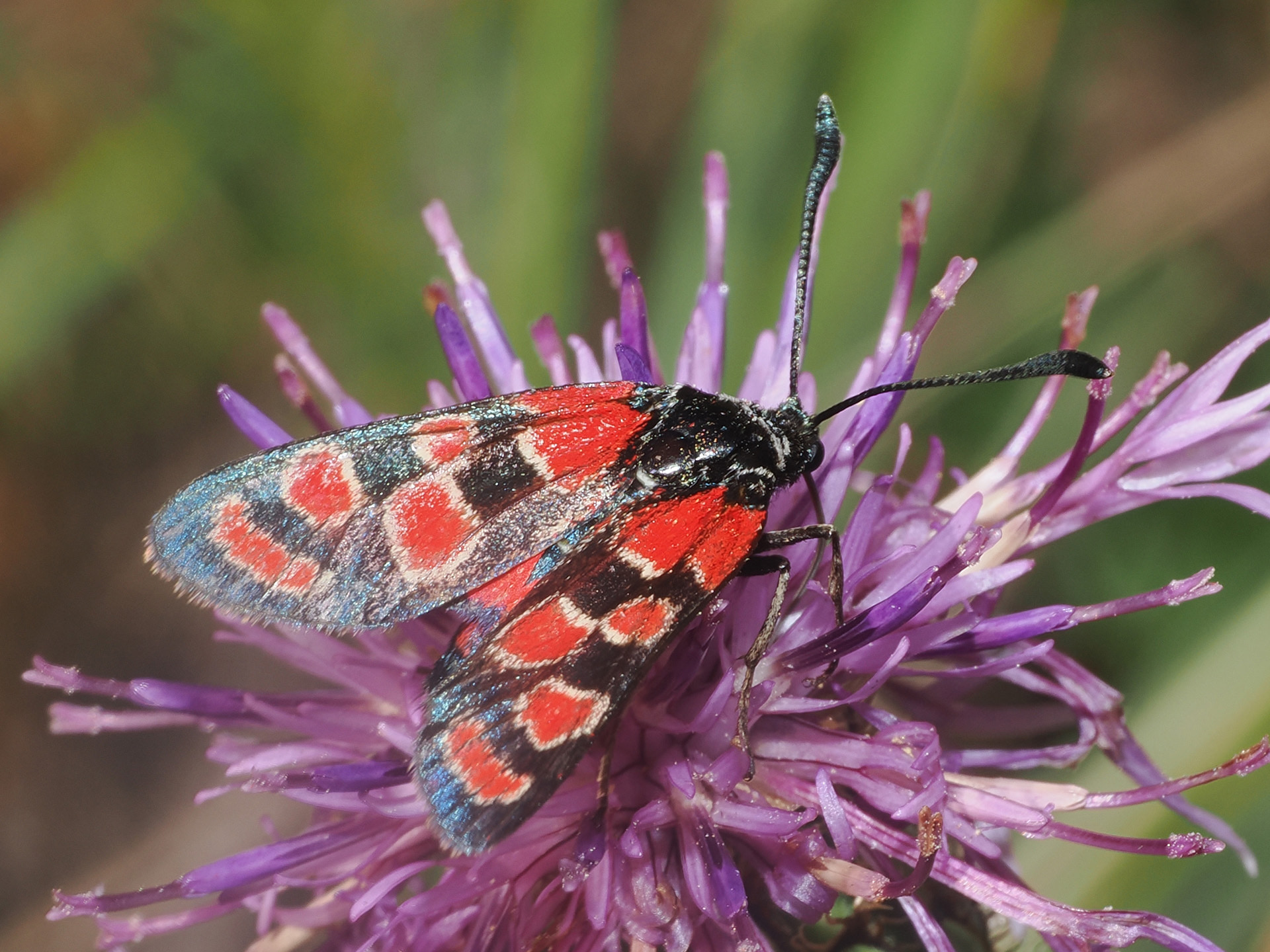
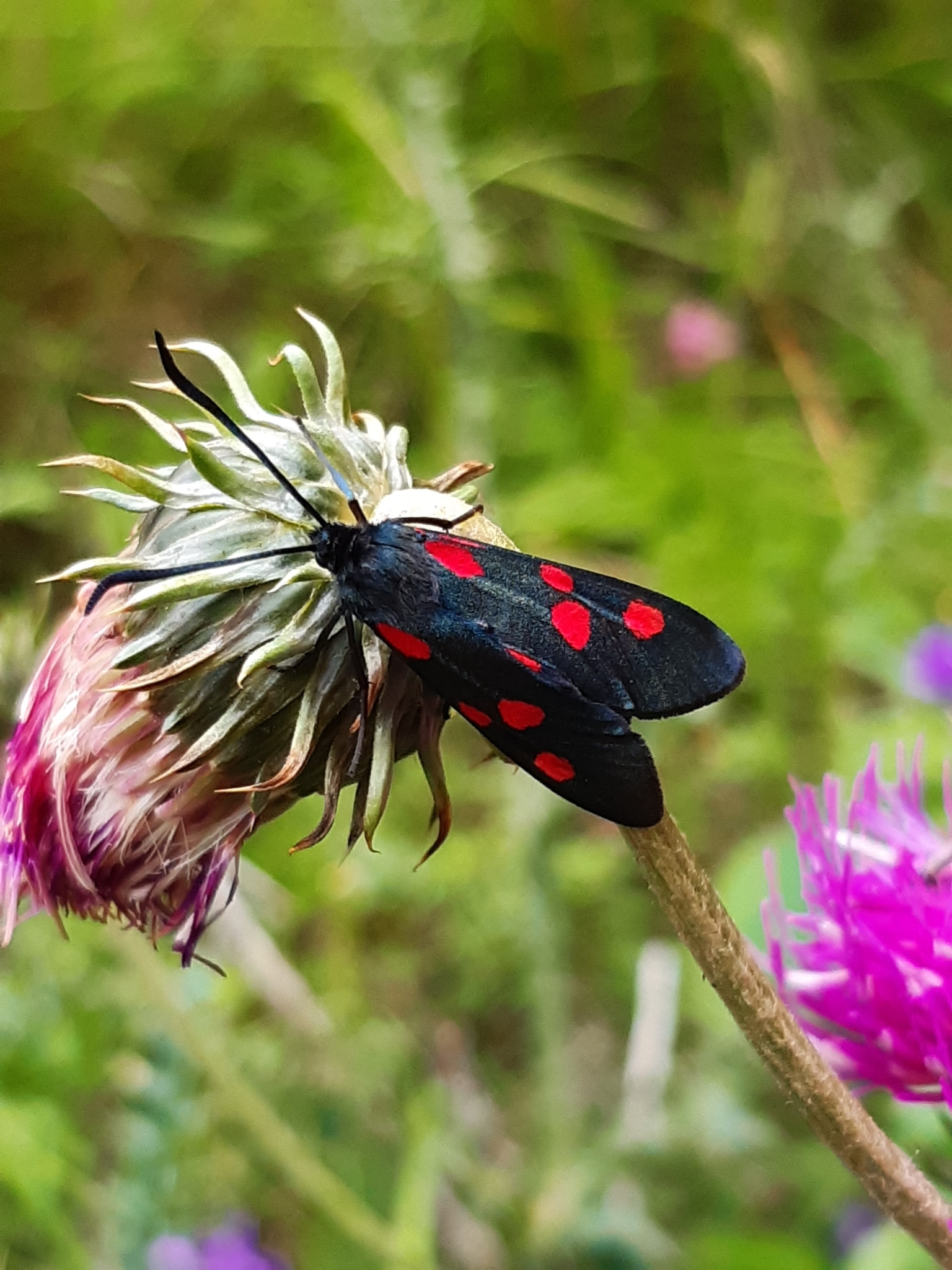
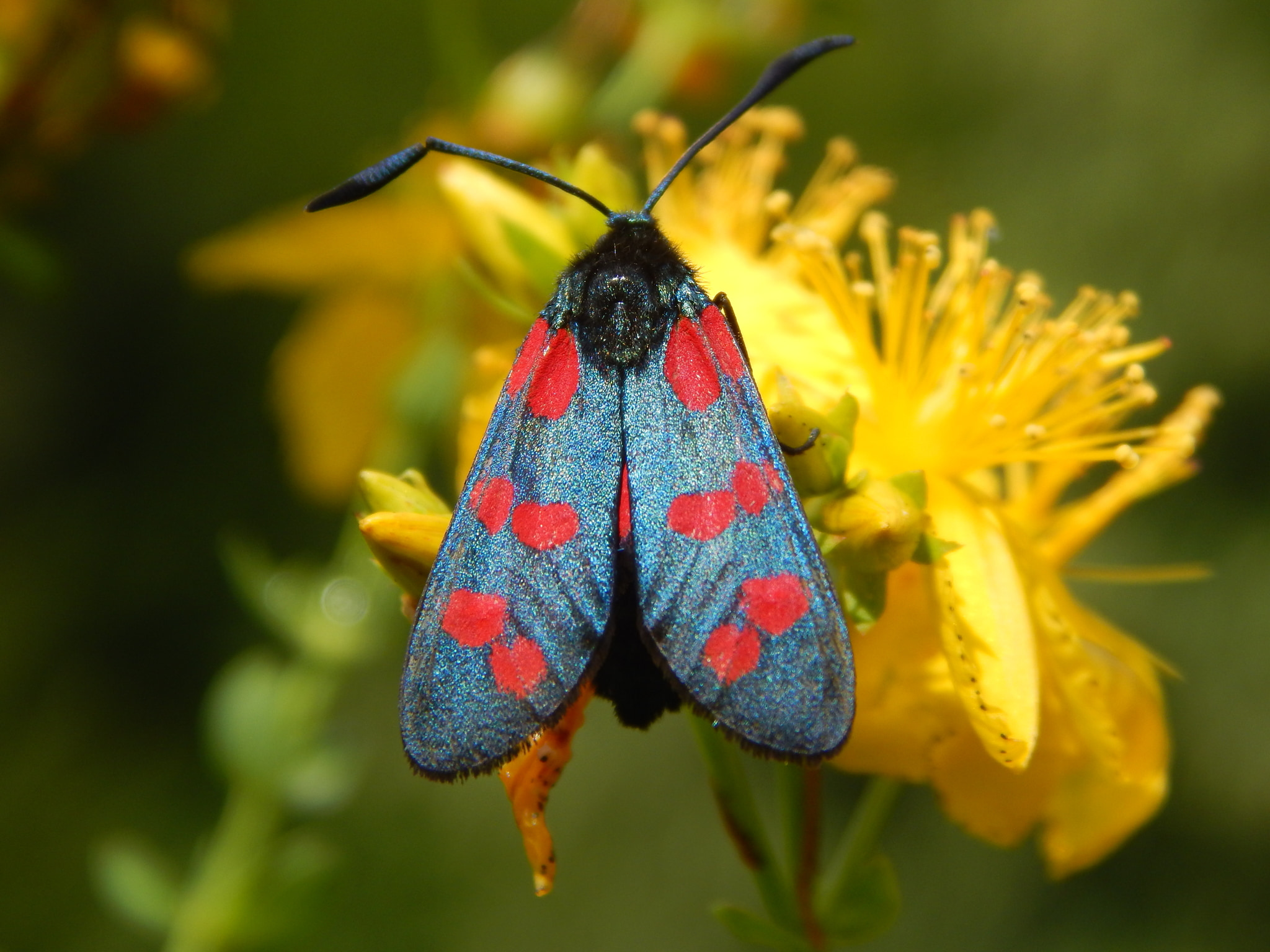
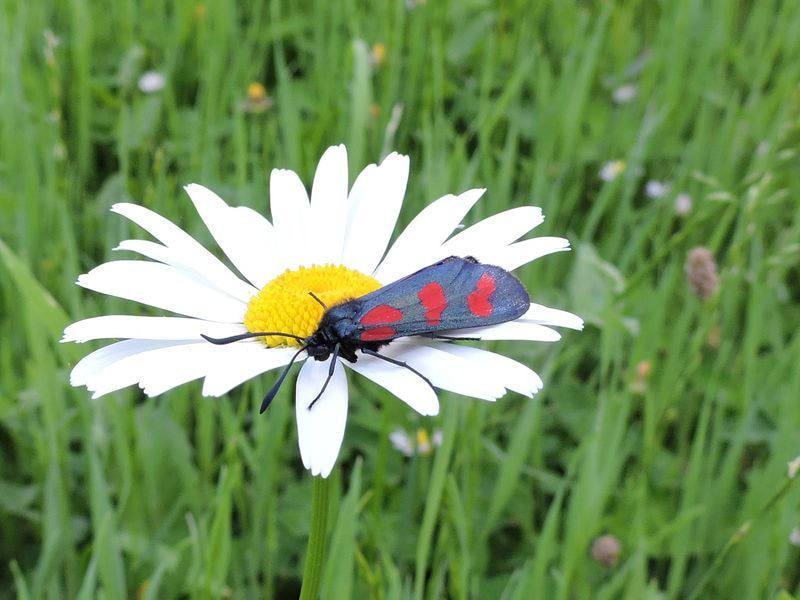
The six-spot burnet (Zygaena filipendulae) flies on hot, sunny summer days and makes no effort to hide its bright colours. Its dark, metallic green forewing bears six red spots, and the hind wing is red. These are warning colours: it carries cyanide at every stage of its life and is toxic to birds and lizards. It is native to Georgia and has been known from the country since 1884. The spots sometimes merge, so a five-spot burnet is not always another species.
Identification
Six-spot burnet: how to identify it
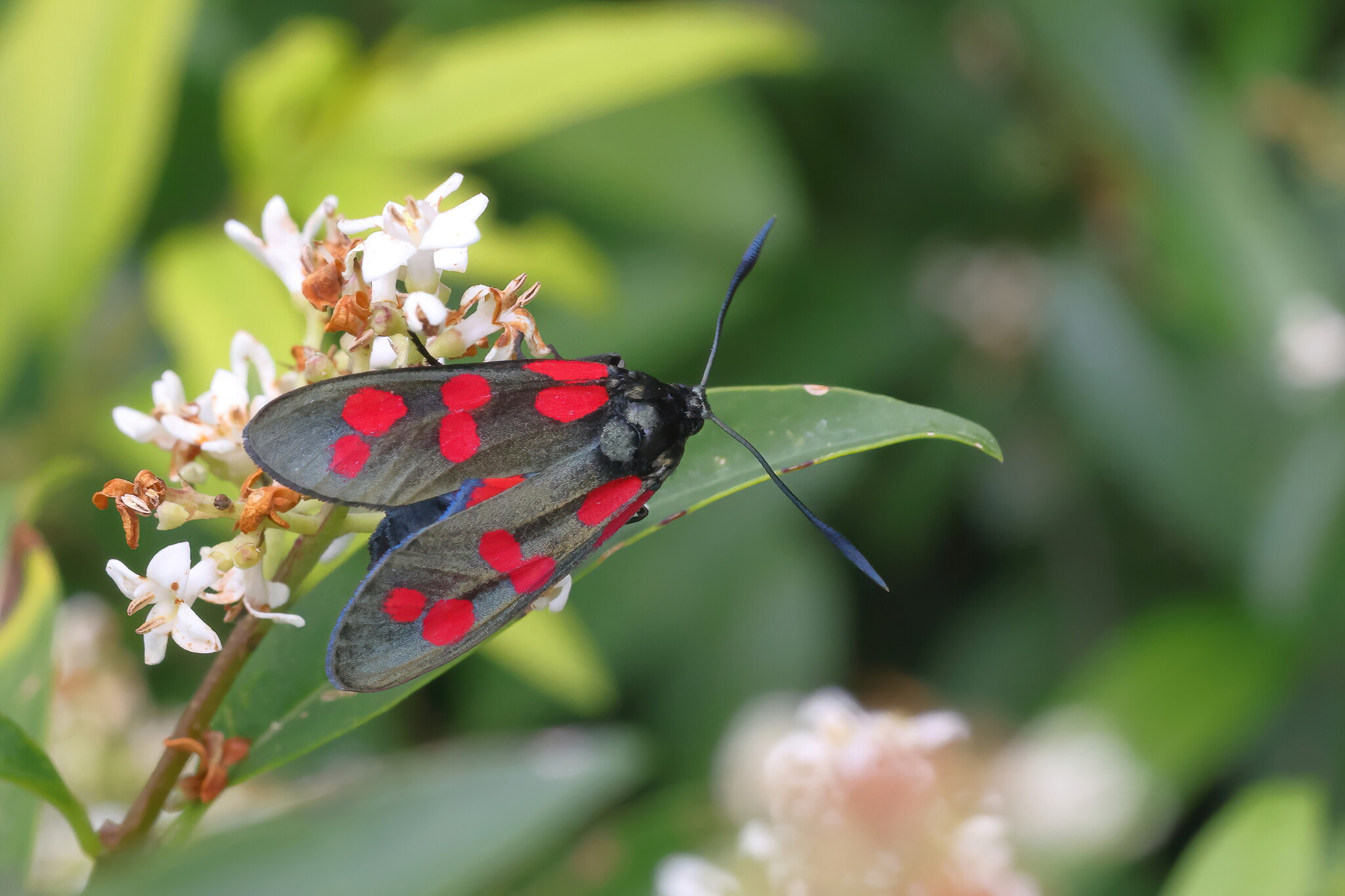
A medium-sized burnet with a wingspan of 30–40 mm. The dark, metallic green forewing usually has six red spots, and the hind wing is red with a blackish border. The sexes look alike. The spots sometimes merge, and then it is confused with five-spot burnets.
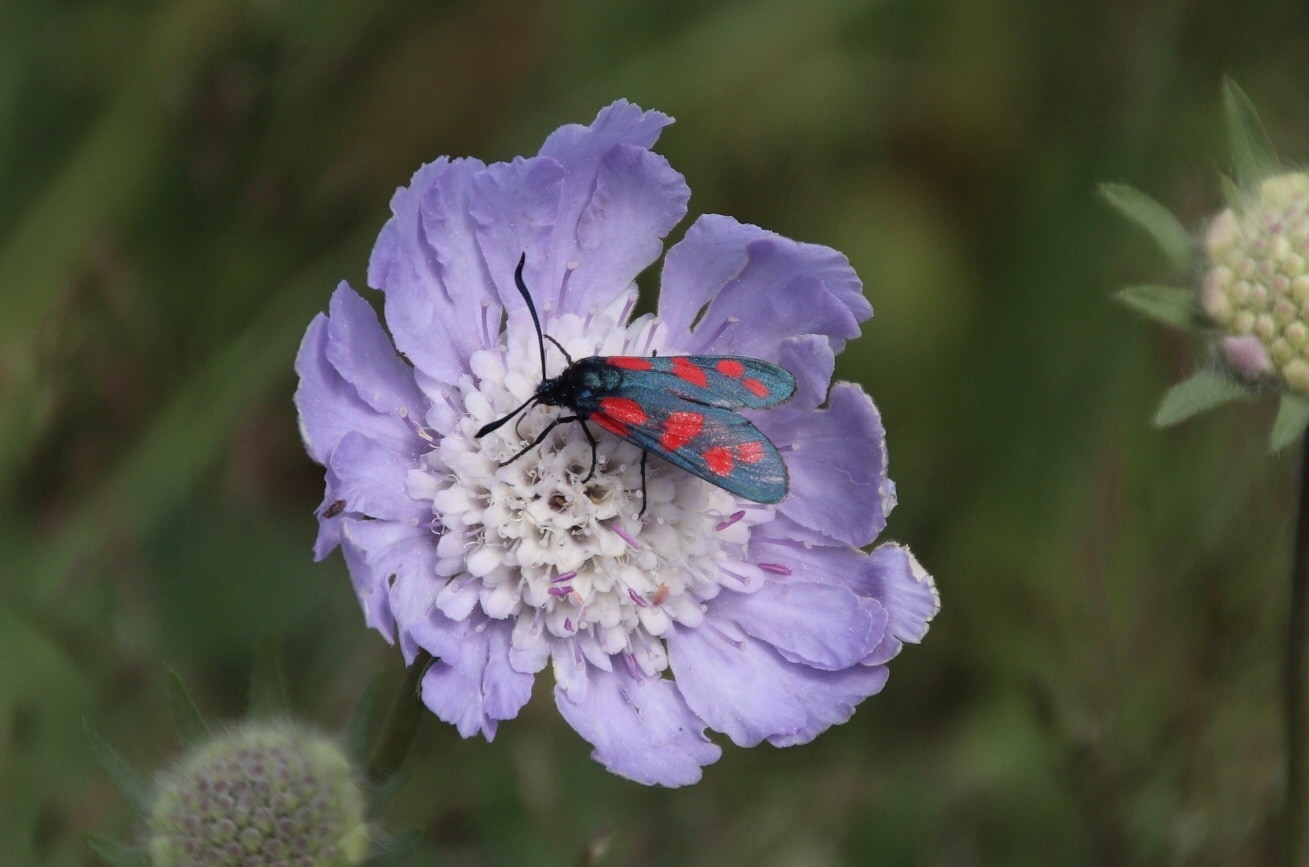
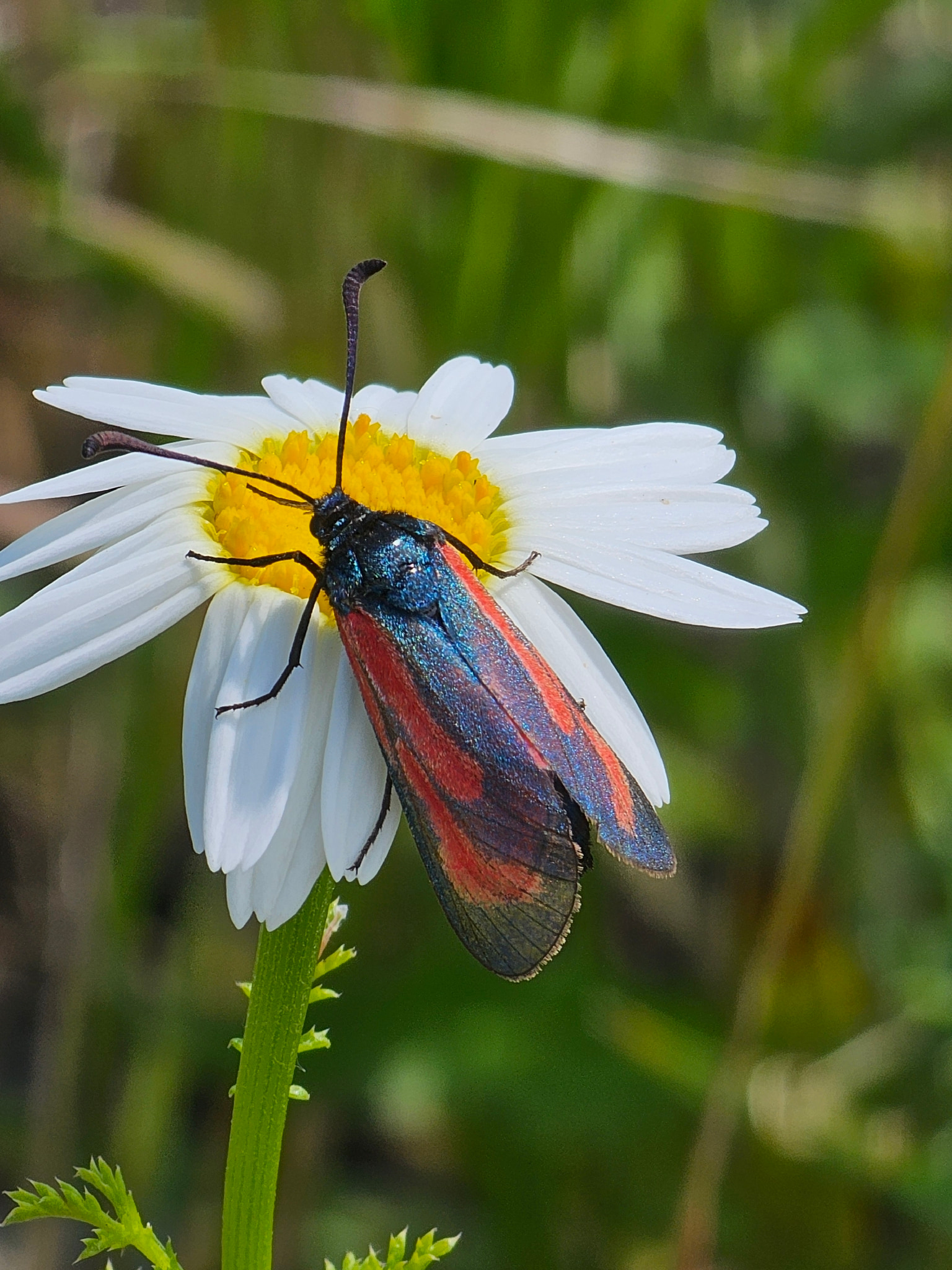
The six red spots are the key feature. The two front spots can merge, and then the moth looks like a five-spot burnet. Similar species include Zygaena lonicerae, Z. transalpina, Z. trifolii and Z. viciae, so five spots alone do not prove another species.
The body is short and stout. The long antennae end in a characteristic club. It flies slowly, so these features are easy to see on a moth resting on a flower.
The caterpillar is plump and hairy, usually pale green with rows of black spots. It reaches about 22 mm and has a black head. Sometimes the black markings are so strong that the whole body looks black.
Colour
The forewing is dark metallic green, sometimes black with a greenish sheen, with vivid red spots. Rarely the spots are yellow or even black. The hind wing is bright red with a blackish border. The subspecies differ in the shape and size of the spots.
Swatches are illustrative. Do not identify a species by colour alone.
The six-spot burnet is a moth of places rich in grasses and flowers. It lives in meadows, woodland clearings and on sea cliffs, and in the mountains it reaches 2,000 m. It prefers dry fields and abandoned gravel pits with sparse vegetation, but also occurs in marshy places. It is a sedentary moth: it usually stays within a few hundred metres and cannot cross heavily altered landscapes. It is native to Georgia.
The six-spot burnet is native to Georgia and has been known from the country since 1884. Most records come from Mtskheta-Mtianeti, around Dusheti, Kazbegi and Khevsureti, from Samegrelo-Zemo Svaneti, mostly around Mestia, and from Kvemo Kartli, around Tetritskaro and Didgori. It has also been found in Imereti, Kakheti including Tusheti, Samtskhe-Javakheti, Adjara, Abkhazia, Tbilisi and Racha-Lechkhumi and Kvemo Svaneti. Adults have been recorded from late May to September, most of them in June and July. The oldest museum specimen was collected on Iverskaya Mountain in Abkhazia in 1903.
Data: Reptiles.ge + iNaturalist · Methodology
- Field observation
- Several records in one spot
- Photo record
- Region with records
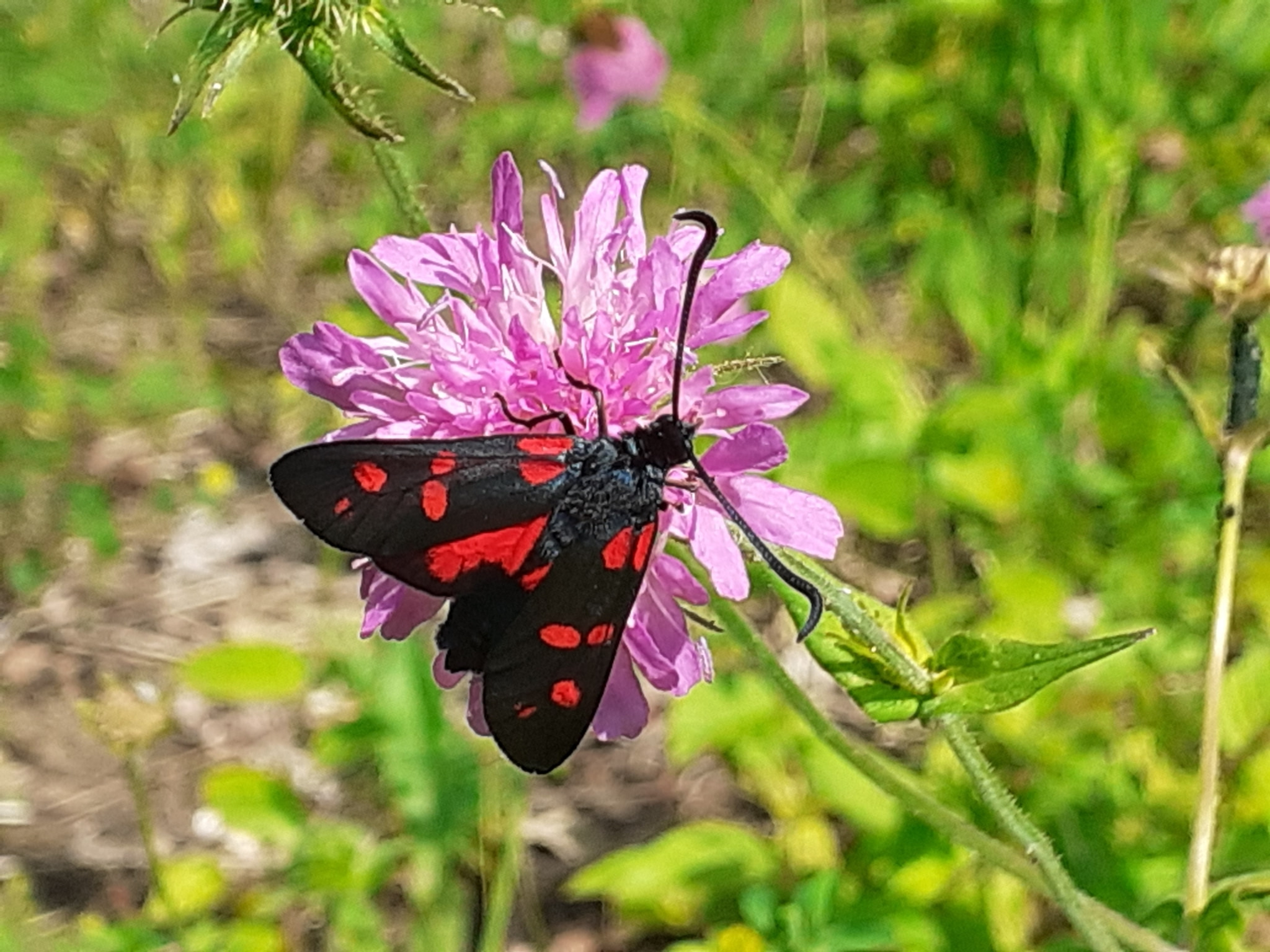
The caterpillar feeds on legumes, above all Lotus corniculatus and L. uliginosus. It also eats Coronilla and clover (Trifolium), and in southern Europe species of Dorycnium as well. The adult drinks nectar from a wide range of flowers, such as knapweed (Centaurea), scabious (Scabiosa) and the caterpillar's food plants.
It flies by day, on hot and sunny days. Its flight is slow and sluggish, from flower to flower, and it is often seen in groups and in large numbers. In Europe the adults fly from June to August, and there is one generation a year. The female lays her eggs on the food plant in July–August. The caterpillar feeds until autumn, overwinters and is fully grown in June of the next year, and some overwinter a second time. To pupate it spins an elongated, yellowish-white, papery cocoon on a grass stem. When threatened, the adult plays dead and releases a yellow, foul-smelling liquid from its joints. The liquid it releases when attacked contains cyanide.
It has not been assessed on the global IUCN Red List (NE). It is not on Georgia's Red List. It is widespread in Europe, but it is declining in many regions and has nearly vanished from intensively farmed landscapes. It is threatened by intensive grassland use, tree planting, scrub encroachment, fertiliser and frequent mowing. It is listed as a rare species (category 3) in the Red Data Book of Moscow.
Related guides
Continue with related pages
Yes. It is native to Georgia and has been known from the country since 1884. It chooses places rich in grasses and flowers: meadows, woodland clearings and dry fields. Look for it in a flowering meadow on a sunny summer day.
No, it poses no danger to people. It carries cyanide at every stage of its life, and its bright colours warn birds and lizards that it is toxic. When attacked it releases a liquid that contains cyanide. Still, there is no need to catch or squeeze the moth; a photo is enough.
Mostly, but not always. The two front spots can merge, and then the moth looks like a five-spot burnet. Rarely the spots are yellow or even black. Twenty-five subspecies are known, differing in the shape and size of the spots, so do not identify the species by counting spots alone.
The caterpillar eats legumes, above all species of Lotus, and also Coronilla and clover. The adult drinks nectar from knapweed, scabious and other flowers. A flowering meadow feeds both stages.
References
What this profile is based on
Species profiles are compiled from peer-reviewed literature and established biodiversity databases, and are reviewed as new taxonomic and conservation data become available.
Prepared by the Reptiles.ge editorial team from the sources listed here.