
Conehead mantis
Empusa pennicornis
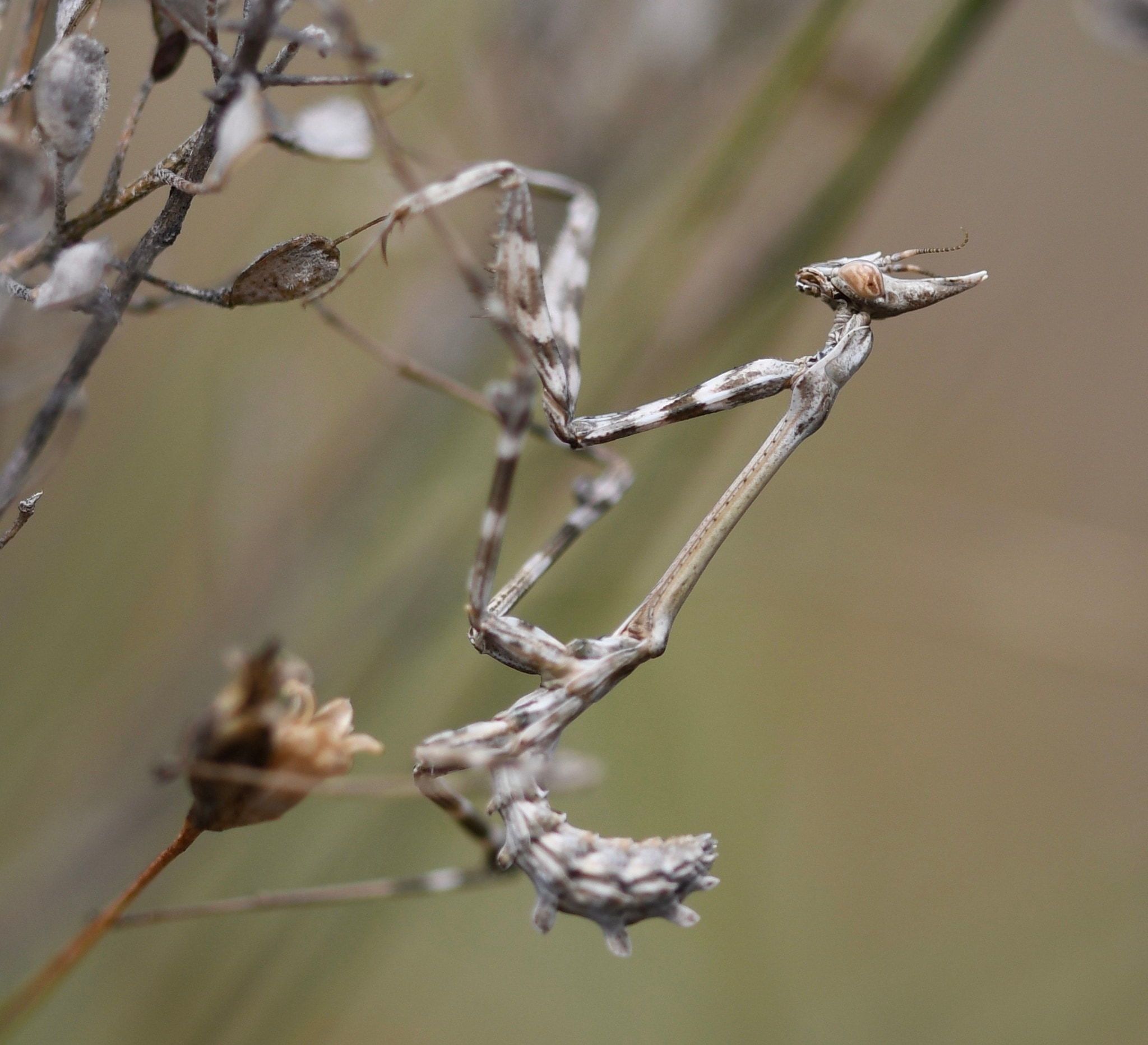
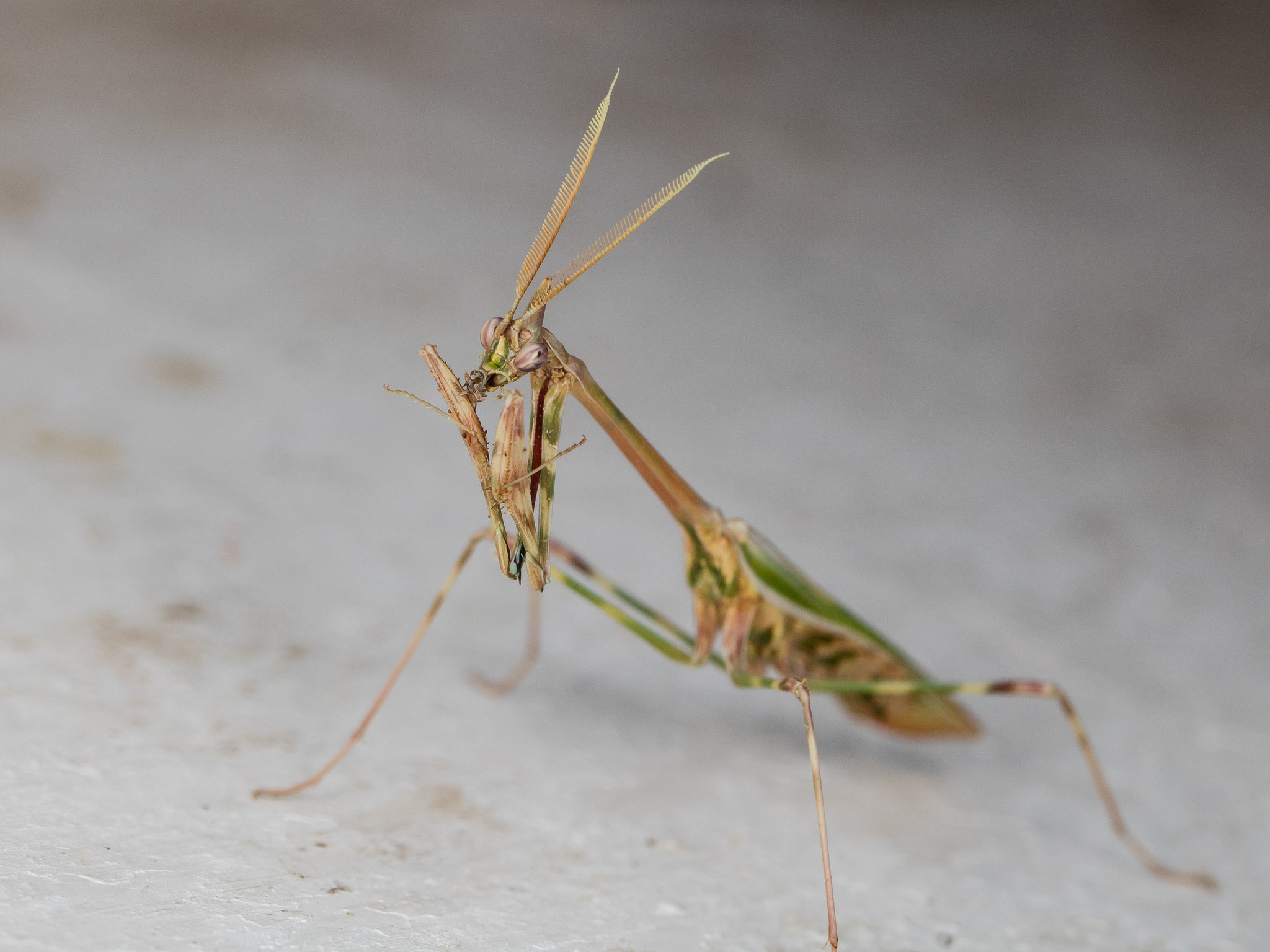
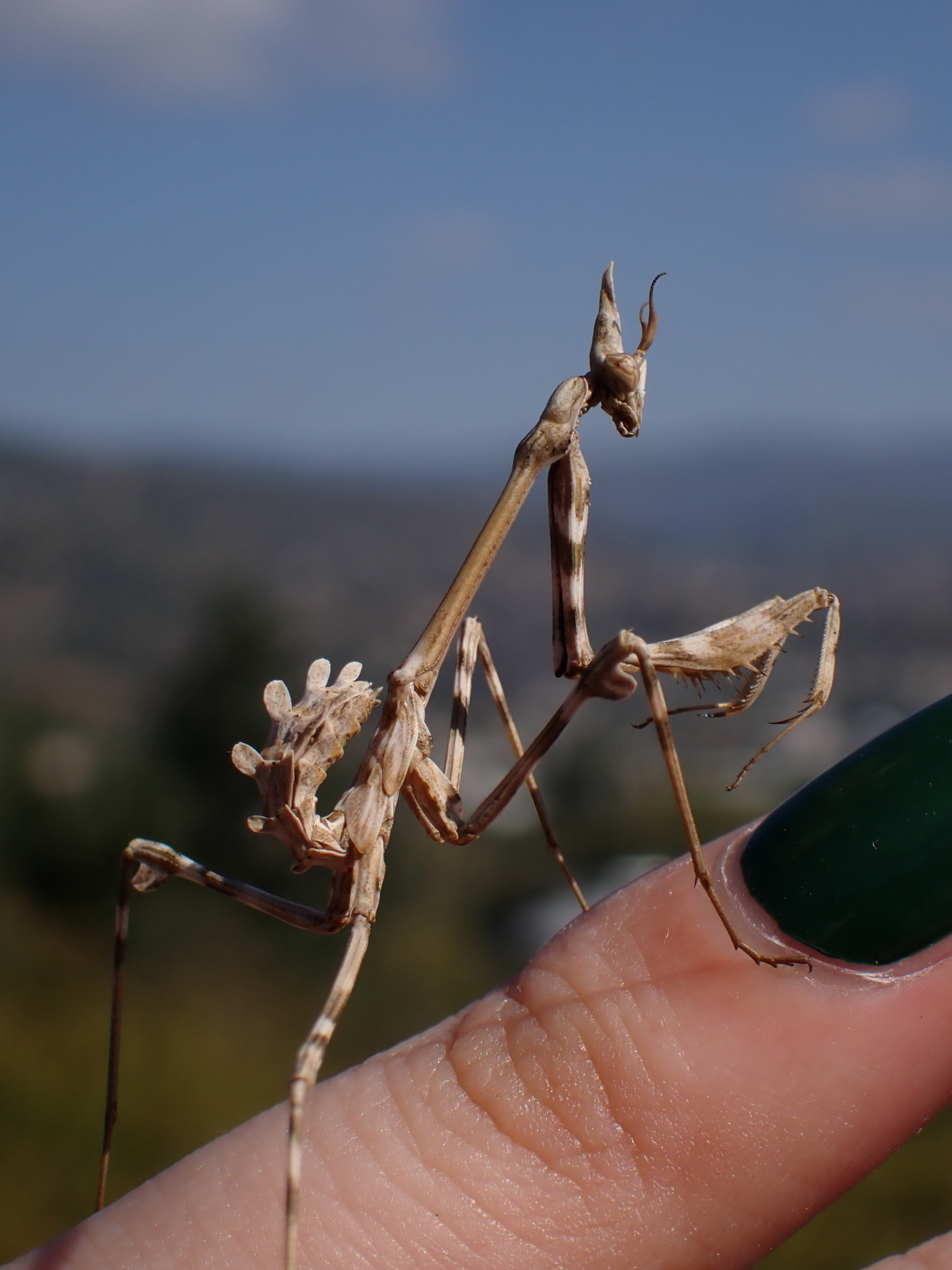
Matthieu Gauvain · Darvoz
Key facts in one look
- Size
- 55–60 mm
- Group
- Insect
- Family
- Empusidae
- Range
- Northern Black Sea to Central Asia
- Status in Georgia
- Native, eastern Georgia
- Conservation
- DD
The conehead mantis (Empusa pennicornis) is the only mantis in Georgia that spends the winter as a nymph. It lives in eastern Georgia and adapts to many kinds of places. It is a large, elongated insect with an upward-pointing spike on its head. The male has feathery antennae, which give the species its Georgian name. It is harmless to people, so take a photo and leave it where it is.
Identification
Conehead mantis: how to identify it
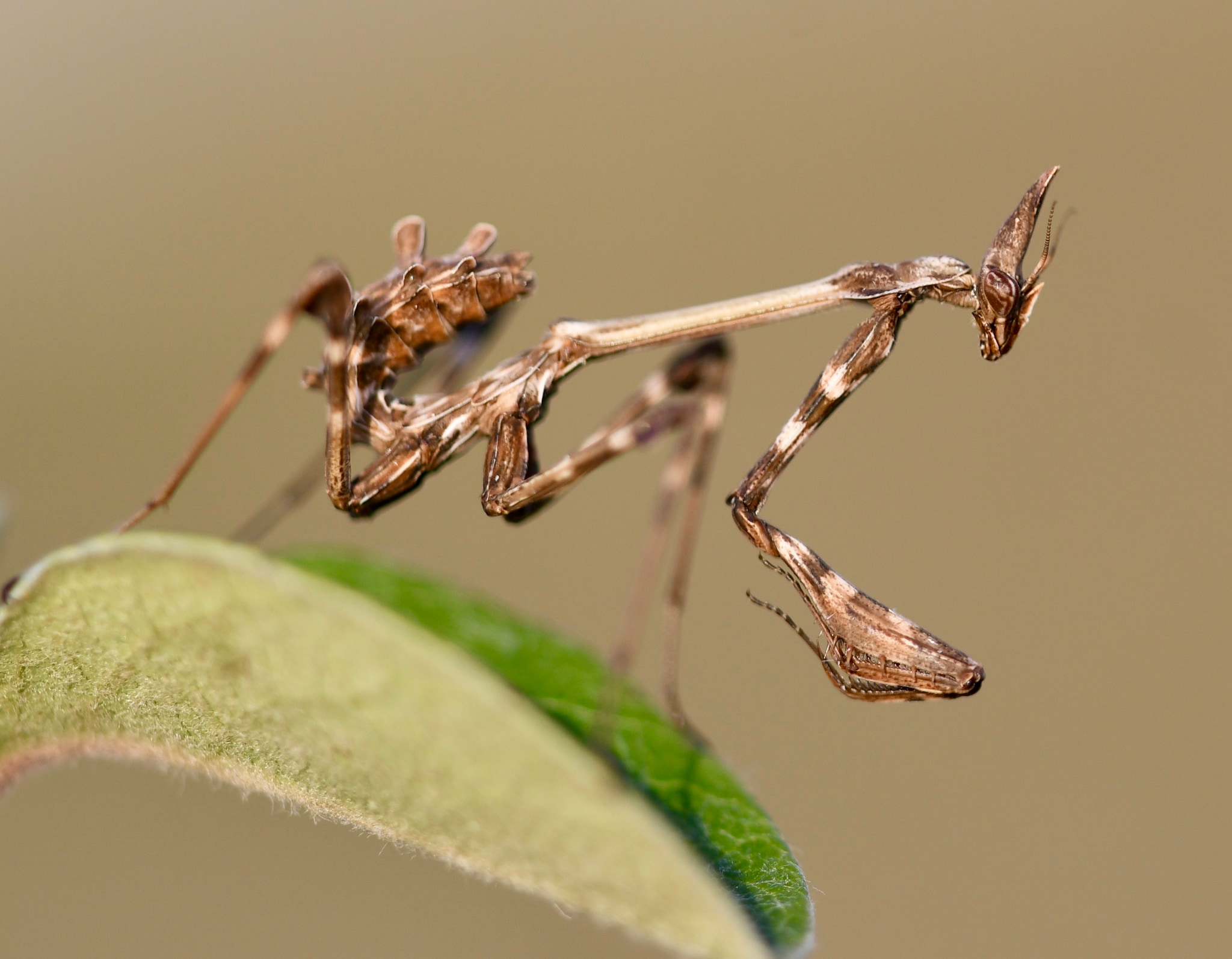
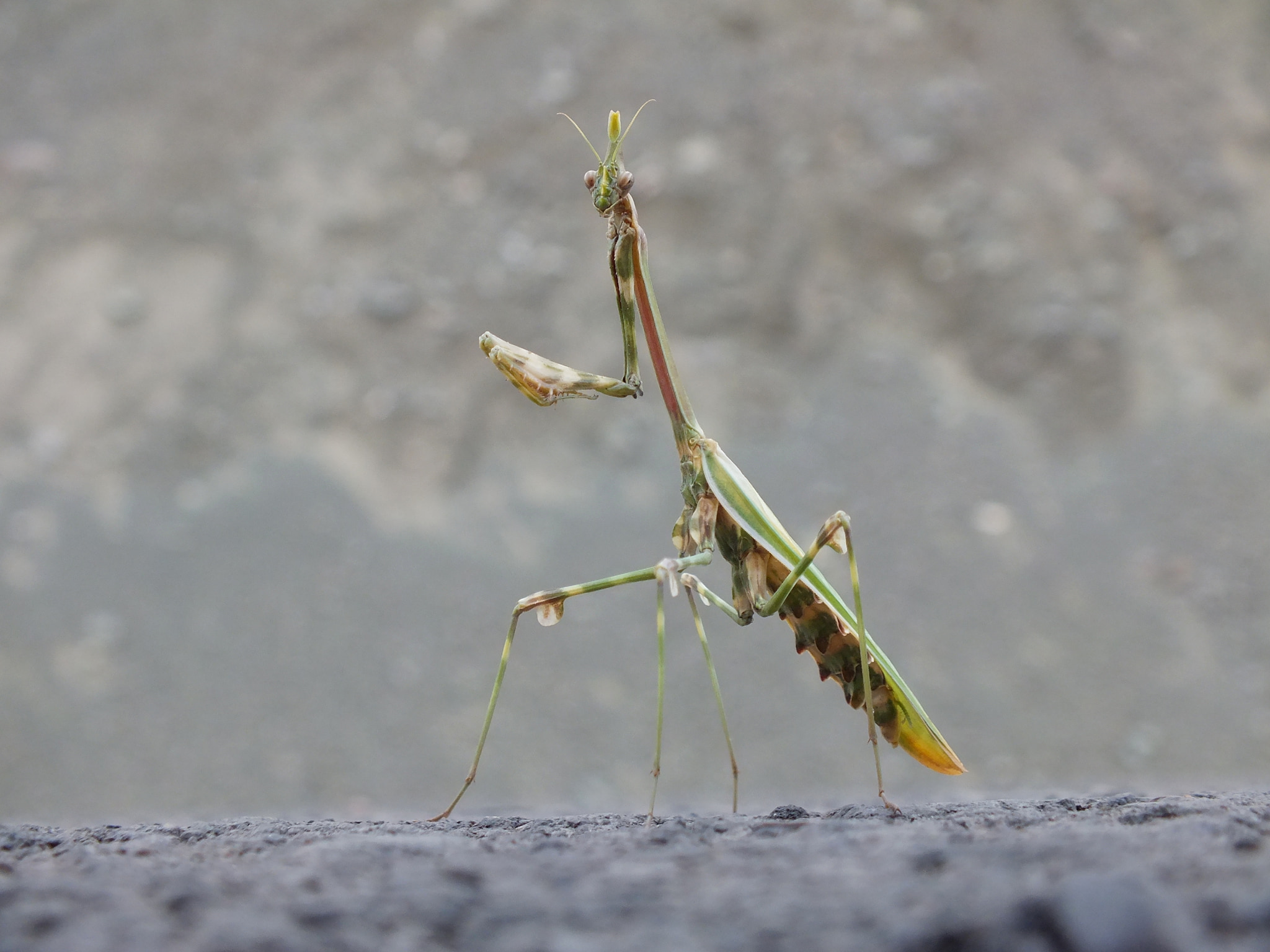
A large and very elongated mantis, with a body 55–60 mm long. It is best recognised by the pointed, upward-facing outgrowth on its head. The male has feathery, comb-like antennae. The pronotum is long and narrow.
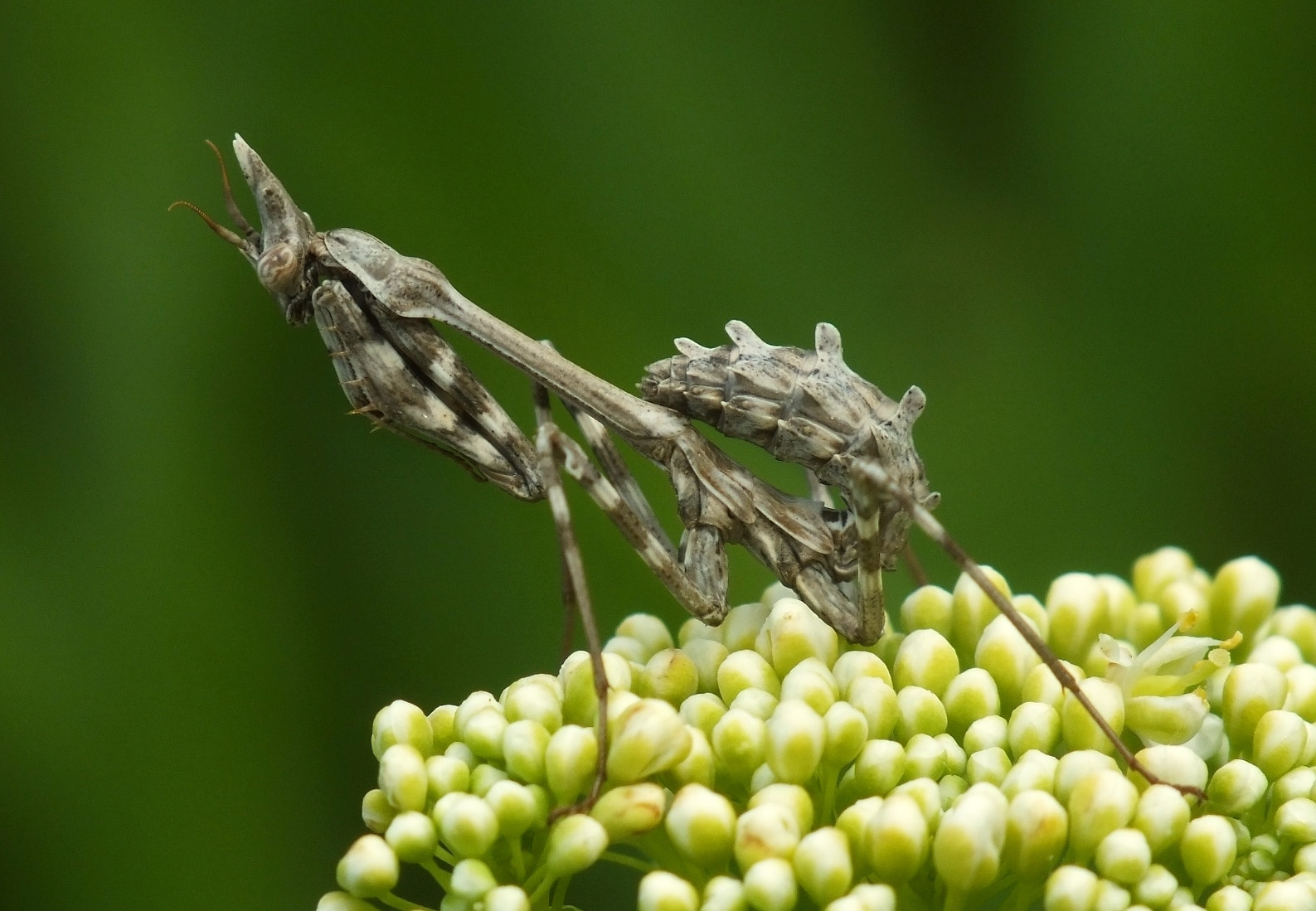
It has a clearly visible, upward-pointing cone-shaped outgrowth on its head. This shows best in a side-on photo. Keep the head and this "cap" in the frame.
The male's antennae are large and comb-like, the female's short and thread-like. You can tell the sex by the antennae.
The pronotum is elongated: its narrow part is almost three times as long as the widened front part. The middle legs have small, rounded, plate-like lobes on the coxae. You will only see these in a close photo.
Colour
The body is greenish yellow or greyish brown. There are a few pale spots on the legs.
Swatches are illustrative. Do not identify a species by colour alone.
Often confused with

The conehead mantis lives in eastern Georgia and adapts to many kinds of places. Elsewhere in its range it chooses sandy ground with sparse plants and dry steppe grass. It also lives on clay plains and in the foothills, among wormwood and mixed herbs. It spends its time on the stems and leaves of tall grasses, such as spurge and wormwood.
The conehead mantis is native to Georgia and lives in the east of the country. Most records come from Kakheti, Mtskheta-Mtianeti, Tbilisi and Kvemo Kartli. It has also been found in Shida Kartli, Samtskhe-Javakheti, Imereti and Racha. It occurs from March to November: most records fall in May, with a second, smaller rise in August and September.
Data: Reptiles.ge + iNaturalist · Methodology
- Field observation
- Several records in one spot
- Photo record
- Region with records
Both the adult mantis and its nymphs are predators and hunt various insects by day. The nymphs feed mainly on true flies, such as flies and mosquitoes. It waits for prey on the stems and leaves of tall grasses.
It is the only mantis in Georgia that spends the winter as a nymph, the larval stage. In Ukraine and southern Russia it has one generation a year. There the nymphs overwinter in leaf litter or among dry stems and carry on growing in spring. Adults appear in late June and early July, and in mid-July they lay their eggs in groups, in an egg case. The young larvae hatch in early to mid-August. The adults sit on the stems and leaves of tall grasses. The males fly to light at night, so on a summer night you may also see one at a lamp.
On the global IUCN Red List it is Data Deficient (DD, 2020): there is not enough information to assess its risk. It is not on Georgia's 2014 Red List. It is listed as rare in the Red Data Book of Ukraine and as declining in the Red Data Book of Dagestan. In Ukraine it is disappearing through ploughing of virgin steppe, steppe fires, overgrazing and pesticides.
Related guides
Continue with related pages
Yes, it is a native species and lives in eastern Georgia. More than 100 records are known from the country. It lives in many kinds of places, which shows how well it adapts. If you find one, take a photo and leave it where it is.
Because of the male's antennae. The male has large, comb-like, feathery antennae, while the female's are short and thread-like. So in a close photo it is easy to tell the sexes apart. Try to get the antennae and the head spike in the same photo.
No, the conehead mantis is harmless to people. It has no venom and does not attack people. It hunts other insects. If you find one, there is no need to pick it up; a photo is enough.
References
What this profile is based on
Species profiles are compiled from peer-reviewed literature and established biodiversity databases, and are reviewed as new taxonomic and conservation data become available.
Prepared by the Reptiles.ge editorial team from the sources listed here.