
Narrow-bordered five-spot burnet
Zygaena lonicerae
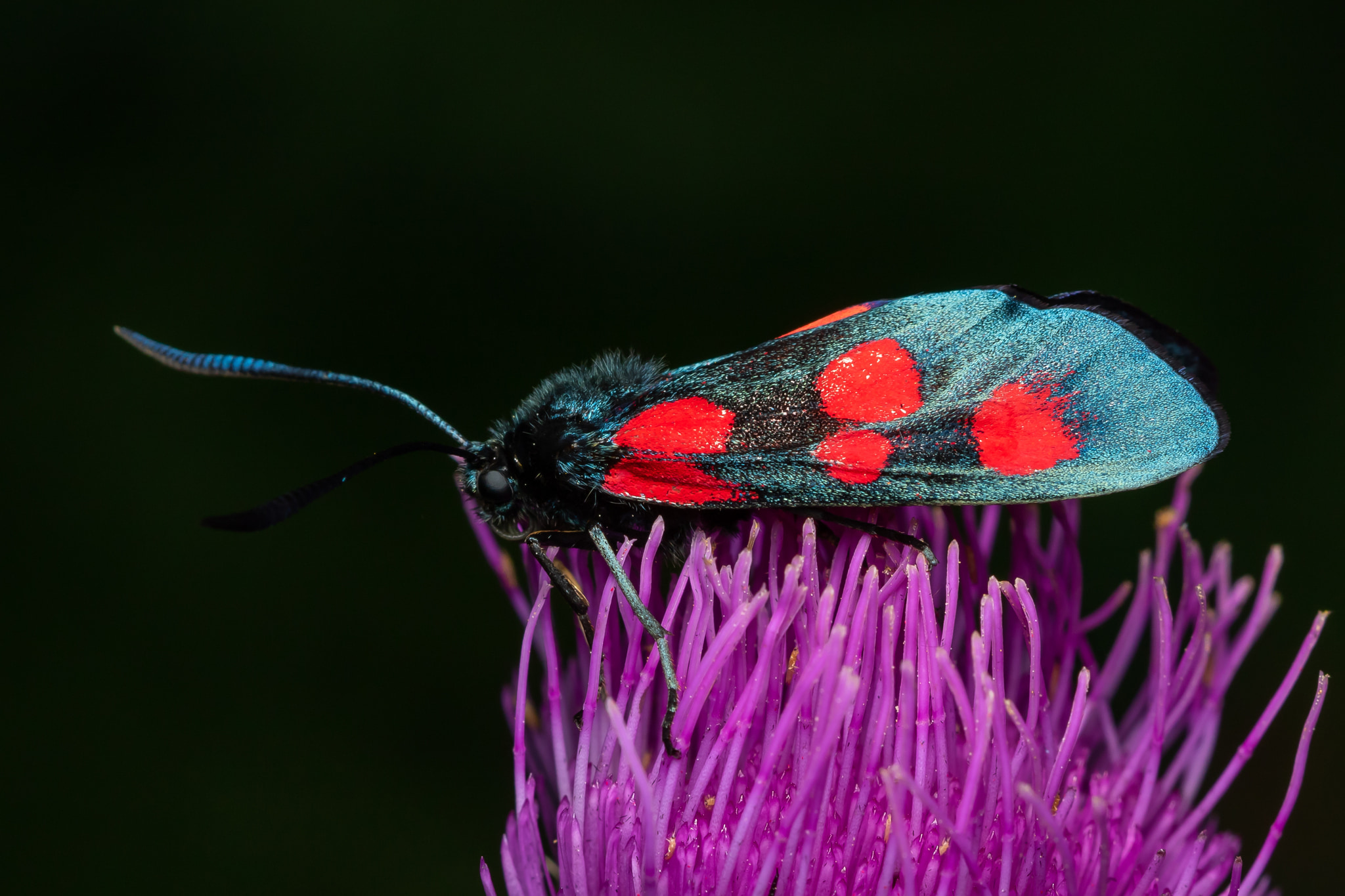
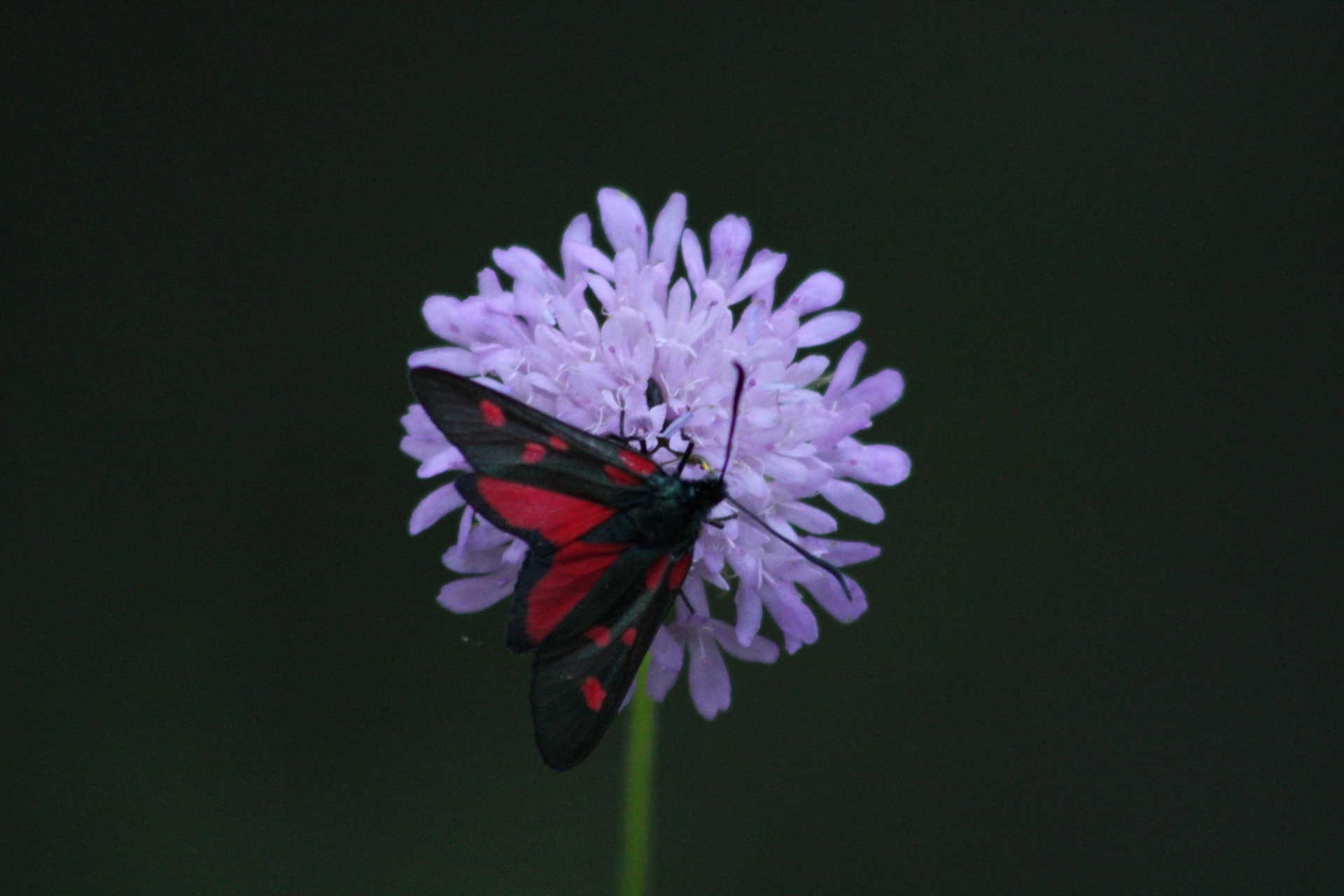
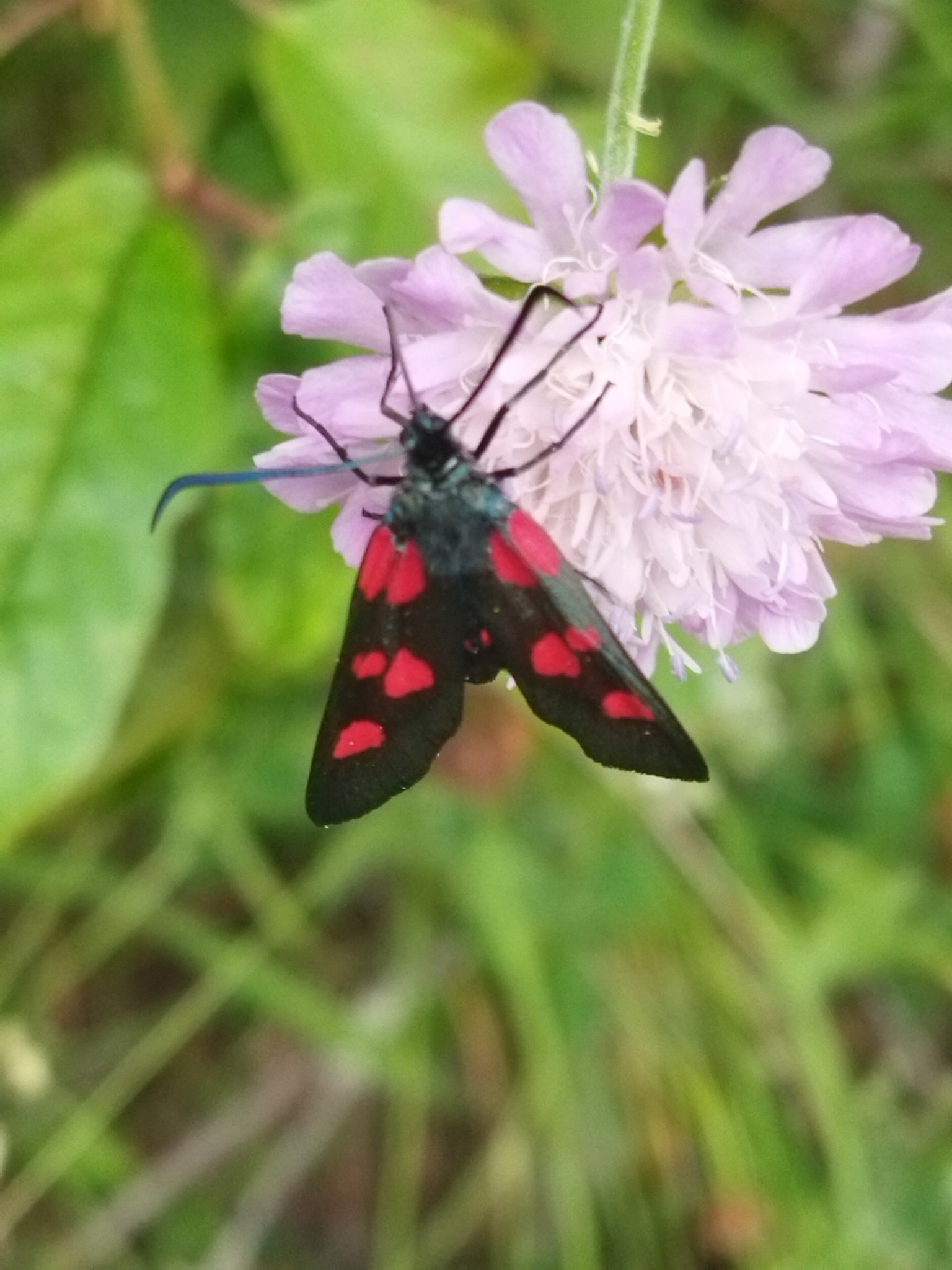
fedelf · Sottoguda-palue
Key facts in one look
- Size
- Wingspan 30–46 mm
- Group
- Insect
- Family
- Zygaenidae
- Status in Georgia
- Native species
- Activity
- June–early August, by day
- Conservation
- NE
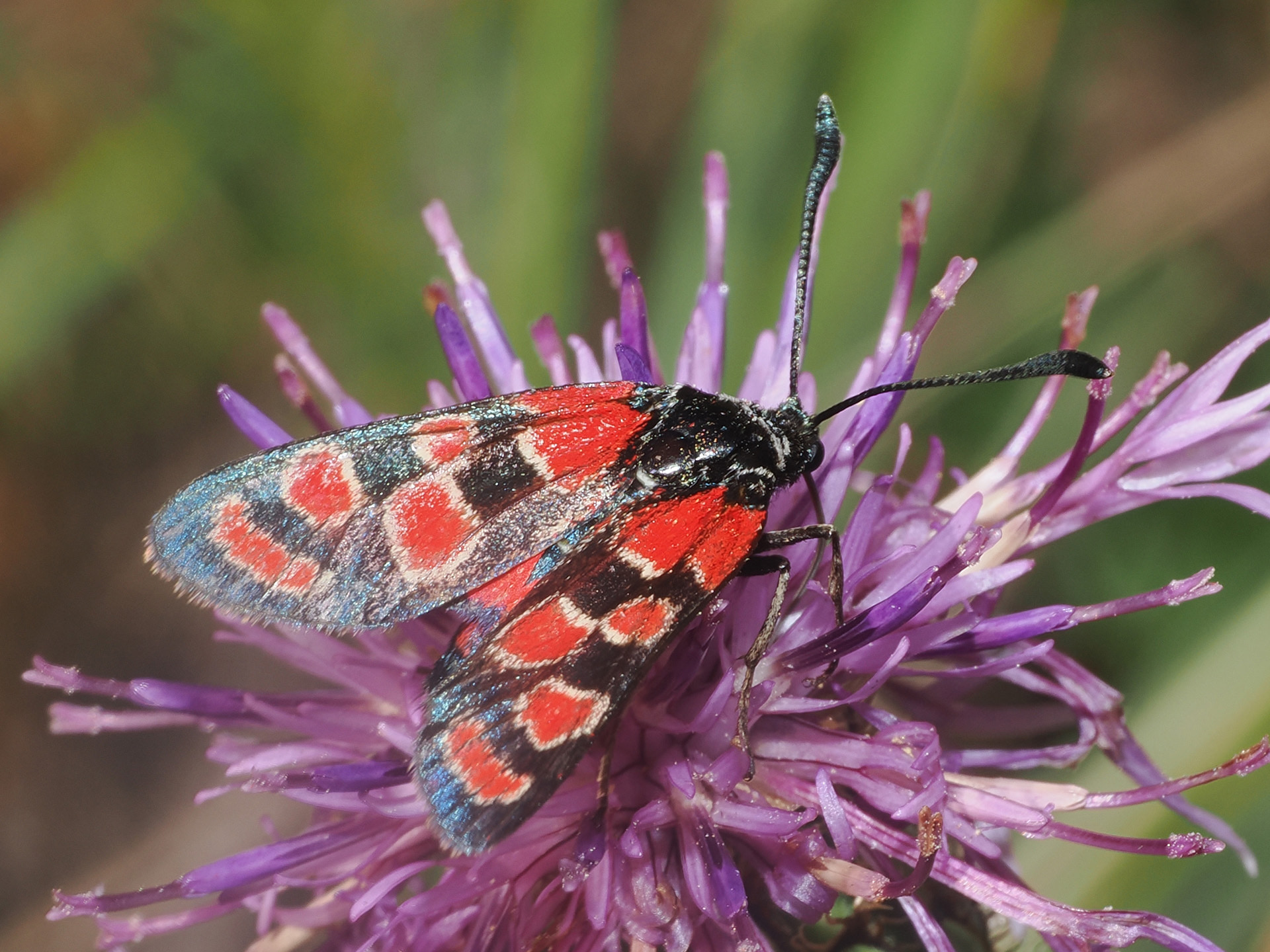
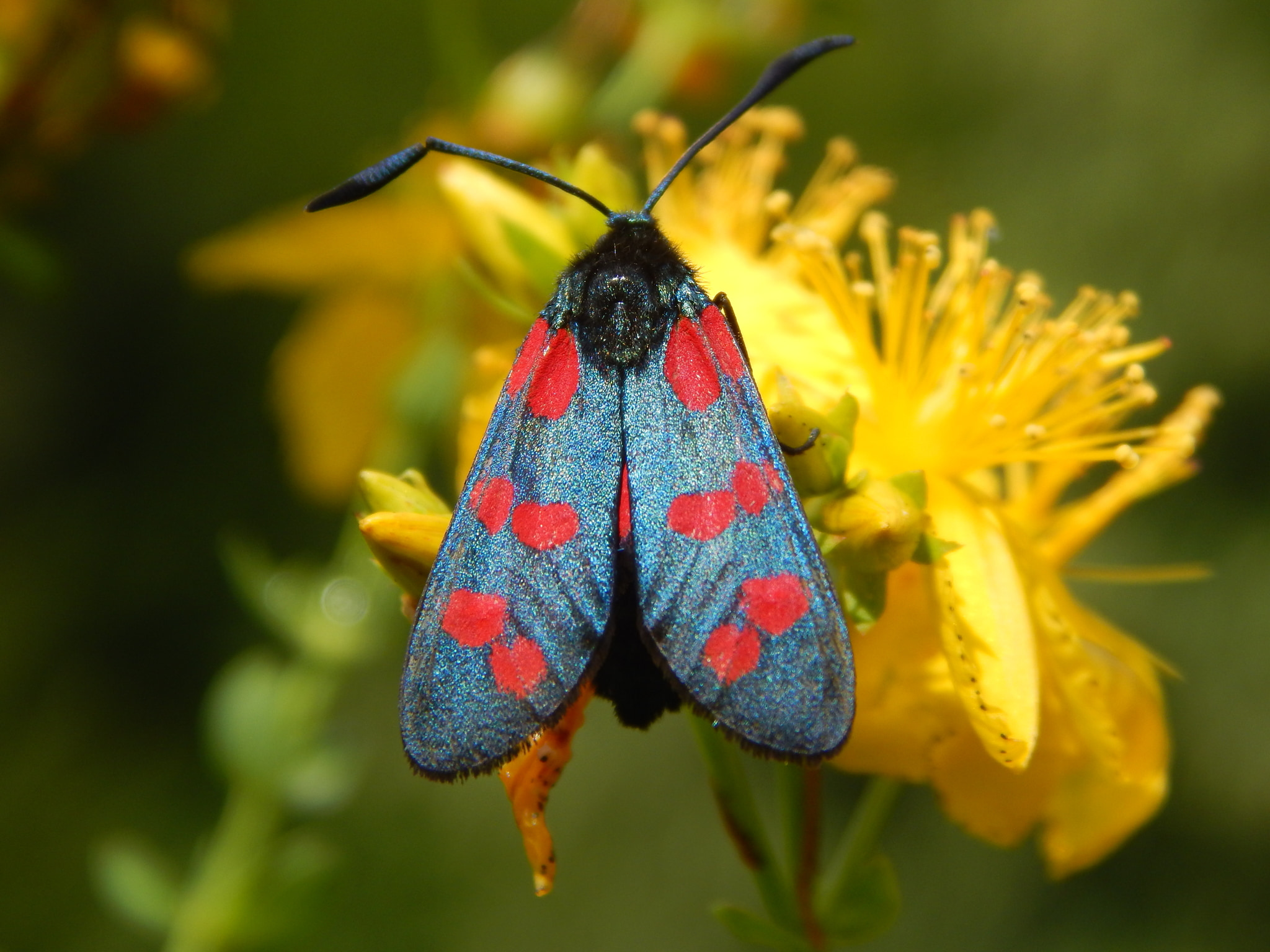
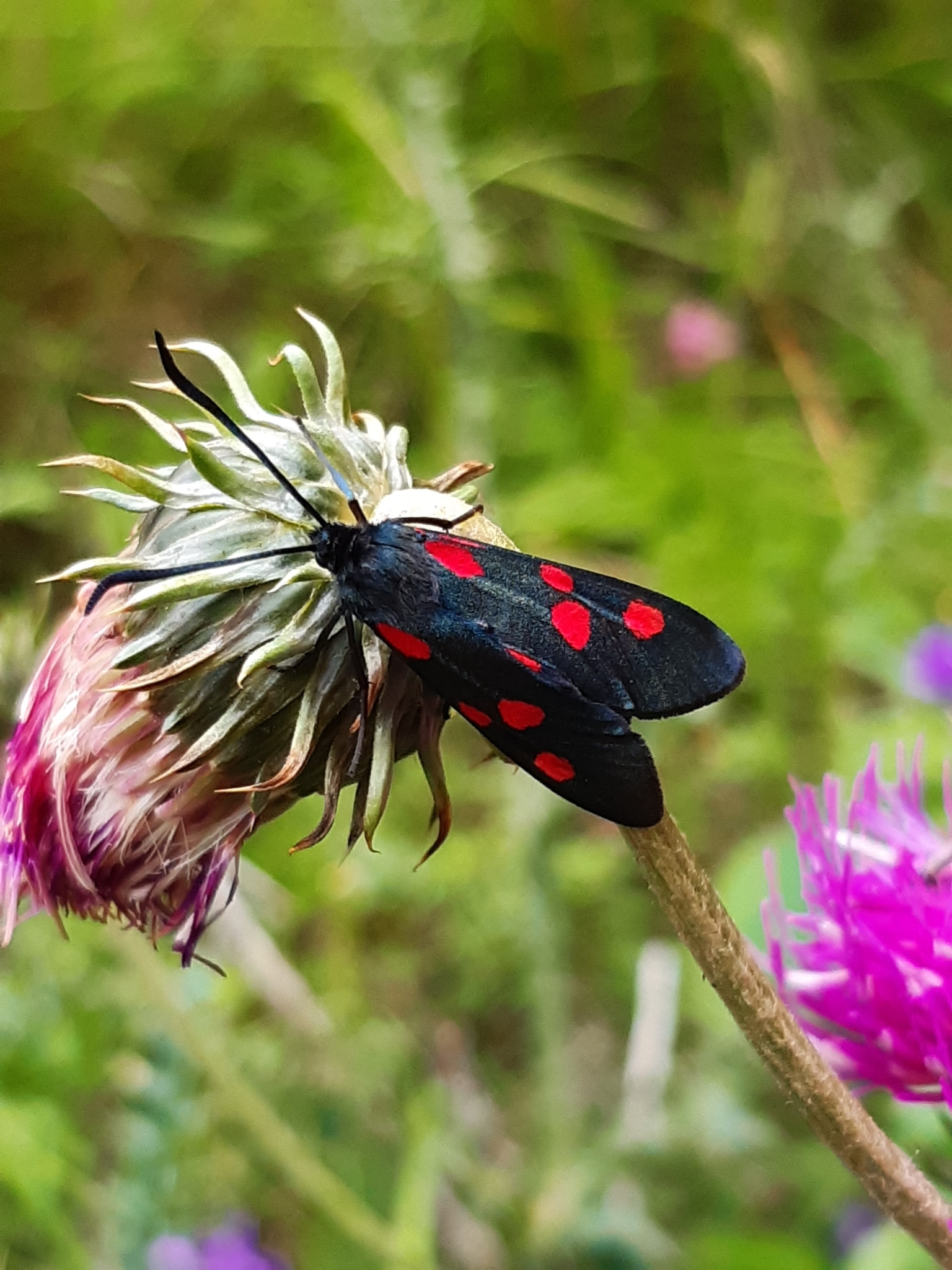
The narrow-bordered five-spot burnet (Zygaena lonicerae) flies by day with a slow, fluttering flight and makes no effort to hide its bright colours. Its black forewing has a bluish or blue-green sheen and usually carries five red spots. Those colours are a warning: burnets contain hydrogen cyanide at every stage of their life and are distasteful to predators. The caterpillar feeds on clovers, vetchlings, vetches and other legumes. It looks very like Zygaena trifolii, so do not identify it by counting spots alone.
Identification
Narrow-bordered five-spot burnet: how to identify it
A medium-sized burnet with a wingspan of 30–46 mm. The black forewing usually has five red spots, and the third spot is smaller than the fourth. It looks very like Zygaena trifolii and is often confused with it.
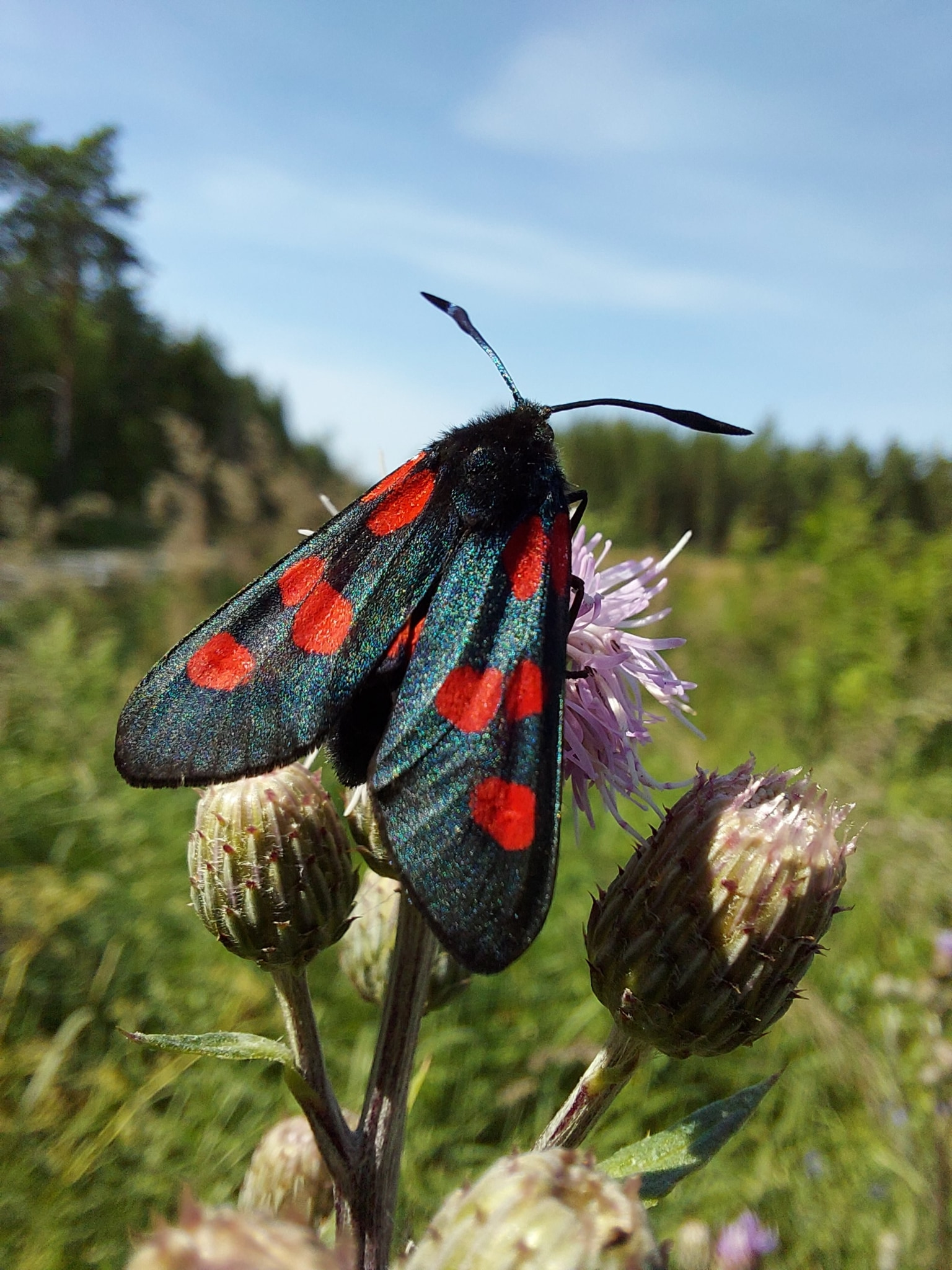
The forewing is long and pointed, and the black border of the hindwing is narrow. These features separate it from Zygaena trifolii, which is smaller and has a broader, rounder wing. Both features show on a moth with open wings.
Of the spots, the third is smaller than the fourth. In Zygaena trifolii the third and fourth spots often merge. This does not always work, so judge the spots together with the wing shape.
The antennae are long and slender, slightly thickened towards the tip and pointed. The female has a more rounded forewing tip and a less hairy thorax and abdomen. The male's forewing is slightly shorter.
Colour
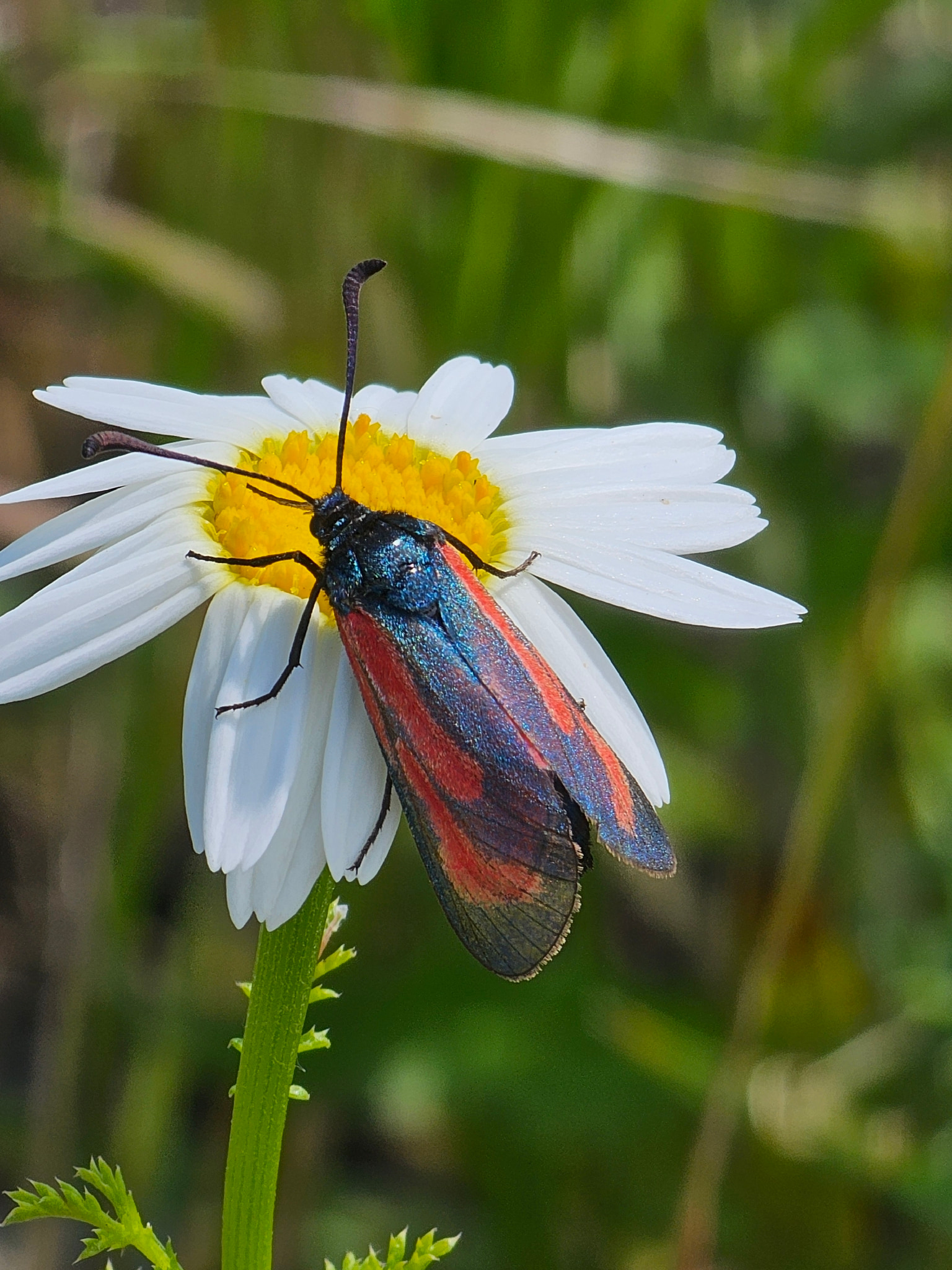
The forewing is black with a bluish or blue-green sheen, and the spots range from deep red to orange-red. The head, thorax and abdomen are black and moderately to strongly hairy. The species is very variable: mountain populations are larger and southern ones darker.
Swatches are illustrative. Do not identify a species by colour alone.
The narrow-bordered five-spot burnet is a moth of dry to moderately moist grassland. It lives in calcareous meadows, along woodland edges, in open places in sunny woods and in subalpine valleys. It sometimes also occurs in damp meadows, on sea cliffs and on roadside banks. In the mountains it reaches about 2,000 m. It is native to Georgia and has been known from the country since 1884.
The narrow-bordered five-spot burnet is native to Georgia. Most records come from Samtskhe-Javakheti, mainly around Borjomi and Bakuriani, and from the mountains of Upper Svaneti in Samegrelo-Zemo Svaneti. It has also been found in Kakheti, Abkhazia, Adjara, Tbilisi and Mtskheta-Mtianeti. Adult moths have been recorded from June to August. Among the oldest dated records are museum specimens collected in 1910.
Data: Reptiles.ge + iNaturalist · Methodology
- Field observation
- Several records in one spot
- Region with records
The caterpillar feeds on legumes: clovers (Trifolium), vetchlings (Lathyrus), vetches (Vicia), species of Lotus and sainfoin (Onobrychis viciifolia). The adult moth drinks nectar from flowers. It prefers blue-violet flowers such as Knautia arvensis, knapweeds (Centaurea) and thistles.
It flies by day, most of all in sunny weather. Depending on the place, it is on the wing from June to early August, with one generation a year. In July the female lays pale yellow eggs in clusters on the undersides of leaves. The caterpillar feeds until late summer, overwinters and goes on growing the following year. By late May most caterpillars are fully grown, and the rest overwinter a second time. To pupate, it spins an elongated, spindle-shaped, yellowish or white cocoon on a grass stem.
It has not been assessed on the global IUCN Red List (NE). It is not on Georgia's Red List. In some parts of Europe it is threatened or declining. In the lowlands it is threatened by the loss of woodland edges and shrubby grassland. In the Alps, by contrast, it is largely not endangered.
Related guides
Continue with related pages
Questions
Frequently asked questions
Narrow-bordered five-spot burnet: short answers to common questions.
Yes. It is a native species and has been known from Georgia since 1884. It chooses dry to moderately moist grassland, woodland edges and open places in sunny woods. Look for it in flowery meadows in summer.
No, it is harmless to people. Burnets carry hydrogen cyanide in their bodies, and their bright colours warn predators that they taste bad. This defence works against birds and other predators. Ordinary handling poses no risk, but there is no need to catch the moth either.
With difficulty. The two species are very similar and are often confused. The narrow-bordered five-spot burnet has a longer, more pointed forewing and a narrower black border on the hindwing. Zygaena trifolii is smaller, and its third and fourth spots often merge. They are reliably separated only by their genitalia, so draw conclusions from a photo with care.
The caterpillar eats legumes: clovers, vetchlings, vetches, species of Lotus and sainfoin. The adult drinks nectar and prefers blue-violet flowers such as knapweeds and thistles. A flowery meadow feeds both stages.
References
What this profile is based on
Species profiles are compiled from peer-reviewed literature and established biodiversity databases, and are reviewed as new taxonomic and conservation data become available.
Prepared by the Reptiles.ge editorial team from the sources listed here.