



Common European thief ant
Solenopsis fugax
Philipp Hoenle · Eußenheim
Key facts in one look
- Group
- Insect
- Family
- Formicidae
- Size
- Worker 1.5–3 mm, queen 5–6.5 mm
- Status in Georgia
- Listed for the country's fauna
- Activity
- Dormant in winter; winged ants Aug–Oct
- Conservation
- NE
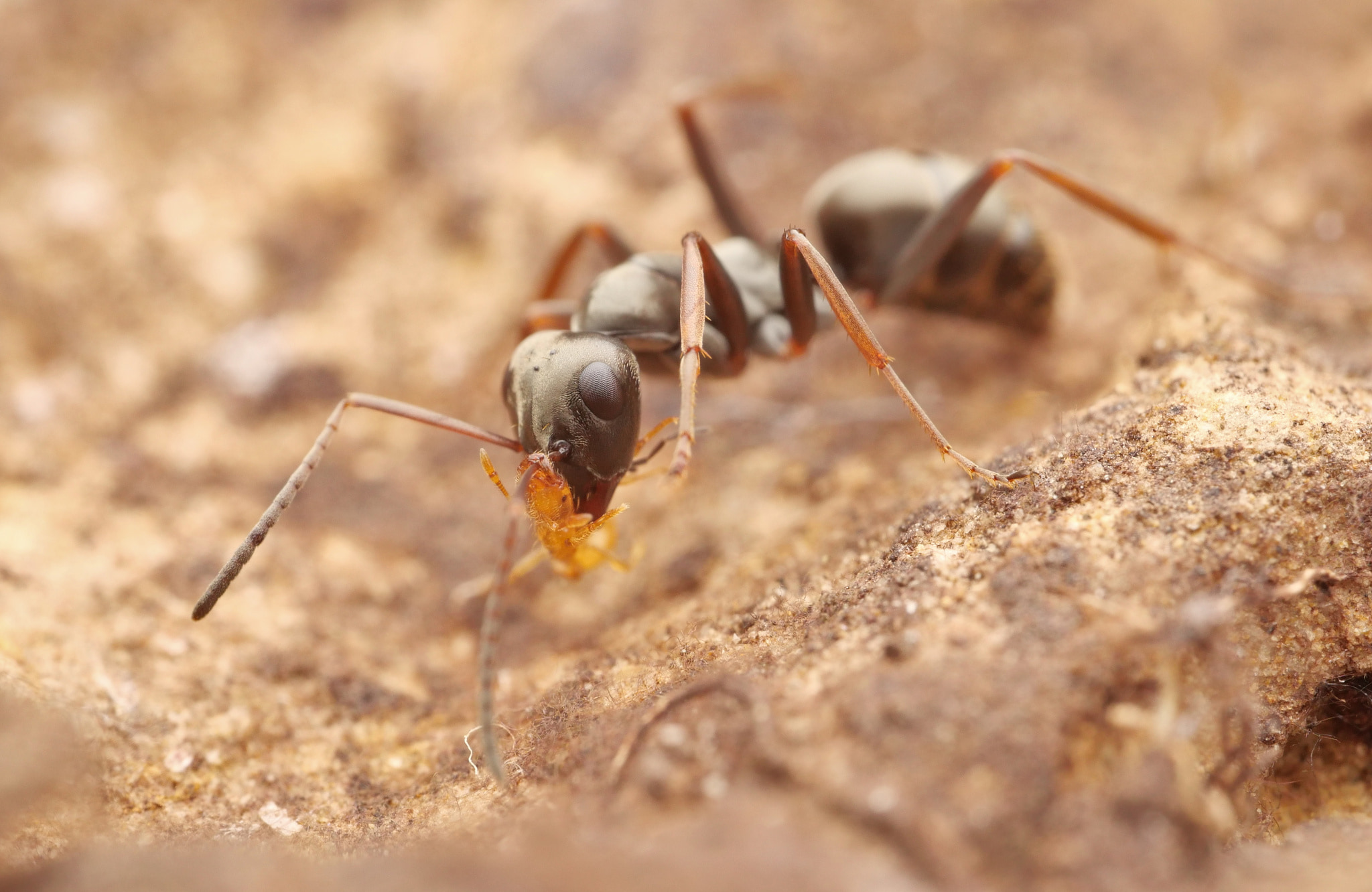
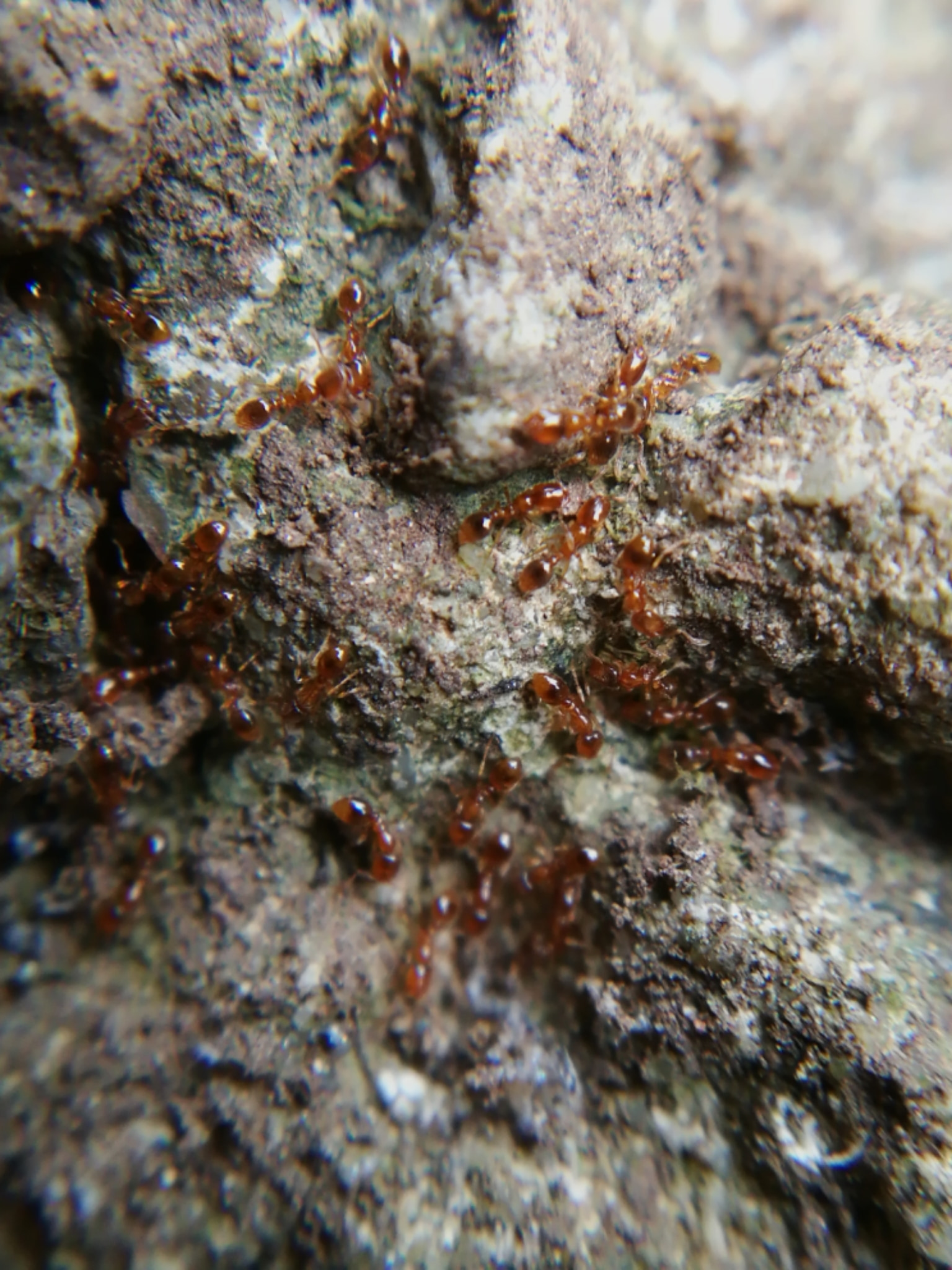
The common European thief ant (Solenopsis fugax) earns its name: its nest lies underground next to the nest of another ant species, and its workers raid the neighbours' brood. A worker is only 1.5–3 mm long and pale yellowish, while queens and males are much larger and dark. It is a relative of the fire ants but is not a fire ant itself: it has a sting, yet it is almost harmless to people. It is on the list of the ants of Georgia. Turn over a stone in a warm, dry, open spot and you may see its yellow workers.
Identification
Common European thief ant: how to identify it
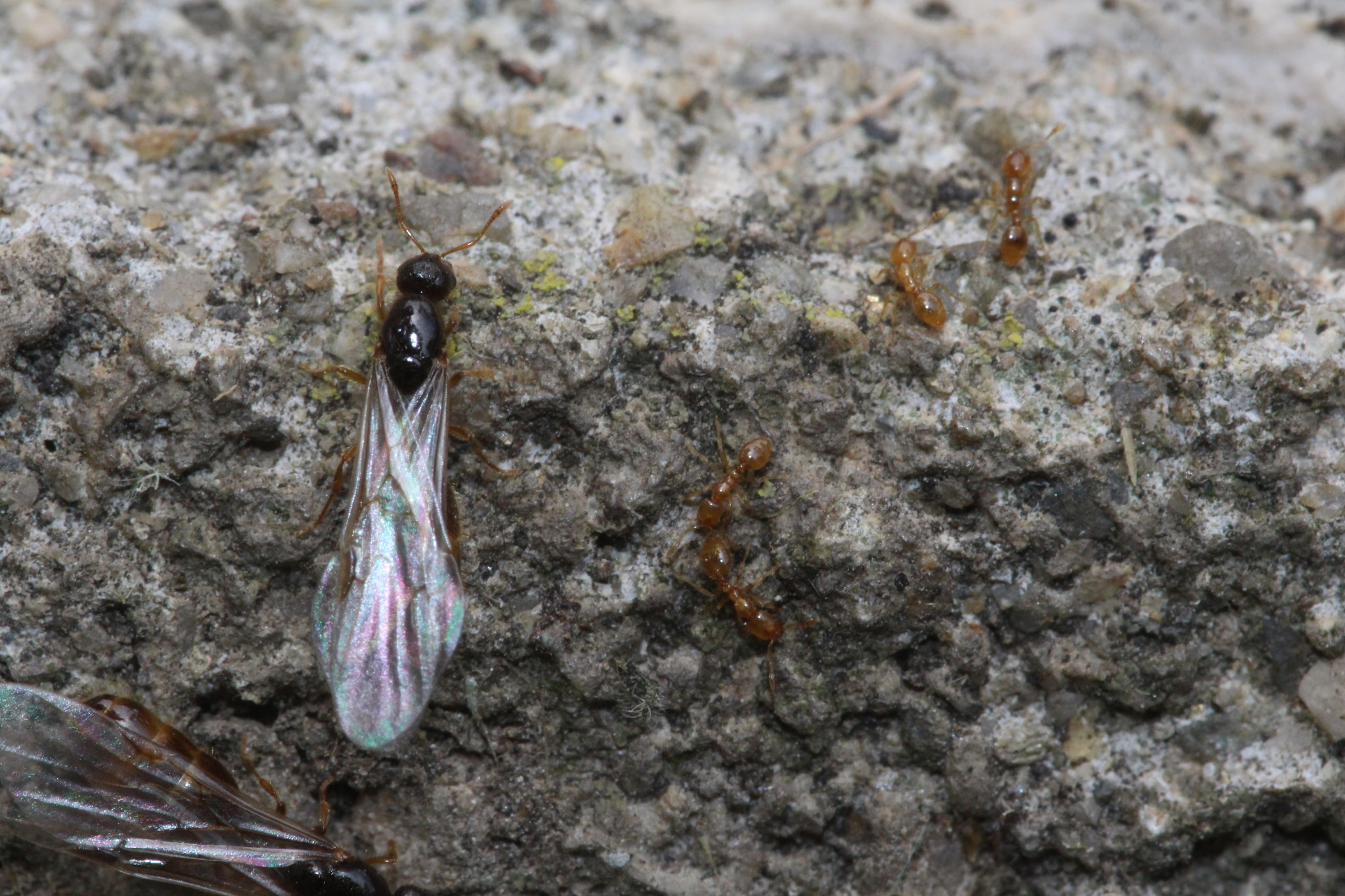
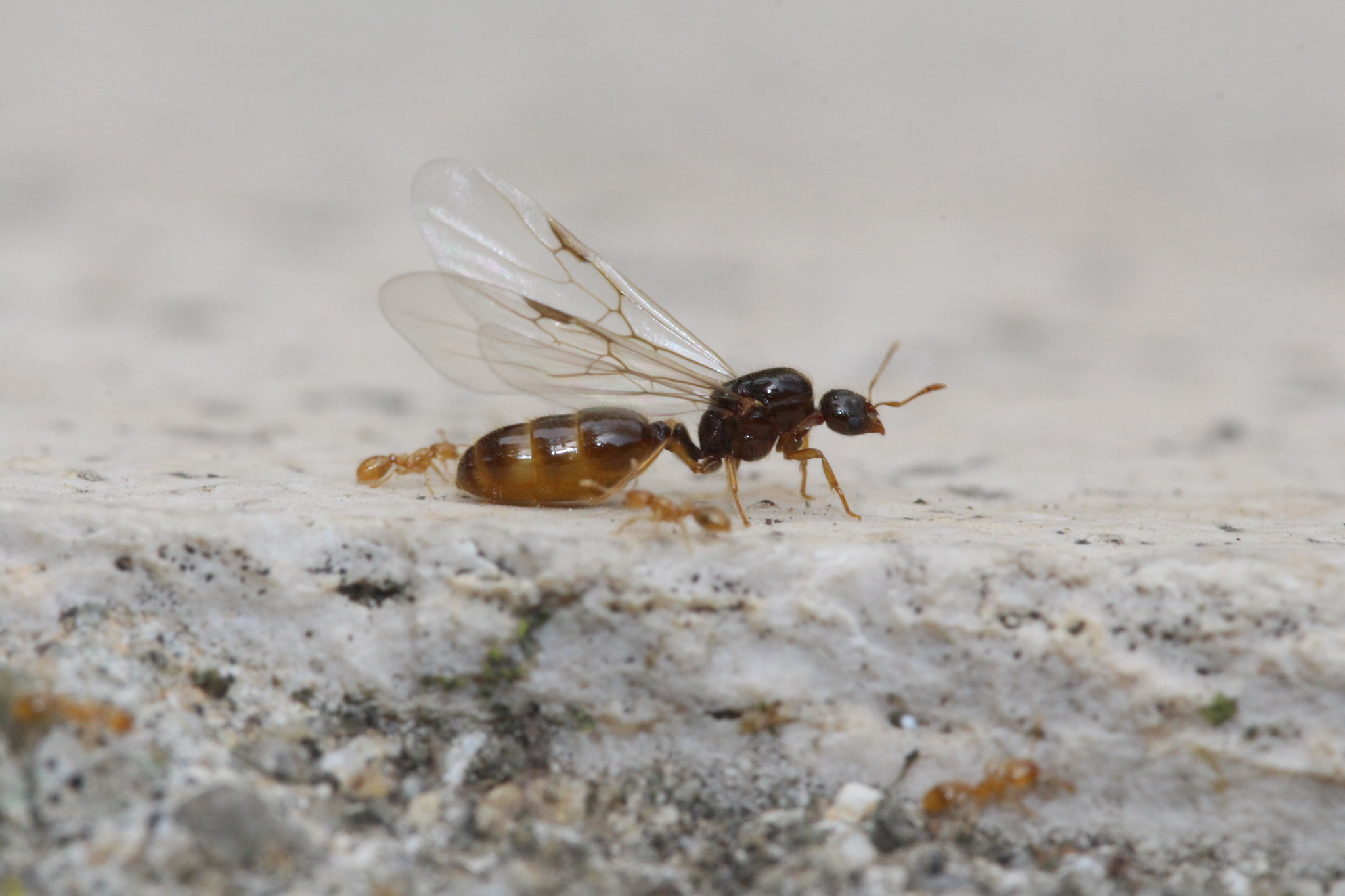
A tiny, pale yellow ant: the worker is 1.5–3 mm long. The queen is 5–6.5 mm and the male 3.5–5 mm, both dark. The best clue is where it lives: underground, close to another ant nest. You cannot tell similar species apart by eye.
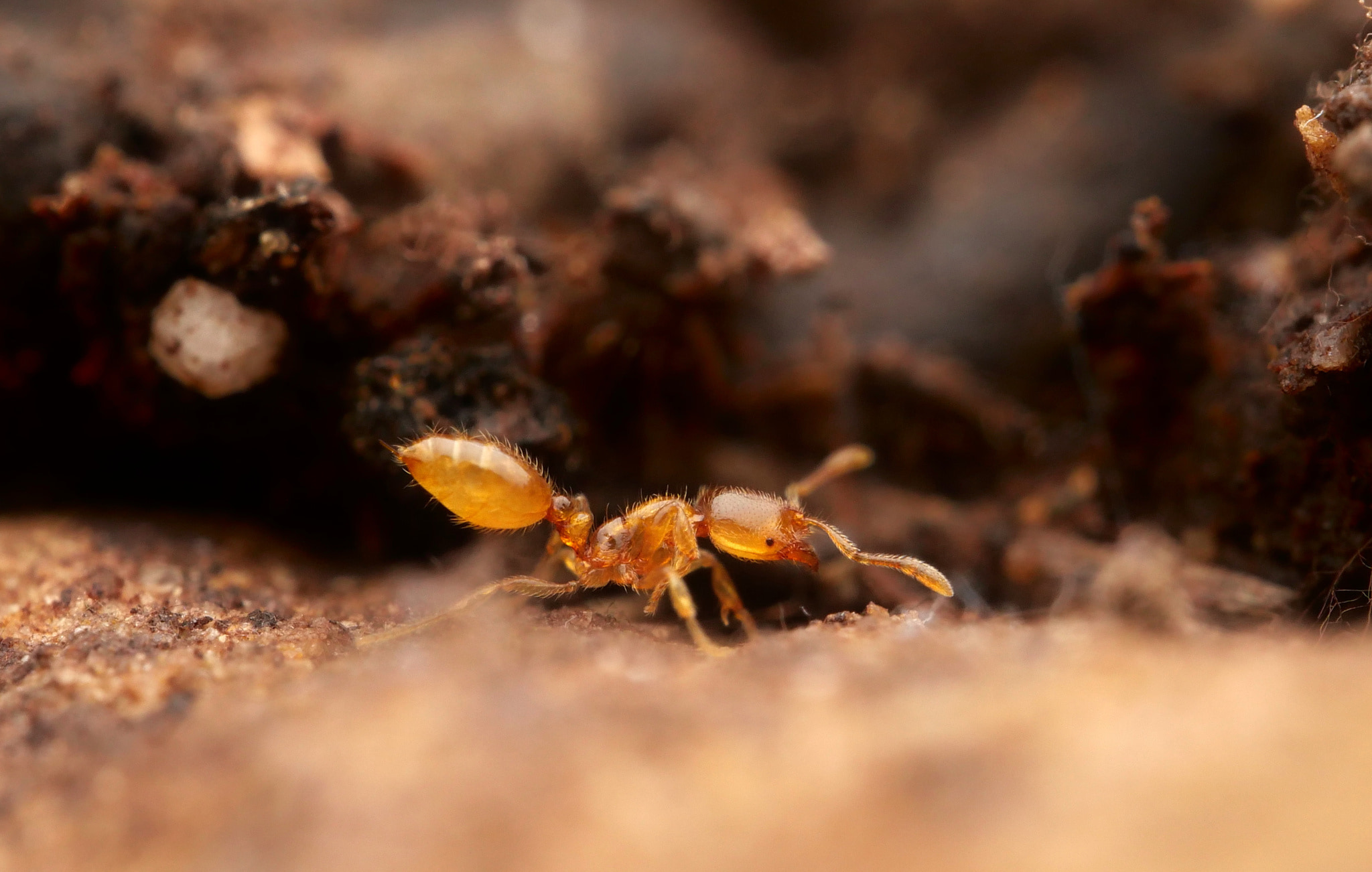
The worker's eyes are very small, with only 6–9 facets. The rear part of the thorax slopes steeply back and has no spines. These features show only under a hand lens or in a close-up photo.
Worker size depends on food. In colonies living only on stolen food the workers are uniformly tiny, while with a varied diet larger workers appear as well.
Workers differ from Solenopsis juliae by a slightly larger average size and a longer head, queens by the strongly sculptured top of the head. You can see these differences only by measuring or under a microscope.
Colour
Workers are pale yellowish. Winged queens and males are dark brown or black, so the members of one nest differ greatly in colour.
Swatches are illustrative. Do not identify a species by colour alone.
The thief ant is an ant of warm, dry places. It lives on sandy soil, in sparsely vegetated places and on dry grassy slopes, and in forest-steppe too. It also occurs on stony and rocky ground and in towns. The nest is always underground: in open soil or under a stone, often close to the nest of another ant species. It spends the winter in the nest, below ground.
The common European thief ant is on the list of the ants of Georgia. Most records come from Kakheti, around Vashlovani, Dedoplistskaro and Lagodekhi, from Kvemo Kartli: Bolnisi, Dmanisi and Kazreti, and from Samtskhe-Javakheti: Aspindza, Abastumani and the Zekari Pass. It has also been found in Adjara, Tbilisi, Mtskheta-Mtianeti, Shida Kartli, Imereti, Samegrelo-Zemo Svaneti and Abkhazia. Almost all records are localities without a date. The only dated one comes from Adjara, from October 2018.
Data: Reptiles.ge + iNaturalist · Methodology
- Field observation
- Several records in one spot
- Region with records
It lives mainly on food stolen from other ants' nests: it takes the hosts' eggs, larvae and pupae. It can also survive without a host, eating carrion and small soil invertebrates. It tends root-dwelling aphids and scale insects too and takes their sweet honeydew.
Workers dig tunnels about 1 mm wide from their own nest to the nest of a neighbouring ant species. The tunnels are so narrow that the larger host ants cannot follow them. Colonies are often large: some 100,000 workers and several queens. If you disturb a nest, it defends it very aggressively: it quickly calls up many workers, uses its sting and repels other ants with a special substance. Winged queens and males fly from late August to early October, on warm days, mostly between 11:00 and 15:00. Mating takes place in the air. The ant spends the winter in the nest.
It has not been assessed on the global IUCN Red List (NE). It is not on Georgia's Red List. It is a widespread species: it ranges from France across Central Europe, the Balkans, Asia Minor and the Caucasus to the Caspian Sea. In nutrient-poor grasslands of Central Europe its nests can be very dense.
Related guides
Continue with related pages
Yes, it is on the list of the ants of Georgia. Its range includes the Caucasus region. Look for it in warm, dry, open places, under stones, near the nests of other ants.
Because it steals food from other ants. Workers enter the host nest through narrow tunnels and carry off eggs, larvae and pupae. The large host ants do not fit into these tunnels, so they cannot chase the thieves.
No. It is a relative of the fire ants, in the same genus, but not that species. It has a sting, yet it is almost harmless to people. Its workers are so tiny that many people never notice them.
The worker is very small, 1.5–3 mm, and pale yellowish. Its eyes are tiny. Winged queens and males are dark brown or black and much larger. Telling it from the similar Solenopsis juliae takes measurements or a microscope.
References
What this profile is based on
Species profiles are compiled from peer-reviewed literature and established biodiversity databases, and are reviewed as new taxonomic and conservation data become available.
Prepared by the Reptiles.ge editorial team from the sources listed here.


