
Little grebe
Tachybaptus ruficollis
Nick Hobgood · Nawala West
Key facts in one look
- Size
- 23–29 cm
- Diet
- Insects, molluscs, small fish
- Status in Georgia
- Year-round resident, breeds; migrant
- Habitat
- Vegetated lakes, slow-flowing waters
- Family
- Podicipedidae
- Protection
- Globally LC, 2025; in Georgia LC, 2021
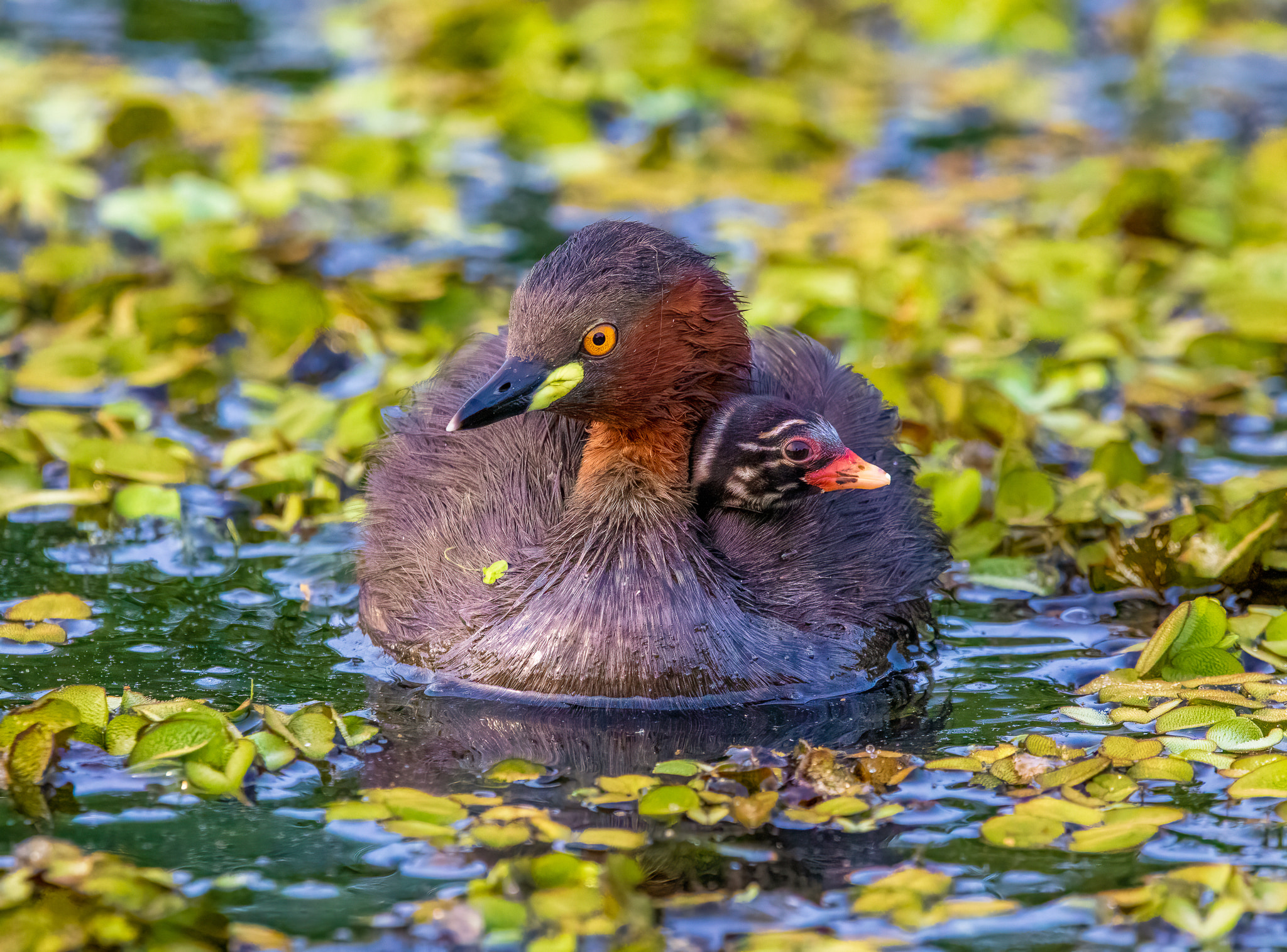
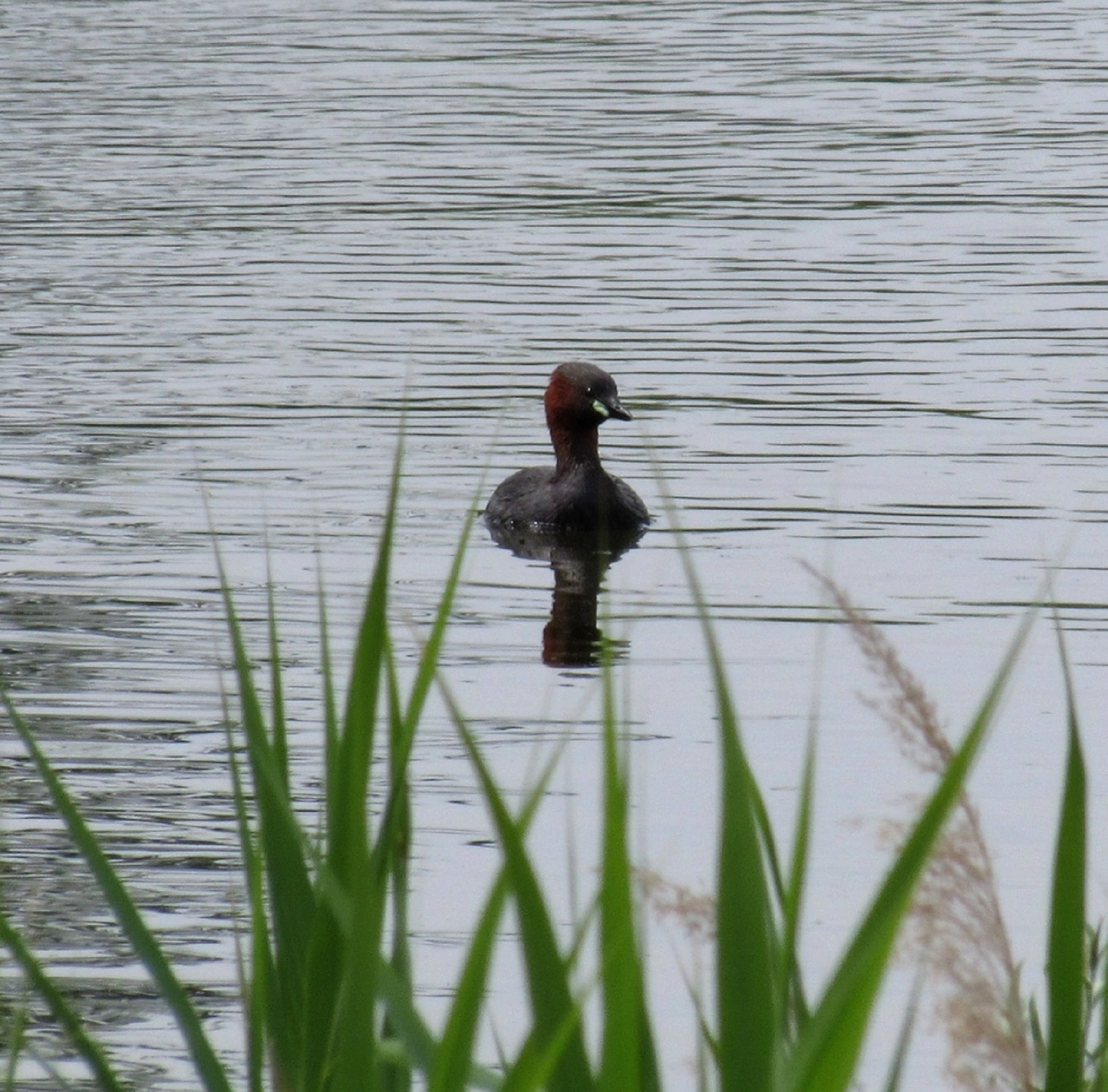
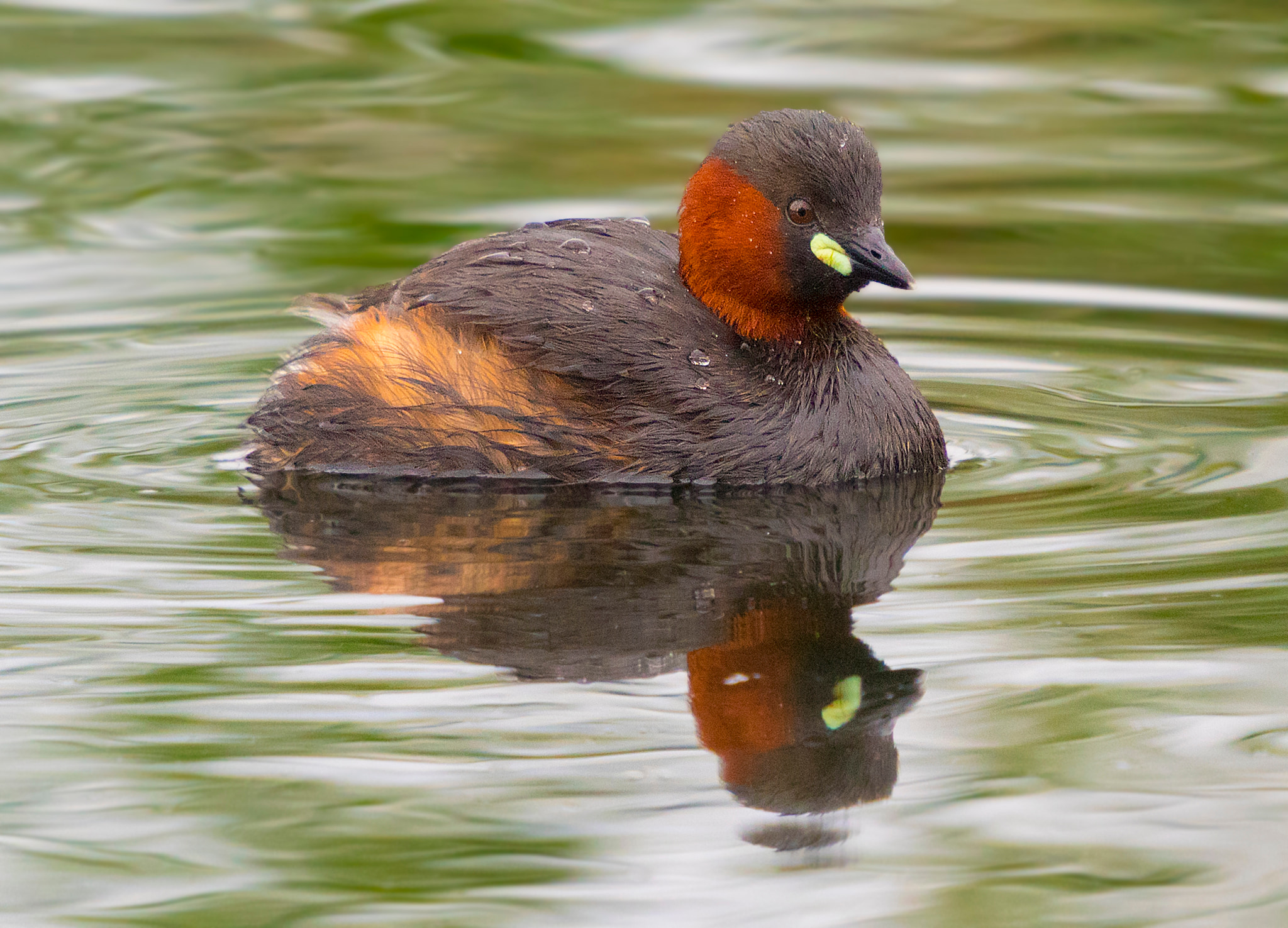
The little grebe is 23–29 cm long, the smallest grebe of Europe, Asia and Africa. In spring and summer it is dark above, with chestnut-rufous cheeks and neck and a yellow patch at the base of the bill. In winter it turns brownish buff. In Georgia it lives and breeds all year round, and it is also seen on migration. In Tbilisi it has been seen in the Ponichala reserve both in winter and in autumn. It picks waters thickly overgrown with plants and hides skilfully among them, so you will often hear it first.
Identification
Little grebe: how to identify it
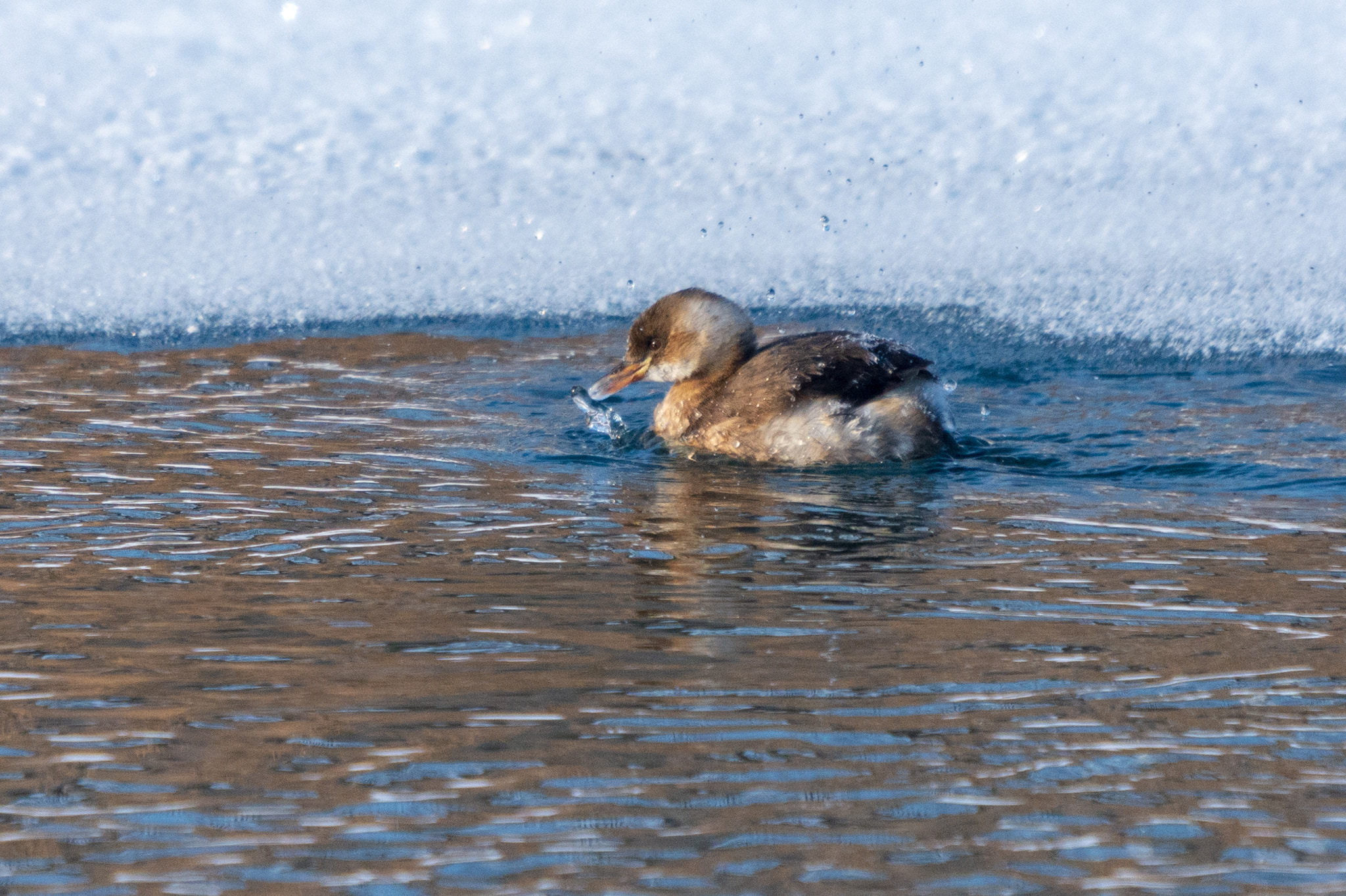
A small grebe, 23–29 cm long and 110–370 g. In spring it is dark brown above, with chestnut-rufous cheeks and front of the neck and a yellow patch at the base of the bill. In winter it is brownish buff.
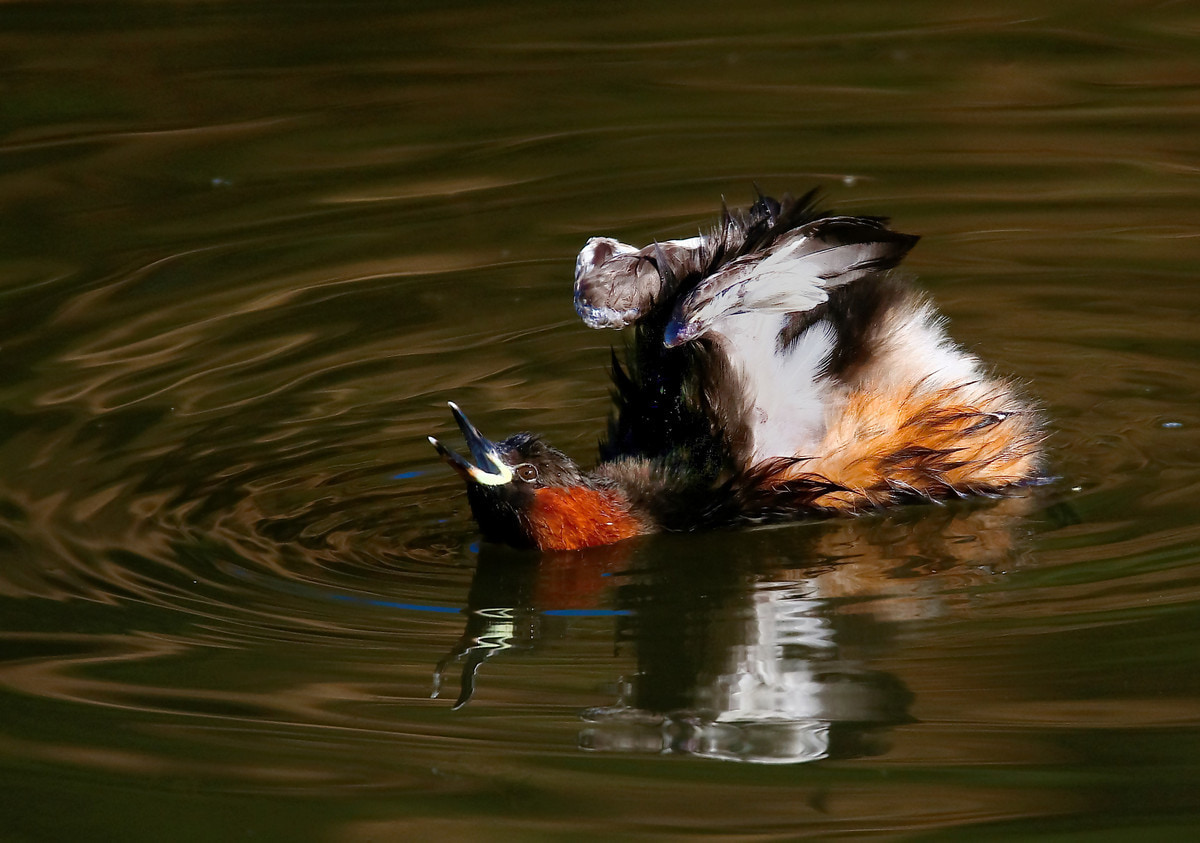
Length 23–29 cm, weight 110–370 g, wing 9–11 cm. It is the size of a pigeon and the smallest grebe in Europe. The bill is short and pointed, the rear end fluffy.
In breeding plumage the upperparts are dark, blackish brown, the underparts dirty white. The cheeks and front of the neck are chestnut-rufous, with a bright yellow patch at the base of the bill. The bill is black with a whitish tip. A white patch shows on the folded wing.
In winter the rufous fades and the bird turns paler and duller: the back and cap stay dark, the rest is brownish grey and buff. Young birds have a yellow bill with a black tip and black and white stripes on the cheeks and neck. In winter you might take it for a black-necked grebe, but that bird is black and white and has a red eye.
Colour
Swatches are illustrative. Do not identify a species by colour alone.
Often confused with
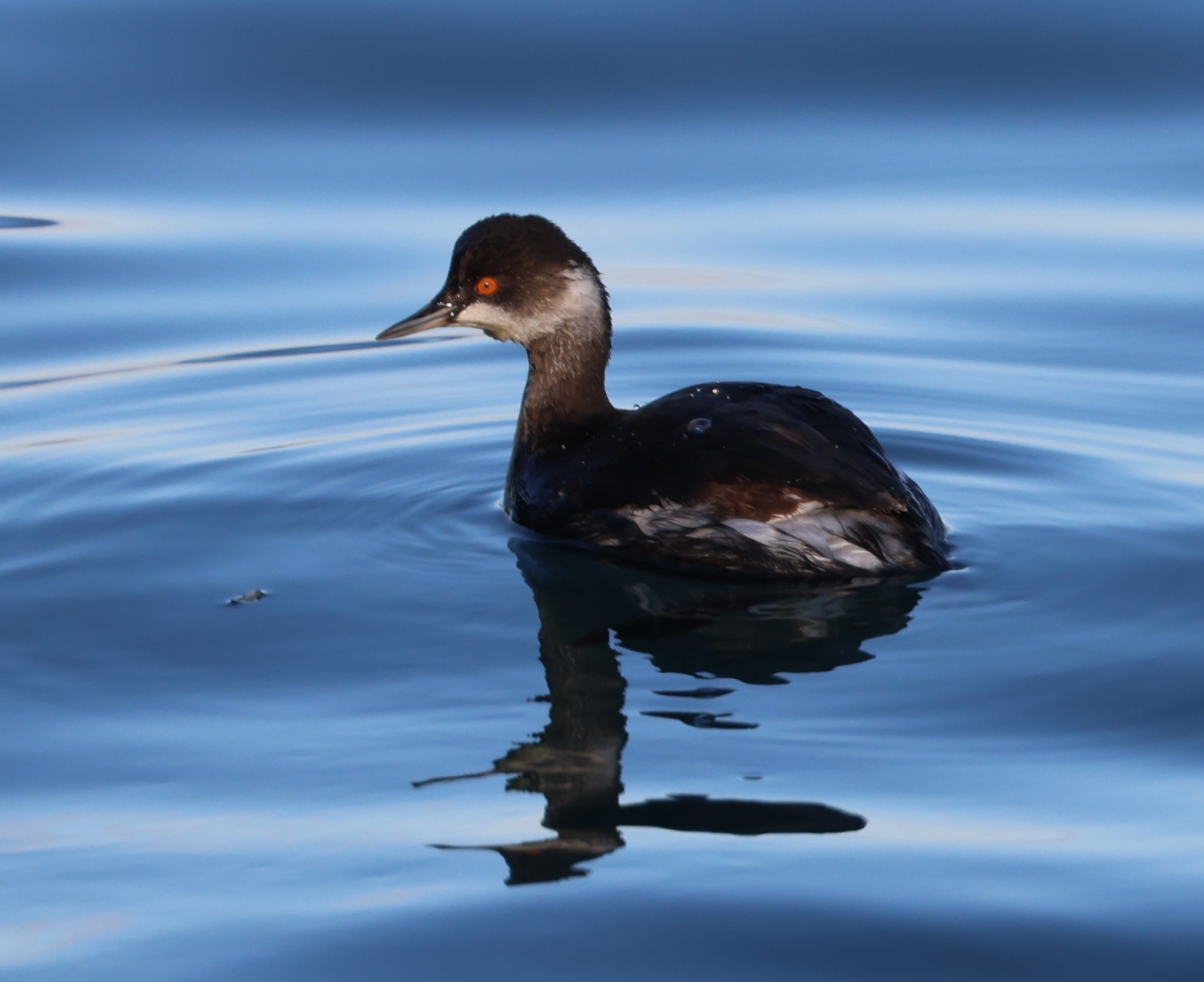
It breeds in small colonies in heavily vegetated parts of freshwater lakes. It picks small, nutrient-rich lakes and slow-flowing waters thickly overgrown with water plants. After breeding it moves to more open water and sometimes turns up in small bays on the coast. It migrates only where the water freezes. In Tbilisi it has been seen in the Ponichala reserve in January and September.
The little grebe lives and breeds in Georgia all year round and is also seen on migration. It has been recorded in every month, most often in September and October, when most records come from Adjara. Overall, most records come from Adjara, Kvemo Kartli, Abkhazia and Samtskhe-Javakheti. It has also been found in Tbilisi, Mtskheta-Mtianeti, Kakheti, Samegrelo, Guria, Shida Kartli and Racha.
Data: Reptiles.ge + iNaturalist · Methodology
- Field observation
- Several records in one spot
- Region with records
It eats mostly adult insects and their larvae. It also catches molluscs, amphibian larvae and small fish. It chases fish and water invertebrates underwater and is a good diver. Water plants are its hiding place: it searches for food among them and hides there too.
It swims superbly, dives deep and also flies well. Its legs sit at the very back of the body and it walks badly on land, so it nests at the water's edge. In the breeding season its call, given by one bird or a pair in duet, is a long, trilled "weet-weet-weet" that sounds like a horse whinnying. It builds a floating nest of dead water plants, both on open water and in reeds. It usually lays 4–7 eggs, most often 4–6. When an adult leaves the nest it covers the eggs with weed so that predators do not spot them. The chicks swim soon after hatching and often ride on a parent's back. Both parents feed them. They become independent at 30–40 days and fledge on day 44–48.
Globally the little grebe's risk of extinction is rated low (LC, 2025). It is a widespread bird of Europe, much of Asia down to New Guinea, and most of Africa. In Georgia's national assessment (2021) its risk is also rated low (LC), and its numbers are stable. The list of the birds of Georgia gives it as a year-round resident and breeder, and also a migrant.
Related guides
Continue with related pages
Yes. It lives and breeds in Georgia all year round, and it is also seen on migration. In Tbilisi it has been seen in the Ponichala reserve in January and September.
It is the smallest grebe in Europe, the size of a pigeon, with a fluffy rear end. In spring look for the rufous cheeks and neck and the yellow patch at the base of the bill. In winter it is brownish buff, which sets it apart from the black-and-white grebes.
Mostly adult insects and their larvae. Also molluscs, amphibian larvae and small fish. It chases prey underwater, by diving.
On the water, in a floating nest of dead water plants. It usually lays 4–7 eggs. When leaving the nest it covers the eggs with weed. Both parents feed the chicks, and they fledge on day 44–48.
Only where the water freezes. In Georgia it lives all year round. In winter it moves to more open water and sometimes turns up in small bays on the coast.
No, it is harmless to people. Globally its risk of extinction is low (LC, 2025). In Georgia's national assessment (2021) its risk is also low (LC), and its numbers are stable. Do not cut reedy shores in the breeding season.
References
What this profile is based on
Species profiles are compiled from peer-reviewed literature and established biodiversity databases, and are reviewed as new taxonomic and conservation data become available.
Prepared by the Reptiles.ge editorial team from the sources listed here.