
Red-necked grebe
Podiceps grisegena
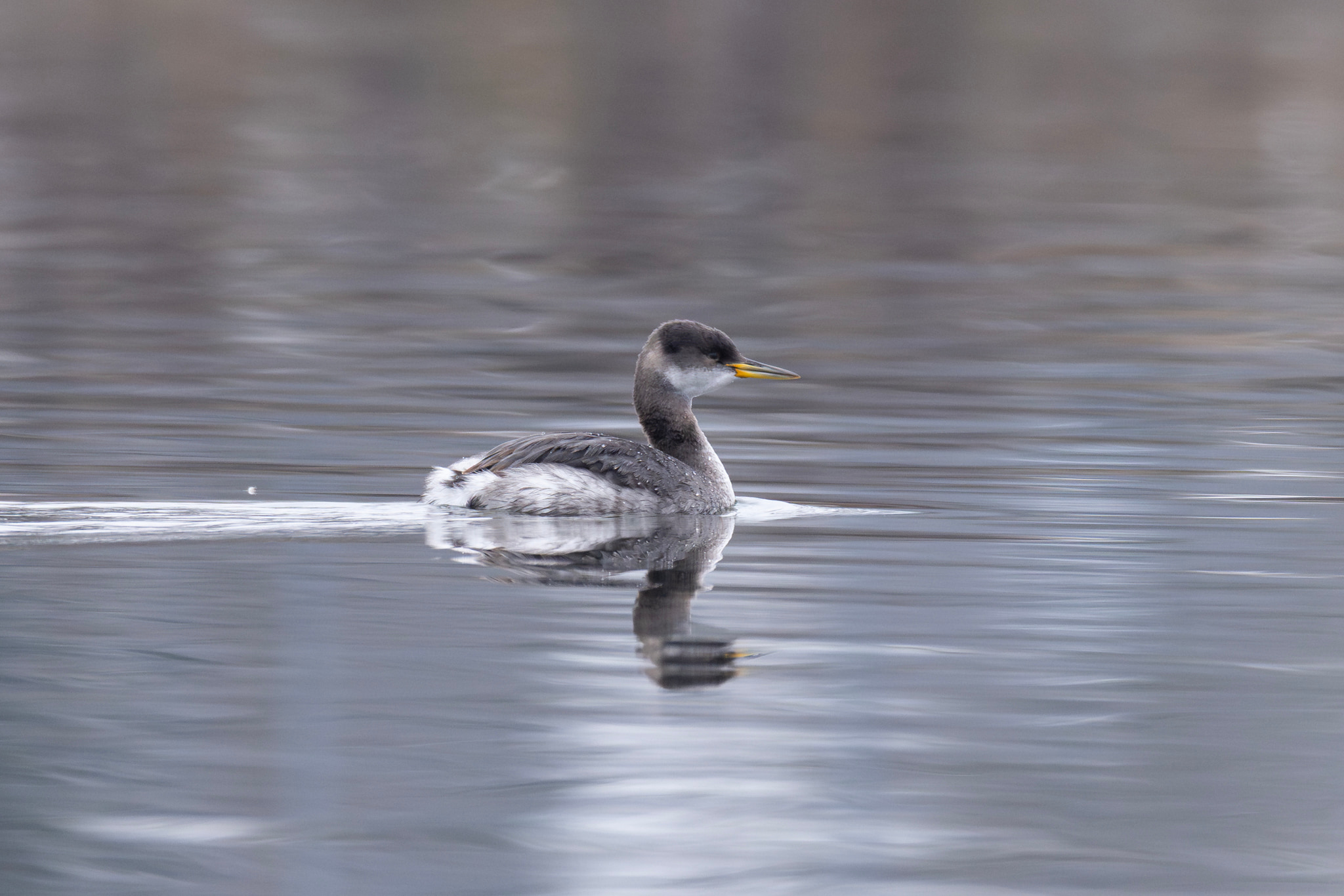
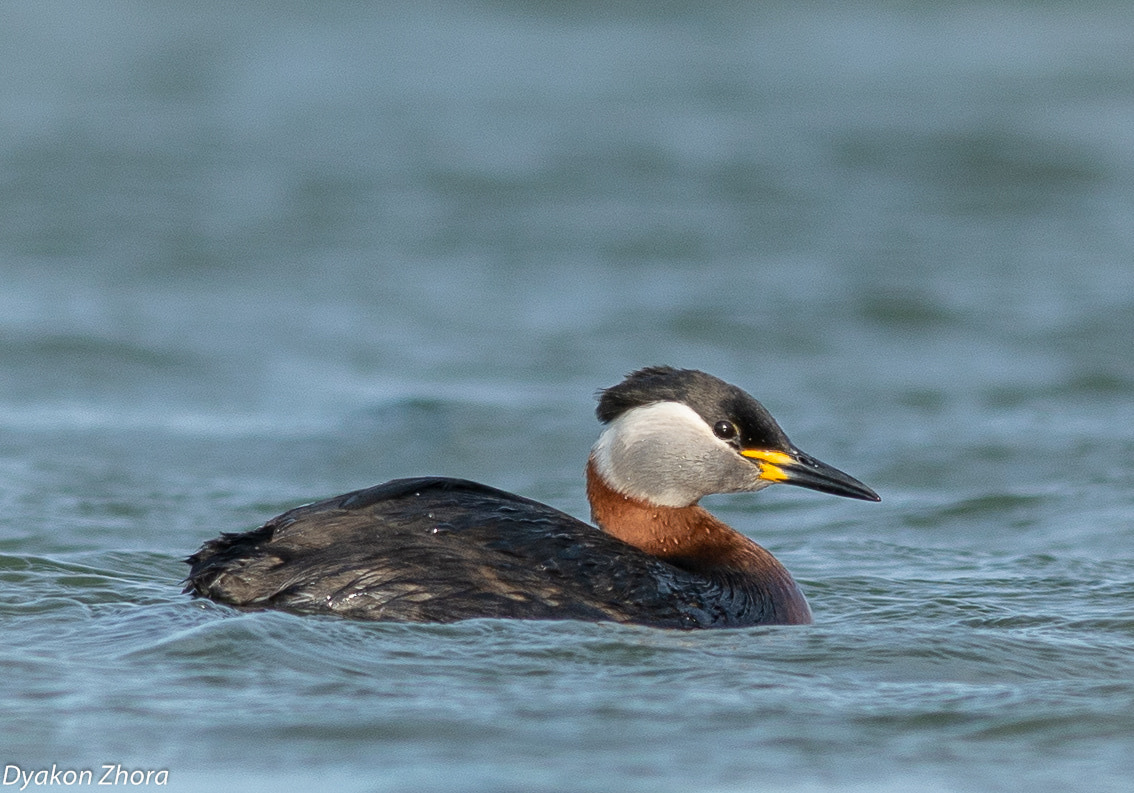
mbrookem · Lac Deschênes
Key facts in one look
- Size
- 40–50 cm; wingspan 77–85 cm
- Diet
- Aquatic invertebrates; fish in winter
- Status in Georgia
- Breeder and migrant
- Habitat
- Shallow, plant-rich lakes and marshes
- Family
- Podicipedidae
- Protection
- Global LC, 2018; Georgia LC, 2021; Red List VU
In the breeding season the red-necked grebe is one of the noisiest grebes: its wailing call carries by day and by night. It is medium-sized, smaller than a great crested grebe. In breeding plumage it has a black cap, pale grey cheeks and a rufous neck. In Georgia it breeds and passes through on migration. The Red List of Georgia (2014) lists it as Vulnerable, so do not disturb the birds at their breeding sites.
Identification
Red-necked grebe: how to identify it
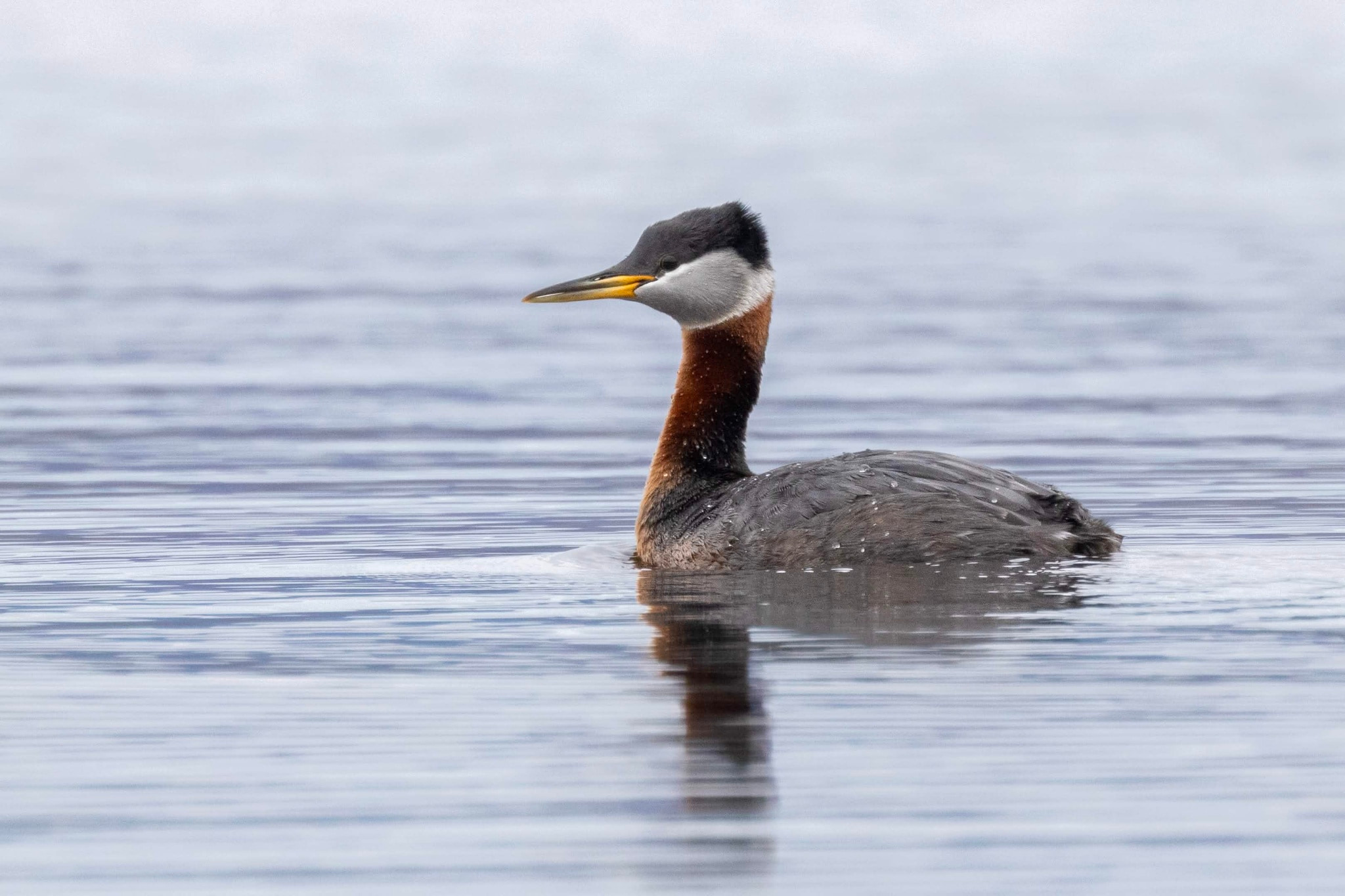
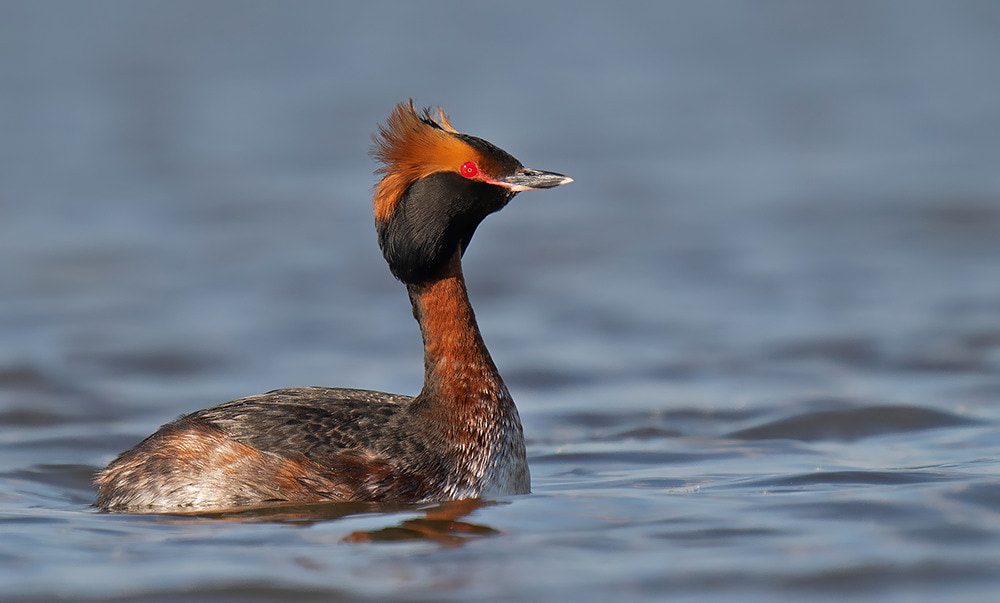
A medium-sized grebe, 40–50 cm long, with a long, pointed black bill with a yellow base. In breeding plumage it has a black cap, pale grey cheeks and a rufous neck. In winter it is dusky grey.
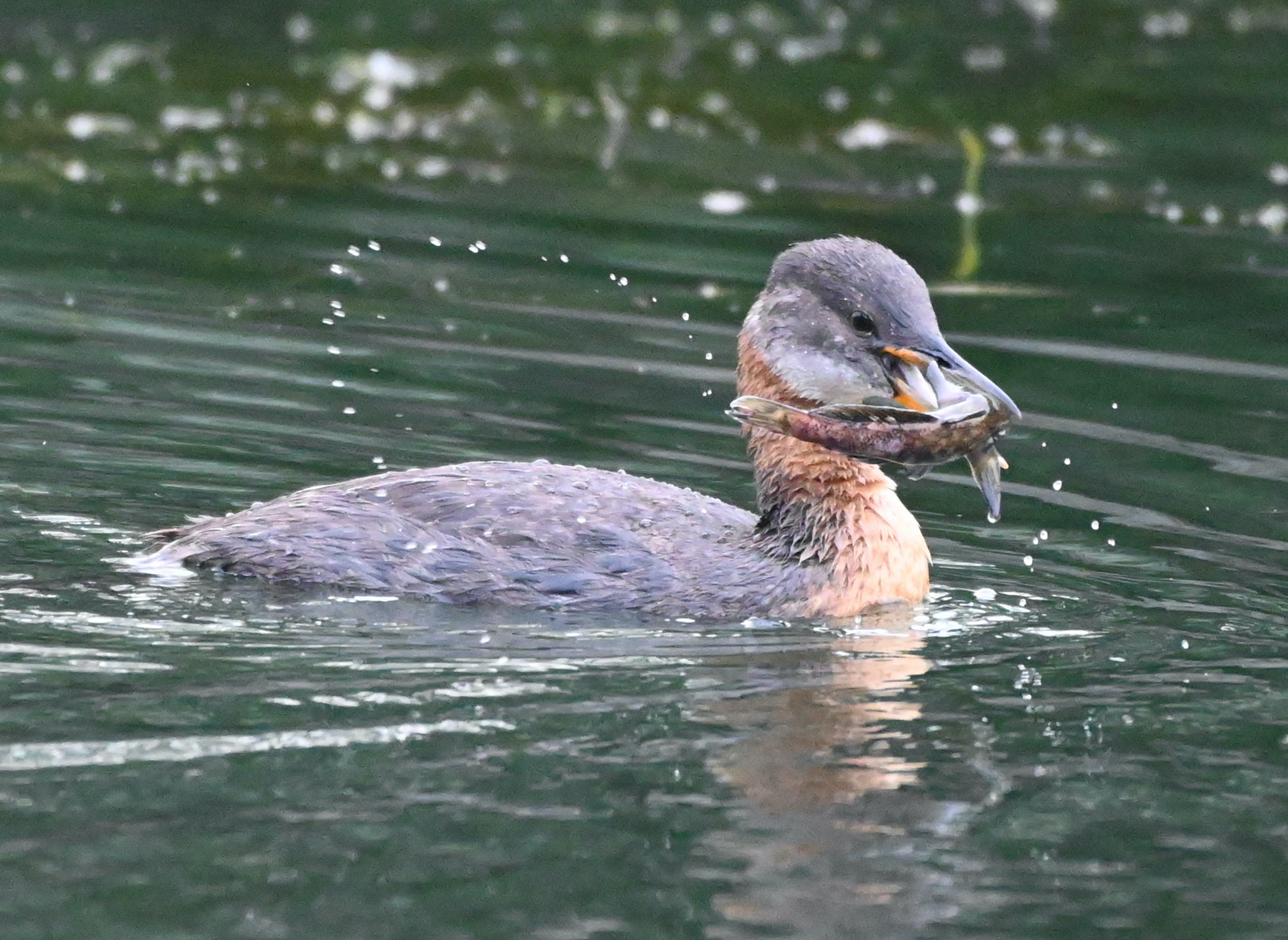
Length 40–50 cm, wingspan 77–85 cm, weight 692–925 g. It is smaller than a great crested grebe and clearly larger than a horned grebe. Its neck is shorter and thicker than the great crested grebe's. The bill is long, pointed and black, with a yellow base.
In breeding plumage it has a black cap reaching down to the eye, very pale grey cheeks and throat, and a rufous neck. The back and flanks are dark grey, the belly white. In flight it stretches its neck forward and trails its large feet, and white patches show on the wings.
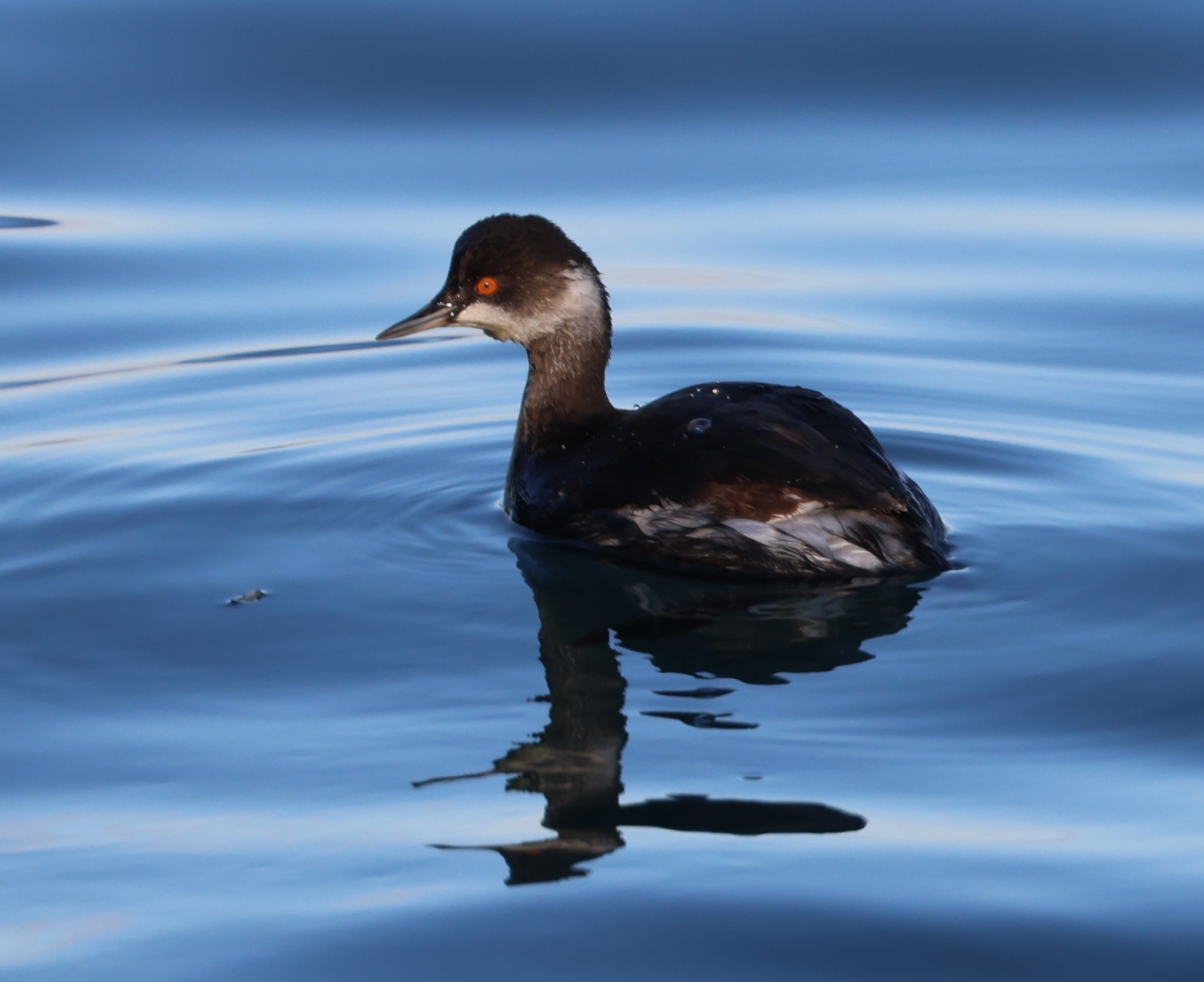
In winter it is duskier than other grebes: the grey cap merges into a grey face, and a pale crescent shows at the rear of the head. The great crested grebe always has white above the eye, the horned grebe a white cheek: if the face is grey and there is no white over the eye, it is a red-necked grebe.
Colour
Swatches are illustrative. Do not identify a species by colour alone.
Often confused with
It breeds on shallow freshwater lakes, bays of larger lakes, marshes and other inland waters, often under 3 ha and less than 2 m deep. It prefers water in wooded country with plenty of reedbeds and other emergent plants. Fish-ponds make the best breeding sites. It winters mostly at sea, on water up to 15 m deep with a sand or gravel bottom. European birds winter mainly on the North and Baltic seas, with smaller numbers on the Black and Caspian seas and the Mediterranean. In Georgia it breeds and passes on migration.
The red-necked grebe breeds in Georgia and passes through on migration. Most records fall in May and September. In May most come from Samtskhe-Javakheti, in September and October from Adjara. From November to March there are only a few records. It has also been found in Samegrelo, Abkhazia, Kvemo Kartli, Guria, Kakheti, Tbilisi, Mtskheta-Mtianeti and Shida Kartli.
Data: Reptiles.ge + iNaturalist · Methodology
- Field observation
- Several records in one spot
- Region with records
When breeding it eats mainly invertebrates: water beetles, dragonfly larvae, crayfish and molluscs. In some places and seasons fish matter too, and crustaceans can make up to 20% of the diet. In Europe it competes with the great crested grebe, so it eats more invertebrates. In winter it feeds mainly on fish. It catches prey by diving or by swimming with its head under water, and it also picks insects off plants.
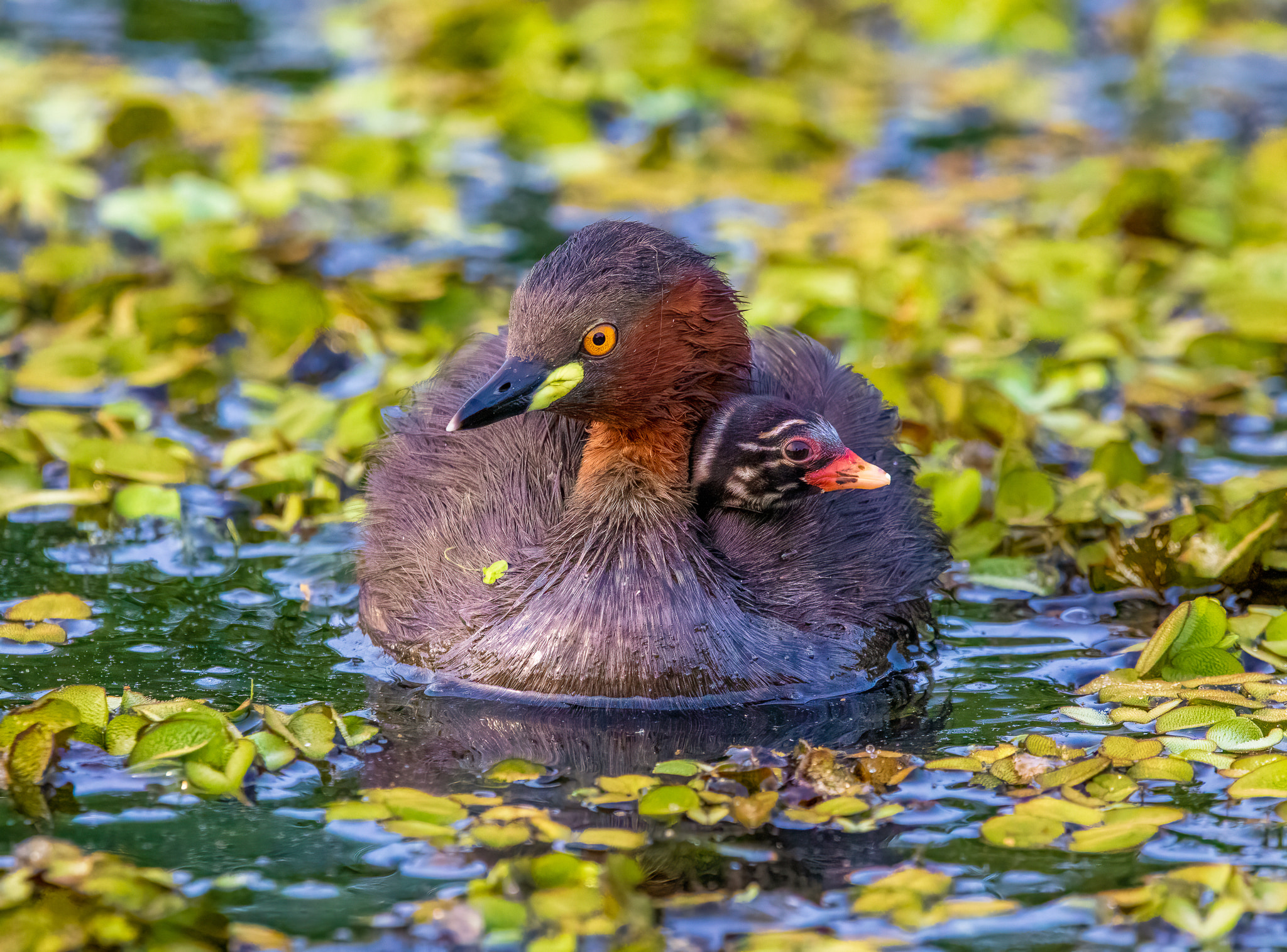
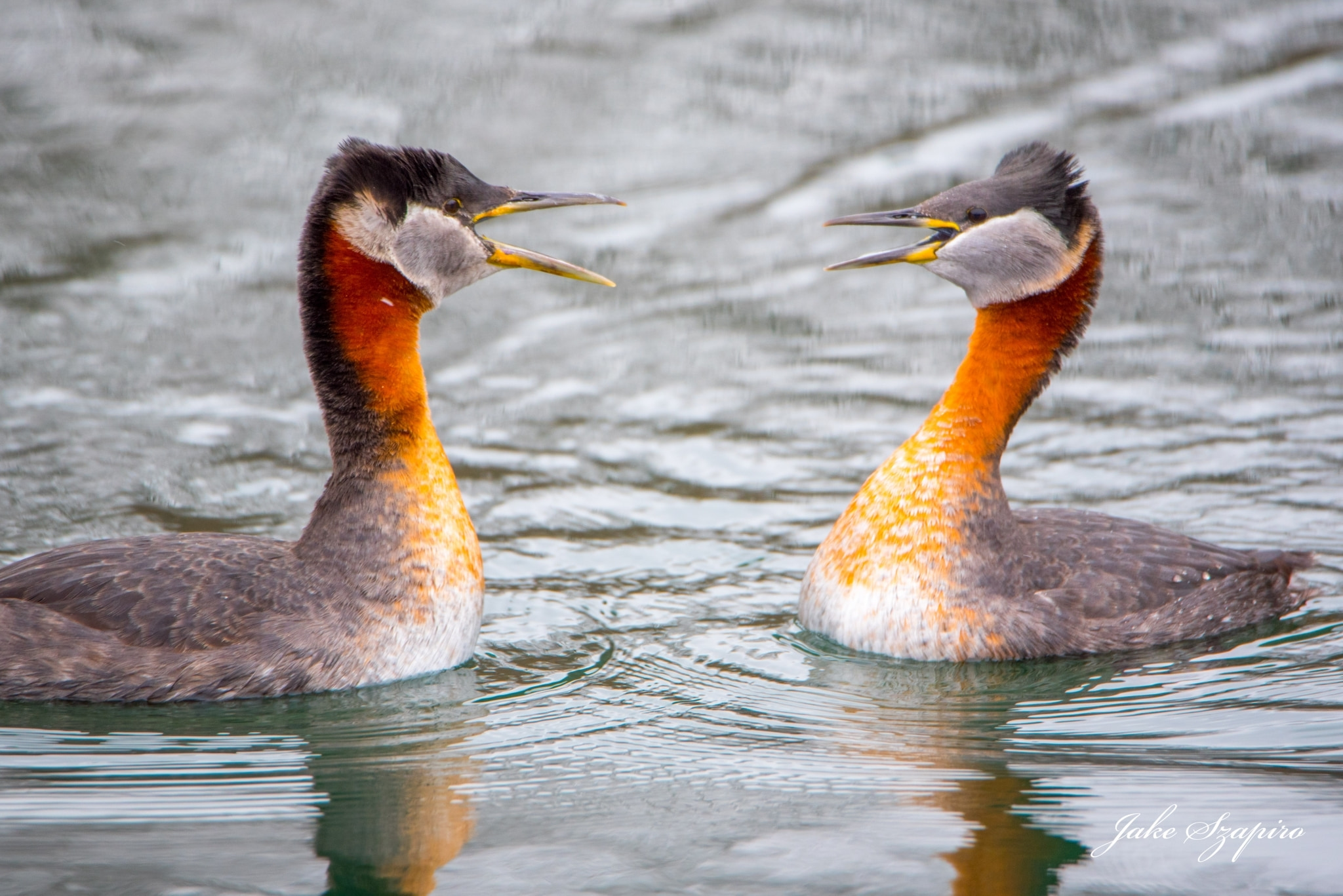
It is monogamous, and pairs form in April–May. The courtship includes head-shaking, parallel rushes across the water and presenting green weed, ending in a "penguin dance" in which both birds rise breast to breast on the water. The call is a loud, wailing "uooooh", given by one bird or a pair in duet, by day and by night. It migrates mostly at night. It usually nests in single pairs, more than 50 m from the nearest neighbour, though up to 20 pairs may nest together at good sites. The nest is a floating platform anchored to water plants, in water 0.5–0.75 m deep. It lays 4–5 (1–9) dull white or pale blue eggs. Both parents incubate for 21–33 days. The chicks climb straight onto a parent's back and spend most of their time there until they are 10–17 days old. They first fly at 50–70 days.
Globally the red-necked grebe's risk of extinction is rated low (LC, 2018). The world population is 150,000–370,000 birds and is stable or growing. It is threatened by the alteration and pollution of lakes and by disturbance from water recreation. In Georgia's national assessment (2021) its risk is also rated low (LC), and its numbers are stable. The Red List of Georgia (2014) lists it as Vulnerable (VU) because of its small population. The list of the birds of Georgia gives it as a breeder and a migrant.
Related guides
Continue with related pages
Yes. It breeds in Georgia and passes through on migration. For breeding it picks shallow freshwater sites rich in water plants. The Red List of Georgia (2014) lists it as Vulnerable because of its small population.
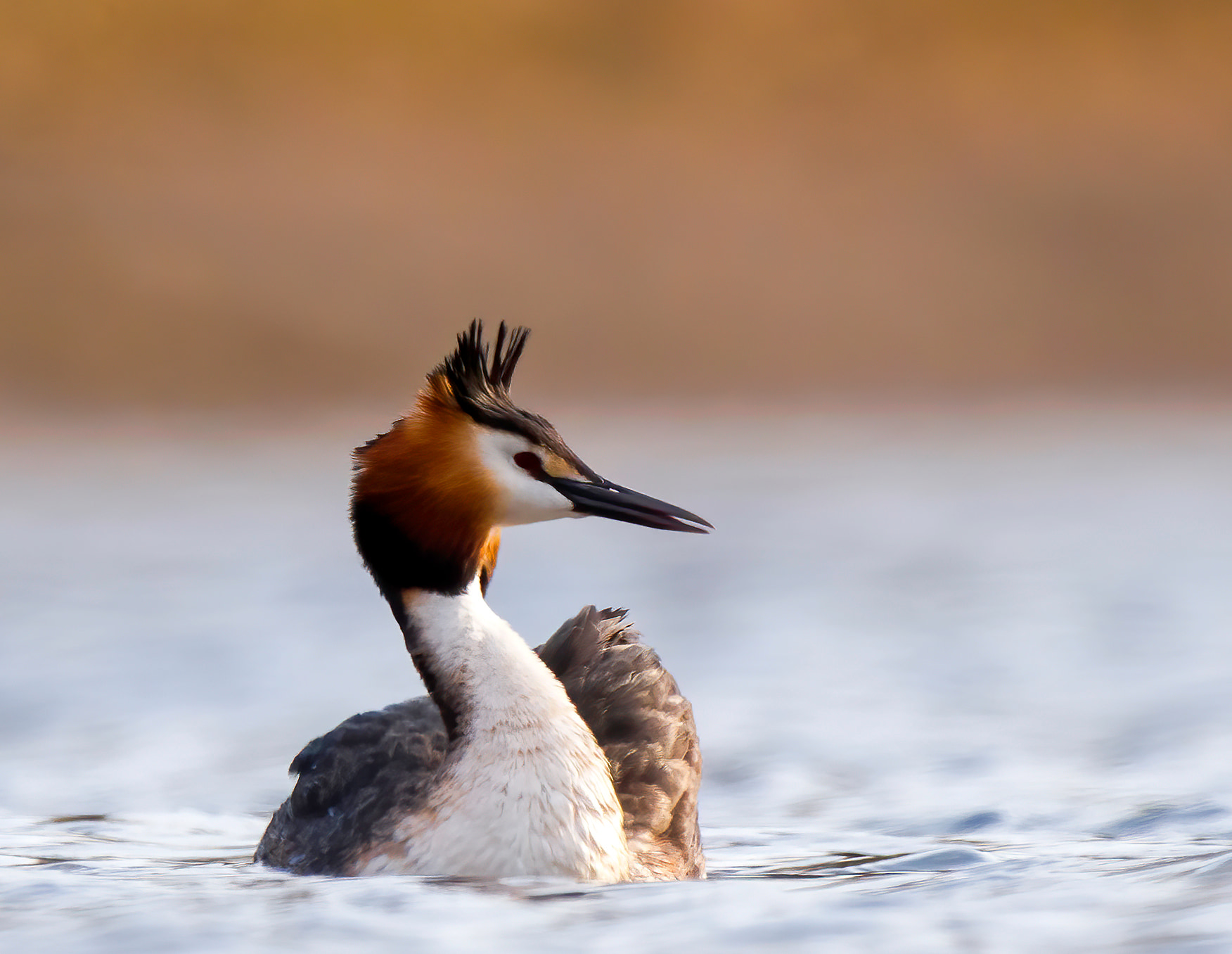
The red-necked grebe is smaller, with a shorter, thicker neck. In breeding plumage it has a rufous neck and pale grey cheeks, while the great crested grebe has a black crest and a rufous-and-black ruff. In winter the red-necked grebe has no white above the eye; the great crested grebe always does.
When breeding, mainly aquatic invertebrates: water beetles, dragonfly larvae, crayfish and molluscs. In some places fish too. In winter it eats mainly fish.
In shallow water, on a floating platform anchored to water plants, often deep in the reeds. It usually nests in single pairs. It lays 4–5 eggs, and both parents incubate for 21–33 days. The chicks spend their first weeks on a parent's back.
In the breeding season it gives a loud, wailing "uooooh", from one bird or a pair together, often from cover in the reeds. It also makes quacking, clucking, hissing and purring sounds. Outside the breeding season it is as quiet as other grebes.
No, it is harmless to people. Globally its risk of extinction is low (LC, 2018), and in Georgia's national assessment (2021) it is LC too. The Red List of Georgia (2014) lists it as Vulnerable (VU). Do not disturb the birds at their breeding sites.
References
What this profile is based on
Species profiles are compiled from peer-reviewed literature and established biodiversity databases, and are reviewed as new taxonomic and conservation data become available.
Prepared by the Reptiles.ge editorial team from the sources listed here.