
Horned grebe
Podiceps auritus
Paul Cools · Tilburg
Key facts in one look
- Size
- 31–38 cm; wingspan 55–74 cm
- Diet
- Aquatic arthropods, fish, crustaceans
- Status in Georgia
- Migrant and winter visitor, does not breed
- Habitat
- Small shallow ponds; sea bays in winter
- Family
- Podicipedidae
- Protection
- Global VU, 2018; Georgia VU, 2021
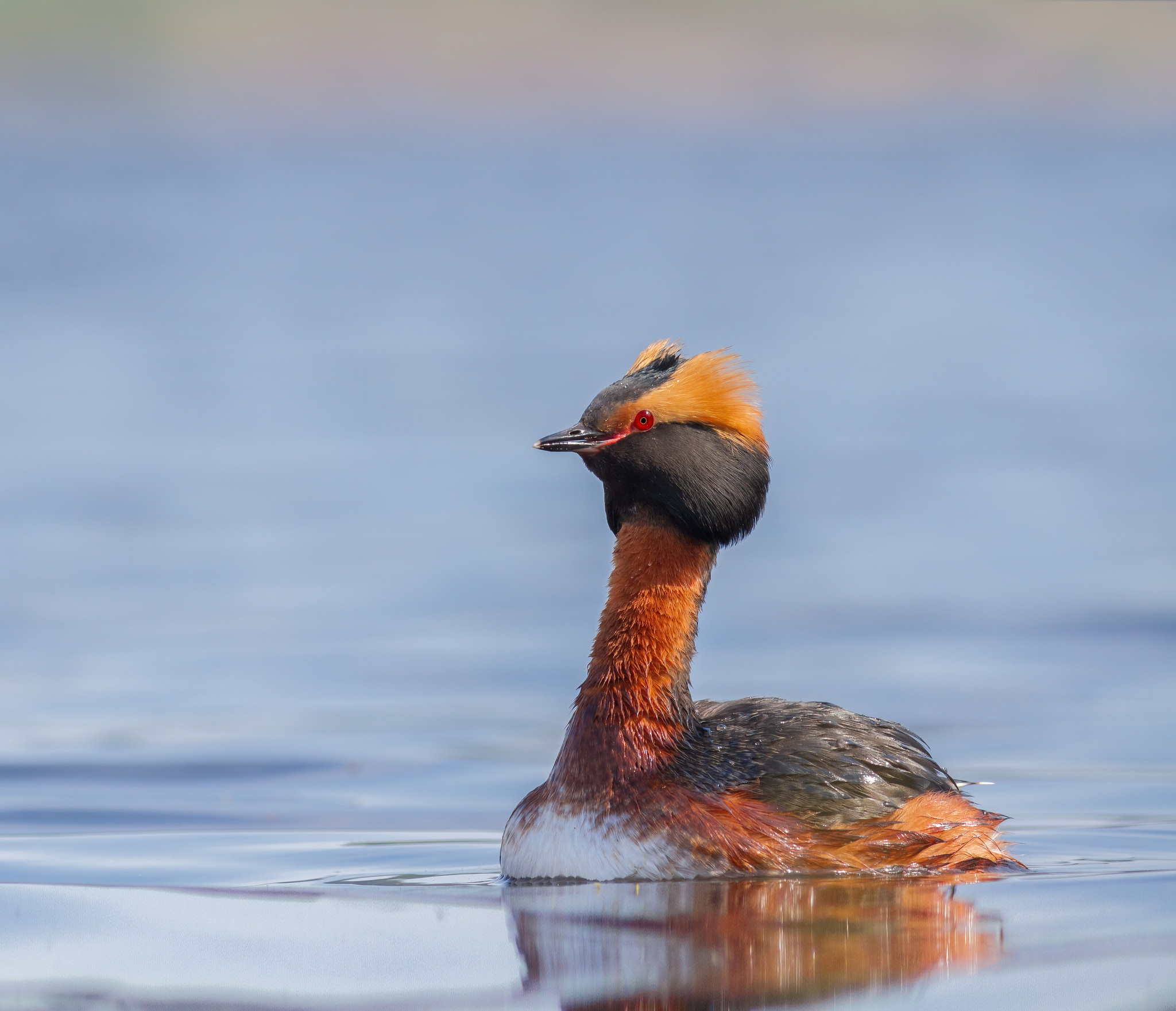
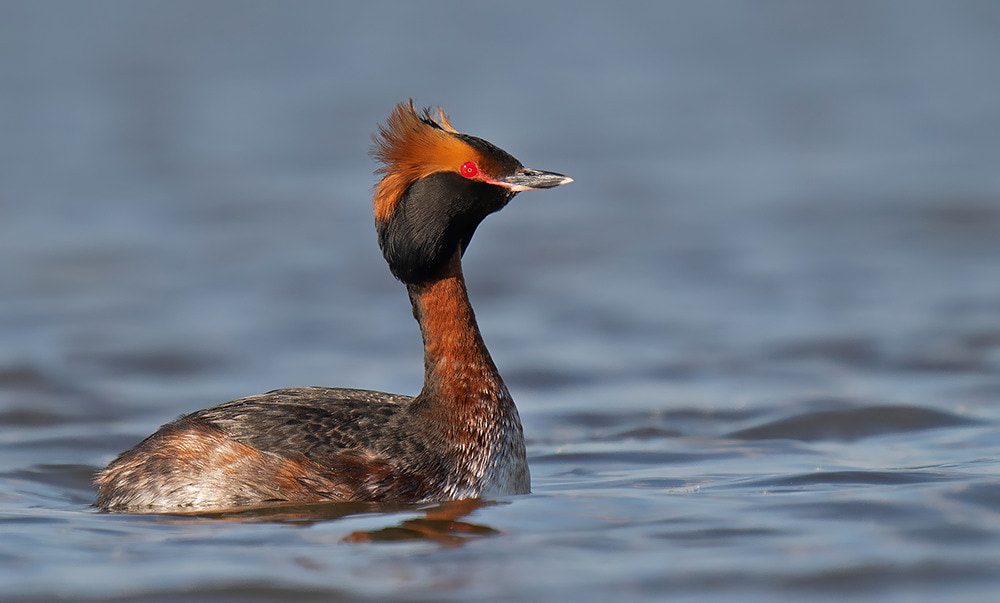
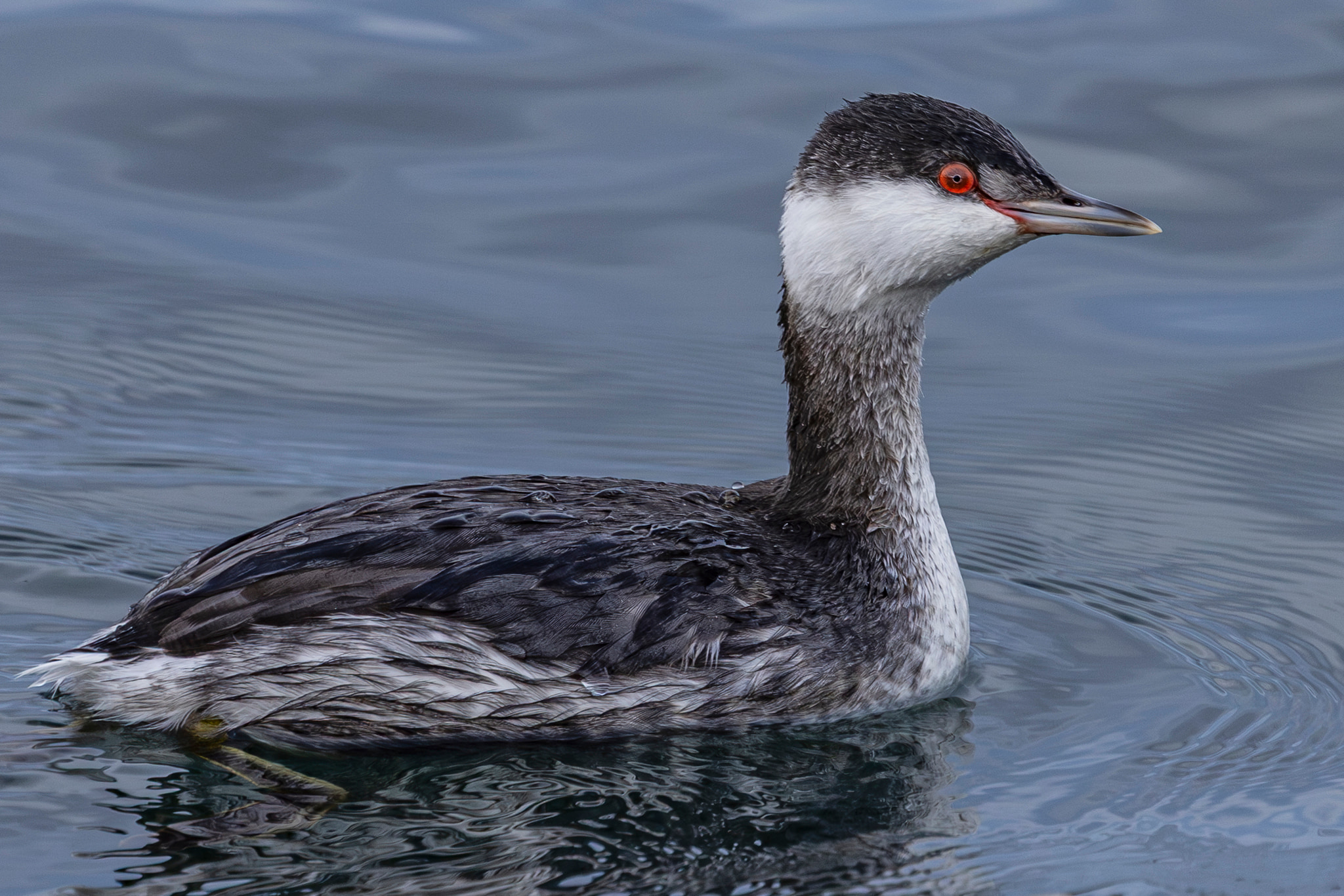
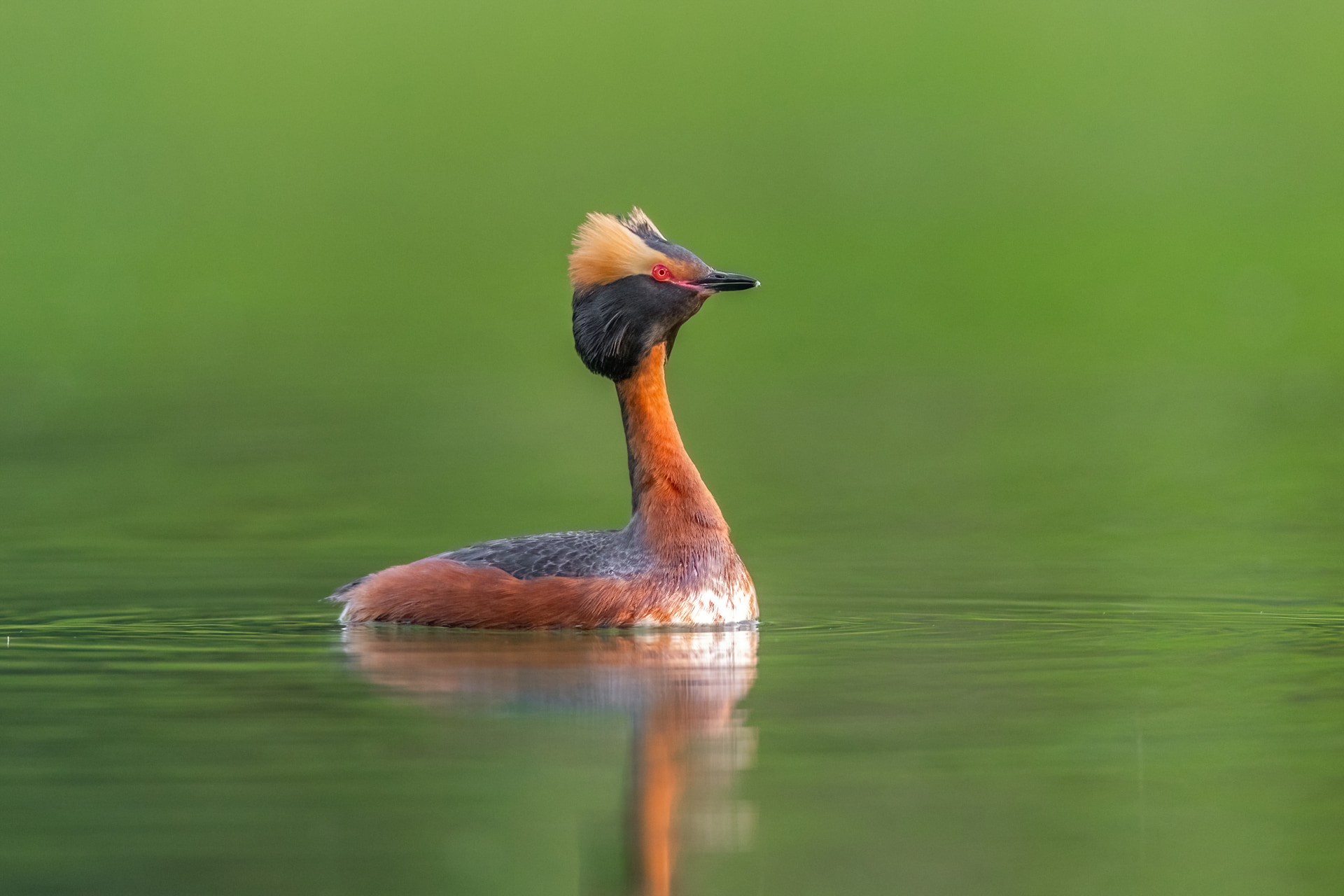
The horned grebe is globally Vulnerable: its threat category was raised in 2015 because its numbers are falling across its range. It is a small grebe, 31–38 cm long. In the breeding season its black head carries golden tufts behind the eyes, and the neck and flanks are rufous. In Georgia it appears only on migration and in winter, when it is black and white and has lost its "horns". If you see a small, white-cheeked grebe on the water in winter, it may well be this one.
Identification
Horned grebe: how to identify it
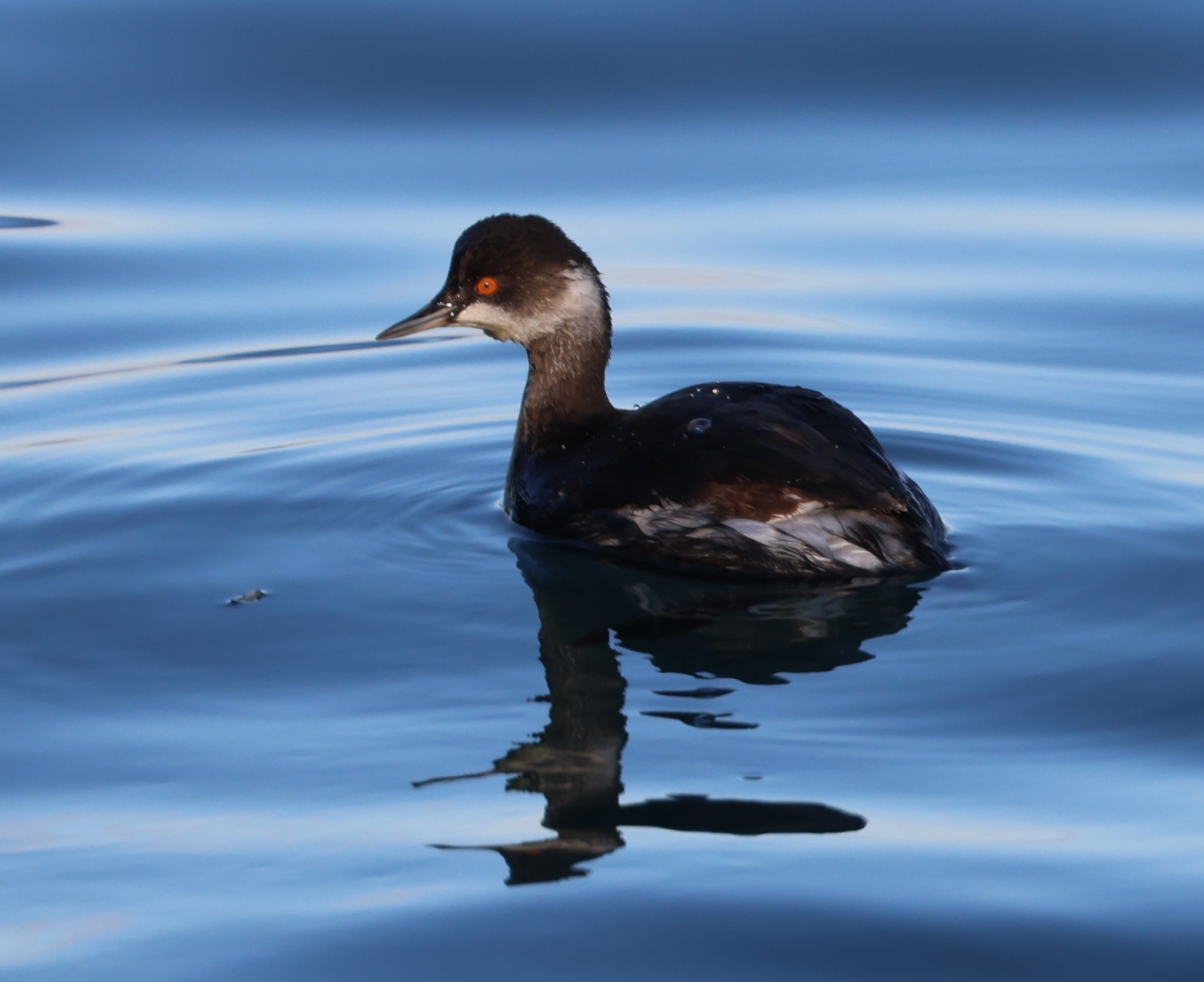
A small grebe, 31–38 cm long, with a straight, pointed bill. In the breeding season the head is black with golden "horns" behind the eyes, and the neck and flanks are rufous. In winter it is black and white.
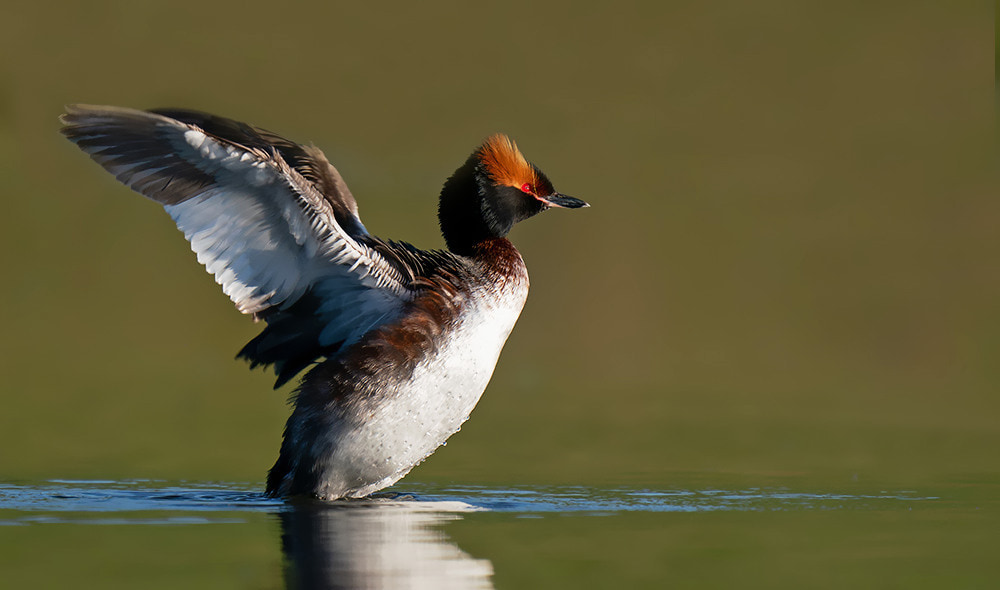
Length 31–38 cm, wingspan 55–74 cm, weight 300–570 g. The neck is of medium length and the forehead flat. The bill is straight and pointed with a pale tip, and the eyes are red. Males are slightly larger and brighter, but in the field you cannot tell the sexes apart.
In breeding plumage the head and back are black, and golden tufts stand up above and behind the eyes like "horns". The neck, flanks and upper breast are rufous-chestnut, the belly whitish. The black cheek feathers are spread like a fan.
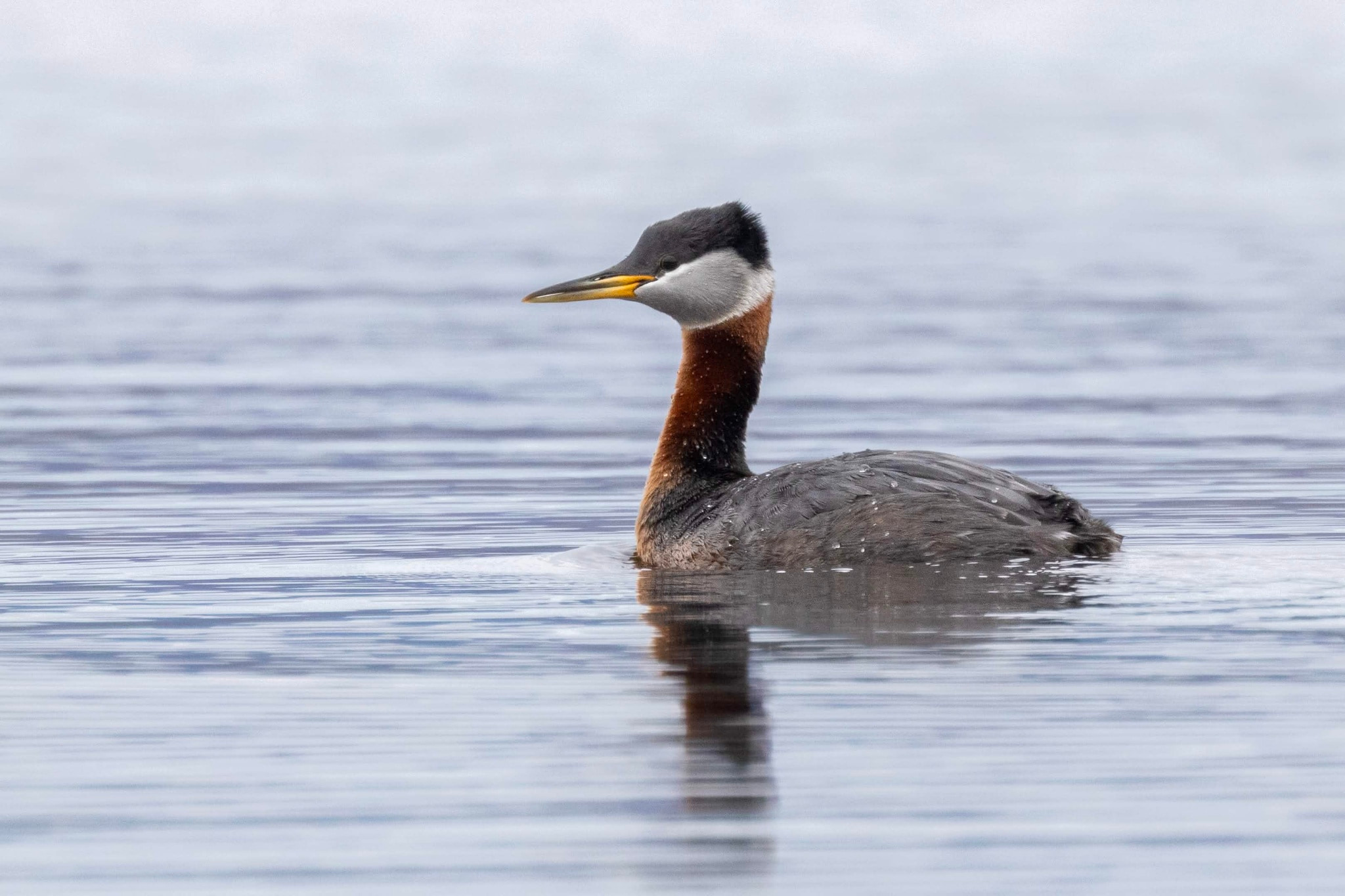
In winter the neck, breast and cheeks are white, the crown and back dark grey, and there are no "horns". The border between crown and cheek runs in a straight line behind the eye. The red-necked grebe is larger, with a bigger bill and a grey rather than white face: if the cheek is clean white, it is a horned grebe.
Colour
Swatches are illustrative. Do not identify a species by colour alone.
Often confused with
It breeds in the northern forest zone and the subarctic, and also in the temperate zone. For breeding it picks small, shallow freshwater ponds, marshes and lake bays up to 2.5 m deep, with reeds and sedges along the shore. On migration it stops on lakes, rivers and marshes, and it spends the winter at sea: in bays, off river mouths and along sandy coasts. In Georgia it occurs on migration and in winter.
The horned grebe appears in Georgia only on migration and in winter, and does not breed. Most records fall in September and October, with fewer from November to April and none from May to August. Most come from Adjara, followed by Kvemo Kartli. It has also been found in Abkhazia, Samegrelo, Kakheti, Tbilisi and Shida Kartli.
Data: Reptiles.ge + iNaturalist · Methodology
- Field observation
- Several records in one spot
- Region with records
It dives for aquatic arthropods, fish and crustaceans. It also catches flying insects at the water's surface. In summer it eats mostly aquatic and flying arthropods, in winter fish and crustaceans. It usually feeds alone or in small groups of up to five birds. It brings large prey to the surface and swallows fish head first.
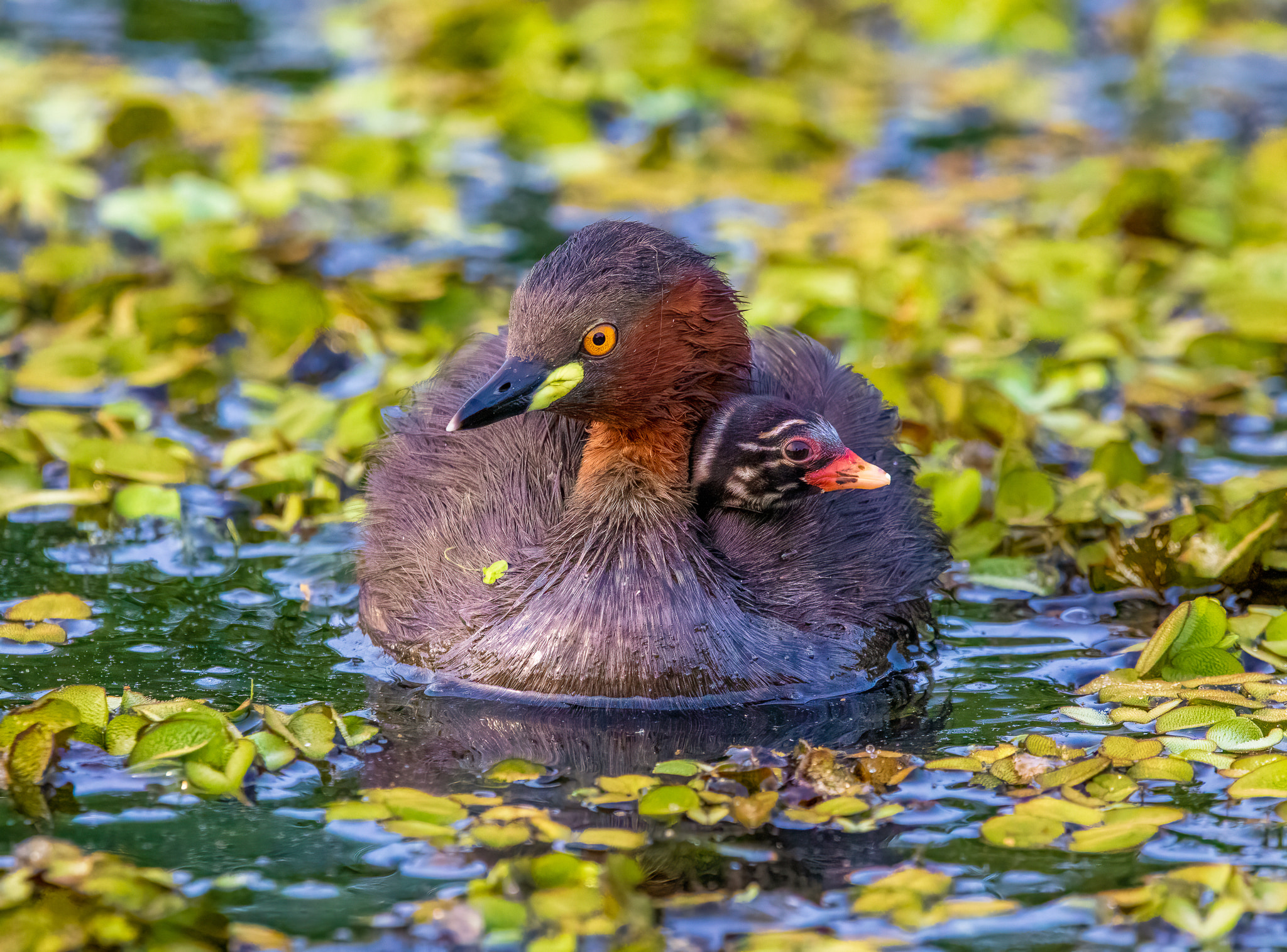
It is monogamous, and pairs form through an elaborate ritual. In one ceremony both birds dive together, bring up water weed and rise breast to breast. It is very vocal when breeding: the main call is a loud, nasal "aaarrh" that falls in pitch and ends in a trill. On autumn migration and in winter it is almost silent. It nests in single pairs or in loose colonies, usually of up to 20 pairs. The nest is a platform of plants, most often anchored to water vegetation. The female lays a single clutch of 3–8 eggs, and both parents incubate for 22–25 days. The chicks swim and dive within their first days and often ride on a parent's back. They first fly at 55–60 days and mature at two years.
Globally the horned grebe is rated Vulnerable (VU, 2018). Until 2015 its risk was considered low, but over the last three decades its numbers have fallen by 30% worldwide and by 79% in North America. Eurasia holds 12,900–18,500 mature birds. It is threatened by disturbance at breeding sites, logging, changing water levels, fishing nets, oil spills and disease. In Georgia's national assessment (2021) it is also rated Vulnerable (VU), with its numbers declining. The list of the birds of Georgia gives it as a migrant and a winter visitor.
Related guides
Continue with related pages
Yes, but only on migration and in winter. It does not breed in Georgia. At that time it is in its black-and-white winter plumage, so do not expect a red neck or "horns".
The horned grebe is smaller and has a smaller bill. In winter its cheeks are clean white, while the red-necked grebe's are grey. The border between crown and cheek runs in a straight line behind the eye. In the breeding season the horned grebe has golden "horns", which the red-necked grebe lacks.
Aquatic arthropods, fish and crustaceans, which it catches by diving. It also takes flying insects at the water's surface. In summer it eats mostly arthropods, in winter fish and crustaceans.
On small, shallow ponds and marshes in the north, among water plants. The nest is a platform of plants anchored to water vegetation. It lays 3–8 eggs, and both parents incubate for 22–25 days. It does not breed in Georgia.
In the breeding season golden-orange tufts grow above and behind its eyes; it can raise them, and they look like "horns". In winter it loses these feathers. That is why in Georgia, where it appears in winter and on migration, it is mostly seen without its "horns".
No, it is harmless to people. Globally it is Vulnerable (VU, 2018), and in Georgia's national assessment (2021) it is Vulnerable (VU) too, with its numbers declining. Do not flush resting birds and do not catch wild birds.
References
What this profile is based on
Species profiles are compiled from peer-reviewed literature and established biodiversity databases, and are reviewed as new taxonomic and conservation data become available.
Prepared by the Reptiles.ge editorial team from the sources listed here.