
Great crested grebe
Podiceps cristatus

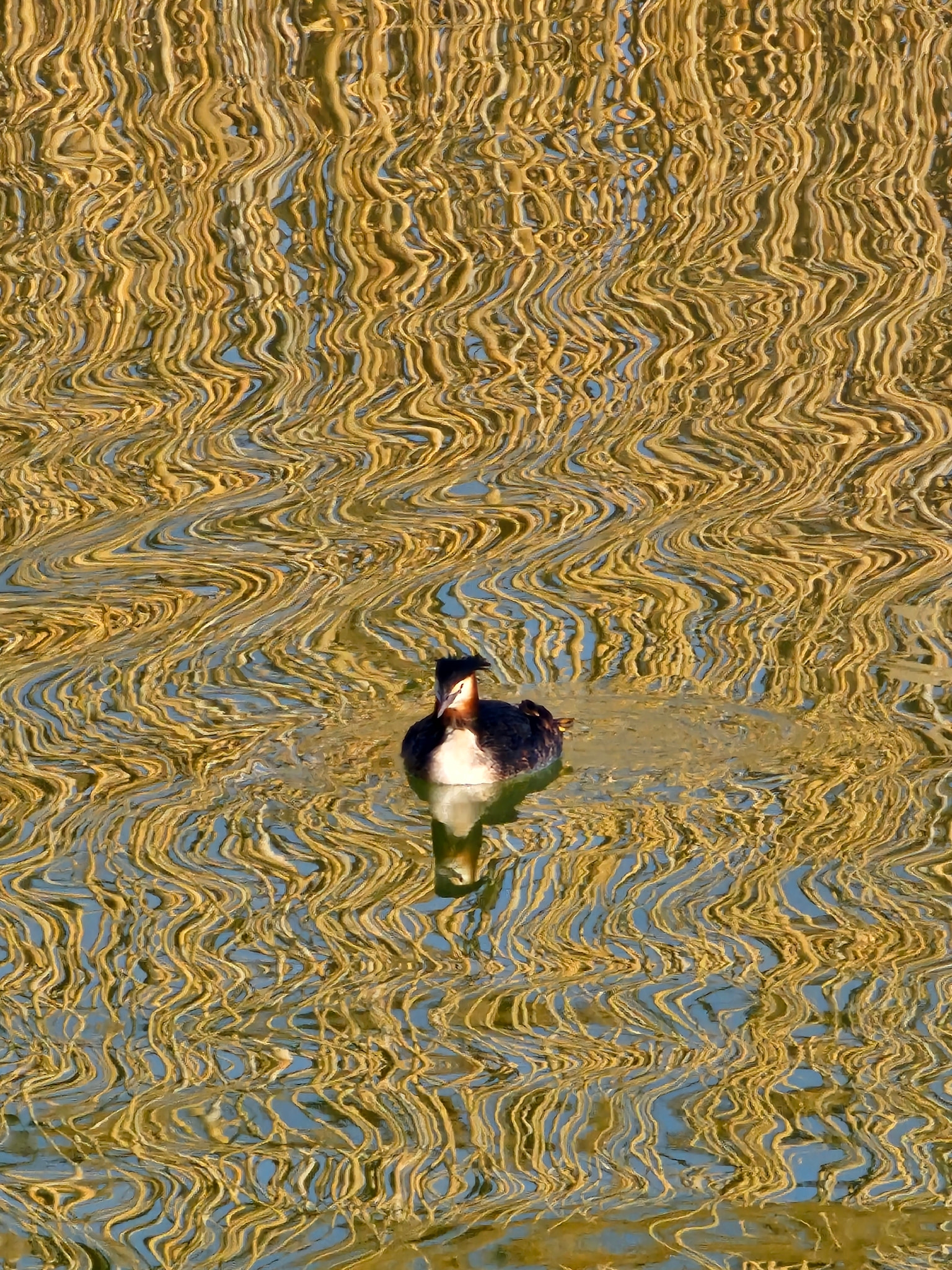
Mikhail Ezdakov · Eastern Administrative District
Key facts in one look
- Size
- 46–51 cm; wingspan 59–73 cm
- Diet
- Mainly fish; crustaceans, insects, amphibians
- Status in Georgia
- Breeder, migrant and winter visitor
- Habitat
- Freshwater lakes rich in plants, reservoirs
- Family
- Podicipedidae
- Protection
- Global LC, 2019; Georgia LC, 2021
The great crested grebe is the largest grebe of the Old World, 46–51 cm long. In the breeding season it wears a black crest and a rufous-and-black ruff, and pairs "dance" together on the water. In Georgia it breeds, passes through on migration and also stays in winter. In Tbilisi it has been seen on Lisi Lake in March and June. In winter the ruff is gone, but the white stripe above the eye and the pink bill still give it away.
Identification
Great crested grebe: how to identify it
A large grebe, 46–51 cm long, with a long, slender neck and a long, straight bill. In the breeding season it has a black crest and a rufous-and-black ruff. In winter it shows a white stripe above the eye and a pink bill.
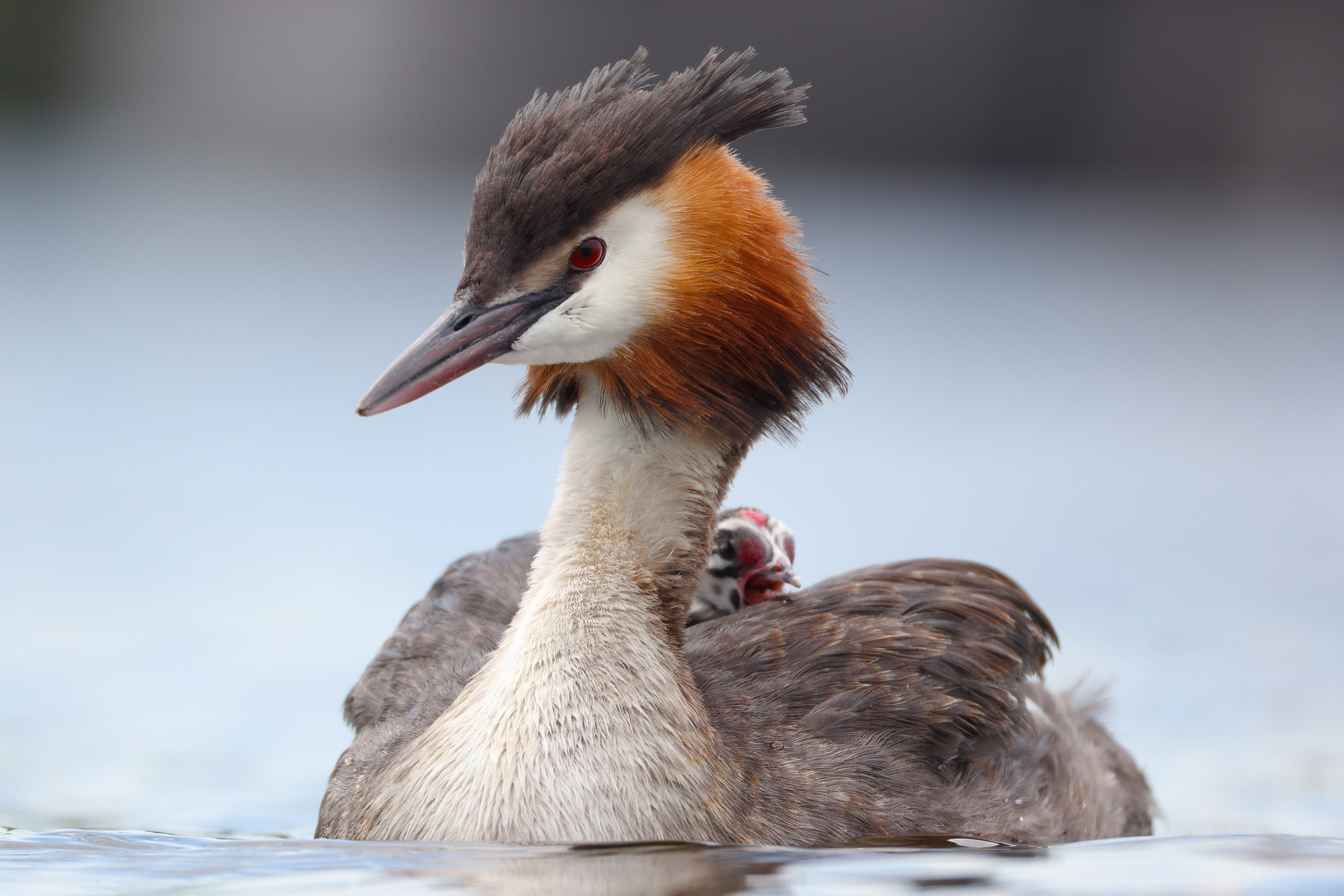
Length 46–51 cm, wingspan 59–73 cm, weight 0.9–1.5 kg. It is the largest grebe of the Old World, a little smaller than a mallard. The neck is long and slender, the bill long and straight.
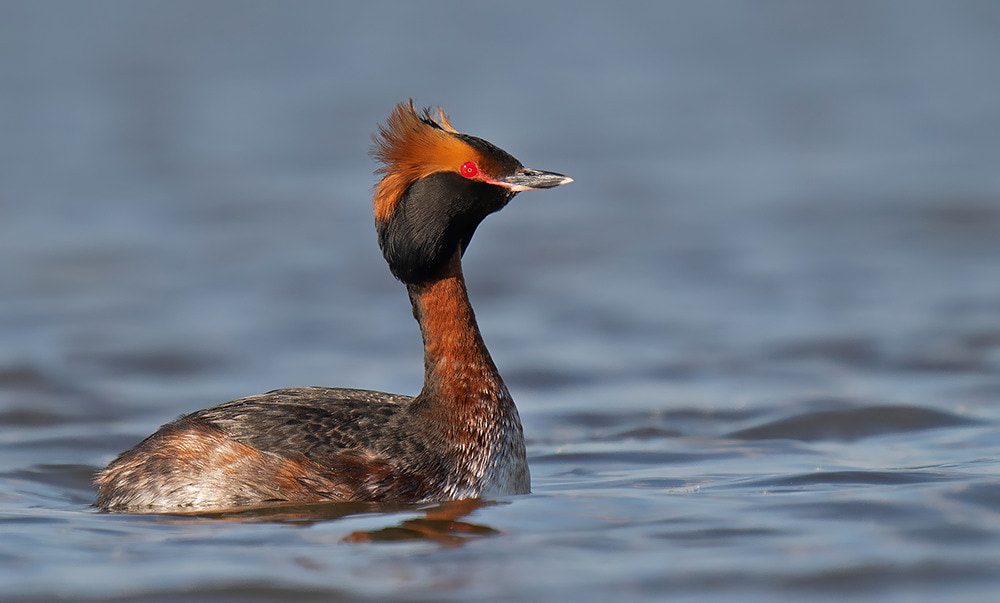
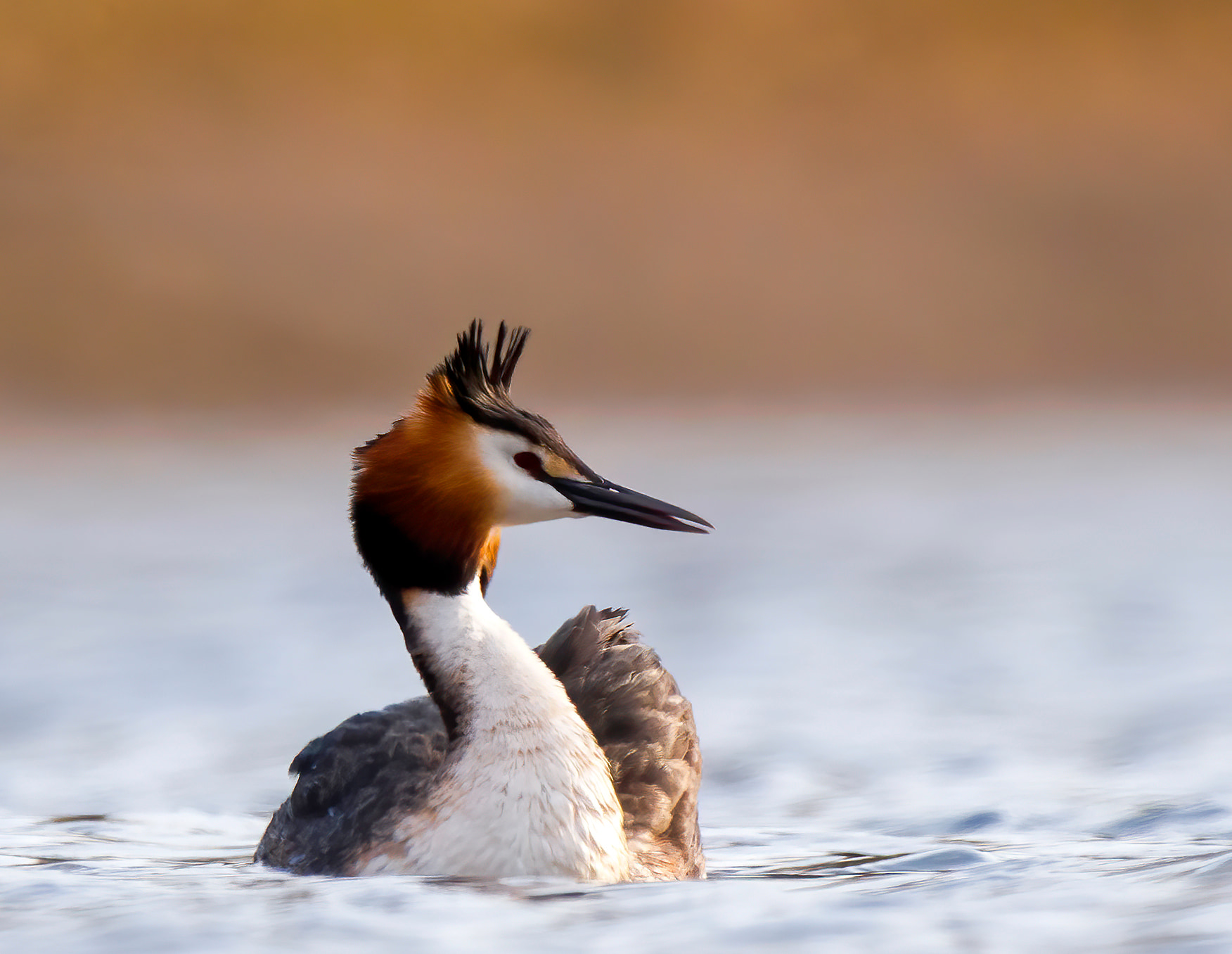
In the breeding season two dark tufts grow on the head like "ears", and a rufous ruff edged with black frames the face. The back is brownish-rufous, the belly, neck and face white. In flight large white patches show on the wings.
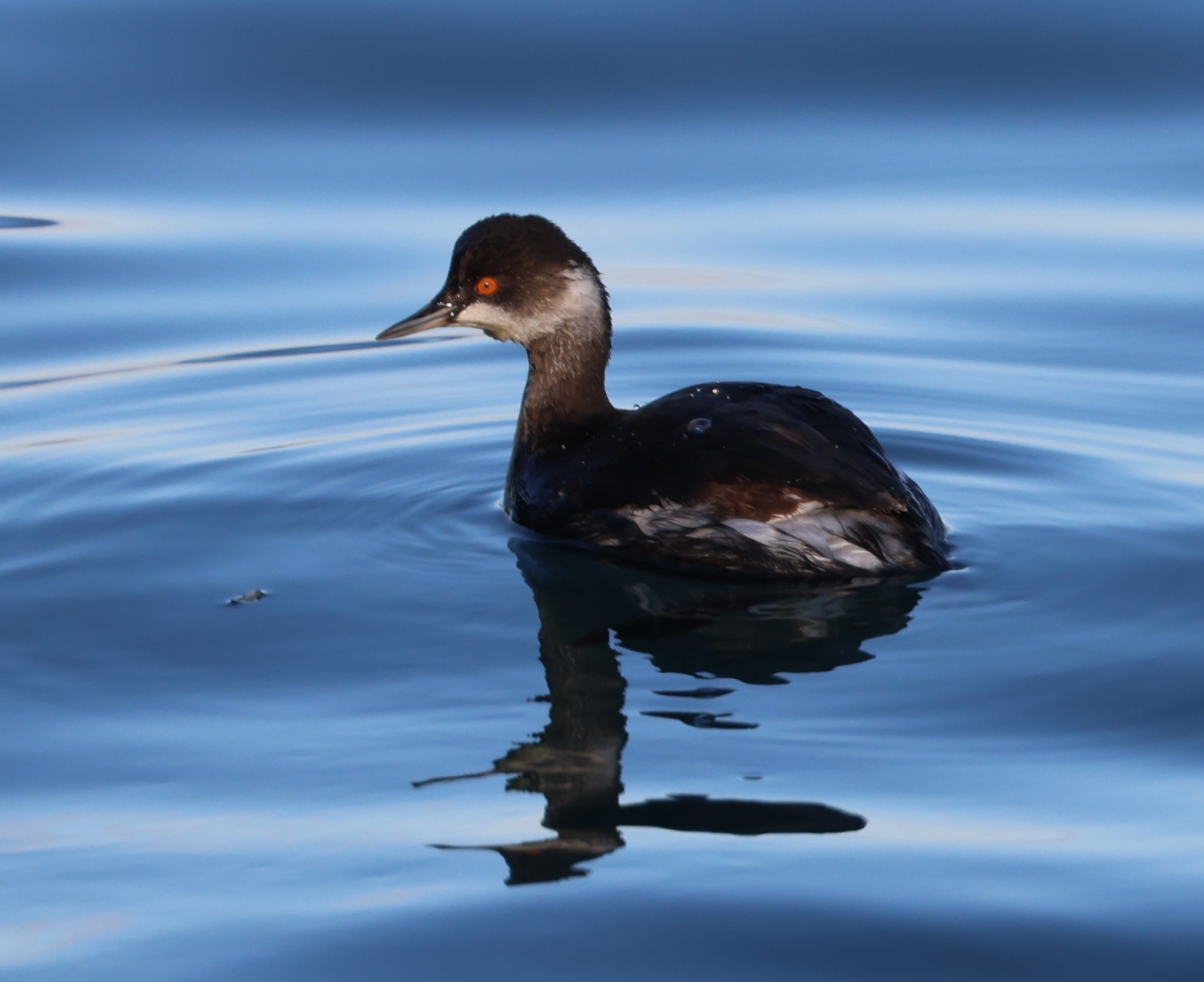
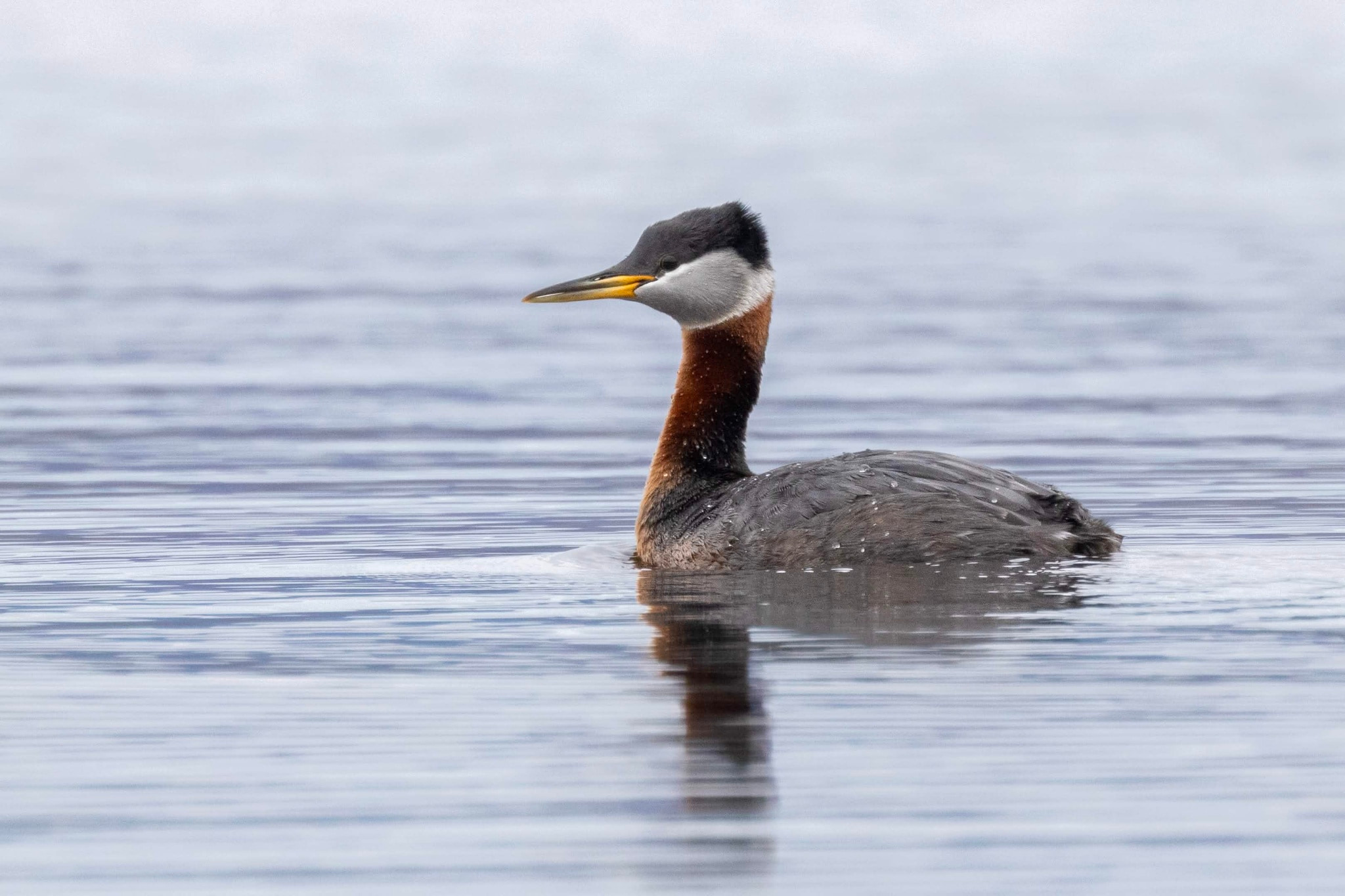
In winter the crest and ruff are gone: the upperparts are grey-brown, the underparts white, there is a white stripe above the eye and the bill is pink. The red-necked grebe has a shorter, thicker neck and no white above the eye: if you see white over the eye, it is a great crested grebe.
Colour
Swatches are illustrative. Do not identify a species by colour alone.
Often confused with
It breeds on freshwater lakes with water plants along the shore. It lives on ponds and lakes in forest, steppe and even desert zones, on calm, slow water. In the mild west of its range it is resident, while it migrates from colder areas. It winters on freshwater lakes, reservoirs or the sea coast. In Georgia it breeds, passes on migration and winters; in Tbilisi it has been seen on Lisi Lake in March and June.
The great crested grebe breeds in Georgia, passes through on migration and also stays in winter. It has been recorded in every month, most often in April–May and September–October. Most records come from Adjara, Abkhazia, Tbilisi, Samtskhe-Javakheti and Kvemo Kartli. In May many come from Samtskhe-Javakheti, in autumn from Adjara. It has also been found in Samegrelo, Kakheti, Guria, Mtskheta-Mtianeti, Shida Kartli, Imereti and Racha. The oldest record is a museum specimen collected in 1911.
Data: Reptiles.ge + iNaturalist · Methodology
- Field observation
- Several records in one spot
- Region with records
It eats mainly fish, which it chases and catches under water. It is an excellent swimmer and diver. Besides fish it takes small crustaceans, insects, small frogs and newts. Molluscs are part of its diet too.
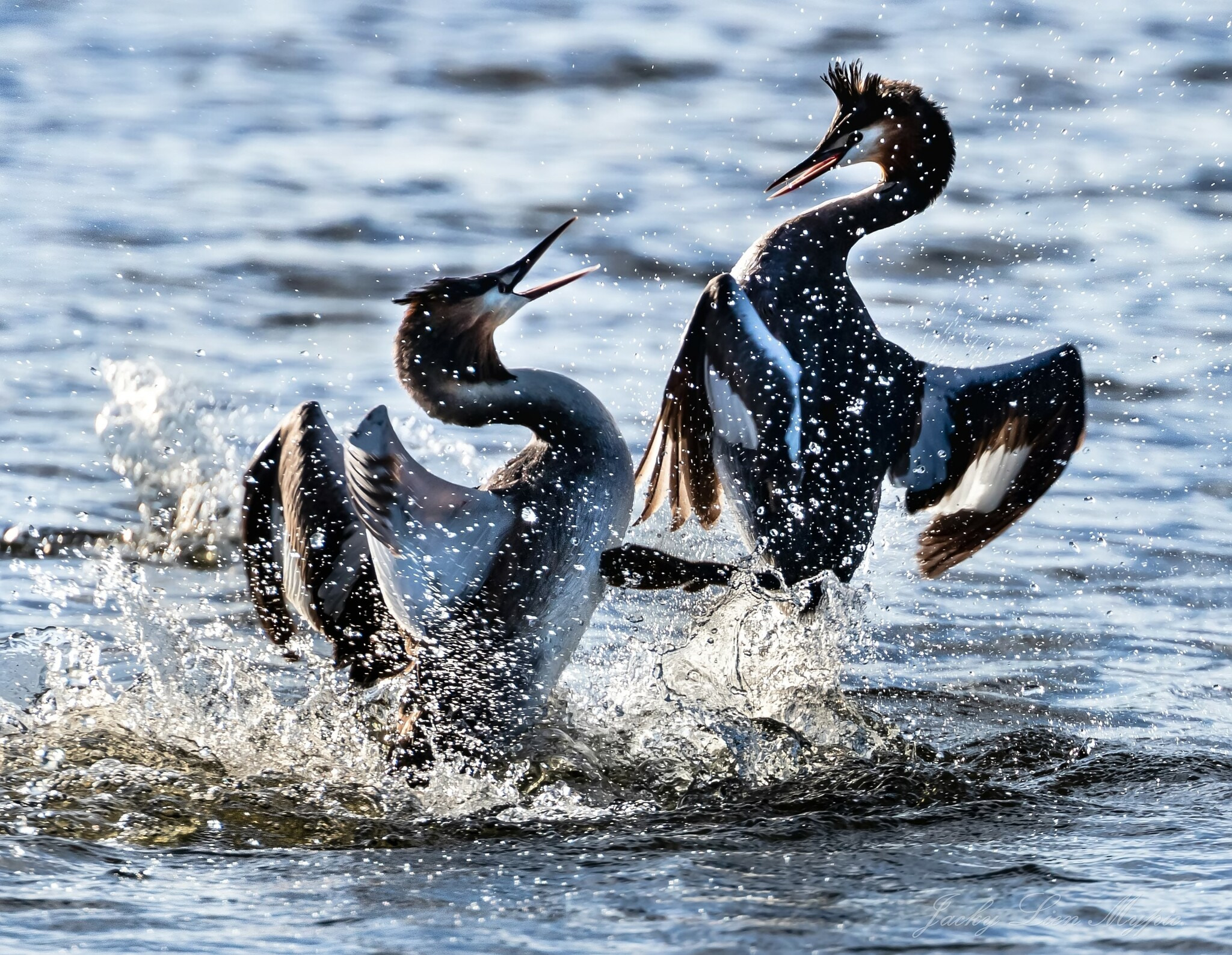
It spends most of its time on the water and does not fly much by choice. In Europe it returns to its breeding sites from mid-March to April. The pair ritual takes place on the water: the birds swim towards each other, spread their ruffs and shake their heads. Then they rise upright in the water in a "penguin pose" and offer each other water weed in their bills. The call is a loud, barking "rah-rah-rah", along with a short "kek" and deep growls. Both sexes build the nest at the water's edge, mostly from dead reed and bulrush. The nest floats and is up to 60 cm across. The female lays on average four chalky-white eggs, which soon turn brown from the rotting plants. Both parents incubate from the first egg, so the chicks hatch at different times, after 27–29 days. The chicks swim and dive almost at once, and the parents carry them on their backs.
Globally the great crested grebe's risk of extinction is rated low (LC, 2019). It is found across Eurasia, Africa, Australia and New Zealand. In 19th-century Britain it was hunted almost to extinction for its head plumes, used to decorate ladies' hats; today it is common there again. In Georgia's national assessment (2021) its risk is also rated low (LC), and its numbers are stable. The list of the birds of Georgia gives it as a breeder, a migrant and a winter visitor.
Related guides
Continue with related pages
Yes. It breeds in Georgia, passes through on migration and also stays in winter. In Tbilisi it has been seen on Lisi Lake in March and June. Look for it on lakes rich in water plants.
The great crested grebe is larger, with a longer and more slender neck. In the breeding season it has a black crest and a rufous-and-black ruff, while the red-necked grebe has a rufous neck and pale grey cheeks. In winter the great crested grebe always shows white above the eye, and the red-necked grebe does not.
Mainly fish, which it catches by diving under water. It also takes small crustaceans, insects, small frogs, newts and molluscs.
At the water's edge, in a floating nest of dead reed and bulrush. Both sexes build it. The female lays on average four eggs, and both parents incubate. The chicks hatch after 27–29 days and ride on a parent's back.
The chicks can swim almost from hatching, but the parents carry them on their backs. An adult dives and leaves the chicks floating on the surface, then comes up a little way off so they swim back to it. This is how they learn to swim and dive.
No, it is harmless to people. Globally its risk of extinction is low (LC, 2019). In Georgia's national assessment (2021) its risk is also low (LC), and its numbers are stable. Do not disturb its nest.
References
What this profile is based on
Species profiles are compiled from peer-reviewed literature and established biodiversity databases, and are reviewed as new taxonomic and conservation data become available.
Prepared by the Reptiles.ge editorial team from the sources listed here.