
Black-necked grebe
Podiceps nigricollis
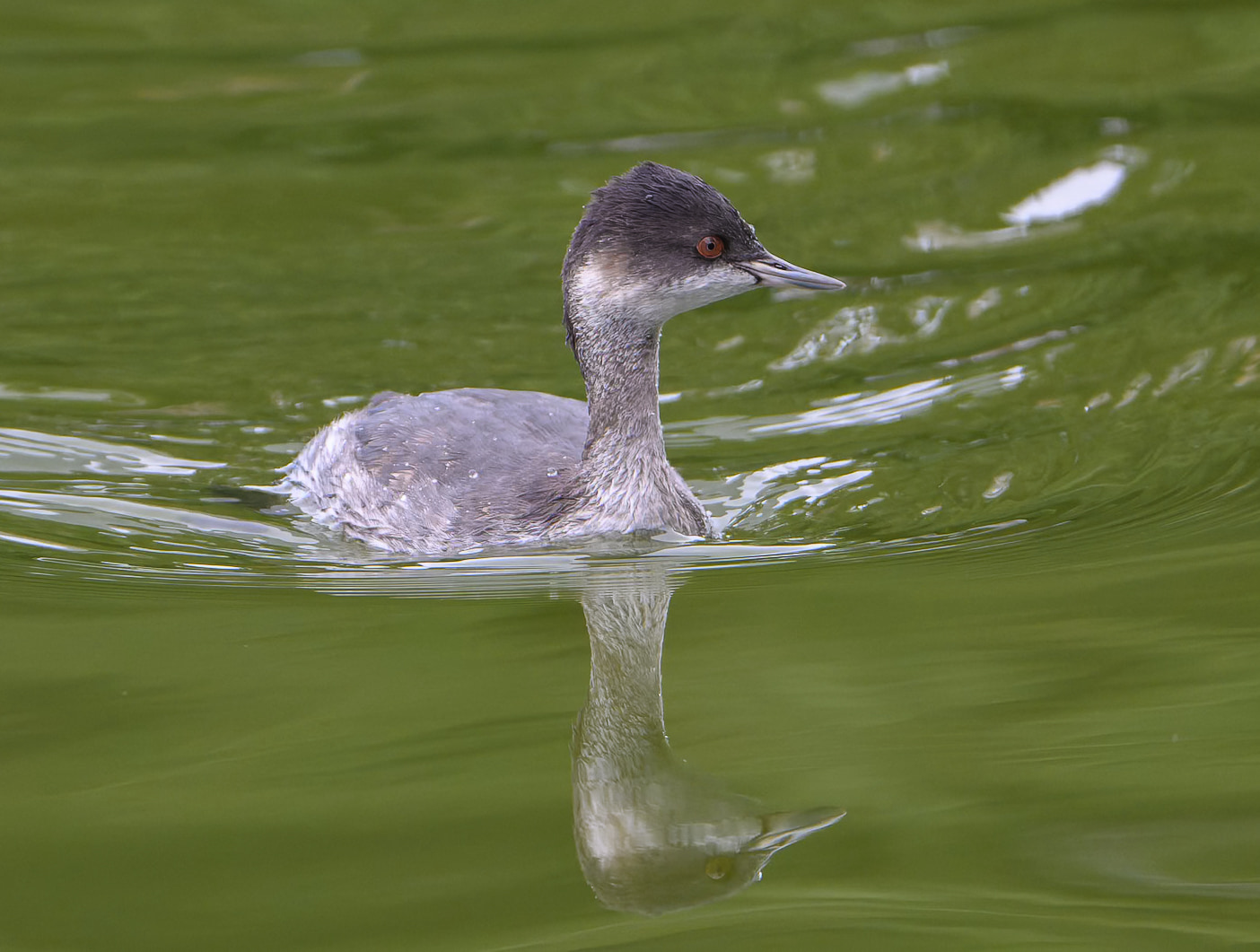
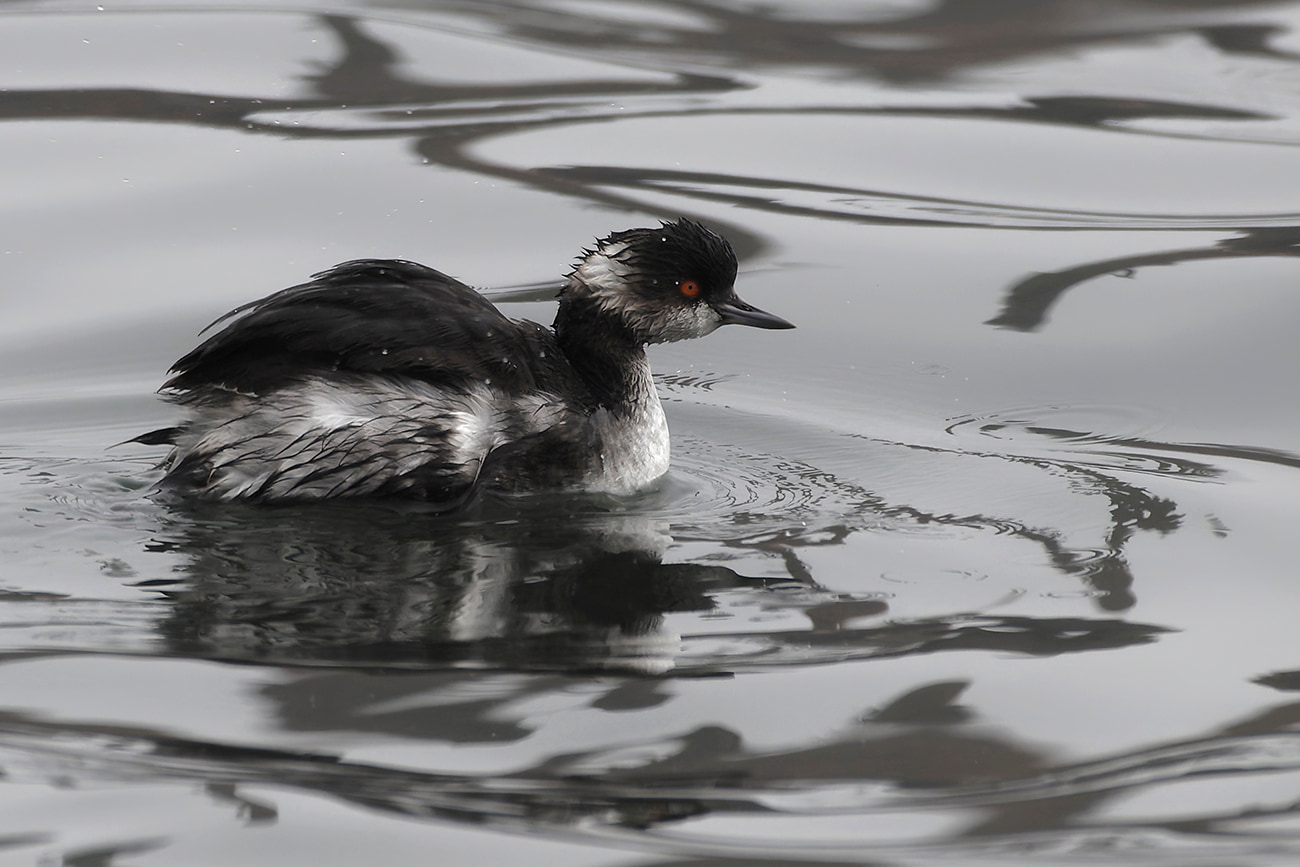
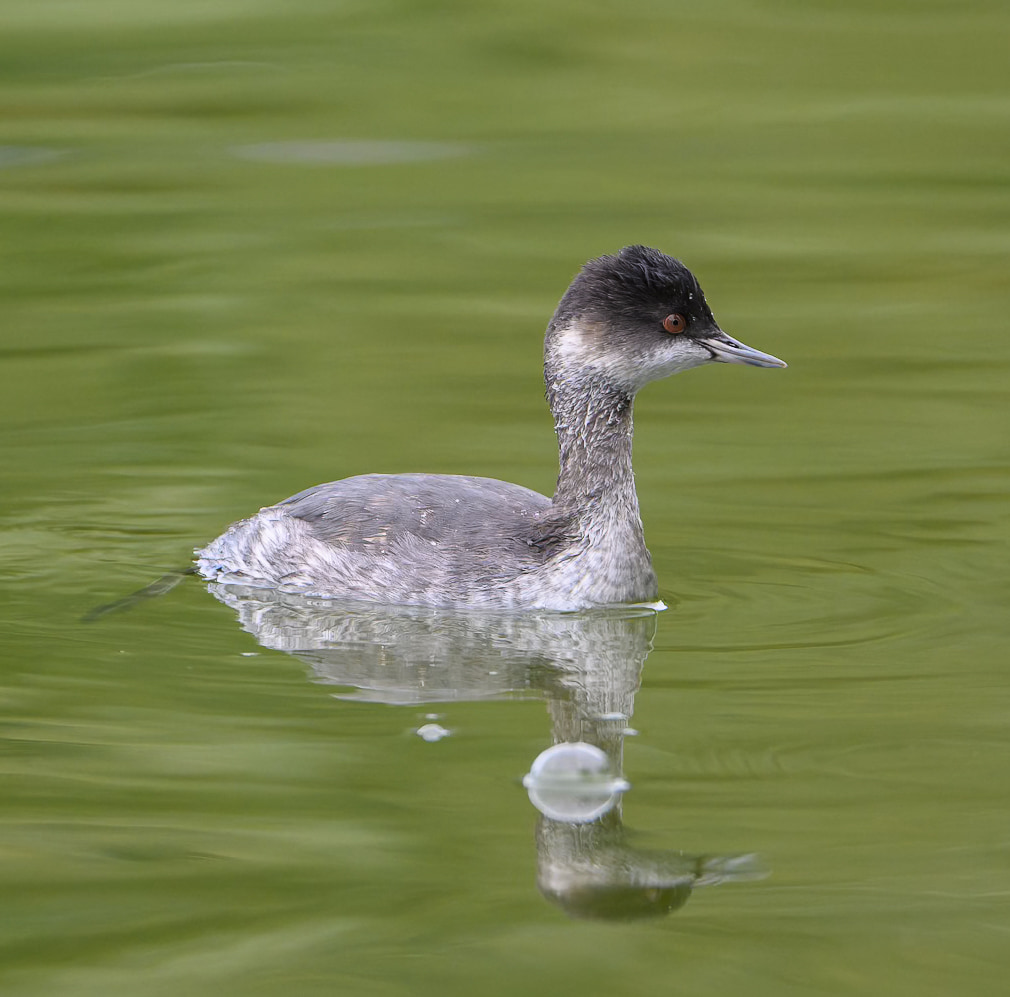
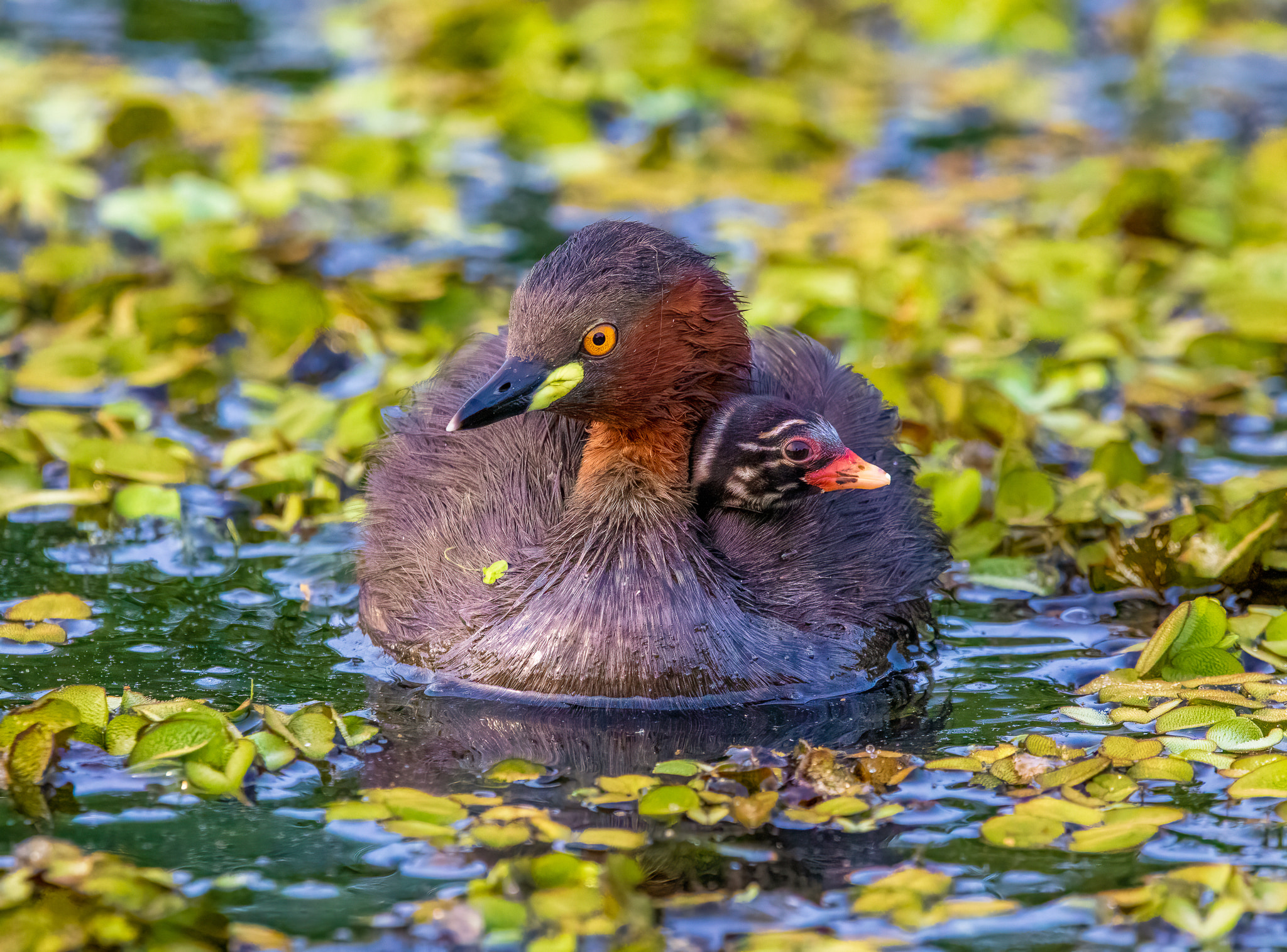
kindjay · Batumi, Adjara Georgia field photo
Key facts in one look
- Size
- 28–34 cm
- Diet
- Water insects, crustaceans, molluscs
- Status in Georgia
- Breeds, migrant, winter visitor
- Habitat
- Lakes; in winter saline lakes and sea coast
- Family
- Podicipedidae
- Protection
- Globally LC, 2018; in Georgia LC, 2021
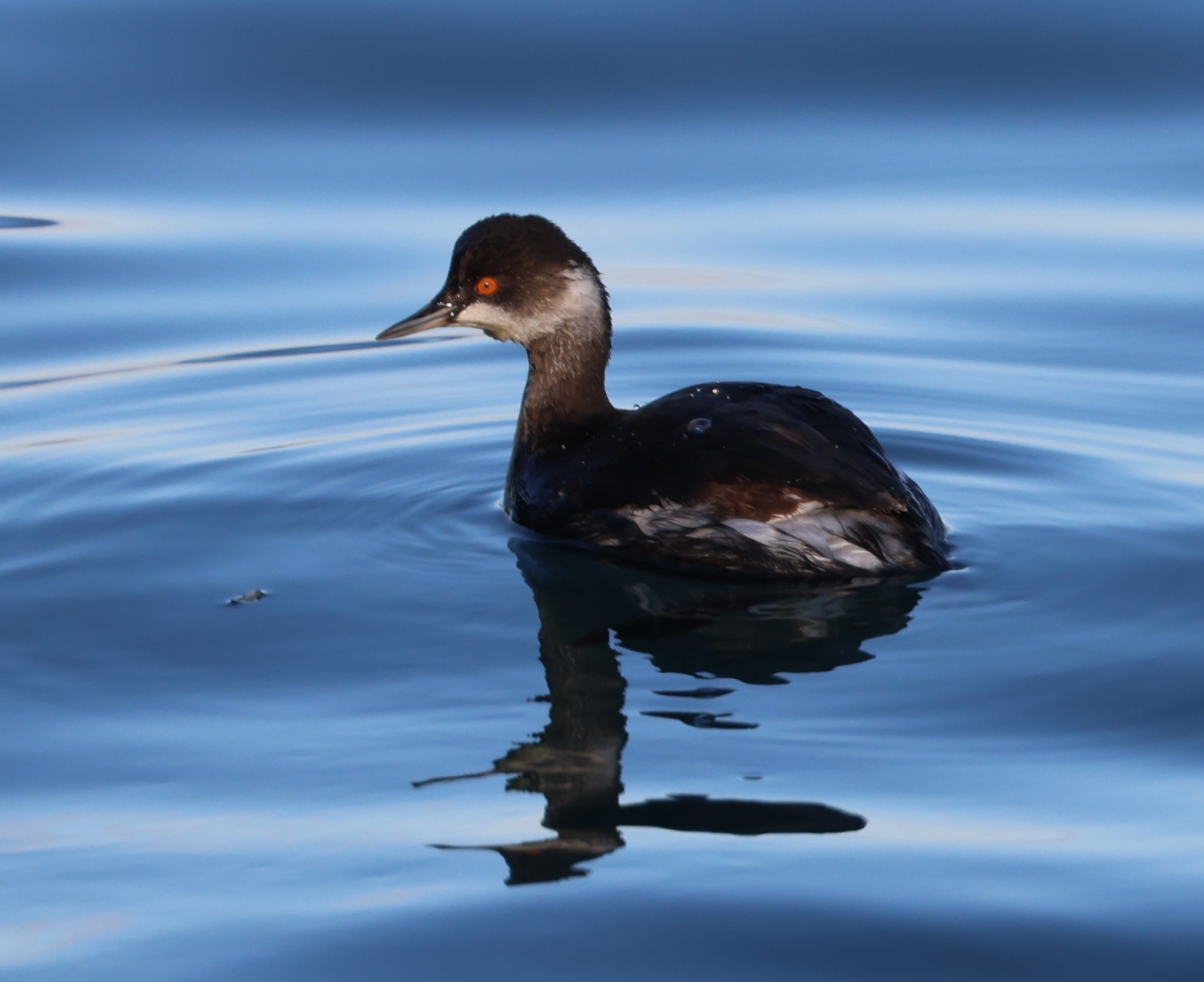
The black-necked grebe is a grebe 28–34 cm long, with bright red eyes and a thin, slightly upturned bill. In summer the head, neck and back are black, a fan of golden plumes spreads behind the eye, and the flanks are rufous. In winter all this fades and the bird turns black, white and grey. In Georgia it breeds, and it is also seen on migration and in winter. It is very sociable: it breeds in colonies and the rest of the year travels in flocks. It does not like to fly: when in danger it dives rather than takes off.
Identification
Black-necked grebe: how to identify it
A small grebe, 28–34 cm long and 215–450 g. In summer the head and neck are black, with golden plumes behind the eye and rufous flanks. The eye is red, the bill thin and slightly upturned.
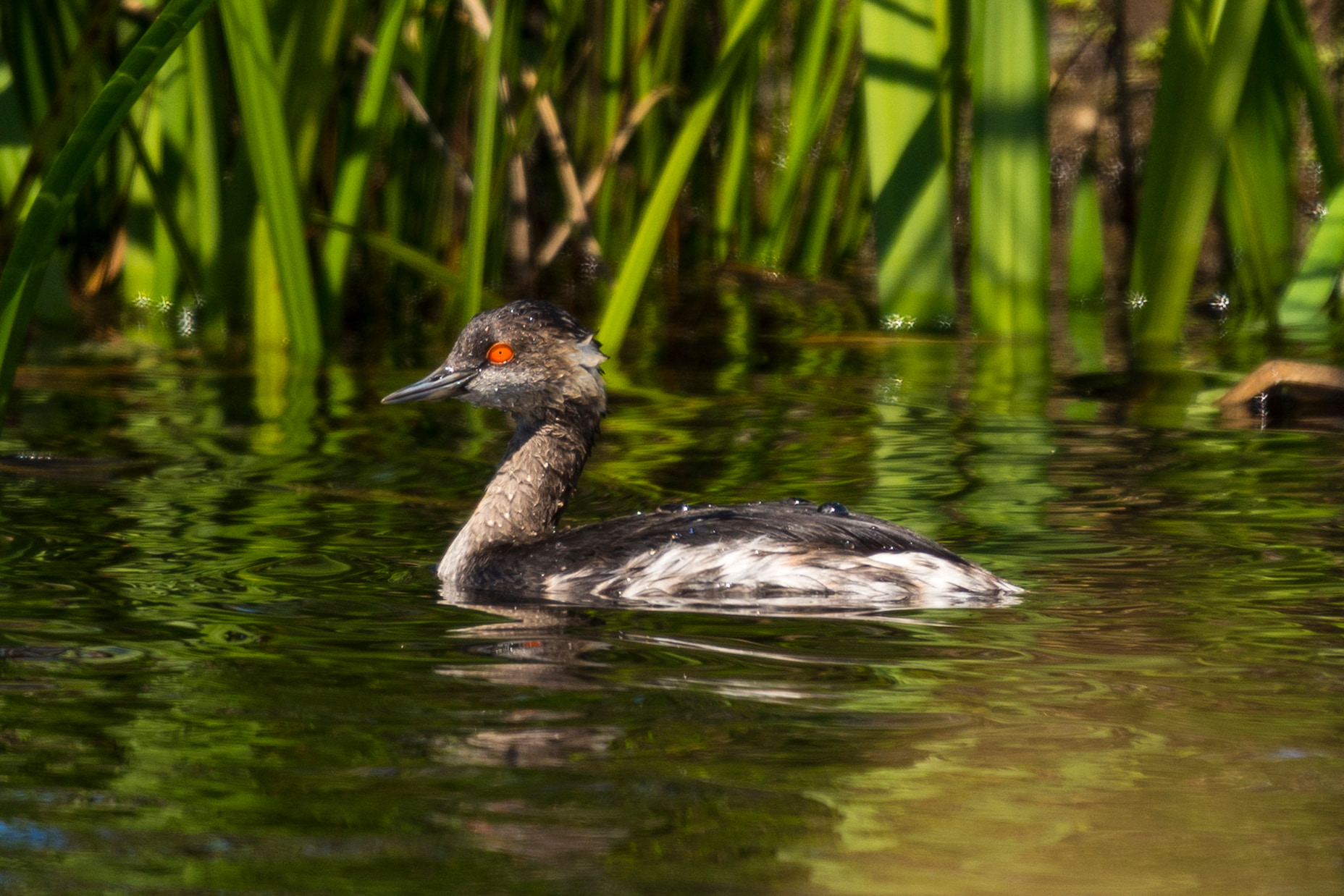
Length 28–34 cm, wingspan 56–60 cm, weight 215–450 g. It is slightly smaller than a horned grebe. When swimming it holds its neck straight up.
In breeding plumage the head, neck, breast and back are black to blackish brown. A fan of golden plumes runs from behind the eye over the ear and the sides of the nape. The flanks are rufous to chestnut, the belly white. The eye is bright red, the bill black, thin and upturned. Males and females look alike.
In winter the cap, nape and back are greyish black, the throat and breast white, the front of the neck grey. The dark cap reaches below the eye. The horned grebe is also black and white in winter, but the black-necked grebe has an upturned bill and its dark cap reaches lower on the cheek. Young birds show more brown in the dark areas.
Colour
Swatches are illustrative. Do not identify a species by colour alone.
Often confused with
It breeds on freshwater lakes with water plants, though it is less tied to reeds than other grebes and does not avoid open water. After breeding many birds move to saline lakes to moult. It spends the winter on saline lakes, sheltered sea coasts and estuaries. On migration it also turns up on mountain rivers. In Georgia it has been seen on Lake Tabatskuri in June.
The black-necked grebe breeds in Georgia and is also seen on migration and in winter. It has been recorded in every month, most often in September and October, when most records come from Adjara. Overall, most records come from Adjara, Samtskhe-Javakheti, Abkhazia, Samegrelo, Kvemo Kartli and Guria. In May many come from Samtskhe-Javakheti. It has also been found in Kakheti, Tbilisi, Mtskheta-Mtianeti and Shida Kartli. The oldest record is a museum specimen collected near Sukhumi in 1958.
Data: Reptiles.ge + iNaturalist · Methodology
- Field observation
- Several records in one spot
- Photo record
- Region with records
It eats mostly insects, both adults and larvae. By diving it catches crustaceans, molluscs, tadpoles, small frogs and small fish. While moulting on saline lakes it eats almost nothing but brine shrimp, a tiny crustacean of salty water. Where there are more brine shrimp, there are more grebes. Now and then it picks insects off plants or catches one in flight.
It is a very sociable bird: it breeds in colonies and the rest of the year travels in large flocks. It often nests together with gulls, ducks and other waterbirds. A dive usually lasts less than 30 seconds. It does not like to fly and makes long flights only on migration. While moulting it cannot fly at all for 35–40 days, and in that time its weight may double. It builds a floating nest of water plants on the shallow water of an open lake. Both parents build it. It lays 3–4 greenish or bluish eggs, sometimes more, because females often also lay in other birds' nests. Both parents incubate for about 21 days. After hatching they leave the nest, and the chicks spend the first days on a parent's back. They fledge in about three weeks.
Globally the black-necked grebe's risk of extinction is rated low (LC, 2018). It is probably the most numerous grebe in the world, with about 3.9–4.2 million birds. In some places its numbers are cut by disease, oil pollution, disturbance and collisions with power lines. In Georgia's national assessment (2021) its risk is also rated low (LC), and its numbers are stable. The list of the birds of Georgia gives it as a breeder, a migrant and a winter visitor.
Related guides
Continue with related pages
Yes. It breeds in Georgia, and it is also seen on migration and in winter. It breeds on lakes, often in colonies. It has been seen on Lake Tabatskuri in June.
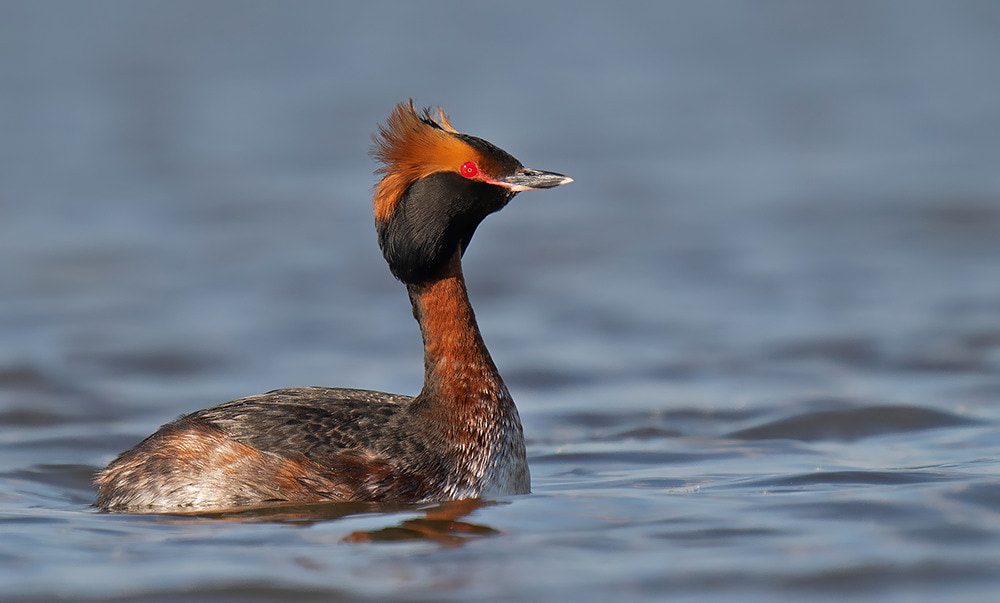
In summer it is easy: the black-necked grebe has a black neck, the horned grebe a rufous one. In winter both are black and white. Then look at the bill: the black-necked grebe's is slightly upturned. Its dark cap reaches below the eye and spreads onto the cheek.
Mostly insects and their larvae. By diving it catches crustaceans, molluscs, tadpoles, small frogs and small fish. While moulting on saline lakes it eats almost nothing but brine shrimp.
On the shallow water of a lake, in a floating nest of water plants. It often nests in colonies, sometimes with gulls and ducks. It lays 3–4 eggs. Both parents incubate for about 21 days.
After hatching the parents leave the nest. The chicks can already swim and dive, but they spend the first days on a parent's back. That way the parents no longer need to go back to the nest. All grebes do this.
No, it is harmless to people. Globally its risk of extinction is low (LC, 2018). In Georgia's national assessment (2021) its risk is also low (LC), and its numbers are stable. Do not disturb a colony in the breeding season.
References
What this profile is based on
Species profiles are compiled from peer-reviewed literature and established biodiversity databases, and are reviewed as new taxonomic and conservation data become available.
Prepared by the Reptiles.ge editorial team from the sources listed here.