
Eastern rock nuthatch
Sitta tephronota
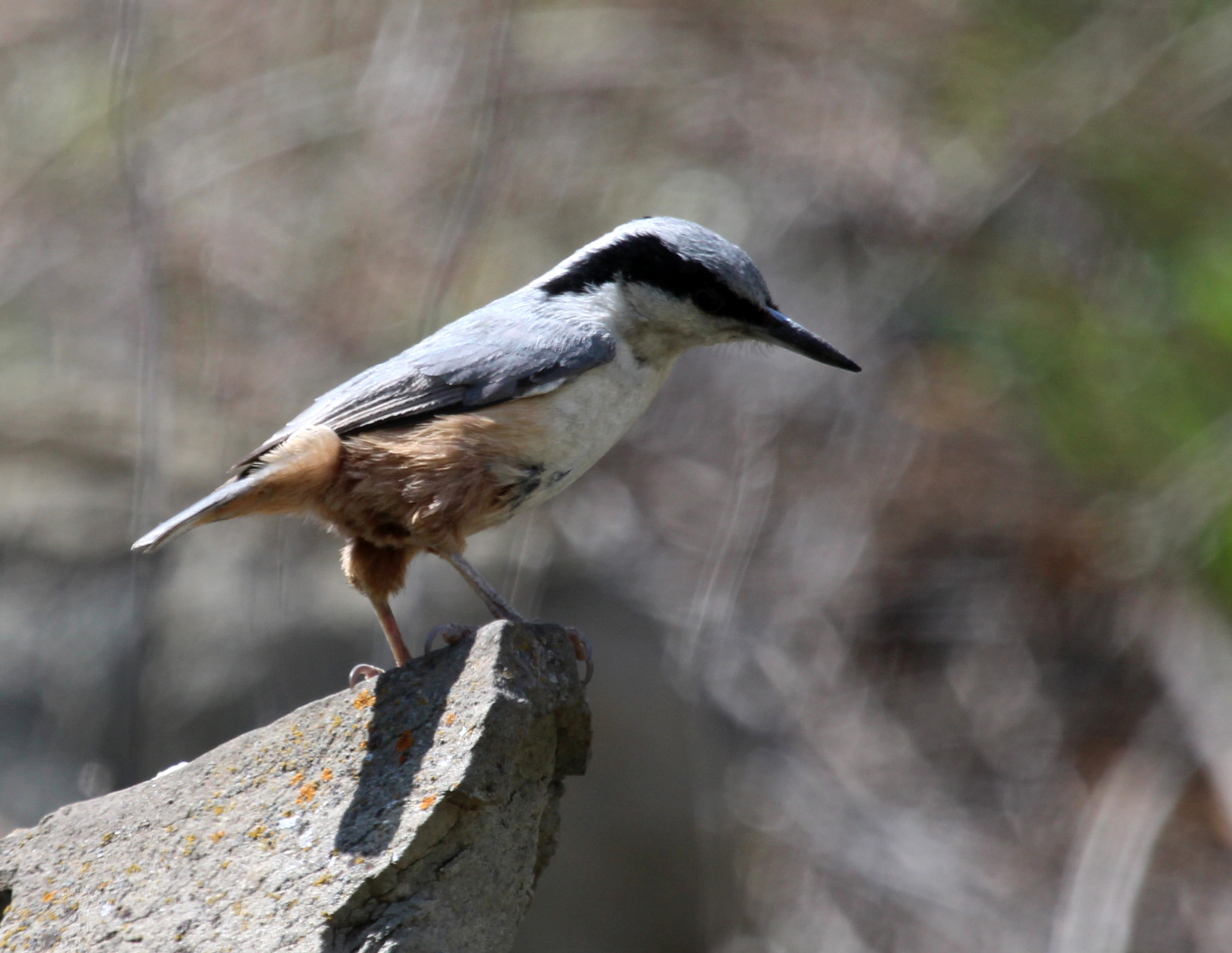
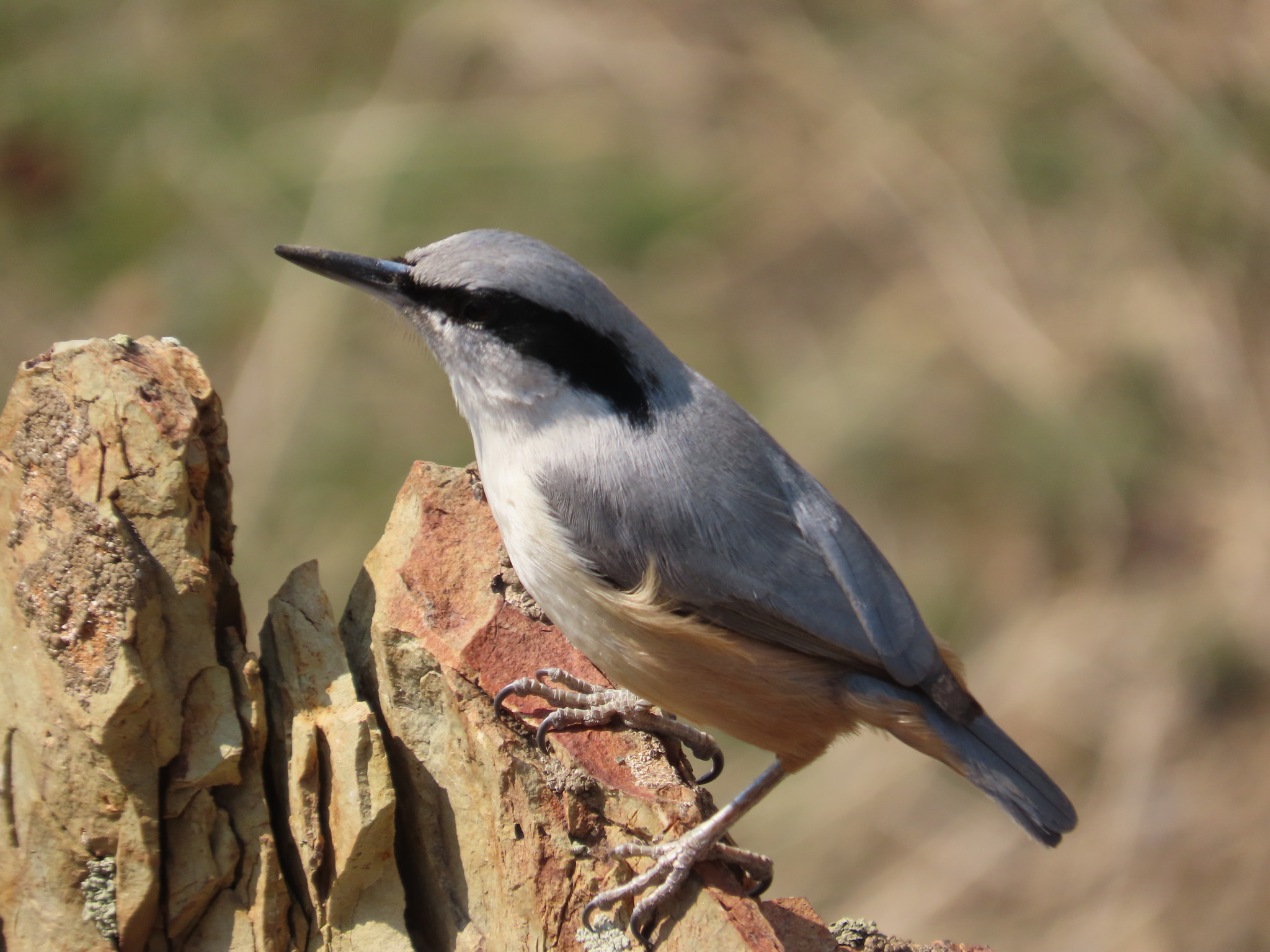
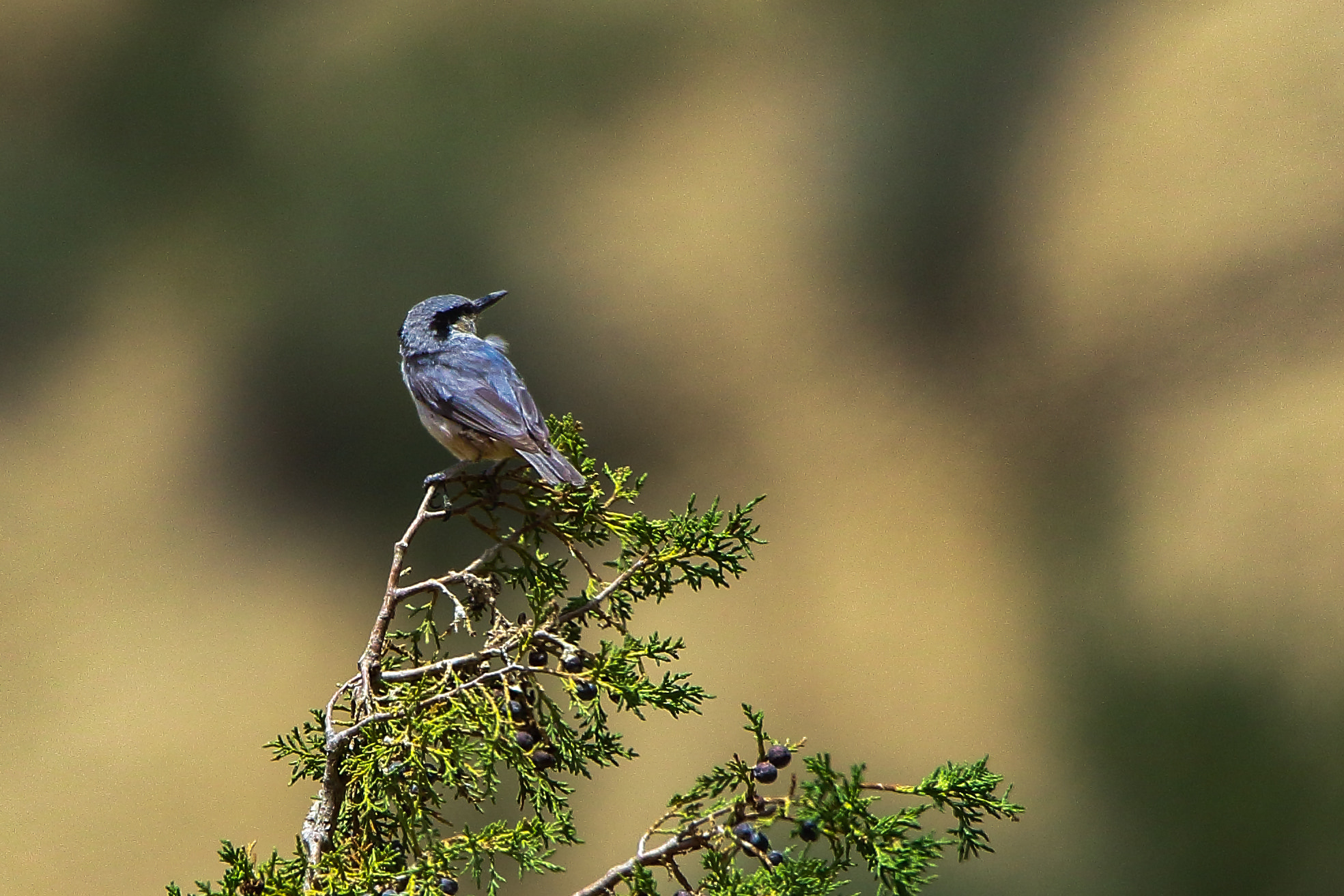
kirill_petrov · Kashkadarya
Key facts in one look
- Size
- 15–16 cm
- Diet
- Insects and other invertebrates
- Status in Georgia
- Seen, status not defined
- Habitat
- Mountain rocks, cliffs, gorges
- Family
- Sittidae
- Protection
- Globally LC, 2016; in Georgia LC, 2021
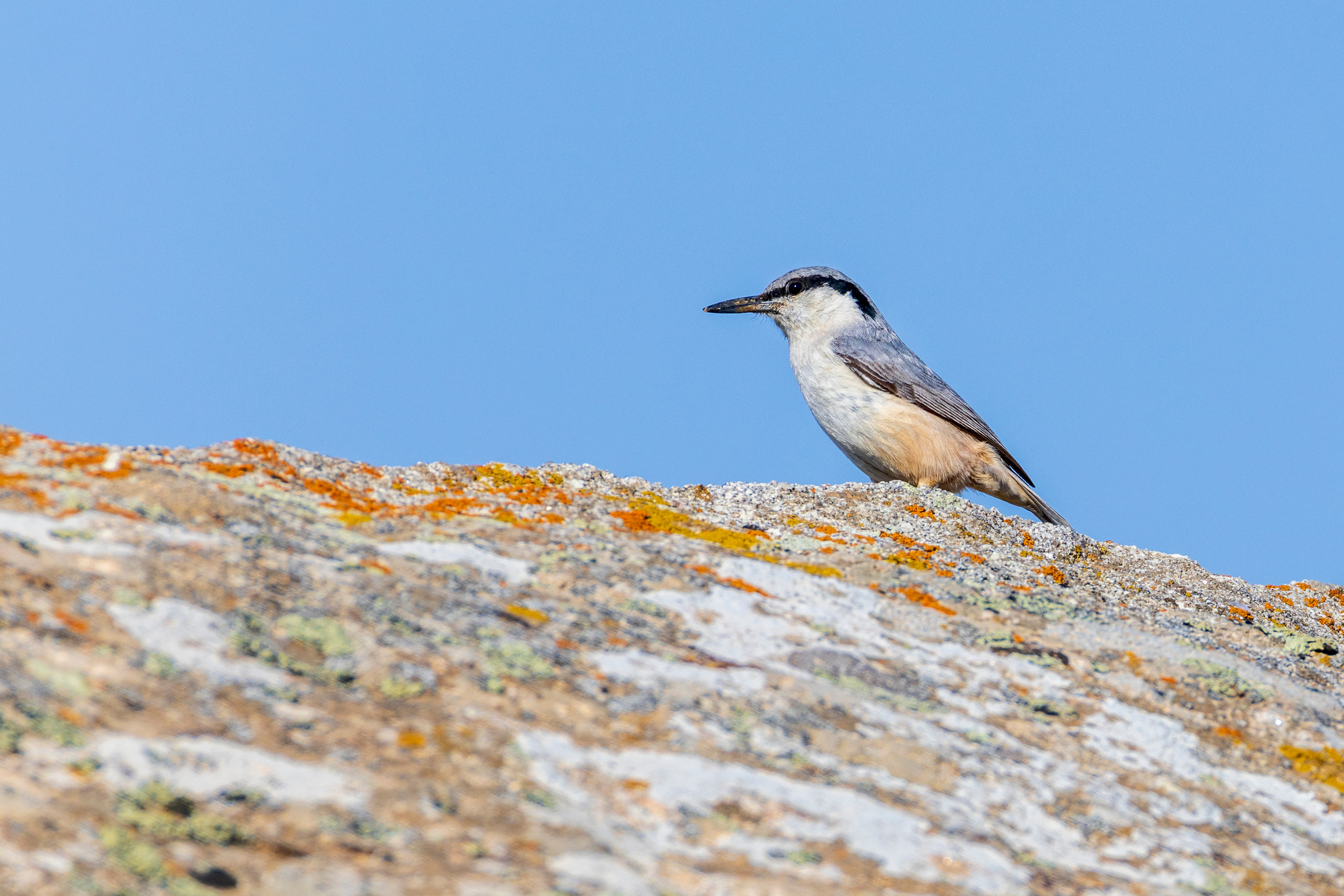
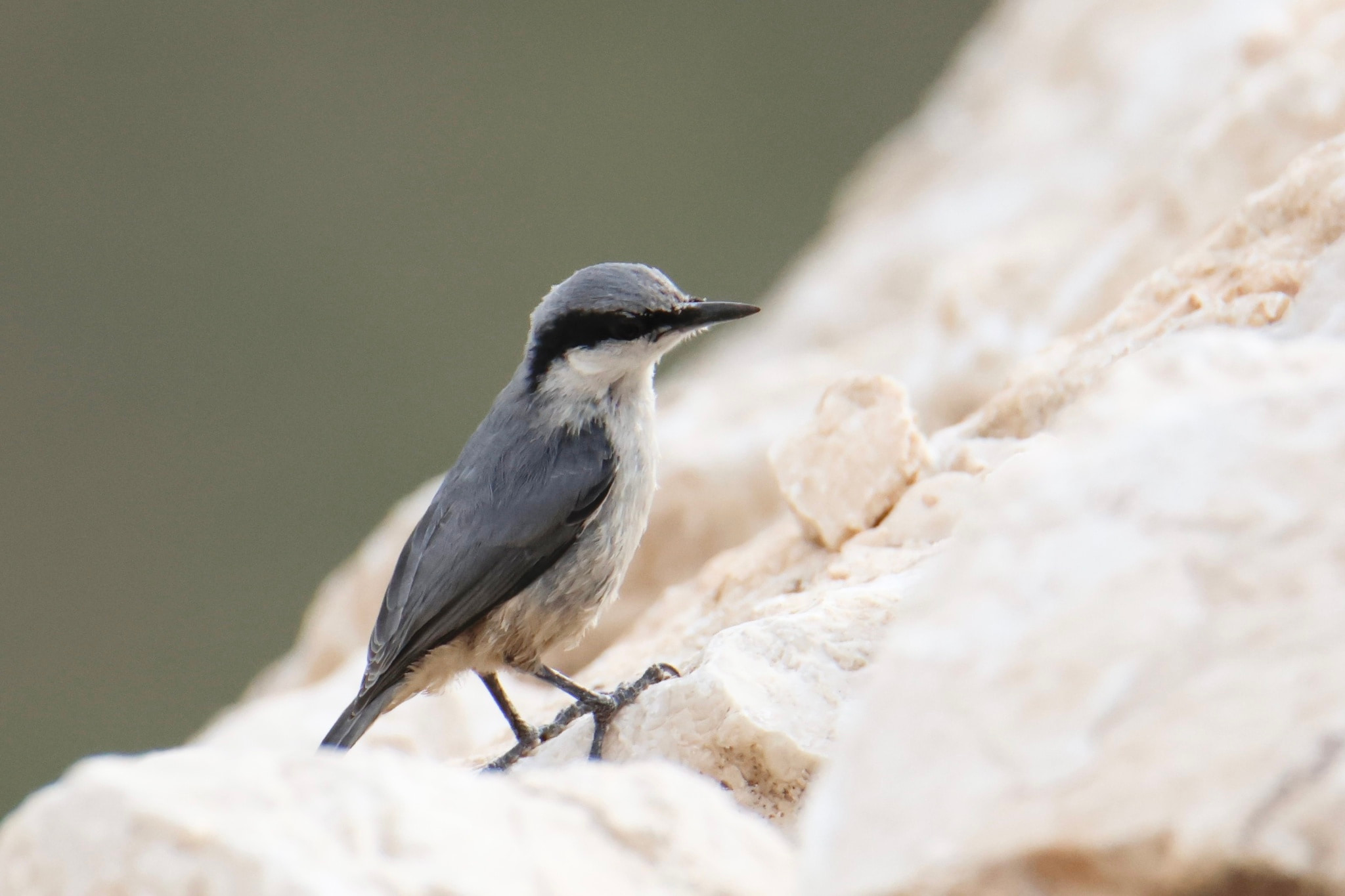
The eastern rock nuthatch builds its nest of mud, dung and hair and fixes it in a rock crevice or under an overhang. It is one of the least colourful nuthatches: pale blue-grey above, white below, with a broad black stripe through the eye. It ranges from eastern Turkey and Transcaucasia to Central Asia. It has been seen in Georgia, but it has not yet been confirmed here by a photograph or a sound recording. It looks very like the western rock nuthatch, so if you see a pale nuthatch on a rock, look first at its size and its eyestripe.
Identification
Eastern rock nuthatch: how to identify it
A pale nuthatch, 15–16 cm long. The upperparts are blue-grey, the breast white, with a broad black stripe through the eye. It is most easily confused with the western rock nuthatch.
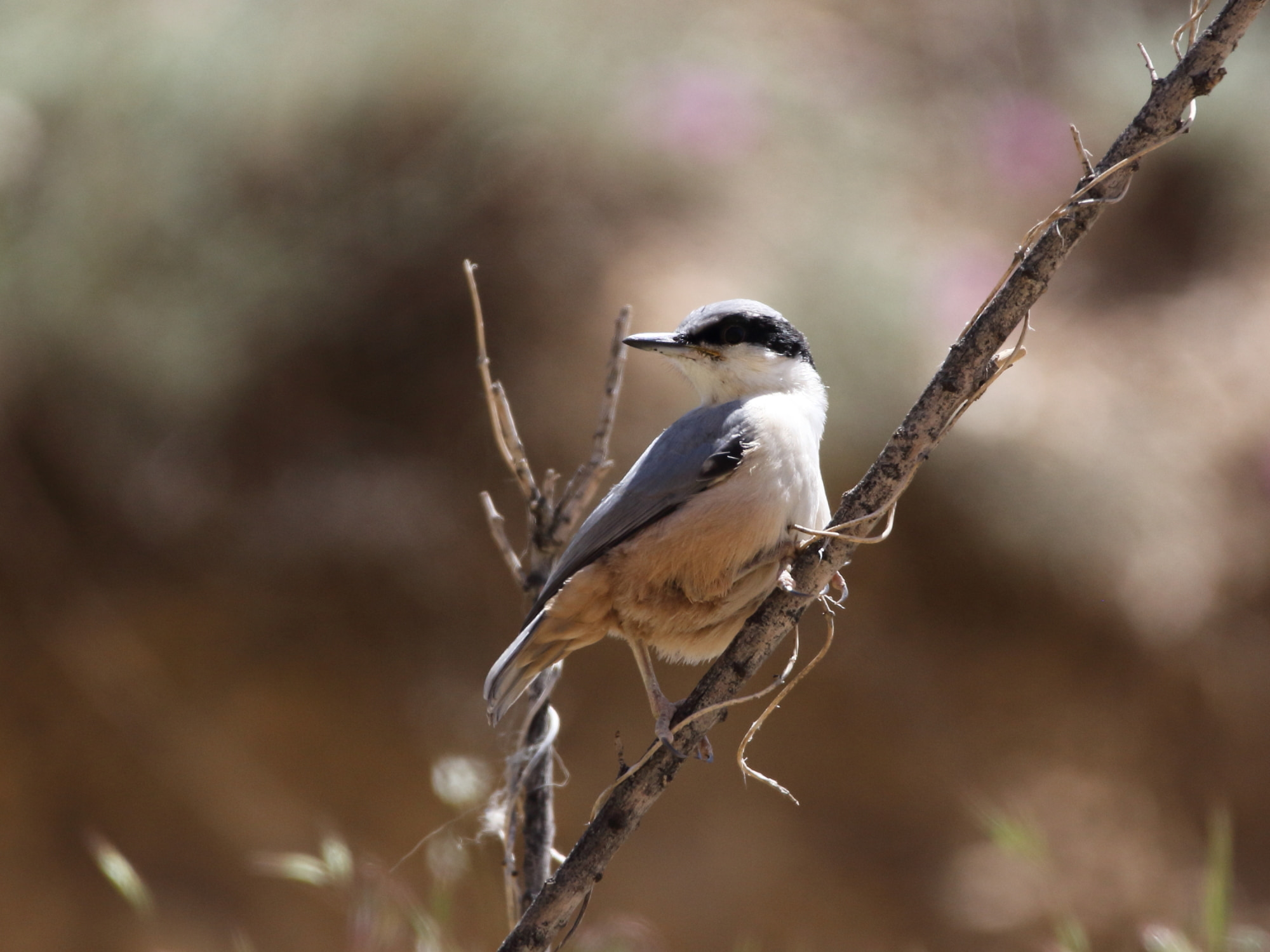
Length 15–16 cm. Weight is 30–55 g depending on the subspecies: eastern forms are smaller, western ones larger. The western rock nuthatch is about 13.5 cm, noticeably smaller.
The upperparts are pale blue-grey, the breast white. The belly shades from white to pale buff on the under-tail coverts, and the flanks have a reddish tinge. A broad black stripe runs from the bill through the eye.
The western rock nuthatch is also grey and white-breasted with a black eyestripe. Where both live together, the eastern one is larger and its stripe broader and sharper. If the bird is big and the stripe broad, think of the eastern rock nuthatch.
Colour
Swatches are illustrative. Do not identify a species by colour alone.
Often confused with
It is a mountain bird that picks bare rocks, cliffs, gorges and stony ground. It ranges from eastern Turkey through Armenia, Georgia, Azerbaijan, Iraq and Iran to Central Asia, Afghanistan and north-western Pakistan. In the Caucasus the subspecies S. t. obscura lives. Where exactly it lives in Georgia is not known.
The eastern rock nuthatch has been seen in Georgia, but its status here is not defined. Most records come from Samtskhe-Javakheti, around Aspindza. Two come from Kakheti, in Sagarejo Municipality. The records fall between May and October, most of them in May. The oldest is from May 2015, near Aspindza.
Data: Reptiles.ge + iNaturalist · Methodology
- Field observation
- Several records in one spot
- Region with records
It eats insects and other small invertebrates. It searches for food on rocks. It climbs nimbly over stone and can even hang upside down.
It is a resident bird and stays in one place all year. The breeding season runs from early April to the first ten days of June. It lays 4–9 eggs, most often 5–7. Its nest is its most striking work: a flask-shaped structure of mud, dung and hair or feathers. It builds it in a rock crevice, in a cave or under an overhang on a rock face, and less often on clay burial mounds. The nest sits 1–30 m above the ground.
Globally the eastern rock nuthatch's risk of extinction is rated low (LC, 2016). It is widespread from eastern Turkey to Central Asia and north-western Pakistan. In Georgia's national assessment (2021) its risk is also rated low (LC), and its numbers are stable. The list of the birds of Georgia gives its status as not defined: it has been seen and identified, but its presence in Georgia has no documentary evidence yet.
Related guides
Continue with related pages
It has been seen, but its status here is not defined. It has been identified in Georgia, but not yet confirmed by a photograph or a sound recording. Its range includes neighbouring Armenia and Azerbaijan, and the subspecies S. t. obscura lives in the Caucasus. If you see one, take a photograph.
By size and by the eyestripe. The eastern rock nuthatch is 15–16 cm long, the western rock nuthatch about 13.5 cm. Where both live together, the eastern one has a broader, sharper black stripe through the eye. The western one has a weaker stripe.
Insects and other small invertebrates. It searches for food on rocks. It climbs nimbly over stone and can even hang upside down.
From mud, dung and hair or feathers, in the shape of a flask. It fixes the nest in a rock crevice, a cave or under an overhang, 1–30 m above the ground. It lays 4–9 eggs, most often 5–7. Leave such nests on rock faces alone.
No, it is a resident bird. It stays in one place all year. Breeding runs from early April to the first ten days of June.
No, it is harmless to people. Globally its risk of extinction is low (LC, 2016). In Georgia's national assessment (2021) its risk is also low (LC), and its numbers are stable. Do not catch wild birds.
References
What this profile is based on
Species profiles are compiled from peer-reviewed literature and established biodiversity databases, and are reviewed as new taxonomic and conservation data become available.
Prepared by the Reptiles.ge editorial team from the sources listed here.