
Krüper's nuthatch
Sitta krueperi
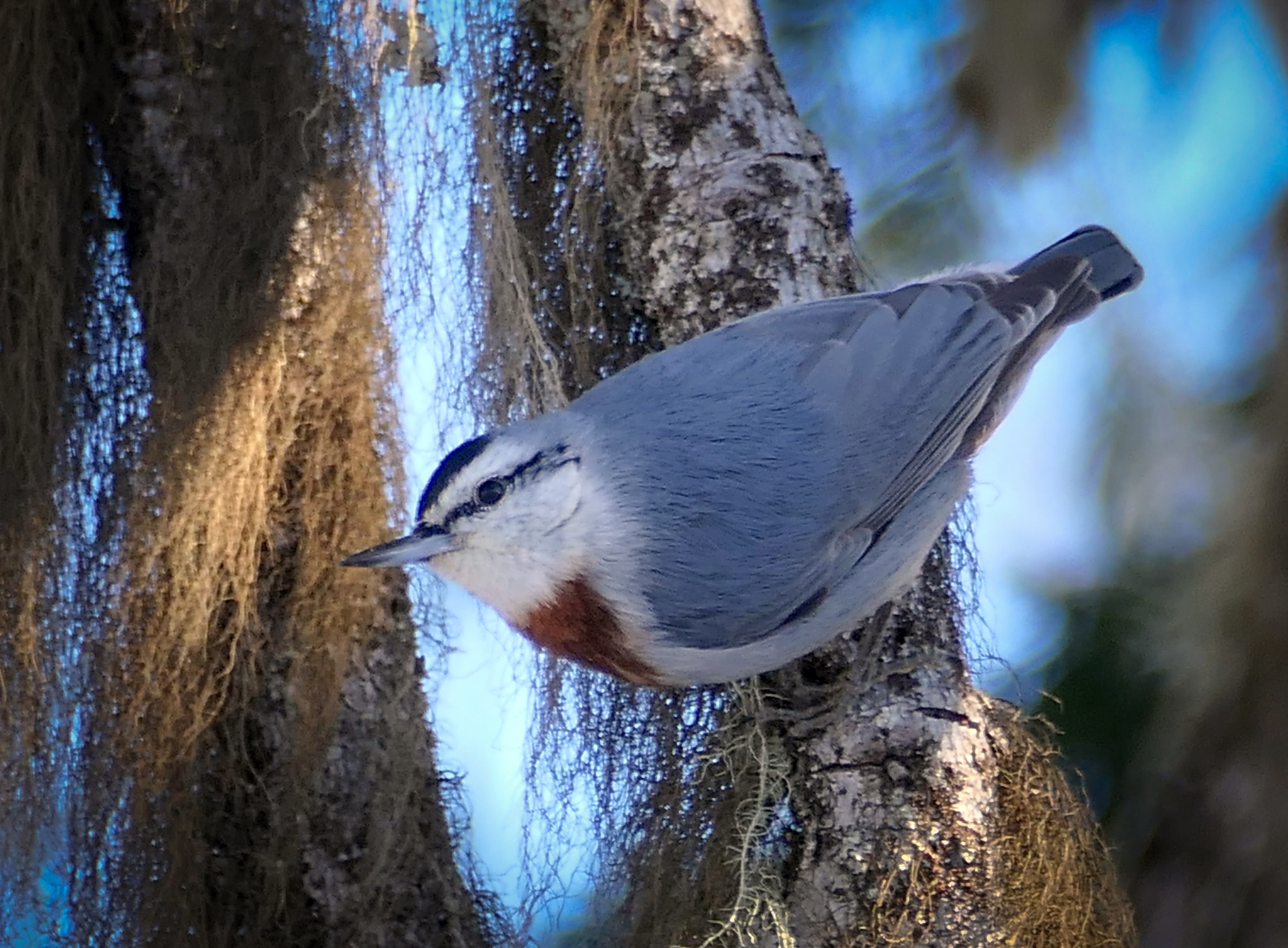
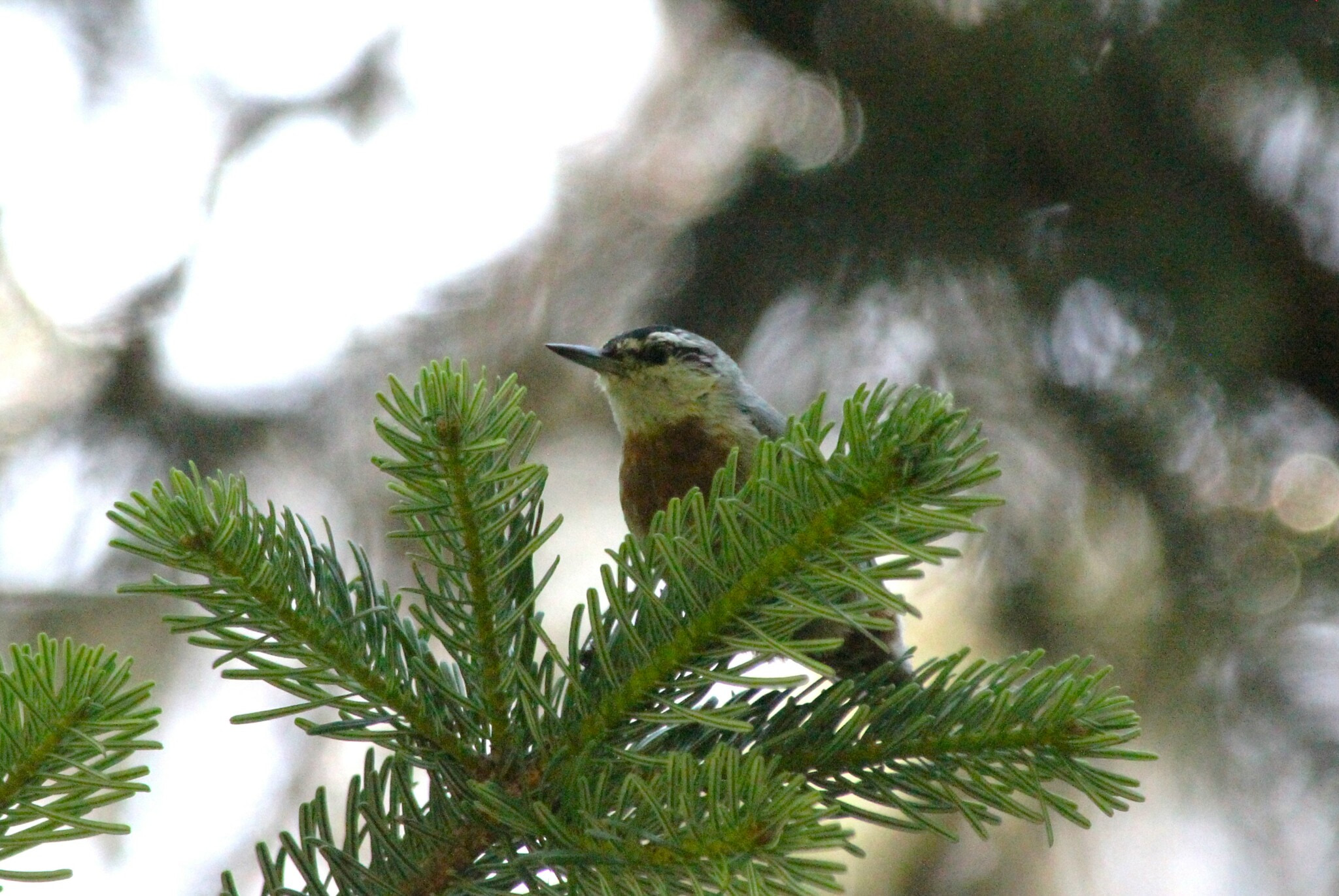
g_kolotin · resort city of Sochi
Key facts in one look
- Diet
- Insects; pine and other conifer seeds
- Status in Georgia
- Year-round resident, breeds
- Size
- About 12.5 cm
- Habitat
- Mountain conifer forest: spruce, fir, pine
- Family
- Sittidae
- Protection
- Globally LC, 2024; in Georgia LC, 2021
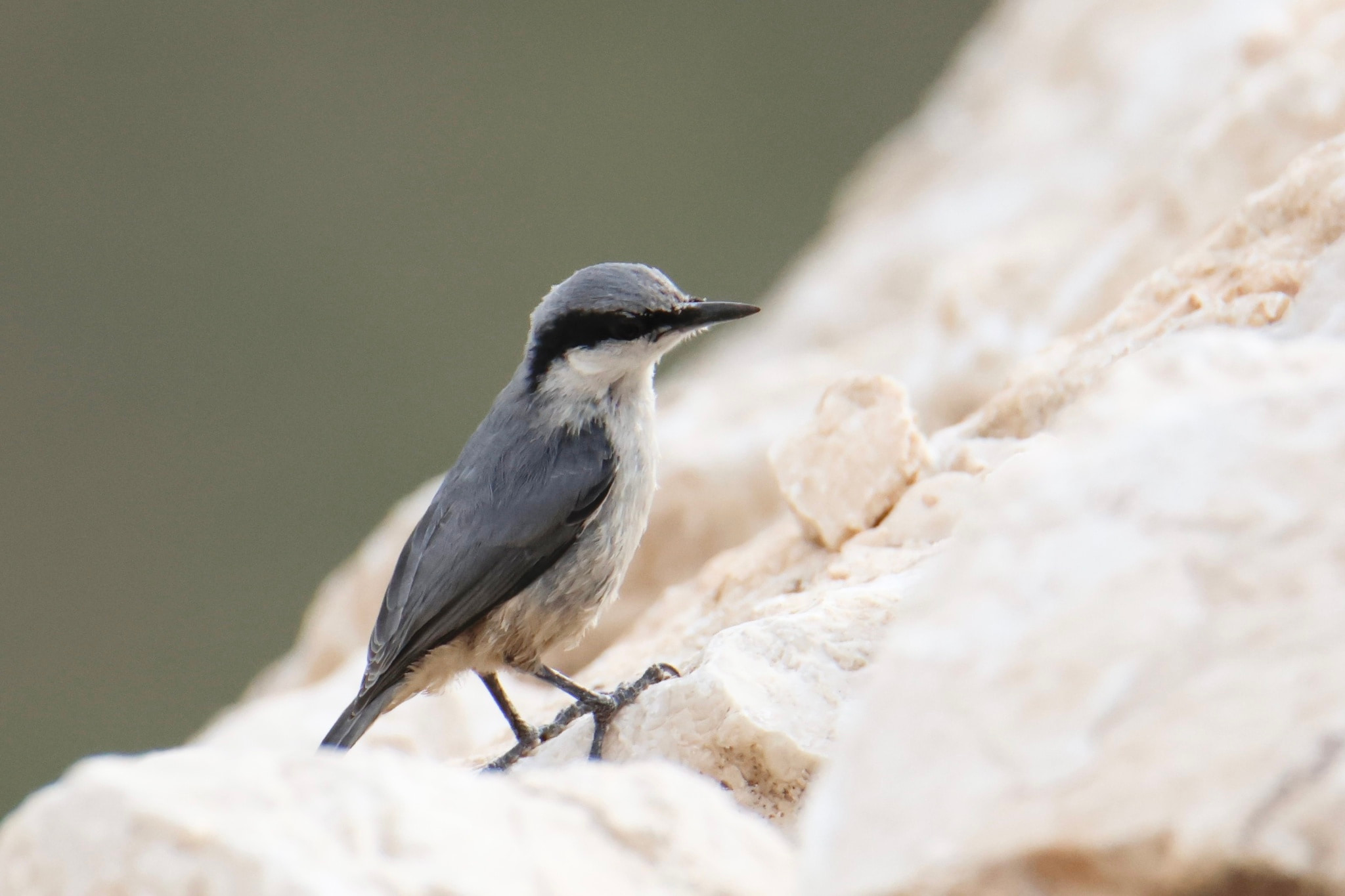
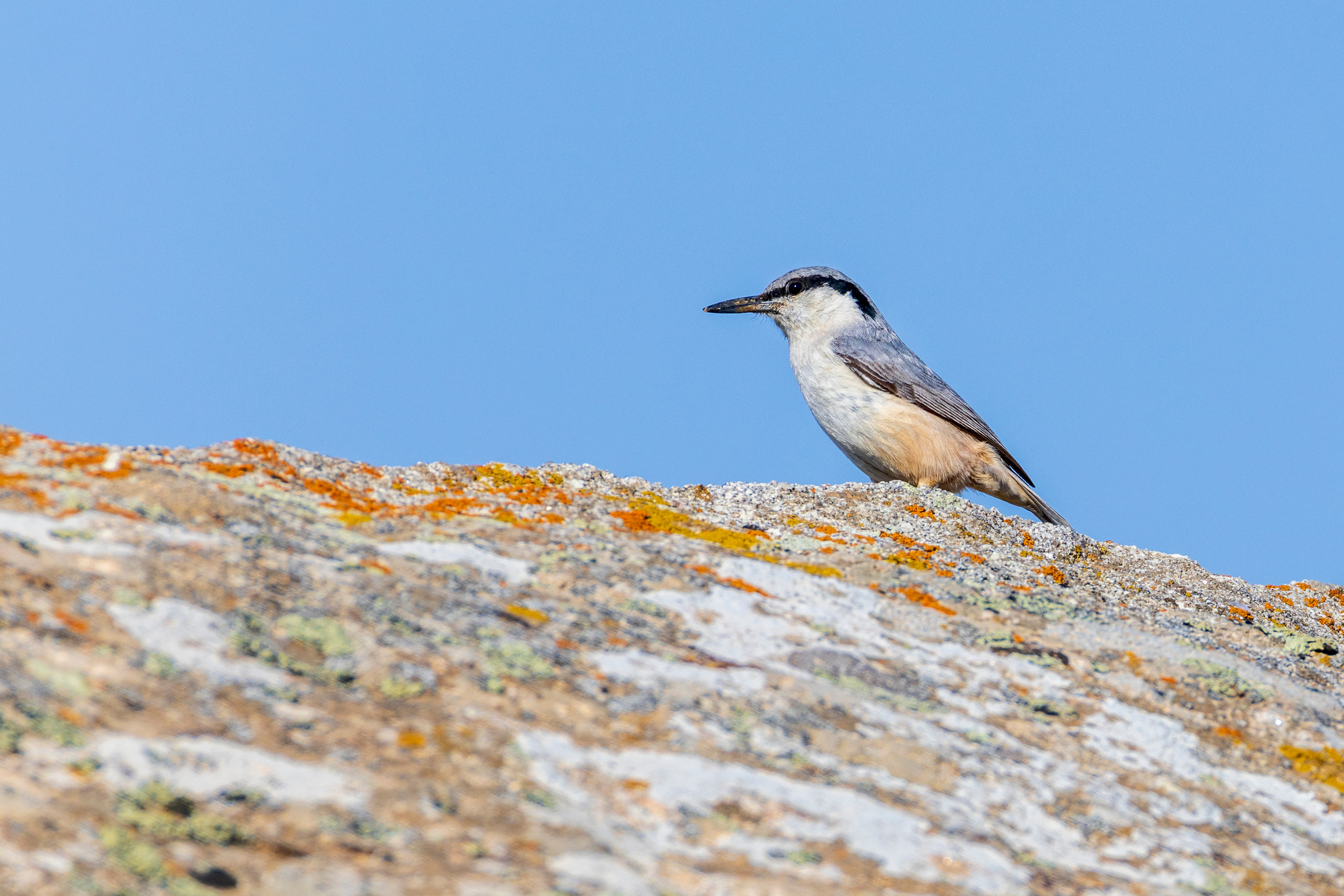
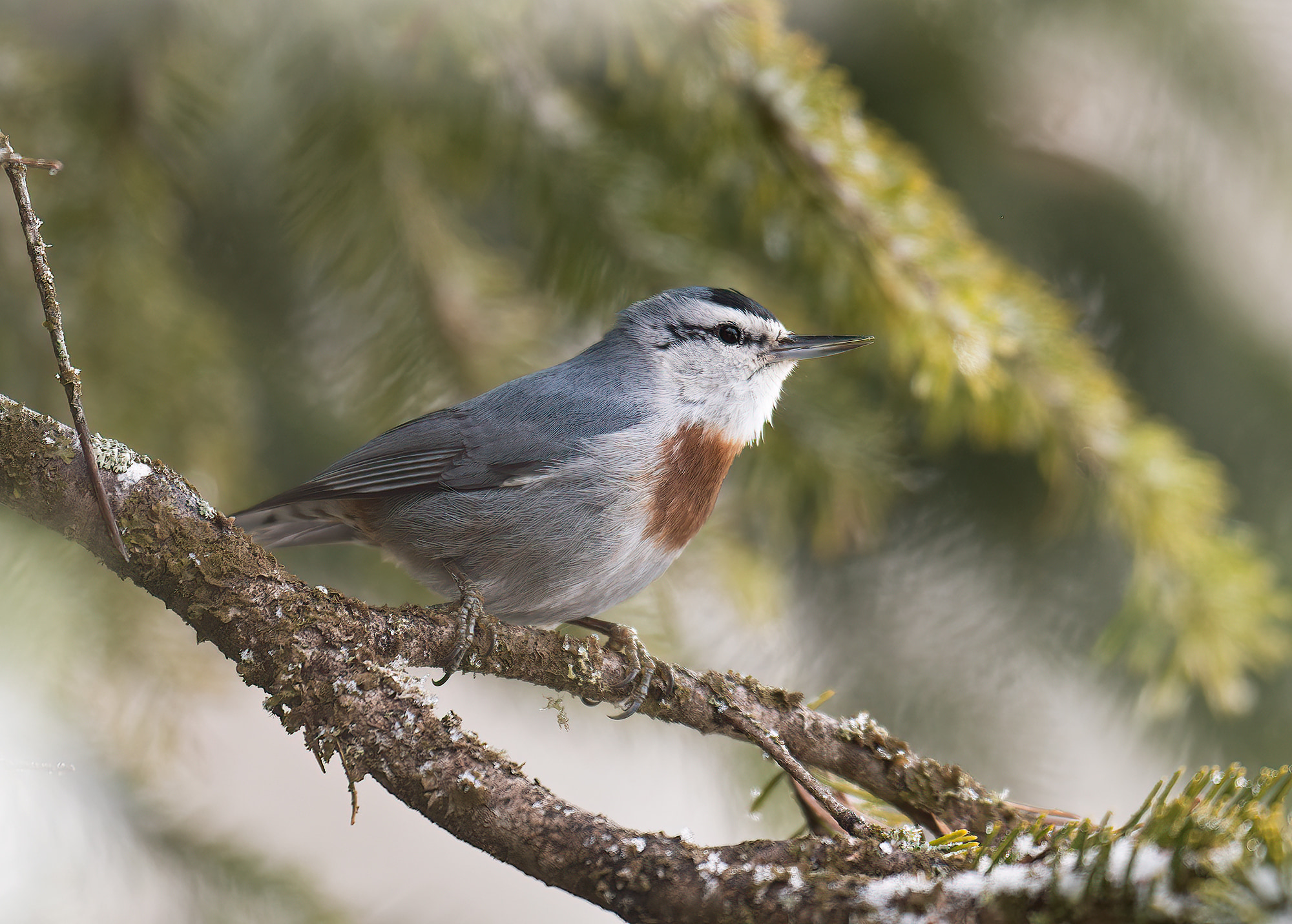
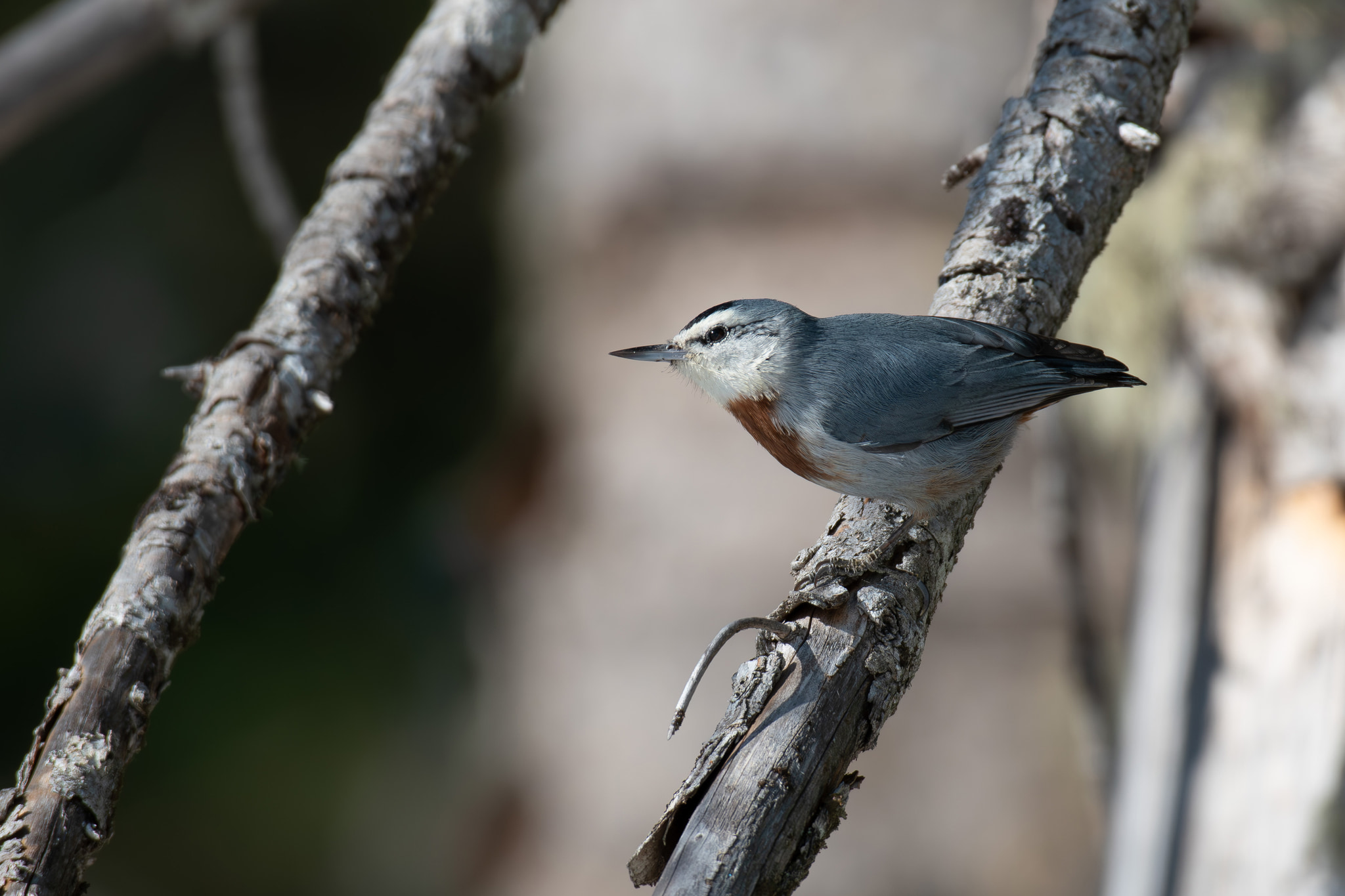
Krüper's nuthatch has a large, crescent-shaped rusty patch on the breast, and that patch is its main mark. The front half of the crown is black, and a white eyebrow runs above the eye. Most of the world population lives in Turkey; in the Caucasus it is scarce. In Georgia it lives and breeds all year round, above all in mountain conifer forest. If a loud, nasal whistling comes from the top of a pine or spruce, look up.
Identification
Krüper's nuthatch: how to identify it
A small nuthatch, about 12.5 cm long and 10–14 g. It is blue-grey above, with a black front half of the crown, a white eyebrow and a large rusty patch on the breast.
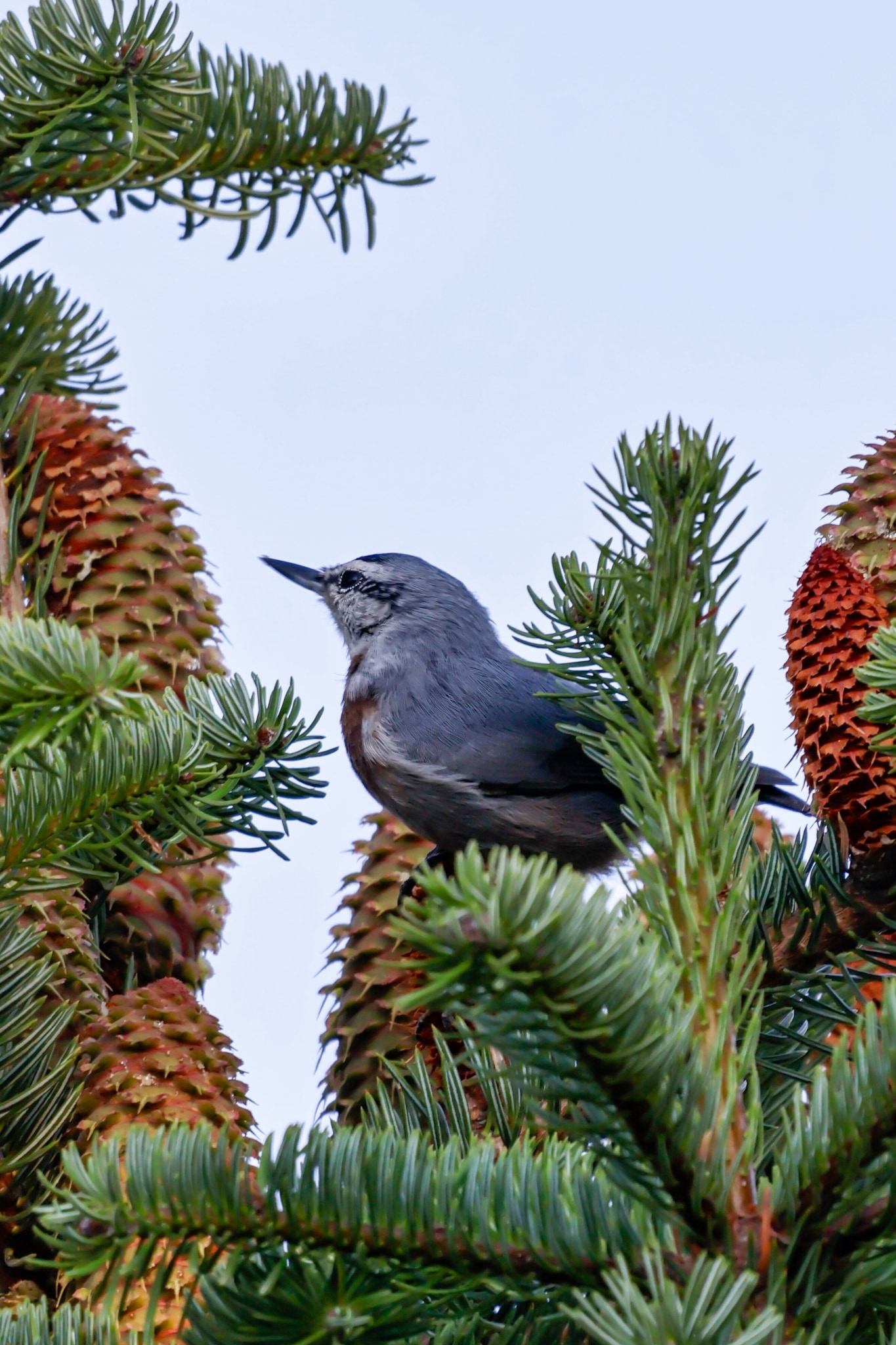
Length about 12.5 cm; males weigh 10–14.3 g. It is smaller than the Eurasian nuthatch. The body is compact, the tail short and the bill long and pointed, as in all nuthatches.
The upperparts are blue-grey, the front half of the crown black. A broad white eyebrow runs above the eye, with a black or grey stripe below it. The throat is white, the breast carries a large crescent-shaped rusty patch, and the undertail is rufous. The female has a duller, less sharply defined black cap and paler, buffier underparts.
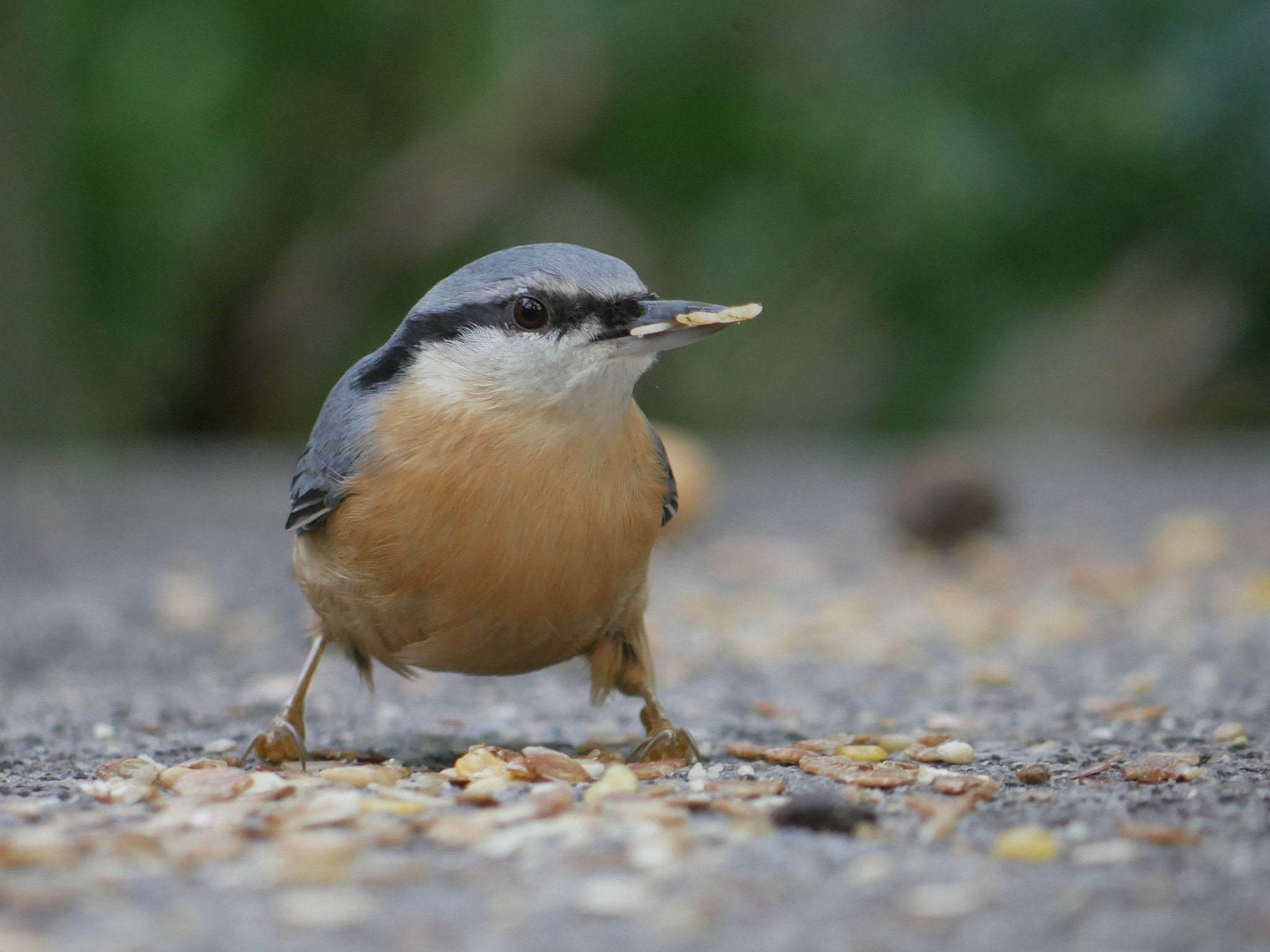
Young birds lack the black cap, and their breast patch, eyebrow and eyestripe are faint. The Eurasian nuthatch also has a blue-grey back and a black eyestripe, but no black cap and no white eyebrow, and its flanks are orange-red. If you see a rusty patch on the breast, you are looking at Krüper's nuthatch.
Colour
Swatches are illustrative. Do not identify a species by colour alone.
Often confused with
It is a bird of conifer forest. In the Caucasus it prefers spruce forest at 1,000–2,000 m, and also fir and pine. Across its range it lives from sea level to about 2,000 m, locally up to the tree line at 2,500 m. Its range almost exactly follows that of the Turkish pine, Pinus brutia. In winter some birds move down from high ground into mixed and broadleaf forest. In Georgia it lives in Samtskhe-Javakheti, Adjara, Kvemo Kartli and Samegrelo-Zemo Svaneti, from Borjomi to Mestia. In autumn it also turns up on the coast at Batumi and Kobuleti.
Krüper's nuthatch lives and breeds in Georgia all year round. Most records come from Adjara, Kvemo Kartli and Samtskhe-Javakheti, followed by Samegrelo-Zemo Svaneti. It has also been found in Imereti, Tbilisi, Guria, Abkhazia, Racha-Lechkhumi and Kvemo Svaneti, Shida Kartli, Kakheti and Mtskheta-Mtianeti. Records come from every month, with most in May and in September and October, when it also shows up on the coast at Batumi and Kobuleti. The oldest record is a museum specimen collected in the Avadhara valley in Abkhazia in 1965.
Data: Reptiles.ge + iNaturalist · Methodology
- Field observation
- Several records in one spot
- Region with records
In summer it eats mainly insects, gleaned from branches or caught in flight. In autumn and winter, when insects are scarce, it switches to the seeds of pines and other conifers. It pulls the seeds from the cone scales with its bill, wedges them into a crack in the bark and hammers them open. It also stores food: in damp weather the cones close and the seeds are out of reach. It forages on thin twigs in the tops of tall trees, but also in bushes and on the ground. The young are fed beetles, insect larvae, moths and butterflies, and earthworms.
It is a resident bird that disperses locally after breeding. In the breeding season it lives alone or in pairs; in autumn it moves in groups of two to five, sometimes with other species. It is noisy and easy to pick out by voice. The contact call is a "dvui", often in a "dui-dui-dui" series that recalls a greenfinch. When agitated it gives a rough, jay-like scold. The song is a nasal "tutitutituti" that alternates high and low notes and has been compared to a bicycle horn. In the Caucasus it lays in April–May, with one brood a year. The nest is in a tree hole, usually in a conifer and high above the ground. It mostly uses an existing cavity but can dig its own in a dead branch. Unlike some other nuthatches, it does not narrow the entrance with mud. The base of the nest is bark chips, rotten wood and cone scales, topped with moss, hair, wool and feathers. It lays 4–7 eggs, most often 5–6. The female incubates for 12–17 days while the male feeds her. Both parents feed the young, which leave the nest at 15–19 days.
Globally the risk of extinction for Krüper's nuthatch is rated low (LC, 2024). It was formerly rated Near Threatened (NT): its numbers are falling, and logging, fires and tourist building on the Turkish coast destroy its forest. A 2015 assessment found the decline continuing, but not by more than a quarter over three generations, so it was moved to LC. In the Caucasus it is scarce. In Georgia's national assessment (2021) its risk is also rated low (LC), and its numbers are stable. The list of the birds of Georgia gives it as a year-round resident and breeder.
Related guides
Continue with related pages
Yes. It lives and breeds in Georgia all year round. In the Caucasus it is scarce and prefers spruce forest at 1,000–2,000 m, and also fir and pine. In Georgia it occurs in Samtskhe-Javakheti, Adjara, Kvemo Kartli and Samegrelo-Zemo Svaneti. Most of the species lives in Turkey.
Both have a blue-grey back and a black eyestripe. Krüper's nuthatch is smaller, has a black front half of the crown and a white eyebrow above the eye. It has a large rusty patch on the breast. The Eurasian nuthatch has no black cap, and its flanks and lower belly are orange-red. A bird at the top of a conifer with a patch on its breast is most likely Krüper's nuthatch.
In summer mainly insects. In autumn and winter the seeds of pines and other conifers. It wedges seeds into a crack in the bark and hammers them open with its bill. It also stores food for the winter.
In a tree hole, usually in a conifer and high above the ground. It mostly uses an existing cavity but can dig its own in a dead branch. It does not narrow the entrance with mud. It lays 4–7 eggs, once a year.
No, it is a resident bird. After breeding it disperses locally. In winter some birds move down from high ground into mixed and broadleaf forest. In autumn it moves in small groups.
No, it is harmless to people. Globally its risk of extinction is low (LC, 2024), although its numbers are falling. In Georgia's national assessment (2021) its risk is also low (LC), and its numbers are stable. Do not catch wild birds.
References
What this profile is based on
Species profiles are compiled from peer-reviewed literature and established biodiversity databases, and are reviewed as new taxonomic and conservation data become available.
Prepared by the Reptiles.ge editorial team from the sources listed here.