
Eurasian nuthatch
Sitta europaea
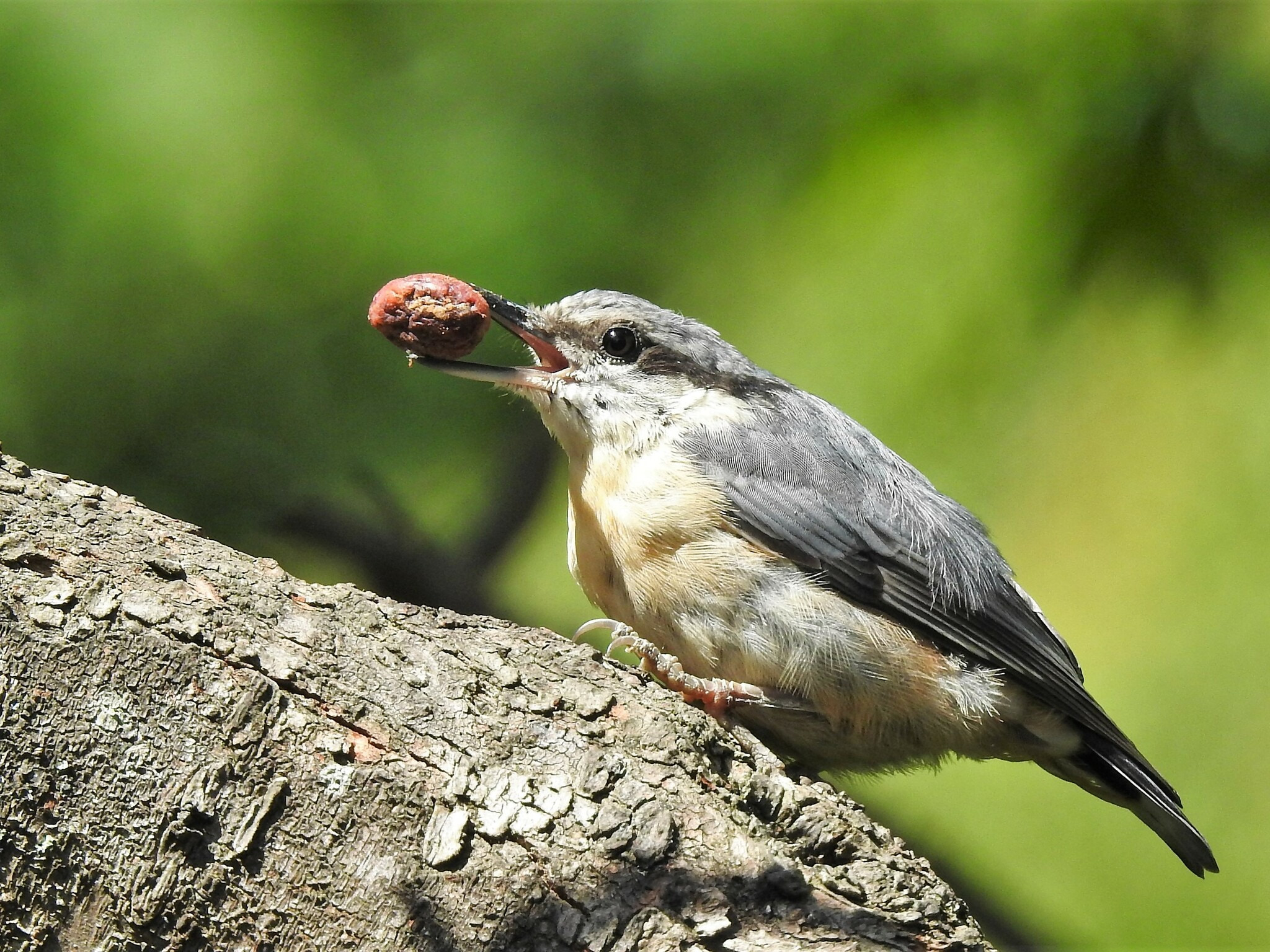
Alexis Tinker-Tsavalas · Berliner Innenstadt
Key facts in one look
- Diet
- Insects; nuts and seeds
- Status in Georgia
- Year-round resident, breeds
- Size
- 12–14.5 cm
- Habitat
- Old deciduous and mixed woodland, parks, gardens
- Family
- Sittidae
- Protection
- Globally LC, 2018; in Georgia LC, 2021
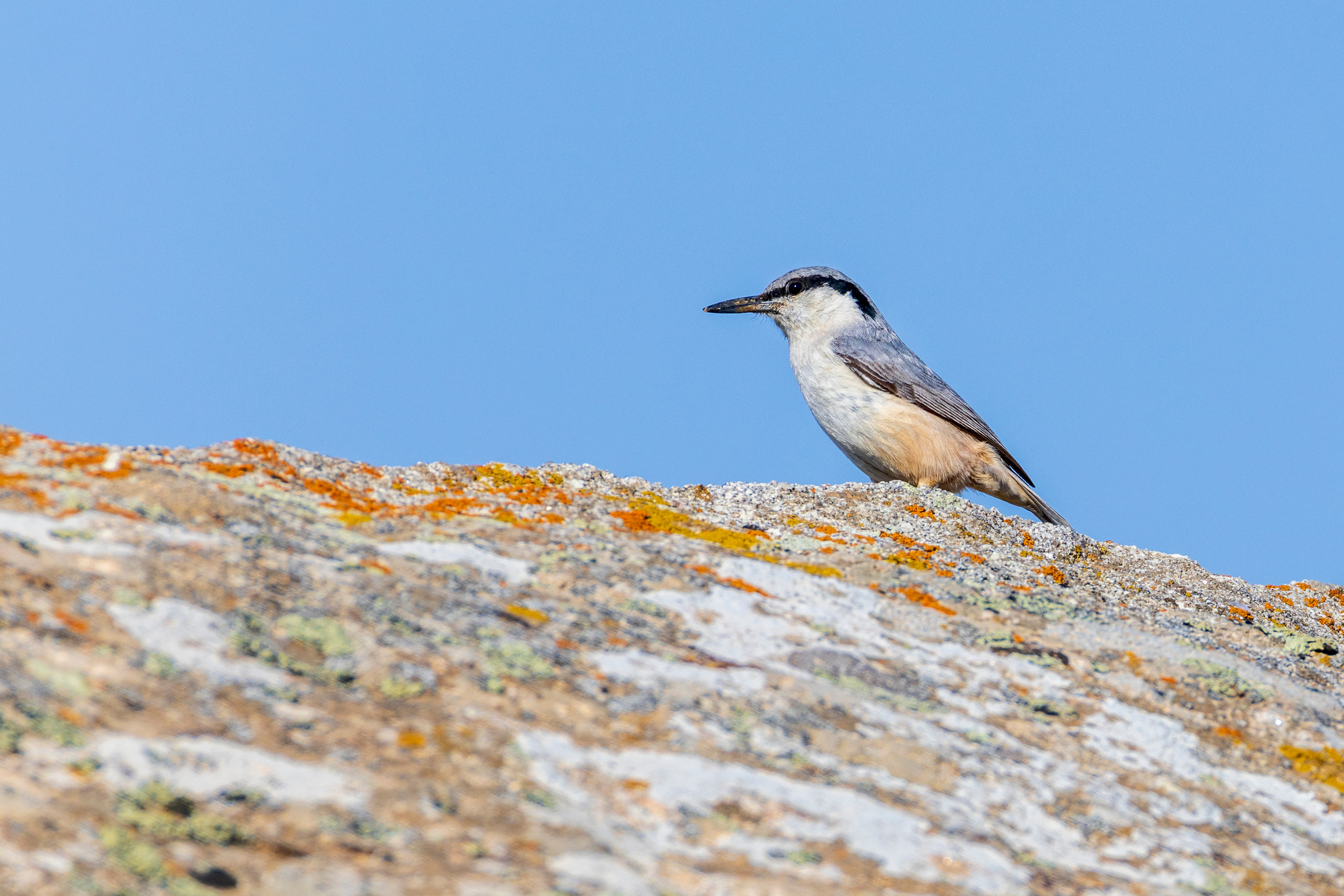
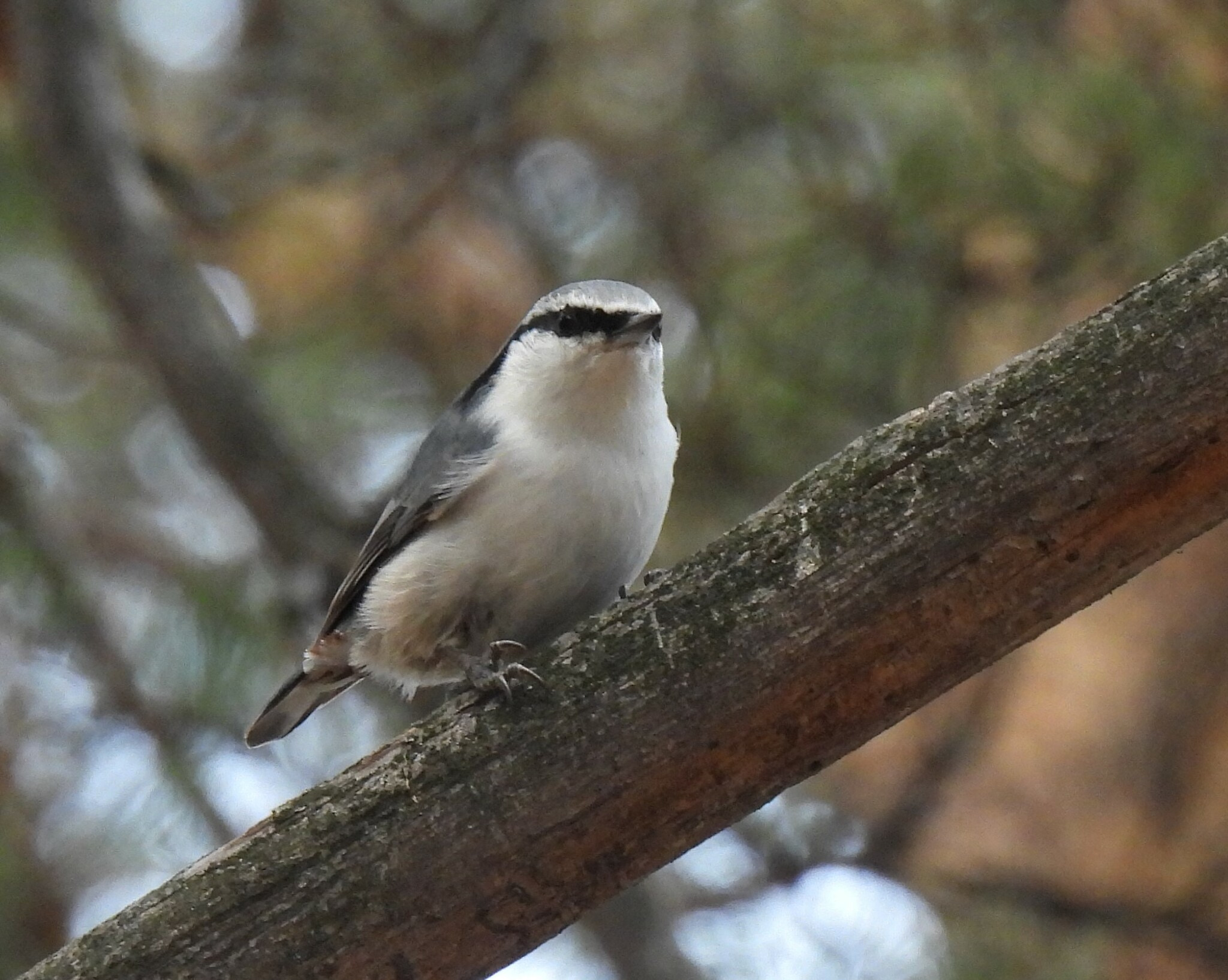
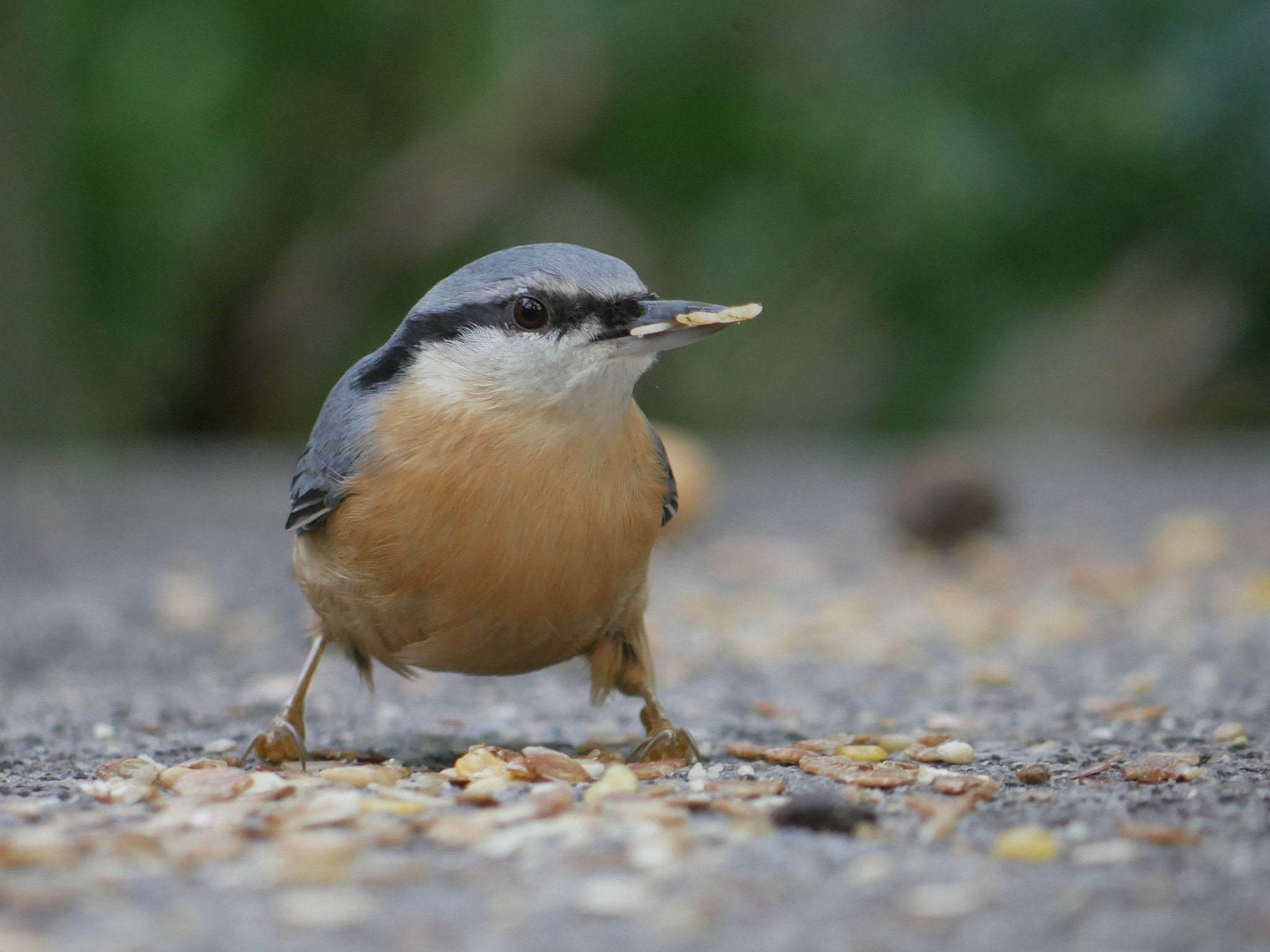
The Eurasian nuthatch runs up tree trunks and comes down them head-first. Its upperparts are blue-grey and a black stripe runs through the eye, while Caucasian birds have a rusty belly and a white throat. In Georgia it lives and breeds all year round. It picks old deciduous and mixed woodland with big trees, especially oak, and also lives in parks and gardens. In the woods you will often hear its loud, sharp "dwip" before you see it.
Identification
Eurasian nuthatch: how to identify it
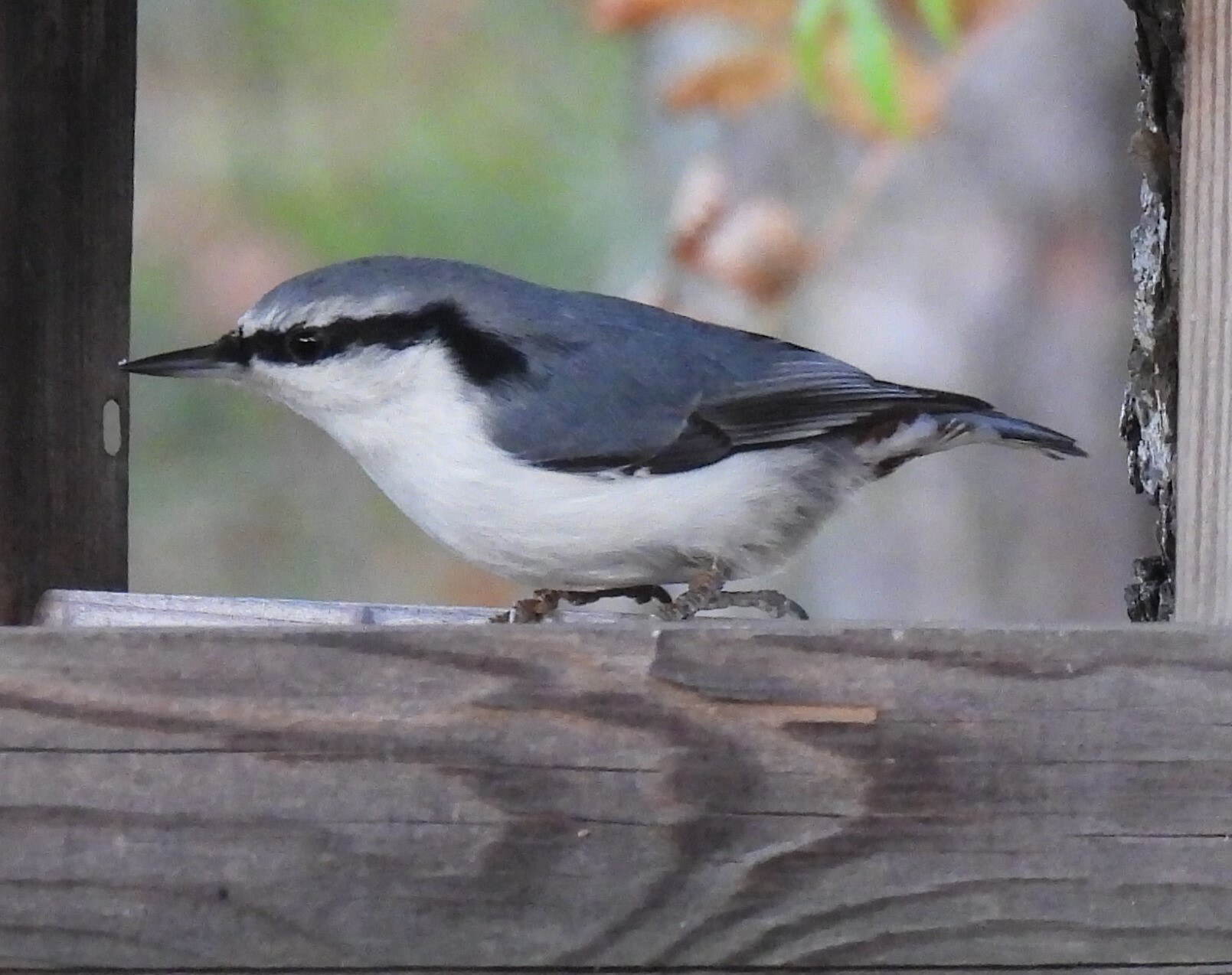
A compact, short-tailed bird, 12–14.5 cm long, with a large head and a long, straight, pointed bill. The upperparts are blue-grey, and a black stripe runs from the bill through the eye towards the nape.
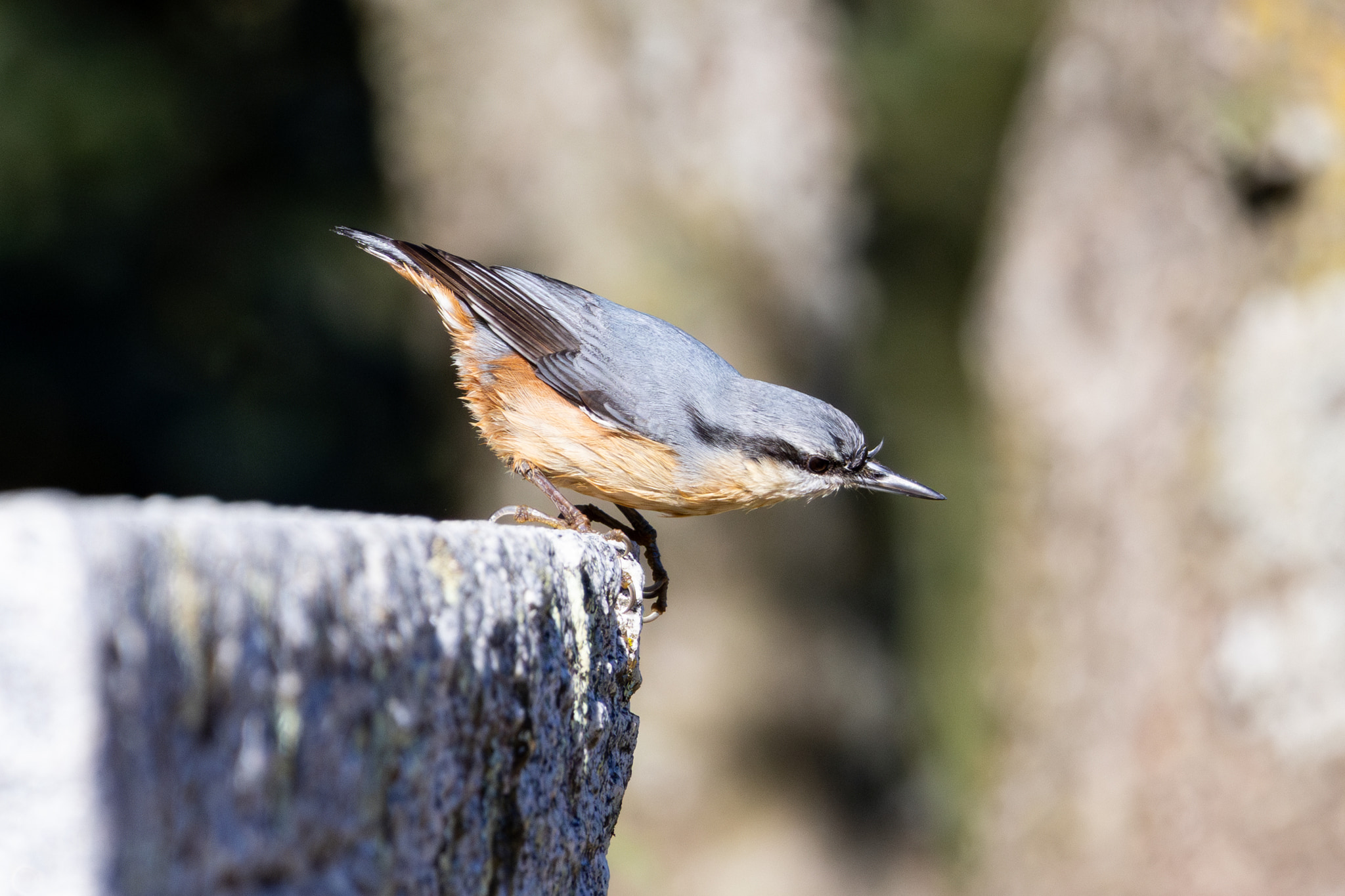
Length 12–14.5 cm, wingspan 22.5–27 cm, weight 17–28 g. The body is compact, the head large, the neck very short. The legs are strong, with long claws.
The upperparts are blue-grey, and a dark stripe runs from the bill through the eye towards the nape. In the Caucasus the belly is rusty, the chin and throat white. The female has slightly paler upperparts, a browner eye stripe and paler flanks.
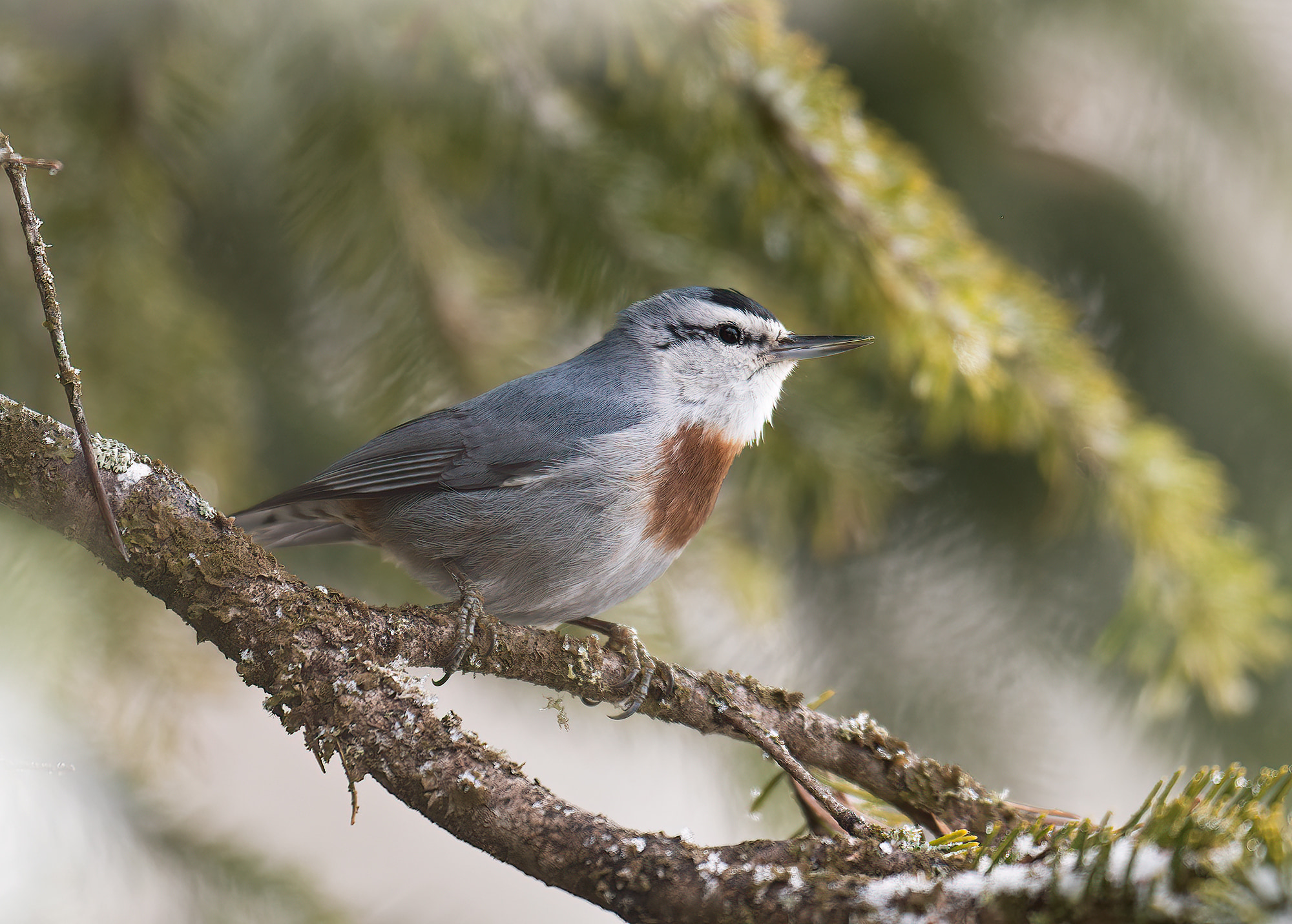
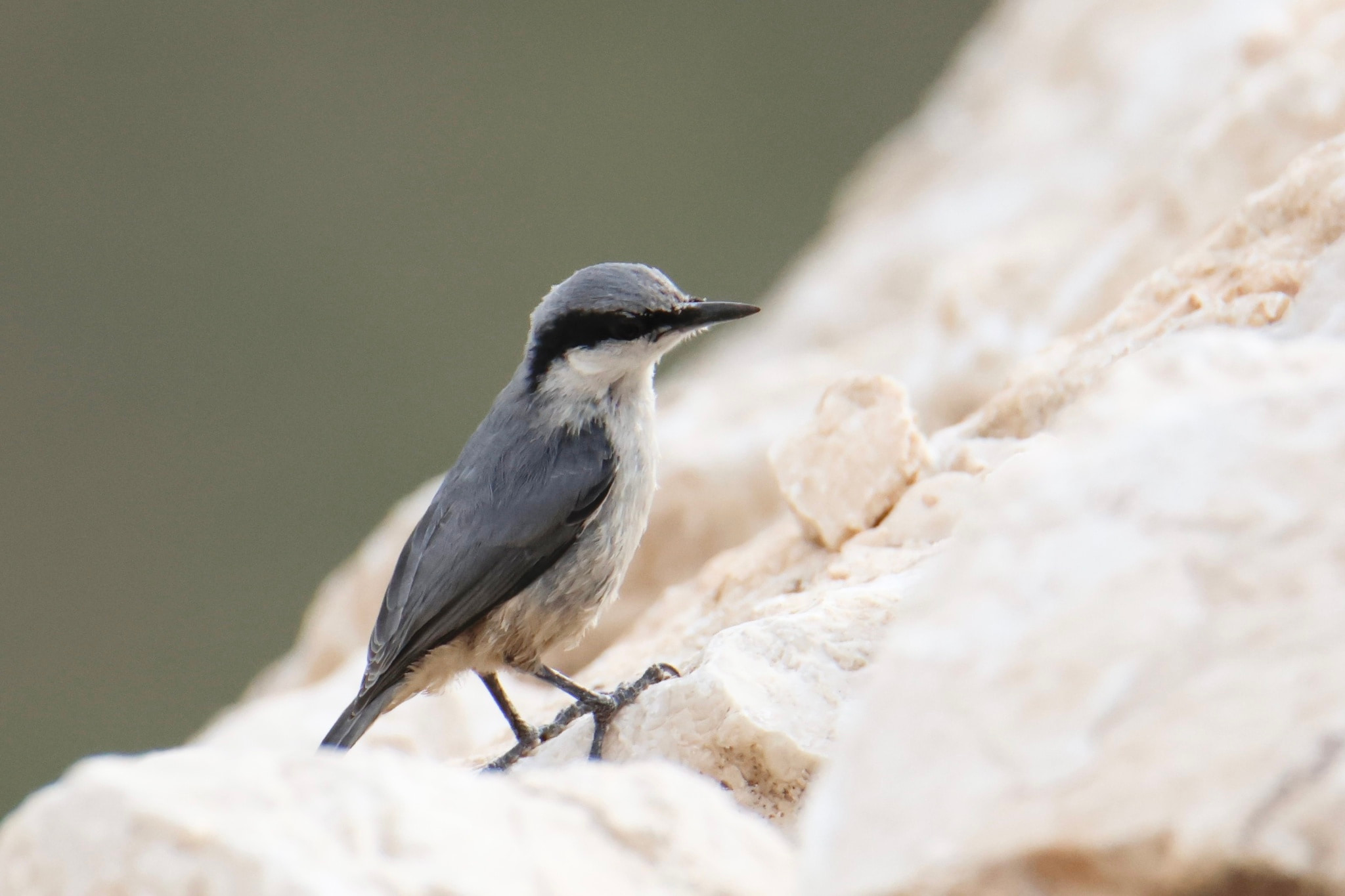
Young birds are duller, with paler legs. Two more nuthatch species breed in Georgia: Krüper's nuthatch (Sitta krueperi) and the western rock nuthatch (S. neumayer). So do not rely on head-first climbing alone: look at the throat and belly.
Colour
Swatches are illustrative. Do not identify a species by colour alone.
Often confused with
It is a bird of old woodland: it picks deciduous and mixed forest with large, old trees, especially oak. It also lives in parks and orchards, if they hold at least a hectare of suitable trees. It occurs in mountain spruce and pine forest too. It also breeds in the mountains of Turkey, the Middle East and Central Asia.
The Eurasian nuthatch lives and breeds in Georgia all year round. It has been recorded in every month, most often in April and May. Most records come from Mtskheta-Mtianeti, Kvemo Kartli, Kakheti and Samtskhe-Javakheti. It has also been found in Adjara, Tbilisi, Imereti, Samegrelo, Abkhazia, Shida Kartli, Racha and Guria. The oldest record is a museum specimen collected near Kutaisi in 1904.
Data: Reptiles.ge + iNaturalist · Methodology
- Field observation
- Several records in one spot
- Region with records
In summer it eats mainly insects, especially caterpillars and beetles. In autumn and winter it adds nuts and seeds, and likes hazelnuts and beech mast best. It wedges large items into a crack in the bark and hammers them open with its bill. It stores food all year, above all in autumn: it hides seeds in bark crevices and covers them with lichen, moss or bark. It comes back to these stores in cold weather, and food may stay hidden for up to three months.
It is mostly resident, and the young disperse after breeding. A pair stays together and holds a permanent territory, in winter too. In Europe a territory covers 2–10 ha. The loud, sharp "dwip" call usually comes twice, more often when the bird is excited. The song is a slow whistled "pee-pee-pee". It nests in a tree hole, often an old woodpecker hole, 2–20 m above the ground. If the entrance is too big, the female narrows it with mud, clay and sometimes dung. She lines the hole with flakes of pine bark or wood chips. It usually lays 6–9 white eggs speckled with red, sometimes up to 13. The female incubates for 13–18 days, and the young leave the nest after 20–26 days. It raises one brood a year.
Globally the Eurasian nuthatch's risk of extinction is rated low (LC, 2018). It is widespread across temperate Eurasia, from Britain to Japan, and its numbers appear stable. Felling and fragmentation of old woodland can reduce its numbers locally. In Georgia's national assessment (2021) its risk is also rated low (LC), and its numbers are stable. The list of the birds of Georgia gives it as a year-round resident and breeder.
Related guides
Continue with related pages
Yes. It lives and breeds in Georgia all year round. The Caucasus has the subspecies S. e. caucasica. It picks deciduous and mixed woodland with old trees, and also lives in parks and gardens.
It moves both up the trunk and head-first down it, searching the bark for insects. It wedges large food, such as a hazelnut, into a crack in the bark and hammers it open. It cannot chisel into healthy wood the way a woodpecker does.
In summer mainly insects, especially caterpillars and beetles. In autumn and winter nuts and seeds, above all hazelnuts and beech mast. At feeders it comes for fat, cheese, butter and bread.
In a tree hole, often an old woodpecker hole, 2–20 m up. The female narrows a large entrance with mud and clay, to about 35 mm. She lines the hole with flakes of bark. The usual clutch is 6–9 eggs.
No, it is mostly resident. A pair stays on its territory in winter too. It stores food in bark crevices ahead of time and returns to it in cold weather. In winter it also visits gardens and feeders.
No, it is harmless to people. Globally its risk of extinction is low (LC, 2018). In Georgia's national assessment (2021) its risk is also low (LC), and its numbers are stable. Do not catch wild birds.
References
What this profile is based on
Species profiles are compiled from peer-reviewed literature and established biodiversity databases, and are reviewed as new taxonomic and conservation data become available.
Prepared by the Reptiles.ge editorial team from the sources listed here.