
Western rock nuthatch
Sitta neumayer
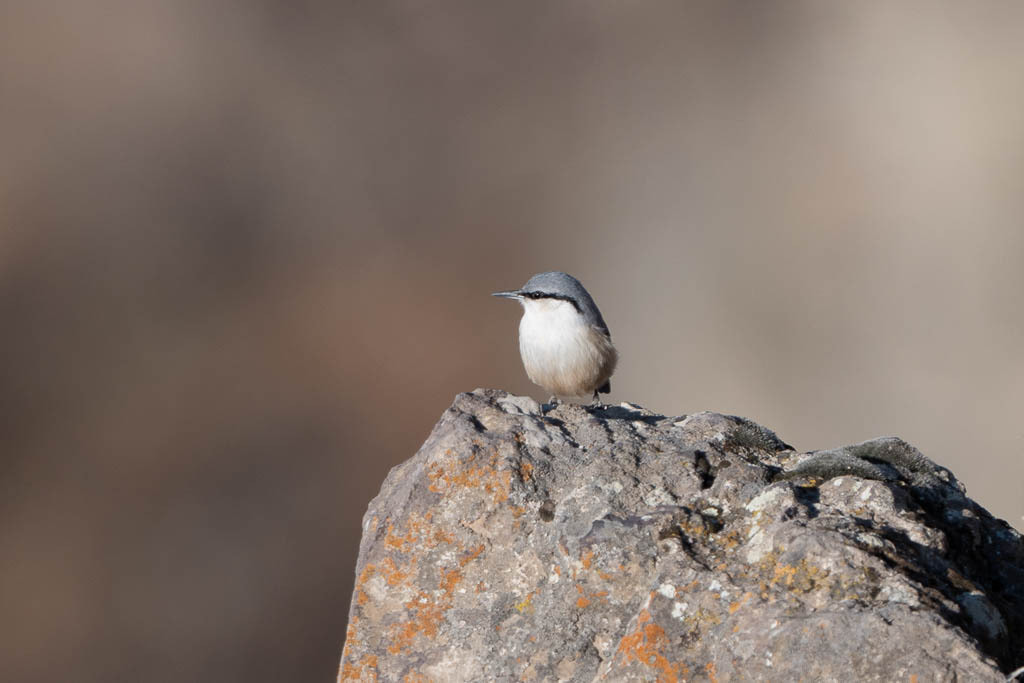
Vladislav Mochalov · Imecik Mh.
Key facts in one look
- Diet
- Insects and spiders; seeds and snails in winter
- Status in Georgia
- Year-round resident, breeds
- Size
- About 13.5 cm
- Habitat
- Bare rock, rocky slopes and ravines
- Family
- Sittidae
- Protection
- Globally LC, 2018; in Georgia LC, 2021
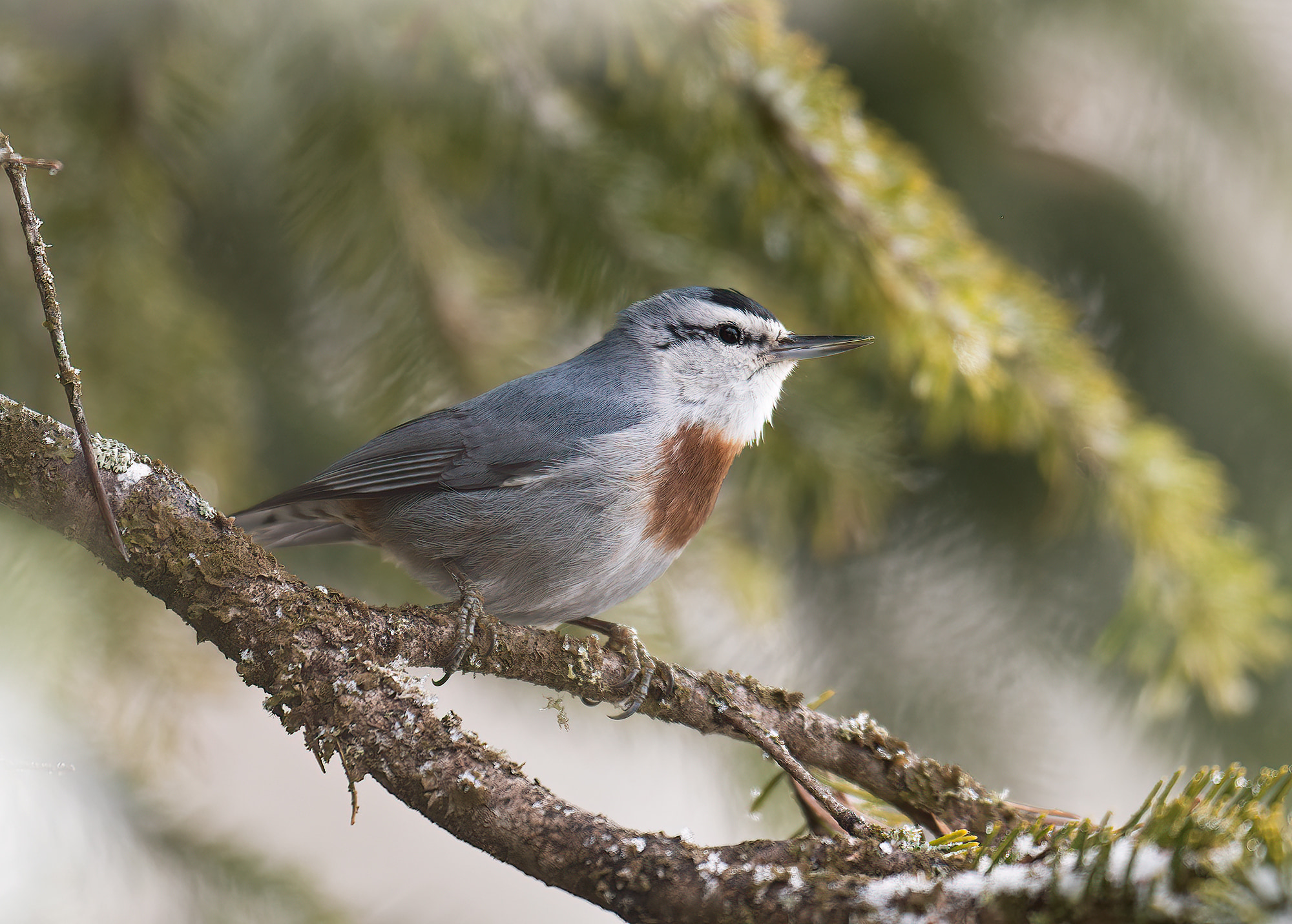
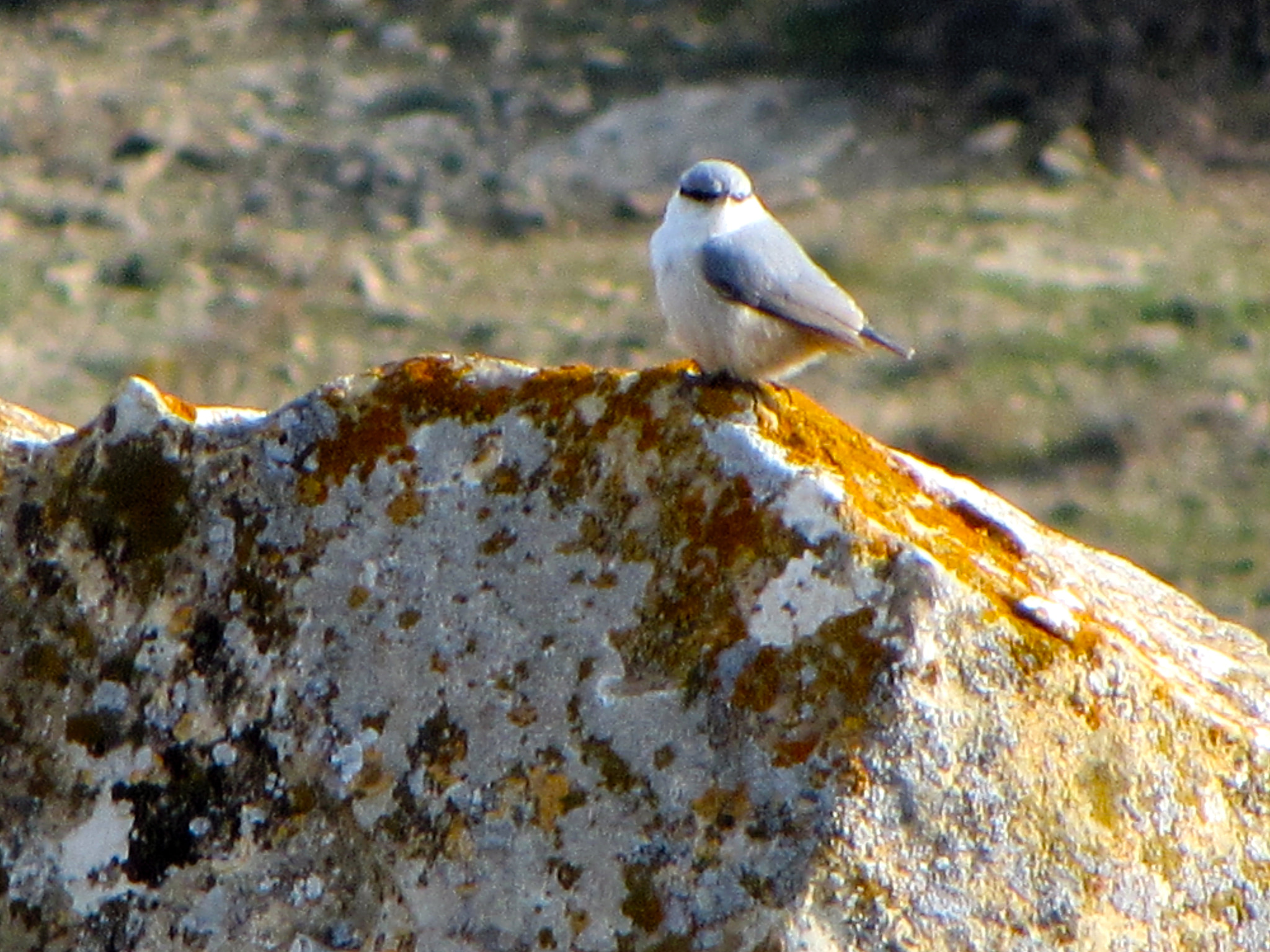
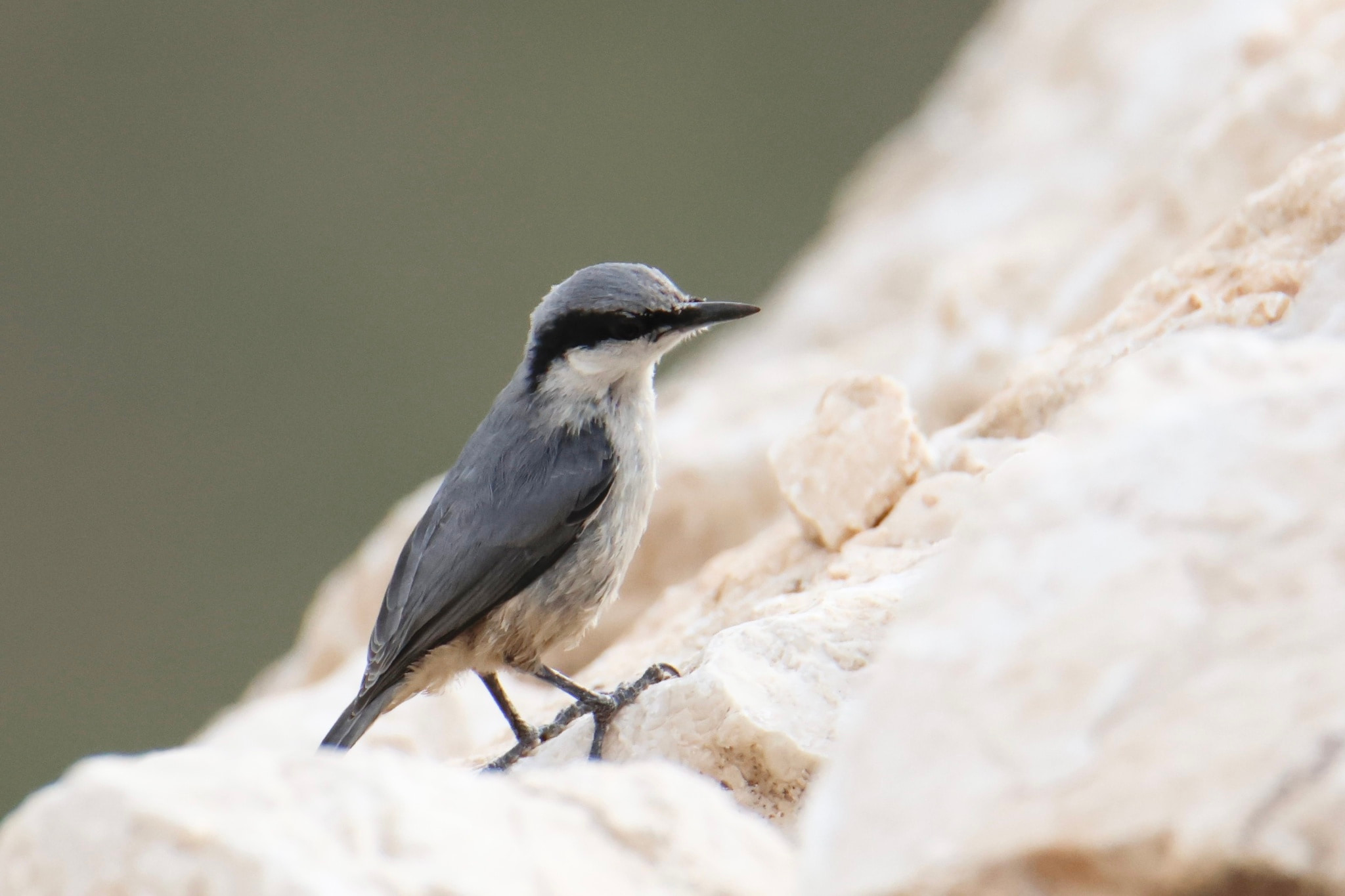
The western rock nuthatch climbs rock faces and moulds a flask-shaped mud nest in a crevice or under an overhang. It is slightly smaller than the Eurasian nuthatch: dark grey above, with a long black eyestripe and a white throat. It picks bare, rocky places, especially in the mountains. In Georgia it lives and breeds all year round. If you notice a small mud "jug" on a rock wall, leave it alone: it may be its nest.
Identification
Western rock nuthatch: how to identify it
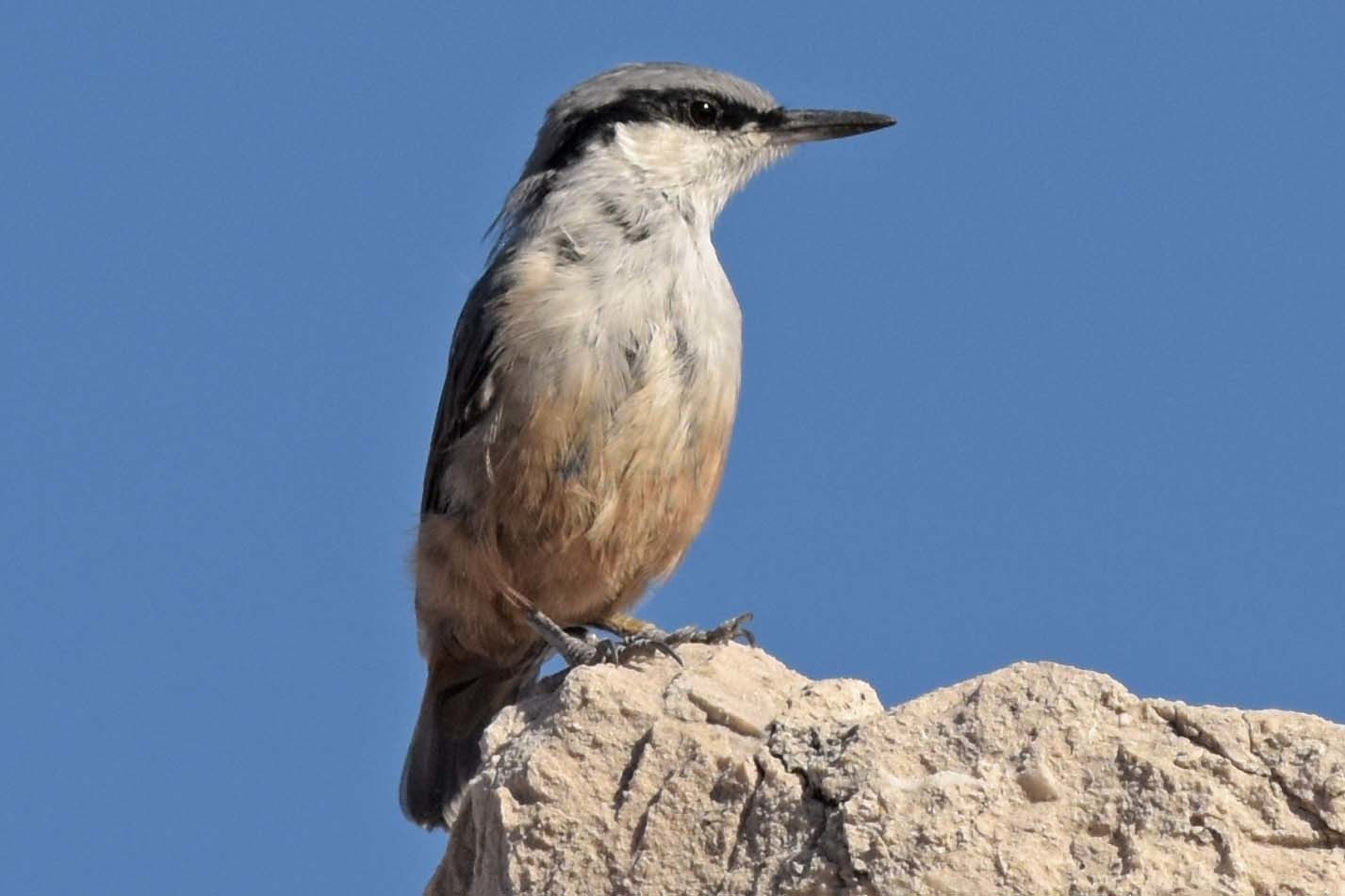
A nuthatch about 13.5 cm long, slightly smaller than the Eurasian nuthatch. It is dark grey above, with a long black eyestripe, a white throat and a buff belly.
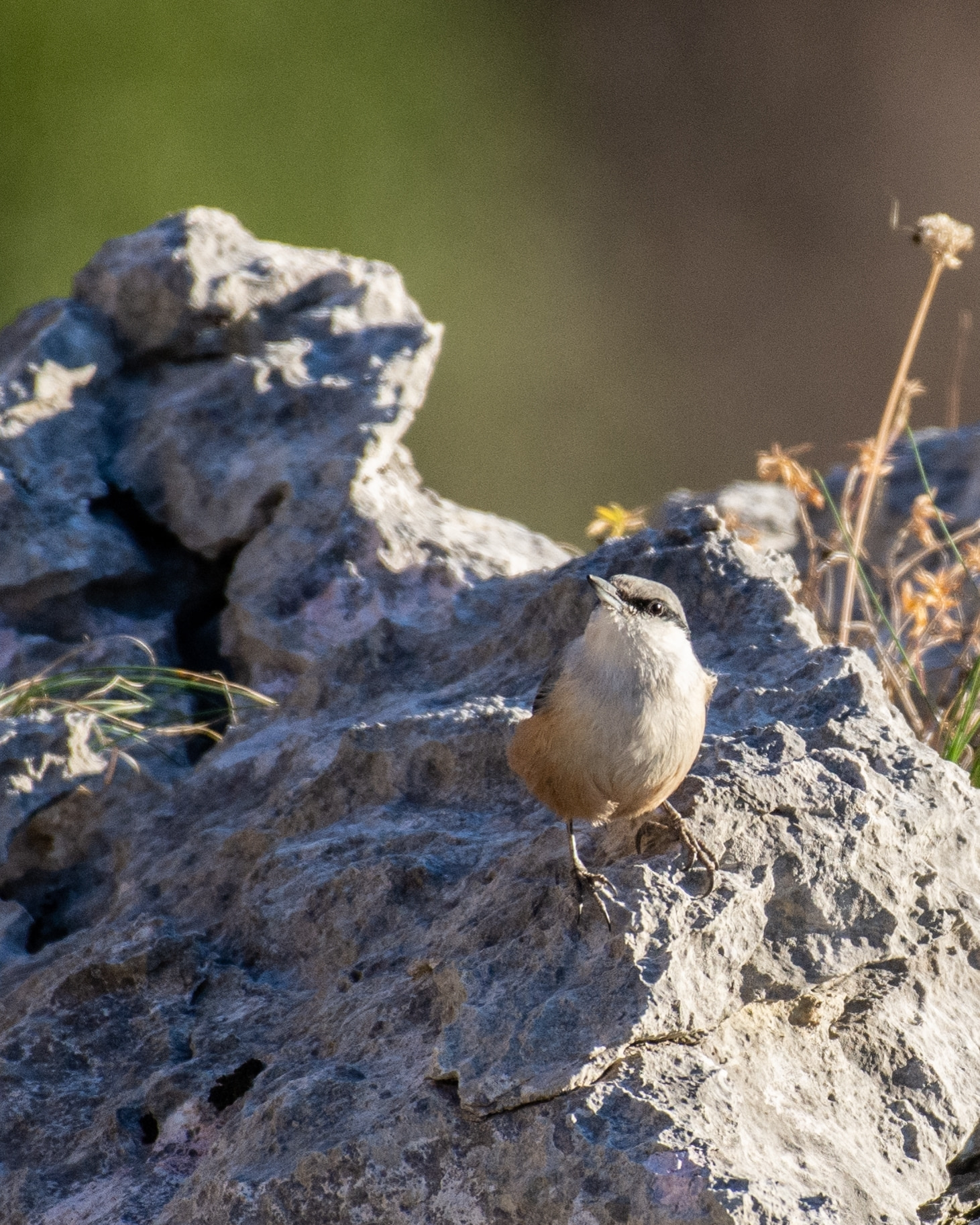
Length about 13.5 cm, slightly smaller than the Eurasian nuthatch. The subspecies of the Caucasus is the largest, 23–35.5 g. It has the big head, short tail and strong feet typical of nuthatches, and a longer bill and legs than most of its relatives.
The upperparts are dark grey. A long, well-marked black stripe runs through the eye. The throat is white, and the underparts shade to buff on the belly. Male and female look alike; young birds are slightly duller.
The Eurasian nuthatch also has a grey back and a black eyestripe, but it lives on trees in woodland and has orange-red flanks. The eastern rock nuthatch is larger, with a broader, bolder eyestripe. If a grey nuthatch is climbing over bare rock, you are looking at a western rock nuthatch.
Colour
Swatches are illustrative. Do not identify a species by colour alone.
Often confused with
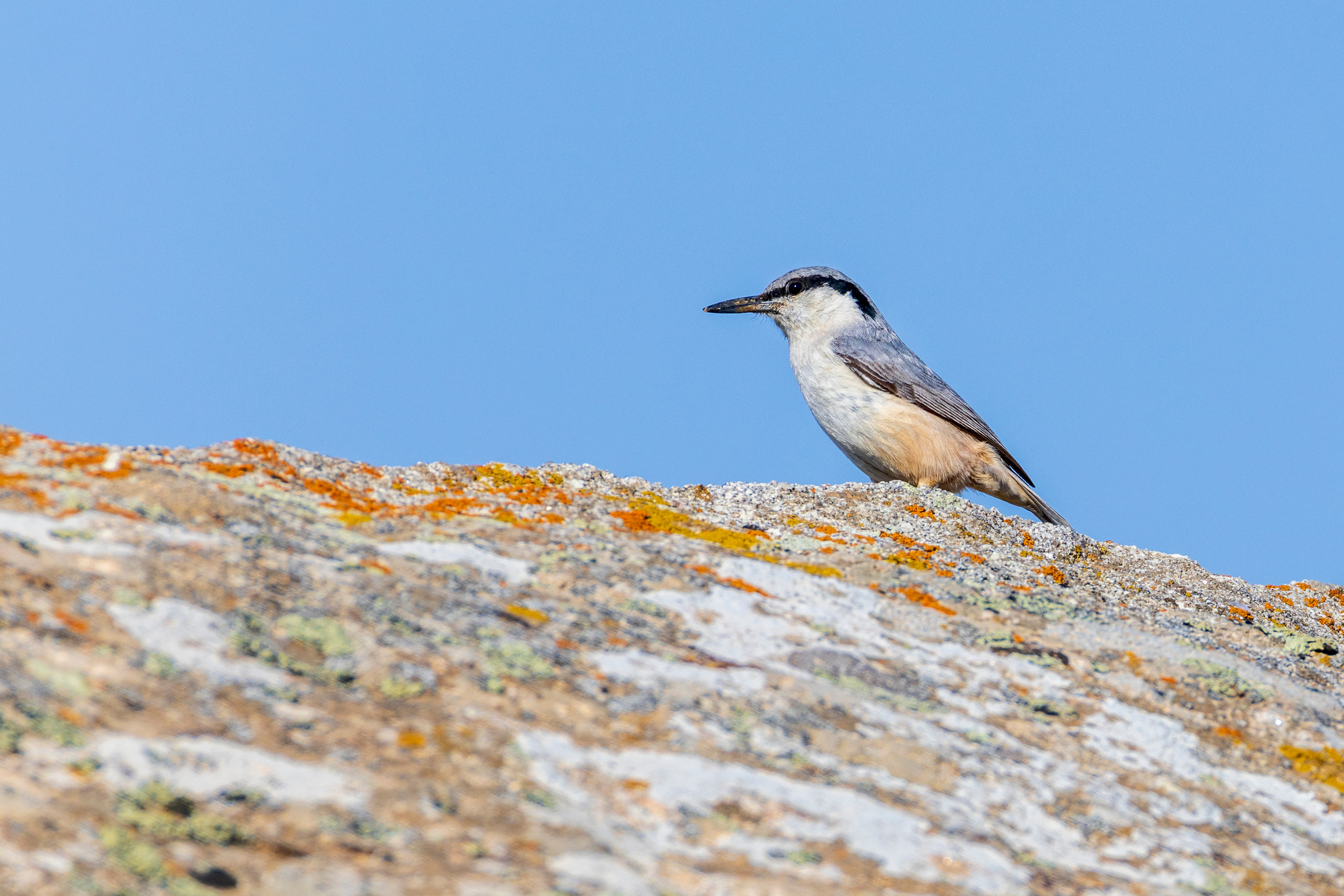
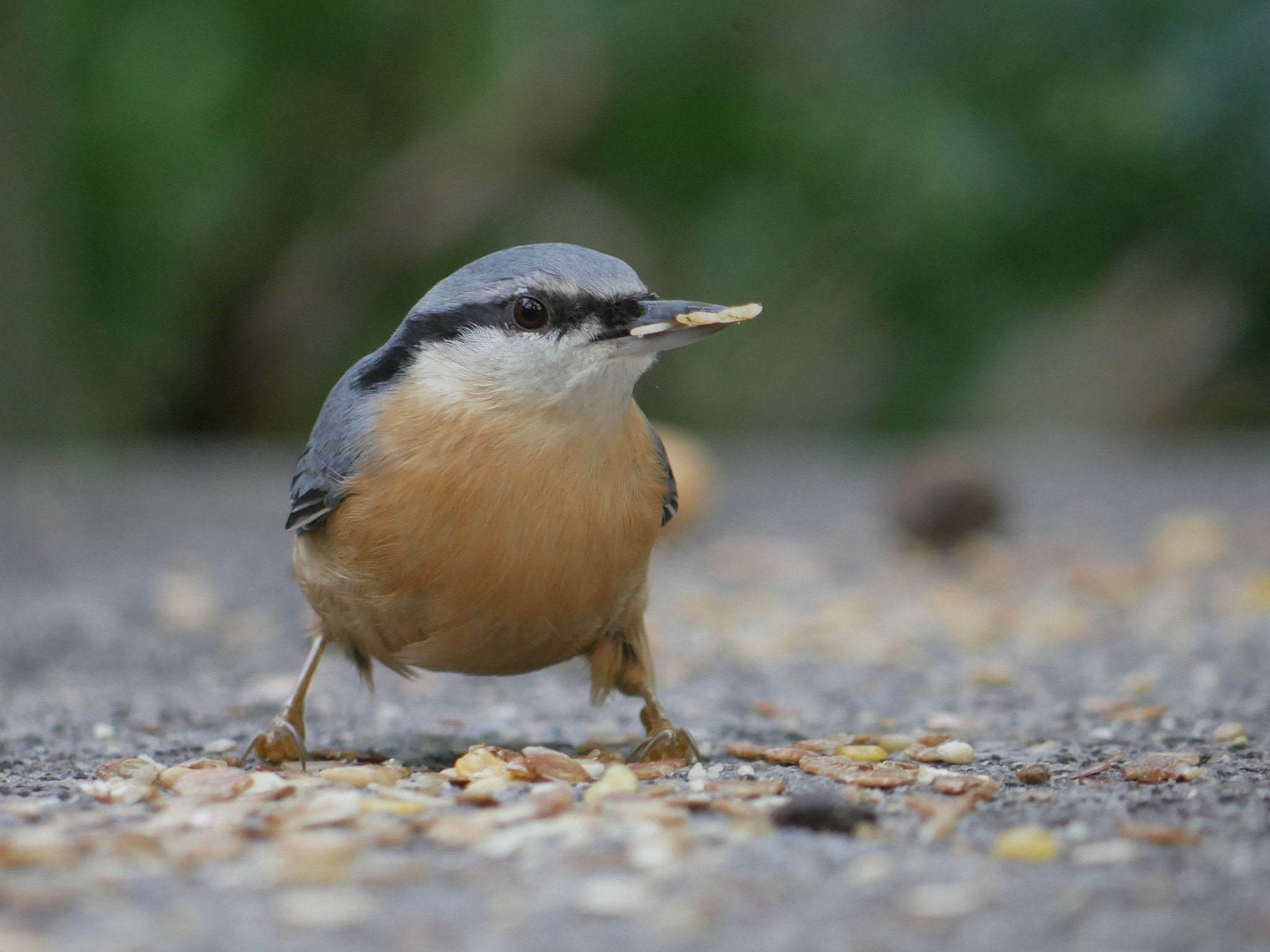
It is a bird of bare rock, especially in the mountains. In the breeding season it lives on rock walls, stony slopes, in ravines and around ruins. Birds from the highest ground move lower in winter, when it also shows up in orchards. In Georgia it lives in Samtskhe-Javakheti, Kakheti, Shida Kartli and Kvemo Kartli, from Aspindza to Dedoplistskaro.
The western rock nuthatch lives and breeds in Georgia all year round. Most records come from Samtskhe-Javakheti, above all around Aspindza and Akhalkalaki, followed by Kakheti. It has also been found in Shida Kartli, Kvemo Kartli, Mtskheta-Mtianeti, Tbilisi and Imereti. Records come from every month, with most in May and September. The oldest record is a museum specimen collected near Akhaltsikhe in 1905.
Data: Reptiles.ge + iNaturalist · Methodology
- Field observation
- Several records in one spot
- Region with records
In summer it eats insects and spiders, picked from rock crevices and plants. In winter seeds and snails are added, and in autumn various fruits as well. It forages on the ground. It wedges larger items into a rock crevice and hammers them open with its strong bill. It also catches insects in flight.
It is a territorial resident bird that disperses locally after breeding. The call is a short "tsik", the song a trilled "tui tui tui". Males start singing in March. It is common wherever it finds suitable rocky ground. A pair starts building in late March or early April and takes about 10 days. The nest is flask-shaped, moulded from mud, dung and hair or feathers, in a rock crevice, a cave or under an overhang. Mixed with saliva, the mud sets so hard that the nest cannot be torn off by hand and is hard to cut even with a knife; such nests last for decades. It sometimes pushes decorative items into cracks near the entrance. Inside, the nest is lined softly with moss, feathers and rodent fur. It lays 4–10 white eggs speckled with yellow. The female incubates for 14–15 days. The young leave the nest only when they can fly, and the parents feed them for a few more days.
Globally the western rock nuthatch's risk of extinction is rated low (LC, 2018). Across most of its range it is common wherever there is suitable rocky ground. In Georgia's national assessment (2021) its risk is also rated low (LC), and its numbers are stable. The list of the birds of Georgia gives it as a year-round resident and breeder.
Related guides
Continue with related pages
Yes. It lives and breeds in Georgia all year round. It picks bare rock, rocky slopes and ravines. It occurs in Samtskhe-Javakheti, Kakheti, Shida Kartli and Kvemo Kartli. In winter birds from high ground move lower down.
The Eurasian nuthatch lives on trees in woodland and has orange-red flanks. The western rock nuthatch lives on rock, has a white throat and a buff belly. The eastern rock nuthatch is larger, with a broader, bolder black eyestripe. Its status in Georgia has not yet been defined. A grey nuthatch seen on rock in Georgia is most likely a western rock nuthatch.
In summer insects and spiders. In winter seeds and snails, and in autumn fruit as well. It wedges larger items into a rock crevice and hammers them open with its bill. It also catches insects in flight.
In a rock crevice, a cave or under an overhang. The nest is flask-shaped, moulded from mud, dung and hair or feathers. It sets so hard that it lasts for decades. It rarely builds in trees. It lays 4–10 eggs.
No, it is a resident bird. After breeding it disperses locally. Birds from the highest ground move lower in winter. Then it also shows up in orchards.
No, it is harmless to people. Globally its risk of extinction is low (LC, 2018). In Georgia's national assessment (2021) its risk is also low (LC), and its numbers are stable. Do not destroy its mud nest.
References
What this profile is based on
Species profiles are compiled from peer-reviewed literature and established biodiversity databases, and are reviewed as new taxonomic and conservation data become available.
Prepared by the Reptiles.ge editorial team from the sources listed here.