


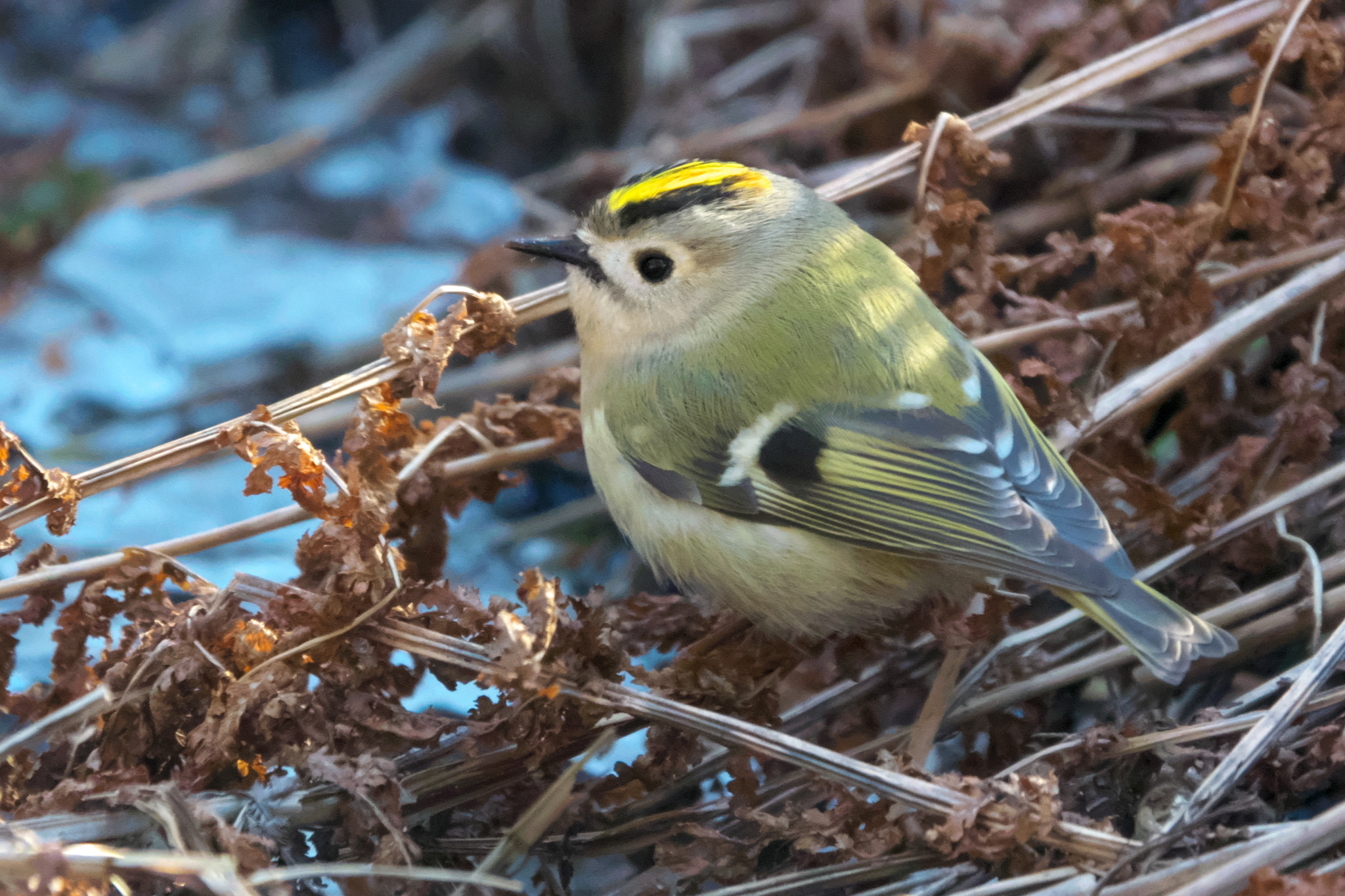

Goldcrest
Regulus regulus
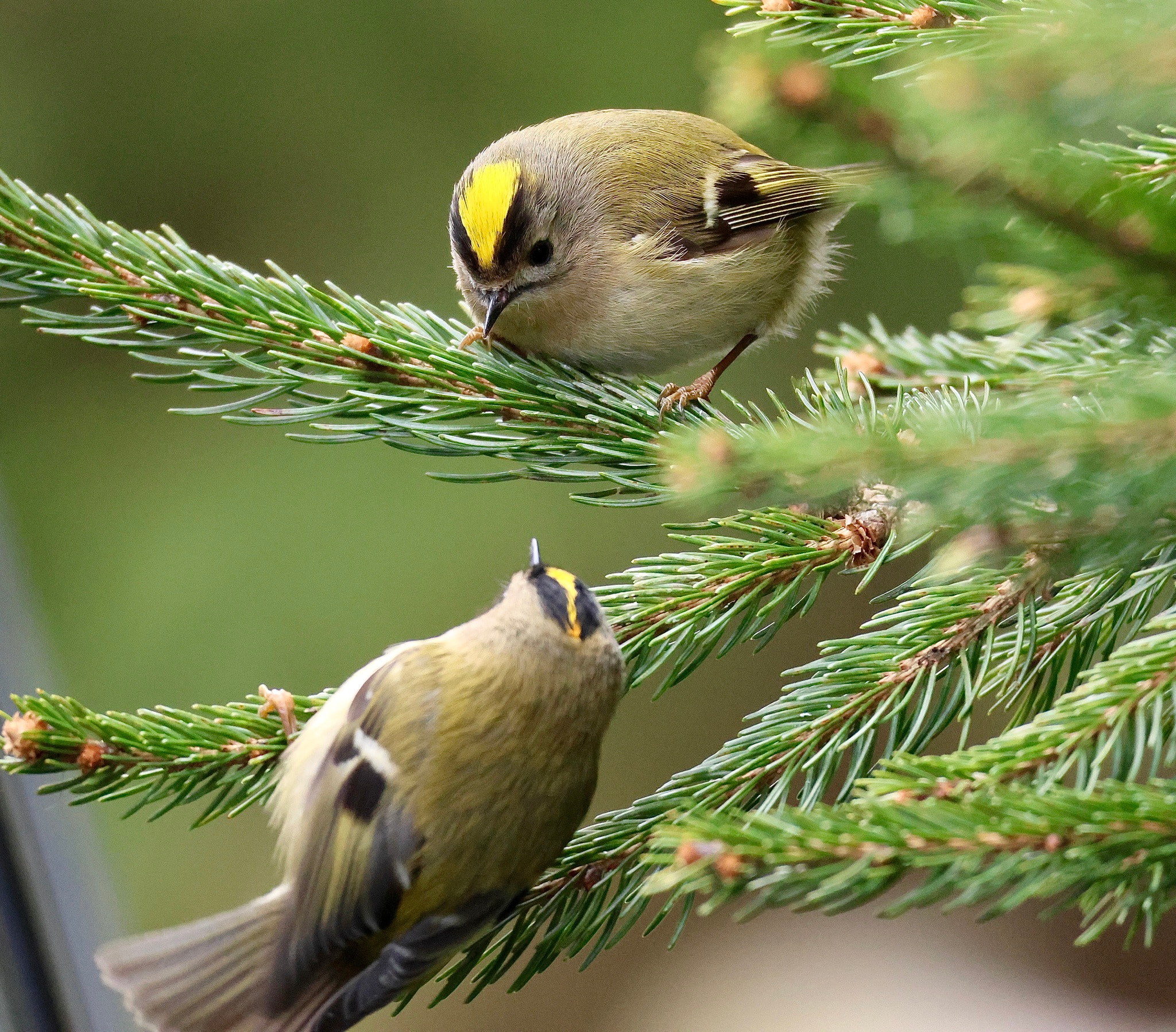
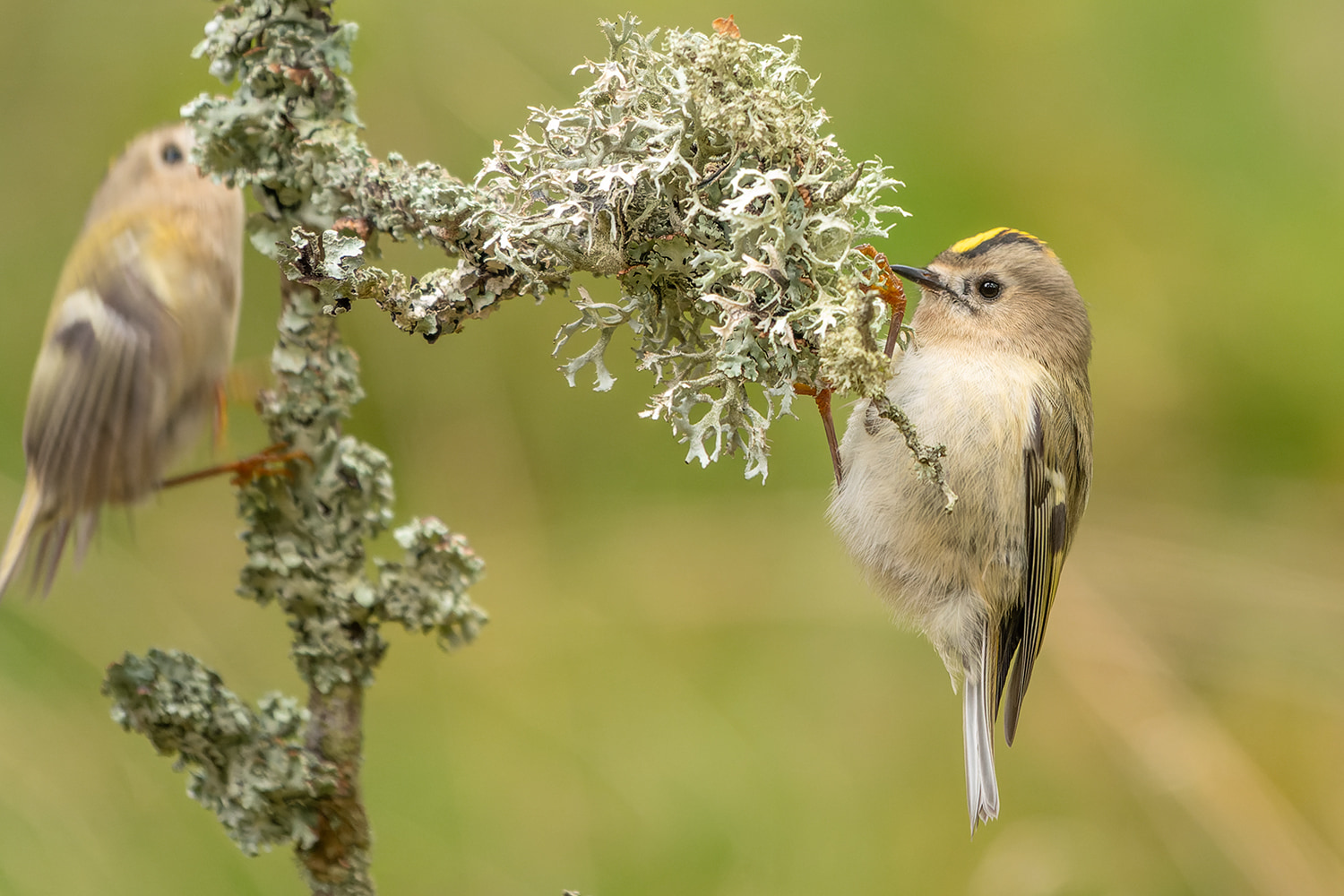
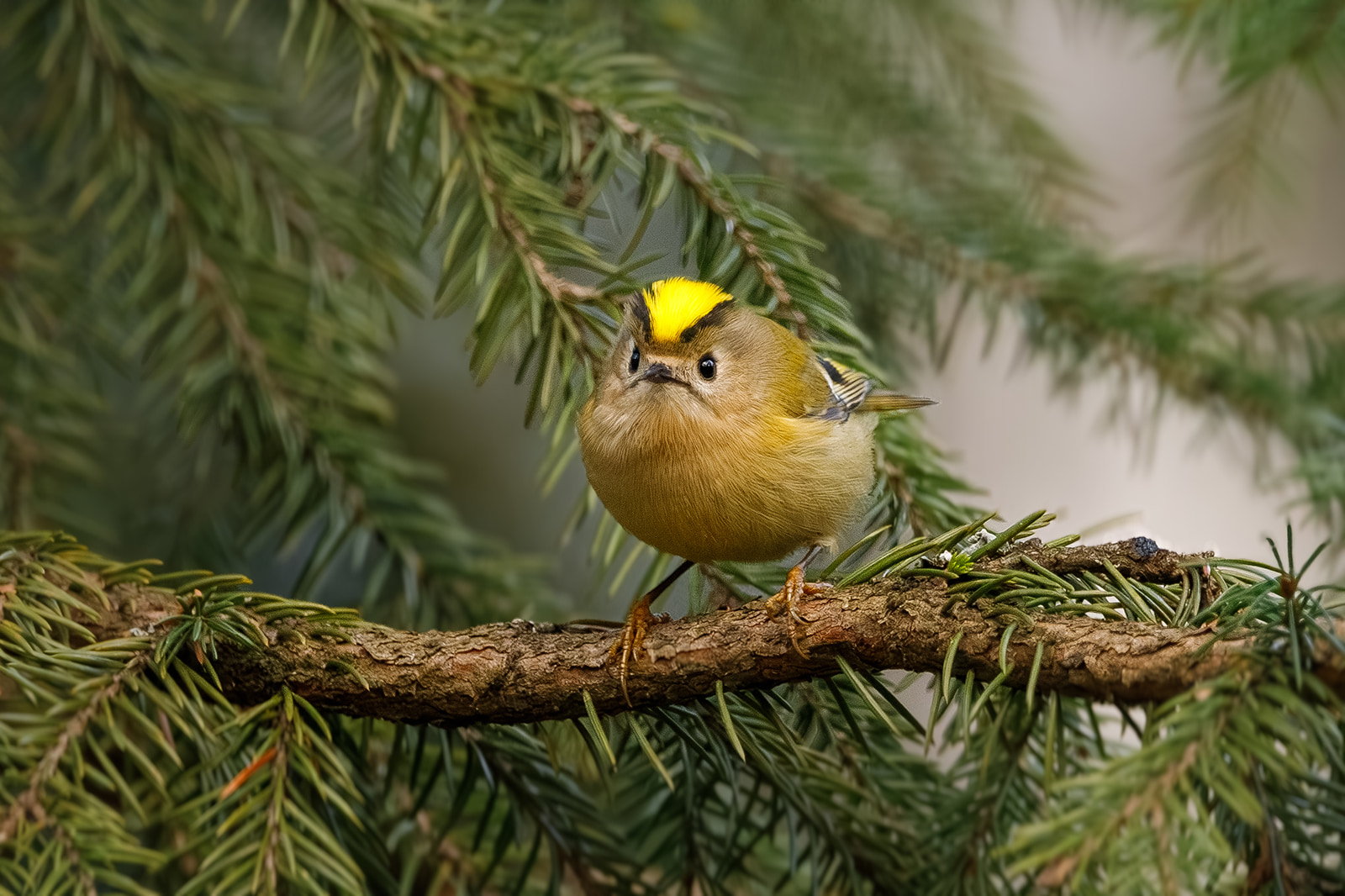
Andrey Gulivanov · Piskaryovsky Park
Key facts in one look
- Diet
- Small invertebrates: spiders, caterpillars, springtails
- Status in Georgia
- Year-round resident, breeds
- Size
- 8.5–9.5 cm
- Habitat
- Conifer forest, spruce and fir, up to 2,000 m
- Family
- Regulidae
- Protection
- Globally LC, 2018; in Georgia LC, 2021
The goldcrest is Europe's smallest bird: 8.5–9.5 cm long and 4.5–7 g. It has a yellow crown stripe edged with black, with orange in the middle in the male. The face is plain, and the black eye stands out. It is a bird of conifer forest and in the Caucasus climbs to 2,000 m. In Georgia it lives and breeds all year round. It looks like the firecrest but has no white eyebrow: that is its main mark.
Identification
Goldcrest: how to identify it
A round, short-tailed bird, 8.5–9.5 cm long and 4.5–7 g. The back is olive green, with two white wing bars. A yellow stripe edged with black runs along the crown, and the face is plain, with a black eye.
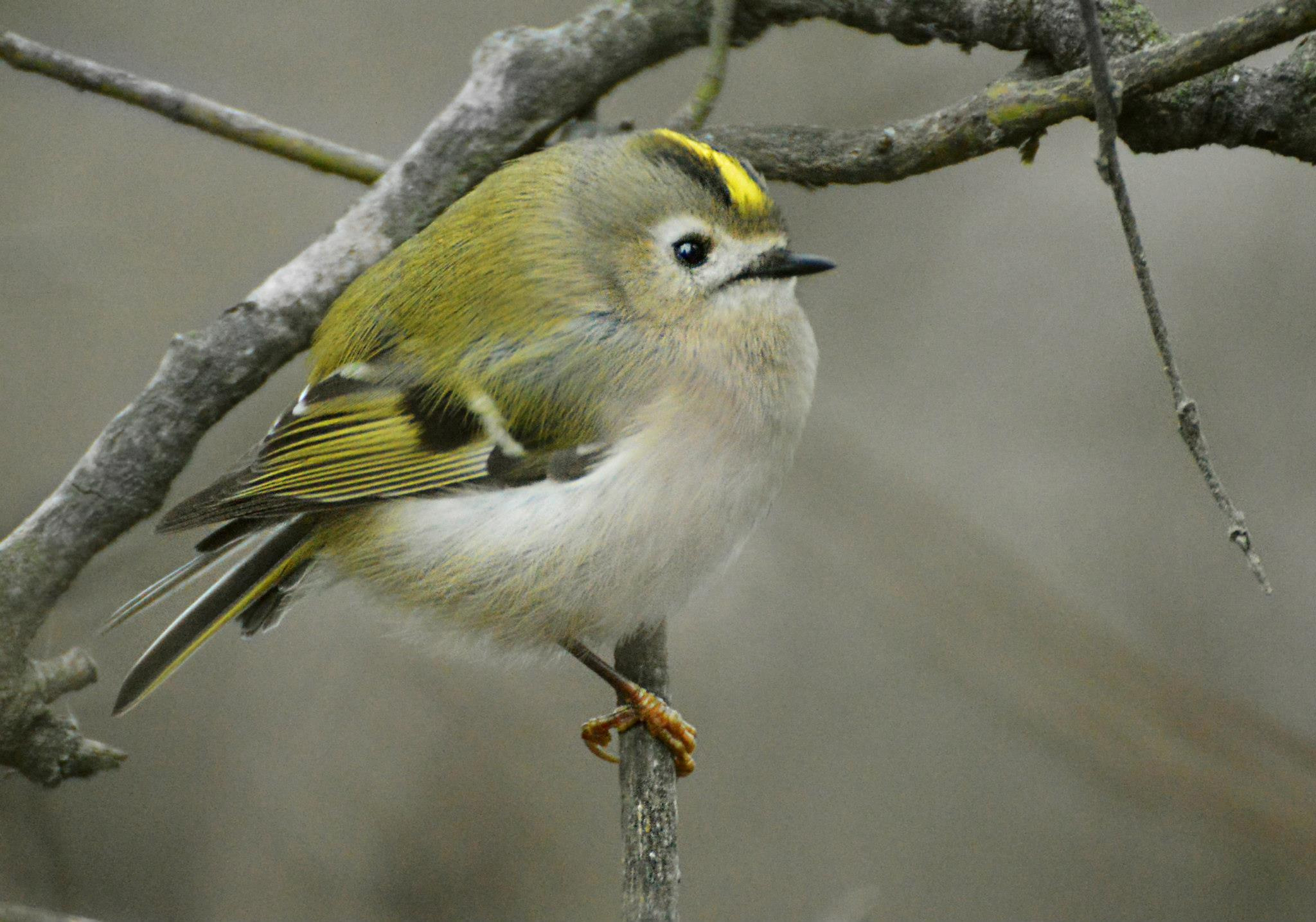
Length 8.5–9.5 cm, wingspan 13.5–15.5 cm, weight 4.5–7 g. It is the smallest bird in Europe. The body is round, the neck and tail short, the head big. The bill is thin and black.
The upperparts are olive green, the underparts buffish white, with two white wing bars. The crown stripe has black sides: yellow with an orange centre in the male, all yellow in the female. When excited the bird raises the stripe like a small crest, and then the male's orange shows well.
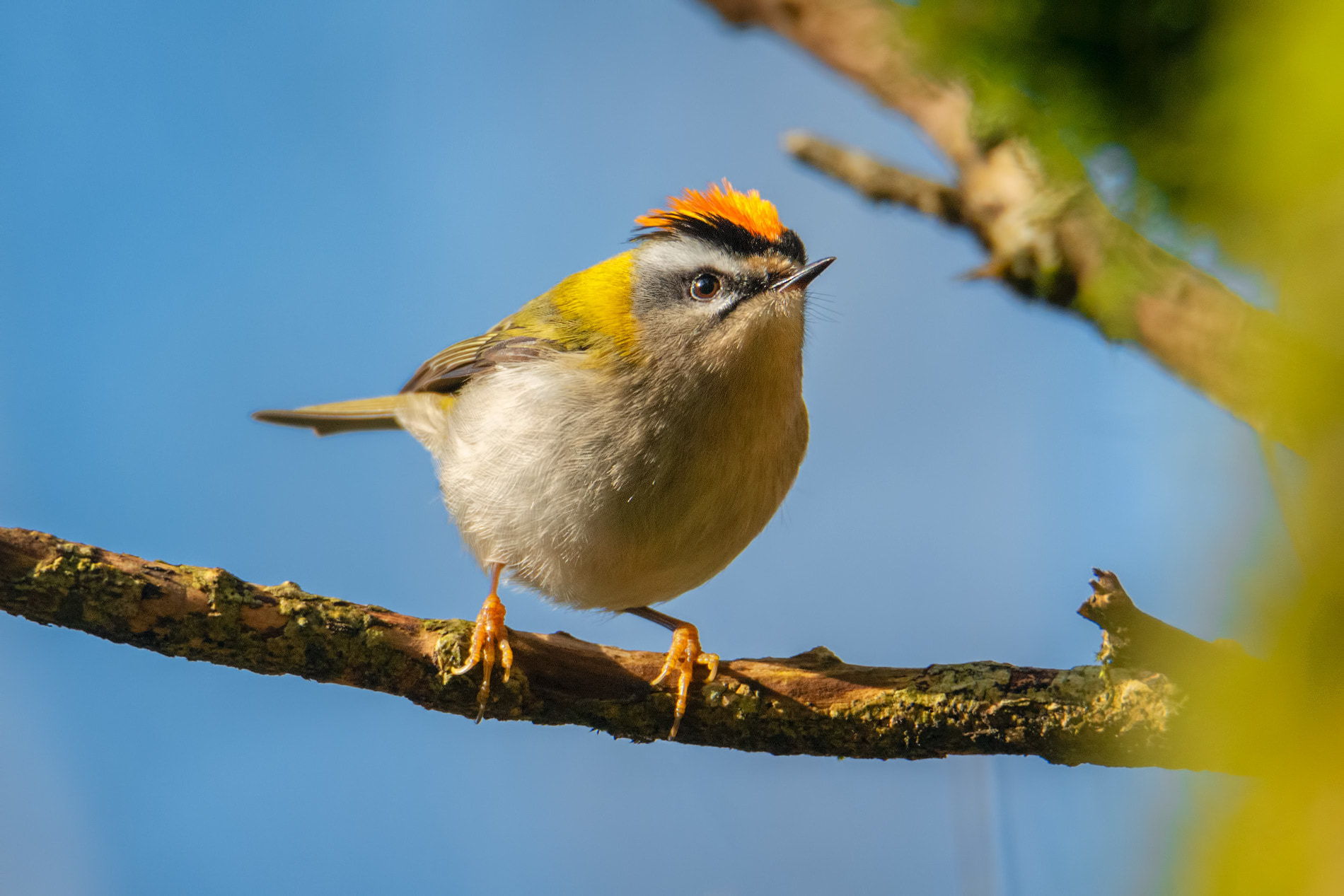
Young birds lack the coloured crown. The firecrest has a white eyebrow, a black eye stripe and bronze shoulders, while the goldcrest's face is clean, with a black eye. If you cannot see a white eyebrow, it is a goldcrest.
Colour
Swatches are illustrative. Do not identify a species by colour alone.


It is a bird of conifer forest: it breeds in mature spruce, fir and pine, in the lowlands and in the mountains. It uses broadleaf woods only where some spruce or fir grows among them. In the Caucasus it climbs to the tree line, up to 2,000 m, and the subspecies there is R. r. buturlini. In parks and cemeteries it breeds only where there are suitable conifers. After breeding it also moves into broadleaf trees, scrub and more open ground.
The goldcrest lives and breeds in Georgia all year round. It has been seen in every month of the year; most records fall in September and October, and many in May and June. Most records come from Samtskhe-Javakheti, Samegrelo-Zemo Svaneti, Tbilisi, Mtskheta-Mtianeti, Adjara and Kakheti. It has also been found in Imereti, Kvemo Kartli, Abkhazia, Racha-Lechkhumi and Kvemo Svaneti, Shida Kartli and Guria. The oldest record is a museum specimen collected near Mtskheta in 1909.
Data: Reptiles.ge + iNaturalist · Methodology
- Field observation
- Several records in one spot
- Region with records
It eats almost nothing but small invertebrates: spiders, caterpillars, bugs, springtails and flies. It takes smaller prey than the firecrest and searches for it on the undersides of branches and leaves. Deep grooves on the soles of its feet let it grip single needles. It catches flying insects while hovering. Sometimes it also feeds on the ground in leaf litter, together with tits.
It is a restless bird: it keeps moving through the foliage and creeps up and down branches and trunks. In winter small groups hold territories of their own and often join flocks of tits. On cold nights they huddle together: two birds roosting side by side lose a quarter less heat. The call is a thin, high "zee", and the song lasts 3–4 seconds, ending in a flourish. Northern populations move south for the winter. The nest is a well-insulated cup built in three layers: moss, small twigs, cobwebs and lichen outside, moss in the middle, feathers and hair inside. It is often hung from a drooping branch. In Europe the clutch is usually 9–11 eggs, within a range of 6–13. The female incubates for 16–19 days, and the chicks leave the nest 17–22 days later. A second clutch often starts while the first nest still holds young: the male builds the new nest and feeds the first brood.
Globally the goldcrest's risk of extinction is rated low (LC, 2018). Its population is estimated at 80–200 million birds and is considered stable. In the 20th century its range spread north in Europe, helped by conifer plantations. After harsh winters its numbers drop sharply for a while, and after a run of mild winters they recover quickly. In Georgia's national assessment (2021) its risk is also rated low (LC), and its numbers are stable. The list of the birds of Georgia gives it as a year-round resident and breeder.
Related guides
Continue with related pages
Yes. It lives and breeds in Georgia all year round. It picks conifer forest, and in the Caucasus it climbs to the tree line, up to 2,000 m. It usually keeps to the tree tops and is hard to see from the ground. So listen for its thin, high voice.
By the face. The goldcrest has a plain face in which the black eye stands out. The firecrest has a long white eyebrow, a black eye stripe and bronze shoulders. The voices differ too: the goldcrest's call is slightly higher. If you cannot see a white eyebrow, it is a goldcrest.
Almost nothing but small invertebrates: spiders, caterpillars, bugs, springtails and flies. It takes smaller prey than the firecrest. It searches the undersides of branches and leaves. It catches flying insects while hovering.
On a tree branch, often hung from a drooping one. The nest is built in three layers and lined with feathers and hair. In Europe the clutch is usually 9–11 eggs. Second broods are common, and the male builds the second nest.
In Georgia it lives all year round. It is a partial migrant: northern populations move south for the winter. On migration it covers 250–800 km in a day. After breeding it also moves into broadleaf trees and scrub.
No, it is harmless to people. Globally its risk of extinction is low (LC, 2018). In Georgia's national assessment (2021) its risk is also low (LC), and its numbers are stable. Do not catch wild birds.
References
What this profile is based on
Species profiles are compiled from peer-reviewed literature and established biodiversity databases, and are reviewed as new taxonomic and conservation data become available.
Prepared by the Reptiles.ge editorial team from the sources listed here.


